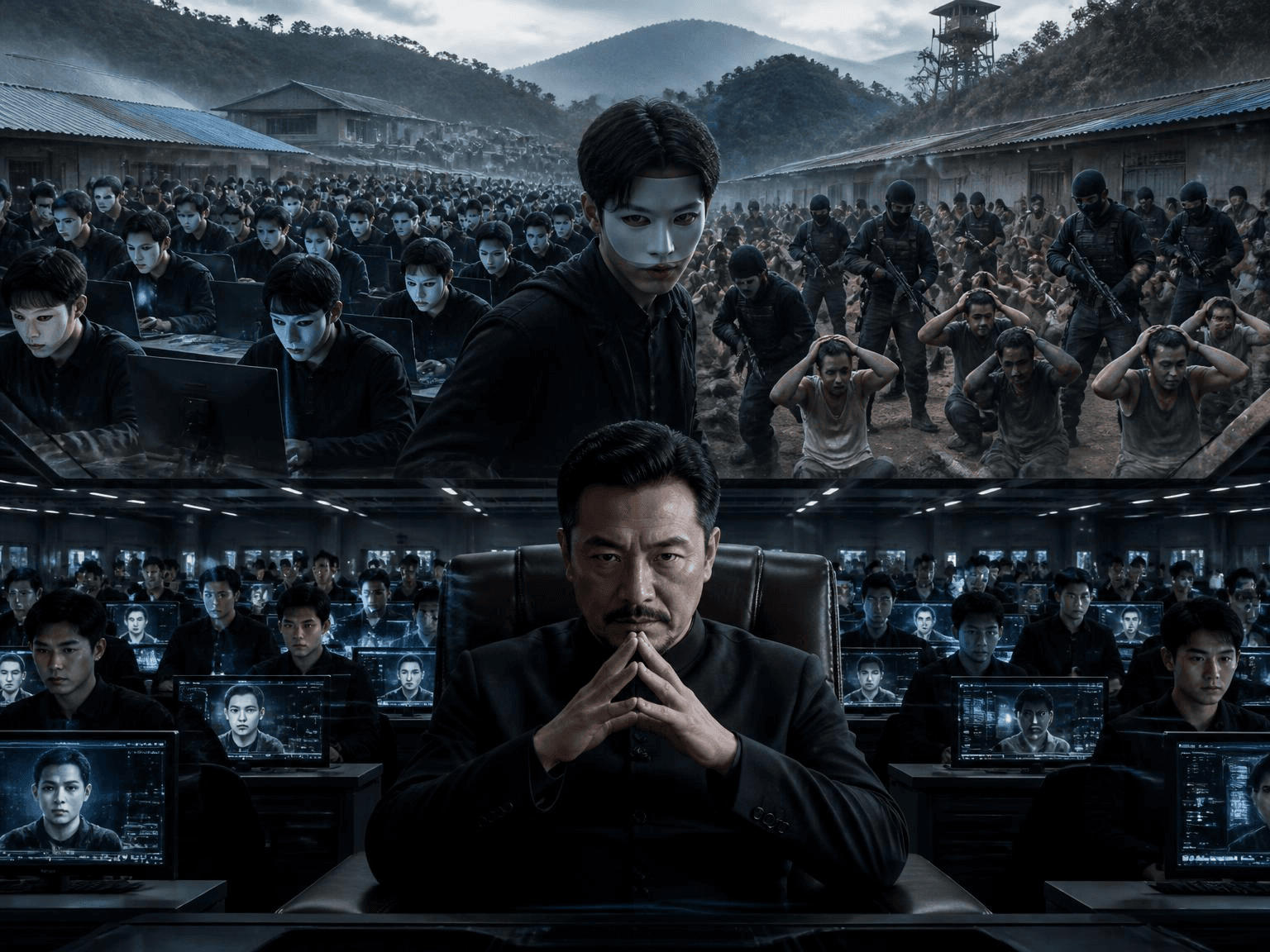
The once-hot Web3 Sector Faces Wave of Layoffs

"AI is the main reason for our layoffs." This is almost the standard explanation given by all companies today when carrying out layoffs.
In the first half of 2026, nearly 140,000 people were laid off in the U.S. technology industry. Amazon let go of 9% of its workforce, while Meta let go of 10%. The reasons they provided for the layoffs were almost the same: AI is transforming everything, and companies need to streamline.
In fact, in 2026, over 56% of layoff events explicitly cited AI, automation, or machine learning as the reason. AI has been the top reason for layoffs in U.S. companies for four consecutive months. Ironically, close to sixty percent of companies admit that they have portrayed their layoffs or slowed hiring as "AI-driven," when the real reason is financial pressure.
The impact of AI is not confined to Silicon Valley; it is reshaping the employment structure of nearly every industry. The Web 3.0 industry, as the intersection of technology and finance, is particularly hard hit. Mass layoffs in the Web 3.0 industry have been ongoing for the past six months, and they are unusually intense and rapid.
Starting from this year, especially in recent months, news of downsizing, team restructuring, and personnel movements around top-tier trading platforms has been appearing intensively in discussions on X, Reddit, Xiaohongshu (RED), Maimai, and among industry practitioners. BitMEX, once a high-flyer, has almost faded from the mainstream view, with smaller platforms either exiting or scaling back their business lines. In a now AI-drained landscape of talent and attention, layoffs in the Web 3.0 industry seem inevitable.
The Sword of Damocles Falls
When Kevin received the notice of his layoff, his Last Day was only three days away.
Kevin had previously worked at a major Internet company for several years, but he was later drawn to the high salaries and narrative of the Web 3.0 industry and moved to a top-tier trading platform. It was only later that he realized his layoff had actually been decided over a month ago.
During that time, he hardly felt any signal that he would be laid off. All work proceeded as usual, meetings were held, and messages were returned. It wasn't until HR approached him, with no reasonable explanation, no talk of poor performance, that the sword of Damocles of layoffs fell on Kevin.
In hindsight, the only sign that could be considered was that two out of the original ten members of his team had left before him. At that time, the consensus was "not a good fit" or "went to find an easier job." "Looking back now, it may have been pushing them out even back then," Kevin told Zeng Sheng BeatZ.
Richard's experience at a small exchange was even more extreme. After being a stay-at-home dad for nine years, he reentered the workforce and found a job at a relatively small crypto exchange. However, like many of his colleagues, he was soon laid off.
According to his account, one morning, he turned on his computer as usual to start work, only to find that his system access had been revoked. Initially thinking it was a technical glitch, he soon discovered in the work group chat that around forty colleagues were all asking the same question: "Why can't I log into my account?" No one knew what was happening. As everyone stared at each other, panic spread through the chat like wildfire. It wasn't until a few hours later that they each received a cold email in their personal inboxes notifying them of their immediate termination.
What made Richard even more disheartened was another detail. Shortly before the layoffs, his manager had hinted that one of his developers "might need to be adjusted." At that time, Richard was trying to help this colleague stay, even rearranging work assignments to demonstrate the person's irreplaceability. However, before he could submit his proposal, both individuals found themselves facing the same layoff fate.
Another former employee, Xiaoyu, who had worked at a crypto exchange, shared a similar layoff experience with BeatZ. In her previous company, the first step of the layoff process involved mass disabling of employees' Slack accounts and revocation of email access. "Every time we saw someone suddenly disappear from Slack, we would immediately rush into private chat channels, scrambling to share our phone numbers and LinkedIn links," Xiaoyu said. "Because we didn't know who would be next to be laid off, everyone wanted to stay in touch while they still could."
"When the layoffs finally reached me, my manager messaged me on Slack asking if I had time for a phone call," Xiaoyu said. "Before I could even reply to her, all my permissions were revoked."
Layoffs Like Tornadoes
Kevin revealed that in the months after he left, the team continued to experience layoffs, leaving only two people now. The exchange he was part of typically lays off 10% of its staff every quarter, accumulating to 40% over the year.
In May, Coinbase announced a global layoff of about 700 employees, officially terming it an "AI-first restructuring" at a rate of approximately 14%. However, sources familiar with the matter told BeatZ that the impact on Coinbase's India office far exceeded this number. Former employees stated that around 90% of the India office staff had departed, affecting all business units, not just sales. Only a very few considered the top engineers were invited to relocate to Canada to continue working.
It is said that the main reasons for the large-scale layoffs in the India office were high costs and significant time zone differences with the United States. Coinbase paid around 7.5 million Indian Rupees to Indian SDE2 (Senior Software Development Engineer), equivalent to about 110,000 Canadian Dollars, which is on par with the salary level of a local Canadian senior engineer. In most high-paying tech companies, the salary of Indian architects is even higher than their EU counterparts.
Many trading platforms have been exposed for failing to reach a compensation agreement with HR, and employees were informed on the same day that it was their last working day and had their system access revoked. The recent closure of the BitMart exchange began with entire departments being laid off in May.
Furthermore, many trading platforms choose to conduct mass layoffs at specific times, not by coincidence. According to insider information from BeatZ, around June 30 is a peak period for industry-wide layoffs. The reasoning is simple: new financial statements are due in July, and these data are meant to be presented to investors. By letting go of a group of people and cutting expenses, the profit and loss statement immediately looks better. For the management of trading platforms, layoffs are not just about cost reduction but also a form of financial narrative management. A streamlined report presented to investors is more convincing than any explanation.
Not only the exchange where Kevin and Richard are employed, but almost all Web 3.0 industry companies are undergoing large-scale layoffs, and only a few severance packages are reasonable and satisfactory.
The experiences of the interviewees mentioned earlier are quite similar, with trading platforms severing contact and access very swiftly during layoffs: "Everyone's contact information is there, without these permissions, we don't even have a channel to fight for our rights."
BeatZ learned from insiders that operational and product roles working in physical or overseas offices received a normal handover period and compensation during layoffs, "but for many tech roles that are remote, they just let you go, let you go quickly, and it doesn't affect them."
Because many IT staff are located domestically while the trading platforms are registered overseas. "Since you are not physically there, the cost of enforcement is very high. It's just that little money, doesn't impact your life, so most people don't want to or can't make a fuss about it."
Even with a few days of buffer time, the situation employees face is still unfavorable. During the exit process communication, HR asked Kevin to fill in the reason for leaving the company in the system and persuaded him not to choose "Company Layoff."
"They will say, if you choose Company Layoff, the reference check will not pass for you, they will speak negatively about you. So they force you to choose the reason for leaving as personal. Choosing personal reasons for leaving means the company does not need to provide any additional compensation."
Kevin ultimately did not receive any severance package. The company only settled his salary up to his last day of work, including overtime pay. Kevin later reflected that there were some signals during the period before his layoff that he did not understand at the time. For example, the synergy with his direct manager started to become strained, and he could clearly sense that the other party was not as fond of him anymore. However, in an organization that operates at high speed every day, these subtle changes can easily be overlooked until the moment of truth arrives.
During a large-scale layoff period, major trading platforms have been trying various ways to make layoffs look less like actual layoffs.
For example, rumors have circulated that BeatZ, a popular trading platform, has been known from interviews with various sources to send out pre-configured computers to employees before they join. These computers have tightly integrated monitoring systems that can track employees' keyboard input frequency and mouse click behavior, which are then included in performance evaluations.
It is said that there have been instances where employees of trading platforms were fired the next day because they used the company-issued computer to watch videos on iQIYI for a while.
Another common practice is to set almost impossible KPIs for employees, and after the assessment period, dismiss employees citing "poor performance" or "failure to meet company requirements." Through this method, layoffs are packaged as performance-based dismissals, allowing the company to avoid paying additional compensation.
According to a former employee of a trading platform, during one layoff period, the platform held regular tests on "Web 3.0 industry knowledge" and made it mandatory for inclusion in KPI assessments. If employees failed the test, they faced the risk of immediate termination.
This massive wave of layoffs swept in like a tornado, but because everyone had been under high-pressure monitoring for so long, there was an unspoken agreement to ignore the elephant in the room.
Amid the Rumors, All Are Silent
Compared to those who were swiftly laid off, the ones left behind are not necessarily luckier.
Xiaoyu said that after each round of layoffs, survivors would actually envy those who had already left because at least their fate had been sealed. The ones who remained lived every day like a startled bird, never knowing if they were next. Since the layoffs began, she could distinctly feel that the work atmosphere had become extremely negative, permeated by an indescribable sense of despair, making it difficult to muster any enthusiasm.
Richard also mentioned that there were subtle changes in the work atmosphere during the layoff period. While the team used to work at a fast pace with intense intensity and rapid product iterations, most of the time they were busy with actual work, product updates, and feature iterations. The current busyness is entirely different, more focused on meeting the management's contrived objectives. The company has intensified its assessment mechanism, requiring hourly check-ins, and the frequency of meetings is higher than before.
The "stand-up meeting" culture of the trading platform was taken to an extreme during the layoff period. The original intention of the stand-up meeting was to make the meetings quick, as standing is uncomfortable and prompts people to be concise. However, according to Richard, at his trading platform, this tool meant to enhance efficiency turned into a drain: two stand-up meetings were held per day, yet no one knew the direction the product was supposed to take.
With three project managers changed in six months, the product management team was almost entirely vacant. Many people had ongoing projects, but due to sudden terminations of key project members, sometimes even just minutes before a meeting, all work had to come to a halt.
As Richard describes, there was even an outsourced team in his trading platform, and unbelievably, the wages of these outsourced personnel were higher than those of full-time employees. It was not until Richard later had a face-to-face conversation with two colleagues that he found out that a senior executive had withheld the employees' raise for two years.
Richard believed that the management was not concerned about cost control because what they truly cared about was not technology and products, but power and control.
Kevin had a similar experience. He increasingly felt that the trading platform he was in resembled a sluggish state-owned enterprise. Against the backdrop of frequent security incidents in the overall cryptocurrency exchange industry, the technical team of the trading platform not only did not receive more resources but instead became like a skittish bird: aiming not to excel but simply to avoid mistakes.
Prior to being laid off, John, who grew up abroad, had long lost patience with such a work environment.
Since he joined, he distinctly felt the company's "Chinese culture" was heavily emphasized. Chat records, JIRA, meeting minutes, and almost everything else were in Chinese; foreign employees who struggled with Chinese would feel excluded. The work atmosphere was extremely demanding, the pace was fast, and there was a quarterly performance review.
Because everyone was in different time zones, being online at odd hours was common. John mentioned that his team's weekly stand-up meeting was scheduled for Sunday evenings, "My weekend plans always had to end early." His QA testing colleague was in the U.S. time zone and would often message him past 11 p.m.
"We are always on 24/7 call," John said, often seeing colleagues submitting code at 2 a.m. on Saturdays. "There's simply no work-life balance; life here is more like work, life, then work again."
The Forbidden City of Power Play: Legitimacy and Disinheritance
Richard joined the company during its heyday and witnessed the entire rise and fall of the company. What struck him the most was the "power play" among the management of the trading platform, which was more naked and chaotic than any other office politics he had experienced.
Within his company, the partners faced a severe trust crisis due to government investigations and potential litigation issues. The CTO/CFO of one faction felt deceived by the other partners or that he did not receive adequate support when facing government issues. In the end, the partners went their separate ways and announced a split.
One faction, together with a core team and a senior employee, formed a "Board of Directors" to establish a new company as the actual developer of the old product. Those who were once called friends became customer relationships within a month. By February, the new company was advancing its business at a pace of two new products per week. All of this happened right around the time Richard resigned.
In this high-level power struggle, the lower-level employees had neither the right to information nor the right to choose. They were all sacrifices of the internal strife and turmoil within the company.
In the Web 3.0 industry, many project founders and even CEOs of trading platforms are just figureheads. This is an open secret within the industry, understood by almost all practitioners. The real decision-makers are often hidden behind the scenes, and the primary quality that the figurehead needs to possess is not innovation or technical expertise, but loyalty.
"Toxic culture is top-down, and in this system, those who can survive are probably of this type. If you move up in this environment, you will definitely be alienated into this mold. If you are not this type of person, you cannot advance. " Kevin analyzed, "Those promoted are almost always skilled in political maneuvering, good at managing upwards, and assertive towards subordinates."
Meanwhile, those who are considered disinherited will be gradually purged by the higher-ups using various means. First, they are excluded from meetings, and key decisions are made without their involvement; then they are transferred to peripheral positions, away from core business functions; finally, they are relieved of submitting reports and are no longer assigned new tasks. It's only when their replacements have already been lined up that they finally realize they have been marginalized.
"So the entire system is very toxic," Kevin said, "You can look at Glassdoor, and everyone generally believes that colleagues are very nice, willing to support each other, with good personalities. But the whole system is like the Forbidden City. You can't speak ill in front of your superiors and have to be mindful of your wording."
Under the Ruins, Can There Be Intact Eggs?
"I think the entire business model of Crypto has already collapsed," Kevin said.
The core revenue of exchanges in the past relied on two things: transaction fees and listing fees. During the market's hot days, new projects poured in, retail investors flocked to trade, and transaction fees and listing fees skyrocketed, with teams expanding accordingly. "But now, all the projects that have been listed have been proven. They were all here to make money, after making money, they left."
The issue of listing fees is equally severe. According to Kevin, exchanges charge project teams extremely high fees, with a small project having to pay hundreds of thousands of dollars just for listing, while the project's market value after going live may only be tens of millions of dollars. "Exchanges have eaten up the entire ecosystem. On the one hand, the cost of starting a business in the coin circle is too high, and on the other hand, there are no retail investors anymore." In his view, this is a downward spiral process, with declining project quality, more listing failures, retail investors exiting, shrinking trading volume, reduced transaction fees, and forced listing fee hikes.
The rise of on-chain derivatives platforms like Hyperliquid has put centralized exchanges in an even more passive position. The most profitable derivatives trading segment for centralized exchanges no longer only occurs within their own systems.
The market-level impact is also accelerating this downward spiral.
Many interviewees spontaneously mentioned the industry-wide mass liquidation event on October 10 of last year, which had a profound negative impact on the industry and deeply shook the confidence of all practitioners. All uncovered positions with leverage exceeding two times were forcibly liquidated that day, and retail investors were slaughtered, unable to recover to this day.
Under the ruins, can there be intact eggs? No one can thrive alone. The plight of exchanges ripples out to the entire industry.
John told Rising BeatZ that many mid-sized Web 3.0 institutions with assets under management between one billion and five billion dollars are shutting down. The old financing and DeFi yield strategies are becoming increasingly unsustainable. Since last summer, the situation of cryptocurrency liquidity drying up has been "very serious." Basically, all meme coins launched in early 2025 are heading towards zero, with a very low book value. Off-exchange trading volume is bleak, and in terms of market making, apart from RWA-related business, there is hardly anything worthwhile. A friend of John's who is a market maker pursuing a crypto-neutral strategy once told him that even though they improved their strategy to increase market share and per-trade profit, the company's total profit still plummeted significantly, with profits generally shrinking to about 70% of the original. John's friend was eventually laid off due to cost-cutting by the company.
Not only market makers and quant firms, Kevin mentioned in the interview that currently VCs in the Web 3.0 industry are very cautious in both investment amount and number of investments, basically in a state of not investing. Even if they do invest, the amount has been significantly reduced. "In this cycle, VC investment has shrunk by 80%. Not many people are investing in crypto anymore. So, by the time of the next bull market, there won't be many good projects left to list for retail investors here."
The situation is equally tough for project teams. Kevin's assessment is: "Except for some projects in the to-B sector that have Web 2.0 revenue, the vast majority of projects have no B-end revenue at all, nor do they have C-end revenue."
Crypto is Like a Roach Motel
While good birds choose wood to nest, for those who have been kicked out of a crypto exchange, the problem is not about choosing the wood, but whether there is any wood left to choose.
After Kevin left the trading platform, he joined an AI-related startup. He is not alone. According to Roar BeatZ, the vast majority of those who left the Web 3.0 industry have flocked to the AI industry. This is not difficult to understand: AI is currently the hottest track, active in financing, abundant in positions, and the crypto industry and AI industry share many similarities in channels and attributes, both emphasizing growth, user acquisition, and global operationalization, where many skills can be directly transferred.
Richard's disappointment with the Web 3.0 industry is even more thorough. In his view, the trading platform where he worked was filled with incompetent people from top to bottom, from partner infighting to grassroots staff incompetence. "Even today, people in the cryptocurrency community are still a group of self-righteous, arrogant individuals." He later also turned to the AI industry, completely leaving the crypto world.
In contrast, very few have truly transitioned to traditional industries. A small number of technically skilled trading system and risk control talents have entered traditional market makers and quant firms. There are also some operations, BD, and compliance personnel who have transitioned to traditional brokerage firms amid the active Hong Kong and U.S. stock markets, but these are the minority. The more common outcome for those laid off by trading platforms is to move to the next tier of small trading platforms.
Because of the discrimination of the traditional industry against the Web 3.0 industry, it is deeper than many people imagine.
Roar BeatZ learned from some traditional financial HR departments that when they see candidates who are still working at a Web 3.0 company on resumes during the recruitment process, they will be directly eliminated. In the stereotypical view of many traditional financial practitioners, the crypto industry is like a giant "roach motel," implying a regulatory gray area, a culture of speculation, and unverifiable performance. Those who come out of here are naturally seen as bearing original sin in their eyes.
Even within the AI industry, there is a similar bias. Some AI companies focused on building large models and infrastructure are also skeptical of candidates with a background in the Web 3.0 industry. In their view, the "growth" of the Web 3.0 industry is more based on speculation and narratives rather than real technological barriers. To an HR person at an AI company, someone who has worked in operations at a trading platform holds a very different value compared to someone who has worked in operations at ByteDance.
Perhaps this is the most profound cost experienced by Web 3.0 professionals who have gone through layoffs.
This Winter Is Colder Than Ever
Every industry goes through cycles. But the current winter in the Web 3.0 industry may be different from before.
Compared to the past, the competitive landscape in the cryptocurrency space has completely changed. Prediction markets such as Polymarket and Kalshi, along with retail brokerage trading, are all vying for the same funds from retail investors. The money from U.S. retail investors is flowing into AI stocks and prediction markets rather than back into the crypto market.
Some practitioners even believe that the current situation is worse than the 2022 crypto winter. At least in 2022, there were still retail investors present, but now, the October 10 liquidation event swept away the last leveraged retail investors.
Whether an industry is young or old is not just about its revenue; it's about what it is fighting for.
Even in such a "shrinking" market, the competition and underhanded tactics between various trading platforms have not stopped. According to sources familiar with the matter, the HR departments of some trading platforms even consider "poaching high-salary personnel from competitors" as a KPI, only to let them go a few months later for various reasons, disrupting the competitor's team rhythm, gaining intelligence and customer resources, while the poached individuals are treated as disposable tools.
This reminds the author of the food delivery wars in the internet industry a few years ago, where the smartest group of people spent billions in profit consuming each other. Alibaba, Meituan, and JD.com, the three Chinese internet giants, collectively spent over 220 billion RMB, roughly equivalent to $31 billion, on food delivery subsidies in just two quarters, almost equal to the total spent globally by all companies in a year on generative AI.
Today's cryptocurrency trading platforms are replaying the same script. The entire industry's pie is shrinking, retail investors are draining, trading volumes are shrinking, yet platforms continue to poach each other's personnel to trip each other up, engage in public mudslinging, and wage wars of attrition.
In the past, we always attributed the mass layoffs in the exchange platform to the cyclical nature of the Web 3.0 industry and the impact of the AI industry. As mentioned at the beginning of the article, in 2026, AI was cited as the reason for over half of the tech layoff events, but almost 60% of companies admitted that the real reason was actually financial pressure.
The Web 3.0 industry is no exception.
Charging project teams hundreds of thousands of dollars for listing fees; listing a large number of low-quality tokens, causing retail investors to lose almost all their funds in repeated instances of breaking the listing price; using opaque performance evaluations and monitoring systems to erode employees' trust and creativity; in the cold winter, failing to contemplate new business models and instead spending resources on poaching competitors' employees.
If today's Web 3.0 industry winter is not the inevitable fate of cycles. Then who is to blame for the decline of the Web 3.0 industry?
Recommended
Desk: Brent Crude Tops $110, Musk's Net Worth Drops 528.6 Billion in Four Days After Tesla Roadster Launch
Oct 17, 21:49
JST Fifth Buyback and Burn Successfully Concludes: Over 170 Million Tokens Worth Approximately $23.53 Million Burned, Buyback Mechanism Set for Comprehensive Upgrade
Oct 17, 20:10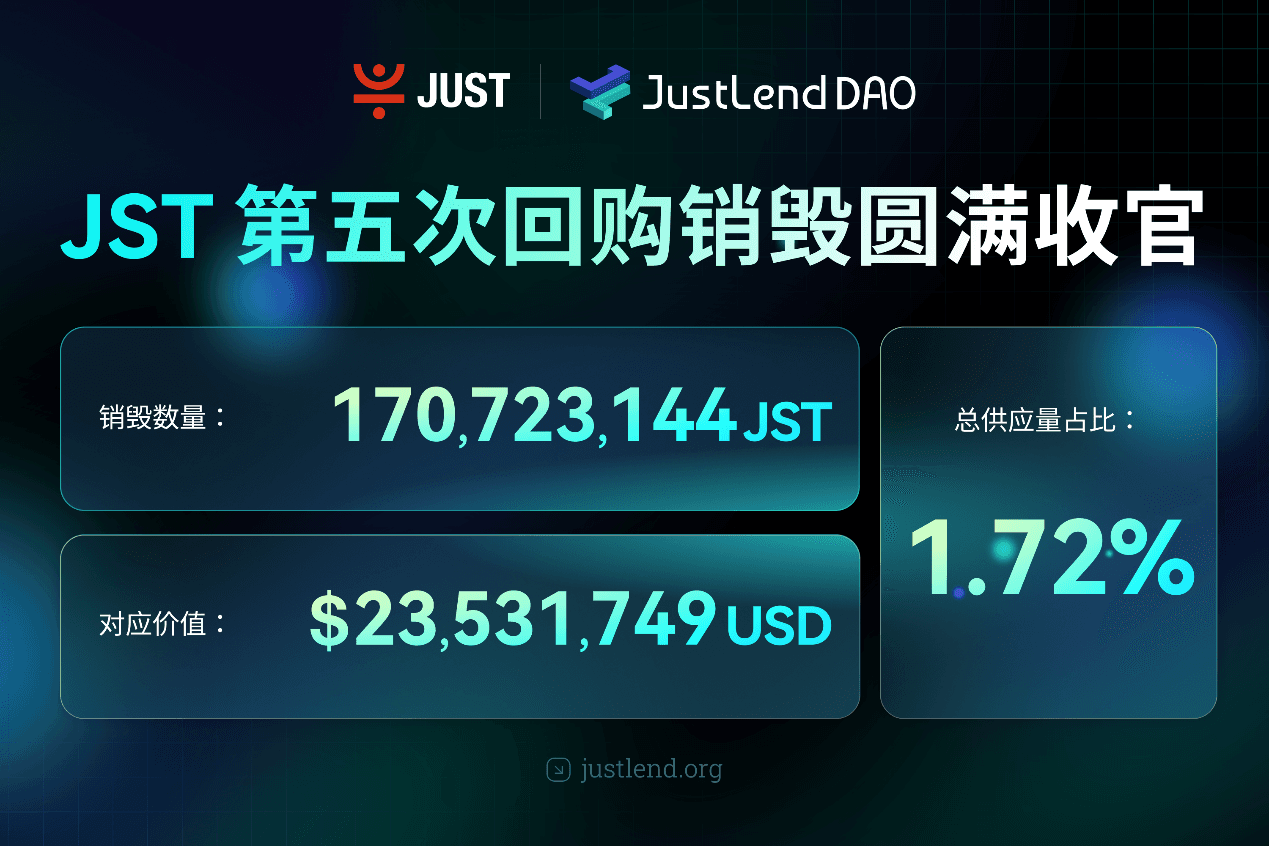
BitTorrent Brand Upgrade and Initial BTT Buyback & Burn Launch Simultaneously, Dual Engines Usher in New Era of Web3 Infrastructure
Oct 17, 20:00
Asia Market Daily: Japan's BOJ signals more rate hikes while Korea targets offshore perpetual platforms (2026/10/17)
Oct 17, 17:01Why did Papertrade backfire on you?
Oct 17, 17:01
The 'Strict Father' of Northern Myanmar: This Company Deploys 200,000 "AI Best Actors" to Strike Back Against Scammers
Oct 17, 15:34