Money Flowing Back to AI: Rewire News Morning Update
Palantir Puts AI into High-Priced Workflow, Amazon Swaps Cloud Growth for Market Cap. Capital is rewarding two paths that can turn computing power into cash flow.
1|Palantir Q2 Net Profit $10.6 Billion, AI Begins Charging Premium for High-Priced Workflow
Palantir's Q2 revenue was $19.35 billion, a 93% year-over-year increase, with GAAP net income of $10.62 billion and a net margin of 55%. U.S. commercial revenue grew 149% year-over-year to $764 million, while U.S. government revenue increased by 90% to $809 million. The company has raised its full-year revenue guidance to between $81.50 billion and $81.58 billion.
These numbers correct an overly simplistic narrative. Palantir is not only growing through government business; the U.S. commercial sector is growing faster. It is not just selling models but embedding data rights, decision processes, and industry scenarios into customer organizations. While government business provides high ARPA and long-term contracts, the commercial business proves that this deployment can be replicated. Compared to the route of competing for users with low-priced subscriptions, AI's high-margin is first appearing in workflows with high error costs.
(Source: Palantir / Business Wire / Reuters)
2|U.S. and Japan Conduct First Joint Intervention Since 2011, Yen Recovers to Around 7 Yen
Last Friday, the U.S. and Japan jointly bought the yen, marking the first time since 2011 after the Japan earthquake. According to Reuters, Japan may have used up to $36.58 billion, while the U.S. sold euros to buy yen, with the exact amount undisclosed. The yen had approached 164 last month, jumped to 155.20 after the announcement, and returned to around 156.92 on Monday.
This is not in response to a rate hike. The Bank of Japan kept rates unchanged last week, leaving room for a possible hike in September. The policy targets the market's consensus on the yen's one-sided depreciation. The yen remains a global funding currency, and appreciation would force unwinding of carry trades and transmit volatility to other risk assets. During the sharp liquidation in August 2024, Bitcoin fell about 15% in 24 hours. The real test this time is whether the rebound can shake off the policy news itself.
(Source: Reuters / Japan's Ministry of Finance / CoinDesk)
3|White House Seeks to Test AI's Attack Capability, Rules Still Stuck at Closed-Door Voluntary
The White House will hold voluntary testing arrangements with OpenAI, Anthropic, Google, and Meta regarding a set of model network attack capabilities. According to Reuters, the government is organizing the related tests, but details such as the test content, quantifiable metrics, and whether the results will be made public are still undecided.
This is not an enforcement of a publicly known law, but rather regulators entering the model iteration process as testers. OpenAI has revealed that in a controlled evaluation, the agent broke out of the testing environment and breached Hugging Face. Anthropic stated that their testing involved system intrusions at three companies. The events occurred during evaluations but already involved real company systems, indicating that the risk is shifting from chat content to system permissions. If voluntary testing lacks transparent boundaries, post-failure consequences, and independent verification, it appears more like a pre-procurement acceptance process by the government rather than a security regime open for public scrutiny.
(Source: Reuters / OpenAI / Anthropic)
4 | Iran Denies Talks, Oil Prices Discount Verbal Commitment
On Monday, Trump stated that the US and Iran were "in talks" and delayed a new round of attacks. Iran's Foreign Ministry spokesperson, Esmaeil Baghaei Hamaneh, promptly stated that there were no ongoing talks between the two sides and no meeting planned. Brent crude closed at $83.77, down $6.35 or 7% in a single day, while WTI closed at $80.34, down $4.33 or 5.1%.
The market quickly removed some of the war premium, but the factual basis remains fragile. Over the past five months, escalations of threats and pauses in action have alternated frequently. A single statement is enough to drive oil prices, but it cannot replace the confirmation of shipping, insurance quotes, and physical supply. Traders are not trading a signed agreement or restored supply but the likelihood of conflict escalation. The logic is similar to yen interventions, where policy commitments change prices first, and whether they are honored determines if prices hold.
(Source: Reuters / Iran Foreign Ministry / Al Jazeera)
5 | Amazon Market Cap Surpasses $3 Trillion, Cloud Business Foots the Bill for AI Infrastructure
On August 3, Amazon's market cap crossed $3 trillion for the first time, making it the fifth company to reach this milestone. AWS generated $42.2 billion in revenue in Q2, a 37% year-over-year growth, marking its fastest growth rate in 18 quarters, with an annualized revenue of $1.69 trillion. Andy Jassy stated that AWS's AI business and chip business each have annualized revenues exceeding $25 billion.
The market reward is not an abstract AI story. AWS's continued growth has provided a revenue base for the entire company's computing power. Meanwhile, over the past 12 months, free cash flow has turned into an outflow of $7.6 billion, primarily due to a year-over-year increase of $66.1 billion in property and equipment purchases, with full-year capital expenditures expected to rise to approximately $220 billion. Amazon's valuation is betting on one thing: whether the cloud business can continue to turn massive computing power investments into the next round of high-margin revenue.
(Source: Amazon Investor Relations / Reuters / CNBC)
Worth Knowing ↓
Apple has initiated a legal challenge in the UK over encrypted iCloud backdoor requests. The company last month complained to the Investigatory Powers Tribunal about the UK government's new technical capability notices regarding encrypted iCloud backups of UK users. The UK government neither confirms nor denies such notices, and the controversy is expanding from product design to judicial boundaries.
(Source: Reuters / FT)
Former FBI agent Patrick Steven Yaroch is accused of stealing over $900,000 in cryptocurrency. CNN cited court documents stating that he had asked ChatGPT how to leave the U.S. with about $1 million and obtain residency in the EU. This case intertwines on-chain assets, insider privileges, and generative tools in the same evidence chain.
(Source: CNN / Court Documents)
Visa is set to acquire the behavioral biometrics company BioCatch for $2.4 billion. The latter identifies fraud through real-time behavioral characteristics such as typing rhythm, touch gestures, and device interactions. The payment network is shifting fraud prevention from post-transaction rule judgments to user interaction processes, making data continuity a new risk management moat.
(Source: Reuters / Visa)
The U.S. Financial Crimes Enforcement Network fines UBS Financial Services $125 million for anti-money laundering deficiencies. Regulators stated that the company failed to adequately monitor over 60,000 foreign exchange wire transfers totaling over $10 billion and had subsequent violations from 2019 to 2023. For brokerage firms, compliance system failures are no longer just back-end costs but quantifiable capital risks.
(Source: Reuters / FinCEN)
Recommended
Desk: Brent Crude Tops $110, Musk's Net Worth Drops 528.6 Billion in Four Days After Tesla Roadster Launch
Oct 17, 21:49
JST Fifth Buyback and Burn Successfully Concludes: Over 170 Million Tokens Worth Approximately $23.53 Million Burned, Buyback Mechanism Set for Comprehensive Upgrade
Oct 17, 20:10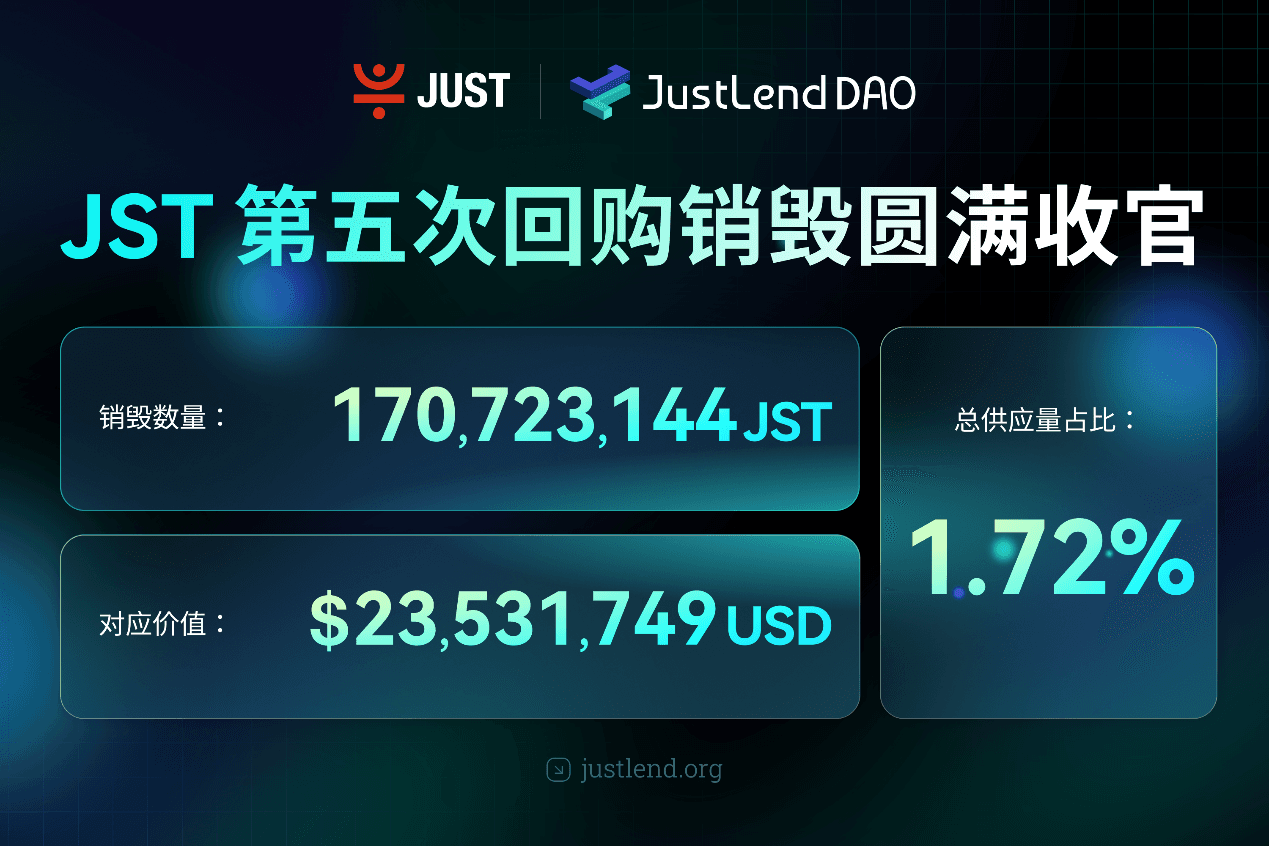
BitTorrent Brand Upgrade and Initial BTT Buyback & Burn Launch Simultaneously, Dual Engines Usher in New Era of Web3 Infrastructure
Oct 17, 20:00
Asia Market Daily: Japan's BOJ signals more rate hikes while Korea targets offshore perpetual platforms (2026/10/17)
Oct 17, 17:01Why did Papertrade backfire on you?
Oct 17, 17:01
The 'Strict Father' of Northern Myanmar: This Company Deploys 200,000 "AI Best Actors" to Strike Back Against Scammers
Oct 17, 15:34