Dalio Latest Interview: Already in an AI Bubble, 1% of Portfolio Is Bitcoin
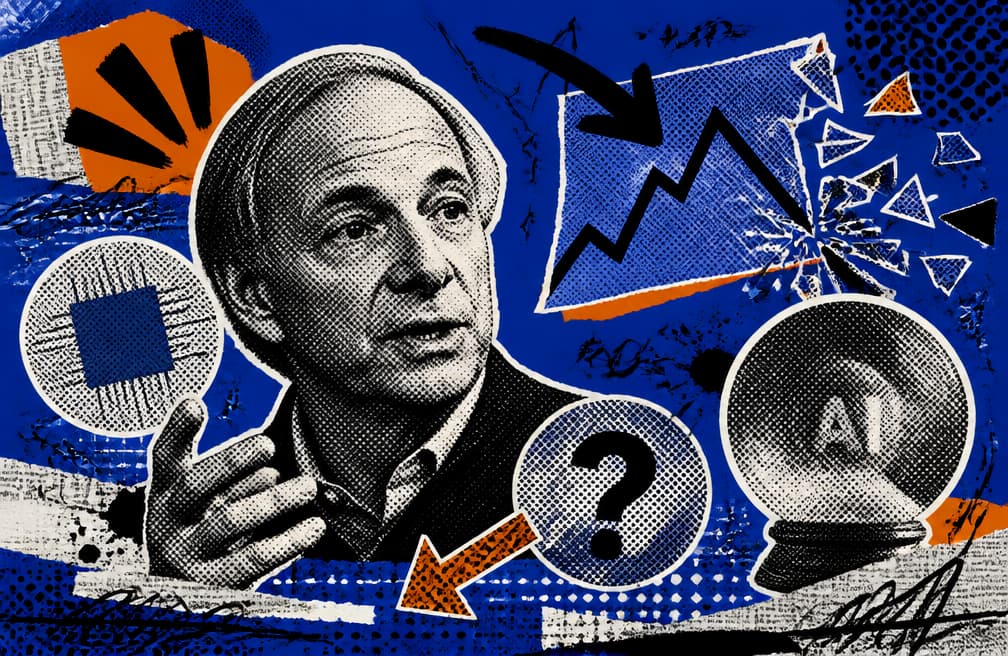
Editor's Note: Ray Dalio, the founder of Bridgewater Associates, recently participated in a in-depth interview on the renowned business podcast The Diary Of A CEO, where he discussed his views on the AI bubble, the 80-year long-term debt cycle, and Bitcoin. During the interview, Dalio revealed why we are currently in an AI bubble, outlined the three main signs that indicate the bubble is about to burst, and expressed his belief that while capitalists will be the biggest beneficiaries of the AI transformation, individuals with outstanding human intelligence who can collaborate with others will still perform well in the future. The core content of Dalio's interview is compiled below. Enjoy~
Learning from History, How Was the AI Bubble Formed?
When people talk about bubbles, they are referring to a significant price increase, impressive company performance, followed by the bubble bursting, which has an impact on the economy and the markets, leading to a recession, such as the 1929 bubble or the 2000 dot-com bubble.
Because this occurs when a revolutionary new technology emerges. During the dot-com bubble, we also had amazing new technology that everyone bet would surely succeed, so everyone rushed to invest, even borrowing money to invest, but they overlooked the importance of price, and prices soared, creating a bubble.
Now we are equally excited about AI, and we should be excited because it will bring about revolutionary change, which it has indeed done. So, everyone also wants to invest in it, but they still overlook the price. This is a somewhat similar mechanism hidden in different cycles.
In economic bubbles, people heavily borrow to invest, and you see many people become wealthy, but wealth does not equate to real money because they cannot spend this wealth. And when they have to sell their wealth to get money, it depreciates. So, when they need money for some reason, such as changes in taxes, rising interest rates, or debt repayment, the bubble begins to burst, and the market declines.
The wealth accumulation process during the bubble bursting operates in reverse, as when they have made a lot of money, they have a lot of high-value assets that can be used as collateral for loans, this compounding effect continues, but when the bubble bursts, this process also operates in reverse.
An economic recession usually occurs after a bubble bursts because as people start deleveraging and selling off assets, consumer demand decreases, and spending naturally contracts.
For example, during the Great Depression in the United States, the late 1920s were a period of great prosperity. Every household was electrified for the first time, refrigerators and lighting entered homes for the first time, cars, airplanes, radios were popularized for the first time, and everyone believed these technological products had a promising future. However, as people continued to buy assets, stock prices kept rising, and everyone leveraged up to buy stocks, among other practices. Eventually, corporate profits could not sustain the corresponding stock prices, leading to a chain reaction that ultimately triggered the Great Depression.
What I mean is, in these massive transformative trends, people knew little, and anyone working in the AI field could not precisely plan. They had no idea how much revenue the future could really bring, so in the end, there would only be two scenarios: either underinvestment and being left far behind by competitors, or massive investment while still failing to achieve precision and control. When this situation occurs, problems arise.
3 Major Signs of a Burst Bubble
In the early stages, the factor that often bursts the bubble is forcing people to sell off some assets to realize their gains, and this is generally due to rising interest rates. It could also be policies like wealth tax, but overall, it is a tightening of liquidity. Because at this stage, there is often inflationary pressure, and central banks around the world decide to tighten monetary policy. Consequently, when interest rates rise, the returns that bond investors can earn will exceed the returns that equity investors can achieve.
Additionally, there is a significant increase in stock issuance. We have been discussing how demand drives stock prices up and how wealth is created, but there is also a supply side in the market. Companies can issue stocks, and there is hardly anything easier than creating wealth through stock issuance. Nowadays, people can even publicly announce the establishment of a company and drive it to go public, then declare to the audience that they are going to issue stocks. It is this abundant supply of stocks, along with the increasing fundraising needs of other companies, that will ultimately lead to the bursting of the bubble.
There is also a very typical way to assess the extent of a bubble, which is to look at the shareholding structure of these companies and see if the chips are in the hands of steadfast investors or unsteady retail investors. But I must also emphasize that a bubble is not a black or white existence but rather a matter of degree.
A typical feature of unsteady chips is the influx of amateur retail investors, especially through leverage, either borrowing to speculate on stocks or buying leveraged financial products. For example, there are leveraged ETFs in the market that track the stock market. Investors participating in these products are essentially no different from gambling by rolling dice.
All of the above are the key signs that a bubble is about to burst. When the bubble bursts, the market will experience panic, leading to a large-scale sell-off of assets. Conversely, at this time, all assets will become cheaper, and everyone will be able to afford them.
However, in investing, people always like to seize the opportunity, trying to catch the falling knife, which often further fuels the bubble. Therefore, I would like to add that the future is full of uncertainty, and investors should not try to time the market. Even for experienced investors, accurately predicting the timing of a bubble burst is extremely difficult. Therefore, the best investment approach in the face of a bubble is diversification.
Managing a Bubble Burst through Diversification
Ordinary people often consider cash deposits the safest asset. However, in the long run, this is the worst investment because inflation erodes its value.
Aside from the stock market, investors have many asset options to choose from, such as gold, bonds, real estate, and Bitcoin. Each of these assets fluctuates in value for various reasons. Typically, when gold rises, bonds tend to fall, and real estate depreciates. These changes follow certain patterns.
Therefore, the best practice is to build a diversified investment portfolio. This not only does not reduce returns but actually lowers risk. Diversification means holding each asset in a certain proportion. Due to different volatilities, investors must know how to balance them. My advice is to start with investing in real assets, starting with gold.
Gold is particularly interesting because when all assets perform poorly, gold often performs well. It is a very effective diversification tool. Gold cannot be hacked technologically. You can hold it, own it. It is the only financial asset that is not someone else’s liability.
So for most people, if they want to ensure that they have some “hard currency”, then gold should account for 5% to 15% of their investment portfolio.
View on Bitcoin
Some investors see Bitcoin as “digital gold,” but I prefer to invest in real gold bars rather than Bitcoin.
Bitcoin is merely an asset similar to gold. It too is a form of currency that cannot be printed. However, some technologies may harm it. For example, if quantum computing emerges, and governments can monitor it, then it may be taxed. Any digital currency is somewhat similar in this regard.
Additionally, when the government says, “I don’t need Bitcoin,” they have the right to dispose of it as they please. Moreover, central banks around the world do not hold such assets in large quantities. This is because central banks need to ensure the privacy of their transactions while keeping control firmly in their hands. Just look at Russia’s situation; all their other assets have been seized/frozen, but no one can touch that gold.
Who Benefits Most from the AI Transformation?
In this AI transformation, only a tiny minority (less than one percent of the total population) hold the cutting-edge technology and can utilize it to accelerate progress. For others, especially those in cognitively demanding occupations, there is a risk of being replaced.
We are entering a world where everything is automatable. Human evolution began in the agricultural age, where genuine innovation was scarce. As machines were invented, they replaced human physical labor. People used to work in fields like oxen, then they were replaced by tractors. The industrial age followed, with inventions like the printing press enabling knowledge acquisition, leading to various innovations and the onset of the first industrial revolution, where machines started replacing human physical labor in factories, and so on.
So, in my view, this is akin to machines first replacing human physical functions, then the replacement level rising, starting to replace computable aspects of human thinking, and this trend is continuing, progressively replacing higher-order cognitive abilities. This trajectory is part of an ongoing evolutionary process.
The ultimate beneficiaries are those who hold the capitalistic notion of replacing workers, such as when a business earns revenue from people shopping in a store, but if you look at the share allocated to workers, you'll find it decreasing while the share going to the business increases. We are going through a phase where, on one hand, the elite are creating astonishing wealth; on the other hand, the lower strata are under tremendous pressure.
This is the challenge we face. Despite a relatively good economic situation, the job hunt has become significantly harder for college graduates. For instance, fresh graduates require training for entry-level jobs, and now many tasks can be swiftly handled through AI and computerization. With advancements in robotics, this situation will worsen, and the rapid pace of disruptive change we see today is due to the substantial funding flowing into cutting-edge AI models like Anthropic and OpenAI.
However, there is no need to be too pessimistic. Humans still possess emotions and intuition, offering some services beyond AI's capabilities. So, exploring what these "services" entail, such as whether robots can provide good massage spa services, is an avenue for further exploration. Overall, I believe that in the foreseeable future, those with exceptional human intelligence who can collaborate with others will still shine.
About the 80-Year Grand Cycle
I have previously mentioned that a shift in the world order occurs roughly every 80 years, but this number is not exact; the cycle has an average fluctuation range, much like human lifespans where each person's expected lifespan varies.
I will not overly emphasize the length of time; I will focus more on the current situation. In terms of symptoms or relevant indicators, where are we currently in this process? Where will the next important milestone be?
The answer is right around this time area where we currently are.
Recommended
Desk: Brent Crude Tops $110, Musk's Net Worth Drops 528.6 Billion in Four Days After Tesla Roadster Launch
Oct 17, 21:49
JST Fifth Buyback and Burn Successfully Concludes: Over 170 Million Tokens Worth Approximately $23.53 Million Burned, Buyback Mechanism Set for Comprehensive Upgrade
Oct 17, 20:10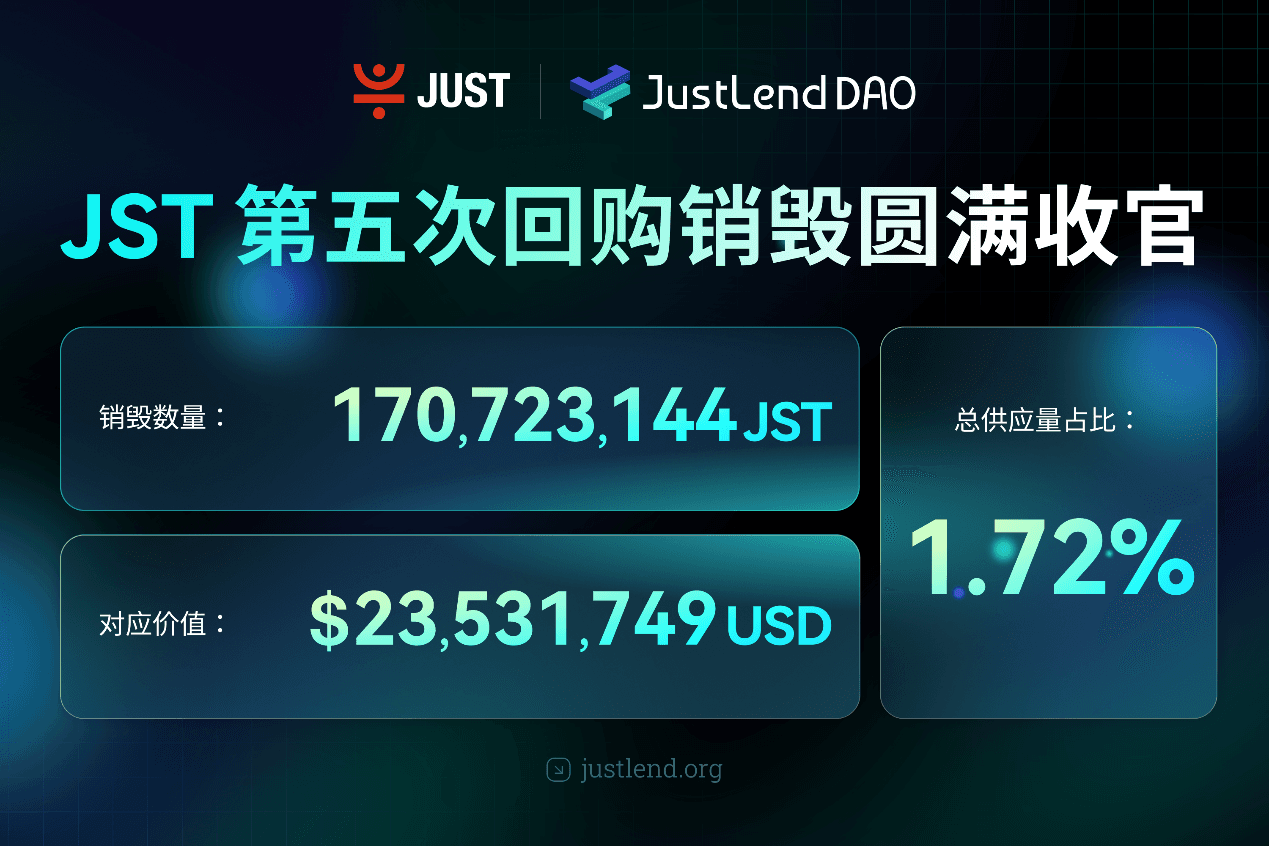
BitTorrent Brand Upgrade and Initial BTT Buyback & Burn Launch Simultaneously, Dual Engines Usher in New Era of Web3 Infrastructure
Oct 17, 20:00
Asia Market Daily: Japan's BOJ signals more rate hikes while Korea targets offshore perpetual platforms (2026/10/17)
Oct 17, 17:01Why did Papertrade backfire on you?
Oct 17, 17:01
The 'Strict Father' of Northern Myanmar: This Company Deploys 200,000 "AI Best Actors" to Strike Back Against Scammers
Oct 17, 15:34