On the eve of Circle's earnings report, Wall Street is sharply divided on CRCL valuation

On August 5th, Beijing time, stablecoin issuer Circle (CRCL) will release its latest quarterly earnings report before the U.S. stock market opens. However, on the eve of this quarterly report, Wall Street has already shown a significant difference in opinion regarding Circle's future value.
On August 3rd, Morgan Stanley (hereinafter referred to as "MS") downgraded Circle's rating from "Equal Weight" to "Underweight" and drastically reduced the target price from $106 to $38.
At the same time, TD Cowen initiated coverage of Circle with a "Buy" rating for the first time and set a target price of $82.
The two institutions gave completely different rating judgments, reflecting a core disagreement on how to define Circle at the present moment—whether to continue seeing it as a stablecoin issuer relying on USDC's scale growth or as a technology company evolving into a digital financial infrastructure platform.
Institutional Divide: MS Bearish on USDC Growth, TD Cowen Betting on Platform Transformation
The MS analyst giving the "Underweight" rating is James Faucette. On TipRanks, Faucette has a four-star rating (out of five), widely considered well above the average level for a sell-side analyst. Although Faucette's average return rate over the past two years has been only 3.1%, his accuracy rate is as high as 60%.
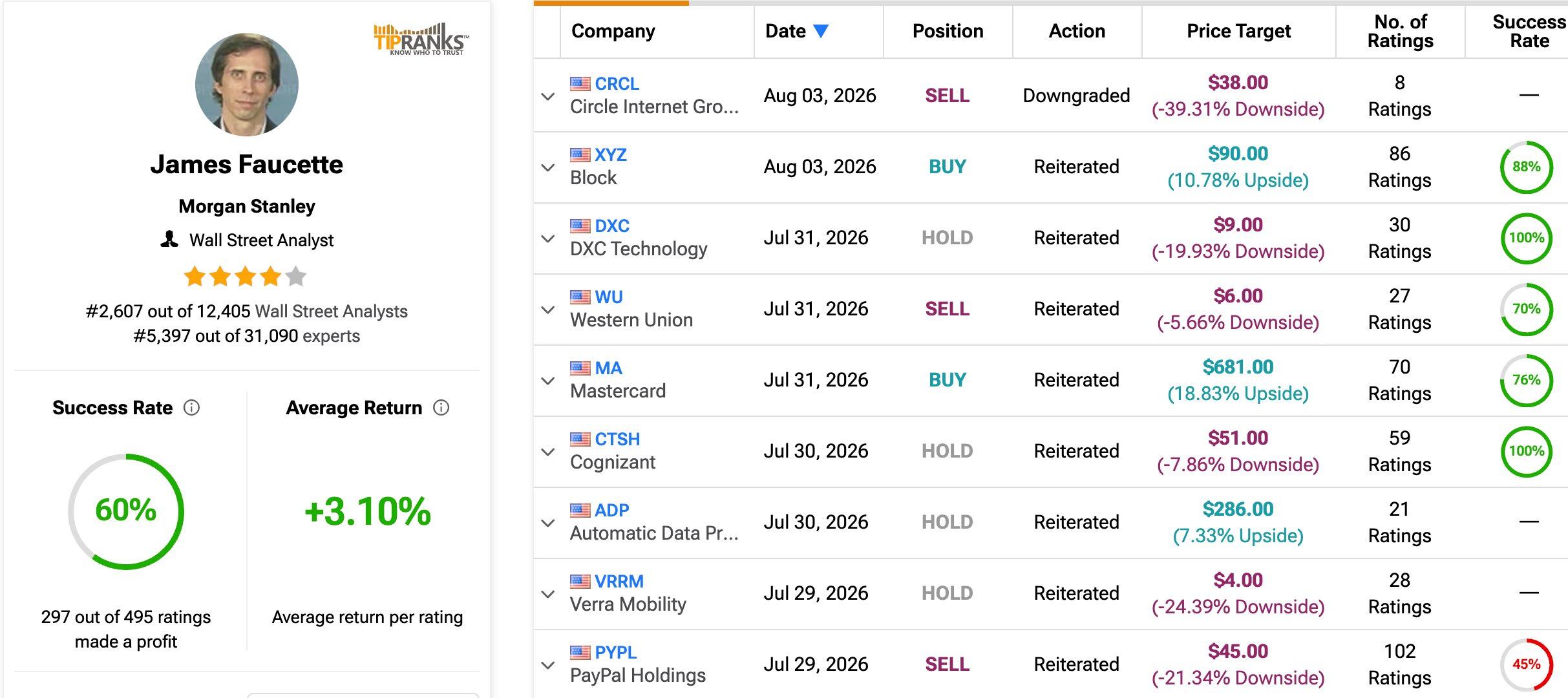
Faucette's bearish logic revolves around Circle's current revenue model.
In his view, the market may have overestimated the future growth potential of USDC, and the pace of stablecoin's use case expansion is slower than previously expected—since the third quarter of 2025, the circulating supply of USDC has not actually grown, and currently, apart from remittances and stablecoin-related debit card spending, USDC has not seen large-scale new applications.
This implies that Circle's current core revenue source, "reserve revenue," may face growth pressure. Currently, Circle's main revenue heavily relies on allocating USDC reserve assets to cash and short-term U.S. Treasury securities to earn interest income. Therefore, the growth of USDC's circulation is often seen as a significant driver of the company's profit expansion.
Faucette believes that if the growth of USDC slows down, Circle's future revenue structure may gradually shift towards a lower-margin transaction revenue. Based on this assessment, he expects that Circle's future earnings performance may be below market expectations and believes that the current valuation already reflects overly optimistic growth expectations.
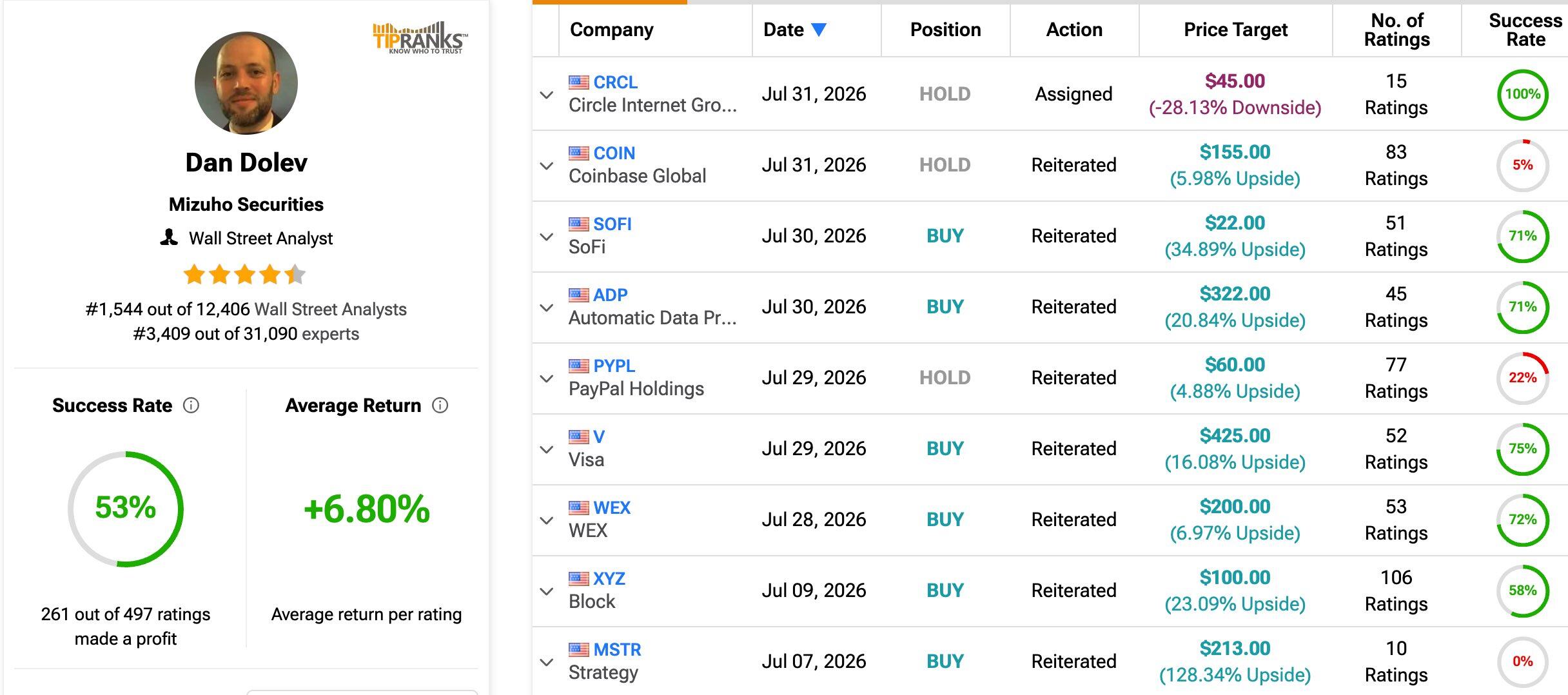
Another analyst who holds a similar bearish view to Faucette is Dan Dolev from Mizuho Securities. Dolev has a rating of 4.5 stars on TipRanks, higher than Faucette. Last Friday, this analyst gave a 'Hold' rating to Circle but lowered the target price from $50 to $45.
On the TD Cowen side, analyst Bryan C. Bergin, who gave a 'Buy' rating, has a personal track record rating of only half a star on TipRanks, with a historical average return of -3.4% and a win rate of only 43%.
Bergin believes that the market may currently undervalue Circle's potential transition from a stablecoin issuer to a broader financial infrastructure platform.
In his analytical framework, Circle's future value depends not only on the circulating supply of USDC but also on its ability to build a more comprehensive financial services ecosystem around the stablecoin, including payment, asset management, real-world asset (RWA) tokenization, developer services, and blockchain infrastructure businesses.
Bergin predicts that by 2030, the circulating supply of USDC is expected to maintain an approximately 31% compound annual growth rate, and the fee-based revenue growth rate will be significantly higher than traditional reserve income. In addition, the Arc network that Circle is advancing could be a potential growth inflection point, further expanding Circle's influence in the digital financial infrastructure space in the future.
Another Recent Key Variable: CLARITY Act Progress
In addition to the company's own business model, regulatory progress is also a key factor currently affecting market expectations for Circle.
Previously, the market generally viewed the CLARITY Act as a key catalyst for further development in the stablecoin industry—if this act is ultimately enacted, stablecoin issuance, trading, and related financial services will receive a clearer regulatory framework, potentially reducing institutional compliance uncertainty.
However, at the moment, the CLARITY Act is facing challenges. With only a few working days left before the Senate's summer recess, the market's expectation of its swift passage has significantly diminished.
· Odaily Note: Refer to "Just a Step Away, What Is Holding Back the Clarity Act?" and "What If the CLARITY Act Doesn’t Pass in the End?"
If the progress of this bill continues to be delayed, the market may reassess the commercialization speed of the stablecoin industry and the growth expectations for Circle. Therefore, the uncertainty surrounding the CLARITY Act has become one of the key factors suppressing CRCL market sentiment ahead of the financial report.
Financial Report Approaching, Market Awaits Circle's Response
Ultimately, Wall Street's divergence on Circle stems not from short-term performance, but from different assessments of the company's future positioning. Bears are concerned about whether Circle's traditional reserve income model can still support its current valuation after the slowdown in USDC growth, while bulls are betting that Circle can grow into a digital financial infrastructure platform based on its stablecoin business.
Therefore, in this financial report, in addition to focusing on revenue and profit performance, the market will also pay close attention to reserve income (especially related to distribution agreements with Coinbase and other partners) as well as progress in payments and RWA.
Recommended
Desk: Brent Crude Tops $110, Musk's Net Worth Drops 528.6 Billion in Four Days After Tesla Roadster Launch
Oct 17, 21:49
JST Fifth Buyback and Burn Successfully Concludes: Over 170 Million Tokens Worth Approximately $23.53 Million Burned, Buyback Mechanism Set for Comprehensive Upgrade
Oct 17, 20:10
BitTorrent Brand Upgrade and Initial BTT Buyback & Burn Launch Simultaneously, Dual Engines Usher in New Era of Web3 Infrastructure
Oct 17, 20:00
Asia Market Daily: Japan's BOJ signals more rate hikes while Korea targets offshore perpetual platforms (2026/10/17)
Oct 17, 17:01Why did Papertrade backfire on you?
Oct 17, 17:01
The 'Strict Father' of Northern Myanmar: This Company Deploys 200,000 "AI Best Actors" to Strike Back Against Scammers
Oct 17, 15:34