On the eve of SpaceX's first earnings report, Musk is so anxious that he is resorting to an all-nighter playing video games.
Author | Jia Liu, Rising BeatZ
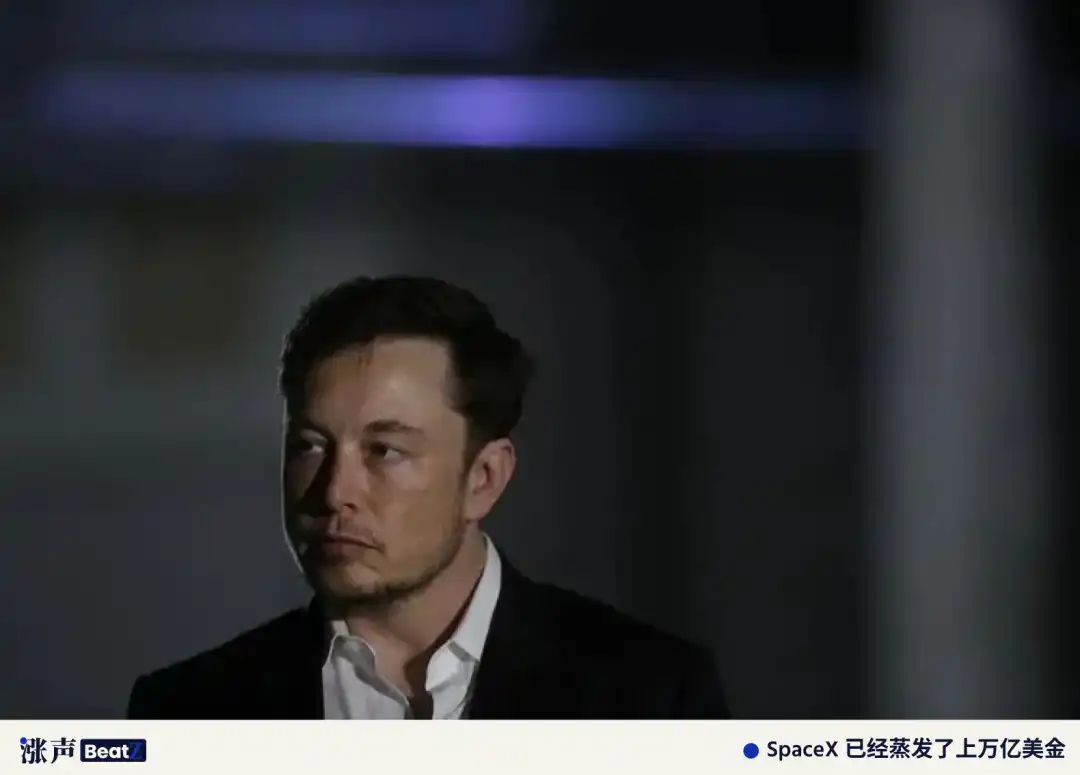
A recent gossip in the Silicon Valley circle, apart from Oracle's founder Ellison taking his sixth Chinese wife for a stroll in Newport Beach, Los Angeles, is that former world's richest man Musk, after the drop in SpaceX's stock price, has once again become obsessed with "Elden Ring."
This is not Musk's first time immersing himself in a game during a high-pressure period. In 2022, after deciding to acquire Twitter, he played "Elden Ring" until 5:30 a.m. in a Vancouver hotel. This was revealed by Musk's ex-girlfriend and later written in the "Musk Biography."
But this time, Musk's anxiety stems from the sharp decline in SpaceX's stock price.
On the first day of its listing on June 12, SpaceX closed at $161, with a market value exceeding $2.1 trillion, directly entering the top six in the U.S. stock market. Four days later, on June 16, the intraday hit a historical high of $225.64, with a market value reaching $2.94 trillion, briefly surpassing Microsoft. Musk's net worth that day reached $1.45 trillion, marking the richest moment in recorded human history.
However, seven weeks later today, the stock price has plunged from the high of $225.64 to $114, nearly halving, with a market value evaporating by about $1.2 trillion, and Musk's personal net worth plummeting over $750 billion.
People around Musk say that he has recently been super addicted to playing "Elden Ring," even asking employees to play for him, and he even plays during meetings. It is common for him to swear at employees during meetings. He often holds meetings at night and is late or doesn't show up, and sometimes meetings scheduled for 8 p.m. are postponed until two in the morning, with people still waiting for him.
Although we cannot confirm the authenticity of this information, Musk's anxiety this week has indeed reached a peak because SpaceX's first-quarter financial report was released on Tuesday, just in time for the first large-scale unlocking day on Thursday.
On June 16, SpaceX, listed for only 4 days, saw its market value briefly touch $2.94 trillion.
However, the good times did not last long. SpaceX, with low liquidity and high valuation, experienced a unilateral decline for 51 days. As of today, SpaceX's market value has evaporated by about $1.2 trillion.
The most affected should be Musk himself. He owns about 4.8 billion shares of SpaceX, plus 350 million options with a strike price of $8.40, and about 700 million shares of Tesla.
On June 22, SPCX plummeted by 16.4%, causing him to lose $152 billion in a single day. His net worth fell below $1 trillion on July 1, officially losing his trillionaire status. The Starship launch abort on July 16 led to another $45 billion loss in a day. By July 27, his net worth dropped to $695.7 billion. In five weeks, Musk's wealth evaporated by about $750 billion, exceeding the combined net worth of the world's second and third richest individuals.
The most "bitter pill to swallow" came from the millions of U.S. retirement account holders who had never placed a buy order for SpaceX.
On July 7, SpaceX was added to the Nasdaq 100 index. Under the old rules, newly listed companies needed to wait for a three-month "seasoning period" to be eligible. Nasdaq specifically amended the rules for SpaceX: a company with a total market value exceeding that of existing constituents can skip the waiting period. SpaceX was included in the index after only 15 trading days, making it the fastest inclusion in the history of the Nasdaq 100.
JPMorgan Chase estimated that just one ETF tracking the Nasdaq 100, the Invesco QQQ Trust with assets under management of about $480 billion, generated approximately $4.3 billion in passive buy orders. In total, there are over 200 products tracking the Nasdaq 100, with combined assets under management of around $800 billion, resulting in total passive fund flows of $22 billion to $27 billion. Most of this money entered the market around the close on July 6 and the open on July 7, when SPCX's price ranged from $157 to $161. As of July 22, QQQ held 39.7 million shares of SPCX, worth $4.57 billion, with a portfolio weight of 0.98%.
This means that millions of 401(k) holders became SpaceX shareholders at around $160 per share. Their asset allocation now includes a stock that posted a net loss of $4.9 billion in 2025, with a market-to-sales ratio of over 115 times, and has been listed for less than a month. Based on the closing price of $114.53 on August 3, they are facing an unrealized loss of about 28%.
And this decision to buy was not even made by them.
On February 2, 2026, SpaceX acquired Musk's AI company xAI in an all-stock deal, valuing xAI at $250 billion and the post-merger entity at $1.25 trillion. In May, Musk announced that xAI would no longer exist as an independent company. On July 6, it was officially renamed SpaceXAI. The trademark application listed satellite data centers, orbital computing services, and AI software. Musk's reason was that the global AI electricity demand "simply cannot be met by ground-based solutions," and moving data centers to space is "the only logically correct solution." SpaceX has applied to the FCC to deploy up to 1 million AI satellites.
Adding to this is Cursor. On June 16, the day the stock price peaked, SpaceX exercised previously acquired options to acquire Anysphere for $600 billion in an all-stock deal, the parent company of the AI programming tool Cursor. This was the largest venture-backed startup acquisition on record. The acquisition aims to integrate Cursor's programming data into the training pipeline of the large-scale model Grok while allowing Cursor to leverage xAI's Colossus supercomputing cluster.
So, a rocket company, using its newly public stock, bought an AI programming tool to train a large model running in a data center it plans to launch into a low Earth orbit.
Subsequently, SpaceX needs to raise funds not only for rockets, satellites, and ground networks but also possibly for Musk's broader technological ambitions. The challenge is that its balance sheet is not light.
According to the IPO prospectus: full-year revenue in 2025 was $18.7 billion, with a net loss of about $4.9 billion. First-quarter revenue in 2026 was $46.9 billion, with a net loss of around $4.3 billion and capital expenditures approaching $10 billion. AI-related expenses accounted for 61% of capital expenditures in 2025 and had risen to about 76% by early 2026. Capital expenditures for the full year of 2025 were approximately $21 billion, spending more than earning. Looking ahead, analysts unanimously expect capital expenditures to reach $48.7 billion in 2026, further increasing to $118.4 billion in the 2028 fiscal year, with debt expected to grow more than fivefold during the same period, soaring from $41.7 billion to $218 billion.
So what kind of company is SpaceX today?
It can be said that this is not a company that builds rockets and satellite internet; it is an AI infrastructure company. Musk is using Starlink's subscription cash flow and his own stock to pay the bill for AI computing power.
Meanwhile, the internal situation in the AI division is much uglier than those previous rumors.
Bloomberg Businessweek published an investigation on July 16 based on interviews with over a dozen insiders and internal documents. This spring, Michael Nichols, who had long overseen the Starlink project as a systems operations executive, was appointed as the xAI president to take over the division. Musk gave him only one task: catch up to Claude from Anthropic. Every time Claude updates, Musk has to Grok keep up. Several internal projects are directly named after Claude, and there are several Slack channels named after competitors' products. Nichols' onboarding memo stated: the near-term goal is to match Claude's performance and make Grok "maximally useful."
However, Nichols inherited a mess. Following the merger, dozens of employees left, including multiple co-founders. In March, a plan to lay off up to 30% of the staff resulted in some employees being terminated without any notification. Recruitment also ground to a halt in chaos, with candidates left in the dark after interviews because the HR department was so short-staffed that it couldn't even complete the process. The pretraining team was temporarily reduced to fewer than five people. The departure list also included the post-training lead and a co-founder from the French AI company Mistral, who had joined less than a year ago. Some employees began to question Musk's judgment, believing that someone who made his name in cars and rockets was fundamentally out of his depth when it came to large-scale models.
A subsequent report by The Information, a U.S. technology investigative media outlet, was more conclusive: all 11 original xAI co-founders have left. Over 50 researchers and engineers flowed to Meta and the emerging AI research company Thinking Machines Lab. After the mass exodus of co-founders, the company's structure remained in a state of almost continuous flux, with Musk personally managing dozens of direct reports at one point.
For a company planning to spend $118.4 billion in capital expenditures by 2028, the core research team of the AI division has been depleted, the CEO is directly supervising dozens of people, and this CEO is also overseeing rockets, satellites, a cash-flow-negative car company, and a social platform.
After the market closed on Tuesday, August 4, SpaceX released its first-quarter earnings report since going public. This was Wall Street's first look at the company's complete financial data.
First, let's look at various institutions' expectations for SpaceX this quarter.
The consensus revenue expectation for Visible Alpha, a subsidiary of S&P Global, is $6.9 billion; Bloomberg's consensus expectation is $6.81 billion; Zacks' consensus expectation is $6.72 billion; and Koyfin Data is at $6.82 billion. The figures are roughly around $6.8 billion, implying approximately 15% year-over-year growth and a significant quarter-over-quarter leap from the previous $46.9 billion, which sounds decent. However, the market is not waiting for just growth, but rather whether the growth can accelerate.
On the loss side, the loss per share is expected to be between $0.22 and $0.26. Koyfin forecasts an adjusted EBITDA of about $2.05 billion. Expectations for the full year 2026 are a loss of $0.64 per share, with a potential turnaround to earnings of $0.63 per share in 2027.
More important than the total is the segment structure. SpaceX currently has three main business segments: Starlink satellite internet, Falcon and Starship launch services, and AI computing power with the Grok large model. The market expects Starlink's operating profit margin for this quarter to reach 35.9%, with its profits offsetting the operating losses of the launch and AI segments. Analysts also predict that Starlink's revenue in the third quarter will grow by over 50% year-on-year to $4.7 billion.
In other words, for a company with a market cap of $1.4 trillion, the entire valuation story is still only based on the Starlink business alone.
However, there are cracks in Starlink's own story. As of the end of the first quarter, Starlink had approximately 10.3 million subscription users in about 164 countries worldwide, doubling year-on-year, showing rapid growth. The issue is that the average monthly revenue per user has dropped from $86 a year ago to $66, and management says this number will continue to decline as Starlink expands into overseas and lower-price markets.
Prior to the first earnings report, the disparity among brokerages' views on SpaceX had become almost absurd. After a company goes public, underwriters have a quiet period (this time until July 7), and then analysts can officially release coverage reports. The target price is what analysts give as the expected stock price for the next 12 months based on their own valuation models; it is not a forecast for the financial report but a judgment of the company's long-term value. On July 7th, over a dozen banks simultaneously released their initial coverage reports, and the market discovered how extreme the differences were.
Brian Gesuale, an analyst at the U.S. investment bank Raymond James, gave the highest target of $800, calling SpaceX "one of the most defining industrial infrastructure companies of the 21st century," with the core logic being that Starship can dramatically reduce the cost to orbit. Morgan Stanley's Chief Analyst Adam Jonas set it at $300, based on the long-term prospect of $3.3 trillion in revenue in 2040. Goldman Sachs analyst Eric Sheridan set it at $205. In between, there are JPMorgan at $225, Bank of America at $235, Wells Fargo at $230, UBS at $210, Citigroup at $200, Macquarie at $250, and Royal Bank of Canada at $225.
The Bearish View: HSBC initiates coverage with a "Hold" rating and a target price of $115, below the $135 offering price. CFRA, an independent research firm under S&P, goes straight to a "Sell" rating with a $115 target price, citing "an extremely aggressive growth strategy, overly high valuation expectations, and significant capital intensity." Morningstar, one of the world's largest independent investment research firms, provides an even lower fair value estimate of only $62, which is less than half of the offering price.
A total of 23 banks participated in this offering, with 18 of them providing target prices. The median is $225, with an average of around $237. The range is wide, from a low of $62 to a high of $800, a difference of 13 times. However, with the current stock price around $114, it is still well below the seller median.
It is evident that this group, who knows SpaceX the best, cannot even agree on which range its fair valuation should fall into.
As for Tuesday's SpaceX call.
Morgan Stanley's Chief Analyst Adam Jonas lists out a few things he will be listening for in the latest report: whether SpaceX plans to add more than 2 gigawatts of computing power next year; if there are any new significant cloud computing partnerships; the trend of Grok's usage on Cursor and the annual growth rate of Cursor's recurring revenue. He also highlights three risks: capital expenditure guidance significantly exceeding around $500 billion, another round of financing before the end of the year, and a slowdown in Starlink user growth. The first point is almost certain to happen.
SpaceX also launched a question solicitation page specifically for this, built by their AI chatbot Grok, where the public can submit questions and vote, a practice inspired by Tesla's previous use of Say Technologies to gather shareholder questions. Looking at the largest forum community Reddit and retail investor community Stocktwits, the most concentrated demands from retail investors are twofold: whether the management will provide detailed data at the segment level for the first time, and if there will be any form of reassurance regarding Thursday's unlocking.
Thursday, August 6, marked the arrival of SpaceX's first unlock.
Unlike the traditional 180-day blanket release, SpaceX designed a staggered release to spread the supply over several months, avoiding a single-day cliff drop. The first tranche's trigger was the second full trading day after the release of the second-quarter earnings report. The targets were employees and some early investors, with a proportion of 20% of their restricted shares, up to a maximum of 9.115 billion shares.
This number is more than 50% higher than the total number of shares SpaceX sold in its IPO, including the overallotment of about 629 million shares.
Another noteworthy comparison: the current value of all freely tradeable SPCX shares is about $860 billion. At $114.53 per share, the sellable shares released on this day exceed $104 billion. In other words, the sellable shares flooding into the market on this day are even larger than the entire existing float. $104 billion needs to find counterparties in an $860 billion pool.
In terms of ownership composition, employee shares are released in five tranches of 7% each on days 70, 90, 105, 120, and 135 post-listing. Musk himself and several undisclosed large institutional holders are under 366-day lock-up agreements until June 12, 2027.
For a 2019 joiner with a single-digit exercise price, selling at $114 still represents a return of several tens of times. He needs to consider down payments on a house, tax planning, and concentration risk in his holdings. Wealth management firms have already been set up specifically to serve SpaceX employees, reminding them that the deadline for selling to cover the corresponding prepayment tax in August is September 15.
One firm that has explicitly stated it will not sell is the U.S. tech giant investment fund Coatue Capital. A fund investor said in a CNBC interview, "I will keep it," and added a memorable line: the biggest mistakes he has made have all come from optimizing for the short term. An example he gave was NVIDIA, which was one of his biggest mistakes to sell at the time.
ARK Fund founder Cathie Wood bought the dip at SpaceX, filling an entire Tesla market cap position.
The most systematic warning comes from former SEC Chairman Gensler. He calls the upcoming event a "great rebalancing," stating, "All those venture capital firms and sovereign wealth funds will want to take risk off the table." He estimates that investors may reduce their exposure by one-third, one-half, or even three-quarters, creating a large amount of selling pressure. His probability assessment is that when looking back in six months, this wave of IPOs may be okay, but there is just as likely even greater systemic selling triggered by the unlocking.
It is worth mentioning that "The Big Short" famed Michael Burry studied SpaceX but ultimately decided against it. CNBC's Jim Cramer gave a very basic judgment on July 28: if you want to buy, you can buy a little first, but if you want to buy a lot, at least wait until Thursday's first wave of unlocking to push the price down a bit. He added a statement that should be the most memorable of the week: in general, as supply increases, prices fall.
However, two variables were seriously underestimated this week.
On Wednesday, August 5, the July ISM Non-Manufacturing Index was released with the market expecting 54.5. On Friday, August 7, the July Nonfarm Payrolls report was released. The unlock day on August 6 fell right between these two macroeconomic data points.
The Wednesday data was stronger than expected, leading to a shift in rate cut expectations and an increase in long-term interest rates. For a company with negative free cash flow relying on financing to sustain capital expenditures, the rise in interest rates directly impacted valuation, and the unlocking pressure was amplified. If the Wednesday data had been weaker than expected, the anticipation of a rate cut would have increased, benefiting growth stocks overall, potentially diluting the unlocking pressure. However, Friday's Nonfarm Payrolls report was the real double-edged sword: if the data was too strong, it would push up interest rates; if too weak, it would trigger recession concerns, putting pressure on high-volatility growth assets.
For a type of asset like SPCX that is both a growth stock and a heavy asset, neither direction of the macro data is very friendly. What it needs is a lukewarm response, which happens to be the least likely outcome from the two data releases within a week.
Wall Street's renowned strategist Tom Lee has already warned that the Nasdaq and S&P 500 could see a bear market-like trend in the second half of 2026. One of the headwinds he mentioned is the unlocking of SpaceX. When a heavyweight stock's share structure change can be incorporated into the market outlook, this event is no longer just a stock-specific occurrence.
Of course, there is also a possibility that the negative factors surrounding SpaceX have been fully priced in. In 51 days, the stock has dropped by 52% without any major negative operational news. Starship successfully completed a test launch on July 24. The main driver of this decline is the anticipation of the unlock itself, and the market has already traded the selling pressure in advance. If the Tuesday earnings report provides segment-level insights and Starlink's profitability is validated, while the actual sale volume on Thursday is lower than expected, the resolution of suspense itself is a positive signal. With short interest exceeding 30% of the float, in a scenario where the negative factors have played out, short sellers may be forced to cover, resulting in a significant rebound.
Regardless of the movement in price, Musk will experience one of the most stressful weeks in his public life this week.
Do you remember the last time Musk publicly admitted he was "closest to a nervous breakdown"? It was in 2008. That year, SpaceX's Falcon 1 rocket had three consecutive launch failures, Tesla was burning cash at a high rate, the global economy was in a financial crisis, and he was going through a divorce.
Musk later recalled that he had invested almost all of the approximately $180 million he received from selling PayPal into Tesla and SpaceX. By September 2008, just before the fourth launch attempt, SpaceX was "almost out of money." Musk said if this launch failed, the company would be completely finished.
But the rocket was successful. Several months later, NASA awarded SpaceX a contract worth around $1.6 billion, and Tesla's investors also injected funds before Christmas. Musk later referred to 2008 as "the worst year of his life."
Now, Musk is facing yet another new crisis.
Interestingly, after following Musk for two years, the author of "The Musk Biography" came to a conclusion: Musk not only can withstand high pressure, he has an almost instinctive craving for high pressure.
In 2018, Tesla's Model 3 production hell had just passed its most difficult phase, and the stock price began to stabilize. Then on August 7, Musk suddenly tweeted: "Considering taking Tesla private at $420. Funding secured." This tweet led to a temporary trading halt of Tesla's stock and later drew a securities fraud charge from the SEC. Ultimately, Musk was forced to step down as Tesla's chairman for three years, and both he and the company paid a $20 million fine each.
People around Musk often mention a word when talking about him: demon mode. His ex-wife frequently used this term to describe his state of being extremely productive and dangerously volatile under high pressure.
And today, perhaps we can also look forward to what surprises Musk can bring us in his current high-pressure state?


Original Article Link
Recommended
Desk: Brent Crude Tops $110, Musk's Net Worth Drops 528.6 Billion in Four Days After Tesla Roadster Launch
Oct 17, 21:49
JST Fifth Buyback and Burn Successfully Concludes: Over 170 Million Tokens Worth Approximately $23.53 Million Burned, Buyback Mechanism Set for Comprehensive Upgrade
Oct 17, 20:10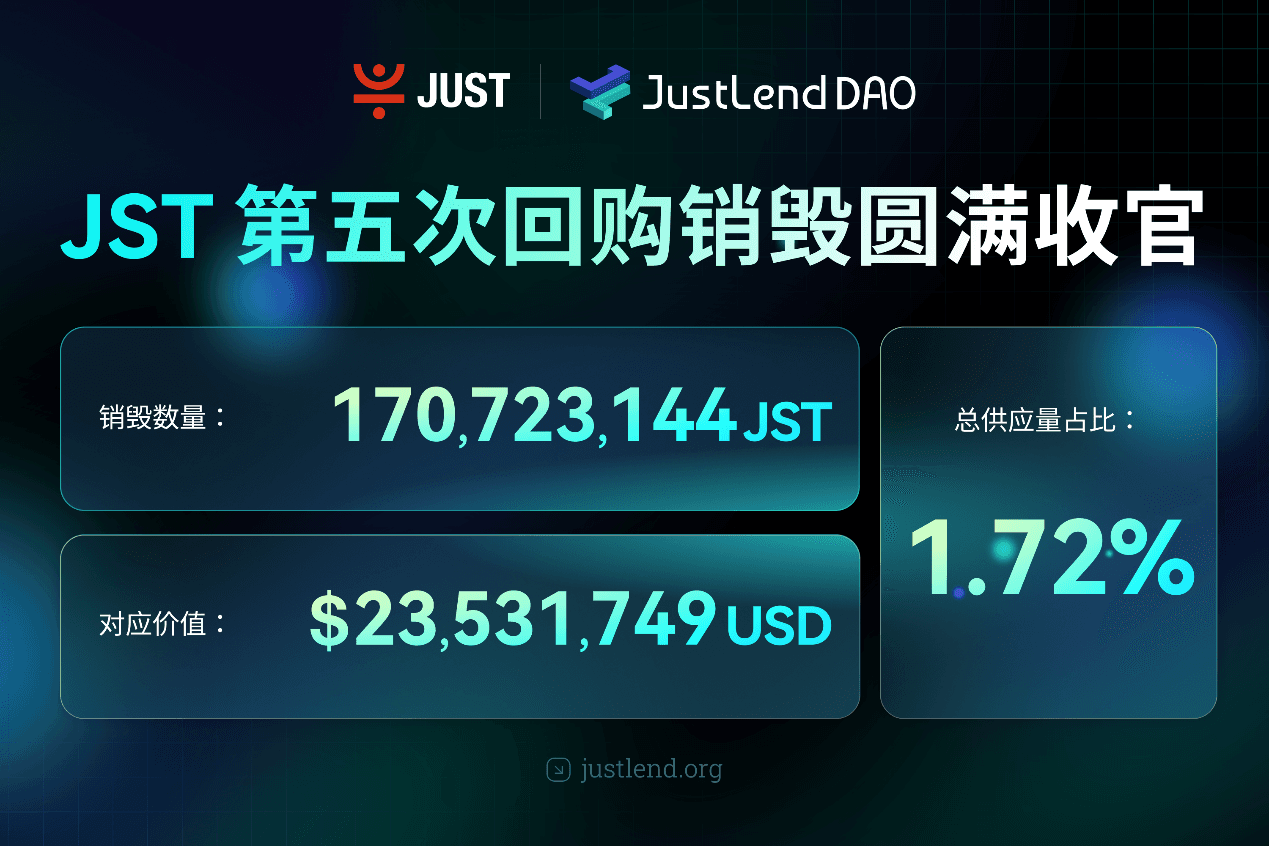
BitTorrent Brand Upgrade and Initial BTT Buyback & Burn Launch Simultaneously, Dual Engines Usher in New Era of Web3 Infrastructure
Oct 17, 20:00
Asia Market Daily: Japan's BOJ signals more rate hikes while Korea targets offshore perpetual platforms (2026/10/17)
Oct 17, 17:01Why did Papertrade backfire on you?
Oct 17, 17:01
The 'Strict Father' of Northern Myanmar: This Company Deploys 200,000 "AI Best Actors" to Strike Back Against Scammers
Oct 17, 15:34