TradeXYZ and Hyperliquid: Unveiling the Symbiotic Relationship Under a 50% Revenue Share

Original Authors: Kunal Doshi, Shaunda Devens, 0xResearcher
The market is becoming increasingly cautious. AI-related spending is only rewarded when it can drive growth without significantly eroding cash flow; the crypto market continues to face ETF outflows and rising yields pressure.
Within the crypto space, leadership has once again shifted to Solana and DEX. We delve into the ongoing discussions around the value allocation of TradeXYZ, Hyperliquid, and HIP-3.
In the past week, major benchmarks had mixed performances. The S&P 500 and gold saw modest gains of 0.74% and 0.65%, respectively, while the Nasdaq remained relatively flat. BTC showed the weakest performance, ending the week down 3.0%.
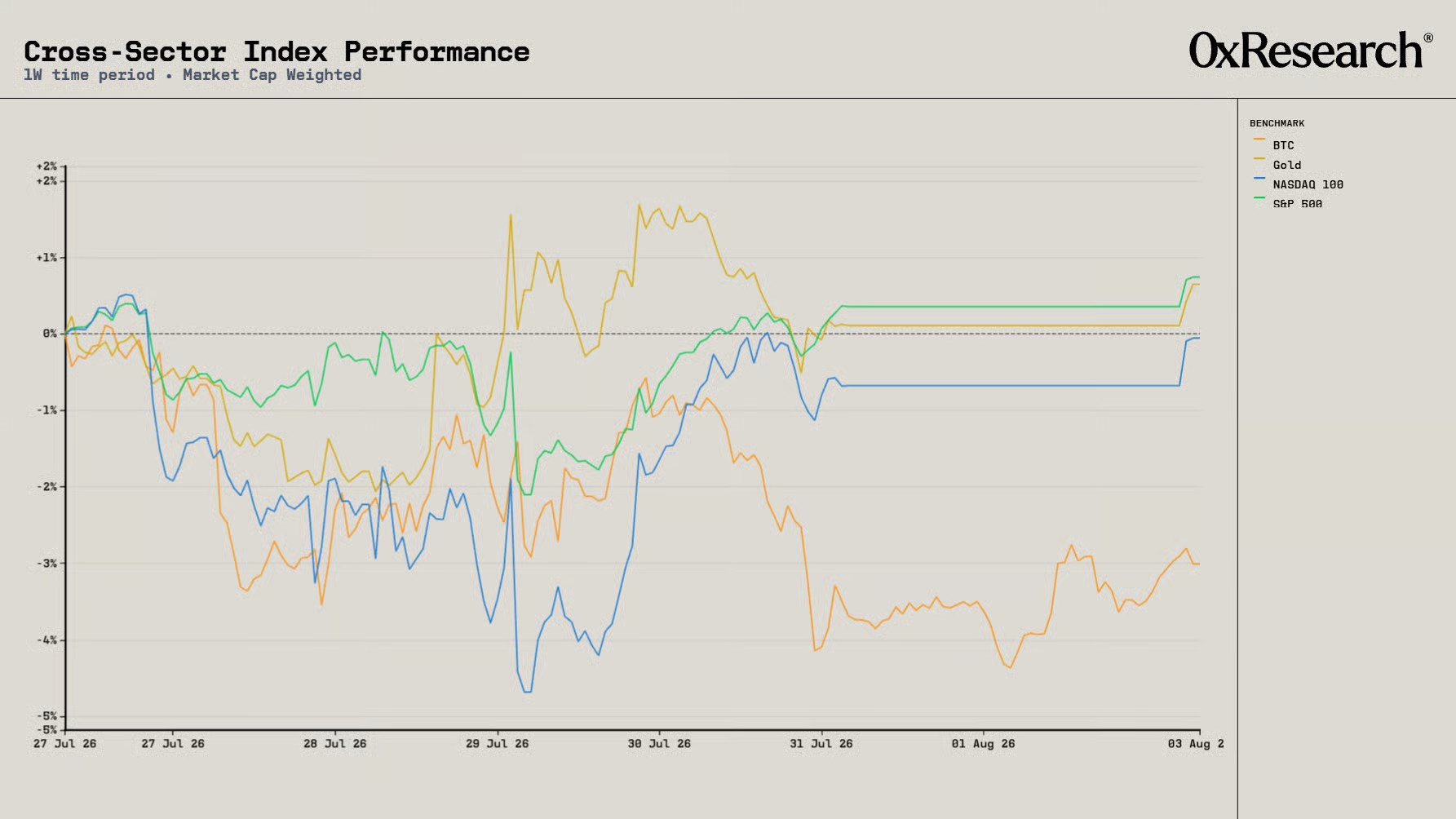
Big AI players released earnings reports last week. Amazon surged over 15%, recording its strongest quarterly revenue growth in over four years, with AWS revenue up 37% year-over-year to $42.2 billion. Microsoft also rose over 15%, with better-than-expected cloud business growth, while its capital expenditure guidance fell below Wall Street expectations. In contrast, Meta declined by 10%, with free cash flow plummeting 91% in the second quarter, as AI-related capital spending weighed on profitability. A clear theme emerging from this earnings season is that the market is no longer rewarding AI investments solely but companies that can demonstrate ROI without sacrificing cash flow.
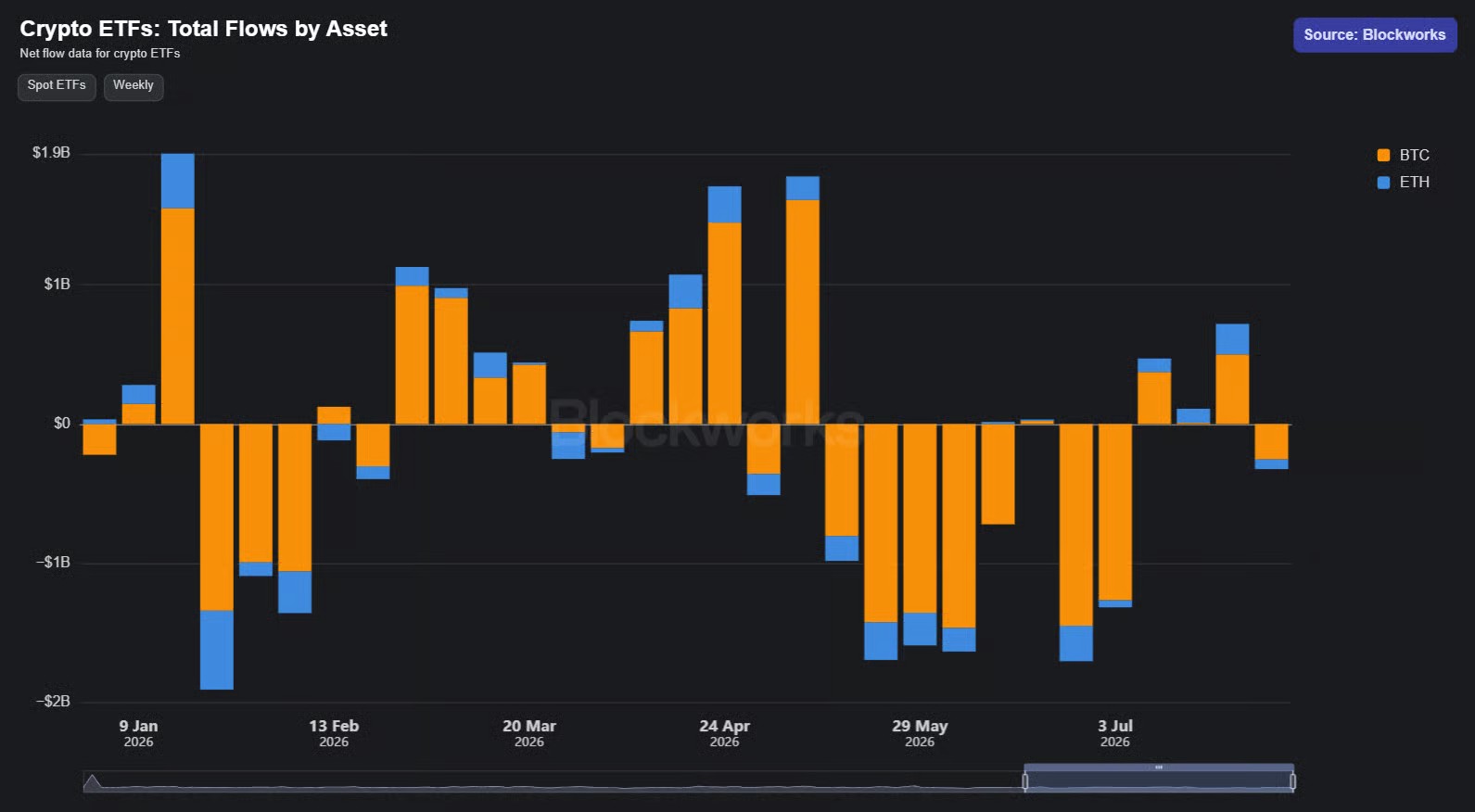
The crypto market continues to face pressure. ETF funds once again turned into net outflows, with BTC and ETH ETFs seeing net outflows of $255 million and $69 million, respectively. Risk sentiment was also subdued by the bond market, with the U.S. 30-year bond yield rising to 5.23%, the highest since June 2007.
Leadership within the crypto ecosystem has shifted again. The Solana ecosystem performed the best this week, rising by 8.5%; the Ethereum ecosystem, after weeks of strength following the launch on Robinhood Chain, declined by 8.8%. The DEX sector came in second, rising by 5.2%.
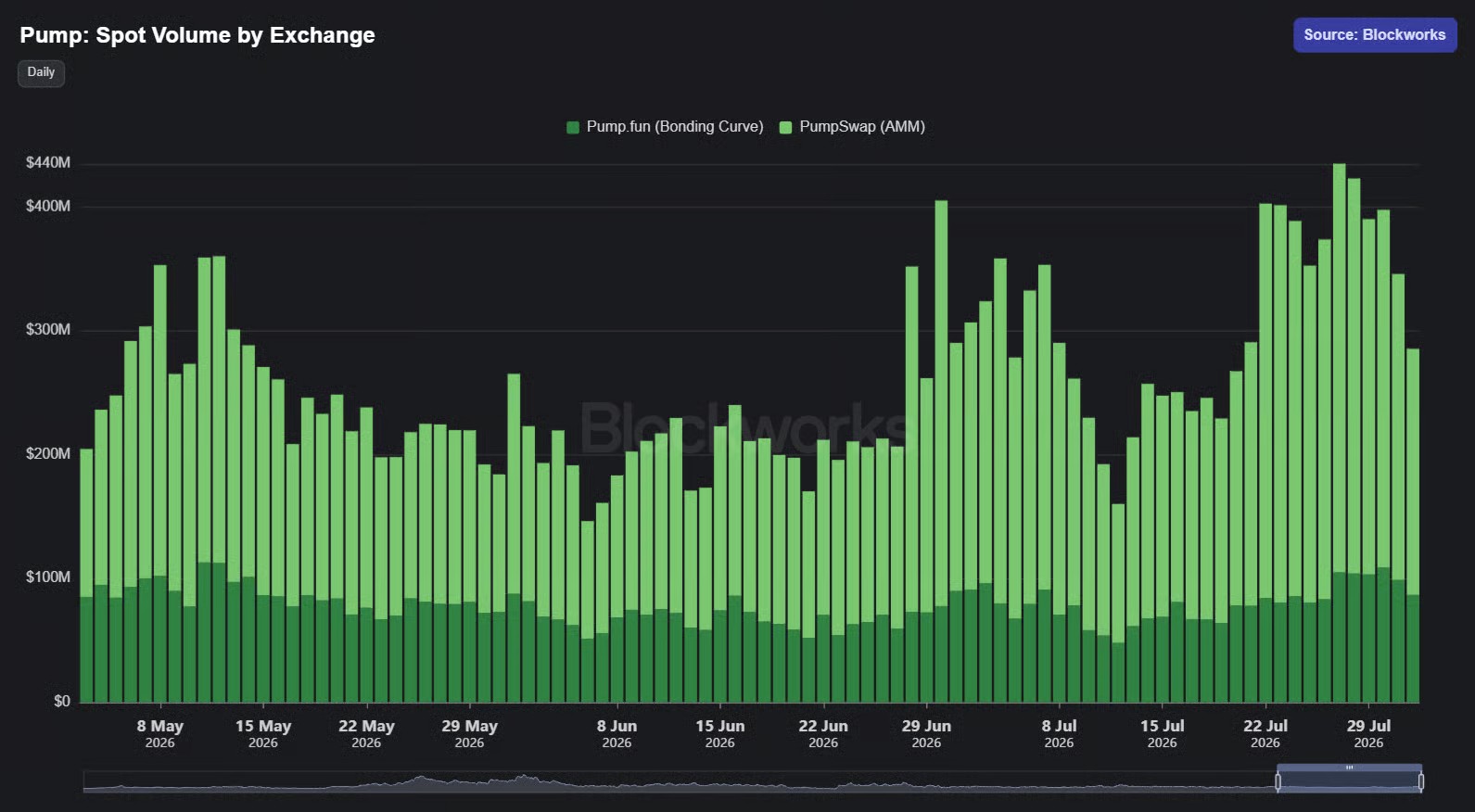
The Solana ecosystem was mainly driven by META, as the token surged by 36% with the listing on Upbit; PUMP rose by 3%, accounting for about one-third of the index's weight. More significantly, Pump.fun's trading volume and revenue have been steadily recovering from the June low, indicating that "trench" activities may be making a comeback.
The DEX sector was led by Uniswap, with a 6.5% increase for the week. UNI benefited from fee switch expansion to the Robinhood Chain and the initiation of protocol fees on some v4 deployments.
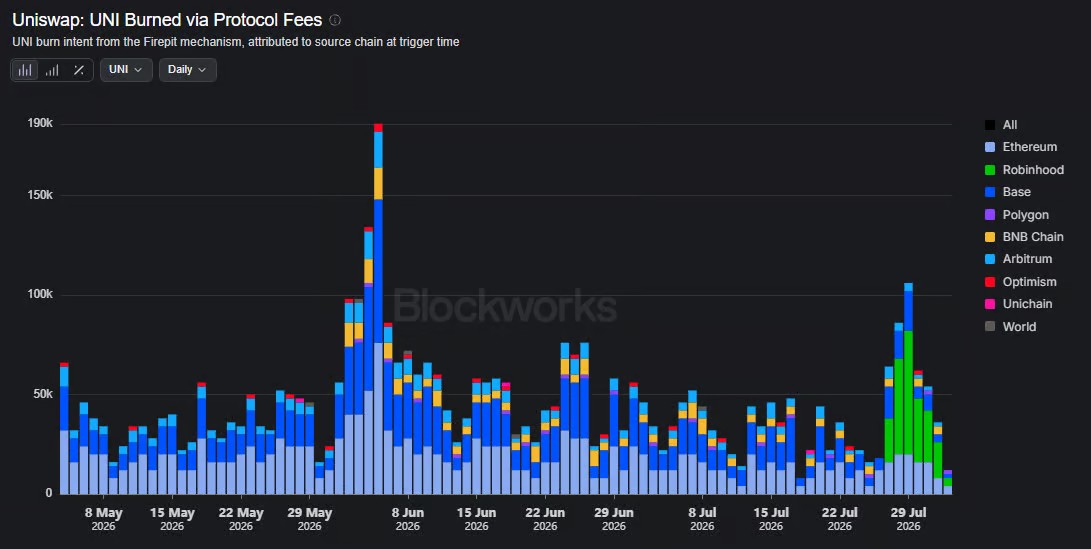
Many recent interesting on-chain innovations (including the FWA we covered last week) are being built through Uniswap v4 hooks. Uniswap and its broader ecosystem are definitely worth paying attention to.
TradeXYZ Debate
As TradeXYZ continues to dominate crypto trading volumes, RWA has accounted for over 50% of Hyperliquid's trading volume. Discussions regarding its alignment of interests and its high concentration on Hyperliquid have intensified. Concerns range from reasonable (how will Hyperliquid monetize HIP-3 long term) to quite far-fetched (TradeXYZ will leave Hyperliquid), so it is necessary to clarify the current relationship.
First things first: TradeXYZ is an independent team building on Hyperliquid. It is required by the protocol to allocate 50% of HIP-3 revenue to Hyperliquid, with the remaining half at its discretion. We have found that TradeXYZ (the same team as Unit) has been using and continues to use its HIP-1 spot revenue to buy back HYPE, but the HIP-3 revenue has not undergone the same operation.
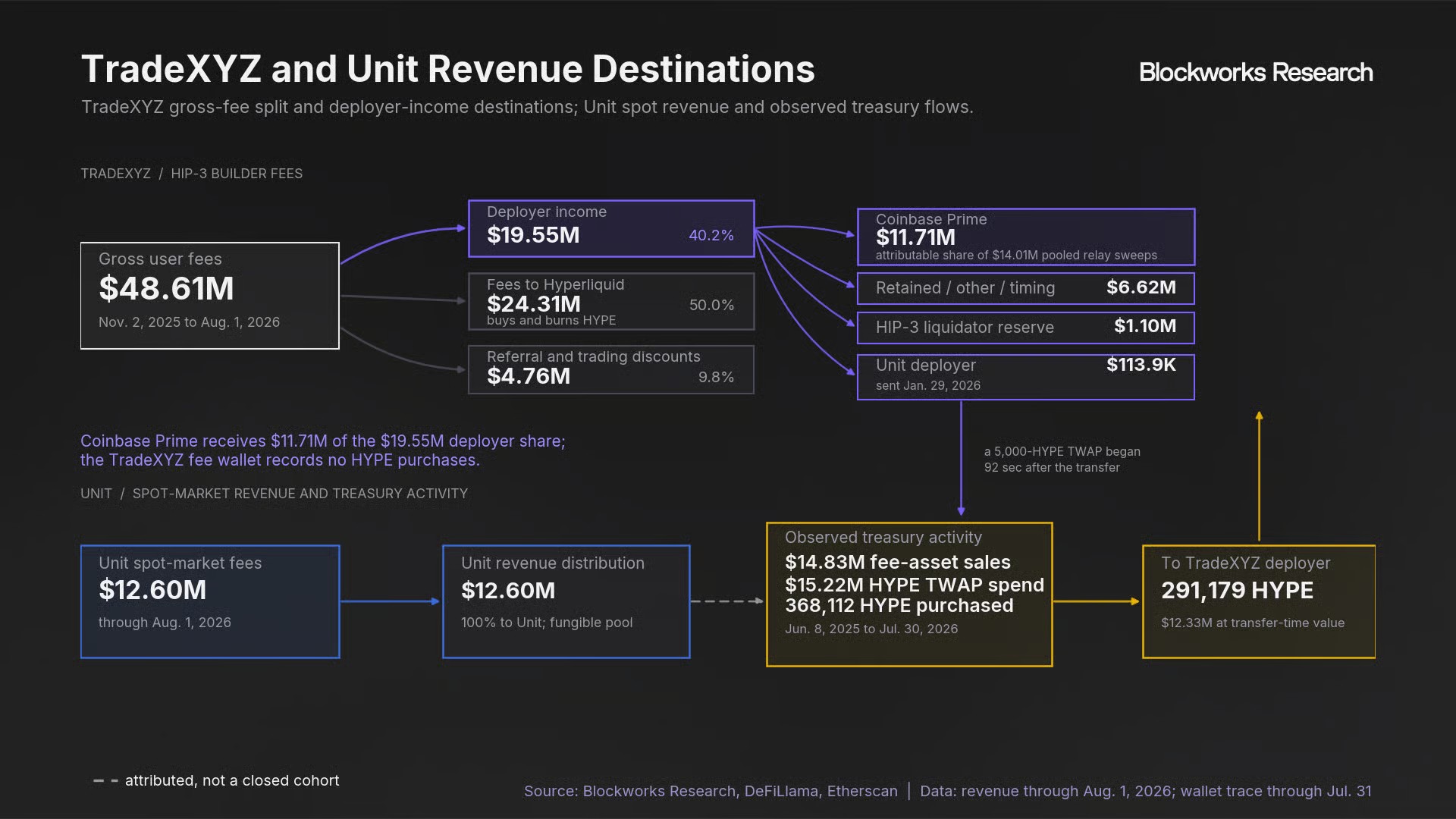
The first concern, and arguably the weakest one in our view, is that TradeXYZ will leave Hyperliquid because the 50% split is too high, and it could capture more value on its own. As early as April, I argued for the complete opposite view: Hyperliquid outsources too much of the most valuable part of the market to deployers. Look at what each side provides. Hyperliquid offers the infrastructure layer, collateral, and most importantly, the user base that underpins the vast majority of TradeXYZ's trading volume. To leave, TradeXYZ would need to rebuild the trading platform layer (the hardest part of the entire tech stack), almost abandon its entire trader base, and tarnish its reputation in the process. For Hyperliquid, reclaiming RWA as in-house operations would also be reputational suicide: weakening the dominant deployer that has contributed to so much of its success sends a signal to all future HIP-3 deployers and all builders on Hyperliquid that any sufficiently successful team will be replaced. This is one of the most typical symbiotic relationships in the crypto space, and from a reputation, economic, and architectural perspective, neither side has a reason to leave the other.
The second concern is about monetization, which is more valid but requires a closer look. First, overlooking TradeXYZ's execution, Hyperliquid's RWA market could not have reached today's scale is disingenuous; owning 100% of a much smaller pool worth less than half of the current pool. Second, the 50% fee split is not Hyperliquid's only monetization avenue: it also profits from writing priority fees and read fees paid by market makers.
It also benefits from second-order effects, such as the increase in USDC supply—revenue from on-chain balances adjusted for costs, of which Hyperliquid retains 90%. A proxy metric is the amount held: since the launch of HIP-3, holdings have grown by $3.68 billion, while the past year saw a $1.38 billion increase in USDC supply and a decline in crypto holdings by year-end. As more traders bring in USDC to go long on RWA, the revenue from this portion of the supply also accrues to Hyperliquid. This revenue is estimated at around $30 million per month, already surpassing the entire HIP-3 perpetual fee pool split equally between Hyperliquid and TradeXYZ.
For us, the most intriguing question is not the 50/50 split between TradeXYZ and Hyperliquid, but how both parties will transition from a growth model to ultimately a more stable, higher fee-based model.
Recommended
Desk: Brent Crude Tops $110, Musk's Net Worth Drops 528.6 Billion in Four Days After Tesla Roadster Launch
Oct 17, 21:49
JST Fifth Buyback and Burn Successfully Concludes: Over 170 Million Tokens Worth Approximately $23.53 Million Burned, Buyback Mechanism Set for Comprehensive Upgrade
Oct 17, 20:10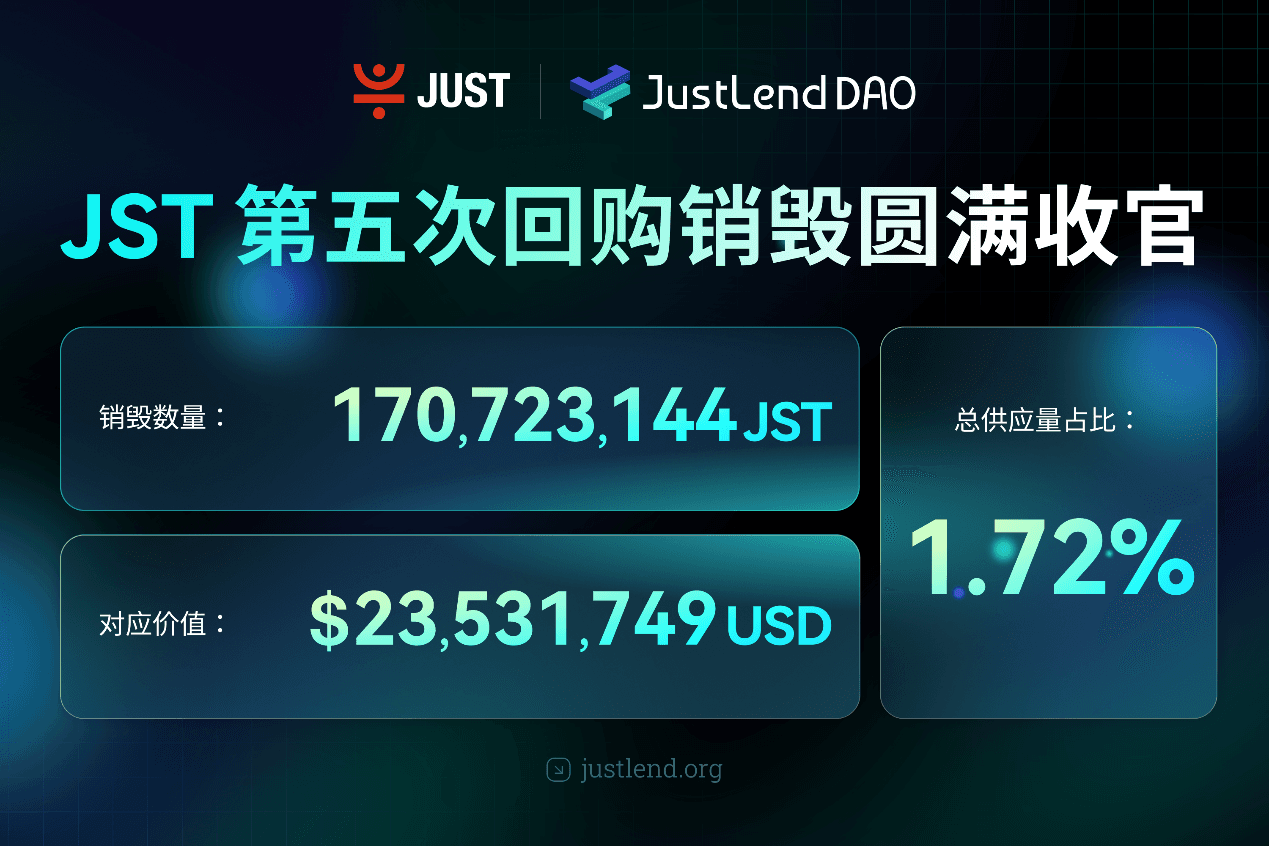
BitTorrent Brand Upgrade and Initial BTT Buyback & Burn Launch Simultaneously, Dual Engines Usher in New Era of Web3 Infrastructure
Oct 17, 20:00
Asia Market Daily: Japan's BOJ signals more rate hikes while Korea targets offshore perpetual platforms (2026/10/17)
Oct 17, 17:01Why did Papertrade backfire on you?
Oct 17, 17:01
The 'Strict Father' of Northern Myanmar: This Company Deploys 200,000 "AI Best Actors" to Strike Back Against Scammers
Oct 17, 15:34