Black Swan Event in Staking Sector, Vitalik Proposes Ethereum Rate Cut

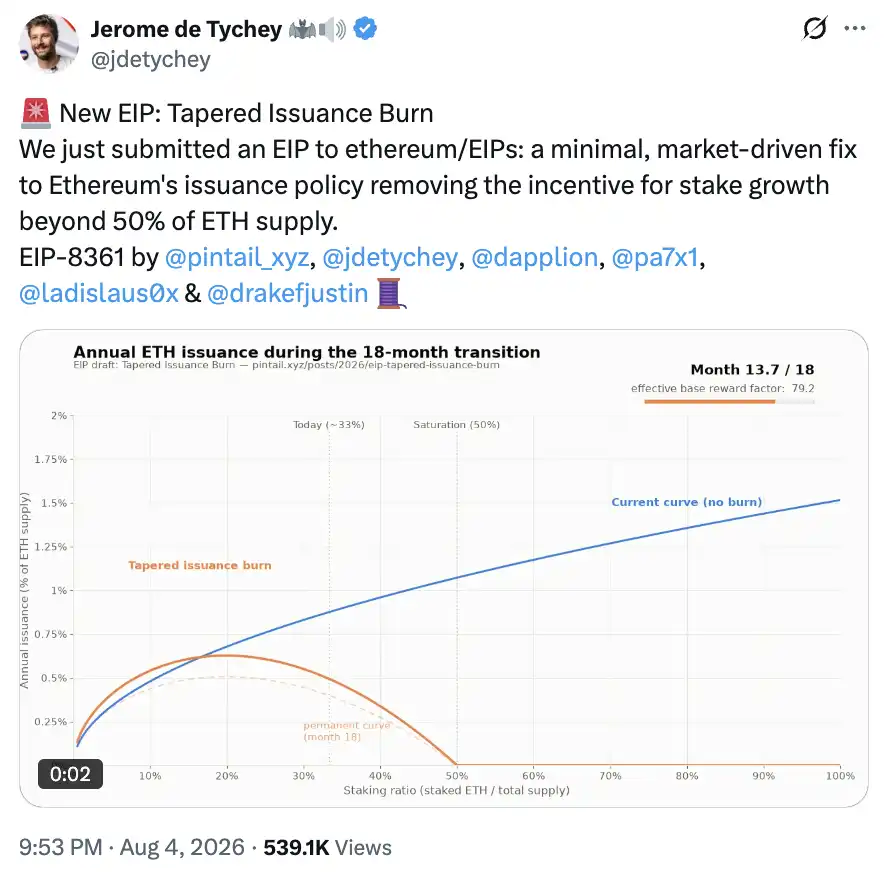
On August 4, a proposal to rewrite Ethereum's staking rewards entered the community's spotlight and immediately faced widespread scrutiny.
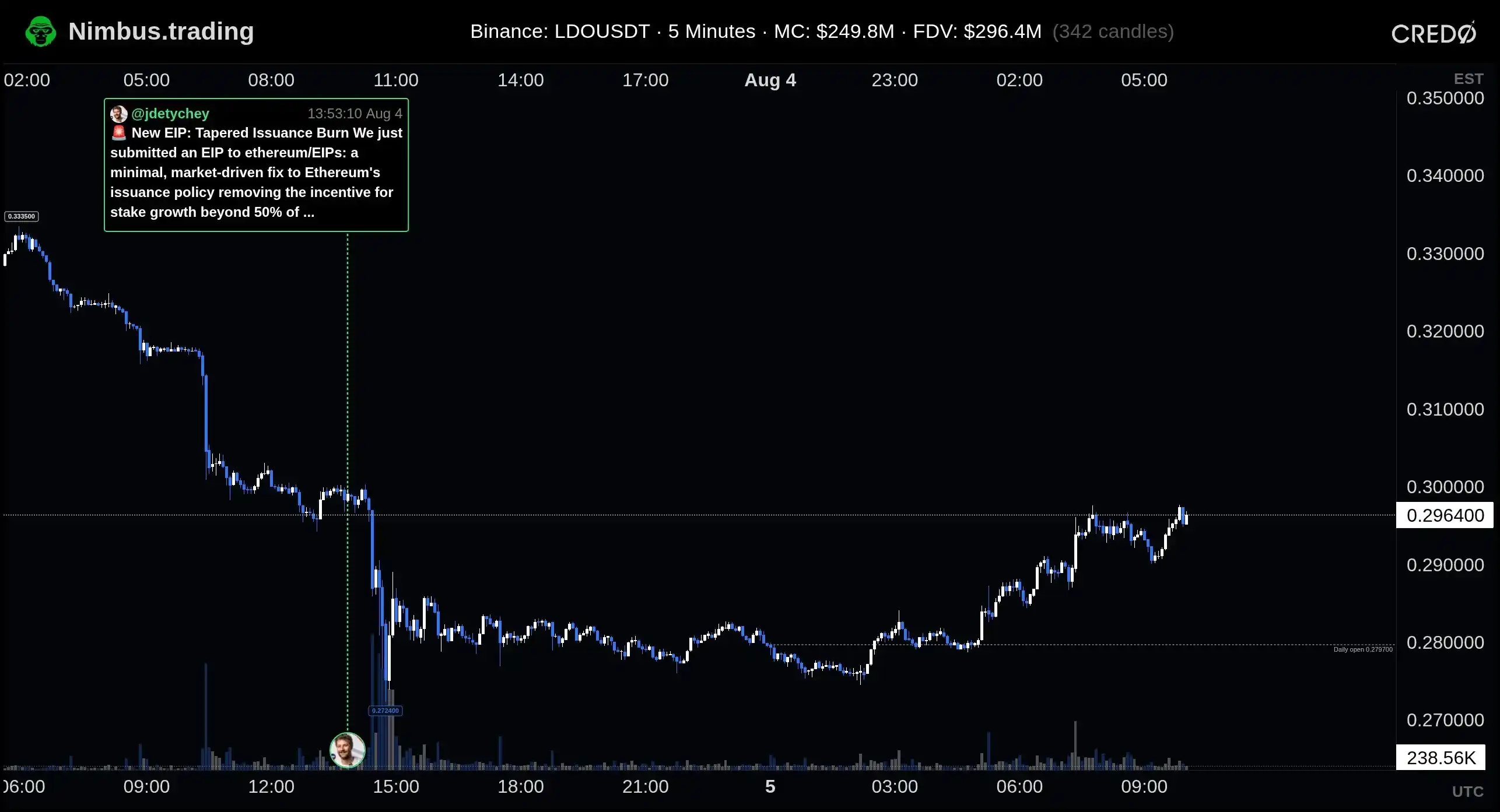
The market quickly identified the primary target of this change, with the token of Ethereum's core liquidity staking protocol Lido, LDO, plummeting by around 15% within two days. Lido sends ETH to the validator network and distributes staking rewards to stETH holders. The higher the rewards, the more attractive stETH becomes, resulting in Lido collecting more protocol fees. Now, someone wants to cut off a portion of this reward curve at its source.
This proposal was initially circulated under the name EIP-8361, which was later renumbered to EIP-8363. One of the co-authors, Justin Drake, is a core researcher at the Ethereum Foundation, with a long-standing focus on PoS, consensus security, and protocol economics. Vitalik also participated in the proposal's discussion. This debate touches on one of Ethereum's most sensitive issues: how much should Ethereum pay validators for security?
The current Ethereum staking curve reduces an individual validator's rewards as the staked amount increases but always retains a positive issuance reward. Even if all ETH is staked, the nominal yield remains close to 1.5%.
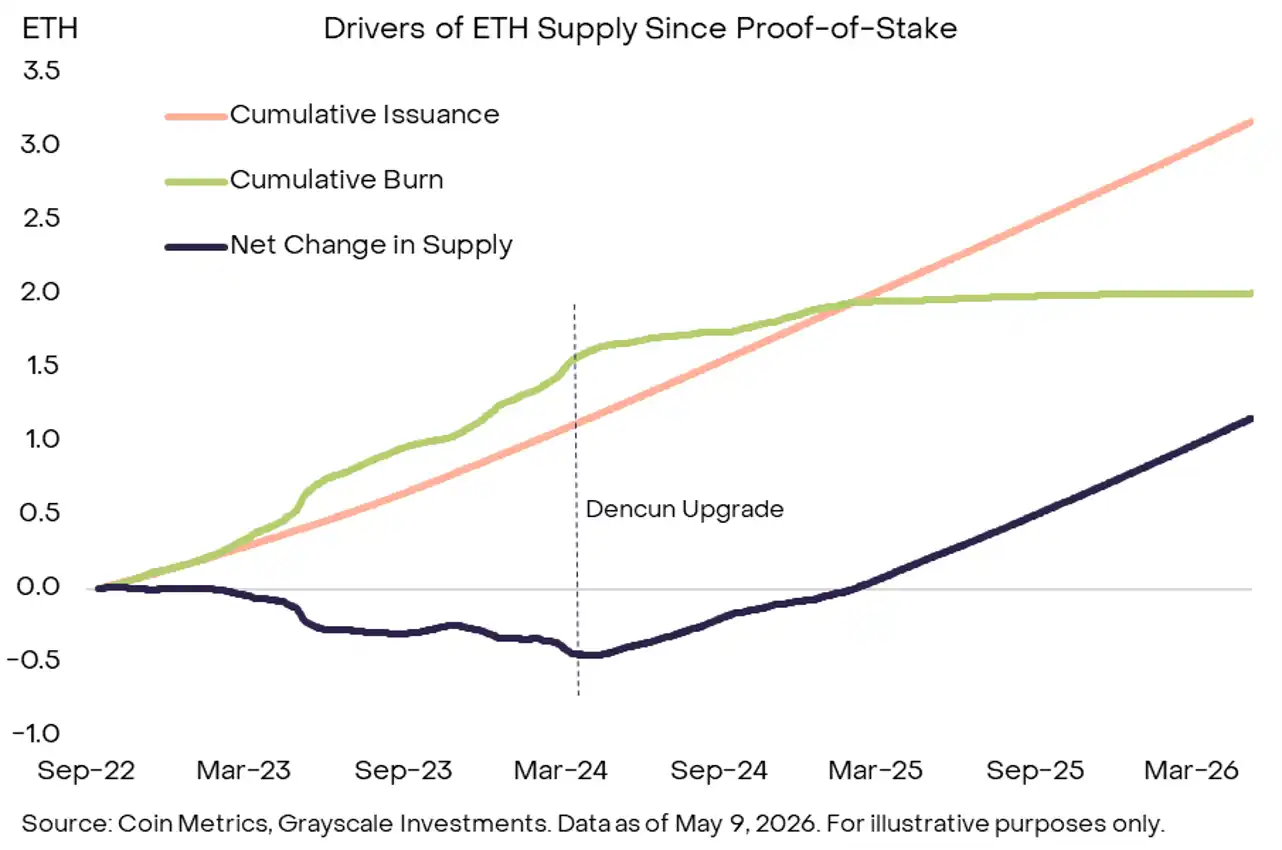
The proposal argues that this amounts to a continuous push for holders to do the same thing: stake ETH with exchanges, custodians, LST protocols, or treasury companies. Native ETH held in wallets is diluted, while staking assets like stETH with rewards increase. Over time, more ETH is issued by the network, and validator shares gradually flow to large institutions with scale and cost advantages.
EIP-8363 offers a straightforward solution. The network first calculates the reward a validator should receive after completing their duties under the current rules, then burns a portion of it based on the overall staking ratio. The higher the staking amount, the greater the burn rate. When around 60.25 million ETH are staked, nearly half of the total supply, the ETH issued at the consensus layer drops to zero. Validators can still earn tips and MEV income, but the most stable staking rewards will be erased.
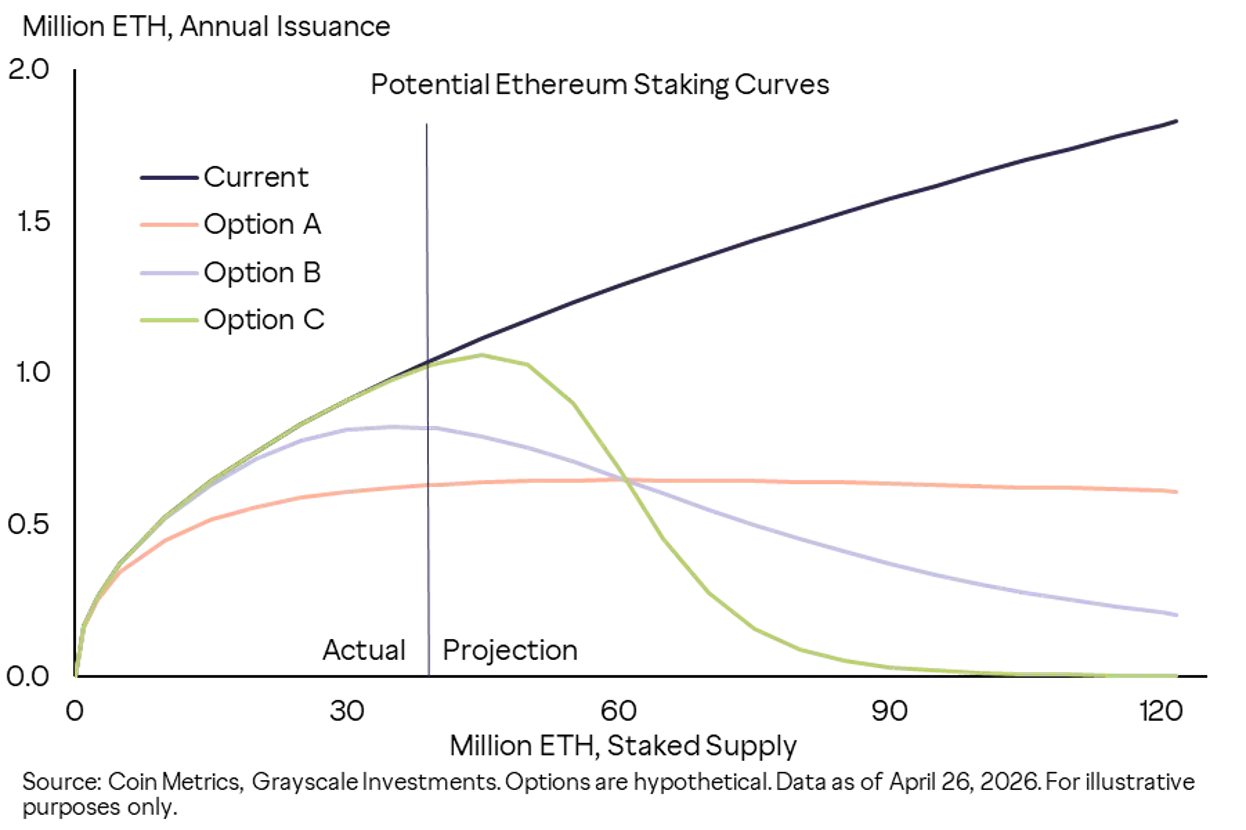
This adjustment plan is designed to be implemented gradually over 18 months. According to the community's calculation of the proposal's formula, with around 39 million ETH already staked, a validator's total annualized income will decrease from approximately 2.86% to 1.48%.
In a nutshell, Ethereum is preparing for a issuance reduction.
Supporters of EIP-8363 see the existing issuance as a staking subsidy, where stakers receive additional ETH, with the cost shared by non-stakers. As more people stake to avoid dilution, the protocol needs to issue more ETH, and stakeable ETH (LST) will gradually replace native ETH in DeFi use cases.
Community member llamaonthebrink explained: If all tokens are staked, even with a 3% nominal APY, the rewards would be close to zero economically as each individual's share of the total supply remains the same. Targeting 50% ensures more native ETH in circulation than LST, helping the market reprice staking risks.
David Hoffman, co-founder of Bankless, also supports capping the staking rate. He believes this would enhance the monetary properties of native ETH, preventing Ethereum from long-term issuance subsidies to sustain LST and systemic leverage.
Supporters uphold ETH's monetary properties, while opponents fear this proposal, if implemented, could dismantle Ethereum's on-chain financial rate floor.
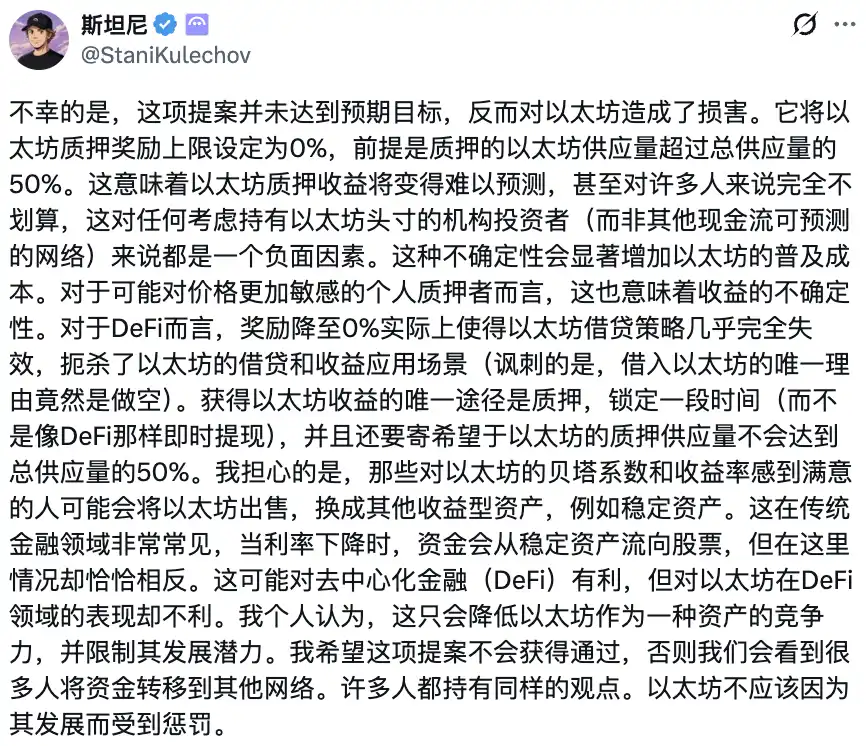
One of the earliest public dissenters was Aave founder Stani Kulechov. He argues that staking rewards approaching zero would make ETH cash flows unpredictable. Institutional purchases of ETH would no longer be able to estimate stable staking returns, and strategies to earn on borrowed ETH would lose viability. "Ethereum should not be penalized for growth," he stated.
Mike Silagadze, founder of ether.fi, expressed stronger objections. He believes the proposal, aimed at reducing around 0.8% of issuance, is preparing to make the entire staking economy bear the cost. Exchanges like Binance, Coinbase, BitMine, and SharpLink will continue to stake as they have custody income, treasury needs, or lower capital costs; whereas independent stakers who bear hardware, power, and tax costs will exit first.
Lido staking lead Izzy thinks the Foundation's decision is one-sided, overlooking the model's complexity. EIP-8363 aims to enhance ETH's monetary properties, prevent over-staking, and protect independent validators but lacks sufficient macro, micro, and behavioral economic analysis. She particularly worries that when large institutions can continue validating near breakeven or even short-term losses, emphasizing professional operation and decentralization, smaller participants passionate about decentralization will be priced out.
Staking rewards have become a part of DeFi, institutional treasuries, and validator operations' balance sheets. By adjusting the issuance curve, the impact will not be limited to just the network's consensus layer.
If the proposal is approved, the first to feel the impact will be stETH. Lido passes on validator rewards to stETH holders, charging a fee from the reward. The underlying yield will drop from around 3% to about 1.5%, causing a decline in stETH's rewards and Lido's protocol revenue together. Holders will have to reconsider how much smart contract, liquidity, and exit delay risks they are willing to bear for this yield.
Next in line are Aave and Morpho. In the Ethereum lending market, there is a common type of transaction where a trader collateralizes wstETH, borrows ETH, exchanges the borrowed ETH back to wstETH, and repeats this process several times. As long as the staking reward is higher than the ETH borrowing rate, the leverage will amplify the spread.
Take 1 ETH as an example of the principal. After the cycle, the trader holds 5 ETH worth of wstETH while owing 4 ETH. With a staking yield of 2.8% and borrowing cost of 2%, when the position can earn about 6% annually. If the staking reward drops to 1.4% and the borrowing rate remains at 2%, the same position will lose about 1%.
The trader will then sell wstETH, repay the ETH debt, causing slippage. If a reckless whale suddenly exits, it may even trigger a cascading liquidation. With a reduced demand for ETH borrowing, Aave and Morpho's capital utilization will decrease, causing a continued downward movement in borrowing rates and deposit yields.
Stablecoin borrowers are not immune either. Assuming wstETH worth $10,000 originally earned 2.8%, generating $280 in annual income; by using it as collateral to borrow $5,000 stablecoins, paying $250 in interest at 5%, the staking reward could cover the borrowing cost. After the staking yield drops to 1.4%, the collateral would only earn $140 in a year, causing the borrower to lose $110.
The interest rates on stablecoin lending platforms remain unchanged, but borrowing has become more expensive. Some people will repay their debts, causing a decline in stablecoin lending utilization and supply returns. Others may switch to re-staking, yield farming, or higher-risk assets.
The interest rate market Pendle will also "front-run" this rate cut. The YT representing future floating income will depreciate first, narrowing the discount on PT's expiry, synchronously moving the implied fixed interest rate market. Treasury pools, stablecoins, and yield products built on LST will all need to recalculate their positions.
Tom Lee's BitMine is the most illustrative case of observing the impact of a proposal on institutions. As of August 2, it holds approximately 5.798 million ETH, accounting for 4.8% of the total supply, with around 4.917 million ETH already staked. The company's disclosed 7-day annualized staking yield is 2.67%, corresponding to an annualized staking income of about $247 million.
If, with the staked amount, coin price, and MEV income remaining unchanged, the yield drops to 1.4%, BitMine's annual staking income would decrease to around $129 million, earning about $118 million less in a year. This amount of money is enough to change the treasury company's profit model and would also weaken the capital market narrative of "buy ETH, stake continuously, and use income to increase per ETH exposure." If BitMine chooses to liquidate its ETH holdings, we will see a hundred billion dollar asset being "dev sold."

Furthermore, BitMine, SharpLink, ETF issuers, and traditional asset management institutions have just begun to incorporate predictable staking cash flows into ETH valuation, and the protocol layer is ready to "reduce interest rates." In the future, each institution, when allocating ETH, will need to consider when the next issuance rule adjustment will occur.
What's more challenging is that EIP-8363 may not necessarily drive away these institutions. BitMine is constructing its MAVAN validator network, which can spread operating costs across millions of ETH; Coinbase and Binance can also subsidize staking business with custody fees and transaction revenue. They can even continue to operate at a low short-term return just to retain their customer and validator share.
In contrast, independent stakers do not have these sources of income. After the income decline, the first to shut down are likely the small operators with higher costs. So, as Ethereum developers thought, the total network staking amount did decrease, leaving behind more concentrated validators. Well, that's a problem.
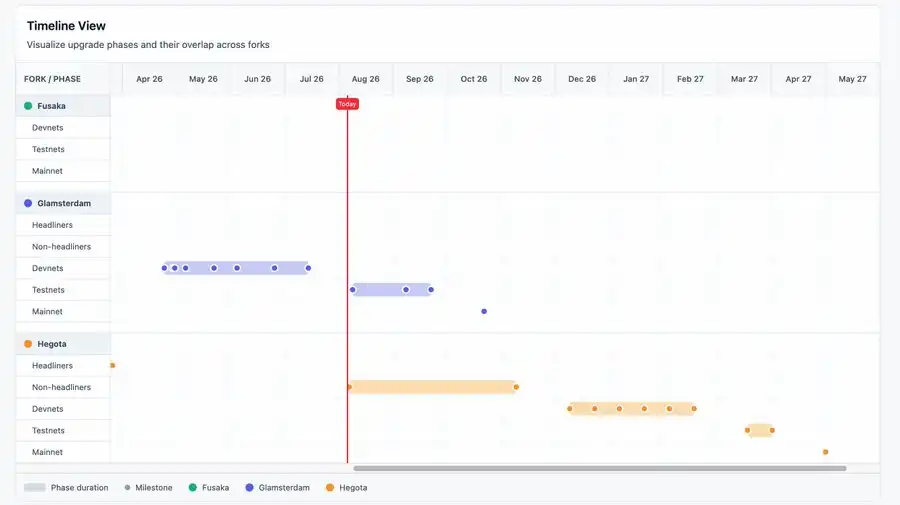
EIP-8363 was made public two days before the submission deadline for the Hegotá upgrade proposal. The author then submitted the "inclusion in the Hegotá upgrade proposal" and explicitly stated the intention to meet the August 6 deadline. A proposal to change Ethereum's monetary policy was thus entered into upgrade discussions in the final 48-hour window, a timing that is hard not to suspect.
Haste itself is not the most severe issue. The proposal models the issuance schedule, staking rate, and validator rewards, but hardly analyzes the proposal's impact on DeFi.
This is also why the community reaction has been so intense. The core of the debate has never been just about stakers earning a few basis points more. It is about what kind of asset Ethereum aims to be: closer to a non-yielding neutral currency or a productive asset that can support lending, collateralization, and institutional cash flows. EIP-8363 chose the former, treating the latter's already established multi-billion-dollar financial infrastructure as a "side effect" that can be dealt with later.
Aerodrome founder Etheraider remarked in the debate that everyone coming out to criticize this proposal is actually a reason for optimism because it proves Ethereum's immune system is still robust.
However, no matter how robust the immune system is, it cannot withstand a doctor who keeps administering poison.
Recommended
Desk: Brent Crude Tops $110, Musk's Net Worth Drops 528.6 Billion in Four Days After Tesla Roadster Launch
Oct 17, 21:49
JST Fifth Buyback and Burn Successfully Concludes: Over 170 Million Tokens Worth Approximately $23.53 Million Burned, Buyback Mechanism Set for Comprehensive Upgrade
Oct 17, 20:10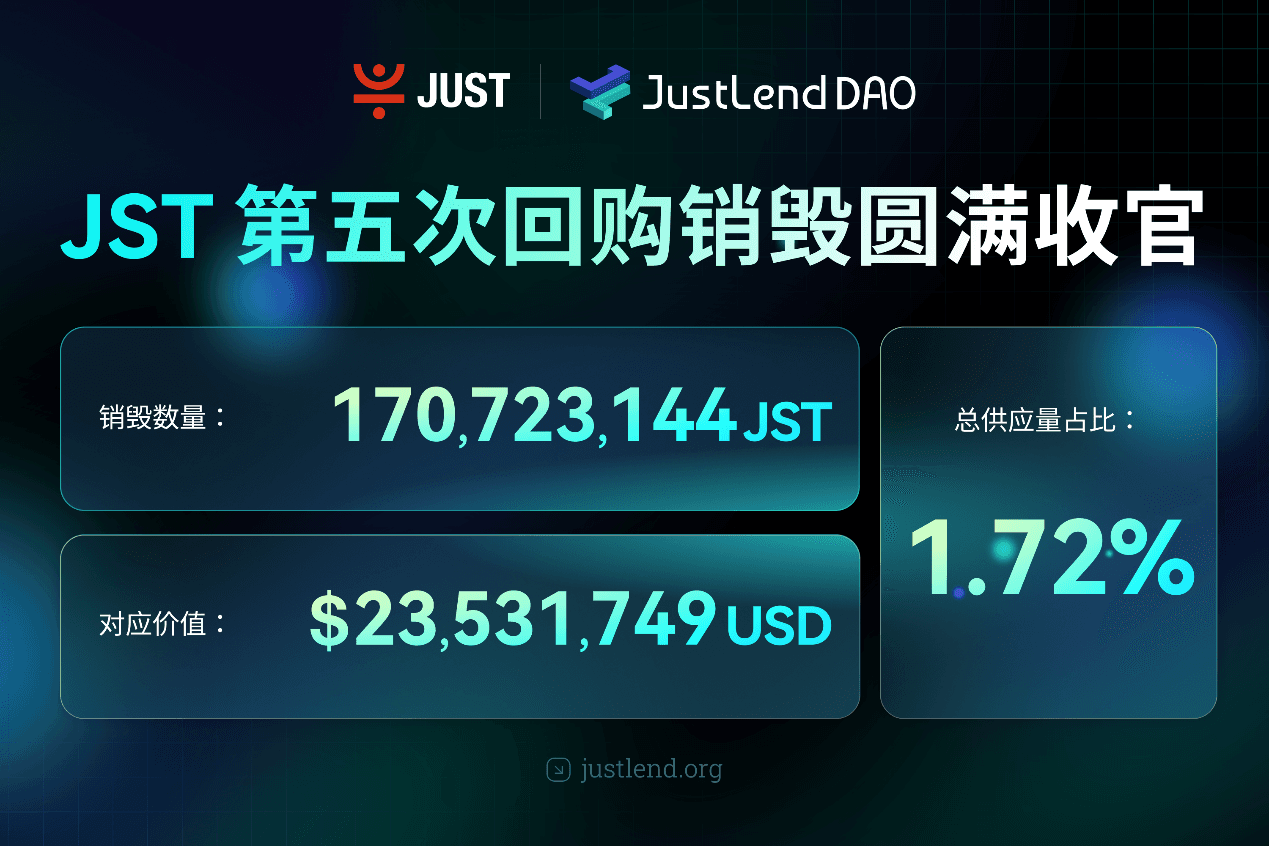
BitTorrent Brand Upgrade and Initial BTT Buyback & Burn Launch Simultaneously, Dual Engines Usher in New Era of Web3 Infrastructure
Oct 17, 20:00
Asia Market Daily: Japan's BOJ signals more rate hikes while Korea targets offshore perpetual platforms (2026/10/17)
Oct 17, 17:01Why did Papertrade backfire on you?
Oct 17, 17:01
The 'Strict Father' of Northern Myanmar: This Company Deploys 200,000 "AI Best Actors" to Strike Back Against Scammers
Oct 17, 15:34