The founder of a cryptocurrency project who can join a big AI company seems to have real technical skills

In June 2023, Silicon Valley investor Jason Calacanis tweeted:
"If you're in the Crypto industry, pivot to AI"
At that time, a large number of Web2 talents flowed into Web3. Top graduates from prestigious universities, department heads, and executives from multinational corporations entered the world of crypto. The bear market was seen as part of the cycle, and people believed that the next boom would still originate from here.
Jason's comment section quickly filled with ridicule. Some suggested he should just go bankrupt, while others saw this tweet as a signal of the market bottom.
Three years later, many people in the comment section have updated their bios to reflect positions in AI companies. A user who replied "bottom signal" back then now lists "systems, security, AI, agents" in their bio.
Today, Move language creator and co-founder of Mysten Labs, Sam Blackshear, announced his departure. His next destination is Anthropic, where he will work in defensive security research. Sam will continue to serve as an advisor to Mysten and remain involved in the Move Foundation, but his professional focus has shifted away from the eight-plus years he dedicated to Move and Sui.
A year ago, another Move public chain underwent similar personnel changes. Aptos co-founder Mo Shaikh stepped down as CEO, passing the role to Avery Ching, while retaining a strategic advisor position.
Former crypto entrepreneurs rarely truly leave. When one project fails, they switch chains, change the narrative, attract a new set of investors, and the next project quickly emerges. Today, Sam went directly to Anthropic. Concurrently, developers, marketers, and community organizers continue to migrate to AI. The exit script of the crypto world is being rewritten.
Over the past eighteen months, several Coinbase executives have transitioned to AI companies. Chief Marketing Officer Kate Rouch moved to OpenAI as CMO, Base's Head of Marketing Sarah Wolf joined Anthropic, and Tom Duff Gordon, responsible for international policy, and Sarah Russell, in charge of integrated marketing, also joined OpenAI. According to public resumes, at least six senior marketing personnel from Coinbase have transitioned to OpenAI.
There are earlier precedents at the founder level as well. OpenSea co-founder and former CTO Alex Atallah, after stepping away from his daily role at the company, co-founded OpenRouter in 2023 and now serves as CEO. Oasis Labs founder Dawn Song, in June 2026, joined Meta Superintelligence Labs as Vice President of AI Research, focusing on AI security and AI safety.
One shifted from the NFT market to infrastructure modeling, while another moved from a privacy-focused blockchain to a cutting-edge AI lab. AI is now attracting not only executives and engineers but also the previous generation of Crypto's most iconic entrepreneurs.
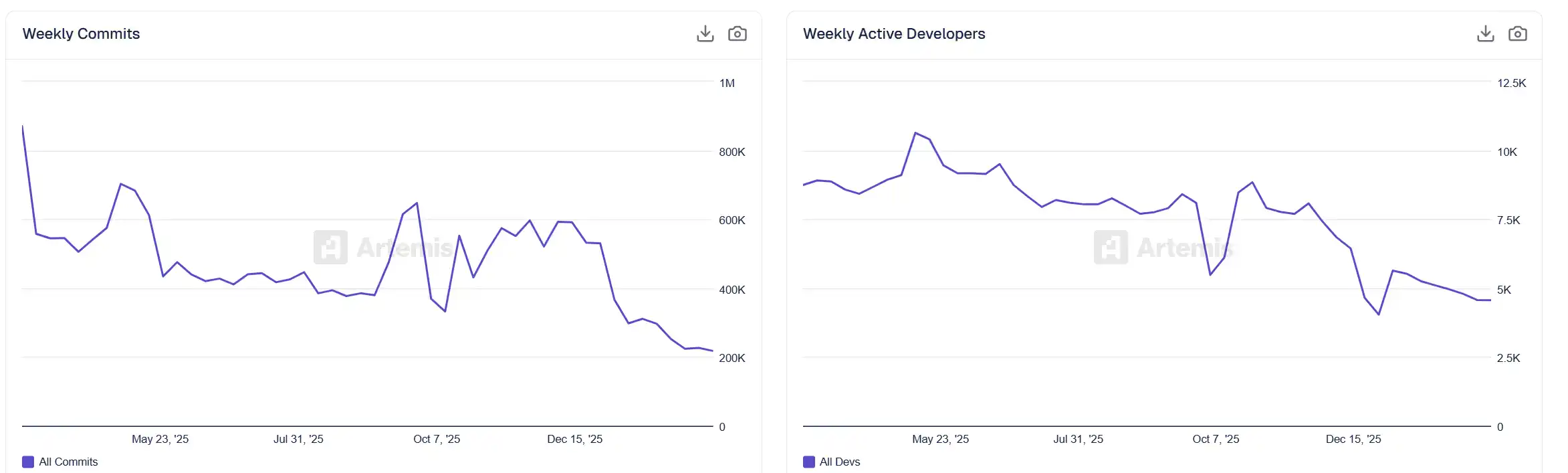
Executive turnover is more easily exposed to the public eye. In the shadows, developers are gradually migrating as well. An analysis of GitHub data shows that as of March 2026, the weekly code commits in Crypto had decreased by about 75% compared to early 2025, and the number of active blockchain developers had dropped by 56% during the same period. The daily average number of new positions on Crypto job boards had also decreased from 38 in January 2025 to 6.5 a year later.
In 2025, PwC's Global AI Talent Salary Index showed that workers with AI skills earn an average of 56% more than their industry peers. More importantly, AI has permeated everyday work and life, while Crypto's most mature applications remain focused on trading, stablecoins, and payments. For engineers, the scale of problems offered by the two industries has diverged.
Market cycles have also contributed to some of the resignations and layoffs. The previous bull market hired too many people, protocol revenues plummeted, tokens fell from their highs, and AI became a convenient excuse for downsizing.
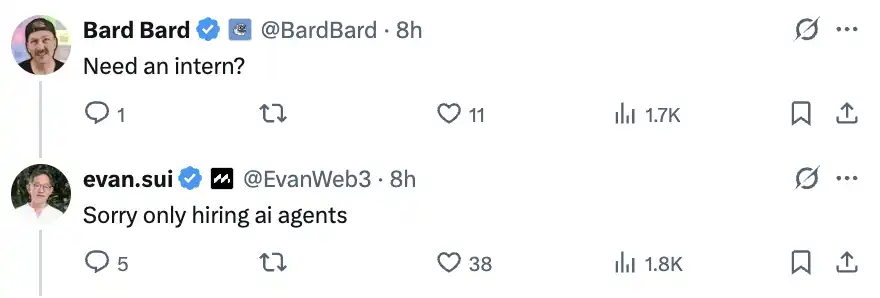
After Sam's departure, Evan Cheng announced that he would return to the front lines of development as CEO and CTO. When someone in the comments section asked if they still needed interns, Evan replied, "We only hire AI agents."
As talent migration occurs, the demand side is also undergoing intense consolidation. Someone in the community calculated that in 2024, 240 projects entered the "graveyard," followed by 218 projects in 2025, and an additional 83 in the first half of 2026. PeckShield's data also shows that in 2025, hacking and fraud losses amounted to approximately $4.04 billion, with DeFi alone being hacked for around $972 million in the first half of 2026.
Sam chose to research defensive security because he saw the power dynamics shifting between attackers and defenders. AI-powered attacks are driving a number of projects in the crypto space to the graveyard. Drift suffered a roughly $285 million attack, with nearly twenty vaults being drained; Balancer dissolved its corporate entity after a third security incident, transitioning its on-chain protocol to a lean mode; Step Finance lost treasury funds after a breach of executive devices, leading to a failed funding and sale attempt before permanently shutting down; Resolv experienced a signature permission leak, allowing attackers to mint tens of millions of uncollateralized USR tokens.
While AI caused the downfall of these projects, it also presented a more enticing next target.
A term gaining popularity on Twitter is the "Post-Crypto Era." Crypto, as a financial lingua franca R&D lab, has fulfilled its mission, with on-chain settlement and various financial tools remaining, while the token production line continues to evolve into a highly speculative market. There will still be coin launches, new Ponzi schemes, but more concepts are being debunked, infrastructure lacks novel issues to solve, making large-scale funding difficult.
The "Post-Crypto Era" also explains why exiting the crypto sphere no longer needs to be framed as betrayal. Over the past decade, the industry experimented intensively with public blockchains, trading platforms, lending, stablecoins, and derivatives. Stablecoins, tokenization, and on-chain settlement have inevitably integrated into the mainstream financial world; the failed aspects are replayed in hacks, rug pulls, and liquidity crises.
Previously, failure was the prelude to the next funding round. Now, we bid farewell to the crypto world with excitement.
Recommended
Desk: Brent Crude Tops $110, Musk's Net Worth Drops 528.6 Billion in Four Days After Tesla Roadster Launch
Oct 17, 21:49
JST Fifth Buyback and Burn Successfully Concludes: Over 170 Million Tokens Worth Approximately $23.53 Million Burned, Buyback Mechanism Set for Comprehensive Upgrade
Oct 17, 20:10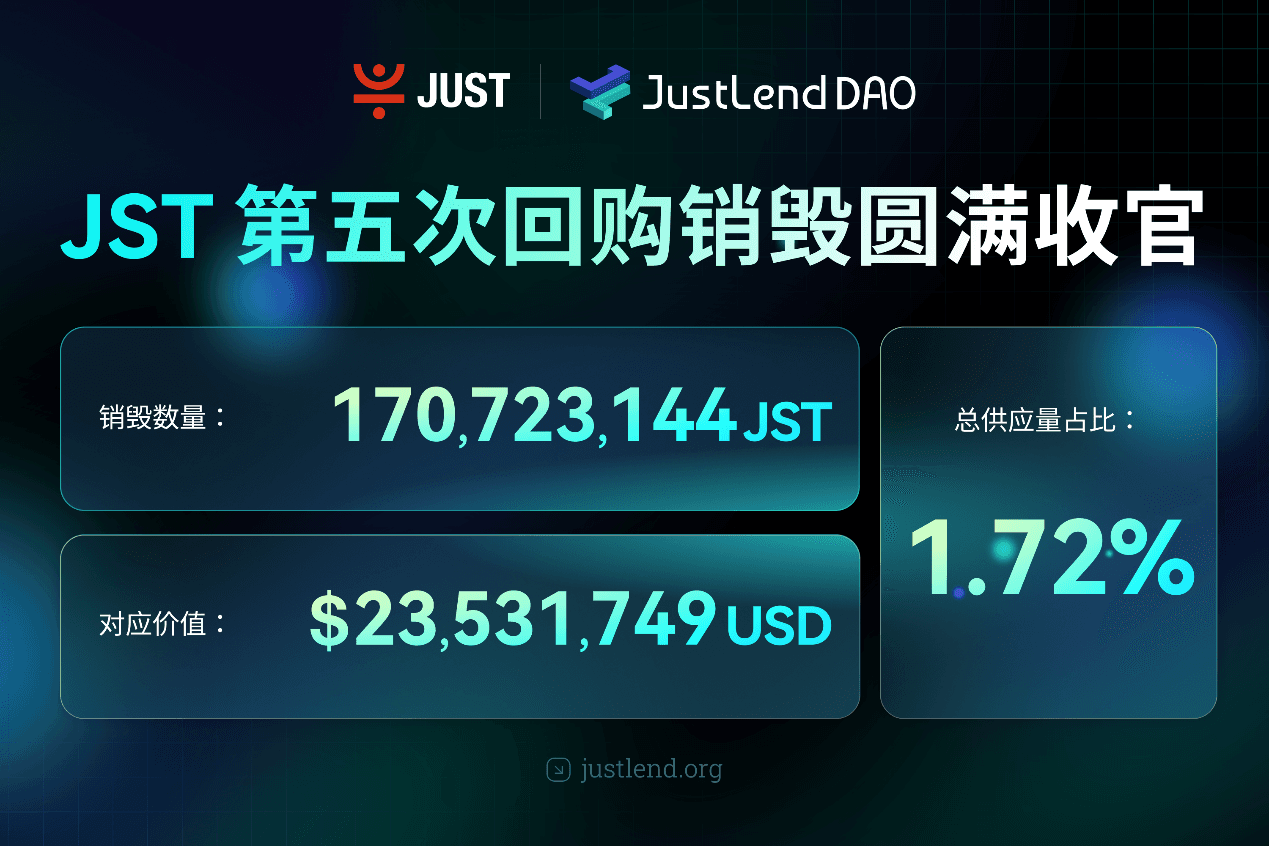
BitTorrent Brand Upgrade and Initial BTT Buyback & Burn Launch Simultaneously, Dual Engines Usher in New Era of Web3 Infrastructure
Oct 17, 20:00
Asia Market Daily: Japan's BOJ signals more rate hikes while Korea targets offshore perpetual platforms (2026/10/17)
Oct 17, 17:01Why did Papertrade backfire on you?
Oct 17, 17:01
The 'Strict Father' of Northern Myanmar: This Company Deploys 200,000 "AI Best Actors" to Strike Back Against Scammers
Oct 17, 15:34