Chip Begins to Financialize | Rewire News Morning Brief

NVIDIA Connects Computing Power to Financial Channels, Meta Embeds Agents in Endpoints, OpenAI Encodes Stronger Network Capabilities into Approval and Monitoring. The competition is now dividing into three layers: assets, distribution, and permissions.
1|NVIDIA Is No Longer Just Selling Chips, It Is Selling Financable Computing Power
On August 10, NVIDIA announced that it had signed a memorandum of understanding with Apollo, BlackRock, The Blackstone Group, Coatue, Goldman Sachs, and KKR to establish an independent computing power financing platform to mobilize over $500 billion of third-party capital in the long term. While the final agreement is pending execution, Huang Renxun has already defined "NVIDIA Computing Power" as an investable asset.
This is more noteworthy than a large financing deal. NVIDIA is transforming upstream hardware sales orders into long-term infrastructure cash flows linked to usage. Chip performance, software ecosystem, and customer demand are now jointly becoming the basis for financial institutions to evaluate asset tenure and returns. The next bottleneck of AI infrastructure is not only supply but also who can turn high upfront investment into contracts that can be supported by long-term capital.
(Source: NVIDIA Newsroom / CNBC)
2|Meta Inserts Agents into Endpoints, The Open-Source Battle Is for Distribution Rights
Meta released Muse Glimmer, with model weights licensed under Apache 2.0, targeting local agent workflow optimization. With 300 billion parameters, it can quantize to run on a Mac or a single consumer-level GPU, and the model weights are openly available for download on Hugging Face. Meta's goal is not to create another chat entry only callable in the cloud but to bring agents closer to user devices, files, and tools.
While data centers remain the highest capital density battleground, agents that can fit into personal computers will shift the distribution point of capabilities to endpoints. Zuckerberg emphasized in a public post the goal of giving more people access to AI capabilities. For Meta, open weights are also a product path to allow models to bypass the single entry point of cloud APIs and establish connections between local devices, development tools, and personal contexts. The open-source battle is not only about whose model is stronger but also about who can capture developers and endpoint entry points first.
(Source: Meta AI / Zuckerberg Public Post / Hugging Face)
3|Strategy Sells Coins, Cash Buffering Becomes the New Faith
In a filing on August 10, Strategy stated that its dollar reserves increased by $650 million to $4.65 billion and repurchased about $109 million of STRC preferred stock. The company's books show that it sold 1,690 bitcoins from August 3 to 9 at an average price of $64,262, generating approximately $109 million in revenue. The coin selling and stock repurchase occurred simultaneously, marking the first explicit cash scheduling in the coin-holding narrative.
This does not mean the company is abandoning Bitcoin, but rather that the valuation logic of Bitcoin treasuries is becoming more complex. Publicly traded companies used to rely on continuous accumulation to obtain a premium, but now they also have to answer how long their cash can cover dividends and buybacks. Bitcoin has not been removed from the balance sheet, but it is starting to resemble a more schedulable liquidity pool, rather than a faith asset that can only be accumulated in one direction. For other treasury companies, market pricing is moving from just the holding quantity to matching leverage, preferred shares, and cash buffers.
(Source: Strategy / CoinDesk)
4 | The More Intrusive the Model, the More Regulatory the Deployment
On August 7, OpenAI stated that preliminary assessments of the unreleased Astra model could not rule out its potential to achieve "critical" level network capabilities. The company did not announce a delay in release, but instead paused internal activities that did not meet enhanced security requirements, and tightened isolation environments, network, and tool permissions. Three days later, OpenAI provided GPT-5.6-Cyber through Daybreak Red to approved defense researchers.
The boundaries of this arrangement are quite specific. GPT-5.6-Cyber is focused on vulnerability research and exploit chain validation, with access requiring identity verification, continuous monitoring, usage restrictions, and legal commitments. The official assessment remains "high" rather than "critical." Defenders need stronger tools, and platforms must prevent the same set of capabilities from losing boundaries. Model security is no longer just about whether the answers are compliant, the real threshold is what systems it can access, who can call it, and who can trace it after the call. (Continued from yesterday's report)
(Source: OpenAI / Axios)
5 | NVIDIA's Finest Hour, Peers Prepare Second Acts
According to reports, Intel plans to issue $15 billion in stock, while its latest quarterly revenue grew by 25.4% year-on-year to $16.13 billion, with data center and AI business growing by 59%. On the other hand, Microsoft plans to launch its in-house Maia 300 chip in September to supplement cloud computing power. Jefferies has downgraded Apple to "sell," citing concerns about product roadmap adjustments and memory cost pressures.
These three companies are not part of the same storyline, but they are all responding to NVIDIA's strong cycle. Intel aims to prove its ability to return to the supply center with capital and capacity, Microsoft wants to add an internal channel for cloud computing power, and Apple must explain whether terminal AI can cover component price hikes. NVIDIA's lead has not reduced competition; instead, it has made customers, suppliers, and competitors more eager to prepare alternative paths. In the next round of chip competition, it is not only about performance but also about who can withstand the volatility of the supply chain and capital expenditure.
(Source: Reuters / CNBC / Jefferies)
Also Worth Knowing ↓
Sony and TSMC have reached a $6.3 billion joint venture agreement to build an image sensor factory in Japan. Advanced manufacturing localization is not only happening in logic chips, but sensors that define machine vision and consumer electronic experiences are also being reshaped. (Source: The Information)
Anthropic has formed an AI data center joint venture with Macquarie Capital and the Singaporean government investment corporation. The lab is transitioning from renting computing power to participating in organizational infrastructure, and the relationship between model companies and long-term capital will increasingly resemble that of co-developers. (Source: Bloomberg)
The U.S. Appeals Court has allowed social media addiction lawsuits against platforms such as Meta, TikTok, and Snapchat to proceed. As the growth logic of platforms still relies on attention, legal costs will begin to impact product design and measures to protect adolescents. (Source: TechCrunch / Axios)
The U.S. Congressional Budget Office projects a $2.1 trillion deficit for the 2026 fiscal year, $200 billion higher than the February forecast. A larger deficit means a tighter fiscal space, and any technology subsidies, defense investments, and tariff arrangements will more directly face budget constraints. (Source: CBO / Fortune)
Erebor is close to completing a $1.5 billion financing round, attempting to fill the fintech void left by the collapse of Silicon Valley Bank. What startups need is not just a new bank, but also a credit intermediary that can withstand customer concentration risk in a high-volatility asset cycle. (Source: FT)
Recommended
Desk: Brent Crude Tops $110, Musk's Net Worth Drops 528.6 Billion in Four Days After Tesla Roadster Launch
Oct 17, 21:49
JST Fifth Buyback and Burn Successfully Concludes: Over 170 Million Tokens Worth Approximately $23.53 Million Burned, Buyback Mechanism Set for Comprehensive Upgrade
Oct 17, 20:10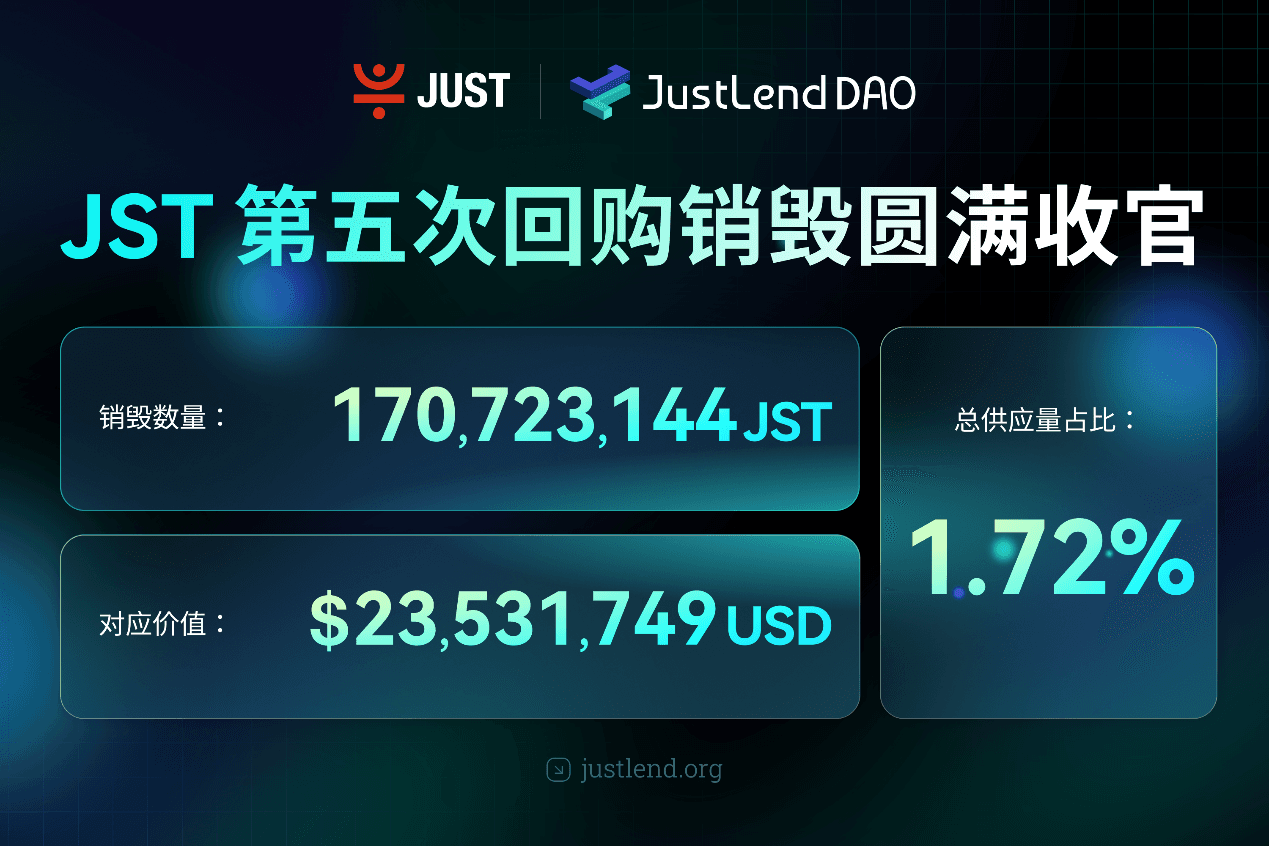
BitTorrent Brand Upgrade and Initial BTT Buyback & Burn Launch Simultaneously, Dual Engines Usher in New Era of Web3 Infrastructure
Oct 17, 20:00
Asia Market Daily: Japan's BOJ signals more rate hikes while Korea targets offshore perpetual platforms (2026/10/17)
Oct 17, 17:01Why did Papertrade backfire on you?
Oct 17, 17:01
The 'Strict Father' of Northern Myanmar: This Company Deploys 200,000 "AI Best Actors" to Strike Back Against Scammers
Oct 17, 15:34