Why Meme Infrastructure Keeps Evolving

The concept of "Social Trading" is becoming increasingly popular in the cryptocurrency market. With FOMO gaining more and more attention this year, more and more projects in the crypto space are starting to focus on developing social trading.
The most profitable on-chain trading terminal, gmgn, now has a "Callout" feature. Thousands of on-chain players can instantly share their confident holdings for everyone to hear their voice. The most interesting aspect of gmgn's social function is that you can "gift" your viewpoint, similar to buying a server-wide chat megaphone in a game, complete with corresponding special effects like when a top donor gifts in a live stream.
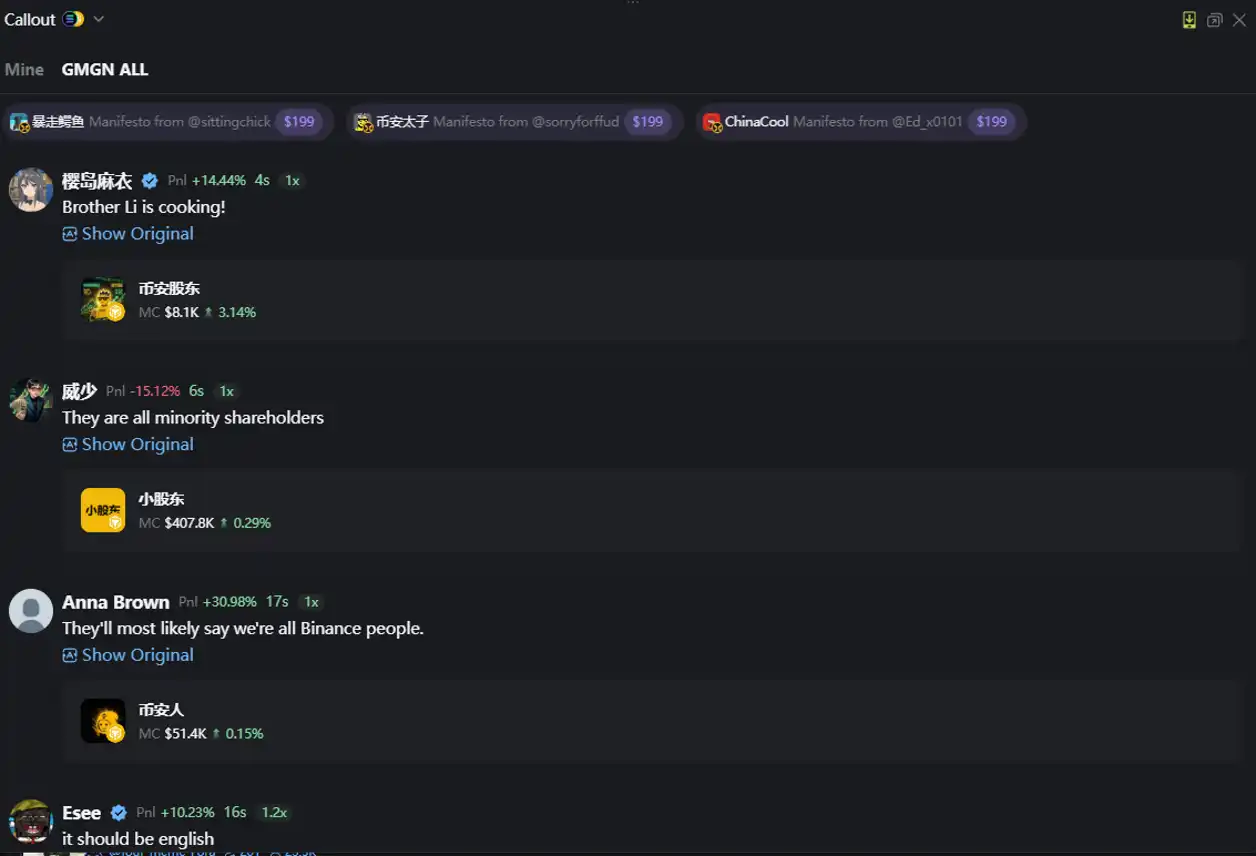
This feature is not only the most user-friendly for Chinese players on the market. From another perspective, paid viewpoints are also more persuasive. Compared to copy trading or paid subscriptions, this is clearly a clever reverse strategy.
The Launchpad, pump.fun, is also stepping up its game. According to discussions from various sources, pump.fun is offering Key Opinion Leaders (KOLs) a monthly $30,000 signing fee and an additional one-time $20,000 signing bonus, on the condition that they move their entire position to pump.fun, link their X account to pump.fun, declare a unique wallet, and ensure the trading volume target on pump.fun is achieved, all while never having to fear missing out (FOMO) permanently.
When 3 out of the top 10 most profitable projects in the entire cryptocurrency market in the last 30 days are moving towards social trading, this is clearly a trend that cannot be ignored.
The emergence of the social trading competition trend signifies further maturation of the meme coin market.
Launchpads such as pump.fun have drastically reduced the cost of coin issuance. Anyone can now easily launch a coin, and there is no longer a need to worry about buying into malicious contracts like "rug pulls" that result in asset loss.
Trading terminals like gmgn have taken transaction speed, multi-chain and multi-wallet operations, and monitoring to the extreme, catering to the on-chain exchange requirements.
From issuance to trading, the meme coin ecosystem has been standardized. The fast pace of the meme coin market is not a fault of the cryptocurrency market itself or any individual player, but rather the true face of the market that should emerge once the infrastructure is in place. Just as we cannot blame the development of technology for making the world more brutal with the advent of firearms and cannons.
As the launchpad and trading terminal have already covered the vast majority of players on-chain, everyone has begun to ride the wave of the "network effect." While a considerable number of players may not like the current market situation where a meme coin's price pumps only when a Key Opinion Leader (KOL) gives a shoutout, looking at it from a different perspective, whether it's a meme coin or a traditional financial asset, the price surge simply comes from more and more people sharing the same idea and joining the ride.
Recalling the GameStop (GME) short squeeze incident from back in the day, retail investors gathered on Reddit to cheer. In the familiar meme coin market, whether people were following a particular influencer on social media for signals or claiming to have a connection with the Chief Technology Officer (CTO), the principle remains the same—a particular asset dreads being unknown or failing to gather a collective force, for good things rarely hide in obscurity.
As the meme coin market's infrastructure has improved, competition has shifted towards reaching more users and expanding distribution channels. Since a meme coin is a culture-driven attention asset, unlike the previous spot or derivative "copy trading," its outreach and distribution target not a specific group of users focusing on a particular trading form within the entire market but rather the entire meme player community.
Whoever can attract and engage this vast and active user base will have more possibilities and initiative in future developments. Assuming the ultimate winner of the social trading competition is GMGN, they may well try to expand their business scope to the launchpad and beyond.
Meme coin's social trading differs significantly from the cryptocurrency market itself and even the traditional financial market, such as the stock market's "copy trading."
On-chain data is transparent, allowing everyone to see real-time transactions on the blockchain, which is a globally open and real-time database. In contrast, trading data in the traditional stock market is private, fragmented, and custodial. Platforms like eToro that enable real-time sharing of stock trades rely on integrating with specific brokers' APIs, where the real-time data accuracy depends on how frequently the broker's API provides trade data. If a broker only offers daily trade data updates, the real-time aspect of user-generated trading posts diminishes significantly.
Alternatively, the platform itself could be the broker, where users trade on the platform and share their trades, ensuring the real-time aspect of the posts. However, this also means that the user base it reaches can only be stock traders using that particular platform. The user base it can attract inherently has a need for sharing/tracking trades and cannot attract individuals who have not been exposed to it, unlike meme coins, which can draw in people who have not previously been involved through social amplification.
So, in the stock market, there is also the presence of platforms like SnapTrade that attempt to create a "cross-broker social layer" to connect users from different brokers for social trading, rather than confining traders to a closed social layer. However, this brings us back to the previous issue — the APIs of different brokers may not always be real-time, meaning you can't guarantee a consistent user experience across users from different brokers.
Furthermore, we also need to consider that meme coins are an asset designed to attract young people, driven by attention. While those of us who have been in the blockchain space for a while may have certain thresholds of understanding, know what topics can trend, or identify potential rug pulls, for young people who have not been exposed to meme coins, trading meme coins in a social setting might simply involve opening an app every day, seeing what everyone is trading, and following along. They might find a meme interesting, think it's cool, and buy some without needing to grasp the industry's logic or look at any financial reports.
Everyone is familiar with what's trending on TikTok and Instagram every day, and that's all they need to know to participate in trading.
No need to open an account, no need to spend hours trying to understand and pick specific assets, and even the viewpoint sharing that goes viral under a meme coin will create a new trending asset, much like a nonsensical internet meme. This is another reason why meme coins naturally fit into social trading.
But coming back to it, the core of competition in social trading is definitely "people." More influential Key Opinion Leaders (KOLs) can attract more followers, and these followers translate into trading volume and funds. As more KOLs build their reputation on the platform, it attracts more influential individuals to join in. Eventually, what users are giving up is not just a simple trading interface, but an entire social network.
Earlier, we mentioned the reasons why meme coins are suited for social trading. Another reason that restricts stock social trading is compliance, as there are limitations on stock-based social trading.
If a stock social trading platform wants to simultaneously function as "social media + broker + investment advisor + data provider," it will face conflicts of multiple regulatory identities. The U.S.'s Regulation Best Interest requires brokers to prioritize client interests, which potentially conflicts with a platform's business logic of earning more commissions by guiding users to copy certain KOLs.
However, the current trend of tokenized stocks may change the above situation. Apart from stocks, there are also Real-World Asset (RWA) bundles and prediction markets that can undergo social trading in the cryptocurrency market. Prediction markets, in particular, have already gained significant traction.
It is foreseeable that social trading in the cryptocurrency market will become even more intense. But we must not forget that there is a slow-moving big Boss, and that is X.
Since launching the Smart Cashtag feature in April this year, X has not shown much action. We certainly cannot say that X also wants to create a social trading application like FOMO, as that would definitely underestimate X.
In 2024, eToro disclosed a data point that in 2023, the X platform had over 1.4 billion posts related to trading and investment topics. As a social media platform, X itself has a massive financial discussion community that is unmatched in the realm of social trading applications.
In the cryptocurrency space, it goes without saying that no matter how strong the Key Opinion Leader (KOL) boosting power is on a trading application, it can't beat a tweet from Musk.
Although X has the concept of integrating Smart Cashtag and transforming interaction in the information feed into transactions, this type of social trading is centered around social activity with trading as a monetization method. It's more akin to using Alipay to buy funds or using WeChat for chat-based payments.
From this perspective, I believe that X's social trading not only does not compete with the social trading in the coin circle but will actually expand the current trend of "asset memefication" by converting a huge amount of information flow into orders, enabling more meme stocks like GME, AMC, and Wendy's to appear, dismantling the serious guise of traditional speculation.
However, the speculation-driven memefication is also not an irreversible trend; people will always believe in memes after losing in overheated stock trading and believe in stocks after losing in overheated meme trading. It's just that in the distribution of buying pressure, platforms like X might gain more influence.
Everything is just beginning.
Recommended
Desk: Brent Crude Tops $110, Musk's Net Worth Drops 528.6 Billion in Four Days After Tesla Roadster Launch
Oct 17, 21:49
JST Fifth Buyback and Burn Successfully Concludes: Over 170 Million Tokens Worth Approximately $23.53 Million Burned, Buyback Mechanism Set for Comprehensive Upgrade
Oct 17, 20:10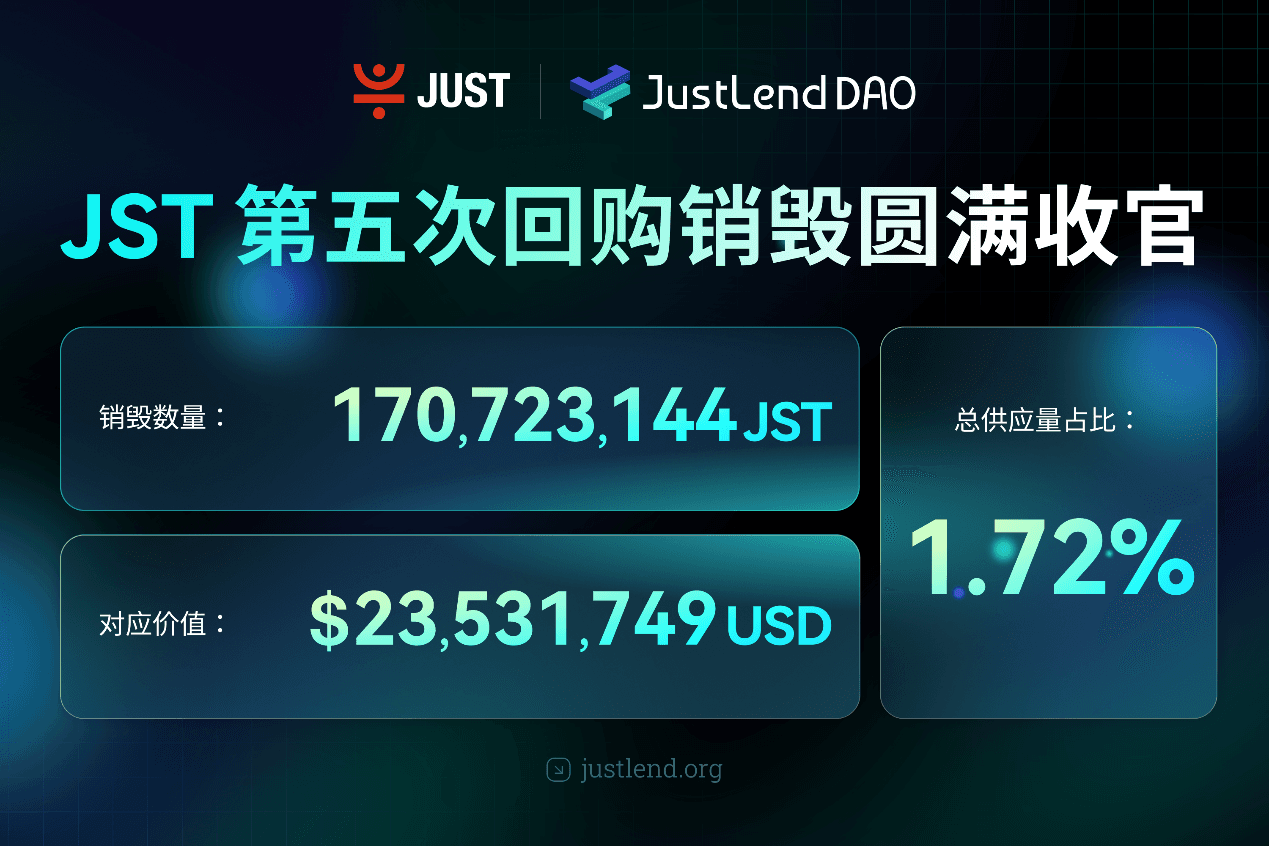
BitTorrent Brand Upgrade and Initial BTT Buyback & Burn Launch Simultaneously, Dual Engines Usher in New Era of Web3 Infrastructure
Oct 17, 20:00
Asia Market Daily: Japan's BOJ signals more rate hikes while Korea targets offshore perpetual platforms (2026/10/17)
Oct 17, 17:01Why did Papertrade backfire on you?
Oct 17, 17:01
The 'Strict Father' of Northern Myanmar: This Company Deploys 200,000 "AI Best Actors" to Strike Back Against Scammers
Oct 17, 15:34