Hyperliquid Trading Volume Skyrockets, Why Is Profit Decreasing?

Original Translator: Chopper, Foresight News
The contract position on the Hyperliquid platform has reached a record high, but the platform's retained transaction fee revenue is dwindling.
On July 13, the total size of leveraged positions held by traders on the platform, known as the open interest, surged above $11 billion, setting a new all-time high for Hyperliquid in 2026. Over the past 30 days, the total trading volume of Hyperliquid's perpetual contracts has approached $178 billion. Currently, when considering all centralized exchanges, Hyperliquid accounts for approximately 9% of the global perpetual contract open interest, compared to less than 7% at the end of May.
However, platform revenue is moving in the opposite direction. Data from DeFiLlama shows that the total revenue of the Hyperliquid protocol peaked at around $357 million in the third quarter of 2025, then gradually declined each quarter, dropping to $295 million, $217 million, and approximately $202 million in the second quarter of 2026. With transaction volume continuing to rise, platform revenue has decreased by 43% from its peak.
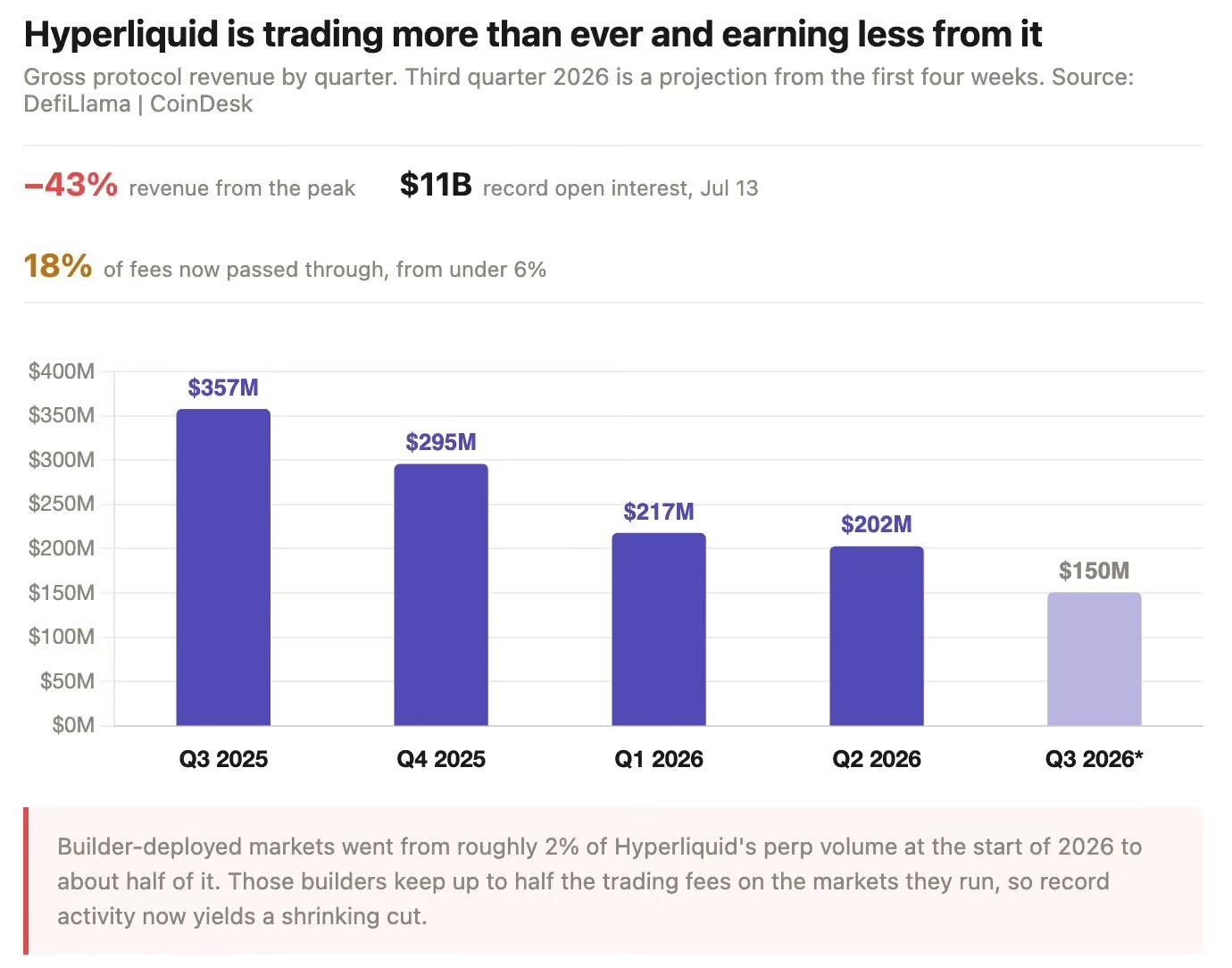
Hyperliquid's platform revenue has declined for four consecutive quarters
The Hyperliquid Improvement Proposal HIP-3 can explain why the platform is unable to retain all the revenue generated from its own business. Since October 2025, anyone who stakes 500,000 HYPE tokens (equivalent to approximately $28 million at the current price) can deploy their own perpetual contract market on Hyperliquid's order book and take away up to half of the trading fees.
At the beginning of 2026, these markets deployed by external developers accounted for only 2% of Hyperliquid's perpetual contract trading volume; today, this percentage has nearly reached 50%.
The revenue data clearly reflects the impact of revenue sharing. The portion of fees directly refunded to developers, liquidity providers, and the platform's liquidity treasury was only 6% of total revenue in the second quarter of 2025; one year later, this proportion had reached 18%.
In the second quarter, developer fee revenue generated by front-end routing solutions like Phantom amounted to approximately $16 million, which was then fully allocated as a cost expense, flowing out entirely as a pass-through transaction.
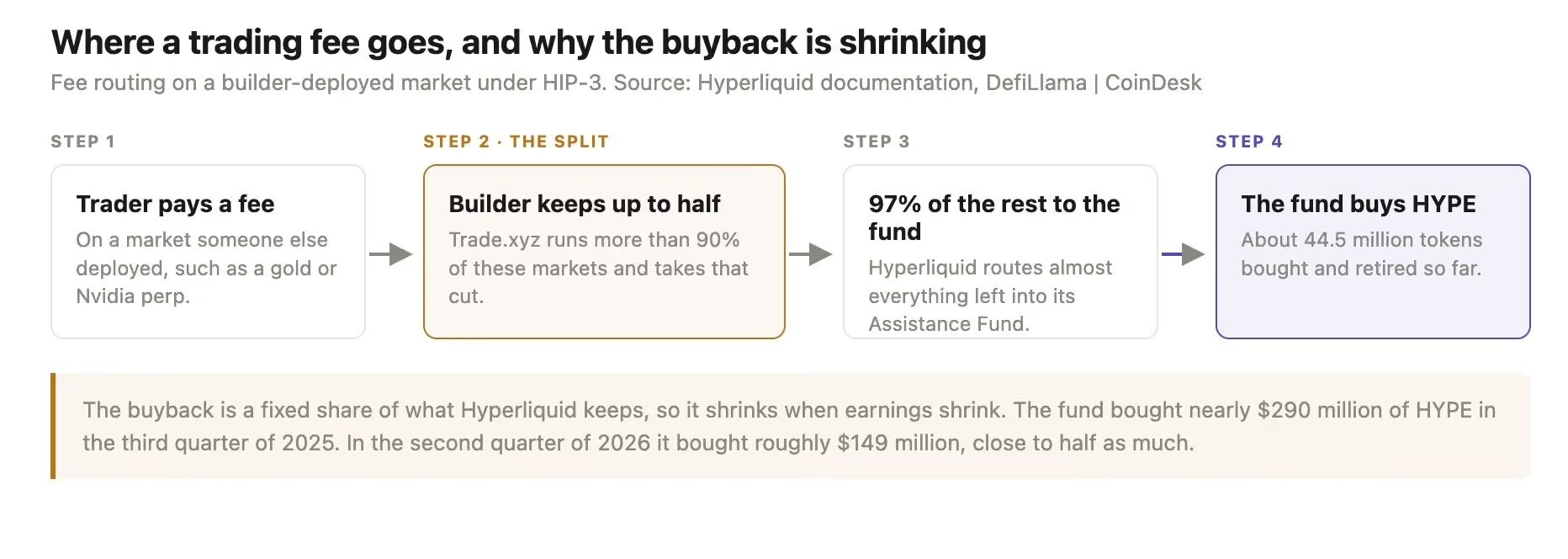
Transaction Fee Flow
A continuous influx of traders was primarily driven by the introduction of new asset classes on third-party markets: Real World Assets (RWA) perpetual contracts. Contracts for crude oil, gold, Nvidia, Tesla, Nasdaq 100 tracking products, and even for unreleased companies like SpaceX reached an unclosed volume of $3.6 billion this month, surpassing Bitcoin and becoming the largest trading market on the platform.
From July 13 to July 19, the trading volume of tokenized stocks and commodity contracts reached $25 billion, accounting for 52% of the total weekly trading volume, surpassing cryptocurrency perpetual contracts for the first time. These contracts settle in stablecoins, have no expiry date, and can be traded even on weekends when the NYSE is closed. If you want to trade a leveraged Nvidia contract at 2 a.m. on a Sunday, there are hardly any other similar options available in the market.
However, this growth phase heavily relies on a single entity. Trade.xyz holds over 90% of the unclosed volume under the HIP-3 mechanism. This means that Hyperliquid's impressive records are highly dependent on this deploying party's oracle selection, margin setting, and risk management capabilities.
On the previous Monday, the risks hidden in this model were exposed: a high-volume transaction occurred on a liquidity-thin trading platform in pre-market Korea, directly causing a 19% plunge in Trade.xyz's SK Hynix contract, triggering numerous liquidations. The institution later agreed to compensate the affected users.
Hyperliquid will allocate about 97% of the trading fees to a rescue fund, which will buy back and burn HYPE tokens on the open market, having destroyed approximately 44.5 million HYPE tokens from the total supply so far. The buyback amount is directly linked to platform earnings, so as revenues decline, the buyback scale shrinks accordingly. In the third quarter of 2025, the fund repurchased HYPE tokens worth nearly $290 million; in the second quarter of 2026, the buyback scale was approximately $149 million, nearly halved.
According to CoinDesk data, HYPE was trading close to $55 last Friday, marking a 5% weekly decline. This represents a 28% drop from its historical high of around $77 on June 16. With an estimated annualized $785 million profit, the token corresponds to a circulating market cap-to-earnings ratio of about 16 times, and a fully diluted price-to-earnings ratio of around 70 times.
Over the past month, institutional holders such as Multicoin Capital and Bitwise have transferred large amounts of HYPE tokens to the exchange.
The Hyperliquid ecosystem is actually quite thin. Among the 48 Hyperliquid ecosystem tokens tracked by CoinGecko, almost all of the market capitalization is concentrated in HYPE. The second and third rankings are held by Ethena's USDe (approximately $4.5 billion) and USDT0 (approximately $4 billion) respectively, both of which are externally issued stablecoins. The token with the largest native issuance on the platform is PURR, with a market capitalization of only $53.1 million, which is less than 0.5% of HYPE's market cap. The market valuation of HYPE mainly comes from the business model of the Hyperliquid trading platform itself rather than a rich native application ecosystem.
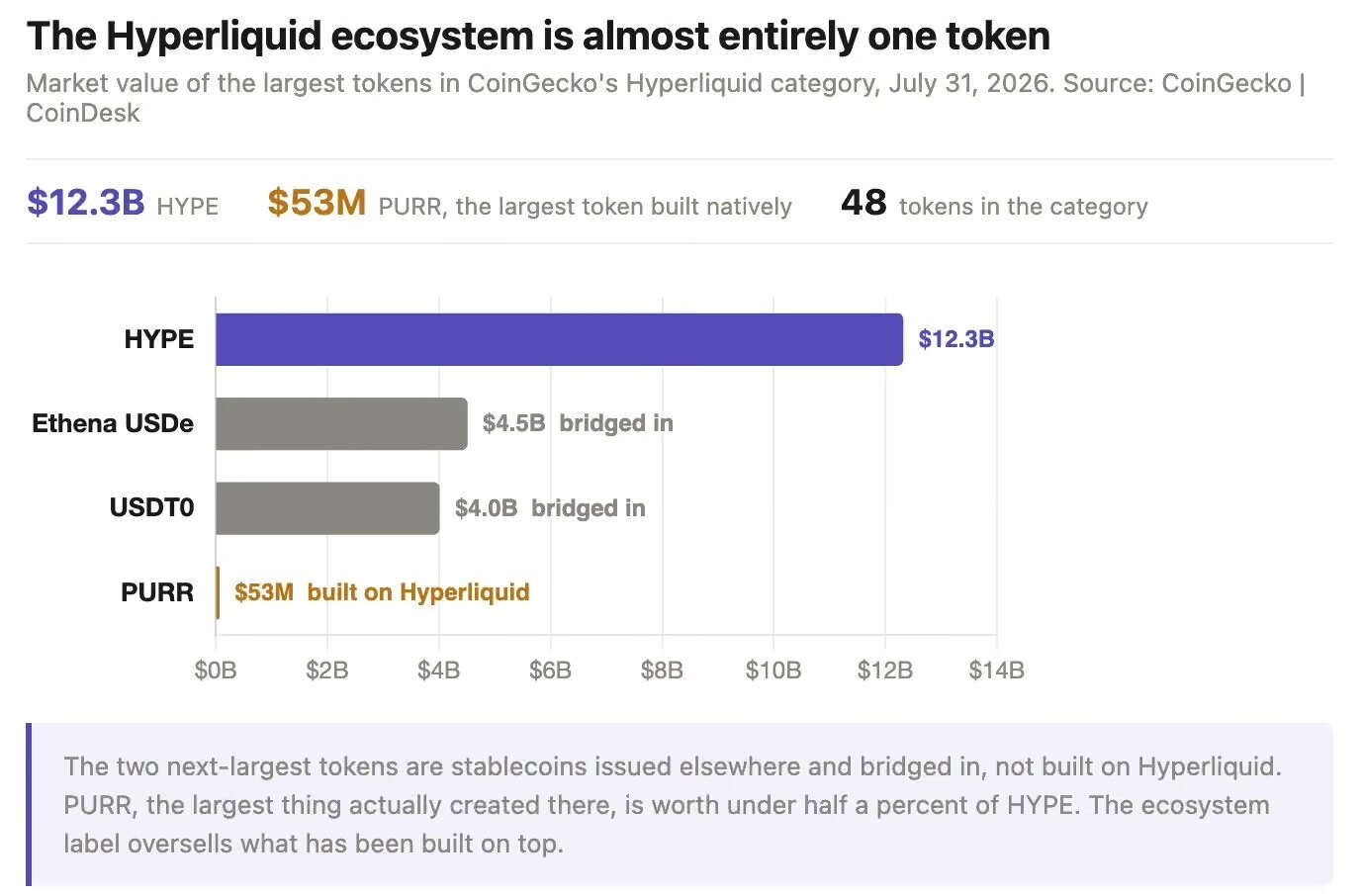
The value of the Hyperliquid ecosystem is concentrated in HYPE
The token faces pressure from both the token supply and regulatory authorities. On August 6th, nearly 10 million HYPE tokens were unlocked for core contributors, worth approximately $550 million at the current price; subsequent unlocks will continue monthly until 2027, while the total circulating supply of HYPE is only 2.22 billion tokens.
As of the week ending July 17th, the HYPE spot ETF saw a net outflow of funds in a single week for the first time since its inception, with an outflow of approximately $7 million, ending a 9-week streak of inflows. The Monetary Authority of Singapore (MAS) included the platform on its investor alert list at the end of June, and the UK had previously issued a risk warning; executives from CME and ICE have also urged the U.S. CFTC to conduct a review of its commodity perpetual contracts business.
Competition has also emerged from unexpected places. Just a month after brokerage firm Robinhood launched Robinhood Chain, the decentralized exchange in the meme coin sector saw its daily trading volume surpass $600 million, and by some measures, its daily speculation trading activity has exceeded that of Hyperliquid.
Of course, all these developments do not necessarily mean that the platform is on the path to failure. Data from ARK Research shows that as of July 31st, Hyperliquid and Pump.fun together accounted for 67% of total revenue in the crypto dApp space. Grayscale has also likened Hyperliquid to Amazon AWS: external developers build products on the platform, and the platform takes a cut from all transactions.
However, this analogy actually highlights the current issue. In the first four weeks of the third quarter of 2026, Hyperliquid's total revenue is about $45 million. If this pace continues, the total revenue for this quarter will be close to $150 million, achieving a revenue decline for the fourth consecutive quarter. Moreover, the buying pressure supporting the HYPE token will also weaken further.
Recommended
Desk: Brent Crude Tops $110, Musk's Net Worth Drops 528.6 Billion in Four Days After Tesla Roadster Launch
Oct 17, 21:49
JST Fifth Buyback and Burn Successfully Concludes: Over 170 Million Tokens Worth Approximately $23.53 Million Burned, Buyback Mechanism Set for Comprehensive Upgrade
Oct 17, 20:10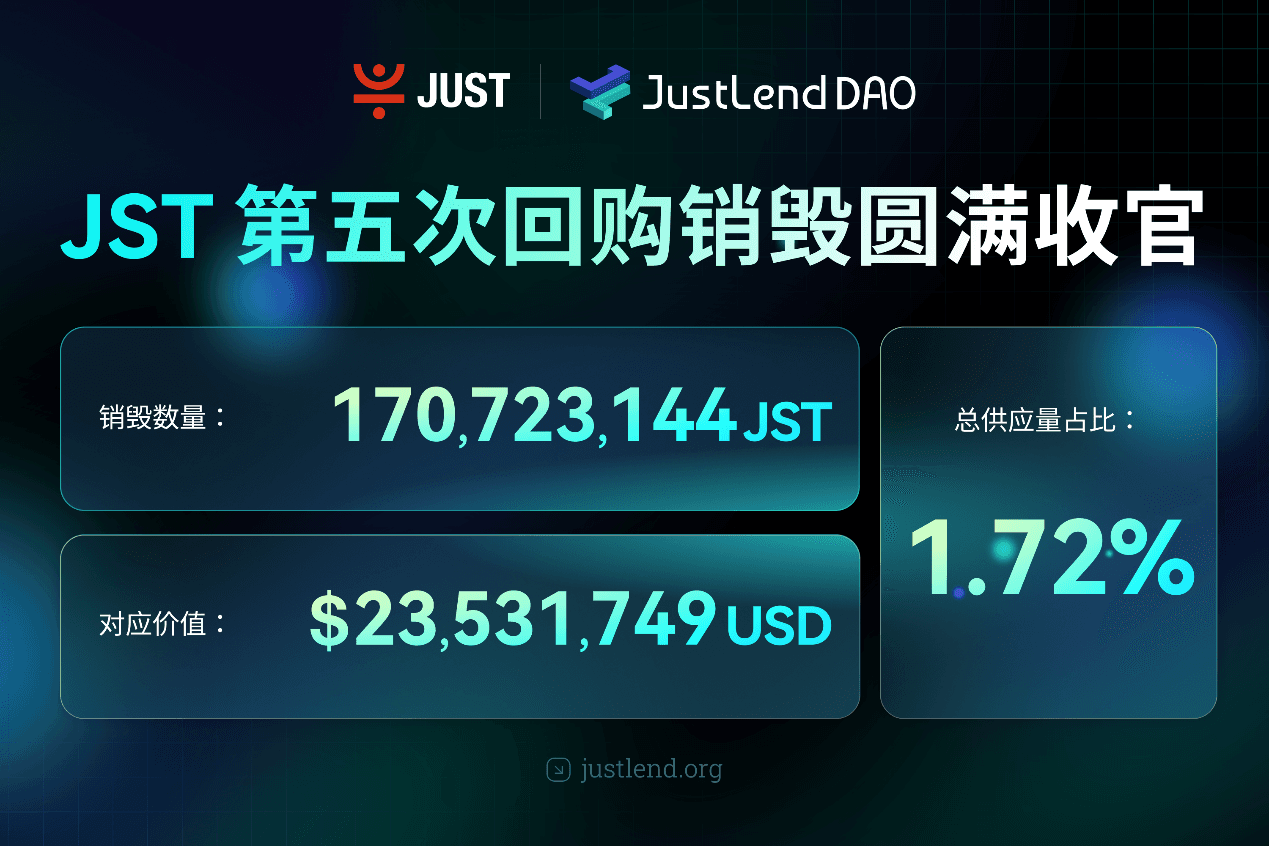
BitTorrent Brand Upgrade and Initial BTT Buyback & Burn Launch Simultaneously, Dual Engines Usher in New Era of Web3 Infrastructure
Oct 17, 20:00
Asia Market Daily: Japan's BOJ signals more rate hikes while Korea targets offshore perpetual platforms (2026/10/17)
Oct 17, 17:01Why did Papertrade backfire on you?
Oct 17, 17:01
The 'Strict Father' of Northern Myanmar: This Company Deploys 200,000 "AI Best Actors" to Strike Back Against Scammers
Oct 17, 15:34