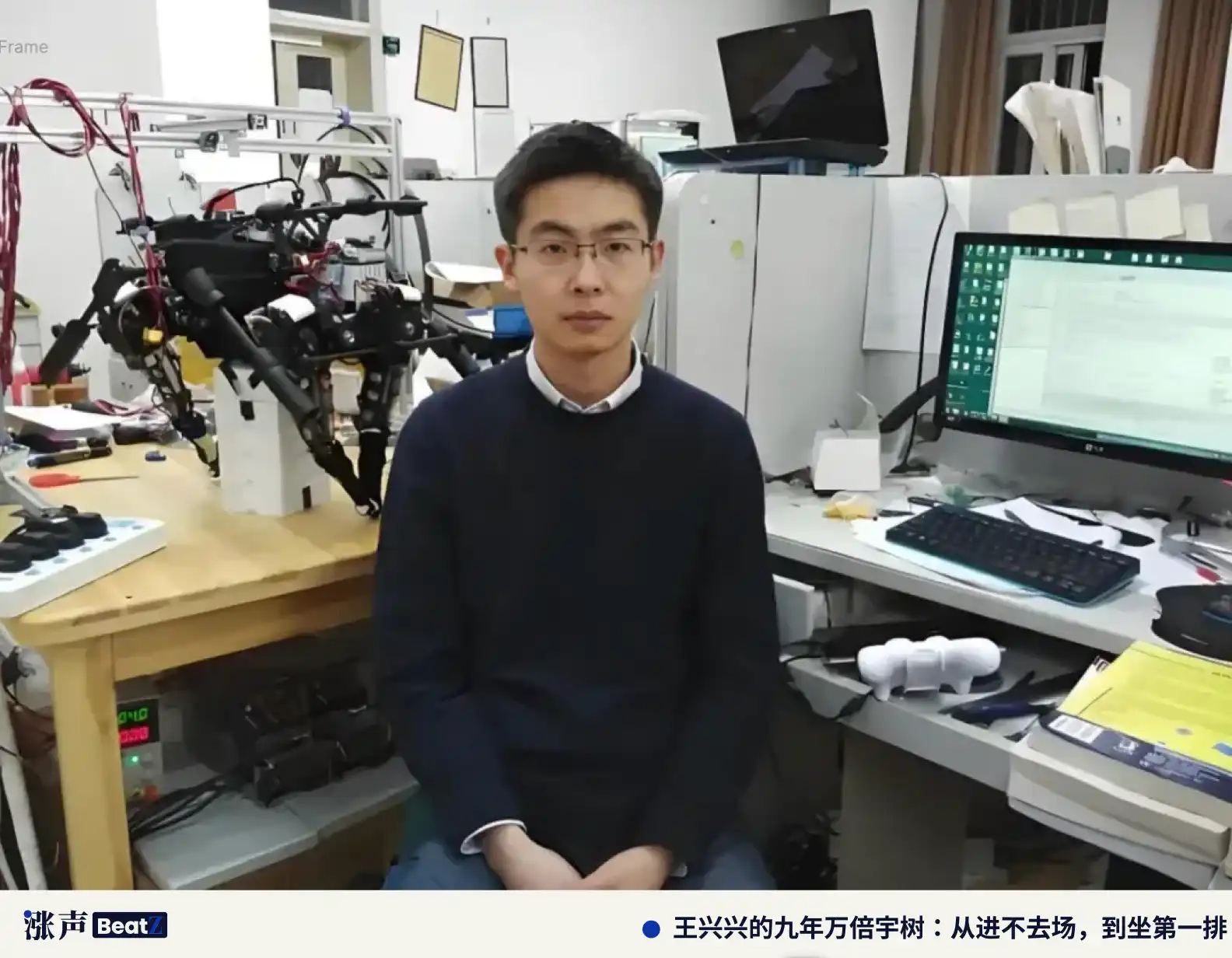
Wang Xing's Nine-Year Thousandfold Yushu: From Unable to Enter the Venue to Front Row Seat

Author|加六,BeatZ
The Wuzhen Internet Conference in December 2017 may have been the most lively one ever.
A group photo from a dinner went viral on the internet at that time, with the table full of the top entrepreneurs in the internet industry. This was because of a gathering organized by Liu Qiangdong and Wang Xing, later known as the "Dongxing Dinner Party."
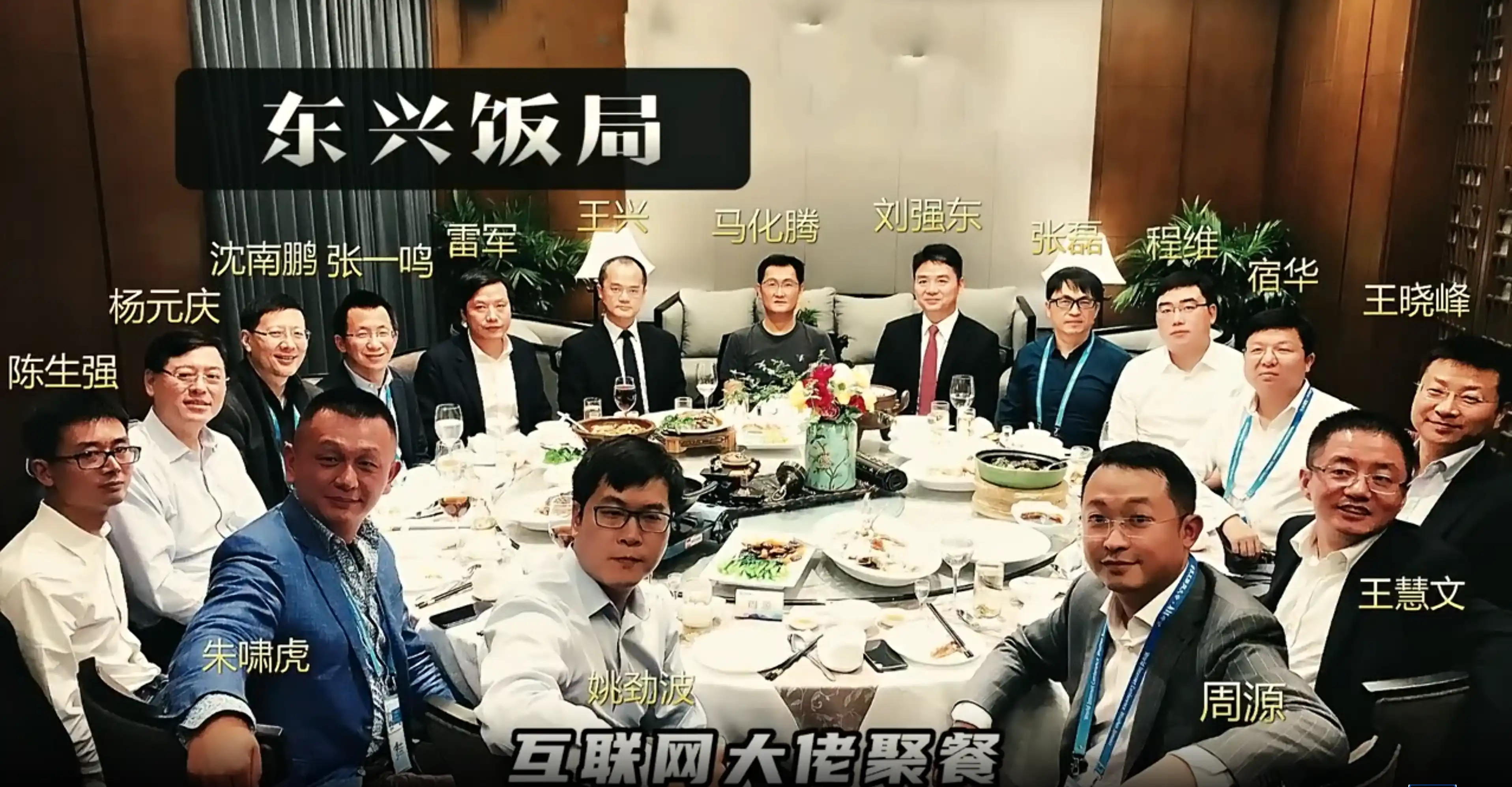
In Wuzhen in 2017, the "Dongxing Gathering" became a highlight moment in the mobile internet with a group photo
The net worth of the various tycoons at the dinner totaled 700 billion. However, shortly after the "Dongxing Gathering," the internal strife within the internet industry officially began. This event seemed like the last group photo of the internet's peak period, marking the beginning of the decline of the Chinese internet.
What many people do not know is that on the same day as the Dongxing Dinner Party at the Wuzhen Internet Conference that year, there was another small gathering during afternoon tea, where another "Tech New Noble" made an appearance.
This person was Wang Xingxing.
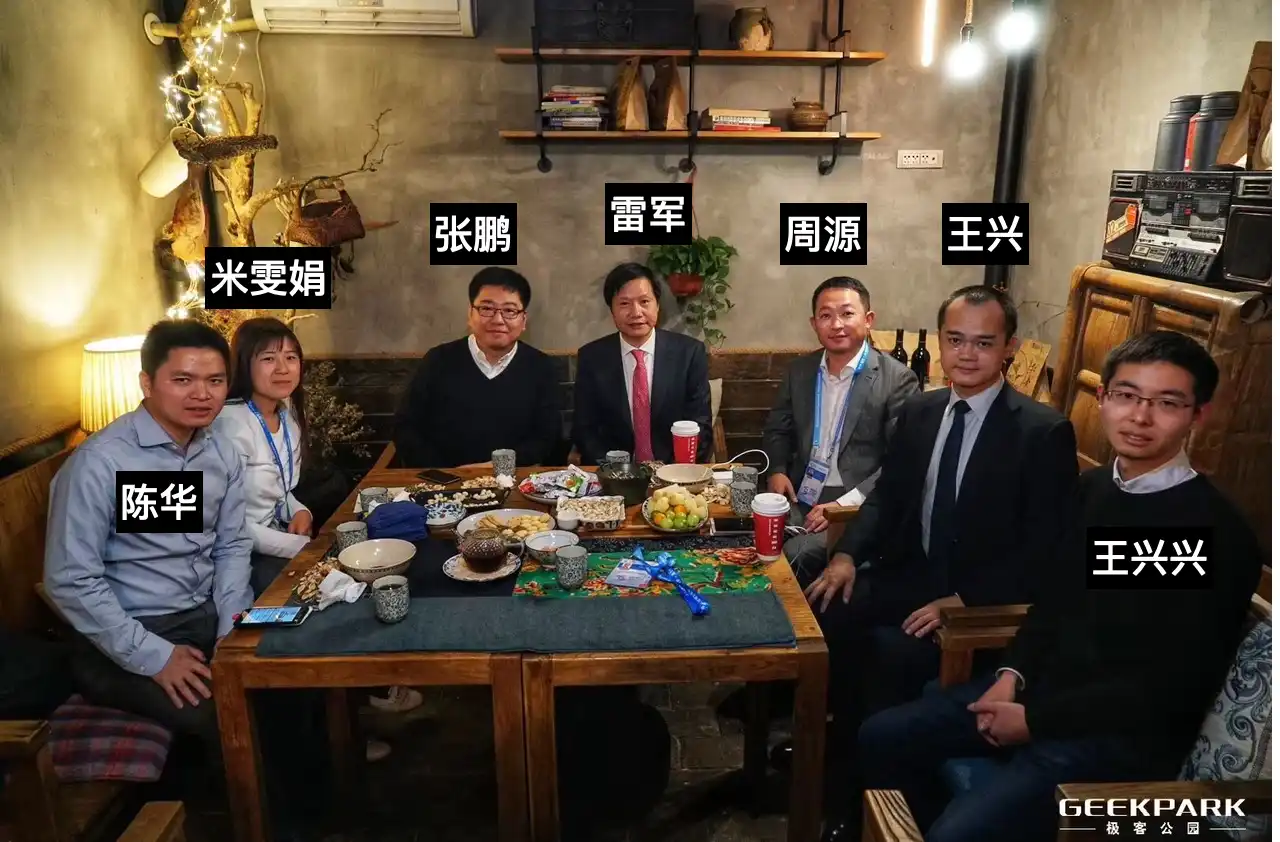
Geek Afternoon Tea, from left: Chen Hua from Changba, Mi Wenjuan from VIPKID, Zhang Peng from Geek Park, Lei Jun, Zhou Yuan from Zhihu, Wang Xing, Wang Xingxing
It was a gathering organized by Zhang Peng from Geek Park, held outside the main venue. At that time, nobody recognized the person sitting on the far right, Wang Xingxing. Netizens only remembered him because his name was similar to Wang Xing.
According to Zhang Peng's later recollection, Wang Xingxing was not even allowed into the main venue at that time. Zhang Peng called him over because he wanted him to show the seniors the robot dog he had created. After everyone had chatted for a while, he allowed him to come over and demonstrate the company's first robot dog, Laikago. However, when the robot dog tried to step over the threshold, it got stuck and crashed, and Wang Xingxing tried to reboot it for a long time, creating an awkward moment.
"Xingxing was a bit shy at the time, and it seemed like he didn't even go add the WeChat of these tycoons." At that time, Yushu Technology had just celebrated its first anniversary, and the company had less than half of the money left in its account.
But the tide of the times surged on, with one wave surpassing another, and one generation passing the baton to the next. Just like Huang Renxun said, in the next 5 years, the number of AI-created millionaires will surpass the number of millionaires created by the internet in 20 years.
Nine years later today, YunTree Technology started its IPO on the Sci-Tech Innovation Board, with a market value exceeding 60 billion yuan. Wang Xingxing directly and indirectly holds a total of 33.36% of the shares, corresponding to a net worth of about 20 billion yuan.
Looking back at the bustling Wuzhen Internet Conference, it marked the end of an era and the beginning of another.
In March 1990, Wang Xingxing was born into an ordinary family in Yuyao, Zhejiang.
He later recounted, "Contrary to what many people imagine, I was not a top student, especially in English. Although I have always worked hard, I only passed three times in my three years of high school. Some even said that this kid seems a bit dumber than others. I have doubted myself and felt anxious because of this." His English teacher once said in front of his mother during junior high that this child was a bit slow.
Wang Xingxing spent all his spare time creating things. At the age of 10, he made a wind-powered car out of scrap cardboard, and at 15, he built a miniature engine and model airplane out of scrap metal.
In 2009, Wang Xingxing enrolled in Zhejiang University of Technology's Mechatronics Engineering program, but he said he felt inferior because he went to an ordinary university.
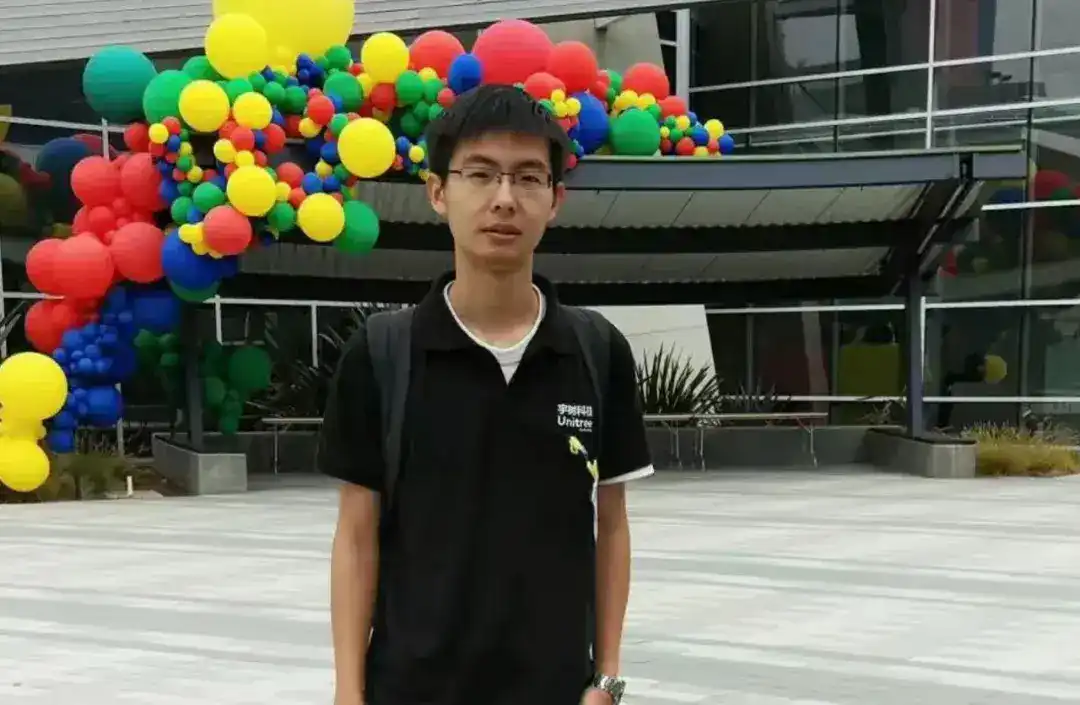
Early photo of Wang Xingxing
That winter, he first came into contact with a microcontroller, buying an Arduino board with his pocket money. During winter vacation, he bought more than ten 9g servos and started building a bipedal robot.
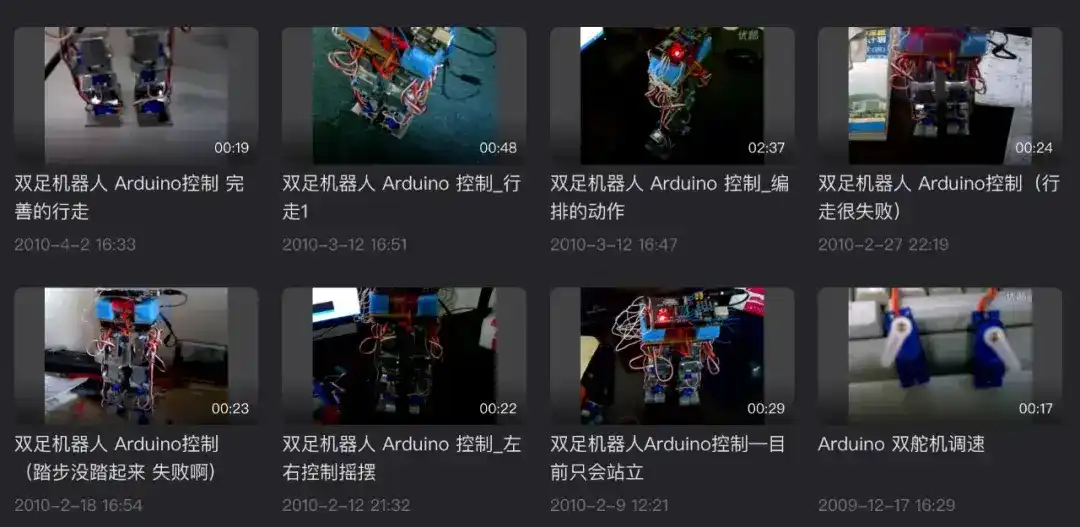
Video uploaded by Wang Xingxing on Youku
Without equipment, he used manual small drill bits, files, and scissors. Lacking funds, he bought ¥9 parts and picked up unwanted scraps left by others. Without a machine for polishing, he rubbed the parts on the ground by hand, making his hands rough.
Eventually, he built a 14-degree-of-freedom bipedal humanoid robot that could barely walk and perform some simple actions. The total cost was only ¥200. The following summer, he spent another ¥300 to create a force-feedback glove and a dexterous hand, paired with a 3D virtual reality force interaction software. The entire process was still manual drawing, cutting, and grinding, without the use of power tools.
In his fourth year of college, he took the postgraduate entrance exam, with Zhejiang University's Mechanical Engineering program as his first choice. Wang Xingxing's total score was enough for admission, but because his English score did not reach the cutoff for Zhejiang University, he was transferred to Shanghai University.
Later, netizens jokingly gave his company a name: Yushu, because his "language and math" were good, but his "foreign" language skills were lacking.
Several years later, in an internal review at First Intent Capital, Tian Jiangchuan admitted that the first time he met Wang Xingxing was in 2017 at Shanghai Hongqiao Railway Station. However, he hesitated to invest due to the mismatch between Wang's background coming from Shanghai University and the industry's requirements and fund preferences. It wasn't until 2019 when he learned from Professor Yu Yang at Nanjing University that many AI labs were purchasing Yushu, with demand so high that "one XDog was hard to come by." First Intent Capital finally completed a Pre-A round investment in early 2020.
During his first year of postgraduate studies, he first created a high-dynamic mechanical leg. His advisor, Jia Wenchuan, provided him with around twenty thousand yuan in research funding, and Wang Xingxing developed the XDog.
During those years, when it came to high-performance quadruped robots, Boston Dynamics led the way: hydraulic-driven, large in size, loud, and outrageously expensive, serving mainly military and government orders. Wang Xingxing took a different path, using his own design of an outer-rotor brushless motor for a direct-drive solution. The entire machine cost less than twenty thousand yuan.
In 2015, he publicized this electric drive solution, about a year earlier than Boston Dynamics shifted to electric drive.
Also in late 2015, he saw a report on quadruped robots on IEEE Spectrum and casually shared the link to his XDog's YouTube video in the comments section.
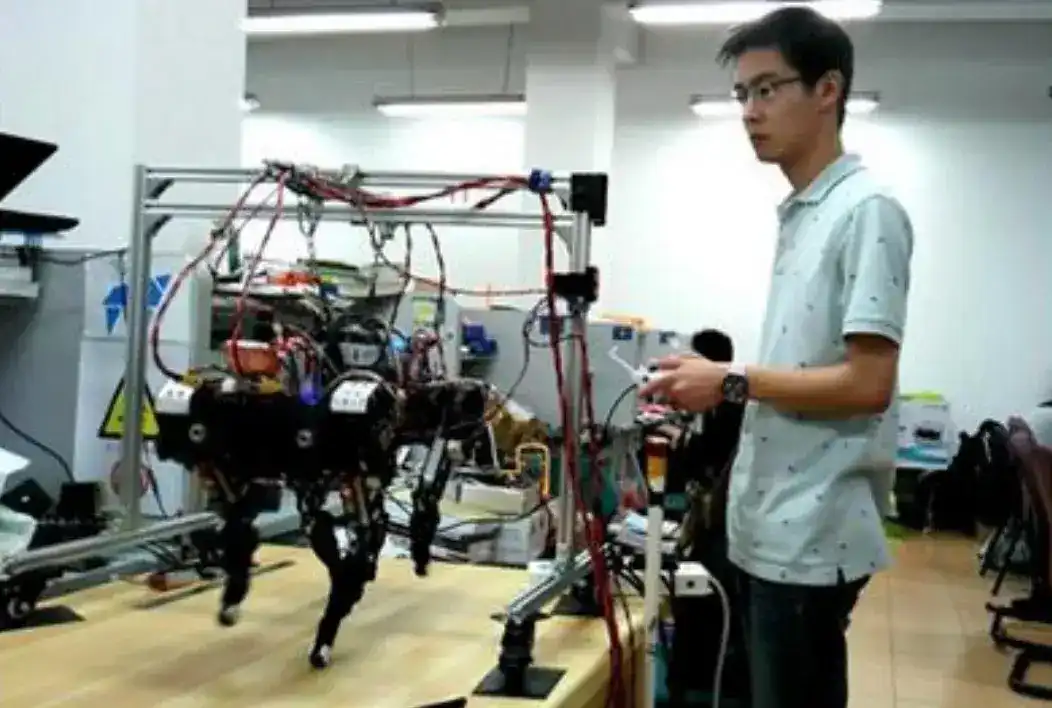
Wang Xingxing in the graduate research lab
After graduating from postgraduate school, Wang Xingxing interned at DJI. However, during this time, his XDog video on YouTube gained popularity, attracting many investors who encouraged him to start a business. After working at DJI for two to three months, he resigned.
After leaving his job, he spent a month in Shenzhen for fundraising. He described it as the most anxious month of his life. Although he had secured investment intentions, the funds had not yet arrived, the initial startup team consisted of only three to four people, and the company had not been registered yet.
It was during this time that the first funds arrived. The investor, Yin Fangming, had previously worked as a product manager and director at companies such as MediaTek, Sohu, and Qihoo 360. In 2014, he co-founded an early-stage fund focusing on smart hardware. In November 2016, he personally invested 2 million RMB, taking a 15% stake in Yushu, valuing the post-investment company at 13.33 million RMB.
Wang Xing later recalled this investment in an interview with LatePost, saying: "He approached me proactively. The terms he offered were very broad. There was no agreement signed when the money was sent."
In April 2018, Yin Fangming transferred part of his equity for 1.3105 million yuan to Shenzhen Anchuang Technology. In August 2020, he transferred the remaining registered capital to Tianjin Junwan Hongyi, completely withdrawing from the shareholder list of Yushu from a business perspective. However, Yin Fangming himself is listed as a contributor in the Junwan Hongyi's shareholder list, and he still holds approximately 16.62% of the shares through this indirect ownership.
Although transitioning from a direct shareholder to an indirect fund contributor, Junwan Hongyi is currently still the tenth largest shareholder of Yushu, holding about 11.17 million shares with a market value of approximately 1.684 billion yuan at the issuance price, corresponding to about 280 million yuan for Yin Fangming.
In Wuzhen in 2017, the undertone was set by Tencent.
That year, the most viral buzz was about Eastern Profit Bureau, with Tencent appearing in the shareholder list of almost half of the companies around the table, from JD.com and Meituan to Didi and Zhihu. The capital landscape of China's Internet industry at that time was basically laid out on that round table.
In July 2019, DeXun Investment, founded by Tencent's co-founder Zeng Liqing, acquired 4% of Yushu's shares for 4 million yuan.
The afternoon tea later turned out to be the most cost-effective public appearance for Wang Xing in his ten years of entrepreneurship. Although Wang Xing's performance at the time was not outstanding, Lei Jun, sitting at the head of the table, still noticed him. Several years later, Lei Jun's Shunwei Capital led Yushu's Series A round in July 2021 and continued to support them in the follow-up Series B round.
Sitting next to him, with a name differing by just one letter, Wang Xing made Meituan System one of Yushu's largest external industry shareholders in February 2024.
The person who brought Wang Xing to Lei Jun and Wang Xing was Zhang Peng.
In September 2017, Yushu's Laikago was unveiled. The name was inspired by Laika, the first dog to enter space. It was no longer a prototype at the research stage but the first commercial quadruped product that Yushu attempted to sell to real customers: the joint, power supply, control, and reliability all needed to transform from a demonstration effect to the ability to deliver goods.
It was also in this year that Zhang Peng saw Laikago in a niche public account article with a few pictures and short videos. Previously, Zhang Peng had taken Chinese entrepreneurs to MIT and seen the "robotic cheetah" in the laboratory: the cheetah's head was placed on a massive body, full of steel cables and wires. Therefore, when he saw a machine dog made by a Chinese team that was smaller and closer to productization in posture, his first reaction was astonishment.
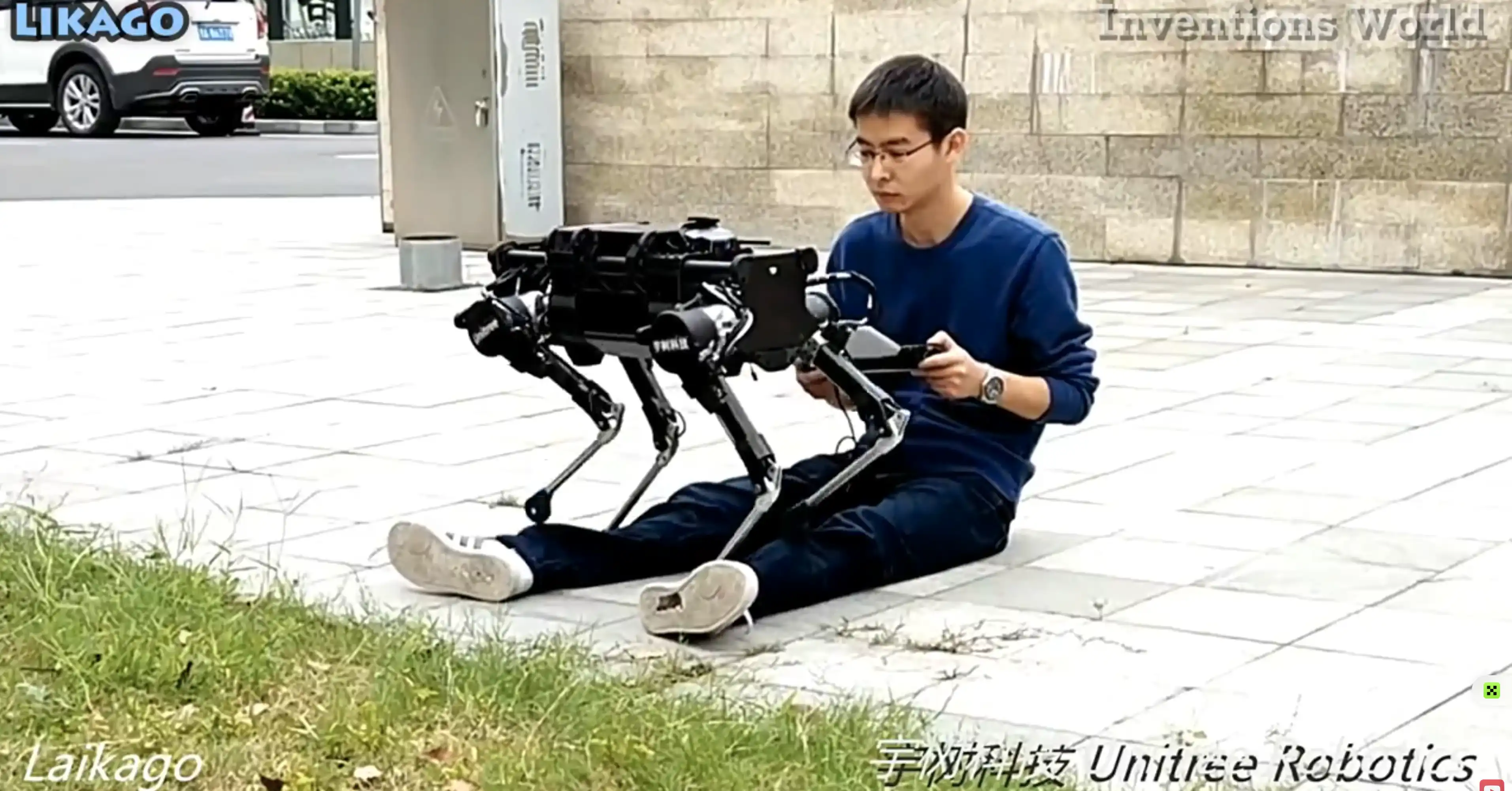
Wang Xingxiong Displays Laikago Prototype with Holes in the Soles
Pengfei Zhang traveled to Hangzhou and arrived at an inconspicuous building in the Binjiang District, where there was no office sign. Obviously, this was not a standard office building, and there seemed to be a factory next to it. "Upon entering, you couldn't see workstations. It felt more like a garage, with various parts scattered around, unassembled robot dog parts, and two already assembled robot dogs."
Wang Xingxiong gave Zhang Peng a demonstration, including some standard movements, such as kicking, which did not knock the robot down. After the demonstration, the two felt awkward because there was no place to sit inside the room. Eventually, they ended up chatting on a sofa in the corridor outside the office, talking for two to three hours.
Soon after, Zhang Peng's Variant Capital became Yu Shu's first institutional investor.
Zhang Peng believed that the company's reasonable financing needs at the time were about 15 to 20 million RMB. However, Variant Capital was not large enough to lead the investment and could only follow suit. The original lead investor, whose terms had already been negotiated, fell through. At that time, Laikago, the revamped quadruped robot by Wang Xingxiong, was unveiled, requiring a large amount of investment in research and development. In one year, most of the initial 2 million RMB investment Wang Xingxiong had received was almost depleted, to the point where he could hardly even pay salaries.
To help Wang Xingxiong, Zhang Peng decided to invest first. Zhang Peng said, "We didn't really have time to hesitate because Wang Xingxiong was running out of money. If we had hesitated for another month, his company might have gone under."
After weathering that storm, in the second half of 2018, Laikago began shipping and sold hundreds of units worldwide. Financing also became slightly easier.
According to publicly available business changes and institutional disclosures, in 2018, Variant Capital entered Yu Shu through Jisi Investment; in 2019, Dexun Investment acquired shares, and Ningbo Redwood also participated in capital increases at the end of the year; in 2020, Redwood continued to increase its capital, with Vertex, Chuxin Capital, and others entering.
In 2021, Shunwei Capital led Yu Shu's Series A round; in 2022, the company completed its Series B round, publicly reported to be led by GGV Capital and Dunhong Asset. Hexacon, Shunwei, Rongyi, InnoStar, and DeepTech Ventures followed suit.
The real flood came in 2024. On January 31, a total of approximately $600.34 million was raised, with Hanhai Information, Jinshi Growth, Source Code Capital, Xinjiang Deep Innovation Investment, and Zhongwang Investment entering the game. On August 31, another round of approximately $284.71 million took place, with Beijing Robot Industry Development Fund and Zhongguancun Science City appearing on the list, marking the first time state-owned assets became direct shareholders of Yushu.
The entry of state-owned background funds gave Yushu a clearer label of "embodied AI industry assets."
That was a time when Wang Xingxing was most proud.
After this major financing, Yushu Technology's robots appeared in the eighth program "Seedling BOT" directed by Zhang Yimou at the CCTV Spring Festival Gala, with 16 H1s wearing red floral jackets, holding red handkerchiefs, performing the seedling dance, changing formations, and rotating handkerchiefs at multiple angles. Discussions sparked by this program accumulated over 3.2 billion views.
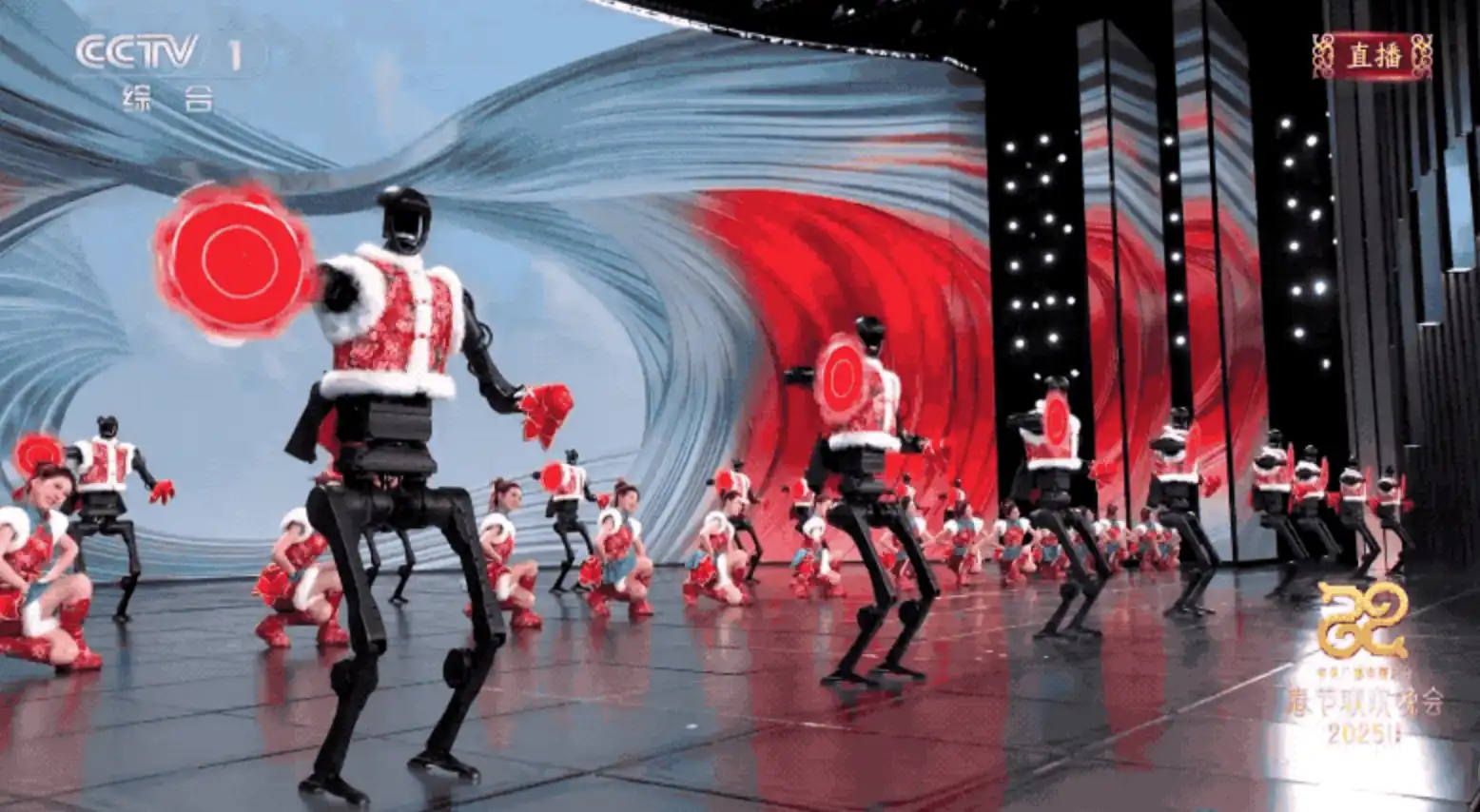
Yushu Technology Appears on the 2025 Spring Festival Gala
It became an overnight sensation nationwide. The next day, this robotic company and its founder entered the memory of every Chinese family.
It was not just luck. Huang Jiawei from Yushu's marketing department made it clear: "In fact, during the CCTV Spring Festival Gala in the Year of the Ox in 2021, we had already been on stage. Later, we had daily close contact with CCTV staff, and actually, three to four months ago, CCTV contacted us." The team previously mentioned the high-intensity rehearsals, adjustments, and choreography for months leading up to the Gala.
The rewards brought by the Gala also left a mark on the financials. The prospectus disclosed that in 2025, Yushu's domestic revenue share had risen to 56.35%, with the company explicitly citing the nationwide recognition brought by the Spring Festival Gala performance as one of the reasons; the annual main business income was approximately $1.676 billion, with humanoid robot income around $868 million, and the pure humanoid robot shipments in 2025 exceeded 5,500 units.
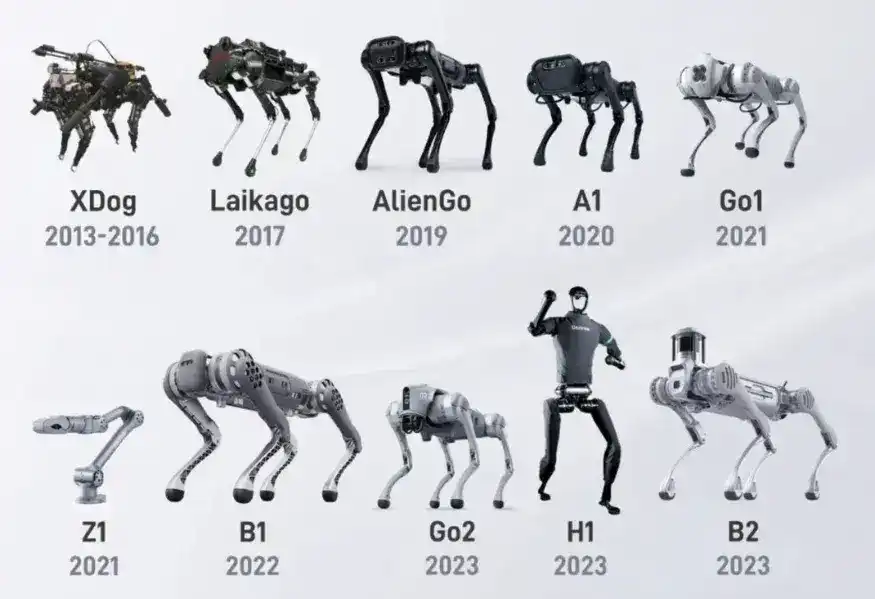
Yushu Technology's Robot Dog and Robot Model Evolution
At the private enterprise symposium in February 2025, a widely circulated on-site photo showed 14 entrepreneurs in the front row. Ren Zhengfei was in the middle, Jack Ma was in the second from the left, followed by Lei Jun and Liang Wenfeng.
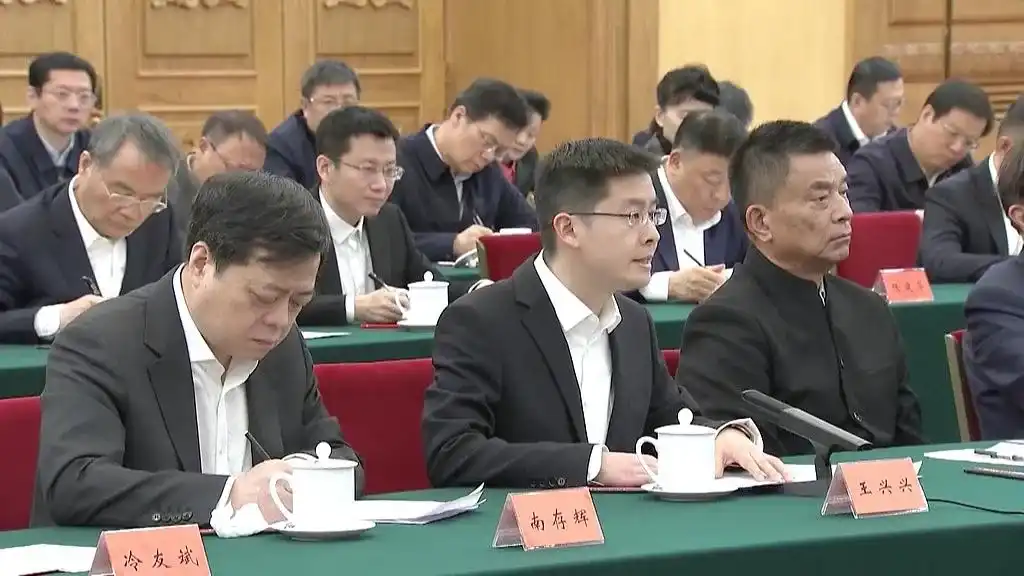
Wang Xingxin Speaks in the Front Row at Private Enterprise Symposium
Wang Xingxin sat in the front row, being the only post-90s in the audience and one of the six entrepreneur representatives who spoke. That day, Meituan's Wang Xing sat behind Wang Xingxin.
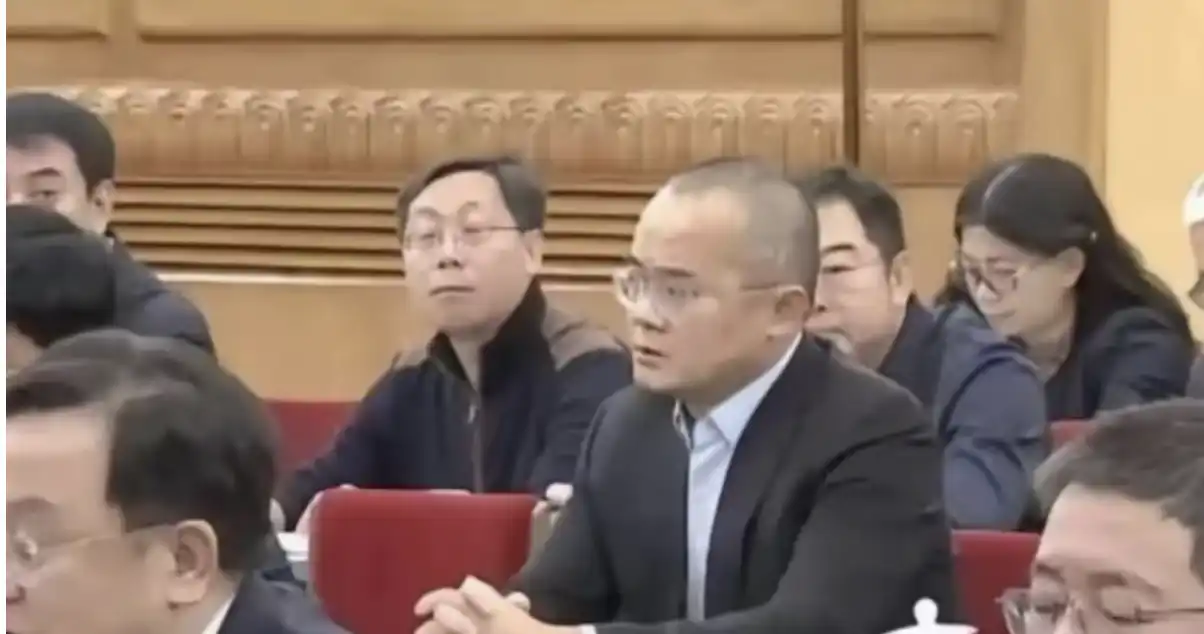
Meituan's Wang Xing
In the following one or two years, Yushu Technology's pace of advancement was unbelievably fast, with one year of progress surpassing the previous four years.
On June 6th, a total of approximately 694.50 million yuan was raised in a financing round, with China Mobile and Chuang, Tencent Technology, ByteDance's Wuxi Jinqiu, Alibaba's Hangzhou Haoyue, and Shanghai Yunguang all participating, officially making Tencent a direct shareholder of Yushu. In September, Wang Xingxin was named one of TIME's 100 most influential people in the global AI field for 2025. On November 15th, Yushu completed its IPO listing guidance. The countdown to the listing began.
Wang Xingxin himself was also busy being pushed around. The previous Wang Xingxin used to explain early projects on Zhihu and Bilibili, occasionally taking out gloves, a nimble hand, and a robot prototype to show to netizens; he once participated in a first-party commercial shoot and specially released a video saying, "One day of shooting earned me half a year's salary." That was a moment when an engineer felt the novelty of his first personal commercial income.
But now, Wang Xingxin has switched from hoodies to shirts and suits, the frequency of updates on Zhihu and other social media platforms has decreased, and even if updated, it is almost always product promotion without revealing personal thoughts.
On Chinese New Year's Eve, February 16, 2026, Yushu appeared on the Spring Festival Gala for the third time. Twenty-five robots shared the stage with teenagers from Henan Tagou Wushu School, performing Drunken Fist, Dual Stick Play, and sword dancing. G1 handled most of the high-difficulty group dances, while the larger-sized H2 appeared as the "Sword Master," taking the stage at the climax. Finally, H2 held hands with the young martial artist, bowing together. At ten o'clock that night, JD.com listed multiple robots, including the "Spring Festival Gala Edition," which were sold out within minutes of going online.
A month later, on March 20, Yushu's application for the Sci-Tech Innovation Board was accepted; it passed the preliminary review on June 1, achieving IPO approval in just 73 days. In July, Wang Xingxin and Yushu's manned mech GD01 appeared on the cover of TIME magazine; on August 6, Yushu's Sci-Tech Innovation Board was priced at 150.80 yuan, with applications opened on August 10. DeepSeek appeared on the strategic placement list, receiving around 933,900 shares worth about 140.76 million yuan, locked for 36 months. There was hardly any gap left for the outside world to ponder over the previous event.
At the most bustling Wuzhen Internet Conference in 2017, Wang Xing appeared in public for the first time.
Eight years later, Wang Xing returned to Wuzhen for another Internet Conference. Although this Wuzhen summit was not as lively as before, there were twenty-eight forums of all sizes during the summit, with the most crowded audience attending the session where Wang Xing was present.
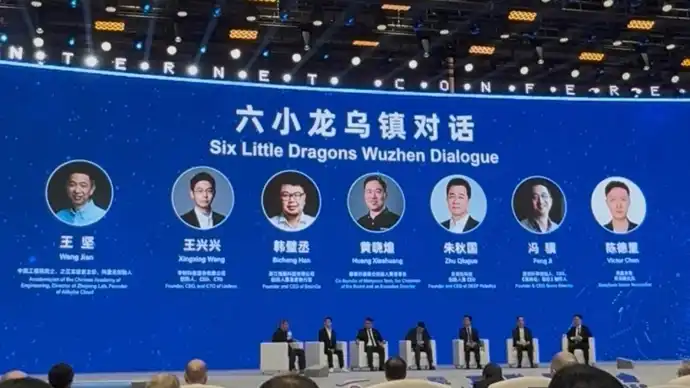
In 2025, Wang Xing will be the main guest at the Wuzhen Internet Conference
The organizers arranged a special "Six Little Dragons Wuzhen Dialogue," hosted by Wang Jian, academician of the Chinese Academy of Engineering and founder of Aliyun. Sitting on the stage were Wang Xing from Yushu, Han Bicheng from StrongBrain Technology, Huang Xiaohuang from GroupCore Technology, Zhu Qiuguo from DeepCloud Technology, Feng Ji from GameScience, and senior researcher Chen Deli from In-Depth Inquiry.
As the first guest speaker, Wang Xing said he had a deep affection for Wuzhen, stating, "From attending the summit as an audience member for the first time in 2017, to sitting on stage today sharing my experience."
When Wang Xing first came to Wuzhen, Yushu had just received personal angel investment, with an estimated valuation of about $13.33 million.
Today, Yushu's Science and Technology Innovation Board issuance price is $150.80, with a post-issuance valuation of approximately $61 billion. On overseas OTC platforms, Yushu Technology's IPO price is $590 RMB, corresponding to a market value of about $238.7 billion. Based on this market value, the profit from Yushu Technology's IPO subscription can even reach $220,000.
In other words, Wang Xing's Yushu Technology has seen its valuation grow by 17,900 times in 9 years.
Looking back at the "East Prosperity Bureau" photo from 2017, we can perceive a somewhat brutal sense of time. At that time, the combined net worth of the entrepreneurs and related Internet companies on the table was approximately $700 billion. This was a sum representing the golden age of platform internet companies.
Today, if we calculate based on the $238.7 billion valuation, Wang Xing's 30.02% stake post-issuance corresponds to about $71.7 billion. The total net worth of the East Prosperity Bureau in 2017 was $700 billion. He alone has reached one-tenth of the value of the entire table from that year.
The East Prosperity Bureau witnessed the moment when an old cycle reached its peak and also left behind a very small starting point for the new cycle outside the venue.
“Every generation of young people has its own opportunities.” Few have articulated this as convincingly as Wang Xing.
Recommended
Desk: Brent Crude Tops $110, Musk's Net Worth Drops 528.6 Billion in Four Days After Tesla Roadster Launch
Oct 17, 21:49
JST Fifth Buyback and Burn Successfully Concludes: Over 170 Million Tokens Worth Approximately $23.53 Million Burned, Buyback Mechanism Set for Comprehensive Upgrade
Oct 17, 20:10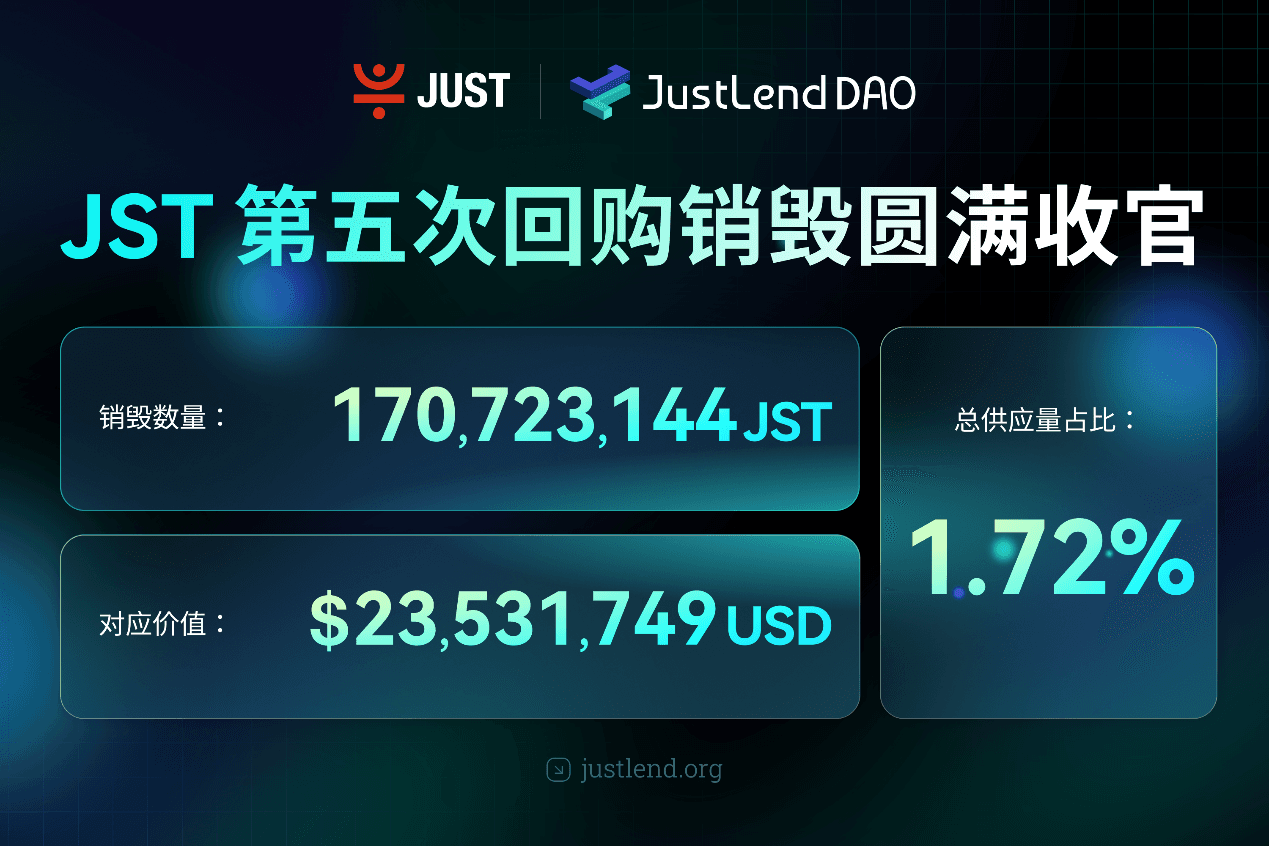
BitTorrent Brand Upgrade and Initial BTT Buyback & Burn Launch Simultaneously, Dual Engines Usher in New Era of Web3 Infrastructure
Oct 17, 20:00
Asia Market Daily: Japan's BOJ signals more rate hikes while Korea targets offshore perpetual platforms (2026/10/17)
Oct 17, 17:01Why did Papertrade backfire on you?
Oct 17, 17:01
The 'Strict Father' of Northern Myanmar: This Company Deploys 200,000 "AI Best Actors" to Strike Back Against Scammers
Oct 17, 15:34