As Crypto Platforms Rush to Wall Street, UMX is Building Depth in Trading
In 2026, the "Token-Stock Convergence" in the crypto industry is transitioning from a narrative to a product capability competition stage.
From Binance launching bStocks, Kraken advancing xStocks tokenized US stocks, to Robinhood opening up tokenized stocks to Europe, Coinbase expanding into stocks and options business, and OKX partnering with ICE to connect traditional clearing infrastructure, these platforms' actions are highly aligned: bringing traditional assets like US stocks and ETFs into the crypto trading interface, using the length of asset listings to build the first-stage competitiveness.
However, as "being able to buy US stocks" gradually becomes a basic capability, a new issue is beginning to emerge: for professional cross-market traders, what they truly need is a single asset price exposure or a set of professional trading tools that can execute strategies, manage risks, and enhance capital efficiency?
Amid the industry's widespread land grab expansion of targets, UMX (The Unified Market Exchange), a crypto-friendly securities platform incubated by Avenir Group, has chosen a different path: skipping the asset quantity competition and directly entering the underlying capability of professional trading. Through open trading APIs, a complete US stock options strategy system, and a unified purchasing power framework, UMX completes the transition from "being able to buy US stocks" to "being able to conduct professional US stock trading."
This may also be a microcosm of the next stage of token-stock convergence: the era of stacking targets is about to end, and the real barrier will be built on trading depth and infrastructure.
To understand why "being able to buy US stocks" is far from enough, we must first deconstruct the real pain points of professional cross-market traders.
In the current macro financial cycle, the interconnection between crypto assets, US tech stocks, ETF fund flows, USD liquidity, and macro data has become increasingly apparent. A seasoned trader may simultaneously focus on BTC, ETH, the Nasdaq index, tech stock earnings reports, interest rate expectations, and ETF fund changes, and adjust positions between different markets based on these signals.
However, the trading structures of the US stock market and the crypto market are not the same.
The US stock market has fixed trading hours, while the crypto market operates 24/7; after the US stock market closes, BTC and ETH still react to macro risks, policy changes, or unforeseen events; when the US stock market reopens, market prices may have already significantly changed. For professional traders, if a platform only provides a frontend trading interface, US stocks can hardly integrate into their strategy system.
This raises several direct issues: while strategy signals can be captured by the model, trade execution still relies on human intervention; holding both crypto assets and US stocks simultaneously is feasible, but integrating them into the same system for cohesive management is challenging; users may purchase US stocks but may not necessarily be able to incorporate them into a professional strategy.
This is also the difference between a "US Stock Onramp" and "Professional US Stock Trading."
The former addresses the accessibility issue, while the latter tackles the usability problem. The former provides users with asset exposure, while the latter demands that the platform possesses capabilities for system access, strategy execution, risk management, and capital allocation.
UMX offers trading in actual US stocks, ETFs, and US stock options. According to the platform's information, users hold real US stock securities rather than CFDs or tokenized exposure based solely on price changes. However, real stock trading is just the foundation of its US stock business.
UMX also provides both App and API trading, supporting various professional order types, US stock option combination strategies, fractional share trading, as well as pre-market, regular market hours, after-hours, and extended-hours trading for some US stocks and ETFs.
Individually, these features may not appear unfamiliar; the real emphasis, however, is that they are beginning to cover the various stages of a professional securities trade, from market observation and order execution to strategy development and position management.
For ordinary users, the core value of US stock products may lie in lowering the access threshold. But for professional cross-market traders, whether the platform can offer actual securities, programmatic interfaces, options tools, and fund coordination determines whether US stocks are just a code in the asset list or can be a strategic tool integrated into a complete trading system.
In a professional trading scenario, an API is not an additional feature but rather trading infrastructure.
For quant teams, market makers, and institutional clients, without a mature trading API, a platform is mostly just a standalone front-end trading interface. Without access to proprietary strategy systems, automated order placement, batch position adjustments, real-time data feedback for risk monitoring, all strategies must rely on manual execution, failing to meet the efficiency and precision required for professional trading.
The value of an API is not in adding another technical interface to the platform but in transitioning US stock trading from page operations to systematic execution by professional traders.
The significance of UMX's open trading API lies precisely here. US stocks are no longer just assets that can be manually purchased but rather trading tools that can be invoked, executed, and managed by a strategy system.
In a cross-market scenario, this is particularly important. Traders may need to adjust their position in US tech stocks based on BTC volatility, or manage their crypto asset exposure around the opening, closing, earnings reports, or macro data releases in the US stock market. When market risk appetite switches rapidly, the speed of strategy response and system execution capability will directly impact trading outcomes.
If trading is limited to manual intervention, US stocks are unlikely to become part of a professional cross-market strategy. APIs, on the other hand, give US stocks the opportunity to be integrated into the same set of strategy systems, serving position adjustments, risk control, and trade execution alongside crypto assets.
From this perspective, APIs represent the first leap in the UMX US stock capability: moving from "can buy" to "can be system-called."
If APIs address the "execution efficiency" issue, US stock options address the "strategy depth" issue.
The essence of plain stock/ETF spot trading is directional trading. Traders can only profit from price movements and cannot manage volatility, hedge downside risks, or enhance returns in choppy markets. For professional traders, options are an essential tool for building a complete trading system: they can be used to hedge position risks, enhance position returns, trade volatility, and construct nonlinear payoff structures.
According to publicly available information from UMX, its US stock options capability already covers individual stock and ETF options, supporting covered calls, protective puts, spread strategies, neutral strategies, and various mainstream combination strategies; it also supports high liquidity underlyings like SPY, QQQ for 0DTE (same-day expiration) trading, and provides professional volatility indicators such as IV/HV percentile to assist in decision-making.
In a cross-market trading scenario, the value of this options capability goes far beyond "having an additional trading instrument." It transforms US stocks from a single directional asset into a manageable, combinable, and hedgeable strategic tool that can serve not only the risk management of US stock positions but also be combined with ETFs, cash management, crypto asset positions, and overall risk budgeting, becoming a core part of cross-market portfolio strategies.
For example, traders can sell covered calls while holding US stocks or ETFs to receive corresponding option premium income; they can also buy protective puts to provide downside protection for existing positions.
When traders have a market directional bias but want to control maximum losses, they can use spread strategies to limit potential risks and returns; in choppy or volatile market conditions, they can also employ neutral or volatility strategies to not rely solely on price increases for profits.
This means that UMX’s US stock capabilities are no longer just about “which underlyings to cover,” but further extend to “whether users can build strategies around these underlyings.”
The upper limit of trading tools is ultimately determined by capital efficiency. For professional traders, this is a core requirement that is more fundamental than feature richness.
In traditional trading models, different assets and products often correspond to independent account systems, margin rules, and capital pools. When users trade both US stock spot and options simultaneously, the buying power and margin utilization of the two types of positions are independent of each other and cannot be holistically allocated. If cryptocurrency assets are added on top, the issue of capital fragmentation becomes even more pronounced. For traders who need to frequently adjust positions and run portfolio strategies, capital dispersion directly reduces capital utilization, increases the opportunity cost of strategies, and may even cause them to miss trading opportunities due to insufficient margin.
UMX's approach to this issue can be divided into two levels.
First, at the securities trading level, US stocks, ETFs, and US stock options use corresponding buying power and margin frameworks according to account rules, and users do not need to establish completely independent capital pools for each type of security product. Therefore, stock holdings, option positions, and account funds can be managed under the same securities trading framework, providing the corresponding capital base for spot and options combination strategies.
Second, at the cross-market fund allocation level, users can exchange USDT for USD, or pledge eligible BTC, ETH, and other cryptocurrencies, and transfer the corresponding funds to the securities account to form buying power.
This means that stock holdings, option positions, and account cash are no longer fragmented modules but are unifiedly managed under the same set of capital rules. For traders, this is by no means just “more convenient operation”: when they need to quickly adjust option hedging positions, respond to market fluctuations, and adjust margin utilization, their funds will not be split by account structure, and the flexibility of strategy execution and the efficiency of fund utilization will be significantly improved.
This is also one of the differences between UMX and ordinary US stock access products. Ordinary access addresses “whether users can buy US stocks,” while UMX focuses more on “whether users can truly use US stocks.” The former emphasizes asset coverage, while the latter emphasizes trading depth and capital efficiency.
The value of the above three capabilities will be more intuitive in specific market scenarios.
Recently, Leopold Aschenbrenner's Situational Awareness fund incident sparked widespread discussion. The fund’s heavily AI infrastructure-related underlyings—including Nebius, Sandisk, Micron, and CoreWeave—all experienced monthly declines of over 35%; however, the positions he shorted did not drop much, ultimately causing the fund to face margin pressure and be forced to deleverage.
However, July was a good month for Bitcoin. While AI infrastructure assets were under pressure, BTC did not experience a significant decline in sync. During this particular market phase, BTC's relative strength made it a deployable asset pool.
Imagine a professional trader holding both AI stocks and BTC simultaneously, with predefined risk rules in their proprietary strategy system: when the AI stock portfolio experiences a decline, implied volatility, or margin utilization reaches a threshold, the system can adjust part of the spot position through the UMX API and establish protective strategies such as individual stock or QQQ puts and bear put spreads. If the US stock market continues to fall, the brokerage margin remains under pressure, and BTC still shows relative strength, the trader can also, under platform rules, use BTC, ETH, and other crypto assets as collateral to perform a "lend-and-transfer" to create USD funds on the securities side to supplement margin or support future hedging.
This means that traders do not need to sell BTC immediately to address short-term pressure on the US stock side while still wishing to hold BTC. The API is responsible for executing position adjustments, options provide hedging tools, and the relatively strong crypto assets can be used to supplement the securities buying power when needed, reducing the risk of forced deleveraging due to insufficient margin.
The difference in this workflow is particularly evident in traditional professional brokerages. Taking IBKR as an example, traders can certainly utilize API to trade US stocks and options; however, if their core funds are still held in BTC, ETH, they cannot keep their crypto positions unchanged in a single securities account while directly converting them into buying power for US stocks and options. Traders usually still need to sell or convert the crypto assets first, then complete the fund transfer before executing securities trades. What UMX is trying to solve is precisely this "crypto assets are still in the account, but immediate action is required on the securities side" execution gap.
In high-volatility markets, risk management depends not only on having hedging tools but also on whether fund buying power and execution systems can be simultaneously mobilized. For cross-market traders, this is closer to the real professional trading needs than simply adding more US stock assets.
As more and more crypto platforms launch US stock-related products, "being able to buy US stocks" is transitioning from a differentiated advantage to a basic setup. However, foundational capabilities have never been equivalent to professional capabilities.
For active cross-market traders, whether the platform supports US stocks is just the first-level issue. The more essential judgment criteria are: whether US stocks can be accessed by the proprietary trading system, whether they can be automatically called by the strategy, whether risk-reward structures can be built through options, whether fund efficiency can be enhanced through a unified fund framework, and whether they can jointly serve the same set of trading logics as crypto assets.
These underlying capabilities are the true differentiators between platforms in the next stage.
UMX chooses to start from three dimensions: Open Trading API, US stock options strategies, and unified purchasing power. Essentially, it is a response to a core industry question: After US stocks are integrated into the trading scene of cryptocurrency users, should it merely be a tradable asset code, or a set of trading tools that professional traders can truly utilize?
From "being able to buy US stocks" to "being able to engage in professional US stock trading," what lies in between is not just the length of the product list, but the depth of the execution system, strategic tools, capital efficiency, and trading infrastructure.
In the second half of the cryptocurrency-stock integration, the asset coverage dividend may gradually plateau. What truly attracts professional traders, quantitative teams, market makers, and institutional clients may no longer be who has more assets listed, but who can enable these assets to be traded more efficiently, systematically, and professionally.
Recommended
Desk: Brent Crude Tops $110, Musk's Net Worth Drops 528.6 Billion in Four Days After Tesla Roadster Launch
Oct 17, 21:49
JST Fifth Buyback and Burn Successfully Concludes: Over 170 Million Tokens Worth Approximately $23.53 Million Burned, Buyback Mechanism Set for Comprehensive Upgrade
Oct 17, 20:10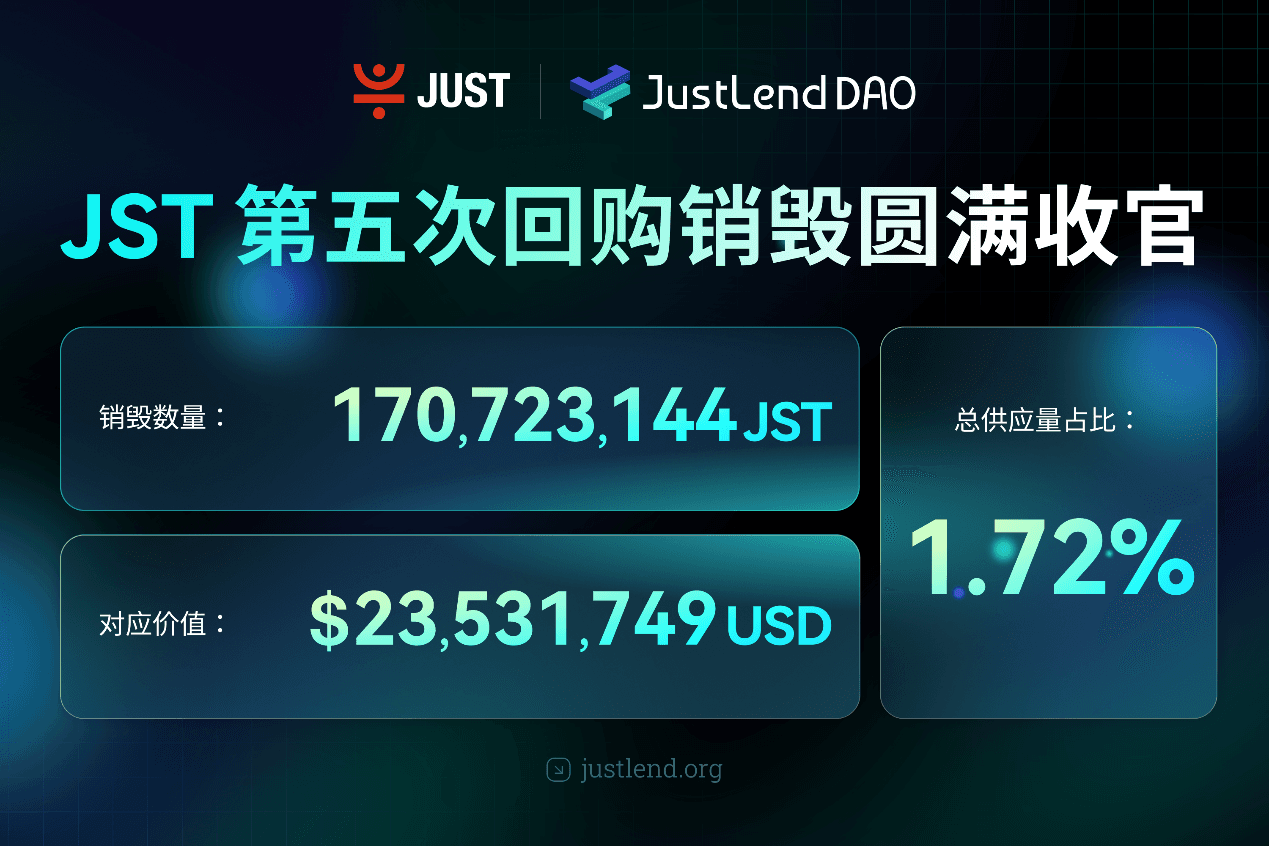
BitTorrent Brand Upgrade and Initial BTT Buyback & Burn Launch Simultaneously, Dual Engines Usher in New Era of Web3 Infrastructure
Oct 17, 20:00
Asia Market Daily: Japan's BOJ signals more rate hikes while Korea targets offshore perpetual platforms (2026/10/17)
Oct 17, 17:01Why did Papertrade backfire on you?
Oct 17, 17:01
The 'Strict Father' of Northern Myanmar: This Company Deploys 200,000 "AI Best Actors" to Strike Back Against Scammers
Oct 17, 15:34