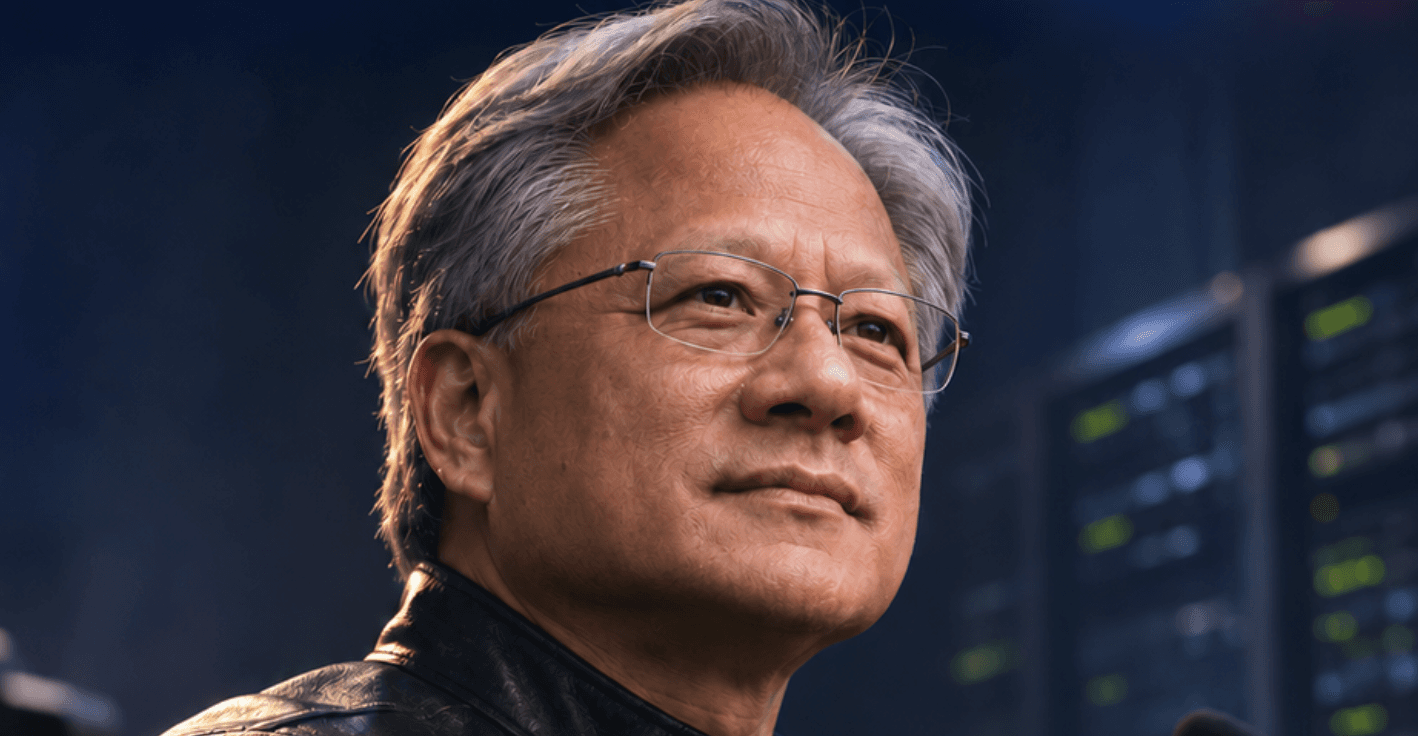
Wall Street Morning Brief: Jensen Huang Ouster Crisis Hits, AI Rally Gets Doused, AMD and Broadcom Move In on Orders
Every Monday to Friday morning, we focuses on macro, US equities, AI, precious metals and crude oil, using data to review the market and trends to seize the initiative.
Dollar Index Hits 19-Month High, Yen Approaches the 160 Mark — Will the "Buy US, Sell Japan" Wave Restart?Riding the tailwind of a triple AI boost, tech stocks forced a breakout despite rate-hike pressure: the S&P 500 rose 1.31% (reclaiming its 100-day moving average), the Nasdaq jumped 1.6% (the Nasdaq 100 surged 2.3% to close above its 200-day moving average, its best weekly performance since May), and the Dow edged up 0.49%. Goldman Sachs' trading desk noted that the Veterans Day holiday cut market liquidity by 20%, and concentrated buying by hedge funds and retail investors directly amplified the short squeeze — just three stocks absorbed 32% of total market volume. But Bloomberg strategist Frank Monkam warned that cross-asset volatility remains elevated and that this rally is in fact very fragile under the shadow of tightening.
The internal power struggle inside the Fed is intensifying: Chair Warsh will face questioning in January from a Democratic-controlled House and Senate, with Senator Warren, a harsh critic, expected to chair the Senate Banking Committee. Meanwhile, the retirement timing of New York Fed President Williams, who holds a permanent vote, has triggered infighting — will he retire when he turns 65 next year, or serve a full ten years through 2028? Analysis firm Derek Tang noted that if Williams is forced out next year, Warsh would gain control of appointments to this key regulatory post a year early; University of Pennsylvania professor Conti-Brown warned that a forced replacement would be seen as political interference.
Expectations of a 50-basis-point rate hike and Treasury yields back at 5% pushed the dollar index up to 103, its highest level since April 2025. Non-US currencies were routed across the board: the euro fell 0.7% and the yen dropped 0.7% to approach the 160 line of life or death. Although Japan's October corporate goods prices jumped 7.1% and pushed JGB yields to 2.785%, the huge US-Japan rate differential still turns the yen into an arbitrage ATM. Dai-ichi Life Research Institute believes bets on a 50bp Fed hike are excessive, but MUFG warned that if dovish BOJ board member Asada Toichiro sounds cautious today, the market will set off another wave of "buy dollars, sell yen."
Spot gold tumbled 1.2%, falling below the $4,000 psychological floor for the first time in four days; the LME aluminum cash premium hit a more than 30-year high and inventories fell to their lowest since 1990, with physical supply extremely tight. Crude oil was volatile: Brent briefly broke above $94 intraday, then pulled back to $92.8 after Saudi Arabia and Iraq posted their highest October output since the war, while WTI edged up 0.4% to $86.41 a barrel. The Trump administration is moving on multiple fronts: it authorized Vice President Vance to explore talks with senior Iranian officials to ease shipping pressure; envoys Kushner and Witkoff fly to Moscow today to meet Putin and demand that Russia submit a new European security proposal including "reciprocal de-escalation measures." In addition, Trump's Interior Department plans to sell some federal public lands to unlock what Burgum calls "trillions of dollars in oil, gas and mineral assets," drawing strong Democratic resistance.
"Money-Takers" Crush "Money-Payers": Nvidia's CEO in an Ouster Crisis, the Global AI Bellwether Faces a Major EarthquakeLast night the AI main line ignited across the board, and the tech sector once again staged a "boiling rally." CoreWeave's better-than-expected results and raised outlook, Anthropic's IPO several times oversubscribed, OpenAI's quarterly revenue topping $10 billion for the first time, plus IBM's new quantum chip pushed money back into AI hardware and infrastructure. Goldman's AI basket soared 5%, recovering its post-midterm losses, and the Philadelphia Semiconductor Index rocketed 5.66%, completely erasing last week's decline and approaching its 200-day moving average.
The "shovel-selling money-takers" are draining the "shovel-buying money-payers": compute leasing, memory and optical communications all soared, with the neocloud sector up more than 12% in a single day; meanwhile the cash-burning cloud giants have become ATMs, and the Mag 7 index underperformed the S&P 493. Goldman characterizes the current phase as the AI "trough of disillusionment," calculating that for the six major cloud giants to achieve a 15% return, they would need to generate $1.42 trillion of revenue in 2028-2030; the five giants have already issued $296 billion of bonds this year, yet the high-yield AI bond market has been nearly frozen for the past month.
The big names' scrutiny of AI's underlying assets has escalated into a life-or-death test of credit and cash flow:
- "Big Short" Burry warned that of the giants' more than $3 trillion in purchase commitments, a large number of GPUs are sitting in warehouses depreciating before they are even powered on;
- Sixth Street chief Waxman, who manages $140 billion, said about $200 billion of chips are stranded in warehouses because data centers are not ready, unit economics are extremely unstable, and ING has even begun selling $500 million of data center loans, including ones tied to "Stargate";
- Social Capital founder Chamath Palihapitiya said the next 18 months will be a brutal screening period, with breakeven utilization needing to reach 70%-75%;
- JPMorgan also believes monetizing AI efficiency will take time, and high rates will crush highly leveraged players.
At the same time, competition on the application side is intensifying: new AI office products are hitting traditional software, while United Airlines and Amazon successively blocked third-party AI agents from accessing their platforms — which instead pushed travel stocks (Booking, Expedia), suppressed by AI-disruption fears, into gains; traditional streamer NBCUniversal's Peacock took a different path, announcing it will double down on vertical short dramas with single viewing sessions of up to 30 minutes to fight for mobile users.
A heavyweight negative shock hit the after-hours market: Nvidia CEO Jensen Huang faces the most serious ouster crisis in Silicon Valley in 40 years (since Steve Jobs was driven out of Apple in 1985). The New York Times disclosed Huang's second extramarital affair, with the partner none other than his direct subordinate, medical VP Powell, and after the two were photographed being intimate at a hotel during the March GTC conference, security was sent to pressure witnesses into signing confidentiality agreements. The board may discuss removing Huang as soon as today and has already been scouting an interim CEO; Polymarket shows the probability that he announces resignation or is removed before December 31 soaring from 13% to 84%.
The matter has evolved into a coordinated kill operation in Washington: Senator Cramer and the chairs of three House committees jointly pressed for his ouster; Axios further reported a heated argument in the White House Oval Office, where Musk, Rubio, Bessent and others unanimously pressed to expand sanctions on illicit shipments of Nvidia chips, and even ally Trump turned against him, completely isolating Commerce Secretary Lutnick, who tried to hold it back. Because as many as 60 people at Nvidia report directly to Huang and there is no successor whatsoever, a change at the top could send the global AI sector into instant shock; Nasdaq futures have already fallen more than 1.1% after hours.
Specific Corporate Moves and Share Price Action:- CoreWeave closed up 24.71%, then fell more than 6% after hours: its Q3 report showed revenue surging 167% to $3.66 billion, backlog of $132.5 billion and raised full-year guidance, and the CEO announced compute is sold out through 2027 with significant price increases. Goldman is optimistic it will turn cash-flow positive by 2030, but shorts warn of a $33 billion funding gap next year and note its CDS spread once breached 1,289bp. After hours it gave back gains on reports that it plans a $4 billion loan collateralized by chip contracts, led by Morgan Stanley and MUFG (yield 7%-7.5%), and on the Nvidia negative news. NEBIUS jumped 15.44%; Oracle rose 8.82% (Bernstein is bullish on its data center and database dual drivers).
- GoPro plunged 18.34%: it delayed its Q3 report due to financing accounting issues, is seeking a debt waiver, and expects Q3 revenue of only $96 million, halved year over year.
- AMD rose 7.32% & Broadcom rose 3.99%: both rose about 3% after hours against the trend. As Nvidia is mired in the Huang removal storm and the White House sanctions crisis, sharp-eyed Wall Street money launched a "Plan B" hedge overnight, betting that Nvidia's governance shock and supply chain turmoil will force hyperscale cloud providers to accelerate shifting AI chip orders to AMD and Broadcom.
- Chip and optical communications stocks rose broadly yesterday: ARM +12.05%, Intel +7.46%, AMD +7.32%, TSMC +4.25%, Broadcom +3.99%, Marvell +9.33%, ASML +1.76%, Qualcomm +1.75%. Super Micro (it began shipping H15 servers equipped with AMD processors, which helped fuel the rally. In optical communications, AAOI +15.6%, Lumentum +10.67%; nuclear stock Oklo was boosted as its Texas test reactor had operating restrictions lifted by the Department of Energy.
- Memory names rebounded across the board: although consumer NAND gains slowed, AI memory bookings are already sold out through 2029, SK Hynix announced that DRAM and HBM capacity is sold out with demand more than twice supply, and Samsung's 2027 HBM capacity is also fully sold, directly setting off a short squeeze in the memory sector. Micron +11.89%, SanDisk +13.69%, SK Hynix +9.71%, Seagate +9.99%.
Mag 7 (the seven tech giants) moves:
- Nvidia closed up 2.87%, then plunged more than 8% after hours: the crash was triggered by the after-hours exposure of the second extramarital affair and the board's plan to remove Huang. Baird and Bernstein downgraded it to neutral and halved their target price to $200, Morgan Stanley removed it from its top picks, and Citi, Wells Fargo and Mizuho all cut targets. Strategists O'Rourke and Mullarkey warned that its aggressive vendor financing will leave the successor busy firefighting and that client trust will be extremely hard to repair. Only "Big Short" Burry called the plunge an "excellent short-term trade," though he expects its edge to narrow over the next five years.
- Microsoft fell for a second day, down 2.26% yesterday: Anthropic will list on November 19, its IPO several times oversubscribed, and it plans to raise the offering price in a bid for a $1.5 trillion valuation and a record $90.4 billion raise (surpassing SpaceX, which fell 2.33% yesterday). Although Microsoft subscribed $1 billion and is investing $117 billion this year to build compute (it is building a Texas power project with Chevron and bearing the electricity costs itself), Anthropic's newly launched office software such as Claude Sheets directly threatens Excel's moat.
- Tesla rose 2.91%: Musk announced he will extend Cybertruck production at the Texas plant by two to three months, to late summer 2027, to work through the order backlog (delaying the timing for freeing up capacity for the Cybercab), while also adjusting prices and suspending new orders for the base dual-motor version.
- Google rose 2.11%: internally it is testing a new Gemini 4 series model codenamed "Hydrogen," positioned similarly to the Flash series and focused on extreme speed, efficiency and low cost.
- Apple rose 2.04%: amid the giants' frenzied spending, Apple's extremely restrained AI capex (below 5% of sales, versus more than 50% for Meta and nearly 45% for Microsoft) made it a defensive winner favored by safe-haven money.
- Amazon fell 1.74%: pressured by high capex, and it recently blocked Meta's AI agent Muse from automated shopping on its platform.
- Meta fell 1.97%: besides concerns over capex above 50% of sales and its AI agent Muse being blocked by multiple companies, long-time infrastructure head Santosh Janardhan announced he will leave early next year, with former AWS executive Dave Brown taking over to oversee AI compute infrastructure.
November 12 (Thursday)
- US $25 billion 30-year Treasury auction: the finale of this week's $125 billion quarterly refunding; the strength of long-end demand will test the market's true pricing of the US fiscal deficit and long-term inflation.
- Four Fed voters speak back-to-back: 22:00 Cleveland Fed President Hammack; 00:30 the next day Chicago Fed President Goolsbee; 02:10 the next day San Francisco Fed President Daly; 07:30 the next day FOMC permanent voter and New York Fed President Williams.
- Nvidia board meeting outcome: the number-one bomb deciding the fate of global tech stocks; a leadership change would hit US AI stocks as well as A-share optical modules and Hong Kong semiconductors.
- US envoys meet Putin in Moscow and Zelensky in Dublin, deciding the Russia-Ukraine prisoner exchange and security plan, which affects whether oil can hold $94.
- Key earnings: pre-market in the US, watch NEBIUS, Ondas, Nu Holdings, Brookfield; after the close, focus on Applied Materials, Cerebras Systems, Cisco and Virgin Galactic.
November 13 (Friday)
- South Korea's new IPO rule: South Korea formally implements the IPO "cornerstone investor system" (allowing institutions with a lock-up of at least six months to receive allocations in advance), aimed at curbing the wave of new-listing price collapses and sharp declines in the Korean stock market.
- Anthropic's CEO and JPMorgan CEO Dimon livestream, building momentum for the $1.5 trillion valuation IPO.
Join the official Coincamps community:
Telegram: https://t.me/coin_camps
Recommended
Individual income tax revenue grows 90%: Is cryptocurrency taxation still far away?
Nov 12, 14:21
Behind Musk's Support for Jensen Huang, Computing Power Costs More Than Favors
Nov 12, 14:05
Breaking the Dilemma of Increasing Volume Without Revenue Growth for Chinese Large Models Going Global, B.AI Builds a Value Repatriation Super Hub via 'Direct Manufacturer Integrat
Nov 12, 14:05
Anthropic Pre-IPO Contract Arbitrage Retrospective: Key Event Timeline and Position Micro-Management
Nov 12, 13:22WasabiCard launches "Global Issuance Card", enabling businesses to issue local cards across 100+ markets.
Nov 12, 12:28
In Jensen Huang, I saw their hostility toward Chinese people.
Nov 12, 11:58