
Top Stablecoins on Solana 2026: USDC, USDT, USD1, PYUSD
Solana has become the most commercially significant blockchain for stablecoin activity outside Ethereum in 2026, holding about $16.9 billion in stablecoins on October 7, 2026 (DefiLlama), with native deployments of USDC, USDT, USD1, PYUSD, and USDY across a payment, DeFi, and institutional settlement ecosystem.
As covered in our stablecoin market cap record analysis, the combination of Solana's sub-second finality, sub-cent transaction fees, and the native deployment of Circle's CCTP cross-chain transfer protocol has made it the blockchain of choice for stablecoin-powered payment applications, cross-border remittance infrastructure, and institutional DeFi protocols that require transaction throughput and cost economics that Ethereum's base layer cannot match.
This guide covers the top stablecoins on Solana in 2026, evaluating each on Solana supply, yield availability, institutional backing, primary use cases, and where each fits in Solana's stablecoin ecosystem. Last updated: October 7, 2026.
Key Takeaways
- USDC is the dominant stablecoin on Solana with the deepest liquidity, broadest DeFi integration, and native CCTP cross-chain transfer support.
- Solana held about $16.9 billion in stablecoins on October 7, 2026, led by USDC at about $7.2 billion and USDT at about $2.9 billion (DefiLlama).
- About $704 million of PYUSD sits on Solana, roughly 24% of its $2.88 billion total supply (DefiLlama), driven by PayPal distribution and low fees.
- USD1 (about $1.4 billion) and USDG (about $627 million) now hold more Solana supply than USDY (about $180 million), while USDP (about $1.7 million) and UXD (about $0.3 million) have become marginal (DefiLlama).
- USDY is the main Treasury-yield token in Solana DeFi at about 3.6% APY (DefiLlama Yields), and it is available to non-US investors only.

Solana's Explosive Growth in Stablecoins
Solana's emergence as the second stablecoin blockchain is a direct function of three technical advantages that no other chain outside Ethereum currently matches simultaneously: sub-second block times, transaction fees that are typically a fraction of a cent, and high throughput capacity.
Those three numbers collectively explain why payment applications, cross-border remittance platforms, and institutional DeFi protocols that cannot absorb Ethereum's base layer costs have converged on Solana as their primary stablecoin settlement layer.
Total stablecoin supply on Solana was about $16.9 billion on October 7, 2026, with USDC at about $7.2 billion in Solana-native supply and USDT at about $2.9 billion (DefiLlama).
USD1, BlackRock's BUIDL, PYUSD, USDG, Ethena's USDe, USDY, EURC, and newer launches such as Open USD account for most of the remainder.
The institutional adoption story is equally significant. MassPay and Coinbase's enterprise payout infrastructure uses Solana-native USDC rails for sub-cent settlement.
Crossmint's Paga Africa partnership deploys Solana as a primary chain for African payment corridors. Bitso uses Solana for LatAm payment flows. And Visa's stablecoin settlement pilots have included Solana as a primary settlement chain alongside Ethereum.
As covered in our 15 stablecoin infrastructure platforms comparison, the platforms building enterprise stablecoin payment infrastructure in 2026 are choosing Solana for its fee structure and throughput before choosing any other non-Ethereum chain.
Solana Stablecoin Supply in October 2026
Ten tokens hold most of the roughly $16.9 billion in stablecoins on Solana. The ranking below uses DefiLlama chain data for October 7, 2026 (DefiLlama Solana stablecoins). USDC alone is about 43% of the total.
| Rank | Stablecoin | Solana supply (Oct 7, 2026) |
|---|---|---|
| 1 | USDC | $7.22B |
| 2 | USDT | $2.91B |
| 3 | USD1 | $1.41B |
| 4 | USDGO | $1.31B |
| 5 | BUIDL (BlackRock) | $968M |
| 6 | PYUSD | $704M |
| 7 | USDG | $627M |
| 8 | USDe | $539M |
| 9 | SoFiUSD | $235M |
| 10 | USDY | $180M |
Source: DefiLlama, October 7, 2026. EURC holds about €57 million on Solana and Open USD about $70 million after its September 2026 launch.
Leading Stablecoins on Solana in Detail
1. USDC (Circle)
USDC on Solana is the native deployment of Circle's dollar-backed stablecoin with about $7.2 billion in Solana-native supply as of October 7, 2026 (DefiLlama). Circle deployed USDC natively on Solana in 2020 and subsequently integrated Solana into its CCTP cross-chain transfer protocol, enabling USDC movement between Solana and Ethereum, Avalanche, Polygon, Base, and Arbitrum without bridging risk.
The CCTP integration is USDC's defining technical advantage on Solana. It eliminates the bridging risk that affects every non-native cross-chain asset transfer and gives Circle Mint institutional clients a direct issuance and redemption pathway on Solana at institutional scale. Every major Solana DeFi protocol including Kamino, MarginFi, and Drift uses USDC as its primary collateral asset. Solana Pay's merchant acceptance infrastructure is built primarily around USDC. And MassPay, Crossmint, and Yellow Card all use Solana-native USDC for their enterprise payment flows.
As covered in our top institutional stablecoins guide, USDC holds the deepest regulated institutional stablecoin credentials in the category with monthly Deloitte reserve attestations, money transmitter licenses across major US jurisdictions, EU MiCA compliance, and Singapore MAS licensing.
Yield to holders: none under the GENIUS Act framework. Yield is available through DeFi lending protocols at variable rates.
Best for: any institution, developer, or payment application requiring the deepest liquidity, broadest DeFi integration, and lowest counterparty risk stablecoin on Solana.
2. USDT (Tether)
USDT on Solana is Tether's dollar-backed stablecoin natively deployed on the chain with about $2.9 billion in Solana-native supply on October 7, 2026 (DefiLlama). Its Solana presence is driven primarily by trading pairs on Solana's centralized and decentralized exchanges and by cross-border payment flows in markets where USDT has deeper consumer adoption than USDC, particularly in Asia and emerging markets.
USDT's primary competitive advantage on Solana versus USDC is consumer brand recognition in Asian and emerging market corridors where USDT is the de facto dollar stablecoin.
USDT holds significant liquidity on Solana DEXs for trading pairs where it is the preferred quote currency. Where USDC beats USDT on Solana is institutional preference: Circle's CCTP gives USDC a native cross-chain transfer advantage that USDT lacks, and US institutional clients overwhelmingly prefer USDC's monthly attestations and regulated issuer structure over Tether's reserve transparency history.
As covered in our how USDT and USDC are losing ground analysis, the market share dynamics between the two largest stablecoins are shifting as institutional adoption accelerates and regulated issuer credentials become the primary institutional selection criterion.
Yield to holders: none.
Best for: trading-focused applications and payment corridors where USDT has stronger consumer adoption than USDC, particularly in Asian and emerging markets.
3. PYUSD (PayPal via Paxos)
PYUSD is PayPal's dollar-backed stablecoin issued by Paxos Trust Company, natively deployed on Solana in May 2024 after its Ethereum launch. Solana's fee structure makes micropayment and consumer payment use cases economically viable in a way that Ethereum's base layer cannot match. About $704 million of PYUSD's $2.88 billion supply was on Solana on October 7, 2026 (DefiLlama).

PayPal's consumer reach gives PYUSD a distribution channel on Solana that USDC and USDT cannot match through payment apps alone. PayPal has also run a rewards program on PYUSD balances for eligible US users; the rate changes, so check PayPal's current terms before relying on it.
As covered in our stablecoin economics guide, the PYUSD yield model is structurally distinct from the GENIUS Act's no-yield prohibition for permitted payment stablecoin issuers because it operates as a reward program rather than a direct yield pass-through.
Best for: consumer payment applications, merchant acceptance tools, and cross-border remittance products targeting PayPal's user base on Solana's payment-friendly infrastructure.
4. USDY (Ondo Finance)
USDY is Ondo Finance's yield-bearing stablecoin alternative deployed natively on Solana, backed by short-term US Treasuries and bank deposits, offering daily Treasury yield accrual to non-US investors at about 3.6% APY on October 7, 2026 (DefiLlama Yields). USDY on Solana benefits from the chain's DeFi composability and low fee structure, making it the primary yield-bearing institutional instrument in Solana's DeFi ecosystem.
USDY is the only yield-bearing Treasury-backed instrument natively composable with Solana's DeFi protocols without requiring conversion to a standard stablecoin. It can be used directly as collateral in Solana lending protocols, in yield strategies on Pendle, and in payment applications where non-US institutional holders want idle Solana balances to be productive rather than sitting in a zero-yield USDC position.
Ondo's Nexus instant redemption technology operates on Solana, enabling 24/7 USDY minting and redemption that eliminates the settlement delay problem affecting traditional tokenized fund subscriptions. As covered in our Ondo Finance review, USDY's DeFi composability is its primary differentiator versus BUIDL and BENJI, which cannot be used directly in DeFi protocols without conversion.
Yield: about 3.6% APY with daily accrual (DefiLlama Yields, October 7, 2026). Available to non-US investors only.
Best for: non-US institutional holders who want Treasury yield on idle Solana balances with full DeFi composability across Kamino, Pendle, and other Solana protocols.
5. USDP (Paxos)
USDP is Paxos Trust Company's dollar-backed stablecoin. Its footprint has shrunk sharply: DefiLlama shows about $25.9 million in total USDP supply and only about $1.7 million on Solana as of October 7, 2026 (DefiLlama). Where it is still used, USDP serves as institutional settlement infrastructure for clients that want Paxos's regulated trust framework.
The primary commercial rationale for using USDP rather than USDC on Solana is the regulatory credential of the issuer. Institutional clients that specifically require an OCC-chartered national trust bank as their stablecoin issuer cannot satisfy that requirement with USDC and must use USDP or the products Paxos issues for institutional clients.
As covered in our 11 best Bridge alternatives guide, Paxos's white-label issuance model also powers PYUSD, which Paxos issues for PayPal, so Paxos's Solana footprint is far larger than USDP's own supply suggests.
Yield: none.
Best for: regulated financial institutions that specifically require Paxos's OCC and NYDFS regulatory credentials as the issuer of their Solana stablecoin infrastructure.
6. UXD (UXD Protocol)
UXD is a Solana-native delta-neutral stablecoin backed by hedged perpetual futures positions, designed specifically for the Solana DeFi ecosystem. It is the most DeFi-native stablecoin in Solana's ecosystem, offering yield through funding rate capture without relying on external TradFi assets or regulated custodians. Its supply has since collapsed to about $0.3 million (DefiLlama, October 7, 2026), so treat UXD as a legacy design rather than an active option.
UXD's yield is variable and dependent on perpetual funding rates, which can be significantly higher than Treasury yields in bull market conditions but carry on-chain perpetual futures market risk that regulated institutions with conservative mandates cannot accept.
For Solana-native DeFi participants who want on-chain yield without TradFi counterparty exposure, UXD provides the Solana-specific equivalent of what Ethena USDe provides on Ethereum.
As covered in our best stablecoin wallet alternatives to MetaMask guide, Solana-native wallets like Phantom are the primary interface for UXD interaction, reflecting its DeFi-native rather than institutional positioning.
Yield: variable, dependent on perpetual funding rates.
Best for: Solana-native DeFi participants who want on-chain yield without TradFi counterparty exposure.
7. EURC (Circle)
EURC is Circle's euro-backed stablecoin natively deployed on Solana, offering euro-denominated settlement on the chain for European institutions and cross-border payment flows involving EUR. EURC on Solana is the primary euro stablecoin in Solana's DeFi ecosystem and the natural complement to USDC for cross-border EUR/USD payment flows.
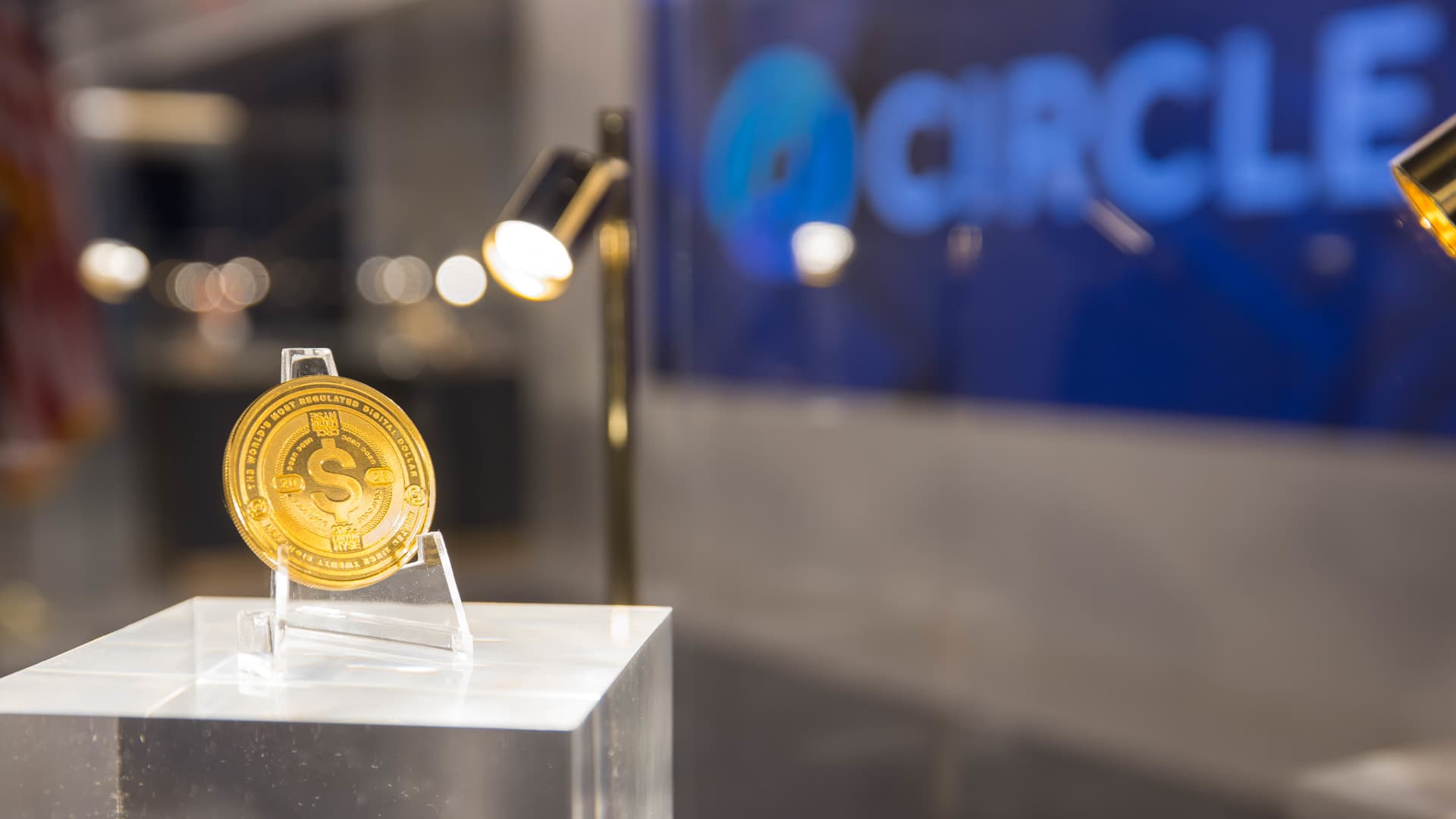
European institutional clients needing euro-denominated settlement on Solana, cross-border EUR/USD payment applications using Solana's fee-efficient rails, and MiCA-compliant euro stablecoin use cases for European DeFi participants are EURC's primary Solana market.
As covered in our BANCOMAT EUR.BANK euro stablecoin analysis, the European euro stablecoin category is growing rapidly in 2026 with both crypto-native issuers like Circle and bank-consortium issuers like BANCOMAT targeting the institutional euro settlement segment simultaneously.
Yield: none.
Best for: European institutions and payment applications requiring euro-denominated settlement on Solana with Circle's regulated issuer credentials and MiCA compliance.
How These Stablecoins Compare
| Stablecoin | Solana Supply (Oct 7, 2026) | Yield | Primary use | Best for |
|---|---|---|---|---|
| USDC | $7.2B | None | Payment, DeFi, settlement | Broadest institutional use |
| USDT | $2.9B | None | Trading, EM corridors | Asian and EM consumer corridors |
| PYUSD | $704M | Rewards vary (PayPal terms) | Consumer payments, remittance | PayPal ecosystem on Solana |
| USDY | $180M | About 3.6% APY | DeFi yield, institutional treasury | Non-US institutional yield |
| USDP | $1.7M ($25.9M total) | None | Regulated institutional settlement | OCC and NYDFS-required entities |
| UXD | About $0.3M | Variable | DeFi-native yield | Solana DeFi yield maximization |
| EURC | €57M | None | Euro settlement, MiCA | European euro settlement |
Source: Solana supply from DefiLlama; USDY yield from DefiLlama Yields, both October 7, 2026.
Key Trends and Institutional Use Cases
USDC Is Pulling Away From USDT for Institutional Use on Solana
The CCTP integration, Circle Mint institutional access, and the GENIUS Act's preference for regulated payment stablecoin issuers with monthly attestations are collectively accelerating USDC's institutional dominance on Solana at the expense of USDT's historically strong Solana position.
For retail and trading use cases USDT remains significant, but institutional clients building post-GENIUS Act compliant stablecoin infrastructure on Solana are choosing USDC by default.
As covered in our GENIUS Act final rules analysis, the July 18 federal rulemaking deadline is creating a wave of institutional infrastructure investment that is further consolidating USDC's position as the institutional default stablecoin across all major blockchains including Solana.
PYUSD's Solana Growth Is Outpacing Its Ethereum Presence
PayPal's decision to deploy PYUSD on Solana has proven commercially correct. The consumer payment use cases that PYUSD was built for are economically viable on Solana at a fee structure that makes them commercially unviable on Ethereum's base layer.
PYUSD's rewards program for eligible US users is the most visible consumer yield feature among Solana payment stablecoins, and about a quarter of PYUSD's supply now sits on Solana (DefiLlama).
Yield-Bearing Instruments Are Filling the GENIUS Act Gap
The GENIUS Act's no-yield prohibition for payment stablecoins has created institutional demand for yield-bearing alternatives that sit alongside USDC in institutional Solana portfolios.
USDY is the primary beneficiary of this demand on Solana, with its daily Treasury yield accrual and DeFi composability positioning it as the yield layer that complements USDC's payment layer in institutional Solana treasury strategies.
Solana Is Becoming the Default Cross-Border Payment Chain for LatAm and Africa
MassPay's Coinbase integration, Crossmint's Paga Africa partnership, Bitso's LatAm payment infrastructure, and Yellow Card's wallet integration all use or support Solana-native USDC for their primary cross-border payment corridors.
The combination of sub-cent fees and instant finality makes Solana the economically rational choice for remittance and B2B cross-border payment flows in corridors where transaction value is too small for Ethereum's fee structure.
As covered in our Yellow Card review, Africa's stablecoin payment infrastructure is being built on Solana rails more than on any other non-Ethereum chain in 2026.
Key Institutional Use Cases by Segment
Corporate treasury on Solana: USDC for liquidity and settlement, USDY for yield on idle reserves for non-US holders, USDP for regulated institutional clients requiring OCC and NYDFS issuer credentials.
Cross-border enterprise payments: USDC via MassPay, Crossmint, and Bitso payment rails. PYUSD via PayPal Xoom for remittance corridors.
DeFi and protocol collateral: USDC as primary collateral across Kamino, MarginFi, and Drift. USDY as yield-bearing institutional DeFi collateral. UXD for on-chain yield maximization.
Consumer and merchant payments: PYUSD via Solana Pay and PayPal's consumer apps. USDC via Solana Pay merchant acceptance infrastructure.
Conclusion
Solana's stablecoin ecosystem in 2026 is the most commercially diverse and fastest-growing non-Ethereum stablecoin market in the world, with USDC's institutional dominance, PYUSD's consumer payment growth, USDY's yield-bearing DeFi composability, and USDT's trading pair depth collectively serving every institutional, retail, and DeFi use case at the fee and throughput economics that make Solana the default payment blockchain for cross-border remittance, enterprise payout, and institutional treasury applications.
USDC leads on every institutional metric including deepest liquidity, broadest DeFi integration, CCTP cross-chain support, and GENIUS Act-aligned regulated issuer credentials. USDT remains significant for trading and emerging market consumer corridors. PYUSD is growing fastest in consumer payment and remittance use cases.
USDY fills the yield gap that the GENIUS Act no-yield prohibition creates for non-US institutional holders. EURC serves euro-denominated settlement, while USDP and UXD have become marginal on Solana by supply.
The Solana stablecoin ecosystem is not a single market but a complementary stack where each stablecoin serves a specific commercial function, and the institutions building stablecoin infrastructure on Solana in 2026 are increasingly holding multiple stablecoins simultaneously to serve payment, yield, settlement, and DeFi requirements from a single blockchain.
Read Next
- Top Institutional Stablecoins in June 2026
- 15 Stablecoin Infrastructure Platforms Compared in 2026
- How Much Are Institutions Earning? 10 Real Yield Examples from Tokenized Funds
FAQ:
1. What are the top stablecoins on Solana in 2026?
The top stablecoins on Solana in 2026 by supply are USDC (about $7.2 billion), USDT (about $2.9 billion), USD1 (about $1.4 billion), BlackRock's BUIDL (about $968 million) and PYUSD (about $704 million), per DefiLlama on October 7, 2026. USDY is the main Treasury-yield token for non-US DeFi users.
2. What is the difference between USDC and USDT on Solana?
The difference between USDC and USDT on Solana is that USDC has native CCTP cross-chain transfer support, monthly Deloitte attestations, and the deepest institutional payment infrastructure integration including Solana Pay and Circle Mint, while USDT has stronger consumer brand recognition in Asian and emerging market corridors and deeper trading pair liquidity on Solana DEXs where it remains the preferred quote currency.
3. What is the difference between USDC and PYUSD on Solana?
The difference between USDC and PYUSD on Solana is that USDC is the institutional default with deepest DeFi integration and CCTP cross-chain support, while PYUSD benefits from PayPal's consumer distribution and a rewards program for eligible US users, and is optimized for consumer payment use cases that USDC does not specifically target.
4. What is the difference between USDC and USDY on Solana?
The difference between USDC and USDY on Solana is that USDC is a payment stablecoin that passes no yield to holders under the GENIUS Act and serves as the primary settlement and DeFi collateral instrument, while USDY accrues about 3.6% APY daily from US Treasury reserves (DefiLlama Yields, October 7, 2026) and is composable in Solana DeFi protocols, making them complementary instruments for institutional Solana treasury strategies.
5. Why is Solana the preferred blockchain for stablecoin payments in 2026?
Solana is the preferred blockchain for stablecoin payments in 2026 because its sub-second finality, sub-cent transaction fees, and high throughput capacity make micropayment, remittance, and high-frequency B2B payment use cases economically viable at scale where Ethereum's base layer fee structure makes them commercially unviable.
6. What is the difference between USDY and UXD as yield-bearing stablecoins on Solana?
The difference between USDY and UXD is that USDY is backed by US Treasuries offering Treasury-linked yield with institutional-grade compliance through Ondo Finance's SPV structure available to non-US investors, while UXD is a Solana-native delta-neutral stablecoin backed by hedged perpetual futures whose supply has shrunk to a negligible level and which carries on-chain perpetual futures market risk rather than TradFi counterparty exposure.
7. What is the difference between USDP and USDC for regulated institutional use on Solana?
The difference between USDP and USDC for regulated institutional use on Solana is that USDP is issued by Paxos under OCC national trust bank charter and NYDFS licensing making it the choice for institutions specifically requiring those credentials under their issuer, while USDC offers significantly broader DeFi integration, CCTP cross-chain support, and deeper Solana payment infrastructure making it the institutional default for most use cases that do not specifically require an OCC-chartered issuer.
Disclaimer:
This content is provided for informational and educational purposes only and does not constitute financial, investment, legal, or tax advice; no material herein should be interpreted as a recommendation, endorsement, or solicitation to buy or sell any financial instrument, and readers should conduct their own independent research or consult a qualified professional.
Join the official Coincamps community:
Telegram: https://t.me/coin_camps
Recommended
Desk: Brent Crude Tops $110, Musk's Net Worth Drops 528.6 Billion in Four Days After Tesla Roadster Launch
Oct 17, 21:49
JST Fifth Buyback and Burn Successfully Concludes: Over 170 Million Tokens Worth Approximately $23.53 Million Burned, Buyback Mechanism Set for Comprehensive Upgrade
Oct 17, 20:10
BitTorrent Brand Upgrade and Initial BTT Buyback & Burn Launch Simultaneously, Dual Engines Usher in New Era of Web3 Infrastructure
Oct 17, 20:00
Asia Market Daily: Japan's BOJ signals more rate hikes while Korea targets offshore perpetual platforms (2026/10/17)
Oct 17, 17:01Why did Papertrade backfire on you?
Oct 17, 17:01
The 'Strict Father' of Northern Myanmar: This Company Deploys 200,000 "AI Best Actors" to Strike Back Against Scammers
Oct 17, 15:34