
CLARITY Act Stablecoin Yield: Status After Senate Vote

March 26, 2026 - San Francisco, CA
Last updated: October 5, 2026
CLARITY Act Stablecoin Yield Status: October 2026 Update
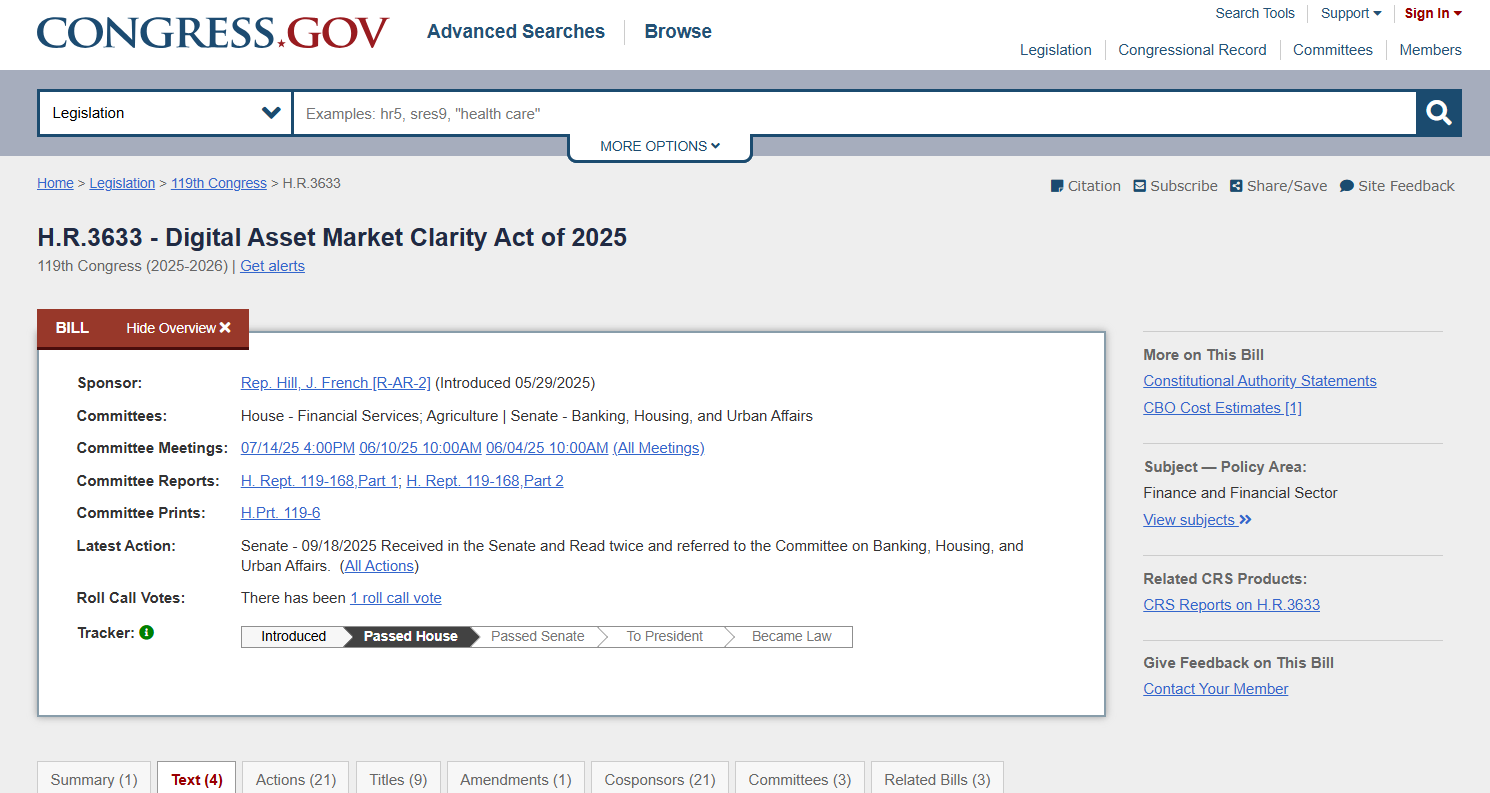
The CLARITY Act has stalled in the Senate. On September 15, 2026, the motion to invoke cloture on proceeding to H.R. 3633 was rejected 49-50, short of the three-fifths threshold, with Republicans Susan Collins, Josh Hawley and Jerry Moran voting no (Senate roll call vote 234).
Stablecoin yield remains one of the main unresolved disputes, alongside ethics rules and DeFi. The Senate text would bar rewards paid simply for holding a stablecoin while allowing activity-based rewards tied to payments or platform use, and banks continue to push for tighter limits. A motion to reconsider keeps the bill procedurally alive, but no new cloture vote had been posted as of late September (crypto.news).
What applies today: the GENIUS Act, signed in July 2025, already prohibits payment stablecoin issuers from paying interest or yield to holders (GENIUS Act text). The CLARITY language that would extend limits to exchanges and brokers, the point Coinbase objected to in March, has not become law, so platform reward programs are not restricted by any enacted federal statute yet.
March 2026: Coinbase Rejects the Draft
Coinbase has once again declined to support the latest draft of the Digital Asset Market Clarity Act (CLARITY Act), citing language that would ban or severely limit passive yield distributions to stablecoin holders.
The major cryptocurrency exchange informed Senate offices this week that it could not back the updated bill, according to reports from Punchbowl News and Coinpedia published March 25, 2026.
Key Takeaways
- Coinbase has rejected the updated CLARITY Act for the second time due to restrictions on passive stablecoin yields and rewards.
- The bill aims to classify digital assets as commodities and provide CFTC-led oversight for spot markets.
- Circle (USDC issuer) stock fell 20% on March 24, its worst day on record, while Coinbase shares lost nearly 10%.
- The stablecoin provision is viewed by critics as favoring banks over crypto platforms in the yield and rewards space.
- Update: on September 15, 2026, the Senate rejected cloture on the bill 49-50, leaving the stablecoin yield question unresolved.

The development marks the second time Coinbase has opposed the legislation over stablecoin provisions, creating fresh uncertainty around one of the most anticipated U.S. crypto market structure bills.
The CLARITY Act seeks to deliver long-sought regulatory clarity by classifying many digital assets as commodities under the Commodity Futures Trading Commission (CFTC) oversight while drawing clearer lines with the Securities and Exchange Commission (SEC).
At the center of the dispute is a contentious provision that would prohibit crypto platforms from offering rewards or yields on stablecoin balances in ways that resemble bank deposit interest.
Critics, including Coinbase, argue the language is overly broad and could stifle innovation in the stablecoin sector, which has grown into a multi-trillion-dollar pillar of the crypto economy.
Coinbase’s opposition carries significant weight. The exchange maintains a major partnership with Circle, the issuer of USDC, the second-largest stablecoin by market cap. Coinbase earns substantial revenue from USDC-related activities, including interest-sharing arrangements that enable customer rewards programs. Industry observers note that restricting these yields could reduce incentives for users to hold stablecoins on exchanges and slow mainstream adoption.
The news triggered immediate market reactions. Circle shares fell 20% on March 24, the stock’s worst day on record, and Coinbase, the main distribution platform for USDC, lost nearly 10% (CNBC), reflecting investor concerns over potential revenue hits and broader regulatory delays.
Analysts linked the sell-off to fears that the bill’s stablecoin compromise favors traditional banks, which have lobbied against crypto platforms offering deposit-like products.
This latest standoff highlights ongoing tensions between crypto innovators seeking competitive tools and legacy financial institutions protecting their turf. Senators Thom Tillis and others involved in drafting the compromise had hoped the revised language would bridge gaps, but Coinbase’s firm stance has delayed planned Senate Banking Committee progress.
Conclusion
Coinbase’s rejection of the latest CLARITY Act draft underscores the delicate balancing act required to advance meaningful U.S. crypto regulation.
While the bill promises historic clarity for digital asset markets, the stablecoin yield debate reveals deep divisions between innovation-driven platforms and traditional finance.
With the September cloture vote failed and no new vote scheduled, industry watchers will closely monitor whether lawmakers can craft a compromise on yield that satisfies both crypto platforms and banking interests, potentially shaping the future of stablecoins and broader digital asset adoption in America.
Read Next:
- USDC Officially Launches in Japan via SBI VC Trade
- Tether's First Full Independent Audit of USDT Reserves
- Deloitte Canada and Stablecorp Announce Strategic Partnership
FAQs:
1. What is the CLARITY Act?
The Digital Asset Market Clarity Act (CLARITY Act) is bipartisan legislation designed to establish clear rules for crypto spot markets, classify most digital assets as commodities under CFTC jurisdiction, and reduce regulatory overlap with the SEC.
2. Why did Coinbase reject the latest draft?
Coinbase opposes language that would ban or strictly limit passive yield and reward programs for stablecoin holders, arguing it would harm user incentives and stifle industry growth. This is the exchange’s second rejection of the bill on similar grounds.
3. How did markets react to the news?
Circle (CRCL) shares fell 20% on March 24, 2026, and Coinbase (COIN) dropped nearly 10%. The sell-off reflected concerns over reduced stablecoin revenue streams and potential delays in broader crypto regulation.
4. What are stablecoin yields and why do they matter?
Stablecoin yields refer to interest or rewards paid to holders for keeping USDC or similar assets on platforms. They drive adoption, provide users passive income, and generate revenue for exchanges like Coinbase through partnerships such as its deal with Circle.
5. What happens next for the CLARITY Act?
On September 15, 2026, the Senate rejected cloture on the motion to proceed to H.R. 3633 by 49-50. A motion to reconsider keeps the bill eligible for another vote, but none had been scheduled as of late September, and passage before the new Congress in January looks unlikely.
Disclaimer:
This content is provided for informational and educational purposes only and does not constitute financial, investment, legal, or tax advice; no material herein should be interpreted as a recommendation, endorsement, or solicitation to buy or sell any financial instrument, and readers should conduct their own independent research or consult a qualified professional.
Join the official Coincamps community:
Telegram: https://t.me/coin_camps
Recommended
Desk: Brent Crude Tops $110, Musk's Net Worth Drops 528.6 Billion in Four Days After Tesla Roadster Launch
Oct 17, 21:49
JST Fifth Buyback and Burn Successfully Concludes: Over 170 Million Tokens Worth Approximately $23.53 Million Burned, Buyback Mechanism Set for Comprehensive Upgrade
Oct 17, 20:10
BitTorrent Brand Upgrade and Initial BTT Buyback & Burn Launch Simultaneously, Dual Engines Usher in New Era of Web3 Infrastructure
Oct 17, 20:00
Asia Market Daily: Japan's BOJ signals more rate hikes while Korea targets offshore perpetual platforms (2026/10/17)
Oct 17, 17:01Why did Papertrade backfire on you?
Oct 17, 17:01
The 'Strict Father' of Northern Myanmar: This Company Deploys 200,000 "AI Best Actors" to Strike Back Against Scammers
Oct 17, 15:34