With federal research funding facing massive cuts, is the U.S. abandoning the "Endless Frontier"?
Translated by TechFlow
TechFlow Summary:When federal research funding is massively cut, scrutinized, and reallocated, what is truly at stake is not “woke culture,” but the foundation of next-generation drugs, weapons, and basic science. This article uses concrete data and case studies to show how the shaking of America’s research ecosystem will reshape the technological landscape over the next two decades—a shift every reader focused on innovation and long-termism should take seriously.

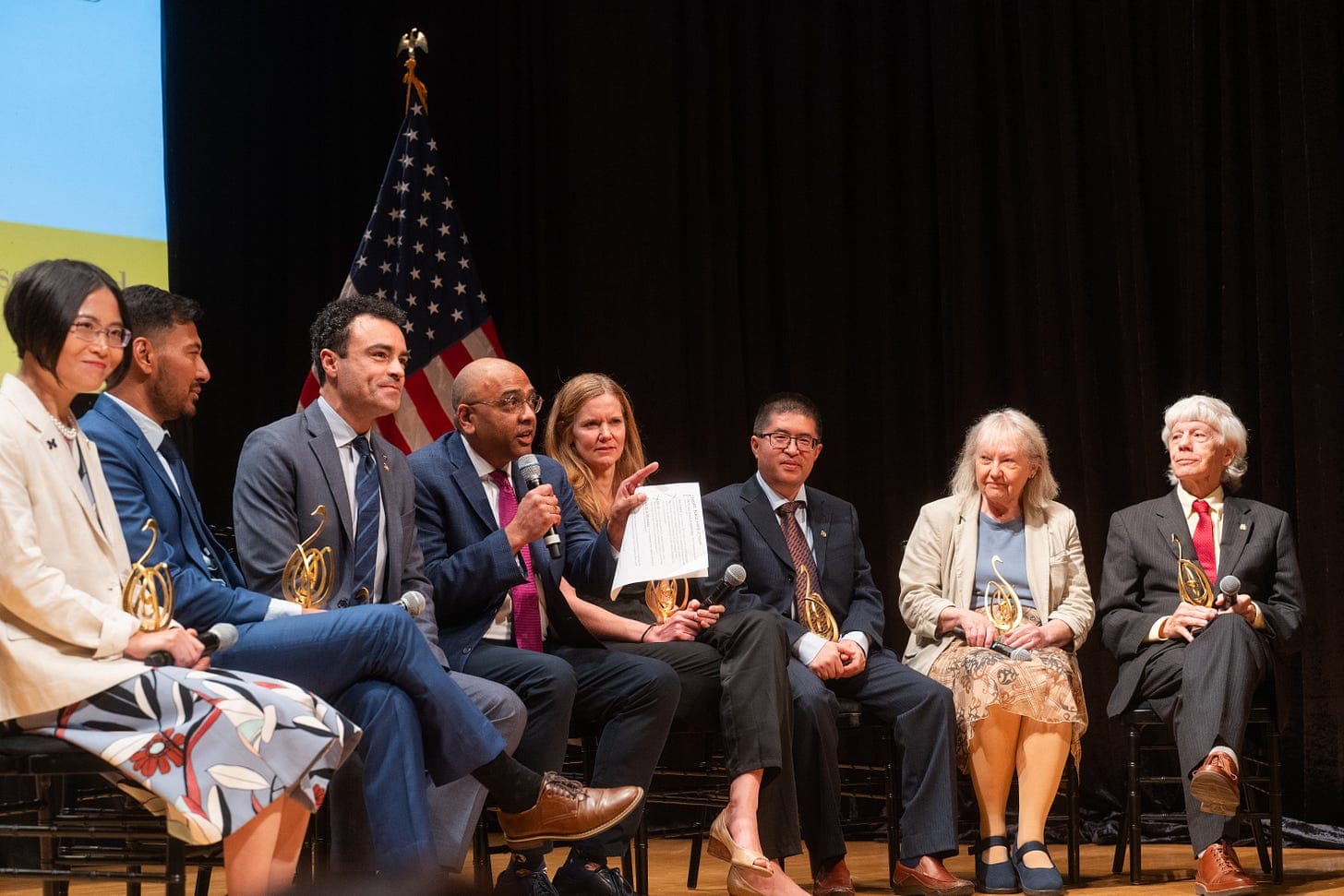
Last month, I traveled to Washington, D.C., to attend the Golden Goose Awards ceremony. The award recognizes federally funded research that initially seemed obscure but later drove major breakthroughs in medicine, technology, biology, and other fields. One of the earliest laureates, Dr. John Ennis, whose research on Gila monster venom paved the way for the development of GLP-1 drugs. This year’s recipient developed an FDA-approved therapy for liver tumors using a $5 bag of pig organs, launching a company now valued at $4 billion. She spent 20 years on this work, during most of which her sole funder was the federal government.
The science celebrated by the Golden Goose Awards is precisely the kind the federal government is now abandoning. Since President Trump returned to the White House, nearly $200 billion in federal funding has been cut, delayed, or otherwise disrupted across 17 policy areas and 21 federal agencies. These cuts go far beyond targeting so-called “woke” science or “wasteful” spending. They have impacted long-term research on Alzheimer’s risk factors, randomized trials for opioid addiction treatments, technologies to combat misinformation, and more. Instead, funds are being redirected toward the current administration’s priorities, such as artificial intelligence and quantum computing, along with several low-scientific-value pet projects.
Ever since meeting this year’s laureates, I have repeatedly asked myself: Among the research that is currently unfunded, which ones might transform people’s lives 20 years from now?
New Gatekeepers
Anyone who cares about curing diseases, winning wars, or maintaining American hegemony should pay attention to the state of U.S. scientific research. Between 2010 and 2016, every single new drug approved by the FDA can be traced back to research funded by the National Institutes of Health (NIH). The existence of stealth technology, night vision goggles, GPS, and precision-guided weapons all stem from government-funded basic research. Nearly one-third of U.S. patents—the bedrock of American innovation—rely on federally funded research.
The world’s most successful and prestigious research system is now being clumsily dismantled. The National Science Foundation (NSF) awarded research grants this year that fell 45% below its five-year average, marking the lowest level in four decades. NIH awards were down 13% from their five-year average, and the Trump administration also terminated over 400 grants from the Centers for Disease Control and Prevention (CDC), totaling nearly $6 billion.
Why is this happening? The Trump administration claims it is improving government efficiency by eliminating wasteful spending from what it calls “DEI” initiatives. In reality, it is canceling or delaying grant processes and critical research to cater to the president, only to reinstate funding in many cases once it becomes clear how vital those studies actually are.
Political Review and Delayed Life-Saving Research
Policy shifts under this administration have burdened scientists with increased paperwork and delays. For instance, every federal grant application must now undergo a new round of political review. NIH staff were instructed to use a “computational text tool” to screen applications beforehand—a large language model, according to personnel, specifically trained to flag terms disliked by this administration.
Mark Kozlov of Nature reported on a list of 235 flagged terms. It included “racism,” “fossil fuels,” and “LGBTQ+” (a fragment designed to capture all variants of “LGBTQ+”). Norm Ross, co-founder of Grant Witness, a public database tracking federal spending cuts, told me: “It’s a coded way of saying, ‘We have a lot of words and topics that are off-limits.’”
Some grants were canceled simply for mentioning minority groups. $15 million in Alzheimer’s research funding at Emory University and the University of Pittsburgh was slashed, partly because scientists were trying to understand why Black Americans are twice as likely to develop Alzheimer’s or dementia as white Americans. Overall, the Trump administration has canceled nearly $800 million in NIH grants because they focused on or mentioned minority populations.
Grant renewals now take months instead of weeks, as politically appointed officials meticulously comb through research documents looking for prohibited language. Staff levels across U.S. scientific agencies have also been drastically reduced, causing further delays.
Of the more than 11,000 grants disrupted at the NIH, CDC, NSF, and Substance Abuse and Mental Health Services Administration (SAMHSA), 65% were later reinstated by courts or review panels on their own.
But funding delays bring real-world consequences, some of which cannot be reversed even after funding is restored.
The life of John Paul Makri depended on federal funding. In March 2025, the 8-year-old boy was diagnosed with DIPG, an aggressive and inoperable brain tumor. The five-year survival rate for his disease is just 2%, but John Paul’s parents remained optimistic because he could enroll in a clinical trial for a novel mRNA therapy. However, just five months after his diagnosis, Elon Musk’s DOGE cut funding for the NIH Childhood Brain Tumor Consortium, the very organization sponsoring the trial. Because of the cut, John Paul was unable to enroll. The consortium’s work is now being transferred to a broader hospital network, but John Paul will not be able to participate in the next trial. He passed away on October 4.
There is one category of research that has gone unscathed: pet projects of politically appointed officials. Ross told me these scientific studies “are typically not well thought out scientifically.”
For example, last month the NIH released a call for research proposals on metal toxicity. The topic sounds harmless, but Ross pointed out it actually serves as a convenient pretext to investigate aluminum in vaccines, a longstanding obsession among anti-vaccine activists. The presence of aluminum in vaccines has already been evaluated and deemed low-risk. Moreover, the window between the announcement and the proposal submission deadline was unusually short, indicating the agency was soliciting proposals from a specific group.
A Diversified Portfolio
The government’s role is not only to fund the most exciting frontier research, but also to support what financially motivated private-sector investors won’t touch: research without guarantees of near-term returns. Such science can yield breakthrough results.
Instead, the Trump administration is reallocating research funds toward artificial intelligence, quantum computing, biotechnology, and advanced materials for semiconductors and robotics—areas where the private sector is already pouring trillions of dollars.
In 2025, health research lost $1 billion, while machine learning and artificial intelligence gained $468 million, and networks and information technology saw an increase of $368 million. This year, the White House announced plans to redirect $200 billion in science funding toward AI initiatives. Meanwhile, new grants from the NSF dropped by over 20% year-over-year.
The American Association for the Advancement of Science (AAAS), one of the world’s largest scientific societies and publisher of the Science journal series, had its CEO, Sudip Parikh, testify before Congress last year regarding the Trump administration’s proposed budget. “This isn’t just a five-year issue. It’s a ten-, twenty-, thirty-year issue,” he said, referring to the impact spending cuts would have on U.S. science and the broader global scientific enterprise.
At the 15th Golden Goose Awards ceremony last September, Parikh said in his address to the audience: “Our nation’s leadership in science and the economy began, in part, by giving researchers the freedom to follow promising ideas, even when no one knows exactly where those ideas will lead.”

On November 13, I will host a live stream with Dr. Parikh and Dr. Shruti Naik. Dr. Naik is a professor of immunology and dermatology at Mount Sinai’s Icahn School of Medicine. We will discuss what those thirty-year horizons look like both at the lab bench and in the halls of Congress, and explore which breakthroughs we may already be missing out on. Register here.
A $5 Bag of Pig Organs
Before the awards ceremony, I had the opportunity to speak with several laureates.
Dr. Zhen Xu left Nanjing, China, in 2001 to pursue graduate studies at the University of Michigan. A year later, she was experimenting with pig hearts to find treatments for congenital heart defects when a lab colleague complained the ultrasound was too loud. To reduce the noise, she tuned the sound pulses to a frequency range mostly inaudible to humans. Then, an accident happened: the acoustic pulses punched holes in the tissue. Unbeknownst to Xu at the time, she had discovered histotripsy, a tumor destruction technique requiring no incisions, radiation, or toxicity.
For years, no one believed histotripsy could treat human patients. Scientists doubted her, and investors deemed the technology too risky. Xu’s only supporter was the federal funding apparatus. Grants from the NIH, and later the Department of Defense, paid for specialized equipment and funded studies demonstrating which other diseases histotripsy might treat.
“Federal funding is absolutely critical, especially in the early stages, when you are laying the groundwork that could eventually lead to practical applications,” Xu told me.
Twenty years later, histotripsy received FDA approval for treating liver tumors. Xu co-founded HistoSonics to commercialize the technology, a company now valued at $4 billion with backers including Jeff Bezos, Peter Thiel, and Reed Jobs. Time magazine named it one of the ten most impactful health and life sciences companies of 2026.
“It all started with a $5 bag of pig organs,” Xu said. “Federal funding made the impossible possible.”
Coffee Rings and Clogged Sands
Another laureate, Dr. Sidney Nagel, has spent his entire career asking questions you might expect from a curious child.
For instance, why do coffee stains dry darker at the edges than in the center? His research ultimately revealed how evaporation drives particles toward the edges of drying droplets, helping improve diagnostic tests in medical settings.
Nagel also studied how materials like glass, sand, and granular matter stack and move relative to one another, all in pursuit of understanding order within chaos. His discoveries have improved industrial processing techniques and pharmaceutical manufacturing. It may sound tenuous, but Nagel’s curiosity about sand piles helped pharmaceutical manufacturers dispense powder evenly into capsules.

From Atomic Nuclei to Cosmic Scales
I asked Nagel how he would defend his work to a skeptical taxpayer. He offered an answer that was both pragmatic and poetic.
First, his biggest expense is personnel, because an essential dimension of his work is mentoring the next generation of scientists. Nagel believes his job is to teach young scientists “to look at the world with an open mind, seeing things that are right in front of us but easily overlooked.”
Second, shouldn’t it matter, as human beings, to understand—truly understand—the world we live in?
Take splashing water droplets, for example. Nagel investigated what determines the shape and motion of water droplets as they split. He told me it is a fundamental problem in mathematics and computer science. “But the singularity in that event, when a drop of water splits, appears in star formation, in the splitting of bacterial colonies, all the way to nuclear fission.”
Best part? “All I do is study something on a tabletop.”
The task laid before us is simple: give great minds the freedom to explore, and we will reap the rewards for decades to come.
Join the official Coincamps community:
Telegram: https://t.me/coin_camps
Recommended
Intelligence Bureau: Chip Stocks Plunge, Dragging Global Markets as U.S. Inflation Resurges and Rate Hike Expectations Rise
Oct 15, 20:56
A16z: From Hourly Billing to Outcome-Based Revenue Sharing, a $100 Billion Relay Race
Oct 15, 17:43
Hyperliquid Founder: Regulation Should Target On-Chain Institutions Rather Than Public Chains
Oct 15, 17:26
Strategy is about to be removed from the index this week. Will its coin-buying financing be affected?
Oct 15, 17:24
Tiger Research Report: Bitcoin Posts Best Third Quarter Since 2017, Yet Capital Hasn't Returned to Startups
Oct 15, 17:13
The Multi-Billion Dollar Business of Idle Bandwidth: How Grass Turns "Unused Capacity" Into AI Infrastructure
Oct 15, 16:56