
Before AI Cracks the Riemann Hypothesis, I Discussed My Ideas with 7 of the World’s Top Mathematicians
Organized & Compiled: TechFlow
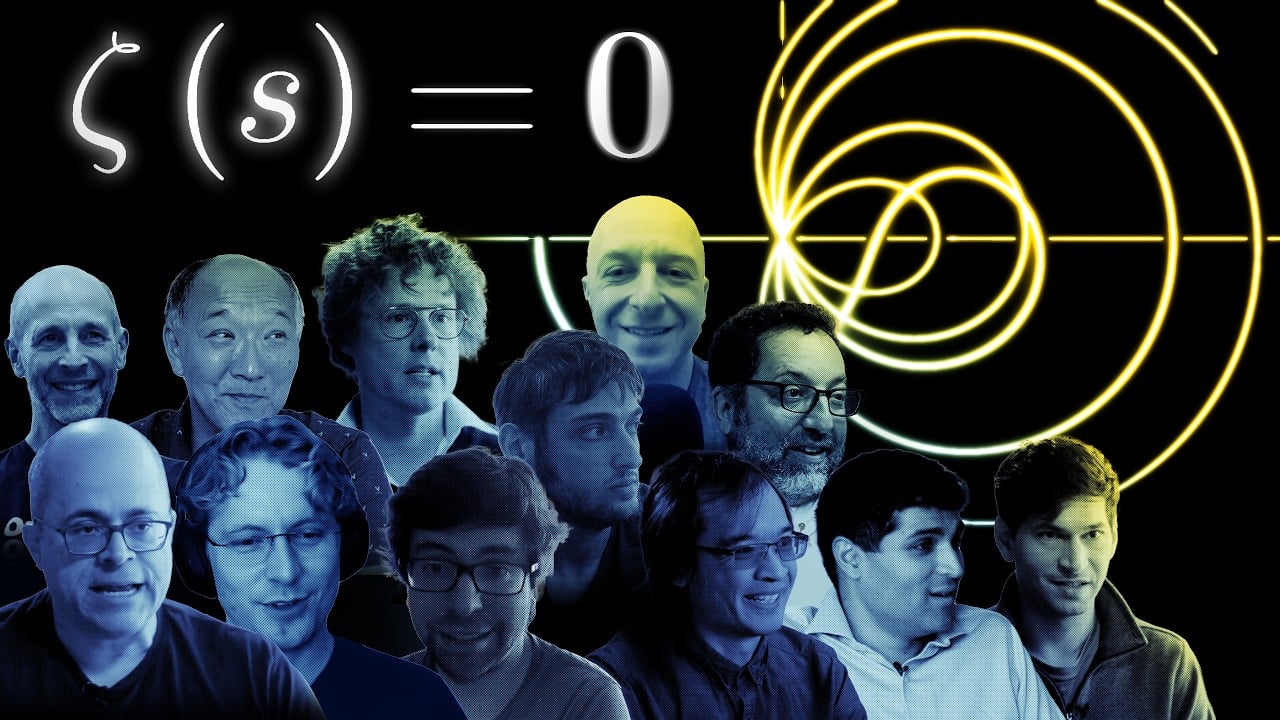
TechFlow Summary: Over the past year, 3Blue1Brown founder Grant Sanderson visited top global mathematicians and theoretical scholars including Terence Tao, Scott Aaronson, Ken Ono, Kevin Buzzard, posing a once-absurd thought experiment: What would happen to mathematics if AI suddenly outputted tens of billions of tokens of machine-verifiable proofs without any textual explanation that humans could read, solving humanity's crown jewel, the Riemann Hypothesis?
With Anthropic researcher Levent Alpöge recently announcing the successful generation of a machine-verifiable Lean proof for the Generalized Riemann Hypothesis (GRH) using an internal AI model, this thought experiment has instantly materialized into a seismic reality. In this high-density exchange, top mathematicians deeply analyzed the disillusionment of romanticism, the century-long separation between machine proofs and human understanding, the co-evolution of humans and superhuman explainers, and the ultimate meaning of human mathematical pursuits after problem-solving becomes commoditized.
Guests: Terence Tao (Fields Medalist and Chair Professor at UCLA), Scott Aaronson (Scholar of Quantum Complexity and Metamathematics and Chair Professor at UT Austin), Ken Ono (Authority on Number Theory, Ramanujan Research Scholar, and Chair Professor at the University of Virginia), Kevin Buzzard (Leading scholar in Formalized Mathematics and Chair Professor of Pure Mathematics at Imperial College London), Michael Nielsen (Theoretical Physicist and Pioneer in Quantum Computing), Jordan Ellenberg (Mathematician, Bestselling Author, and Professor at the University of Wisconsin), Alex Kontorovich (Chair Professor of Number Theory at Rutgers University)
Host: Grant Sanderson (Founder of 3Blue1Brown and Mathematics Educator)
Podcast Source: 3Blue1Brown (https://www.youtube.com/watch?v=zqzk43bSdDI)
Original Title: Since last year, we asked: “What if AI solved the Riemann Hypothesis?”
Broadcast Date: Beijing Time: 2026-11-22 10:02
Key Takeaways
- The thought experiment instantly becomes reality: The hypothetical scenario posed by Grant Sanderson over the past year—“AI spits out a heavenly book code of tens of billions of tokens to solve the Riemann Hypothesis”—has evolved completely from scientific fiction into a real-world tsunami, following Anthropic researcher Levent Alpöge's announcement of a machine-verifiable Lean proof for the Generalized Riemann Hypothesis (GRH) and Alessandro Masullo's publication of a human proof.
- The disillusionment of romanticism and the leap in number theory tools: Jordan Ellenberg admits that for mathematical romantics, a lengthy, ugly code solving a century-old puzzle without human involvement would be a disaster; however, Ken Ono points out that thousands of modern number theory papers are written assuming the Riemann Hypothesis holds true. Once established, the entire edifice of human mathematical knowledge will experience an instant, quantum-level leap.
- Machine proofs are far from a static endpoint; reverse engineering will unite global intellect: Kevin Buzzard emphasizes that faced with a Lean proof spanning tens of billions of tokens, core comparison tools (Comparators) will first verify its absolute correctness and zero vulnerabilities. Even if humans cannot initially read it, mathematicians will not stand idle. Proofs are never dead objects; top global minds will immediately assemble, breaking them down into independent lemmas and modular fragments for deep reverse engineering.
- The Riemann Hypothesis is absolutely not the Four Color Theorem; brute force has cognitive limits: Terence Tao points out that certain problems (like the Four Color Theorem) can be solved by exhaustively subdividing all cases, but the Riemann Hypothesis could never be cracked through mechanical exhaustion. Its solution necessarily depends on an unprecedented new mathematical framework, or establishing profound structural bridges between two previously unrelated unknown fields.
- The great century-long split between proof and understanding: For millennia, "proving a proposition" and "understanding a proposition" were always bound together; today, the AI era completely separates them. Humans might receive God-like oracles without explanation; but Michael Nielsen optimistically believes that superhuman provers will inevitably become superhuman explainers in the future. With infinite patience and zero judgment, AI can reconstruct extremely obscure machine texts into elegant logic that humans can comprehend.
- The 37th move of mathematics and the orthogonal shift of ultimate value: Just as AlphaGo's 37th move against Lee Sedol reshaped humanity's perception of the boundaries of Go, when routine problem-solving capabilities are rapidly commoditized and made low-cost by AI, the direction of human mathematical pursuit will undergo an orthogonal shift. The end of a century-old puzzle has never been the endgame of mathematics; the entirely new paradigms it creates will give birth to deeper conjectures, and humanity's journey to explore primes and cosmic order knows no bounds.
Featured Insights
- "If a computer generated a lengthy Lean proof of billions of lines with absolutely no textual explanation, as a logician researching metamathematics, I would even derive a pathological pleasure from it. But if it spanned 20 billion tokens and not a single person on Earth could read it, it wouldn't count as a proof within the framework of human knowledge. I wouldn't even care about its existence; ultimately, humanity will seek its own understanding." (Scott Aaronson)
- "From the perspective of a mathematical romantic, a purely machine-generated solution would be a nightmare. I crave genuine human wisdom in proofs, and I firmly believe mathematical proofs possess exquisite beauty; if this string of code lacks any beauty whatsoever, humanity's quest to find elegant, conceptual proofs will remain undiminished." (Jordan Ellenberg)
- "Thousands of cutting-edge papers are written under the premise of assuming the Riemann Hypothesis holds true. Once it is thoroughly verified by formal systems, it hands humanity a brand-new arsenal, and the entire edifice of mathematical knowledge will experience a true quantum leap." (Ken Ono)
- "A proof is not a static, lifeless object. If multiple independent verification cores confirm there are no logical loopholes, then regardless of whether anyone understands it right now, this is an incredibly great day for mathematics. Tens of thousands of mathematicians will drop everything, break this behemoth into countless fragments, and spend years, even decades, reverse-engineering it until every bit of its underlying wisdom is fully extracted." (Kevin Buzzard)
- "Completely autonomous, one-shot black-box miracles are absolutely not the correct path to cracking such century-old puzzles. True breakthroughs will undoubtedly take the form of unprecedented deep symbiotic collaboration between human wisdom and ultra-powerful AI tools. While human intuition is prone to errors, formal systems merely serve as the baseline for verifying understanding; actual understanding occurs in higher spatial dimensions." (Terence Tao)
- "For thousands of years, proving something and understanding something went hand in hand; today, we face for the first time the reality of their divergence. But I firmly believe that superhuman theorem-proving models will inevitably become superhuman explainers in the future. They possess patience surpassing humans and unbiased pedagogical abilities, capable of step-by-step dimensionally reducing complex machine texts into cognitive models humans can grasp." (Michael Nielsen)
- "If an AI spits out a proof spanning millions of tokens claiming it's done, I would absolutely not say 'Great, let's move on to the next problem.' I would frantically ask: 'What exactly is the answer? How exactly did you do it? Tell me quickly!' Because my sole goal in dedicating myself to mathematical research has always been, and remains, understanding." (Alex Kontorovich)
- "In great mathematical research, solving a century-old puzzle has never been the end point. Even if the Riemann Hypothesis is completely unraveled, the entirely new tools it leaves behind will nurture countless deeper new questions and conjectures. Humanity's eternal pursuit of primes, integers, and the laws of the universe will forever surge forward." (Ken Ono)
Main Article
The Thought Experiment Becomes Reality: When Heavenly Books of Proof Spanning Billions of Tokens Crash Down Upon Humanity
Grant Sanderson: Over the past year, while communicating with many top mathematicians, I often posed an extreme hypothetical scenario: If one day in the future, a computer screen suddenly displays a stream of Lean code spanning billions of lines, with absolutely no natural language explanation, coldly stating "let function A be a certain mapping, let function B be a certain operator," and subsequently formally verifying and announcing the proof of the Riemann Hypothesis. Faced with this code that completely transcends human reading limits, would you feel joy or fear?
Scott Aaronson: Haha, what a brilliant question! Honestly, if this scene ever actually unfolds, I, as a logician researching metamathematics and computational complexity, would even derive a kind of pathological pleasure from it. I am naturally filled with academic curiosity toward these incredible, elusive Inscrutable Proofs.
But on another level, does this truly pose a danger? Or does it truly matter? I have always held a viewpoint: if there exists a Lean proof in the world stretching to 20 billion tokens that absolutely no human being can read, then in the realm of human cognition, it cannot genuinely be called a proof of the Riemann Hypothesis. I wouldn't even care about its objective existence. There is no cause for panic; we would simply shrug and say, "What a pity. Hopefully, someday humanity itself will find the true proof."
Jordan Ellenberg: From the perspective of a mathematical romantic, the scene you described is nothing short of a nightmare. I have always believed that mathematical proofs must involve the human soul, and I firmly believe that great proofs inevitably harbor intoxicating beauty. If a proof is merely a patchwork of ugly code fragments, then the human academic pursuit of finding beautiful, profound, and conceptually rich proofs will lose absolutely none of its significance due to the emergence of machine code.
Ken Ono: Romanticism is one thing, but we must soberly see the objective reality: today, hundreds of thousands of top-tier papers in the global mathematics community build their core conclusions entirely upon the premise of "assuming the Riemann Hypothesis holds true." If this code is confirmed as true, it means these tens of thousands of conditional propositions are instantly and completely activated, solidifying into absolute truths. This hands humanity an unprecedented brand-new arsenal, and the entire mathematical knowledge system will welcome a violent, quantum-level leap.
Formalized Cores and Reverse Engineering: Machine Proofs Are Far from a Static Endpoint
Grant Sanderson: If this behemoth really appears, what would our first reaction be? How do we confirm it isn't simply a flaw within the formal verification system itself?
Kevin Buzzard: This is an extremely serious engineering and scientific question. The good news is that within the formalized mathematics community, we already possess a rigorously scrutinized and refined precise statement of the Riemann Hypothesis. Therefore, when we receive such a lengthy proof, our first step is to run a comparison tool (Comparator) and execute verification across two to three completely independent lower-level cores, screening for any potential compiler vulnerabilities or logical loopholes.
Assuming all independent verification cores give the green light, unanimously ruling the proof impeccable. Even if absolutely no human on Earth can read it right now, I must emphatically state: This is an incredibly great day in the history of human mathematics!
Grant Sanderson: But if absolutely everyone cannot understand it, how should we digest it? Wouldn't this cause a severe knowledge gap?
Kevin Buzzard: Absolutely not! Because a proof is never a statically displayed dead object. Once mathematicians hold absolute trust in the proof's correctness, countless scholars globally will unhesitatingly drop their current research and collectively dive into this proof. We will break it down into thousands of independent lemmas, isolate core modules, and reverse-translate the mathematical constructions segment by segment. This process alone will give rise to staggering new mathematics until we thoroughly understand the principles behind it.
The Limits of Brute Force Exhaustion: The Riemann Hypothesis Is Absolutely Not the Four Color Theorem
Grant Sanderson: Could this type of machine proof merely be an extremely massive brute-force search? We have seen the computer-assisted proof of the Four Color Theorem in the past, and many mathematicians still harbor reservations about its lack of conceptual elegance. Is it possible that the Riemann Hypothesis could also be violently cracked in a similar manner?
Terence Tao: It is essential to clarify that certain specific problems indeed can be solved by exhaustively subdividing into a massive number of special cases, followed by relying on computers to brute-force check every instance. The Four Color Theorem is a classic example; up until today, humanity has not yet found a conceptually highly elegant human-readable proof, and perhaps there never will be one.
But the reason the Riemann Hypothesis holds such a sacred status in the temple of mathematics is precisely because everyone knows deep down: it absolutely cannot be conquered through mere exhaustive verification. To solve the Riemann Hypothesis, it is necessary to create an entirely new mathematical framework unprecedented in history, or establish profound bridges between two major mathematical branches that previously seemed utterly unrelated—bridges we never imagined before. We cannot even foresee the rough outline of the final solution; it could absolutely not be brute-forced out by piling up computing power.
Grant Sanderson: So, can fully autonomous AI achieve a solo breakthrough on its own?
Terence Tao: I have always believed that completely autonomous, one-shot black-box generation is absolutely not the proper path to conquering Millennium Prize Problems. The true form of breakthrough will undoubtedly be a deeply interwoven symbiotic collaboration between human wisdom and ultra-powerful AI tools. Human mathematicians are responsible for proposing high-level intuitions, strategic frameworks, and directional guidance, while extremely powerful AI tools provide a hundredfold leverage in micro-inference, cross-disciplinary conceptual connections, and rigorous formal verification. This collaborative mechanism may manifest as entirely new paradigms we haven't witnessed yet.
The Century's Great Split Between Proof and Understanding: Receiving Oracles or Achieving Human-Machine Symbiosis
Grant Sanderson: In the history of human mathematics, "proving a theorem" and "understanding a theorem" have almost always been tightly intertwined. Now in the AI era, must we accept their inevitable divergence?
Michael Nielsen: This is indeed a profound turning point. In the past, we naturally gained understanding during the process of proof. Now we step into a new epoch for the first time: we might be like ancient priests, receiving oracles written on ancient scrolls, dimly knowing something to be true, yet completely ignorant of why it is true.
But I harbor immense optimism regarding this. I believe that alongside possessing superhuman theorem-proofing capabilities, large models will inevitably evolve superhuman explainer capabilities (Superhuman Explainers). As a theoretical physicist myself, I deal daily with many niche topics I ought to master but haven't yet explored. When consulting peers, I might hesitate, but when I query large models, they display extreme patience and unbiased inclusiveness, able to extremely clearly lay out the threads for me.
If this explanatory capability extends from existing knowledge to unknown frontiers, large models will undoubtedly have the capacity in the future to act as bridges that break down, translate, and transform obscure machine proofs spanning billions of tokens into concepts humans can absorb. They will jointly complete the exposition of proofs alongside human mathematicians.
Alex Kontorovich: I completely agree. If an AI system spits out a block of massive code claiming it has solved the Riemann Hypothesis, I will absolutely not satisfiedly shut down my computer and turn elsewhere. I will jump up and frantically ask: "What exactly is the answer? How exactly did you do it? Tell me quickly!" Because the original intention behind our exploration of mathematics has always, from beginning to end, been nothing but "understanding."
The reason humanity established strict formal axiomatic proofs as a mechanism for seeking truth is that we have been deceived by intuition too many times throughout long history: from subtle implicit flaws in Euclid's Elements to countless counterfeit proofs that 1 equals 0. Formal axioms are the solid baseline for testing understanding, but they are absolutely not understanding itself. Understanding is contained within the spatial intuition, geometric imagery, and conceptual leaps in the human mind. As long as this human thirst for understanding remains, the spark of mathematics will never extinguish.
The 37th Move of Mathematics and the Orthogonal Reconstruction of Value
Grant Sanderson: In the Go human-machine wars, AlphaGo's 37th move against Lee Sedol is regarded as the iconic moment where machines surpassed human intuition. If we analogize this leap to the mathematical community, in what form would the 37th move of mathematics appear?
Michael Nielsen: When the marginal cost of a certain capability is driven exceptionally low by machines and becomes a cheap commodity, the values cherished by humanity will inevitably undergo an orthogonal shift. If routine problem-solving and standard proofs are fully commoditized by AI, then what humanity reveres most will pivot toward meta-questions with greater philosophical depth: asking the right questions, constructing grand programs, and selecting the most insightful directions.
The so-called 37th move of mathematics is absolutely not merely solving a single high-difficulty problem; rather, it is machines autonomously gestating an entirely new grand theoretical system capable of perfectly fusing number theory, algebraic geometry, and theoretical physics into one integrated whole. Only that represents a genuine intellectual leap that shocks all of humanity.
Ken Ono: I want to conclude with a simple belief: In the true edifice of mathematics, solving a century-old mystery has never been the endpoint of a certain exploration. If someone completely conquers the Riemann Hypothesis, perhaps it marks the winding down of many old phases, but it is absolutely not the twilight of mathematics.
All the brand-new tools, new thoughts, and novel insights forged during our conquest of century-old puzzles will inevitably be used to nurture even more profound new conjectures and new fields. Humanity's eternal exploration of primes, integers, and the intrinsic mathematical order of the universe will proceed eternally forward, like unceasingly flowing rivers.