
Core PCE hits 3.3%, AI cash-burn frenzy collides with macro headwinds
Summary: 3.3% Core Inflation Ignites Compute Revaluation.
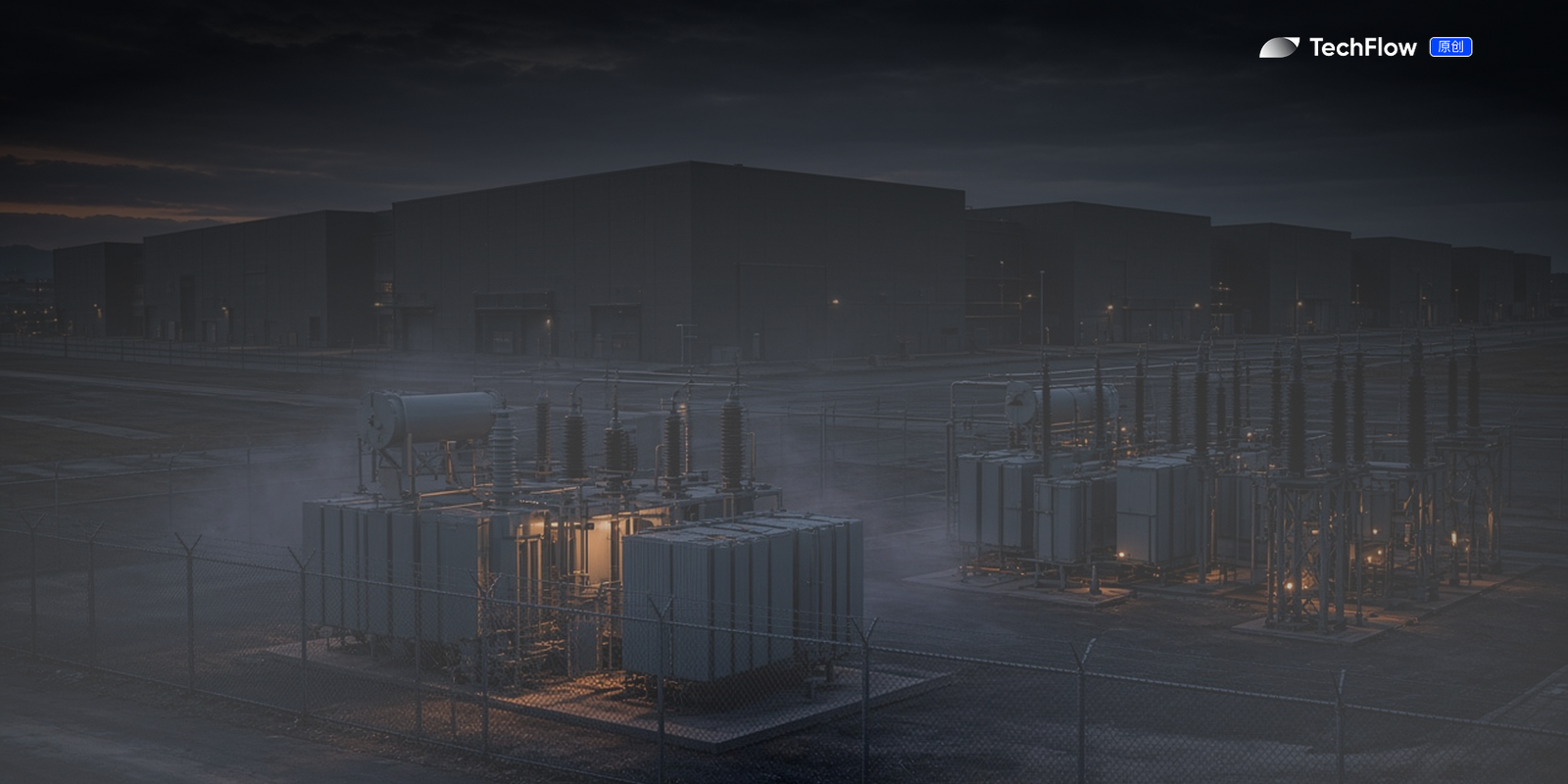
In the data center corridor of Northern Virginia, the grid connection date for a 100-megawatt AI data center has been delayed by a full eighteen months. The cause is neither a chip supply shortage nor bottlenecks in large model algorithms, but rather several specialized large transformers in the substation queuing up for copper wire and silicon steel sheets. The physical world pays no mind to Silicon Valley's compute doubling laws.
Transformer Queues and 3.3% Core Inflation
In data released on November 25 by the U.S. Bureau of Economic Analysis (BEA), the October PCE price index rose 3.8% year-over-year. The core PCE, excluding food and energy, climbed to 3.3%, surpassing expectations (from 3.1% previously), far exceeding the Federal Reserve's 2% policy red line.
When micro-level power anxieties at data centers collide with a broad rebound in macro-level prices, Wall Street's tech stock valuation model, which has operated for over a decade, begins to creak under the strain.
Those lightweight cloud giants once hailed as "money printers" are now pouring more than half of their annual profits into cement, liquid cooling pipes, and GPU clusters that will be obsolete in three years. Free cash flow rates are visibly declining, and some have even started issuing bonds to raise funds for building data centers. Borrowing debt to buy depreciating graphics cards was previously backbreaking work reserved for heavy-asset manufacturing industries.
How Is Burning Cash to Build Data Centers Fueling Re-inflation?
Many tend to blame this round of inflation rebound on energy fluctuations or service-sector wage stickiness, overlooking how the AI arms race is manufacturing an extremely stubborn form of "capital goods inflation."
In order to illuminate tens-of-thousands-GPU clusters ahead of rivals, several tech giants have nearly cornered the advanced packaging capacity of the world's top foundries, pushing up the quoted prices for HBM high-bandwidth memory chips along the way. This has simultaneously driven up industrial electricity costs, gas turbine production schedules, and even power infrastructure expenses in parts of North America. These costs will eventually transmit step-by-step down the industrial chain, leaving a clear mark on the upward-trending curve of the October core PCE.
With upstream chips, power, and infrastructure all rising in price, and hundreds of billions in capital expenditures solidly supporting economic investment growth, how can prices simply comply and fall back to the target line?
The Federal Reserve has been placed squarely on the grill. As long as the fire of AI infrastructure burns on, inflation remains sticky. The target range for the federal funds rate will remain firmly pinned at the high level of 3.75% to 4%, or may even see further hikes. Any illusions of monetary easing will be ruthlessly shattered by reality.
From "Blindly Buying GPUs" to "Seeing Who Actually Makes Money"
Tightening expectations crash head-on into massive capital expenditures, bringing the U.S. tech sector to its most brutal moment of divergence.
As long-end U.S. Treasury yields rise alongside rate hike expectations, markets immediately adjust higher the discount rate for future cash flows. For AI application companies and mid-layer software firms that haven't yet achieved self-sustaining profitability and rely entirely on a "future fantasy multiple," this is tantamount to directly pulling away the ladder beneath their feet.
Meanwhile, the capital markets' scrutiny of upstream compute hardware has also become harsher. If cloud providers hint even slightly at "slower capital expenditure growth next year" during earnings calls, the volatility of highly valued chip stocks will instantly amplify.
It resembles a prolonged gold rush. After the shovel sellers cash in their quick first wave of profits, the focus now shifts to seeing who can actually dig up real gold and silver in the mining pits.
Capital is quietly relocating.
A portion of savvy money is exiting crowded pure-play compute concept stocks. Another portion flows to platform giants holding vast enterprise client bases, capable of directly embedding AI features into existing office software to drive price increases. A third segment takes a detour, purchasing power equipment manufacturers and industrial enterprises that directly benefit from grid upgrades and infrastructure expansion.
Once the tide recedes, those remaining at the table will no longer be the loudest evangelists, but rather the staunchest harvesters with the hardest cash flows.