JPMorgan Chase's Wealth Management Sees Record High Youth Account Openings, Gen Z May Be More Investment-Savvy Than You

Original Article Title: These Teenagers Know More About Investing Than You Do
Original Article Authors: Hannah Miao, Gunjan Banerji, The Wall Street Journal
Seventeen-year-old Sophia Castiblanco not only drives a Tesla car, but also owns shares of the company.
Sophia is a junior in high school in the Chicago suburbs, and she has invested in stocks of companies like Tesla, Apple, and Amazon.com. Three years ago, when she started earning money as a social media content creator, her parents encouraged her to put some of her income into investments that could potentially appreciate over time, rather than keeping all her cash in a savings account.
Her father helped her open accounts at Charles Schwab, Edward Jones, and Robinhood, and she has now put in thousands of dollars. Last year, she saved up to buy a brand-new Tesla Model 3 (starting at around $40,000), with her parents sharing the repayment plan with her. She creates videos on TikTok, Instagram, and YouTube, teaching thousands of followers the basics of investing.
"I've always had a business mindset of wanting to make money, and I'm very willing to take risks," Sophia said. "In reality, no matter how young you are, you can start investing."

Sophia Castiblanco invested her earnings from social media content creation.
Sophia is one of many teenagers diving into the U.S. stock market. Teens usually have to wait until they are 18 to open their own brokerage accounts, but adults can open custodial accounts for minors. These accounts are then transferred to the children when they reach the legal age.
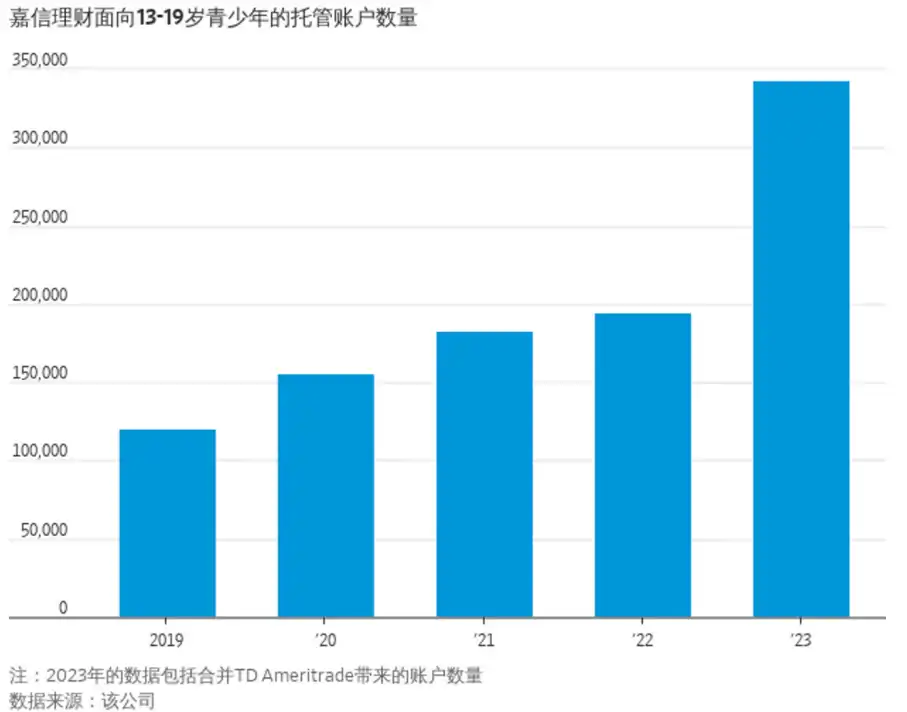
According to Charles Schwab, by 2022, the company's teen custodial accounts reached nearly 200,000, significantly higher than the 120,000 in 2019. In 2023, this number surpassed 300,000, partly thanks to Charles Schwab's integration with TD Ameritrade. Other brokerage firms including Vanguard, Fidelity, and E*Trade under Morgan Stanley have also reported a surge in custodial account numbers in recent years.
Some teenagers have their parents open accounts with brokerage firms like Robinhood that don't offer custodial accounts, then share login information. In smaller-scale financial apps like Greenlight, teens are putting in more money than ever. In 2023, they invested $20 million through Greenlight's app, up from about $10 million in 2021.
Fidelity recently conducted a study on teens and money, estimating that about a quarter of U.S. teens have started investing based on an online survey of 2,081 respondents aged 13 to 17. The number of trades made through Fidelity's Youth app surged in the fourth quarter, with these accounts owned by teens but opened by their parents.
Kelly Lannan, Fidelity's Vice President, said many teens opened accounts during winter break.
Since the outbreak of the COVID-19 pandemic, Americans have been flocking to the financial markets, and this teen investing craze is just part of a larger trend. With the stock market surging, a wave of new retail investors has been trying to profit from this rally.
Many new investors later abandoned meme stocks that soared during that period but are still investing, leading to a record percentage of Americans owning stocks.
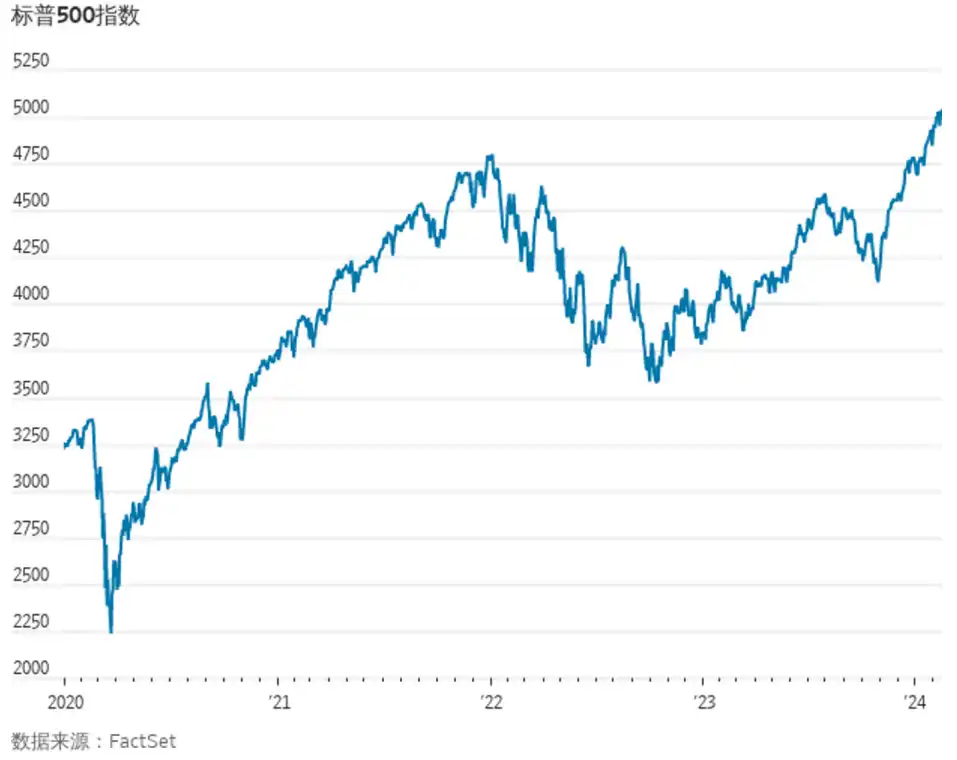
As the stock market hits record highs, the Dow Jones Industrial Average recently crossed 38,000 points, and the S&P 500 index surpassed 5,000 points for the first time. Since the beginning of 2020, newbie investors have fueled an unprecedented trading frenzy, resulting in the S&P 500 rising by about 55%.
"More and more people are realizing that the earlier you start investing, the better," said James Martielli, Managing Director of Vanguard's Investment and Trading Services.
Martielli said that over a decade ago, when his three kids were still toddlers, he opened custodial accounts for them. At Vanguard, the number of custodial IRAs has been rapidly increasing.
The biggest advantage is time. According to the investment app Stash (which offers custodial accounts), if $10 is invested weekly for a child from birth with an assumed annual return of 8%, by the time the child turns 18, they would have about $20,000. By the time this investor reaches 70 years old, assuming an 8% annual return, this money would soar to around $1 million.
Of course, these returns can be influenced by a variety of factors, including when an investor buys in and how the stock ultimately performs. According to Dow Jones Market Data as of the end of 2023, the S&P 500 Index has had an annualized total return of around 10% over the past thirty years. Buying a S&P 500 Index fund at the high point of the 2000 dot-com bubble would have generated approximately a 7% annualized total return; buying at the low point of the 2009 financial crisis would have yielded around a 16% annualized total return.
Executives at popular tech stock brokerage firms say that tech giants ubiquitous in teens' lives are often the stocks this demographic holds the most. At Vanguard, U.S. stock index funds are particularly popular in custodial accounts.
Sixteen-year-old Mahanth Komuravelli has a roughly $7,000 investment portfolio, with a small portion in S&P 500 Index funds and the majority in stocks of large companies like Amazon and Advanced Micro Devices (AMD). He's considering adding some small-cap stocks, such as educational company Chegg. Mahanth uses a custodial account at Fidelity set up with his father's help. The father-son duo frequently exchange investment ideas.
"Sometimes he asks me for advice," Mahanth says. He's a junior at a high school in Edison, New Jersey.
Thirteen-year-old Kaida Benes from the Minneapolis suburbs earns money through chores like washing dishes or cleaning bathrooms, saving this money in her Greenlight investment account, which now holds about $1,000.
She's also drawn to some big companies, investing in Apple, Alphabet, as well as media companies like Disney and Netflix. At times, she feels anxious about potential losses. With her mother's help, she says she's learned to endure these fluctuations.
Reflecting on what she's learned, Kaida says, "Stocks go up and down. It's okay, it's normal."
She's always on the lookout for other money-making opportunities to either save in a bank account or invest. Kaida and her mother, Renee Benes, say that recently she found a recliner at a community flea market, had it repaired and refurbished with her parents' help, and then sold it for a profit on Facebook's marketplace.
「I like the feeling of being rich,」 Kaida said.
Renée Barnes said she regrets only starting to learn about investing a year or two ago, in her 30s. Barnes, a social media influencer, hopes to educate her two children about financial matters.
Lesson Learned
Many young investors are starting earlier than previous generations. Nearly two-thirds of Gen Z investors say they started learning about investing as early as high school or middle school, whereas a Bank of America survey of affluent individuals in 2023 found this rate to be around 38% for millennials. Some were introduced to stocks by family members or teachers, while others learned through social media.
Seventeen-year-old Felix Peng from the Los Angeles area said he learned a lot about investing from YouTube and Instagram, but some social media stars promote high-risk trading strategies that seem more like gambling. He noted that when influencers try to sell expensive trading courses and promise investors they will make big money quickly, it's a red flag.

Nevertheless, Felix believes that young people don't have as much money to lose, so learning from mistakes at this stage can be beneficial. His investments in Apple, Meta Platforms, and Alphabet have performed well. However, when he bought Teladoc stock at its peak and watched it plummet, he realized how challenging timing the market can be. He holds about $1,000 in a custodial account on Stockpile, an investment app for parents and kids.
「It was a good lesson learned, and I'm glad I learned something from it,」 Felix said.
Felix Peng mentioned how he understood the difficulty of timing the market.
Seventeen-year-old Rachael Kim from Orange County, California, said she traded AMC Entertainment Holdings stock during the meme stock era and made around a 300% profit.
「For a while, I was addicted to that adrenaline rush,」 Rachael said of day trading. 「But as I did more research, I realized that this kind of windfall is unlikely to last.」
Rachel said she started learning about investing to help her immigrant parents prepare for retirement. Now, she regularly invests about half of her income in the S&P 500 index fund and the Nasdaq 100 technology sector index fund, her income coming from social media content creation, cashiering, and work as a church teacher. She has approximately $10,000 in a Roth IRA custody account at Fidelity.
“Because we are still young, we are fortunate to see our investments continue to grow,” Rachel said. “The biggest lesson learned is to start investing early.”
Original Article Link
Recommended
The Wall Street Journal: How is AI Trading Stealing the Limelight from Cryptocurrency?
Aug 15, 14:00
Tencent Still Has a Dream
Aug 15, 11:27
To Catch North Korean Hackers, They Set Up a Fake Project
Aug 15, 10:00
From Litigation to Settlement: Positive Signal Released by HTX's Negotiation with FCA
Aug 14, 19:32
11,742 Shipping Addresses Exposed Alongside Trezor Orders
Aug 14, 19:01
Founder Interview: FOMO Creator Explains How They Added 30,000 Users in One Day and Became One of the Fastest-Growing Crypto Apps
Aug 14, 18:37