Revealing the trading techniques of the team behind the popular meme project YES on Blast, the myth of "it only goes up but not down"

Original title: "Will Eternal Inflation Only Rise or Fall?" Uncovering the mystery of Baseline, the team behind YES"
Original author: Peng SUN, Foresight News
Recently, YES on Blast has attracted much attention , just the meme, "it only goes up but not down", no liquidation mechanism, and multiple leverages are enough for Ponzi to cause FOMO in the community. Even Cinneamhain Ventures partner Adam Cochran (AC) discussed it with the community on Discord and read through all of Baseline’s code. Not only that, KOLs are also buying crazily. On-chain data shows that Brother Maji has opened a position of YES worth US$1.5 million yesterday, with an average cost of US$4.47.
However, many people are asking why YES only rises but not falls, and why does its total supply keep inflating? Today, Foresight News will unveil the mystery of YES and the team behind it, Baseline. How does it realize the "Wudang Ladder Cloud Control" and why does it continue to issue additional tokens? Let’s start with YES!
What is YES?
YES is the first ERC420 token on Blast to leverage Baseline’s automated tokenomics and will be launched on Blast soon. However, we still have not found a clear definition and explanation of what BRC-420 defined by Baseline is. Not surprisingly, this is a new concept invented by Baseline.
YES previously launched the first Baseline Value (IBLV) pre-sale at 10:00 on March 2, and it was 87% completed by 03:55 on March 3 of pre-sale. The team has set a minimum price (IBV) for YES. Qualified community members can deposit ETH and buy YES at the IBV price, with a maximum limit of 340 coins:
· 100 users who participate in the Base Invaders game and obtain the Jeet Slayer role in Discord, and 400 users who obtain the Based role can allocate 228 ETH (67%);
· Jimmy Stimmy community members can receive 112 ETH allocated (33%).
According to Dexscreener data, at 8 a.m. on March 3, YES opened at 1.92 USDT. About 2 hours after it went online, YES’s trading volume accounted for half of Blast’s trading volume. At 04:00 in the morning on March 4, YES rose to a maximum of 7.07 USDT, a maximum increase of more than 3 times, and is currently quoted at 5.83 USDT.
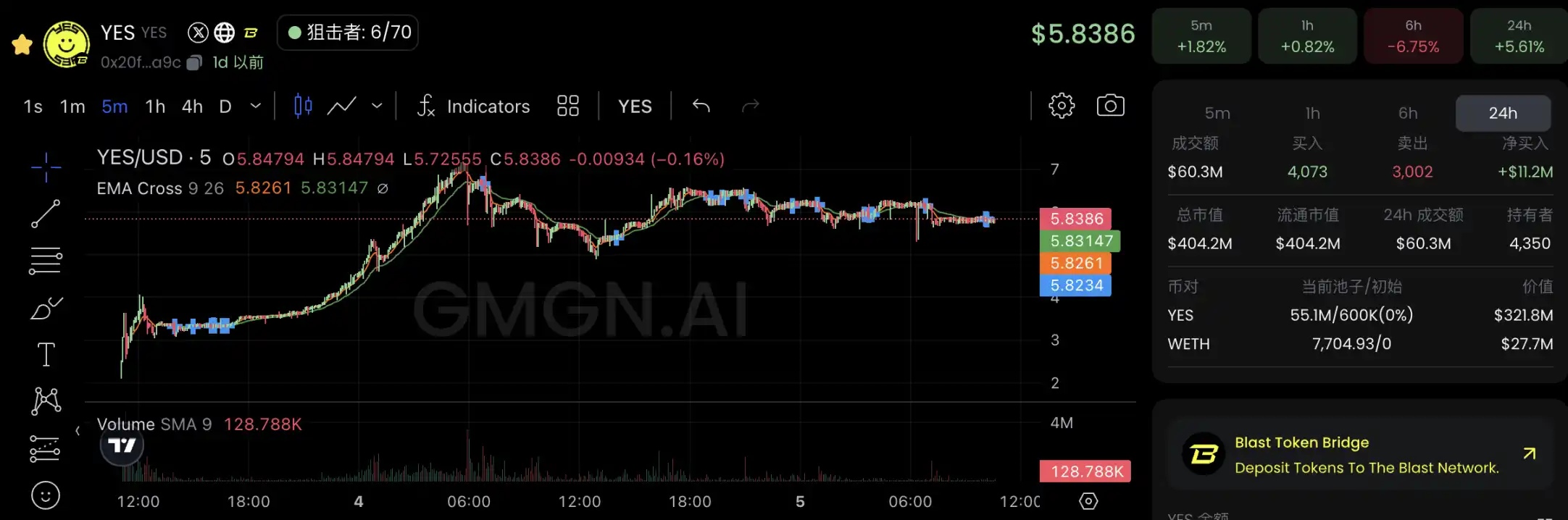
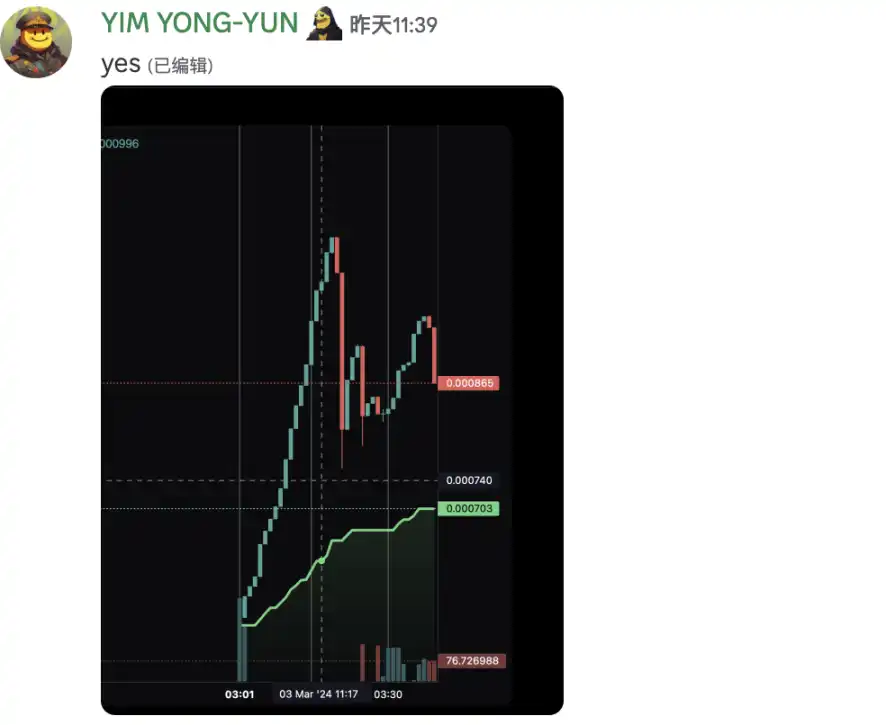
YES is known as "only rising "Up-only token" (up-only token), its team members have experienced FOMO many times in the community.
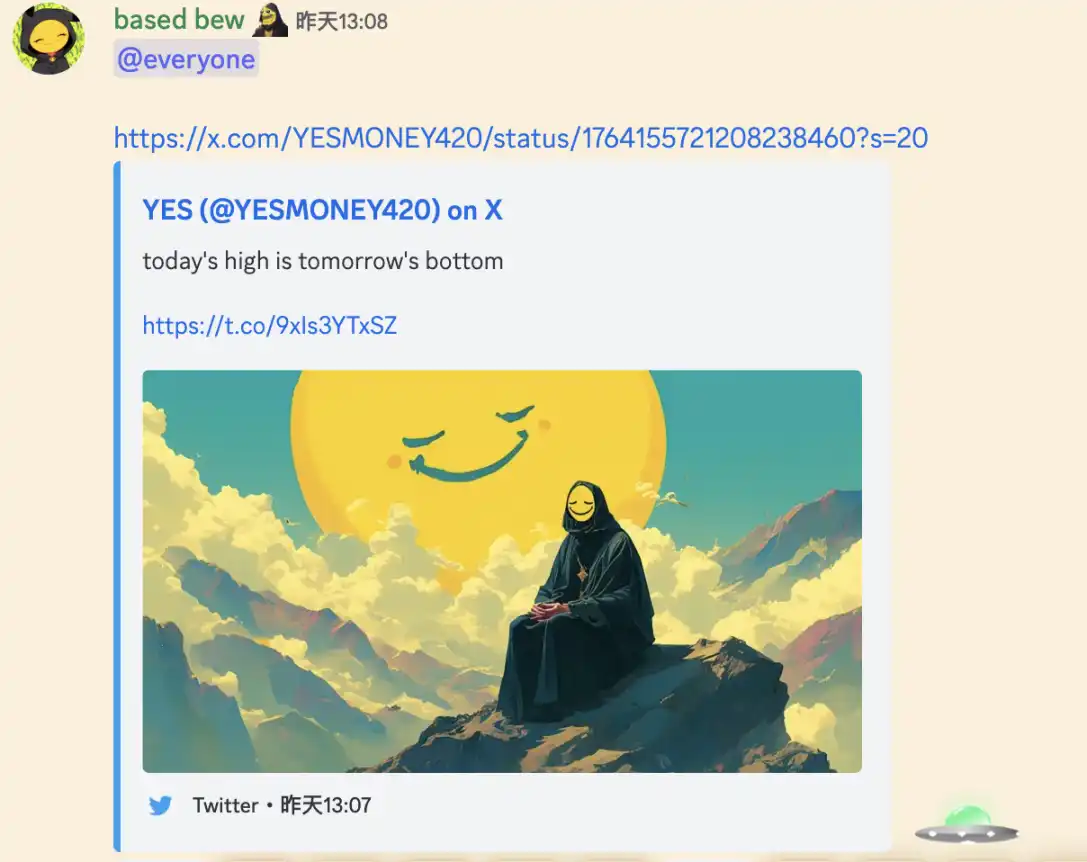
YES Twitter also claimed YES is "Today's top, tomorrow's bottom." But Yesterday’s official push was frozen.
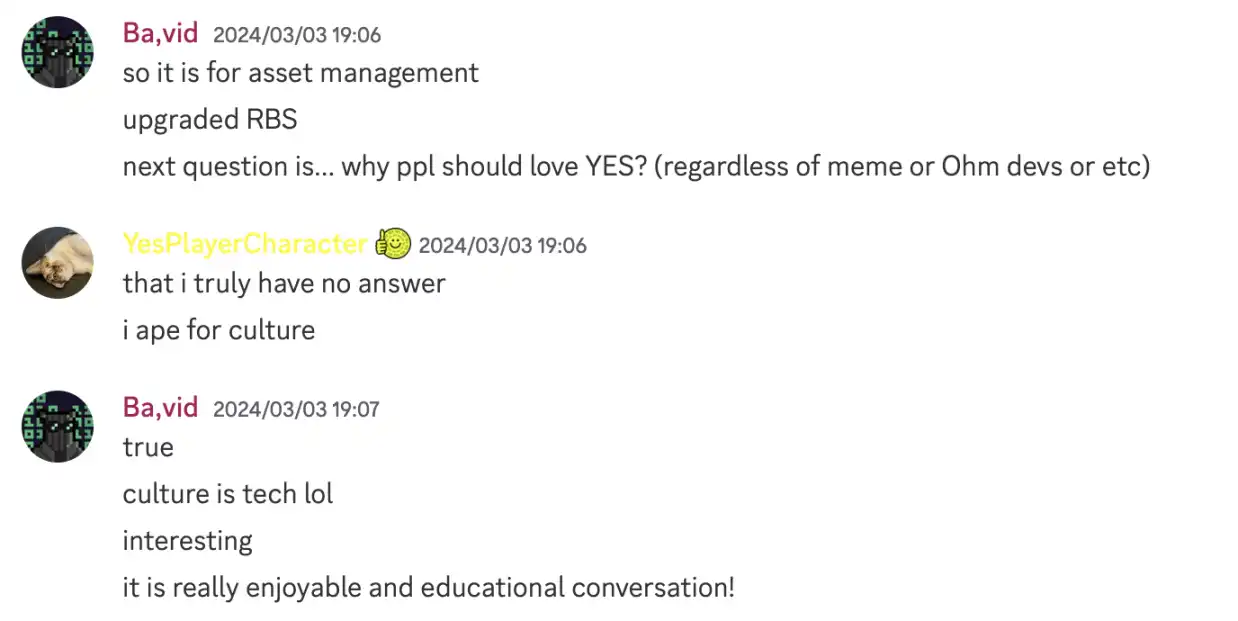
Seeing this, maybe You might think what IBLV is, "it only goes up but never falls" is too Pond's! So what exactly is going on? Don’t worry, let’s start with Baseline, the team behind YES, and unveil the mystery of YES step by step.
Baseline past and present life
If you have paid attention to Blast recently, there is a high probability that you will know that Baseline is One of 47 championship projects selected for Blast BIG BANG. Going back further, the predecessor of Baseline was Jimbos protocol, which suffered a $7.5 million flash loan attack in May last year. As mentioned above, Baseline also provides YES allocation quota for Jimbos protocol victims (Jimmy Stimmy community members).
Jimbos changed its name to Baseline Protocol on July 28 last year and announced that it would be a permissionless algorithmic market maker protocol. The protocol extends the previous protocol owned liquidity (POL) proposed by Olympus and uses smart contracts to manage token liquidity within a centralized liquidity pool. When you see this, you will find that this is similar to Trader Joe’s liquidity order book and Uniswap v3’s centralized liquidity, but the difference is that Baseline uses code to implement automatic market makers and optimize liquidity deployment, because the team believes that people are not Reliable and very expensive to operate.
Speaking of POL, many believe Baseline has close ties to the Olympus team. However, Smokey The Bera, the founder of Berachain, deliberately distances himself from the relationship between OHM and Baseline. He believes that projects that draw on POL ideas should not be famous for OHM, but should build their own projects in a down-to-earth manner.
On February 15 this year, Baseline was officially launched. Its logic is very simple, that is, the initial liquidity is fully deployed on the native DEX Thruster (a fork protocol of Uniswap v3) on Blast. Users can deposit ETH to purchase tokens in the protocol (such as YES), and the deposited ETH will form The protocol’s liquidity positions can be used in Baseline’s permissionless market-making mechanism and native credit mechanism. Baseline reserves enough liquidity through various methods to ensure that when everyone sells tokens such as YES, the lowest price (BLV) of the token can still be maintained. But in fact, if the smart contract is not attacked and as the number of Baseline users and funds increases, the price of BLV will never decrease and will only continue to rise.
How to realize "only rise but not fall"? Baseline's "Wudang Ladder Cloud Zong"
In the Baseline protocol, "Up Only" is a very important technical capability and narrative. It also embodies a kind of meme culture.
Having said that, we still Let’s start with Baseline’s algorithmic market maker mechanism. First, after users buy tokens (such as YES) and provide ETH liquidity, the liquidity position owned by the protocol will be allocated by the protocol to the three price ranges of Floor, Anchor and Discovery:
· Floor has the narrowest price range, but the most concentrated liquidity. When users collectively sell circulating tokens, sufficient liquidity within a narrow range can ensure that the price of BLV is stable enough and will not fall;
·The Anchor price range is slightly wider, but the liquidity is much less, mainly It plays a transitional role to facilitate funds entering the Discovery side;
· When the liquidity breaks through the Floor and Anchor range, it will enter a wider Discovery price range, and normal users will trade within this range. . The liquidity within this range is relatively dispersed, which is conducive to the rise and fall of the token market price.
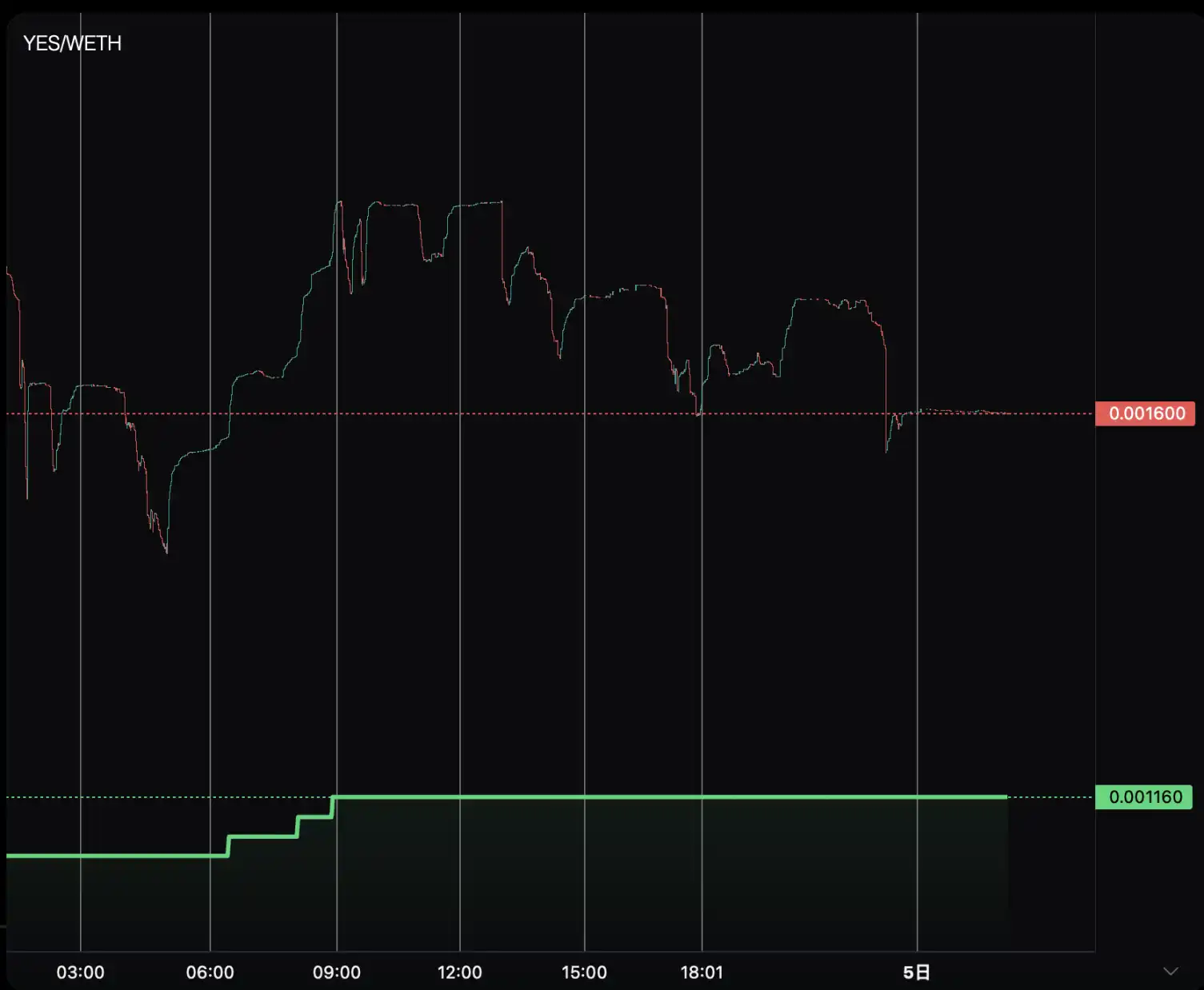
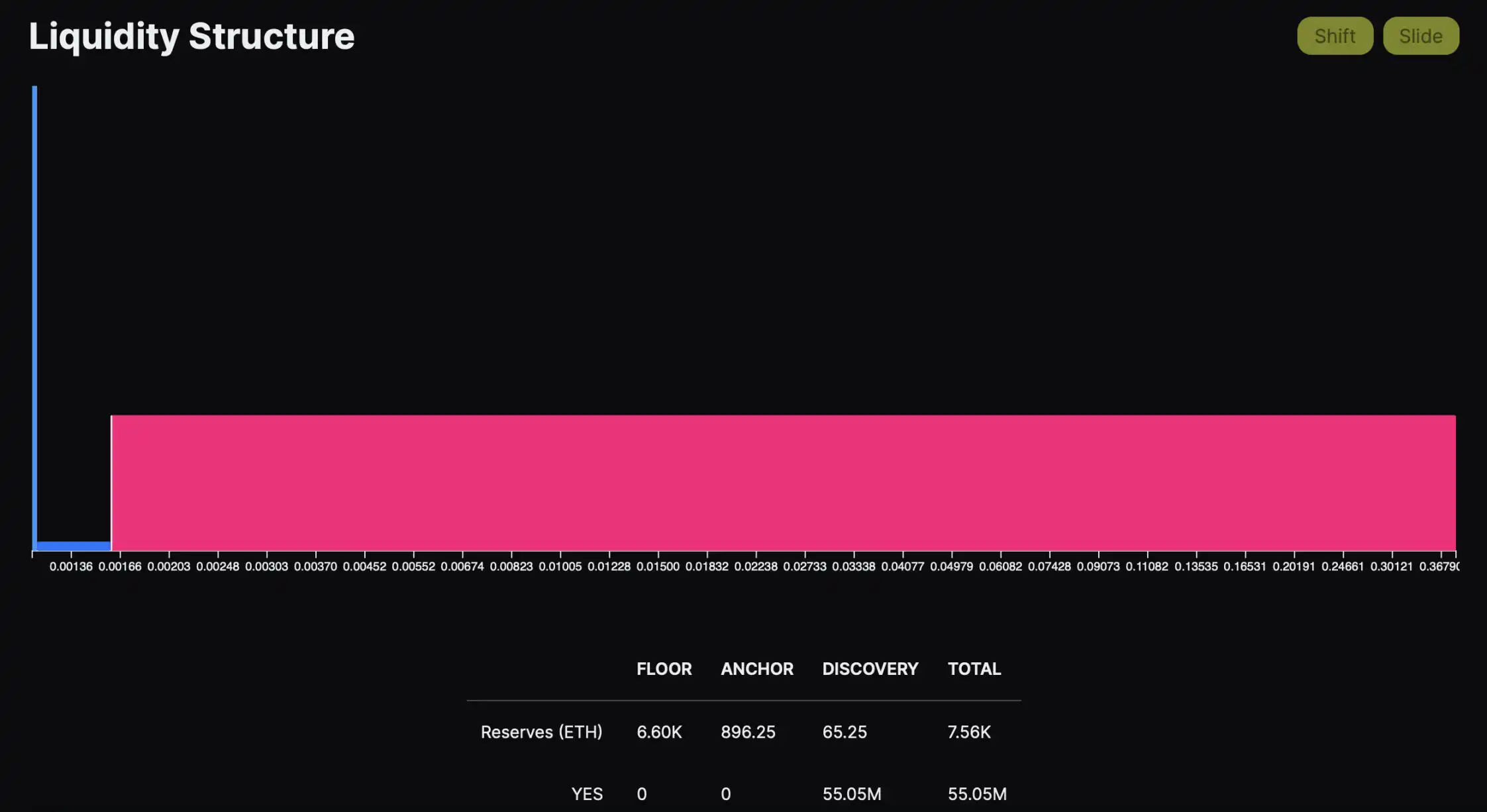
* Currently, the YES market price is 0.001601 ETH (about 5.77 USDT), the BLV floor price is 0.00116 ETH (about 4.18 USDT), and the Anchor price range is 0.0012 to 0.0016 ETH (about 4.32 USDT to 5.77 USDT), and the Discovery price range is 0.0016 to 0.3679 ETH (approximately 5.77 USDT to 1327 USDT).
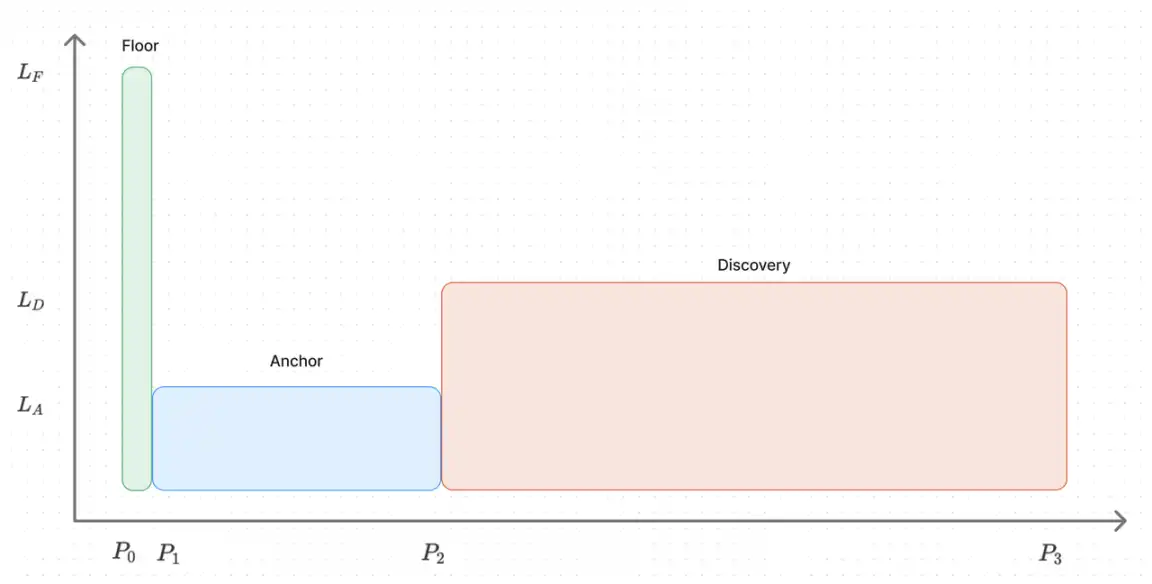
Generally speaking, when Giant whales enter the market, big funds break through the Anchor price range, mint new tokens within the Discovery range, and sell them at higher profits than BLV and Anchor. Once profits accumulate enough, they will be rolled back into the Anchor position, as the algorithmic market maker mechanism will call shift() to increase the top price of the Floor range and the bottom price of the next Discovery range in the same proportion. At the same time, the protocol will also withdraw part of the ETH from the Anchor position and transfer it to the Floor position, increasing Floor liquidity. When profits are large enough, the protocol can also buy back all circulating tokens at a higher price, raising the token's low price and redeploying new Anchor positions with additional ETH liquidity. Of course, the project party can also manually adjust the price range to the Anchor position. Additionally, when prices fall, the liquidity rebalancing strategy will slide() the Discovery position to the market price and compress the Anchor position without affecting the Floor floor price. Of course, if this is not intuitive enough, you can also simulate the liquidity position allocation of Baseline tokens through the following website: https://baseline-simulations.streamlit.app/.
Speaking of this, do you smell the strong smell of Pond's? Baseline makes profits by selling tokens at a premium, ensuring that protocol revenue always exceeds the value of tokens in circulation.
Next let’s look at Baseline’s lending mechanism, which uses an over-collateralized lending mechanism with a loan-to-value (LTV) of 100%. In addition, since Baseline extends POL, the security of liquidity in the protocol will be higher, and user loans do not need to consider the risk of fund exit. In addition, Baseline's lending mechanism does not have any liquidation risk, each token is supported by the Floor price reserve, and the protocol will not confiscate the borrower's assets, but based on the loan term. In the event of default and failure to repay the loan, the protocol simply destroys the collateral, reducing circulating supply and reserves in proportion to the increase in intrinsic value.
In Baseline's design, users can deposit purchased tokens to lend ETH, and use the loaned ETH to buy tokens again to create a leveraged position. In other words, without the risk of liquidation, a user buying Baseline tokens means that he can achieve 2x leverage through mortgage lending, and a set of operations by a user has helped the price of Baseline tokens to become a "Wudang Ladder" "Yunzong". However, it should be noted that each user can only apply for one loan at a time, and only pays a one-time fee of 0.01095% each time they take out a loan.
Here let’s talk about how Baseline generates protocol profits to increase BLV. There are three specific ways:
· LP income: Baselime's LP income is mainly concentrated in the Discovery range. Currently, about 78% of the liquidity has been deployed in this range and has not yet started. The fee level in this range is 1%, and exchanging in this liquidity pool requires a 1% handling fee, which will be directly used to increase the BLV floor price.
· Liquidity rebalancing fee: During shift(), the protocol will also transfer part of it to the Floor scope to increase liquidity. When the BLV price rises, the protocol calculates the excess tokens and sends a portion of them to the team (because all liquidity is deployed on the protocol, the team does not have any allocation);
· Borrowing fee: A one-time daily fee paid by users when opening a loan or extending the loan term, which will be used directly to increase BLV.
The mystery of the agreement: YES eternal inflation?
Many people will be confused. The total supply of YES on the Blast browser has been rising. What is going on? Community members say this is the "Mystery of the protocol" and no one understands what is going on. At the same time, the current introductions to YES and Baseline avoid the issue of token inflation. No wonder, after all, this is the Baseline document and there is no explanation.

But the author picked it up Discord, found some clues in it. In fact, Baseline automated token economics is divided into two levels, namely floating supply and total supply.
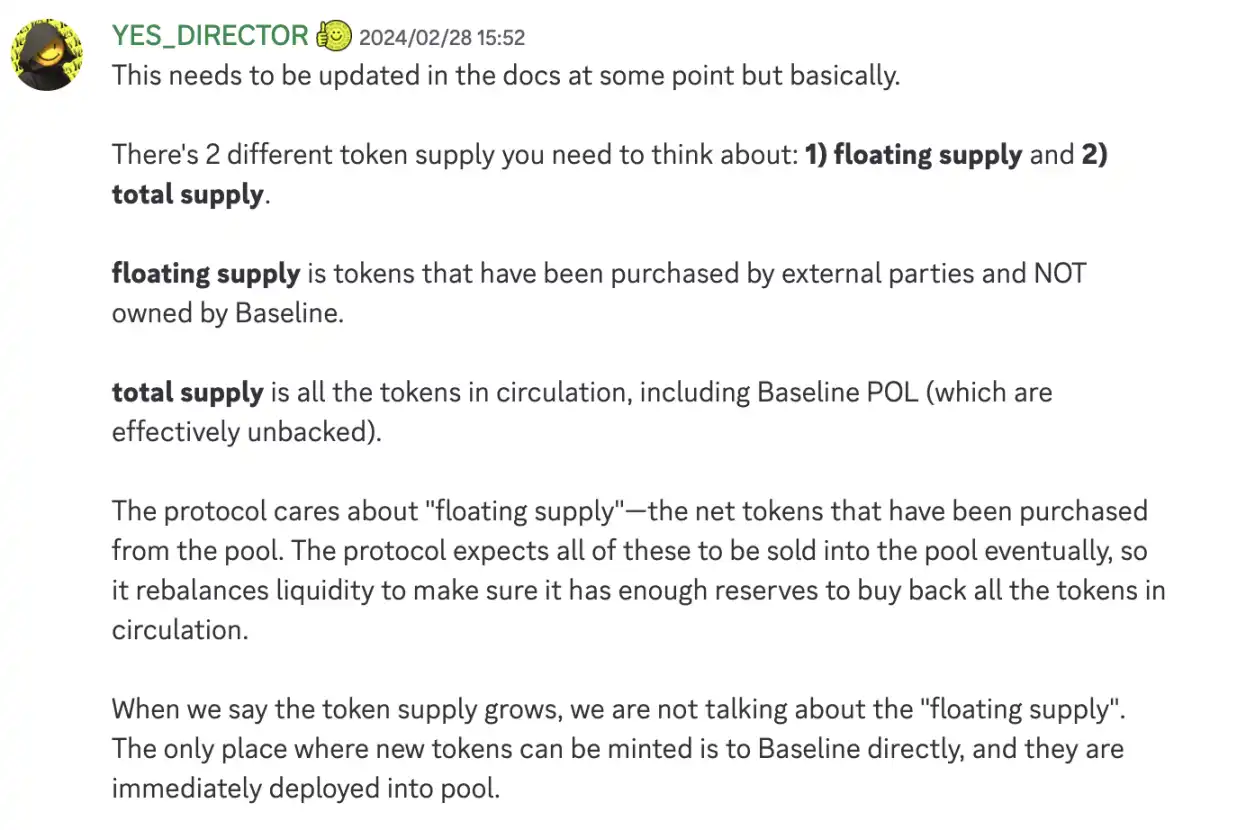
Floating supply It refers to all tokens outside Baseline's liquidity position, that is, tokens purchased by users, which are not owned by Baseline. If you hold a token, it means it belongs to the floating supply. If a token is burned, it will not be included in the floating supply. Just think of it as the normal total supply of tokens we understand.
Baseline's total supply is all tokens in circulation, including Baseline POL that is not backed by reserves, but POL will not be counted Make YES the circulating supply of such tokens. Taking YES as an example, only by matching the liquidity of ETH and issuing additional YES can the protocol have a liquidity position, otherwise it will not be filled in the liquidity pool to provide sufficient liquidity for the protocol.
The protocol is concerned with the "floating supply", which is the net number of tokens purchased from the token pool. As analyzed above, what Baseline needs to do is to have enough reserves to repurchase all circulating tokens, so that BLV will not fall below the Floor price range. But the premise is that the Recovery liquidity pool must have sufficient liquidity positions to earn profits for Floor to enhance the BLV price.
Therefore, the supply of YES tokens that everyone sees continues to grow. This does not refer to "floating supply", but to the POL deployed in the liquidity pool. YES tokens added to the position. In short, the supply of tokens that are not backed by reserves continues to grow, and the supply that is backed by reserves does not.
It is also worth noting that there is no target issuance rate for newly issued tokens. When users add ETH liquidity to the pool, the protocol calculates how much is needed for the corresponding position. Liquidity, mint the corresponding amount of YES to match and add to the liquidity pool. Therefore, this also creates a misunderstanding that YES is eternally inflationary. This is not entirely true. There is also a corresponding token destruction mechanism during the liquidity rebalancing period. If there is an excess of Baseline tokens such as YES, they will be destroyed directly, which can offset the newly issued token supply.
YES How to calculate market value?
After clarifying the above-mentioned token issuance and destruction situation, we can calculate the market value of YES. Currently, Blast browser data shows that the total supply of YES is 69.23 million, but the liquidity deployed by the protocol within the Discovery range is still 55.05 million, and the current market price has just entered the Discovery range. In other words, there are a total of 14.18 million YES in actual circulation. At the current price of $5.71, YES should be worth about $80.96 million.
Will Baseline fall into a death spiral?
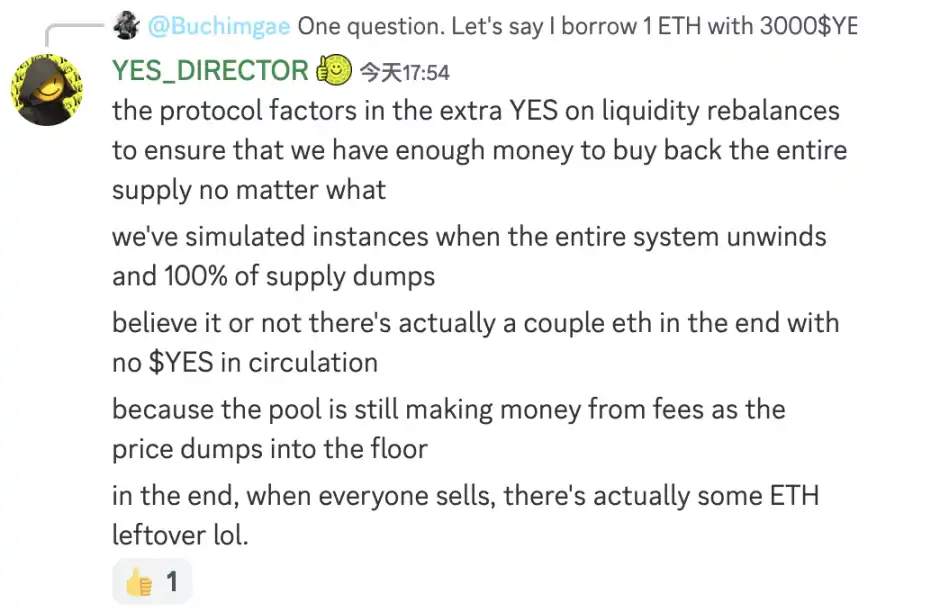
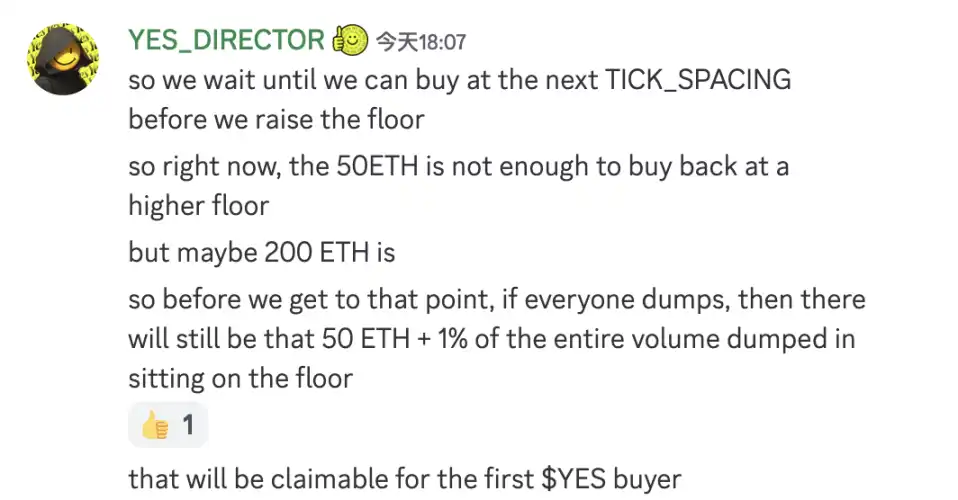
If everyone sells YES like a bank run, is there really enough liquidity on the Floor? The Baseline team stated that it has simulated and tested this situation. In the absence of any YES circulation, there will still be a few ETH left in the Floor, and the protocol has enough reserves to repurchase the circulating tokens.
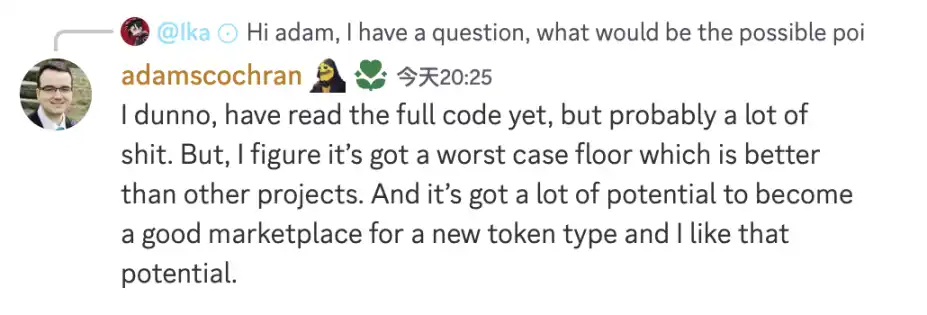
Cinneamhain Ventures partner Adam Cochran said that he has read all the code and there may still be many problems, but the price range of Floor still exists Better than most projects.
Of course, Baseline’s BLV Under the mechanism, will the Floor prices of tokens such as YES really not fall? Won't we fall into a death spiral? Will the tragedy that happened to Jimbos Protocol not happen again? We don’t understand code, and our IQ is obviously not up to par. If we want to participate, we most likely have to trust the team. But it still has to be left to the market to test. After all, Ponzi was good in the time before the crash.
Original link
Recommended
The Wall Street Journal: How is AI Trading Stealing the Limelight from Cryptocurrency?
Aug 15, 14:00
Tencent Still Has a Dream
Aug 15, 11:27
To Catch North Korean Hackers, They Set Up a Fake Project
Aug 15, 10:00
From Litigation to Settlement: Positive Signal Released by HTX's Negotiation with FCA
Aug 14, 19:32
11,742 Shipping Addresses Exposed Alongside Trezor Orders
Aug 14, 19:01
Founder Interview: FOMO Creator Explains How They Added 30,000 Users in One Day and Became One of the Fastest-Growing Crypto Apps
Aug 14, 18:37