Opinion: Crypto is not an asset, it’s a technology

Original title: It's time to get rid of "Crypto"
Original author: JP Koning
Original compilation: Luffy, Foresight News
You can call me a pedant, but I just don’t like the word “Crypto”. It was an available category back in 2011, when there was only one Crypto – Bitcoin. Today it is no longer a meaningful term and, if anything, it has led to a regression in understanding.
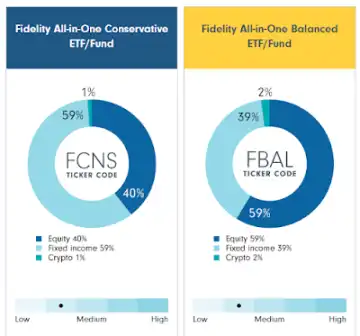
Fidelity chart above It is a typical example. It recommends that customers conservatively invest 40% of their wealth in "stocks", 59% in "fixed income", and the remaining 1% in "Crypto".
These classifications are meaningless because in most cases, Crypto "is" stocks; in other cases, Crypto "is" fixed income.
Take the MKR token as an example. It is based on the Ethereum network and is among the top 100 crypto assets by total market capitalization on CoinGecko. It sounds like it should belong to Crypto , but please wait, as a MKR holder, you have the right to receive MakerDAO income.
MakerDAO is actually an offshore bank. You can enjoy buybacks, voting rights, and the right to claim the remaining assets after compensating creditors in the event of bankruptcy. This is Equity! Yes, buying MKR is the economic equivalent of buying Bank of America stock.
Similarly, the DAI token is a payment instrument (also known as a stablecoin) issued by MakerDAO on Ethereum and is the 25th largest asset by total market capitalization on CoinGecko. It also sounds like Crypto, doesn’t it? But in addition to being pegged to the U.S. dollar, DAI pays 5% interest. That puts it squarely in the fixed-income category, just like Bank of America's uninsured interest-bearing account.
So what exactly is Crypto?
The term "Crypto" describes a database technology, not an asset class. Various asset classes such as stocks, bonds, options, and savings accounts (or various combinations thereof) can be recorded and stored in Crypto databases, just like MKR is issued on Ethereum (one of the most popular Crypto databases). These Crypto databases are in the same category as Azure SQL Database or Oracle Database, which both record assets but are not themselves asset classes.
So now you can see why it is ridiculous for Fidelity to advise clients to invest 99% in stocks + fixed income and 1% in Crypto. This is a category misperception, much like Fidelity recommending people hold 99% equity + fixed income, with the remaining 1% stored in an Oracle database.
Telling clients to invest 1% of their wealth in generic assets stored in Oracle databases is more than just a category error, it sounds pretty reckless. All kinds of crazy financial information has appeared in Oracle databases, including sports betting and doomsday options. As for the Crypto database, it is notorious for being riddled with financial scams such as Ponzi.
Crypto does not refer to an asset class, but to a database technology that describes the occurrence of an asset. The best thing to do is, let's get rid of the word altogether.
Original link
Recommended
The Wall Street Journal: How is AI Trading Stealing the Limelight from Cryptocurrency?
Aug 15, 14:00
Tencent Still Has a Dream
Aug 15, 11:27
To Catch North Korean Hackers, They Set Up a Fake Project
Aug 15, 10:00
From Litigation to Settlement: Positive Signal Released by HTX's Negotiation with FCA
Aug 14, 19:32
11,742 Shipping Addresses Exposed Alongside Trezor Orders
Aug 14, 19:01
Founder Interview: FOMO Creator Explains How They Added 30,000 Users in One Day and Became One of the Fastest-Growing Crypto Apps
Aug 14, 18:37