Where did the token rewards go?

Original title: "Where do token rewards go?"
Original author: FLORIAN STRAUF
Original compilation: Frost, BlockBeats
Editor’s note:
Where do the airdrop or staking rewards go? Perhaps most people have not thought about this issue carefully. As an important part of the blockchain industry, token incentive plans are being widely adopted, but there are not many articles on the market analyzing the incentive effects. Is such an incentive mechanism really effective? This article analyzes the token reward mechanism. BlockBeats compiled the original text as follows:
Someone recently asked me this question: "How do recipients of token rewards handle tokens?" Coins?"
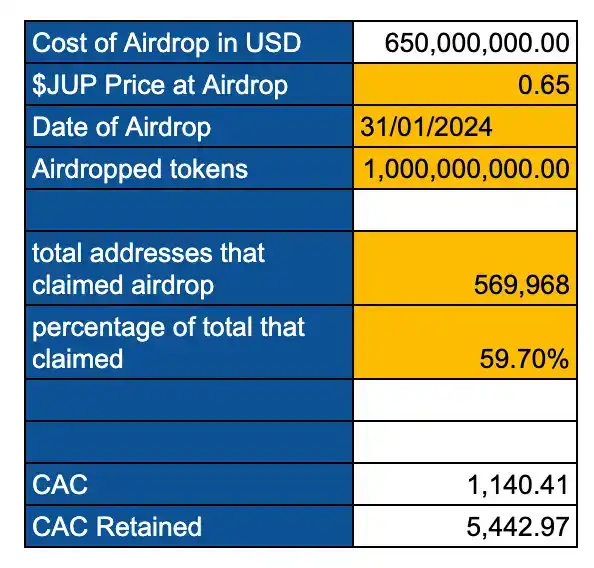
If we look at Jupiter's recent $JUP airdrops, the answer is that most are selling.
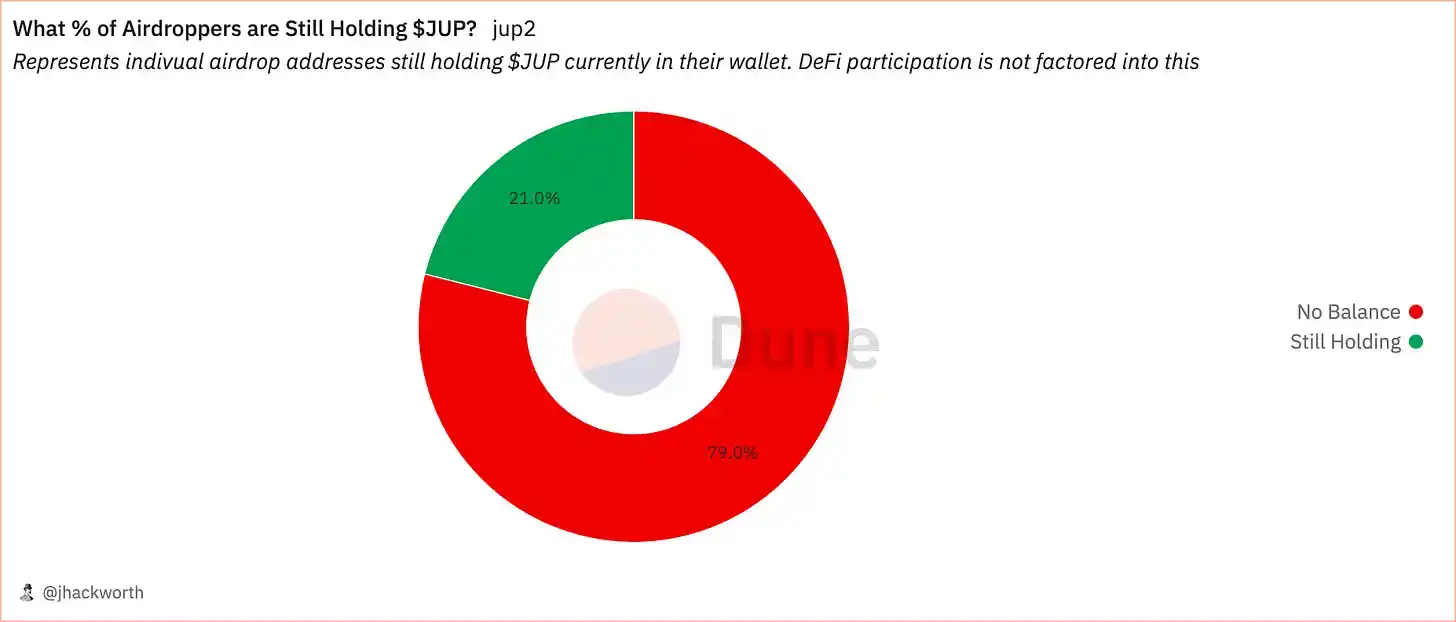
There are two reward recipients Choice: sell or hold.
If we analyze deeper, selling or holding is a matter of an individual’s risk appetite for holding a token. Typically, cryptocurrency startups are very risky, so there is a threshold for how much money one wants to allocate to the project. If the reward exceeds that threshold and the incentive to hold is not strong enough, they may eventually be sold.
Rewards are a powerful tool at the disposal of token originators. There is no cost to mint the tokens, and you can earn a profit by selling them.
Projects receive free funds and can incentivize others (liquidity providers, users, etc.) to interact with the protocol. Doing so steers the market and subsidizes buyers and sellers to drive business.
The sponsors may hope that over time, the number of buyers and sellers will allow the market to keep running organically without Internet funding.
There is no doubt that free tokens are a great tool. Almost every project that launches a token uses it for incentives. But the question is, how effective are these incentives?
Staking rewards are a form of incentive. In its original form, staking was a mechanism in which a proof-of-stake base layer paid minted internet currency to validators.
However, non-base layers have adopted this strategy to pay token holders to retain users. Currently, it is a popular mechanism for many protocol implementations.
If we talk about staking rewards from non-base layers, the goal is usually customer retention, i.e. people being rewarded for holding tokens.
Can token reward activities retain token holders?
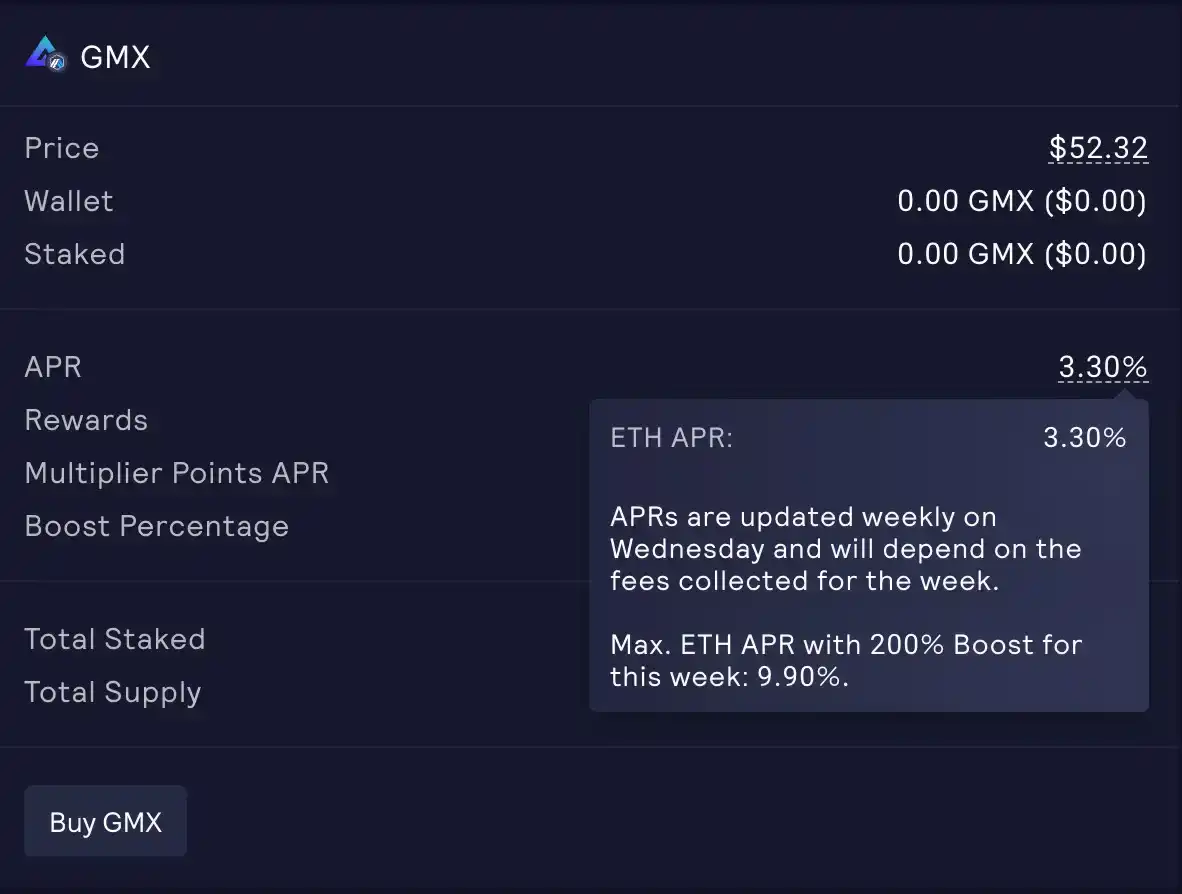
I will pay $GMX The yields are compared with the yields on corporate bonds. Most people are unlikely to hold a risky asset like $GMX with a yield as low as 3-4%. They will do things like buy low and sell high because they see the potential in the project.
In this case, I think the token reward campaign will not retain holders, or will have a very small effect.
Token holders and customers are not the same, but There is some overlap.
We can use rewards as a cost to retain customers or token holders. It is similar to dividends as a mechanism for retaining shareholders (except that dividends are not paid in kind).
Similarly, airdrops can be viewed as a customer acquisition cost. Unfortunately, there isn’t a lot of data on the effectiveness of staking rewards, but there are some great examples of airdrops.
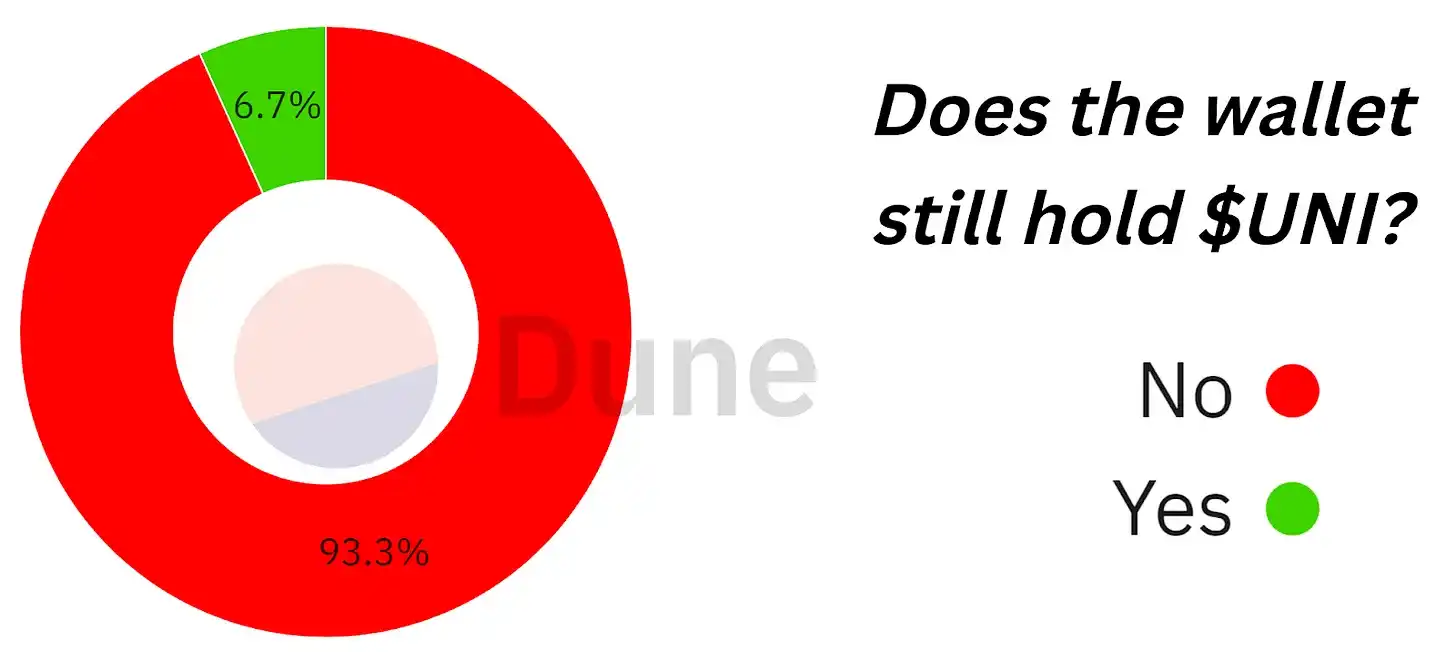
For example, 7% of airdrop recipients still held $UNI at some point after the airdrop. This somewhat matches Jupiter’s airdrop campaign above.
Kerman Kohli analyzes in detail Customer acquisition cost of Looksrare airdrop, For details, please refer to this article .
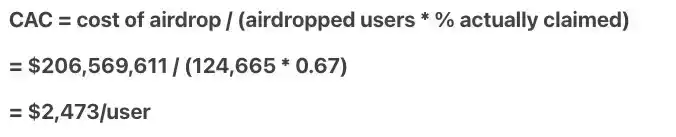
Although airdrops and staking are not entirely comparable, they both show reward activity has worse user retention, so I think the results are roughly the same.
By the way. This is the airdrop situation of Jupiter:
Dune: https://dune.com/jhackworth/jupiter-airdropDune
Comparison (source source):
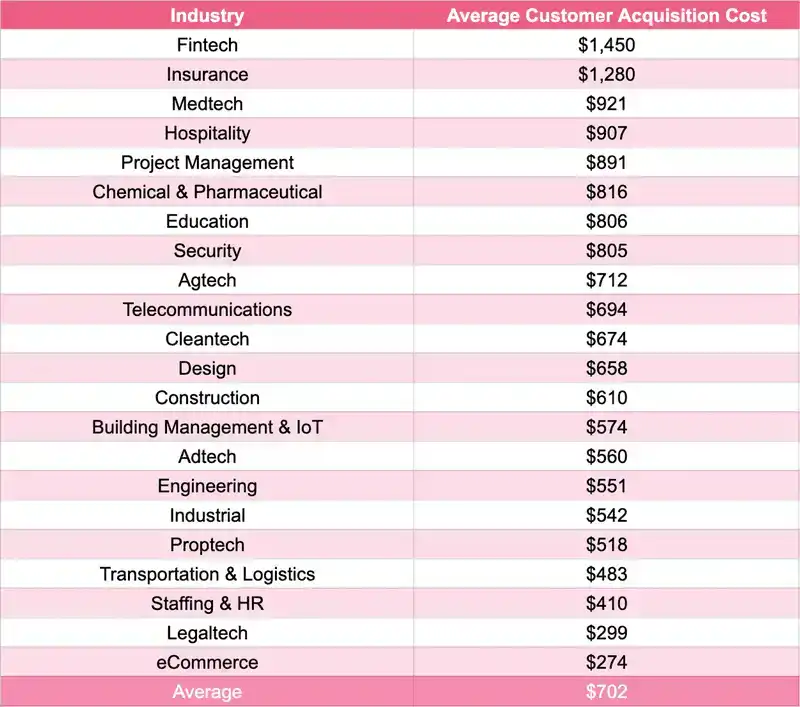
Too bad, project Spend not only money but also tokens to acquire customers. Many of these coins will eventually become selling pressure in the market.
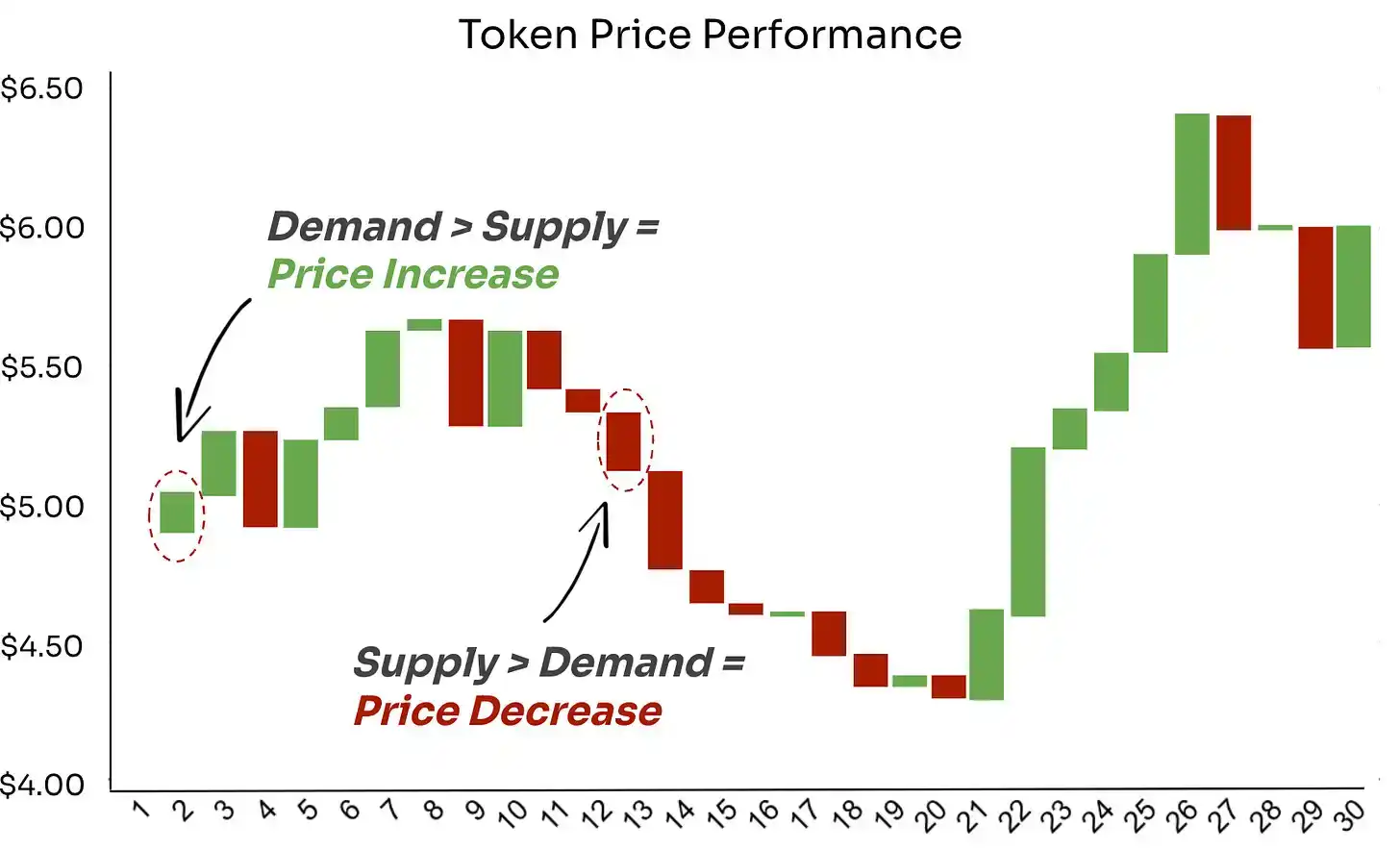
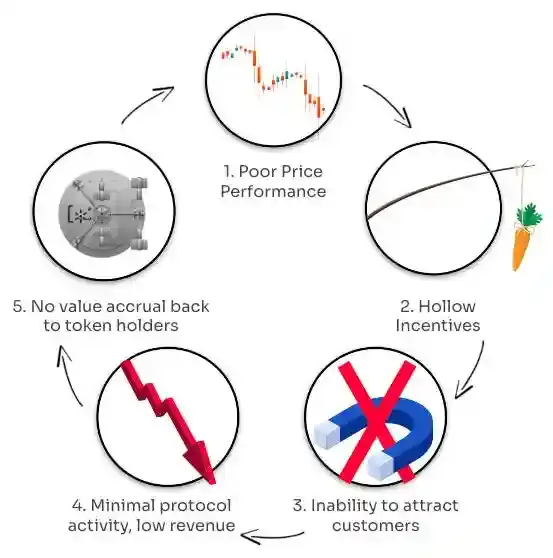
If they have not encountered For buyers who can withstand this selling pressure, the token price may fall, thus weakening incentives and possibly creating the following cycle.
What I want to say is , token incentives are helpful, but they may not be as effective as people think, and when the circulation of tokens is larger, people need to have a strong reason to buy and hold. If users will do this, then it should have generous actual benefits, governance rights, token buyback and other mechanisms, or be a project with stable growth.
「Original link"
Recommended
The Wall Street Journal: How is AI Trading Stealing the Limelight from Cryptocurrency?
Aug 15, 14:00
Tencent Still Has a Dream
Aug 15, 11:27
To Catch North Korean Hackers, They Set Up a Fake Project
Aug 15, 10:00
From Litigation to Settlement: Positive Signal Released by HTX's Negotiation with FCA
Aug 14, 19:32
11,742 Shipping Addresses Exposed Alongside Trezor Orders
Aug 14, 19:01
Founder Interview: FOMO Creator Explains How They Added 30,000 Users in One Day and Became One of the Fastest-Growing Crypto Apps
Aug 14, 18:37