Realizing the Full Potential of EVM: Artela’s EVM++ Innovation for Parallel Processing and Scalability

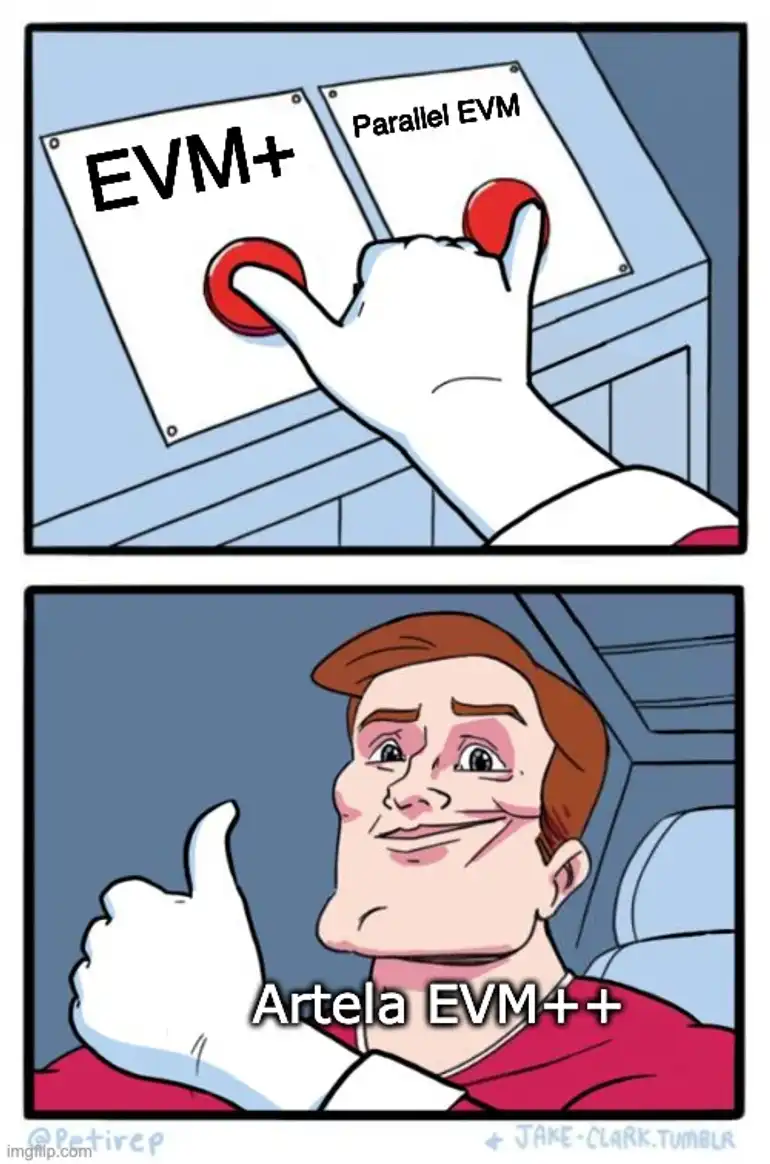
The public chain Artela announced that it has entered the next stage of research and development: EVM++, which improves Artela network performance through parallel EVM and supports the mass adoption of decentralized applications through the advanced design of elastic blocks.
Previously, the Artela public chain achieved an important milestone in ecological development, completing the construction of EVM+ features and launching a public test network. Through the paradigm of EVM+WASM, developers are allowed to pass Aspect programming builds on-chain expansion, and has breakthrough cases in AI+Crypto, full-chain games, DeFi security and other directions, and has established many ecological partners in these directions.
EVM++ carries Artela’s ultimate vision: to simultaneously unlock the extensibility and scalability of the EVM blockchain to adapt to the new crypto world: AI, DePIN, DeFi Security, etc. Useful technologies are being integrated into crypto applications at an accelerated pace.
Today, we announced the launch of EVM++, which is our upgrade of the next-generation EVM execution layer technology. It achieves native expansion through EVM+WASM and unlocks the area The extensibility of the blockchain also supports parallel execution to achieve the scalability of the blockchain.
EVM++ aims to open the boundaries of EVM to adapt to the new crypto world: the product power and innovation of web2 are being integrated, and AI, DePIN, DeFi Security, etc. are useful technology is accelerating its integration into crypto applications. EVM++ allows existing EVM assets, protocols, and infrastructure to be seamlessly connected to new ones, carries mass adoption applications, and accelerates the integration of crypto and mainstream at the application level.
Artela has built a highly scalable EVM+ network in the past year. Based on Aspect programming, we have added a WASM virtual machine on the EVM-compatible network. , used to dynamically add and run on-chain extensions. Applications can use EVM+ to develop high-performance protocols, build modular applications, and customize application-specific underlying features
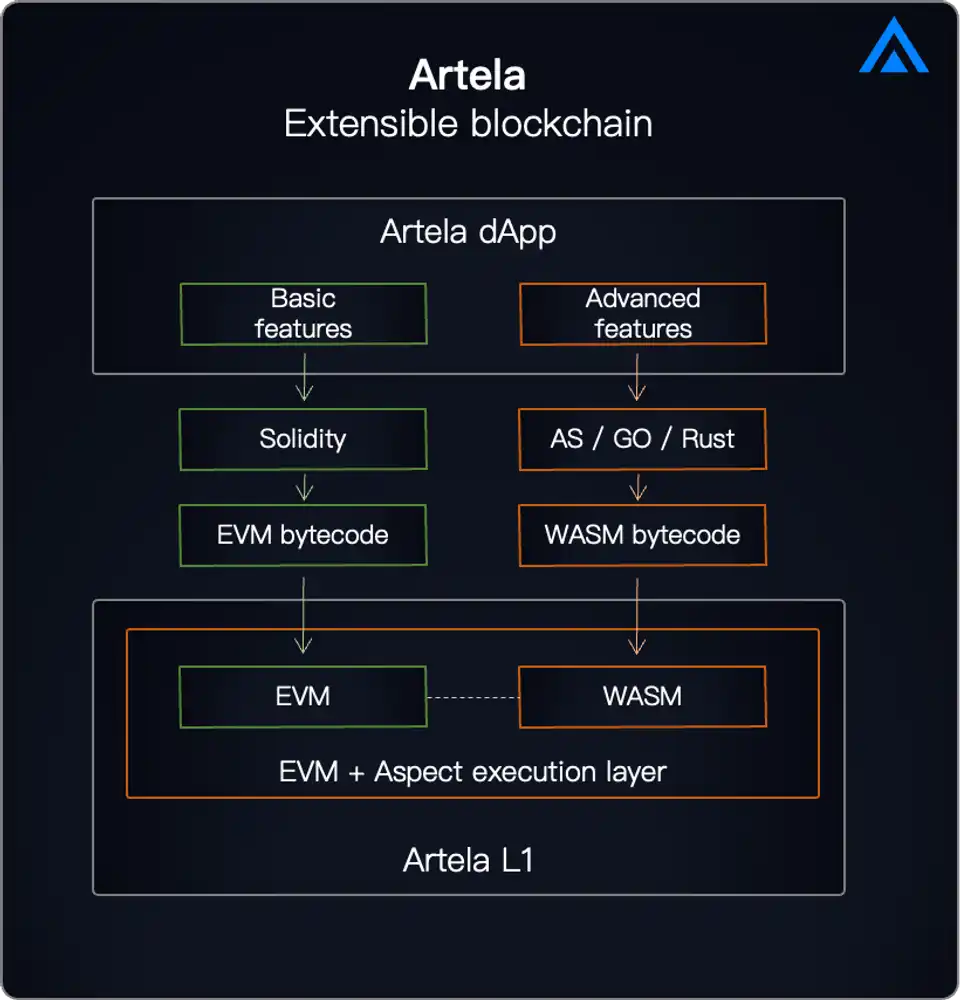
During DevNet and Public Testnet, we worked with Extremely creative developers have deeply explored the potential of the EVM+ network, and many imaginative use cases have been built:
WASM as on-chain co -processer, a breakthrough in running AI-agent algorithms and other high-performance modules on the chain, while maintaining interoperability with EVM
Ai-agent participates in Full-chain games allow the autonomous world on the chain to realize a truly programmable NPC
The opt-in security risk control module can be executed in real time at runtime, and the DeFi protocol Suspicious transactions can be identified and blocked in real time
A network that can unlock full-chain applications, AI, and secure DeFi while retaining compatibility and interoperability with the EVM world Sex, it's already coming.
Artela’s vision is to build a network that can be infinitely expanded, EVM+ Not the end goal, but a starting point. Next, Artela will move into the next stage of development: EVM++, a parallel EVM+ network to fully unleash the potential of scalable blockchains.
EVM+ unlocks the extensibility of EVM. It aims to open the boundaries of EVM to adapt to the new crypto world: the product power and innovation of web2 are being integrated into AI , DePIN, Fintech and other useful technologies are being integrated into crypto applications at an accelerated pace. EVM+ allows existing evm assets, protocols, and infrastructure to be seamlessly connected to new ones, rather than creating isolation in the non-evm world.
EVM++ unlocks the Scalability of EVM, allowing this highly creative network to further carry mass adoption applications and accelerate the integration of crypto with the mainstream at the application level.
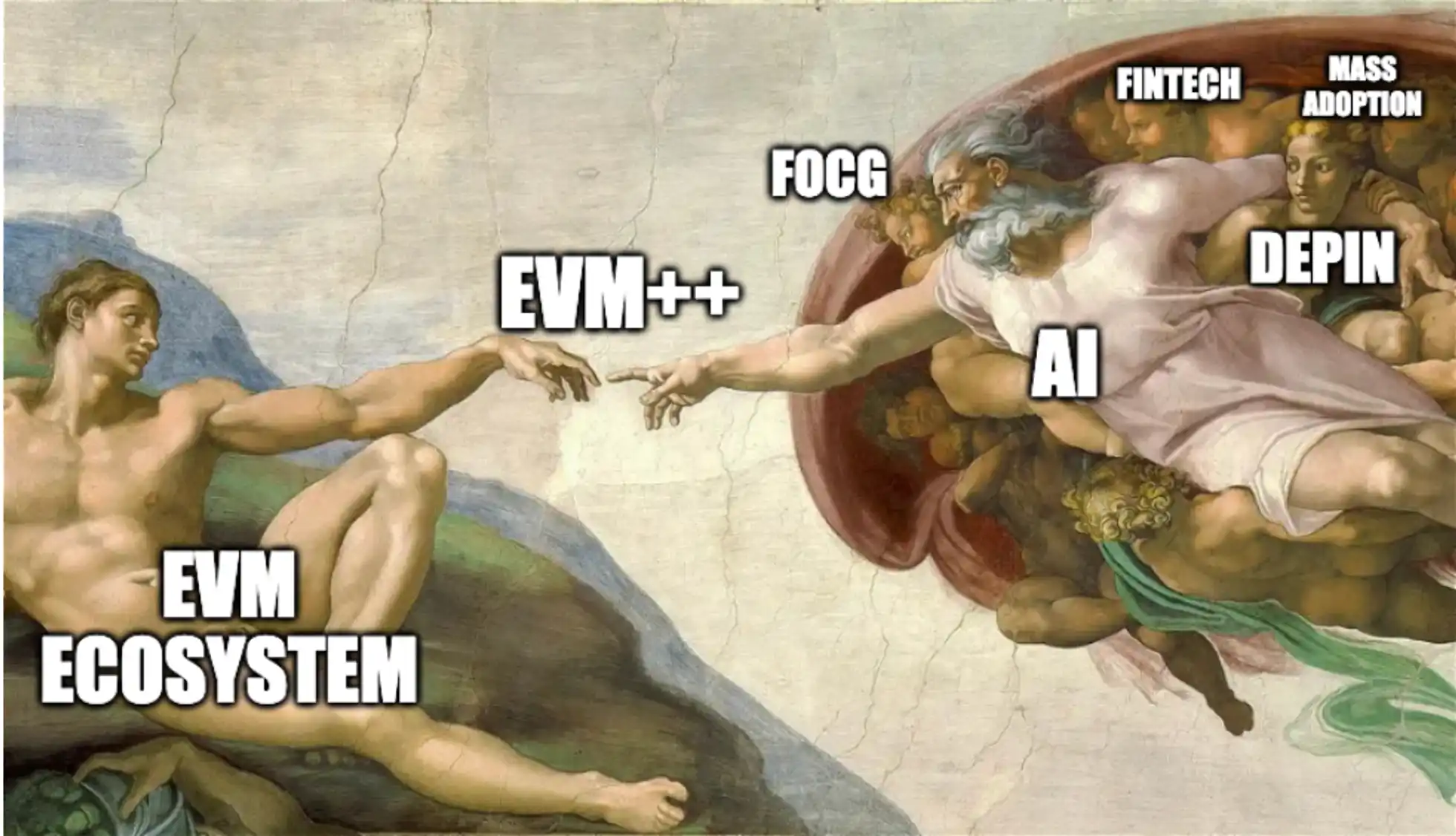
One can fully chain, We are accelerating the arrival of intelligent, secure, and mass-adoptable EVM networks.
Artela's parallel EVM++ will be implemented in two stages.
The first stage is to implement parallel execution of transactions under EVM+. The Artela network not only implements the basic parallel EVM, it also solves the problem of parallel execution under EVM+. Aspect is an extension program running under the WASM virtual machine in the Artela network. It will be called during the transaction life cycle.
In the second phase, Artela will make full use of parallel features and further combine it with elastic computing to achieve flexible block space, which will allow dApps to maximize the use of parallel execution features. dynamic elastic network.
Parallel EVM Overview
Artela’s scale-out architecture will be designed around parallel execution. On the basis of parallel execution, elastic computing is used to ensure the scalability of network node computing power, and ultimately achieve elastic block space.
Parallel Execution: Artela Network groups transactions based on transaction dependency conflict analysis to support parallel execution.
Elastic Computing: The validator node supports horizontal expansion, and the network automatically adjusts the validator’s computing nodes according to the current network load or subscription situation. The expansion process is coordinated by the elastic protocol to ensure that there are enough elastic computing nodes in the consensus network.
Elastic block space: Based on elastic computing, in addition to expanding the public block space, large dApps that have independent block space requirements You can apply for dedicated flexible block space in the network.
Elastic block space
Elastic block space (elastic block space) refers to dynamic The expanded block space provides independent block space guaranteed by the protocol for dApps with higher transaction throughput requirements. By default, blocks have limited public block space capacity. When a dApp applies for separate block space, additional space is added to the block that only accommodates transactions related to the dApp's smart contract. When the block space expands, validators need to add elastic execution nodes to expand the corresponding processing capabilities. Elastic block space is an expansion mechanism for blockchain that enables unlimited scalability while maintaining interoperability. Scalable networks such as sharded blockchain, appchain, layer2, etc. can also provide independent block spaces, but their block spaces will be isolated from each other and cannot interoperate. Elastic block space allows dApps with independent block spaces to interact synchronously through atomic transactions in the same block, avoiding the need for asynchronous cross-chain communication. When dApps in the Artela Network have high scalability needs, they can subscribe to elastic block space to handle increases in throughput. Elastic block space and native extensions provide dApps in Artela with extensibility and customization capabilities.
The Artela ecosystem is developing rapidly and will be realized as we move towards EVM++ A major leap forward. We'll continue to announce important developments, so please follow Twitter and Discord to learn more.
Recommended
The Wall Street Journal: How is AI Trading Stealing the Limelight from Cryptocurrency?
Aug 15, 14:00
Tencent Still Has a Dream
Aug 15, 11:27
To Catch North Korean Hackers, They Set Up a Fake Project
Aug 15, 10:00
From Litigation to Settlement: Positive Signal Released by HTX's Negotiation with FCA
Aug 14, 19:32
11,742 Shipping Addresses Exposed Alongside Trezor Orders
Aug 14, 19:01
Founder Interview: FOMO Creator Explains How They Added 30,000 Users in One Day and Became One of the Fastest-Growing Crypto Apps
Aug 14, 18:37