Runes self-developed market is launched. How to explore the rune ecosystem in one stop through the OKX Web3 wallet?

Original source: OKX
On April 20, as the block height reached 840,000, Bitcoin successfully completed its fourth halving. At the same time, the highly anticipated Runes protocol was officially launched.
As an early supporter of Bitcoin ecosystem construction, OKX Web3 wallet launched the Runes self-developed market as soon as possible to help users explore the Rune ecosystem in one stop.
Runes is a new Bitcoin protocol proposed by Casey Rodarmor, the creator of the Bitcoin Ordinals protocol, in 2023. It aims to use the blockchain's native UTXO transaction model to promote the issuance and use of alternative cryptocurrencies. Compared with the solutions of protocols such as Ordinals, Runes is more efficient and easy to use.
Specifically, Runes has the following technical features:
• Runes introduces UTXO based homogeneous token protocols, provides alternative models such as BRC-20 and ORC-20.
• Based on UTXO models,simplifies the creation and management process,provides a smooth solution than address or off-chain protocols.
• Can seamlessly integrate with Bitcoin architecture,which helps reduce blockchain bloat and improve scalability.
• Sets a new benchmark for Bitcoin token protocols, which can minimize the creation of "junk" UTXO , and to some extent provides a more user-friendly system.
To sum it up in one sentence: a simple, UTXO-based, homogeneous token protocol with better user experience.
Currently, the OKX Web3 wallet web plug-in has launched the Runes self-developed market, and supports the viewing, transfer, trading and mint (casting) functions of Runes ecological rune assets. Users can experience the product according to their own needs. In addition, the deploy function of the Runes market will be launched soon, and it will support the deployment of corresponding tokens for Runes ecological projects.
How to use the Rune ecosystem through the OKX Web3 wallet? (Take the web plug-in as an example)
• Connect the wallet (update to the latest version of the plug-in wallet)
• Enter the Runes market
• Click on Minting to view the tokens being minted
• Click on the token you want to mint
• Mint/Buy (the minting process is the same as BRC-20)
• Confirm
• List
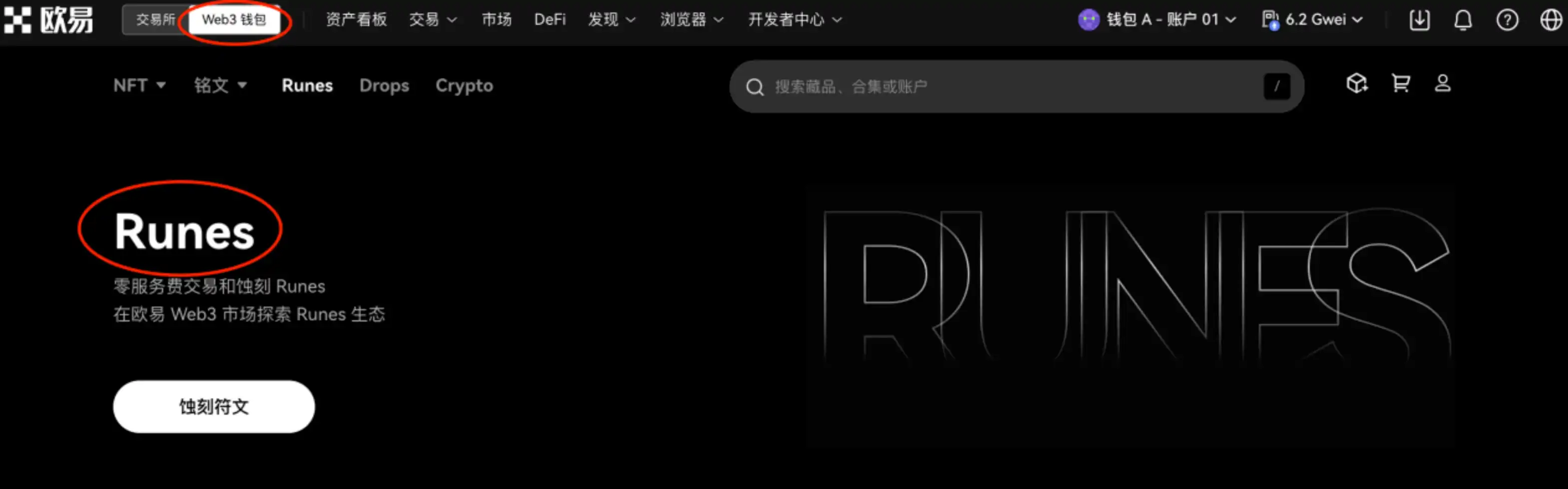
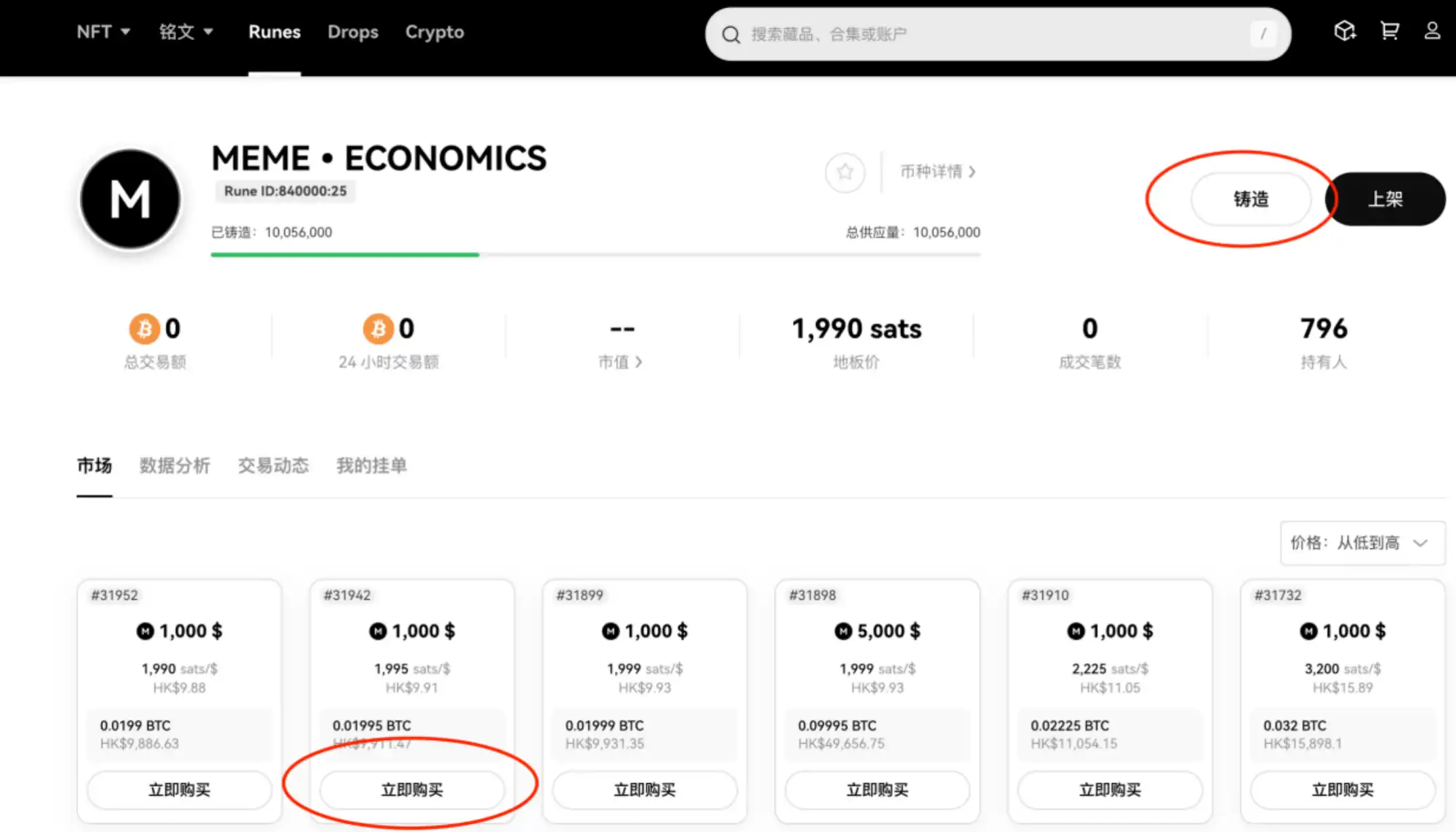

It should not be difficult for familiar users to find that the minting process of runes is very similar to that of BRC-20 tokens. Of course, what is more noteworthy is that the Runes market of the OKX Web3 wallet currently supports 17 popular projects such as Runestone and Runepups, helping users to play the rune ecosystem in one stop.
To talk about the difference between the two, we cannot do without the background of the birth of Runes.
In May last year, the core developers of the Bitcoin community publicly stated that the Ordinals protocol caused too much garbage and frequent transactions, causing the Bitcoin network to be blocked, and the community should take action to prevent it. In September, Casey began to publicly state that the minting of the BRC-20 protocol should be stopped, and then announced the redevelopment of Runes, an alternative protocol to Ordinals. Casey believes that after the improvement, Runes can reduce the runes that create a large number of junk UTXO phenomena, and is a better, lighter and simpler asset issuance solution than the previous experimental Ordinals protocol.
Currently, the development space of the Runes protocol is mainly reflected in the following three aspects:
First, the compatibility and scalability of the Runes protocol are excellent, and it can seamlessly connect with Bitcoin's UTXO model and the second-layer protocols based on it, such as the Lightning Network. Compared with other homogeneous token protocols such as BRC-20, Runes significantly improves the efficiency of operations and user experience through simplified transaction processes and token balance management directly bound to UTXO.
Second, at the token issuance level, Runes provides greater flexibility in token issuance, allowing token names from 1 to 28 characters in length, and adopts a variety of innovative issuance mechanisms, including but not limited to fixed total issuance and public minting issuance, and even considers more expressive issuance methods. The fixed total amount method is more centralized, where the issuer directly casts the corresponding Runes assets and then redistributes them; while the public casting method is based on specific parameter settings, such as block height or timestamp, and the number of assets cast by users within the specified time determines the final total amount of the corresponding Runes assets.
Finally, in terms of UTXO management, Runes avoids the complexity and security risks that may be brought about by the witness part of the transaction through the use of OP_RETURN scripts, reduces unnecessary UTXO generation, and thus improves the overall health and efficiency of the network. The design concept of the Runes protocol is to reduce the "footprint" on the chain, encourage the optimization of UTXO use, and make it seamlessly integrated with Bitcoin's infrastructure. Promote the development and innovation of the Bitcoin ecosystem in a more concise and intuitive way.
What is the difference between the Runes market launched on the OKX Web3 wallet and the inscription market where Ordinals is located in terms of product interaction paths?
First of all, at the product interaction path level, the Runes etching function corresponds to the BRC-20 inscription, but the difference is that Ordinals inscription engraves data on sats, while Runes etching writes data in the transaction's Opreturn and binds the token balance to the UTXO output. Of course, the more important difference is that Runes' transfer and purchase operations only require one transaction, and there is no need for dummy placeholders when purchasing, that is, there is no need for initialization operations like Ordinals.
Because the Ordinals protocol records information by engraving data onto Satoshis for off-chain indexing, while the Runes protocol is directly based on UTXO and records information on-chain, this means that transaction outputs can contain not only Bitcoins, but also Runes of different quantities and types. For example, a transaction output can contain 1 Bitcoin, 100 A Runes, and 1,000 B Runes at the same time.
Of course, what’s even more interesting is that the Runes protocol requires names to be at least 13 letters long, such as “UNCOMMON•GOODS”, for the first four months of its launch. After that, the minimum length of the name will be reduced by one letter approximately every four months until the next halving event, when a single-character Rune can be created (a total of 26). Finally, in terms of the issuance model, compared to the one-click public asset launch model of Oridnals, Runes ecosystem project parties can choose to directly send a fixed number of tokens to a specified address when deploying, or they can choose to perform Open Mint (fair launch).
So far, the OKX Web3 wallet has launched the Ordinals, Atomicals, and Runes markets, helping users experience the latest developments in the Bitcoin ecosystem at the first time, while providing users with a one-stop entry to explore the Bitcoin ecosystem. Users can easily acquire and trade assets through the Web3 wallet; discover and participate in popular projects in the Bitcoin ecosystem, and can also directly access the DeFi section to achieve on-chain staking of Bitcoin assets and enjoy on-chain income with low gas fees.
Since March last year, the rapid development of the Bitcoin ecosystem has led to the emergence of billions of dollars in assets and the establishment of more than 20 infrastructure platforms. Against this backdrop, OKX Web3 and UniSat, as key participants, have largely led the development and construction of the Bitcoin ecosystem.
In fact, as an active builder of the Bitcoin ecosystem, the OKX Web3 team has been inspired by the origin of Bitcoin and its geek spirit, which is also the core reason why they were able to enter the market and support the ecosystem construction at the first time. Now, with the continued prosperity of the Bitcoin ecosystem, OKX has become the core leader in this wave of enthusiasm with its smooth and secure products. Almost every time the community mentions hot topics related to the Bitcoin ecosystem, the first thing that comes to mind is the OKX Web3 wallet.
Disclaimer
The content of this article is for reference only and does not constitute or shall not be regarded as an invitation, offer, solicitation or recommendation or investment advice for any product transaction; investment should be cautious, the price of digital assets has certain market risks and price volatility, especially contracts and options and other transactions are more susceptible to market risks and price fluctuations. There are risks in investing in digital assets, and you may even lose all your investment amount; therefore, digital asset trading may not be suitable for all investors. You need to understand the operating mode of the product and make independent judgments and investment decisions. Please be responsible for understanding and complying with local laws and regulations.
Recommended
The Wall Street Journal: How is AI Trading Stealing the Limelight from Cryptocurrency?
Aug 15, 14:00
Tencent Still Has a Dream
Aug 15, 11:27
To Catch North Korean Hackers, They Set Up a Fake Project
Aug 15, 10:00
From Litigation to Settlement: Positive Signal Released by HTX's Negotiation with FCA
Aug 14, 19:32
11,742 Shipping Addresses Exposed Alongside Trezor Orders
Aug 14, 19:01
Founder Interview: FOMO Creator Explains How They Added 30,000 Users in One Day and Became One of the Fastest-Growing Crypto Apps
Aug 14, 18:37