Found guilty! What does the Tornado Cash case ruling mean for DeFi regulation?

Today, a Dutch judge ruled at the Court of ‘s-Hertogenbosch that Alexey Pertsev, one of the founders and core developer of Tornado Cash, was guilty of money laundering. The court sentenced Pertsev to 64 months in prison. Over the past year, the DeFi regulatory issue raised by Tornado Cash has been of great concern to the industry. This year, despite the team's repeated emphasis on its compliance tendencies, Uniswap, the "big brother" in the DeFi field, was sued by the SEC. Today, what impact will the guilty verdict of Tornado Cash co-founder have on future DeFi entrepreneurial teams? How will DeFi coexist with regulation in the future?
The team and the protocol are separated, and it is also difficult to escape DeFi regulation?
The trial of the Tornado Cash case continues to sound the alarm for other cryptocurrency service agencies.
In April 2023, the U.S. Treasury Department released an assessment report on illegal financial activities in DeFi, which revealed the potential risks in DeFi services and deeply analyzed the illegal actors' use of these services for criminal activities. Three months later, four U.S. senators proposed the Crypto Asset National Security Enhancement and Enforcement Act, which also aims to strengthen supervision of KYC, AML and DeFi.
The Crypto Asset National Security Enhancement and Enforcement Act provides a new framework for regulating DeFi, which requires that DeFi be regulated like other cryptocurrency institutions, requiring that any "person" who can control the project must be responsible for the project. The bill may mention that if no specific person can control the DeFi service, then any investor who invests more than $250,000 in the project should be responsible for the project.
Related reading: "What does the US court's "friendly ruling" on Uniswap mean for DeFi regulation? "
Echoing the current regulatory hotspots, the focus of this Pertsev trial is whether the law aimed at curbing money laundering can adapt to blockchain-based financial innovations, anonymous transactions and other values.
In a hearing that Pertsev experienced in March, prosecutors argued that protocol developers did not do enough to prevent criminals from exploiting Tornado Cash. Pertsev's defense countered that prosecutors should consider the open source and automated nature of Tornado Cash's core smart contracts. "It would be wrong to hold Pertsev responsible for Tornado Cash users because these users are anonymous and independent by design."
Pertsev’s defense attorney, Keith Cheng, said that none of the project’s parties could prevent users from using the open-source smart contract code in any way they like. The protocol’s contributors are a decentralized organization with no single person in charge like a traditional company.
But prosecutors rejected such a view, arguing that the advantages of the technology outweigh the legal obligations to prevent platforms from helping criminals and sanctioned entities (such as the North Korean hacker group Lazarus Group) conceal the source of stolen assets. Prosecutor Martine Boerlage said, “Tornado Cash is not just a smart contract, it operates like a company.”
But perhaps given the controversial nature of the case, Pertsev’s trial in the Netherlands was opaque, with prosecutors only revealing his indictment a week before Pertsev went on trial. The prior trial and a series of hearings were also conducted in Dutch.
Pertsev has won various support, including petitions, lawyer fundraising, and statements from the hacked protocol declaring his innocence. The crypto community, especially the developer community, has strongly protested Pertsev's arrest, fearing that the charges against Pertsev could set a dangerous precedent for the conviction of software developers.
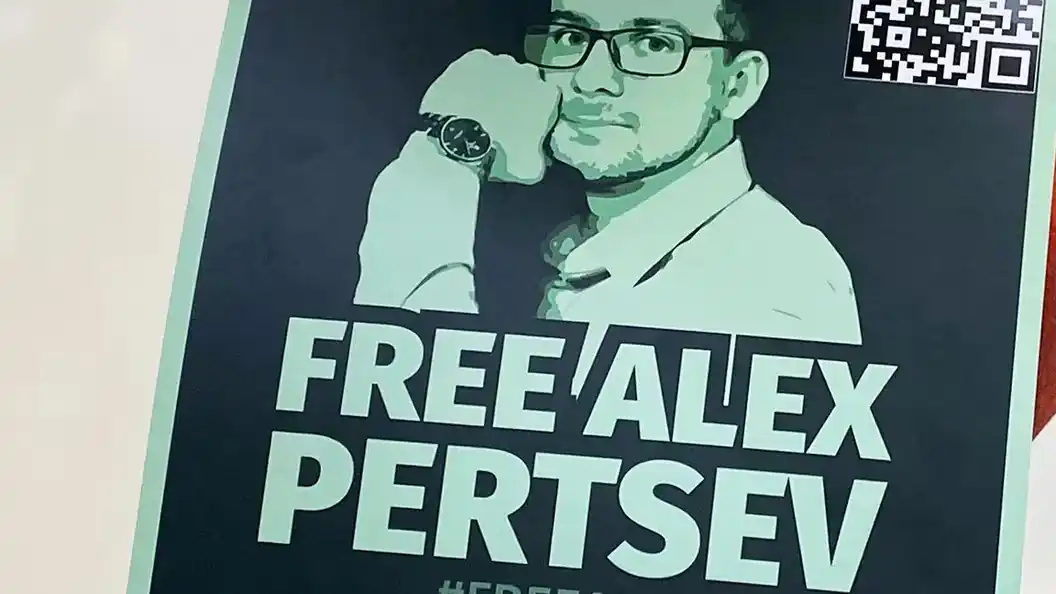
Posters supporting Alexey Pertsev were distributed outside the Dutch court
Previously, the U.S. Department of Justice and other regulatory agencies (DOJ) filed criminal charges against Tornado Cash founders Roman Storm and Roman Semenov, accusing them of conspiracy to launder money, violating sanctions regulations and operating an unlicensed remittance business during the operation of Tornado Cash. The two will face at least 20 years in prison.
Storm was arrested last year and will stand trial in September this year, while Semenov has not yet been arrested. The verdict of Pertsev is likely to determine the future trial results of the two Tornado Cash founders.
After Tornado, Uniswap case becomes the focus
In fact, after Tornado Cash, many crypto protocol owners have been accused of criminal activities on them. For example, Uniswap was accused of allowing fraudulent tokens to be issued and traded on the protocol, and the lawsuit was eventually dismissed by the court in 2023.
At the end of last year, a16z wrote a comment letter for the Financial Stability Board (FSB)'s "International Regulation of Crypto Asset Activities" theme event, which began by discussing the need to clarify the difference between DeFi and CeFi, and how the appropriate DeFi regulatory framework should regulate Web3 applications rather than Web3 protocols (regulating businesses, not software). There is an ongoing debate about where DeFi protocols and applications fit into the regulatory environment, but even so, most legal experts agree that DeFi front ends with any U.S. connection (broadly defined) must comply with U.S. sanctions laws.
And on April 11 this year, the U.S. Securities and Exchange Commission (SEC) issued a warning to Uniswap Labs on Wednesday, planning to take enforcement action against the company. It is reported that the warning was issued in the form of a "Wells Notice", that is, the U.S. Securities and Exchange Commission will send this notice to a company before initiating a formal lawsuit, providing the company with a last chance to refute any allegations. At present, it is unclear what the specific nature of the SEC's allegations against Uniswap Labs is.
The market reacted very sensitively to the news. According to market data, affected by the news of "SEC warning", the price of UNI fell from US$14 to the current US$9.58, a 24-hour plunge of more than 14%. During this period, the on-chain transaction volume of UNI tokens surged, even rushing to the top of the Dexscreener Ethereum token hot list.
Uniswap responded promptly. Uniswap founder Hayden Adams confirmed on social media that Uniswap Labs had received a warning from the SEC and published an open letter to fight back. In the letter, Hayden mentioned that the team believed that the products they provided were legal, and accused the SEC of not being committed to formulating clear and informed rules, but instead choosing to focus on attacking high-quality participants in the crypto field such as Uniswap and Coinbase, while letting bad guys like FTX "slip away."
In addition, Hayden specifically emphasized in the letter that Uniswap is an Internet company located in the United States to demonstrate its long-term adherence to the path of compliance. At the same time, Hayden also mentioned that this fight with the SEC will last for several years and is ready to appeal to the Supreme Court.
Related reading: "If someone needs to promote crypto compliance, we are the best candidate"-Uniswap founder's open letter"
After being sanctioned, it is still the largest crypto mixer
Tornado Cash is a privacy protection protocol that can mix 10 cryptocurrencies, of which the most mixed asset is the native ETH on the Ethereum mainnet. At its peak in July 2021, Tornado Cash pool contracts held more than $700 million in ETH.
A week before Pertsev went on trial, an indictment shared by the court showed that between July 9, 2019 and August 10, 2022, "Pertsev and one or more other persons developed a habit of money laundering in at least several countries, including the Netherlands, Russia, the United States or Dubai." The court believed that Pertsev should at least be suspected of the criminal roots of illegal transactions on the Tornado Cash platform.
The indictment lists nearly 40 transactions from different crypto platforms processed by Tornado Cash, totaling 535,809 ETH, including KuCoin and Liquid (the exchange acquired by FTX before its collapse in 2022). The largest amount, 175,100 ETH (about $585 million), came from Axie Infinity's Ronin network and involved the largest theft in cryptocurrency history at the time. The attacker was the notorious North Korean hacker group Lazarus.
In August 2022, Tornado Cash and related Ethereum addresses were added to the U.S. Specially Designated Nationals List (SDN List) by the U.S. Treasury Department's Office of Foreign Assets Control (OFAC). At the time, the U.S. Treasury Department claimed that Tornado Cash was a key tool of the North Korean hacker group Lazarus, which had led the $625 million hack of Axie Infinity and other major cryptocurrency thefts.
According to analysis, as of early May 2022, Lazarus Group has transferred 37,000 Ethereum, about $100 million, to Tornado Cash. Some experts say that "black money from official hackers in a certain country" accounts for 20% of the balance held by Tornado Cash smart contracts.
Related reading: "The most severe crypto sanctions in history: What happened to Tornado Cash"
Tornado Cash has said in response to such accusations that despite many attempts, it has not been able to prevent Lazarus Group from adding black money to it. After all, Tornado Cash itself is positioned to help users confuse their on-chain transaction history.
The crypto community also believes that developers have become political prisoners of the US government simply for writing code, and this sanction involves more than just an attack on cryptocurrencies. However, the sanctions did not have a shocking impact on the Tornado Cash project itself. In the following month, $77.35 million in assets were still transferred on the Ethereum mainnet through Tornado Cash.
Related reading: "Demand is still huge, Tornado Cash is still the largest cryptocurrency mixer on Ethereum after being sanctioned"
Recommended
The Wall Street Journal: How is AI Trading Stealing the Limelight from Cryptocurrency?
Aug 15, 14:00
Tencent Still Has a Dream
Aug 15, 11:27
To Catch North Korean Hackers, They Set Up a Fake Project
Aug 15, 10:00
From Litigation to Settlement: Positive Signal Released by HTX's Negotiation with FCA
Aug 14, 19:32
11,742 Shipping Addresses Exposed Alongside Trezor Orders
Aug 14, 19:01
Founder Interview: FOMO Creator Explains How They Added 30,000 Users in One Day and Became One of the Fastest-Growing Crypto Apps
Aug 14, 18:37