zkLink In-Depth Decryption: How to Find Unity in a Multi-Chain World?

Original Title: "zkLink In-Depth Analysis: How to Achieve Unity in a Multi-Chain World?"
Original Authors: Viee, Biteye
From Layer 1 to Layer 2 and now Layer 3, the blockchain island effect is becoming more pronounced, and multi-chain interoperability is gaining more attention. As one gives birth to two, two gives birth to three, and three gives birth to all things, whether there will be an L4, L5, Ln above L3 is currently unknown. One of the most pressing questions now is how to integrate dispersed liquidity islands. zkLink addresses this issue by proposing a solution to aggregate multi-chain liquidity.
This article will focus on zkLink's technical principles, current status, development roadmap, and more, providing a comprehensive analysis of zkLink, a multi-chain aggregation layer based on ZK-Rollup technology.
With the development of blockchain technology, from the emergence of Layer 1 (L1) public chains like Ethereum and Solana to the rise of Layer 2 (L2) solutions such as Arbitrum, Optimism, zkSync, and Starknet.
While meeting the needs of different users, this advancement has also brought about issues such as liquidity fragmentation and high cross-chain costs. Additionally, developers face complexity when deploying dApps due to different chain programming languages and tools.
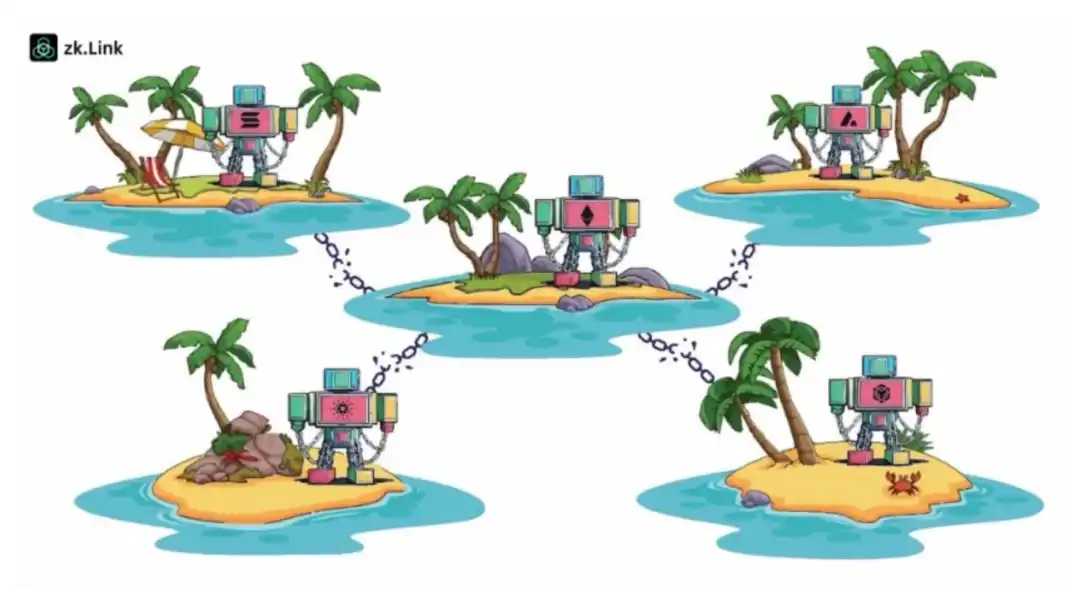
Imagine a country made up of islands where transportation is inconvenient, and the financial system is not yet mature. Each small island (blockchain) has its own currency and transaction system.
You want to shop between different islands (such as Ethereum, Solana, Arbitrum), but each cross-island transaction requires currency exchange, incurring fees, and the risk of losing money.
This is the current interaction dilemma faced by blockchain users: fragmented liquidity, high transaction costs, and insecurity.
How can we make cross-chain transactions as convenient and secure as transactions on the same chain? zkLink provides the answer.
(Source: zkLink Official Website)
By using Zero-Knowledge Proof (ZKP) technology to unify L2 and L1, zkLink achieves multi-chain state synchronization and native asset aggregation.
Tokens issued by the same entity on different L1 chains and L2s, such as USDT on Ethereum, USDT on BSC, etc., will be consolidated into a single USDT token in zkLink Rollups.
In other words, this island nation now has a comprehensive trading center that aggregates the currencies of different islands onto one platform, eliminating the need for frequent currency exchanges, high fees, or asset security concerns. This is the multi-chain liquidity aggregation feature achieved by zkLink, far beyond a "cross-chain bridge."
Building on this, zkLink has created two main products: zkLink Nova and zkLink X
zkLink Nova is the first L3 zkEVM Rollup network built on Ethereum and Ethereum L2, utilizing Zero-Knowledge Ethereum Virtual Machine (zkEVM) to aggregate assets across multiple L2 networks on Ethereum, addressing Ethereum's liquidity and asset scattering issues.
zkLink X is an aggregation Rollup infrastructure supporting custom multi-chain dApp development, connecting L2 and L1, allowing developers to feel like they are building on a single chain but actually accessing multi-chain liquidity.
Returning to the blockchain and island analogy, zkLink Nova is like a universal gift card, allowing you to freely shop (interact) between various island malls without the need for repeated currency exchange.
Meanwhile, zkLink X is like a universal toolbox, enabling you to customize the type of mall store (dApp) you want to build according to your needs, like building with blocks, and these stores also support currencies from different islands.
As a result, zkLink not only integrates liquidity scattered across different chains, reducing transaction costs and security risks, but also simplifies multi-chain dApp deployment, improves user experience, and ensures the security of dApp development.
Multi-chain and cross-chain have been well-discussed topics, but it is essential to note that zkLink is not a cross-chain bridge but a chain that aggregates multi-chain liquidity.
So, how does zkLink achieve multi-chain aggregation?
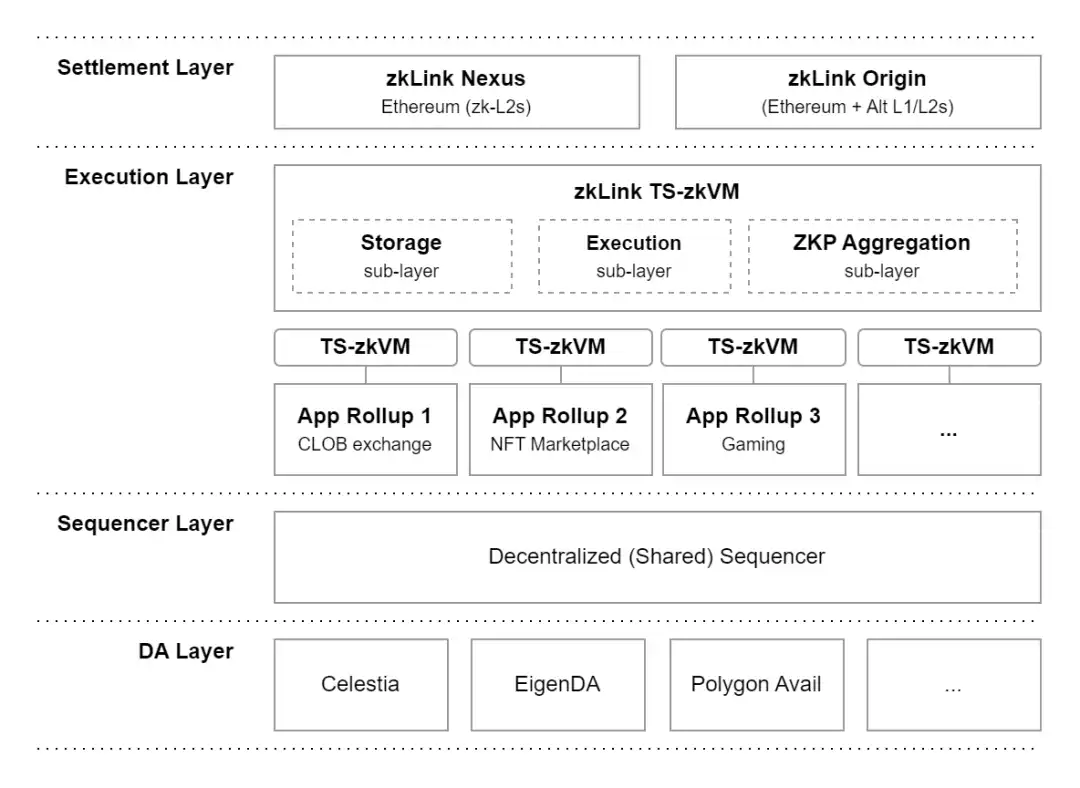
The zkLink protocol is a multi-chain ZK-Rollup infrastructure consisting of four layers: Settlement Layer, Execution Layer, Sequencer Layer, and Data Availability Layer. These layers are independent of each other, supporting customized application Rollup deployment. The core value of the zkLink protocol lies mainly in the Settlement Layer and Execution Layer.
(zkLink Protocol Architecture Source: zkLink Official Website)
The settlement layer of zkLink, as the most core part, is similar to an aggregated settlement center that can integrate multiple chains and ensure that each transaction can be validated on multiple chains through sync technology to prevent fraudulent operations.
Currently, there are two settlement schemes: zkLink Nexus and zkLink Origin, each targeting different network integration needs.
zkLink Nexus: connects Ethereum and its L2 networks, inheriting Ethereum's security.
zkLink Origin: can connect to other L1 public chains (such as Solana) and Ethereum to provide broader integration.
Traditional Cross-Chain vs Multi-Chain Aggregation
Transacting between different blockchains results in increased costs and a more complex experience. Both "Traditional Cross-Chain" and "Multi-Chain Aggregation" are solutions to this issue. Let's consider an example: think about using a DEX to swap tokenA on chainA for tokenB on chainB, what is the most primitive way?
First, you need to set up a wallet and purchase gas tokens for chainB;
Next, the user needs to trade tokenA for a stablecoin or another intermediary token that can be bridged to chainB;
Finally, the user needs to buy tokenB on a local DEX.
Compared to cross-chain transactions, this process is clearly more complex and costly. Therefore, the emergence of cross-chain bridges has improved this experience to some extent.
However, the cost of cross-chain token transactions is still high, and users still find it difficult to seamlessly and inexpensively interact with tokens across different chains.
In addition, traditional cross-chain solutions are often more centralized, making them vulnerable to hacker attacks and putting user funds at risk of theft.
Unlike traditional cross-chain solutions, zkLink provides a more secure multi-chain settlement solution, namely the Nexus and Origin mentioned earlier, both of which leverage Zero-Knowledge Proof technology (ZKPs).
zkLink creatively applies zero-knowledge proofs to multi-chain interoperability, utilizing a decentralized and permissionless design that does not rely on third parties to secure assets and transactions. It ensures the security and consistency of transactions and state transitions, reduces asset custody risks, and significantly enhances security and efficiency.
From Layer 2 to Aggregated Layer 3
In addition to multi-chain aggregation, zkLink's highlight is the construction of the third layer zkLink Nova, connecting Ethereum L2 liquidity islands.
Why build L3 to unify L2 ecosystem liquidity?
We all know that the rise of L2 has added a layer of "highway" to Ethereum, making transactions faster and cheaper. However, it has also created a non-interoperable and fragmented blockchain landscape where liquidity is trapped in isolated chains.
Native assets on different Ethereum L2s (such as ARB, OP, MANTA, etc.) cannot interact with each other, resulting in time-consuming and costly transfers. The liquidity fragmentation across different L2 networks further exacerbates the issue.
The increasing number of L2s, sidechains, and decentralized applications has led to liquidity fragmentation, contradicting the goal of enhancing Ethereum's usability.
This is the cost of Ethereum developing L2, dispersing liquidity across dozens of blockchains, which urgently needs to be addressed through more advanced solutions to improve interoperability and efficiency.
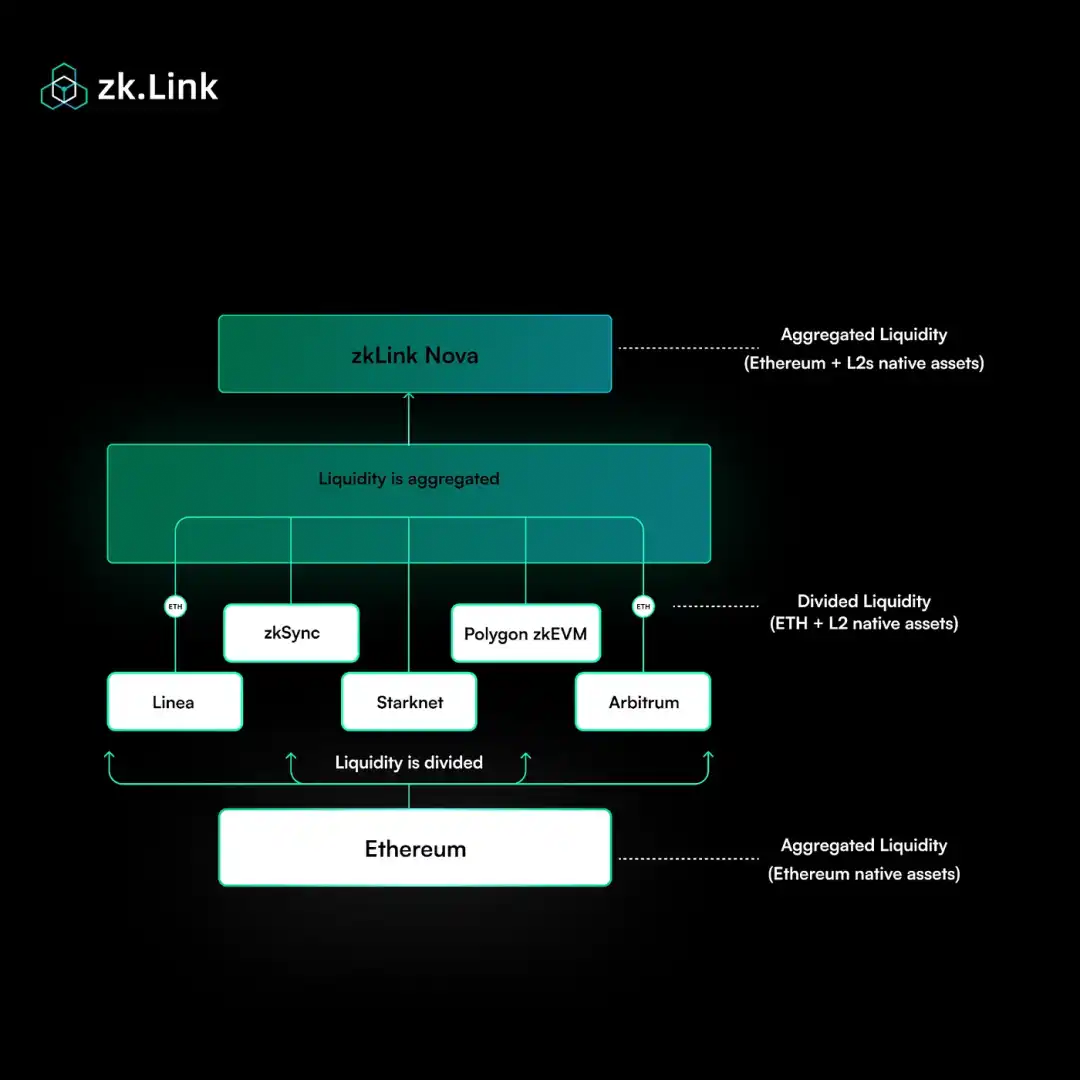
Compared to most L3s designed to meet specific application needs and deployed on a single L2 (such as Starknet or Arbitrum), zkLink Nova is a general L3 aggregation network built on Ethereum and multiple L2 networks, with Ethereum and its L2s jointly serving as the settlement layer.
Therefore, zkLink's construction of the L3 zkLink Nova is not just about making each layer cheaper than the previous one but also holds the vision of "one Nova rules them all."
(Source: zkLink Official Website)
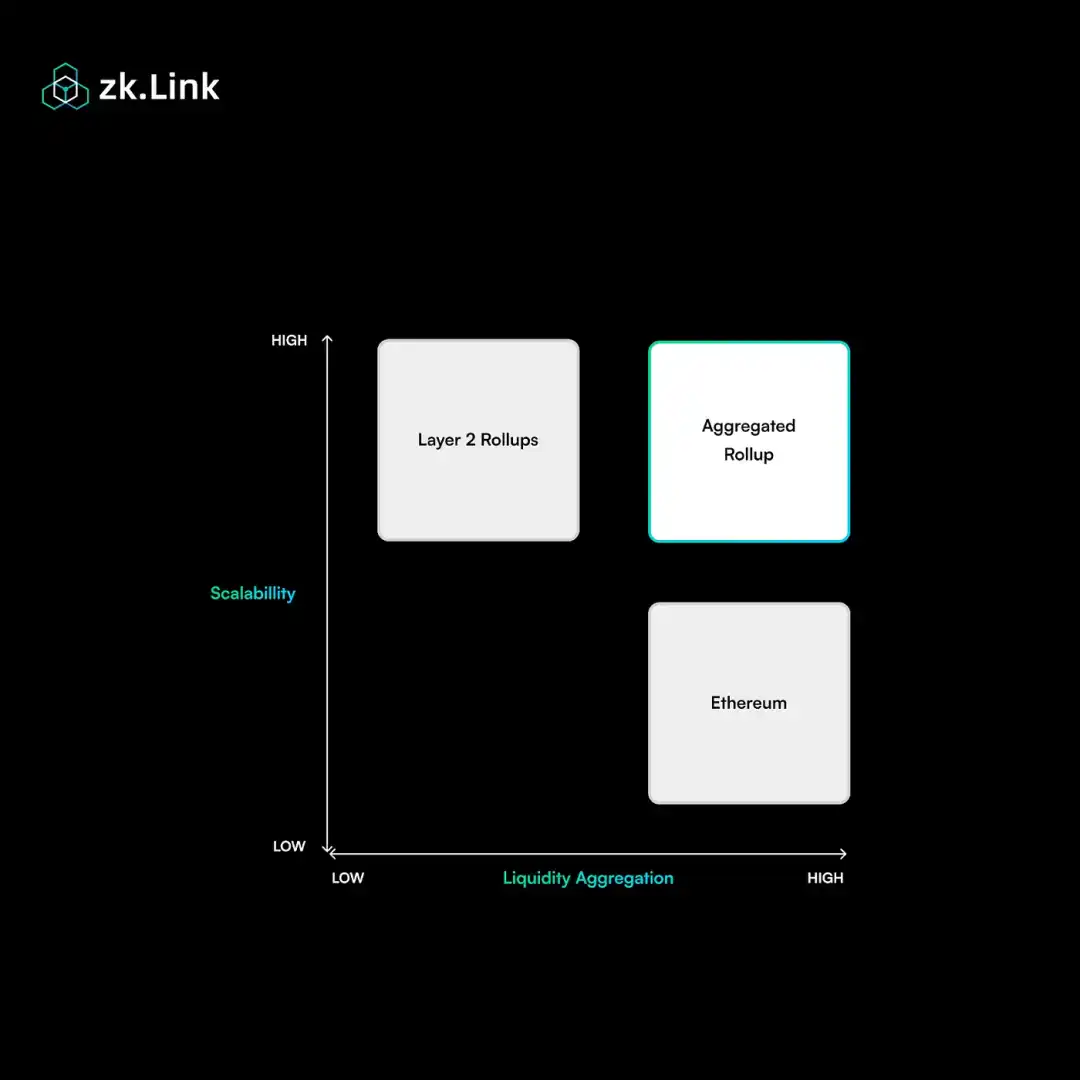
In simple terms, ETH deposited from different L2s will automatically merge into the same ETH on Nova.
The same ERC-20 tokens bridged from different networks, such as USDC.Ethereum, USDC.Arbitrum, etc., can be merged into the same USDC on Nova. The merged USDC on Nova benefits from unified liquidity, enhancing scalability and optimizing user experience.
zkLink vs Other Aggregation Solutions
Many L2s have also recognized the issue of liquidity fragmentation and have attempted to address it. For example, OP's Superchain, Polygon's AggLayer, zkSync's Hyperbridge, aim to tackle this by providing a unified bridge or shared sequencer for liquidity.
However, they are limited to their separate sub-ecosystems and specific tech stacks. In this scenario, having multiple different tech stacks could worsen liquidity fragmentation and cross-chain interoperability issues, leading to further fragmentation of the Ethereum ecosystem.
In contrast, zkLink Nova can bridge assets from any Layer 2 to Layer 3 networks to achieve fast and interoperable transactions. While sacrificing atomic interoperability of cross-rollup transactions, it provides the most extensive liquidity aggregation across the Ethereum ecosystem.
(zkLink Nova Protocol Architecture Source: zkLink Official Website)
Current Development
Since its mainnet launch in March 2024, the zkLink Nova ecosystem has seen significant development, covering over 90 partner projects as of early May (the graph was officially released at the end of March and has not been synced). These projects span DeFi, tools, social, gaming, NFTs, and more.
On March 14, zkLink Nova launched the "Aggregation Parade" Season 1 reward event, which lasted for a month. Assets such as ETH, L2 native tokens, stablecoins, LST, and LRT tokens had the opportunity to earn Nova Points, encouraging users to deposit assets into the L3 Nova mainnet.
In essence, users earn Nova Points through cross-chain activities, staking, and inviting new users, which can later be exchanged for ZKL tokens.
Currently, the "Aggregation Parade" Season 2 reward event is ongoing, where users can enhance their Nova Points through interactions with dApps partnered with zkLink Nova.
Event details: https://blog.zk.link/aggregation-parade-phase-ii-defis-turn-to-blossom-on-zklink-nova-7b30e2ab1d82
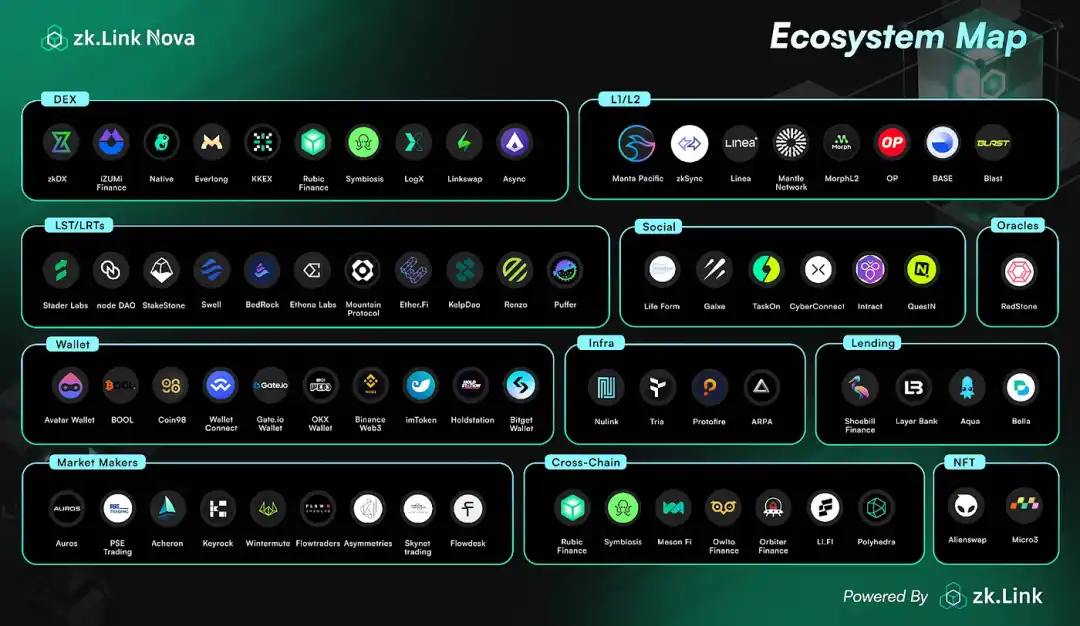
(zkLink Ecosystem Source: zkLink Official Website)
The above activities indicate that the team has made great efforts to drive user growth in the zkLink Nova ecosystem, and the data performance is also impressive.
The current Alpha mainnet running has processed over 2 million transactions using zkLink technology, generating 500,000 unique addresses.
According to DefiLlama, as of May 22nd, zkLink Nova's TVL has surpassed $1 billion, with a 156% growth in the past month, making it the highest TVL Layer 3 network.
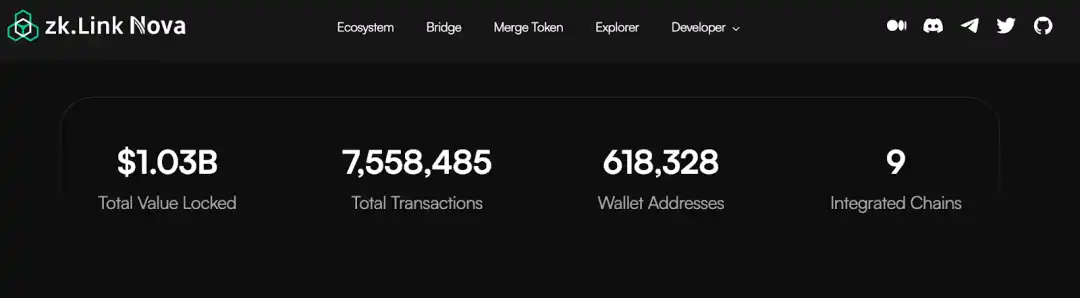
(zkLink Nova Total Staked Amount Source: zkLink Nova Official Website)
Financing
In terms of financing, zkLink raised $4.68 million through a CoinList community sale in January of this year, and completed a $10 million strategic financing in May of last year, with participation from Coinbase Ventures, SIG, BigBrain Holdings, among others.
So far, zkLink has raised a total of $23.18 million, which will further develop the Nova protocol.
zkLink's investors are more strategic partners, not only providing funding and manpower but also investing more resources to deepen their cooperation with zkLink.
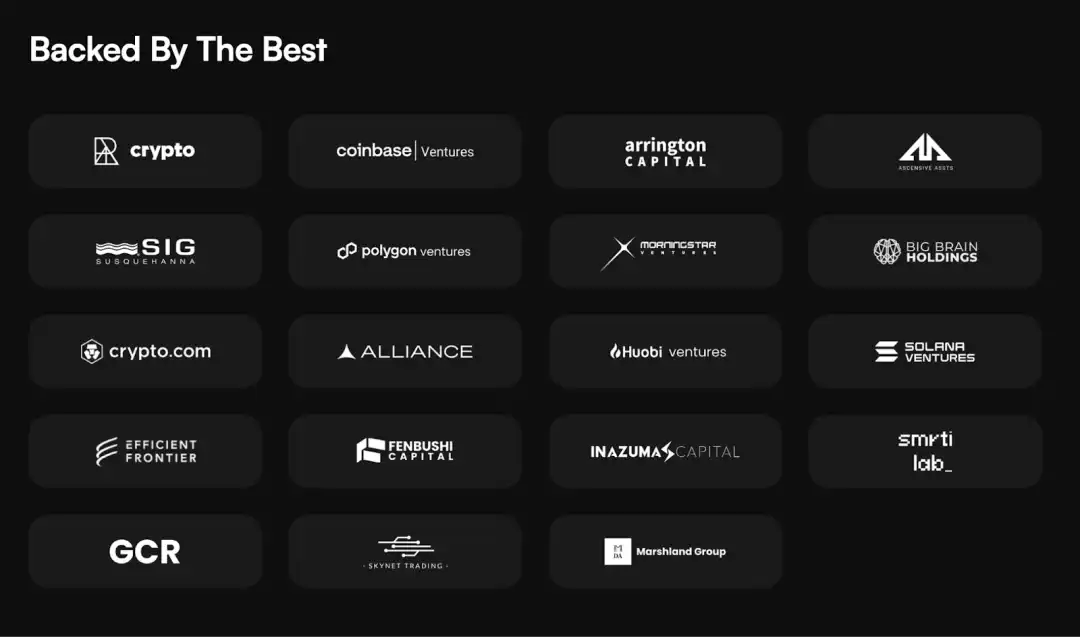
(zkLink Investors Source: zkLink Official Website)
Future Outlook
The zkLink Nova mainnet is already live, and the team is upgrading the ZK Oracle lightweight node oracle network to validate cross-chain states as part of improving the zkLink X protocol.
In the future, zkLink will also undergo a series of significant upgrades, including supporting external data availability (DA) solutions, a decentralized proof auction market, and more.
The current zkLink sequencing service is centrally managed, and the team plans to integrate decentralized solutions such as Espresso, Astria, and Fairblock in the future to reduce centralization risks. Additionally, the ZKL token is also set to launch soon, and the team is preparing for the TGE.
It is evident that zkLink is continually improving on its path to bring unprecedented liquidity aggregation to Ethereum and its L2.
If achieving "seamless on-chain interaction" was once a distant dream, zkLink may be turning that dream into reality.
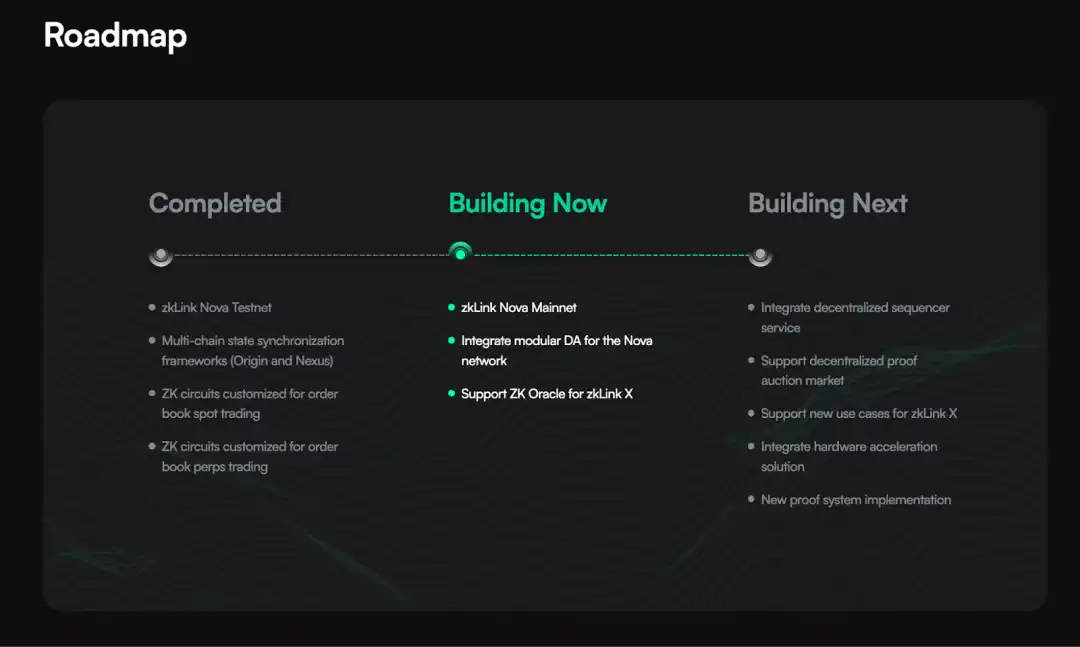
(zkLink Roadmap Source: zkLink Official Website)
The debate over L1, L2, and L3, which layer will ultimately emerge as the winner, will only be revealed with time. Meanwhile, the market will also tell us that both L1 and L2 will always have their necessary existence; this is not a zero-sum game.
The future is destined to be an era of multi-chain coexistence, and zkLink will also become a key hub, connecting various components and systems of the L1 and L2 ecosystems.
It is conceivable that zkLink is leading a more interconnected multi-chain new era, bringing more new opportunities.
Original Article Link
Recommended
The Wall Street Journal: How is AI Trading Stealing the Limelight from Cryptocurrency?
Aug 15, 14:00
Tencent Still Has a Dream
Aug 15, 11:27
To Catch North Korean Hackers, They Set Up a Fake Project
Aug 15, 10:00
From Litigation to Settlement: Positive Signal Released by HTX's Negotiation with FCA
Aug 14, 19:32
11,742 Shipping Addresses Exposed Alongside Trezor Orders
Aug 14, 19:01
Founder Interview: FOMO Creator Explains How They Added 30,000 Users in One Day and Became One of the Fastest-Growing Crypto Apps
Aug 14, 18:37