From technological innovation to community building: Rushi, co-founder of Movement, explains the development of MoveVM and modular blockchain

Translator's note: In this episode of the Chain Abstraction podcast, Altan, co-founder of the NAER ecosystem, and Jared, content director of the NAER Foundation, had an in-depth conversation with Rushi, co-founder of Movement. The discussion covered many aspects, from technical innovation to community building. Rushi shared his technical background and views on the Move language, explaining how MoveVM outperforms traditional EVMs in performance and security. He also detailed Movement's positioning in the modular blockchain wave, emphasizing the future vision of shared sorters and chain abstraction. Rushi pointed out that while technical innovation is important, community building and management are equally critical. He believes that the poor performance of low-circulation and high-FDV tokens at present is a warning to founders that they need to actively interact with the community and meet community needs to ensure the long-term development of the project. It is worth mentioning that Rushi is good at using analogies to cleverly explain complex issues.
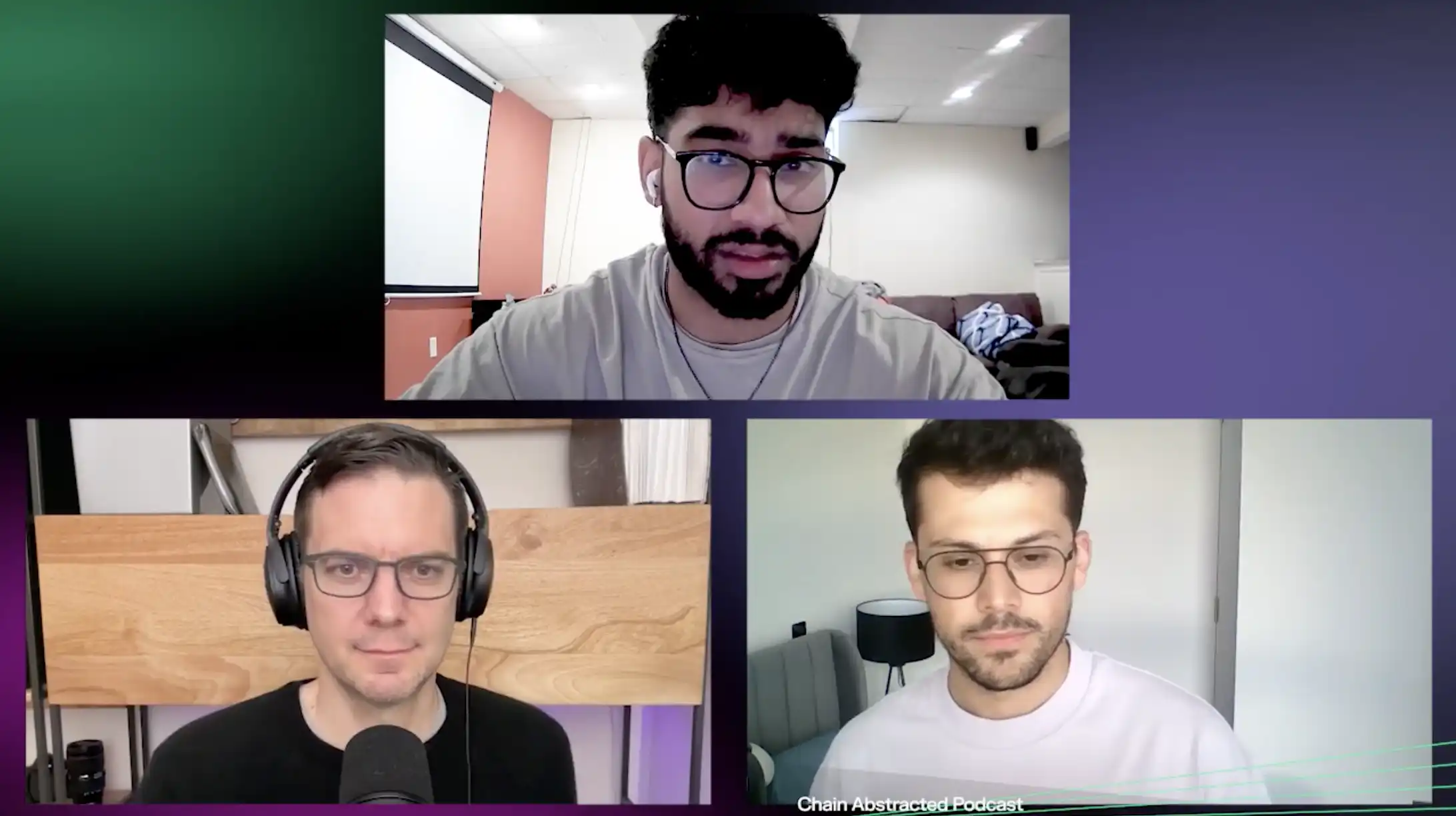
Rushi:I’m Rushi Manche, founder of Movement, and my background is engineering. I’ve been involved in technology since I was 13 or 14 years old, with early work coding distributed systems. At 15, I worked as a young engineer at United Health Group, helping them convert their on-premises database to the cloud. While there wasn’t much innovation in a company with a huge market share, this experience gave me an initial understanding of how to manage a multi-billion dollar business and eventually scale to a trillion dollar business.
I started in the cryptocurrency engineering space three years ago. The early engineering of Ethereum and Cosmos was challenging. I never liked Solidity because it was hard to use. Anyone who has written Solidity or contributed to the early EVM knows that it was more of a tinkering exercise and not really meant to scale. I then started looking at Cosmos and some other good but still-improving infrastructure.
I was still in school at Vanderbilt University at the time, and my co-founder Cooper, who was a few years older than me, was an alumnus. I read an article saying that Facebook was building a programming language. I was so happy, this was an opportunity to expose billions of users to cryptocurrency. Unfortunately, the Diem project never succeeded due to regulatory reasons, but it pioneered the Move language. After the FTX explosion in November 2022, Cooper and I reassessed the situation and thought that the Move language was promising. It is a fast parallelized virtual machine, but with a security component. If you really have more than a thousand users on the chain, including even our parents, they will not want to suffer losses due to hacker attacks. This is the idea behind Movement, which introduces the principles of Diem to the first Ethereum second layer based on MoveVM, not only bringing parallelized EVM and all its advantages to Ethereum, but also introducing security principles to Ethereum through a fully decentralized sorter.
Altan: How does Move work and how can Move be parallelized in some way? For NEAR, parallelization has always been a horizontal expansion; Solana is about processing more transactions by adding more hardware.
Rushi: We don't actually have to deal with parallelization. Block-STM (Software Transactional Memory) is the main consensus engine for executing transactions. It was pioneered by the Diem project, and there are related papers to read. Block-STM basically introduces optimistic parallelism. By using concurrent threads and powerful hardware (mainly at the virtual machine level), you can queue transactions and execute them simultaneously without worrying about one transaction causing all transactions to fail.
When you compare Solana and Aptos, you will find that they are two different execution styles. With Solana, you have to manually code the behavior between different transactions. For example, if there are 5 concurrent transactions, you have to manually consider the characteristics of the transactions. In MoveVM, which adopts optimistic parallelism like Aptos, the transaction order is done automatically. As a developer, you don't have to worry about tradeoffs. In short, we inherited all the work from Diem and Aptos and brought their execution environment to Ethereum.
Jared: I've enjoyed this very technical discussion so far. But for those who don't understand technology, is there a simple and easy-to-understand way to explain it, just like explaining it to a 5-year-old?
Rushi: In the traditional EVM, if you have 10 transactions, you need to wait for transaction A to complete before processing transaction B, and then process transaction C. This is sequential processing, which is fine when there are only 10 users, but when the number of users reaches 1,000, almost every EVM chain will collapse. Inscriptions is the best example, Arbitrum, ZKsync all collapsed on TPS. Any other EVM chain has a gas fee of more than $500 per transaction. There are only five or six chains that can really keep up with the demand for actual transaction volume, such as Move public chains, Solana, and NEAR.
Back to your original question, the traditional EVM is sequential processing, which means you are waiting for each transaction to complete, while parallel processing has multiple threads. The most vivid analogy is when you are checking out at the supermarket, sequential processing is like having only one line and you need to wait for everyone to check out. If there are 1,000 customers, you have to wait in a line of 1,000 people. Parallel processing is like having multiple checkout counters so that you don't have to wait in a line of 1,000 people.
Jared: That's a great "explain it to a 5 year old" analogy. But you said that once the number of users exceeds 1000, the EVM chain will start to break down. Is this a controversial point or a general fact?
Rushi: That's actually quite obvious. If you look at Arbitrum, the maximum TPS is about 150 TPS, so it's not actually 1000, it's probably around 200.
Jared: I remember a few months ago, every chain was issuing Inscriptions. It really poses a challenge to a lot of chains. Do you think this will be the first use case that will challenge these chains in the future?
Rushi: I think it's a stress test. Inscriptions themselves are a fringe use case, there's not a lot of innovation happening, people are just swiping like crazy like minting NFTs. But what is more important is to see which technologies can really deliver on their promises when the chain is tested by tens of thousands of users and tens of thousands of transactions? Every chain claims that they can serve billions of users. Every chain is saying, "We are for the masses." Well, now the masses are here, who can survive? Almost no EVM chain can survive.
Altan: As an L2, how does Movement operate in the current wave of modular blockchains?
Rushi: Every chain is competing to become the Rollup framework and data availability (DA) layer. Now there are Arbitrum Orbit, OP Stack, Polygon CDK, and other Rollup frameworks will be launched in the future. The competition at the DA layer is also fierce, but no one is innovating at the execution layer. Every chain is saying, use our Rollup framework, use our DA, and then integrate EVM. It's like giving a car a custom chassis, giving you the best wheels, giving you a cool turbo, and then installing a V2 engine, but the car is still slow. So what we do is, we don't innovate on the Rollup framework or DA, because there are people who are better than us in these areas. We focus purely on the execution layer: how do we ensure that smart contracts run? How do we ensure that transactions are executed quickly and securely?
We have the Move stack, and anyone can spin up any Rollup framework they want. You can use the OP Stack framework, use Celestia, EigenLayer, and NEAR as the DA, and then use our VM for execution, and connect to the shared sorter. We already have about 7 to 10 Rollups that are going live in the next three to four weeks, and they use the OP Stack, Arbitrum Orbit, Polygon CDK. From a business perspective, it's very attractive because we're not competing with anybody. We're pretty much the only company that offers an execution layer suite.
It's a net-increase development. Basically, you can keep your existing tech stack, keep your Polygon and Celestia alignment, and just use a faster and better VM. So far, the business development side of that has been good.
Altan: Your shared execution means that each chain is sorting at the same time. So with the Movement sorter, does that allow Movement Rollup A to interact with Movement Rollup B?
Rushi:We actually released a demo two weeks ago showing the first shared sorter in action. So far, you can have Rollup A and Rollup B communicating through a block explorer. You can run a DEX on Rollup A, handle order books on Rollup B, and swap between them. From a broader perspective, trading becomes very interesting. You have innovations in the DA layer, you have innovations in shared sorters, you have innovations in the execution layer, and this space between applications and infrastructure is chain abstraction. If you look at each layer of the technology stack, they are almost all funded from the bottom up. First all the DA layers raised a lot of money, then the shared sorters raised money, and then the execution layer. The chain abstraction space has been almost untouched. NAER may be the main driver of chain abstraction as a narrative, but there is still a lot of work to do.
My vision is two-fold: user chain abstraction and developer chain abstraction. On the user side, when I use Uniswap on a single infrastructure layer, I don't need to know which L2 or L1 I'm using. I just know that I can swap from Arbitrum to Optimism without having to worry about token standards or who is participating and making these swaps. At Movement, what we say is that there will be unified executors using the same token standards. Whether Rollup uses OP stack, Arbitrum, CDK, etc., they all use the same token standards and can swap with each other, which solves a lot of chain abstraction problems.
The second problem we see is abstraction at the developer level. A Web2 developer comes in and encounters about 100 different CLIs (command line interfaces), such as NEAR CLI, Avail CLI, Ethereum CLI, which are very difficult to use. We need a chain abstract CLI, such as near-deploy --arbitrum, near-deploy --optimism, and can use commands like this to do any deployment through a centralized CLI.
Jared: As you said, the chain abstraction layer will basically solve a lot of problems, such as communication between two Rollups. Is it possible to introduce an AI agent to automatically find the optimal path?
Rushi: I'm not an AI expert, but I do see AI liquidity agents. Some DeFi developers say they want to make cross-chain liquidity aggregators, a bit like Jupyter, but with built-in AI agents. If there is a better trade on Optimism, such as arbitrage on ETH, it can be done automatically. There may also be some automated market makers, which is interesting. I think intents may be the first stage of AI evolution. I invested in a company called Shogun, they are a bit like 1inch, they have liquidity connectors that connect multiple different L2s. If you deploy a smart contract or want to trade a Meme coin, it routes liquidity between Optimism, Arbitrum, etc. in one interface.
Altan: What is the ultimate goal of Movement in terms of chain abstraction? What are your thoughts on how Movement Rollup interacts with other Rollups or L1s?
Rushi: Obviously both Optimism and Arbitrum have visions of shared sorters. But the thing is, their sorters make a lot of money, so it's more likely that we will eventually do it. We hope to launch a shared sorter as soon as possible, probably this year. This is because first, our transaction fees on Ethereum are lower, and the sorter fees are not that profitable for us. Second, we believe in a world where everyone has to do decentralized sorting. This will eventually need to happen from a regulatory perspective, but more from a token economics perspective. Most L2 token economics today are like Meme coins, used as governance tokens but with no real value. When truly decentralized and shared ordering is achieved, there will be a voting and staking mechanism where validators stake tokens to order the L2. This is built-in economic buying pressure.
Back to Altan's question, how do we think about chain abstraction. We are probably the first major player to prioritize implementing a shared sorter, so there will be the Movement network and various related chains. Arbitrum and Optimism both have their own networks, but the problem is that these are all different countries, how do you connect them all? You can say use cross-chain bridges, such as LayerZero, Wormhole, etc., but obviously no one likes to use cross-chain bridges.
You can have a shared sorter, but from a business perspective, I don't want to use Optimism's shared sorter, and Optimism will not give up their fees and use my shared sorter. So, the world needs a composition layer to connect all these shared sorters.
This is where Intent becomes interesting. We may not be able to accurately predict its development at this time, but there are some teams exploring it. I think NodeKit is an interesting team that is developing a composition layer to try to connect different shared sorters. This is also part of our roadmap, once our shared sorter is live, we want to build a messaging protocol, similar to the double staking mechanism. For example, you have an Optimism node and a Movement node, and they both double stake shared security. It's a bit like the concept of mesh security, where Movement node operators stake OP, and OP node operators stake Movement, so that they can evaluate each other's network and connect different shared sorters. This is a very experimental concept and may be a few years away, but I think this is the ultimate goal of the shared sorter ecosystem.
Jared: I want to follow up on a point you made, that not everyone will prioritize commercial profits over the best build. Do you think this friction exists in other areas of Web3?
Rushi: The EVM is the best example. The EVM has been around for years, and everyone agrees that it's a bad technology. Objectively speaking, the EVM is terrible in isolation. This is why Monad and some other teams are completely reinventing it from the ground up. But the EVM has been around for too long, and rewriting it would take too much effort for anyone to do it. Are there any other tech stacks where teams would voluntarily choose not to upgrade for the sake of profit?
Of course there are other examples. In theory, if you only have one centralized node generating proofs, it would be more profitable to decentralize the proof market. Basically, anything that is centralized now, there is not much economic incentive to be decentralized. Even Blast, which is just a multisig, does not have much economic incentive to be truly decentralized because there is $2 billion in TVL. The real answer is that users don't care. Users don't care what kind of proof you use, how decentralized your infrastructure or sorter is, or what your macro vision is. They just want to trade Meme coins.
Altan: In a world of chain abstraction, how does it feel to migrate from the Move ecosystem to the Ethereum ecosystem?
Rushi: Working in Ethereum engineering is the beginning of my career. Every developer hates Solidity, and no one likes to write Solidity code. There is always a strong desire not to use EVM, but there was no way to do it before. Building on Ethereum means you have to align with Ethereum, you must use ETH as Gas, you must use EVM, and you must abide by Ethereum's rules.
This situation has changed recently. With the rise of modularity, Alt DA, for example, provides us with an opportunity to implement some features ahead of the Ethereum roadmap. Ethereum is now starting to discuss market transformation to reduce gas fees, but teams such as Celestia and NEAR have been saying that we can do this today and don't need to wait for the Ethereum Foundation to launch these in three to four years.
Also, the execution environment is getting complicated, and Vitalik is also calling for parallelization and a better execution environment. It may take several years for the Ethereum Foundation to launch these features. Why can't I do this today? This permissionless environment sometimes causes some hostility because the original Ethereum developers are reluctant to use anything that is not supported by the Ethereum Foundation. But the new generation of developers, often from a Web2 background, are building applications that can really attract users. They don't care what the old people think, they just want to use the technology stack that allows them to enter the market today.
For example, people want to build on Solana because it has fast transaction speeds and a good user experience. This is not possible on Ethereum today. To answer your question simply, there may be some old-school people who want to see the EVM mature, but there are also some experimental people who are willing to try new things. This is how the Internet was formed.
Altan: What applications do you want to see on Movement? What functions can Movement achieve that cannot be achieved today?
Rushi:In the short term, we are very focused on security. There are $4.5 billion in losses every year, mainly due to hacker attacks and exploitable vulnerabilities. How do you create a secure environment for DeFi on Ethereum? For example, if I execute a contract and find that there is an integer overflow attack or a reentrancy attack. In the current EVM, this cannot be prevented at runtime, as we saw with the large-scale attacks this week. Over time, this situation will bring insecurity. As an ordinary developer, I will not be able to trust my system. So in the short term, Movement hopes to become a secure DeFi center on Ethereum, with high security through MoveVM. We block more than 90% of attacks in MoveVM, such as integer overflows are blocked at runtime, which is basically an encrypted firewall built into the runtime.
Long term, the answer is simple, Facebook designed the language. When people ask me how to build a Facebook on a chain, my answer is, use the language designed by Facebook. We focus on the needs of users. Movement can actually become a consumer application center on Ethereum, where you don’t suffer from the execution bottlenecks that you see on Base. Although Base has a strong brand, actually using Base involves high gas fees and poor user experience. We can bring a similar transaction experience and user experience to Ethereum like Solana.
Altan: Are you the only one running MoveVM on Ethereum, or are there others working on this?
Rushi: There is also Lumio, who are now moving to a multi-VM solution and are more focused on bringing various VMs such as MoveVM, SVM, WASM, etc. to the execution layer. Initia supports Move on Cosmos.
We are almost the only Move L2 solution on the market. On top of that, we are also EVM-compatible MoveVM. This is not just a bet on Move, but a bet on the next generation of virtual machines. Move is just a feature, not a brand in itself.
Altan: Does this allow Movement Rollup to be combined with Aptos, Sui, and other Move-based public chains?
Rushi:We are working closely with Aptos, who are one of the investors in our series C round. In general, they want Move to be adopted elsewhere. We think of Move as a framework for secure programming, so the question becomes: "How do we work together to build this narrative?"
What we see is that developers want their DeFi applications to run on faster L1s like Aptos and Sui, but also want to bring in Ethereum liquidity to attract Ethereum assets. So we see cross-chain DeFi protocols like Thala that provide a native and fast user experience on Aptos and other L1s, while having the security of Ethereum.
We are not essentially a bridge from L1 to L2, that is not our goal. We want to be a unified execution layer that connects different narratives together. Just like EVM has been widely adopted, not only Ethereum, but also other EVM chains, such as BNB Chain, Avalanche, Arbitrum and Optimism, etc., creating sticky applications and user and developer ecosystems. We are trying to do something similar in the Movement system.
Jared: You mentioned "security" a lot, are there tradeoffs to achieve your goals on EVM?
Rushi: We are fully EVM-compatible, so it only takes 10 minutes to deploy Uniswap or any smart contract on our platform. The main tradeoff is that some infrastructure tools take some time to get used to because you have different features and different opcode management. For example, like Fireblocks, some blockchain browsers, or VS Code plugins, some manual adjustments may be required. But it's not difficult, it's very intuitive.
Jared: What important aspects do you think founders usually overlook when raising funds?
Rushi: Founders are often out of touch with reality. They usually think that their Stanford PhD is cool, they develop cool technology, and then they can get investment and they're done. They think that as long as I develop a cool technology, users will automatically come, and the problem is that this is not the case. You can have the best blockchain, the fastest, most secure, perfect user experience, but no one will use it. So, first of all, it is important to be active on social media, for example, participate in a podcast, explain your vision, and connect with other people.
Some investors and I have been discussing an egalitarian view: when you are the founder of a protocol, especially an infrastructure protocol, you are essentially like your own country. You have a group of community members and supporters who believe in your vision, venture capitalists, who are like politicians and citizens who support you, and your alliances with different countries. For example, I have a close relationship with Berachain and our communities overlap to a certain extent. You will find that there are often small groups between different VCs and companies, they don’t like each other, and there is competition between protocols. This ultimately becomes a political game, and cryptocurrency is an attention game. You need to build a technical narrative, community ecology, and turn it into the power of your sovereign country, and then build alliances with other ecological projects so that your geopolitical power increases, thereby increasing GDP (in this case, token prices). It's a grandiose egalitarian view, but it does make sense.
You're managing a community, which is essentially managing an economy, and founders who don't succeed often don't think about that. They might just think I'm going to build a chain, maybe a DEX, and then issue a token, and nothing happens. I think of this as a board game where you're basically fighting other countries. That's the current state of crypto. I would say the United States is more like Ethereum, and the other countries are fighting each other.
Altan: I remember a professor at Cornell did a game theory study on the interaction between different strategies in a game. If someone betrays and you also betray, you get a one-to-one result; but if someone does not cooperate and you try to cooperate, then you are the losing party. I think in this cycle, more people tend to cooperate, which brings better results. When I came to NEAR in 2022, we positioned ourselves as a scalable L1, but then people began to see us as "Ethereum killers."
Rushi: Three or four years ago, everyone was branding themselves as "Ethereum killers" because L1s usually get higher pricing, and you see amazing financing and token prices for these large L1s. But in fact, it's more of a collaboration. What modularization and this narrative brings is that partnerships and alliances have become more prominent. In the past, people always said I'm going to build my own L1, and the only partnerships were cross-chain bridges and infrastructure providers. Now the situation has changed. You are L1, I'm L2, how do we cooperate? How do you bring the different pieces together?
It’s like there are two camps: the solo camp, who want to build their own L1 and be the best L1 and drive everyone else to hell, and the integrated or modular camp, who want to work with different providers, swap out different pieces, use different DA layers, provers, and execution layers to find a solution that fits the needs of their community.
Last week Logan and I were arguing about what scales best. My response was that Solana Labs is a great engineering team that can spend the next six to twelve months doing some amazing innovation. But hundreds or thousands of engineering teams will innovate much faster than a single engineering department, and that’s how we do traditional innovation.
To digress a little, this reminds me of traditional Web2 innovation. Think about car manufacturing, where Ford made all the parts in the beginning, but eventually they started outsourcing some of the parts, with engines made by others and tires made by Goodyear, to achieve scale. This is exactly the state of blockchain today, and I’m glad we’re on the right side of it.
Altan: What do you think is next for Movement?
Rushi: We currently have a private DevNet where users can participate in the upcoming incentivized testing and other activities, more details will be announced in the next few weeks. We have over 300 Move developers in our chat group, 120 teams, and 35 ongoing projects. The ecosystem is about to go live, and we have over 10 projects that have completed funding. We support teams and developers through ecosystem building, marketing, and go-to-market.
More broadly, I think the current market conditions are pretty weak. You see these high FDV (fully diluted valuation), low float projects that are basically creating a sell-off on the secondary market. So it becomes a back-and-forth question of how protocols and founders manage the relationship between community, stakeholders, and private interests. I think the last few months have shown that community is more important than anything. No matter how much money you raise, no matter how much hype and momentum you have, if you don't know how to build the community and meet the community's wishes, all the hard work you've put in the past few years will go down the drain overnight.
As a founder, this scares me a lot because one wrong decision could ruin everything for you. But at the same time, it's also a lesson. Founders should pay attention to their communities and communicate with them before making big decisions, and hopefully Movement will reflect that when it reveals the next steps.
Original link
Recommended
The Wall Street Journal: How is AI Trading Stealing the Limelight from Cryptocurrency?
Aug 15, 14:00
Tencent Still Has a Dream
Aug 15, 11:27
To Catch North Korean Hackers, They Set Up a Fake Project
Aug 15, 10:00
From Litigation to Settlement: Positive Signal Released by HTX's Negotiation with FCA
Aug 14, 19:32
11,742 Shipping Addresses Exposed Alongside Trezor Orders
Aug 14, 19:01
Founder Interview: FOMO Creator Explains How They Added 30,000 Users in One Day and Became One of the Fastest-Growing Crypto Apps
Aug 14, 18:37