Pump.fun’s new competitor, what’s so fun about MakeNow.Meme?

The market has given a new answer on how to play memes more extreme. This time, you can send memes by sending a tweet.
The format of tweets using MakeNow to send coins is: the tweet starts with a $ symbol and a stock code, plus a token description, and then the official account of MakeNow.Meme is attached with any pictures or videos.
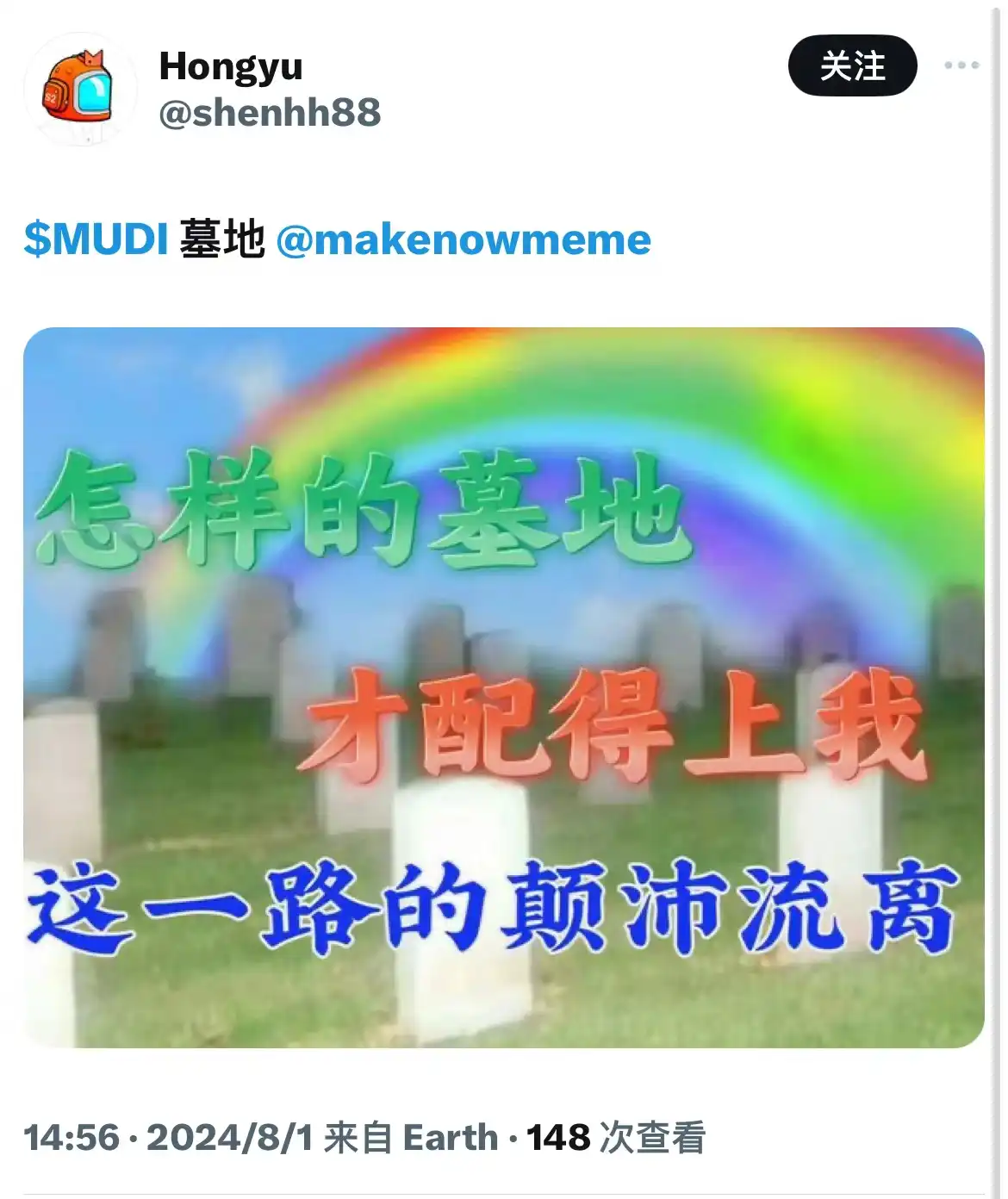
Sending a tweet in the format required by MakeNow is equivalent to sending meme coins, but you must wait for the official reply from MakeNow to be considered a successful coin issuance, and the reply will include the token contract.
Since the launch of the official protocol, MakeNow has launched more than 2,600 meme tokens in just one day (about 26 hours) and earned more than 230+ SOL.
If Pump.fun opened a way for Degen to quickly launch and hype memes, today's market focus MakeNow has even opened a fast track for rug, and staged a PvP battlefield to the extreme. By taking the same approach as Blinks before, MakeNow uses the natural traffic pool of Twitter and influential big KOLs to simplify the formation of meme consensus, but the unique mechanism that requires official replies to successfully create makes this game not as transparent as it seems.
CryptoWai from AC Capital discussed the uniqueness of MakeNow and why it attracted widespread attention in just 24 hours. The most noteworthy thing is that MakeNow has made deeper innovations in the market-making model. Through the strategy of multiple deployers, the difficulty of sniping is increased, and the problem of rat warehouses is cleverly avoided. I hope this article will help readers understand the ever-changing meme rushing skills.
The following is the original text:
This MakeNow.Meme is quite interesting. If you observe carefully, you will find that its 24-hour popularity reveals the essential problems of many similar tracks.
On the three aspects of issuance, trading, and market making, Make is just a copycat of Pump on the surface, and it has made a micro-innovation on the issuance side, that is, allowing users to directly issue coins through Twitter, which is very simple.
After actual testing, it was found that if you issue coins using the official website, then there is no difference from Pump; but if you issue coins using Twitter, there is no way to do a short position, it does not require you to connect to a wallet, and it is directly launched through the official contract.
This actually doesn’t make sense for a meme launcher.
But is it really so?
In fact, Make secretly made an innovation in the market-making model.
The coins sent through Twitter are, on the surface, perfectly fair launches. Devs also need to grab coins like retail investors, and the time for devs to know CA may not be as fast as the hunters on the chain. But in fact, you can see that there is still a suspected rat warehouse in the front row of the coin I sent. Who is that?
Obviously, the project party.
And his method is very clever. After I sent a tweet, he would use several deployers to send the same token, increasing the difficulty of sniping, and it is more difficult to detect rat warehouses compared to Pump, because every rat warehouse is a platform, not even a dev.
If a well-known project wants to issue a token, it can use Twitter to issue a token, making it seem like it has no responsibility to shout orders, and then find the official Make to snipe the chips and realize the insider trading. So many project parties can publicly issue Make.
As we all know, it is a difficult problem for KOLs to issue tokens, because based on the previous token distribution model, KOLs shouting orders will be suspected of cutting retail investors, thereby damaging their own reputation.
Make has proposed a great solution for the KOL token issuance model, so that the gentry and local tycoons will return the full amount, and the ordinary people will split the account 30% to 70%.
Yesterday I said that the value proposition of Pump imitations or any casino-like things should not be to provide features that are assumed to increase traffic, but to be brave enough to cut into the liquidity model (issuance, trading, market making).
Make has fine-tuned the issuance model without making a sound, and proposed a solution to the market-making side of the KOL coin issuance scenario, allowing large-traffic projects to exit. Only for them can traffic be converted into liquidity, which has really changed the liquidity model.
To put it bluntly, Makenow’s real business model is not the Pump imitation on the front end, but that it acts as a market maker for all the coins posted by celebrities on Twitter.
Pay close attention to the robot addresses that grab the front row of coins he successfully performed.
Recommended
The Wall Street Journal: How is AI Trading Stealing the Limelight from Cryptocurrency?
Aug 15, 14:00
Tencent Still Has a Dream
Aug 15, 11:27
To Catch North Korean Hackers, They Set Up a Fake Project
Aug 15, 10:00
From Litigation to Settlement: Positive Signal Released by HTX's Negotiation with FCA
Aug 14, 19:32
11,742 Shipping Addresses Exposed Alongside Trezor Orders
Aug 14, 19:01
Founder Interview: FOMO Creator Explains How They Added 30,000 Users in One Day and Became One of the Fastest-Growing Crypto Apps
Aug 14, 18:37