The US is about to cut interest rates, and the UK has cut interest rates, but why is Bitcoin falling?

Original title: "Bank of England cuts interest rates for the first time in four years, Fed hints at loosening in September, why does Bitcoin keep falling?"
Original author: Zhang joy, BlockTempo
After the latest FOMC meeting ended yesterday (1), the US Federal Reserve (Fed) maintained the federal benchmark interest rate at 5.25%~5.5% for the eighth time as expected by the market. Fed Chairman Powell also eased the pressure at the press conference, and the long-awaited rate cut by the market is imminent.
In addition, the Bank of England (BOE) also released its latest interest rate decision later yesterday (1), announcing that it would cut the benchmark interest rate by one basis point from 5.25% to 5%, the first rate cut since the outbreak of the COVID-19 pandemic in 2020.
In response, Bank of England Governor Andrew Bailey said:
"Inflation pressures have eased sufficiently and we have been able to cut interest rates.
But we need to make sure inflation remains low, and be careful not to cut interest rates too quickly or by too much."
We know that after Bitcoin and Ethereum spot ETFs were approved for listing by the U.S. SEC, and Bitcoin completed its fourth halving in history in April, interest rate cuts are considered to be another major positive factor stimulating the rise of the cryptocurrency market.
However, after the Fed eased its interest rate cut and the Bank of England officially started the interest rate cut, Bitcoin not only lacked the momentum to rise, but continued to fall after 21:00 last night, reaching a low of $62,280. It rebounded at the time of writing, and is now trying to maintain its position above $64,000.
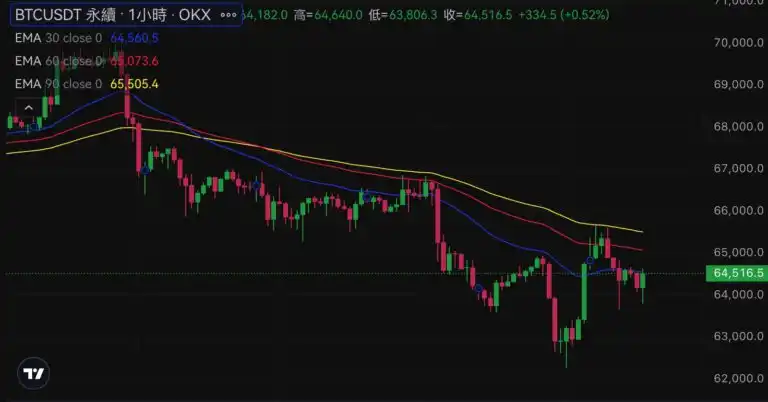
After rising the day before yesterday, the US stock market also fell sharply last night. The semiconductor sector was particularly tragic, with Nvidia falling 7% and Arm plummeting 15%.
Many investors may feel annoyed. Why is the expectation of interest rate cut becoming more and more clear, but the market has not responded, but has turned to fall? The following dynamic area sorts out historical data to discuss with readers whether interest rate cuts can really stimulate the venture capital market every time?
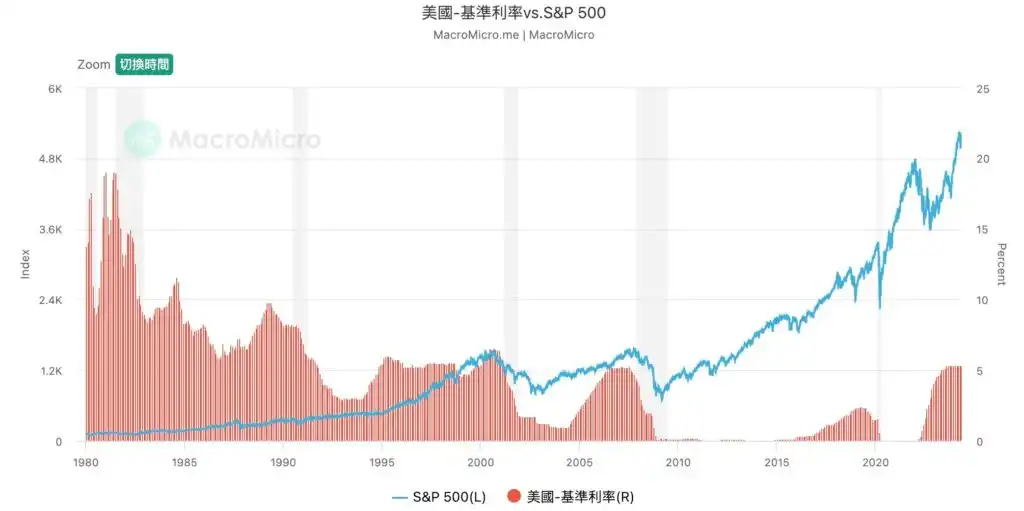
S&P 500 and US interest rate comparison chart
The following chart is a comparison of the S&P 500 and US interest rates since 1980. Let's take a look at the changes in the stock market after the Fed's first rate cut.
Decline:
· The 2020 COVID-19 pandemic caused a sharp drop in interest rates in a short period of time, but it quickly rebounded
· The interest rate was cut before the 2008 financial tsunami, and the stock market subsequently fell
· During the Internet bubble in 2000, the SP500 index also fell in sync with interest rates.
Rise:
· In 1995, the stock market rose after the interest rate cut
· In 1989, the stock market rose slightly after the interest rate cut
It is worth noting that we can find that in each cycle, the S&P500 rose more than usual in the stage of stopping interest rate hikes. In 1995 and 2006, the stock market rose by nearly 20%. The high interest rates maintained after August 2022 also allowed the US stock market to continue to set new highs. When the interest rate cuts really began, a higher proportion of stocks fell.
One possible reason is the expectation psychology: in the stage of stopping interest rate hikes, the expectation of interest rate cuts was played out in advance, just as the market has often claimed that interest rate cuts will be coming in the past year. Every time you see Powell constantly saying that the economic data is the standard, once the interest rate is really cut, the market has already reacted in advance, and it is easy to sell out the positives.
On the other hand, the Fed has initiated interest rate cuts many times because there are more serious economic problems, forcing the Fed to release money, which is not good news for the investment market.
Back to this round of interest rate cuts, although the background of this interest rate cut is basically to return to normal, it cannot be ruled out that investors may sell assets due to potential "economic recession" expectations. Therefore, investors cannot simply follow the crazy market after the epidemic and think that interest rate cuts will definitely stimulate the stock market (or risk market) to rise.
Therefore, although historical data shows that interest rate cuts are usually bullish for risk markets in the long run, it may take months to years for the fermentation period to break out of the rising market; short-term fluctuations are difficult to predict, and the market may reverse and fall instead. Bitcoin's decline last night may also be the first to fluctuate as a leading indicator, and how the market will perform in the future remains to be seen.
At the same time, the dynamic zone also reminds investors to do a good job of risk management, and not to blindly believe that the market will go up all the way and leverage to invest funds just because the Federal Reserve really starts to raise interest rates.
Original link
Recommended
The Wall Street Journal: How is AI Trading Stealing the Limelight from Cryptocurrency?
Aug 15, 14:00
Tencent Still Has a Dream
Aug 15, 11:27
To Catch North Korean Hackers, They Set Up a Fake Project
Aug 15, 10:00
From Litigation to Settlement: Positive Signal Released by HTX's Negotiation with FCA
Aug 14, 19:32
11,742 Shipping Addresses Exposed Alongside Trezor Orders
Aug 14, 19:01
Founder Interview: FOMO Creator Explains How They Added 30,000 Users in One Day and Became One of the Fastest-Growing Crypto Apps
Aug 14, 18:37