Cycle Capital: optimistic but neutral about the market in the rest of the year

Original title: "Cycle Capital 8.25 Weekly Report: Optimistic and Neutral for the Market in the Rest of the Year"
Original source: Cycle Capital Research
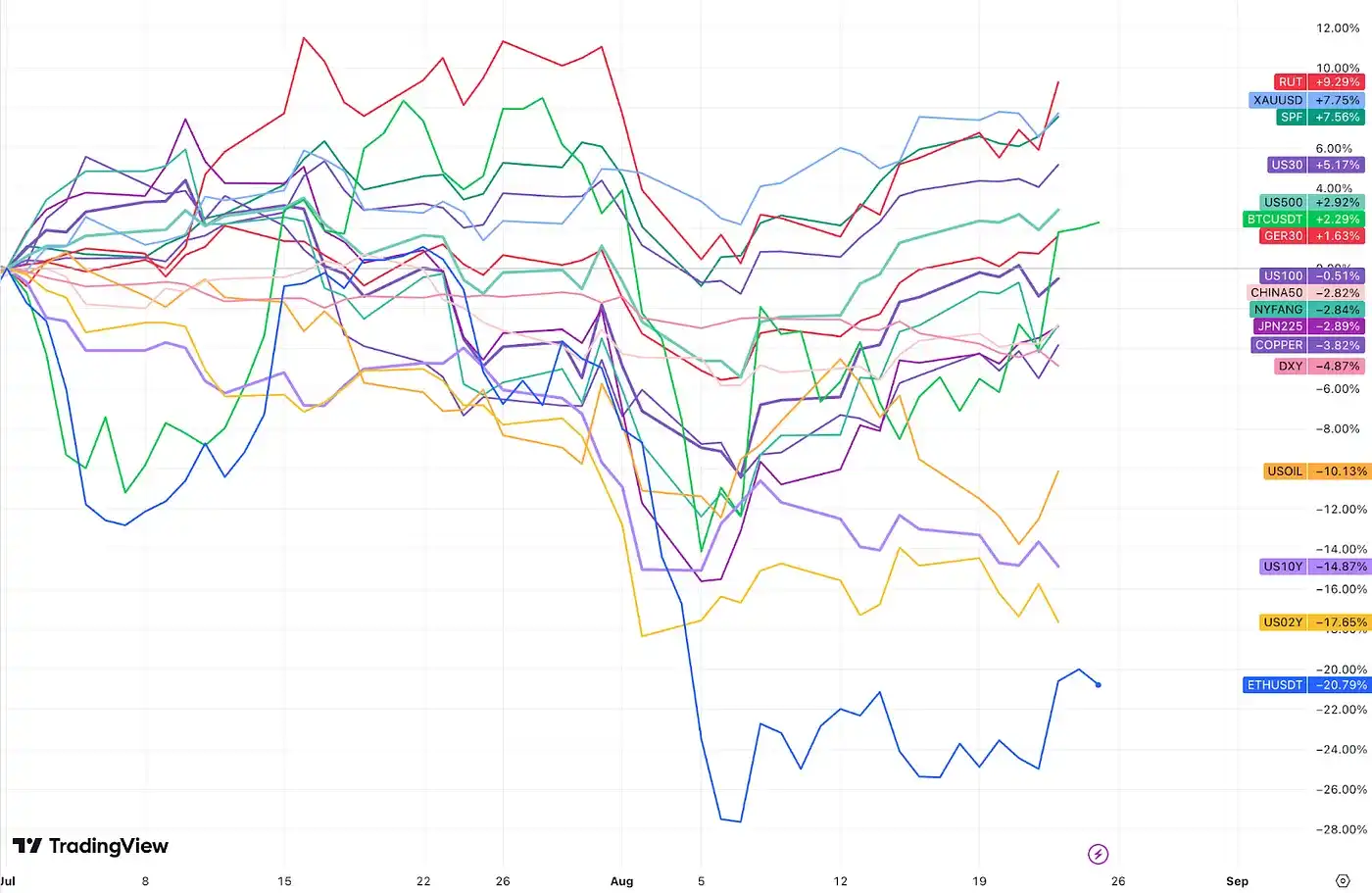
Since the third quarter, the assets that have performed better: RUT (Russell 2000 Index) and XAUUSD (gold price) as well as SPF (financial stocks) and US bonds, and the assets that have performed worse: Ethereum, crude oil, and the US dollar. The almost flat pie, Nasdaq 100.
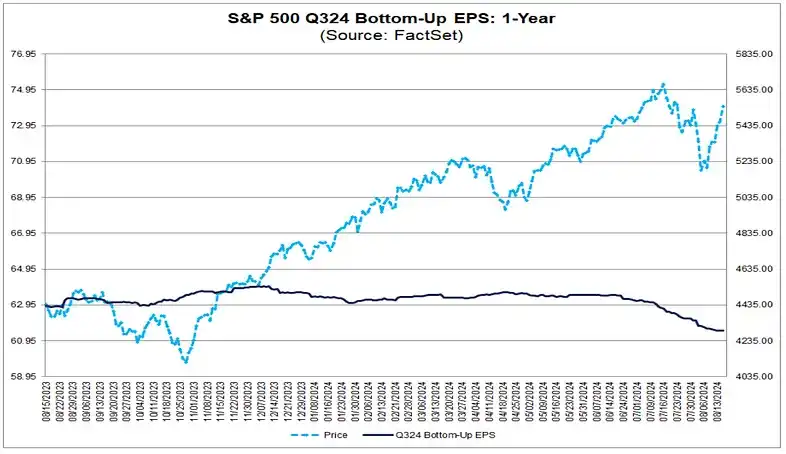
For US stocks, the current market is still in a bull market, and the main trend is still upward. However, the trading environment in the last few months of the year will be relatively lacking in performance themes, and the market's upside and downside space will be limited. The market continues to revise down Q3 earnings expectations:
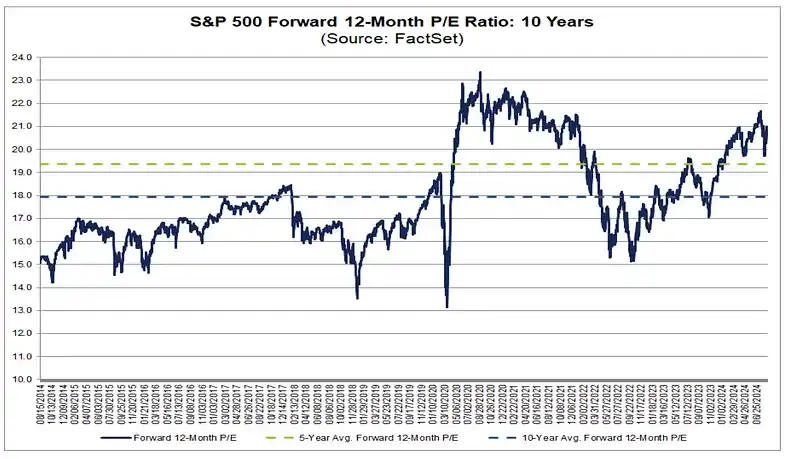
Recently, the valuation has been adjusted, but it rebounded quickly. The 21 times PE is still much higher than the 5-year average:
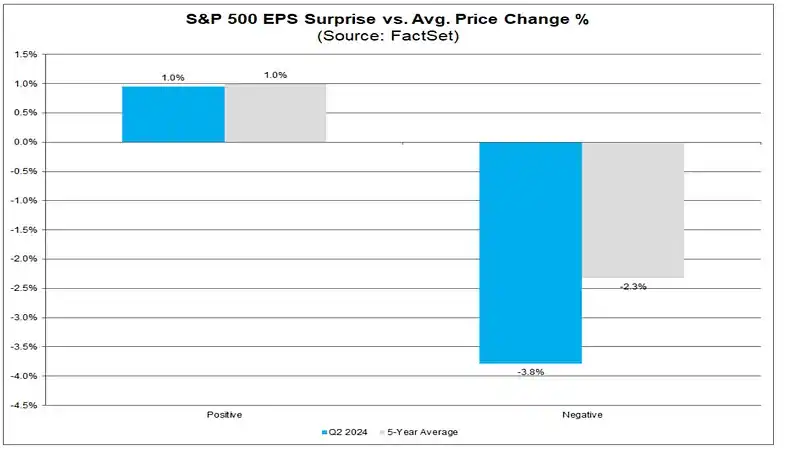
93% of the companies in the S&P 500 have announced actual results, of which 79% of the companies have exceeded EPS expectations and 60% of the companies have exceeded revenue expectations. The stock price performance of companies that exceeded expectations is basically the same as the historical average, but the stock price performance of companies that are worse than expected is worse than the historical average:
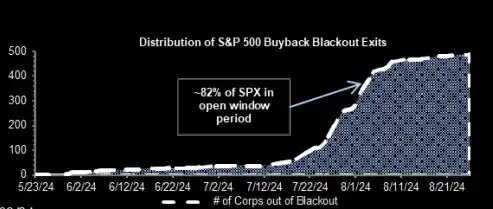
Buybacks are currently the strongest technical support for the U.S. stock market. Companies have repurchased twice the normal level in the past few weeks, about $5 billion a day (US$1 trillion a year). This buying power may continue until mid-September and then gradually fade away.
Big tech stocks have weakened in the mid-summer, mainly due to lower earnings expectations and the market's waning enthusiasm for AI themes. However, the long-term growth potential of these stocks is still there, and prices are unlikely to fall.
There have been periods of time when the market was indeed very bullish, for example, from October last year to June this year, some of the best risk-adjusted returns in a generation (NDX sharpe ration reached 4). Today, the stock market has higher PE multiples, slower economic and financial growth expectations, and higher expectations from the Fed, so it is relatively difficult to expect the stock market to perform as well as the previous three quarters in the future. And we have seen signs that large funds are gradually switching to defensive themes (for example, both subjective and passive strategy funds have increased their holdings in the healthcare sector, which provides defensiveness and growth unrelated to AI). We do not expect this trend to reverse soon, so it is safer to take a neutral attitude towards the stock market in the next few months.
At the Jackson Hole meeting on Friday, Fed Chairman Powell made the clearest statement on rate cuts so far. The September rate cut is a foregone conclusion. He also said that he does not want to further cool the labor market and that he is more confident that inflation will return to the 2% path. But he still insists that the pace of policy easing will depend on future data performance.
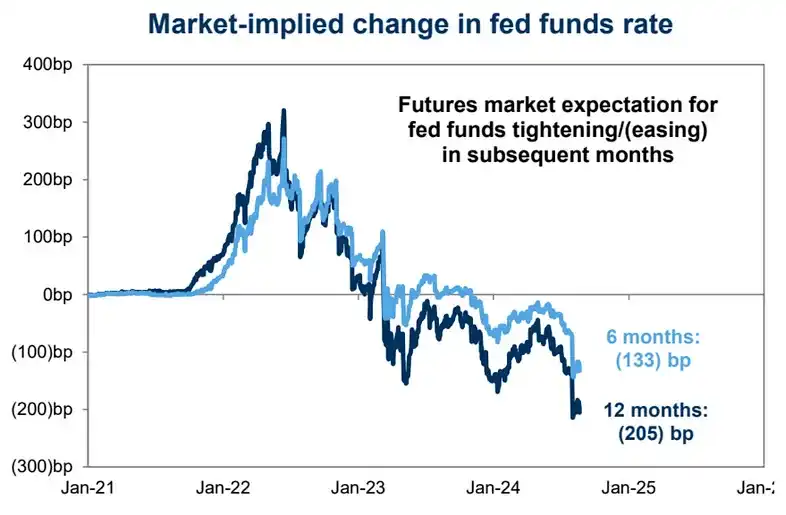
So I personally think that Powell's statement this time was not more dovish than expected, so it did not cause much splash in the traditional financial market. What everyone is most concerned about is whether there is a chance of a single 50bp rate cut this year, and Powell did not hint at all. So the expectations for rate cuts this year are almost the same as before:
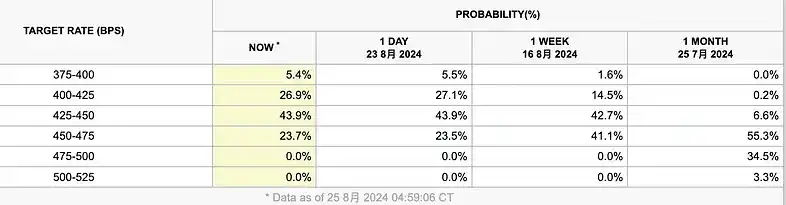
So if future economic data is good, the current priced 100bp rate cut expectations may even be adjusted downward.
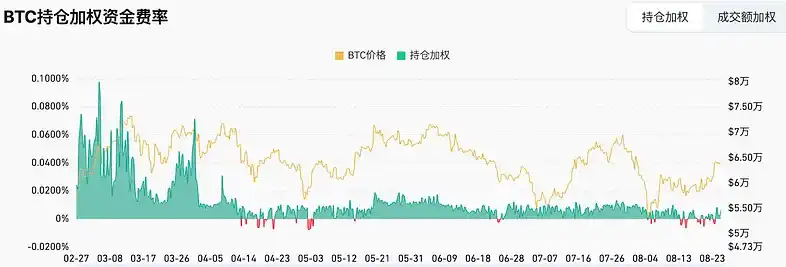
However, the crypto market reacted strongly. This may be due to the squeeze caused by too much accumulation of short positions (for example, the recent position increase has been very fast, but the contract often has negative rates), and the fact that the rhythm of the currency circle players' understanding of macro news is not as unified as that of the traditional market, that is, the damping of message transmission is relatively large. Many people may not know that Powell will speak at the JH conference this week. However, whether the current market environment supports the crypto market to hit new highs may be a question mark. Generally speaking, in order to hit new highs, the macro environment must be relaxed and the sentiment must be risk-averse. Crypto-native themes are also indispensable, including NFT, defi, spot ETF release, and meme craze. At present, the only theme with strong momentum is Tele ecosystem growth. Whether it has the potential to become the next theme depends on the performance of the latest token-issuing projects. What is the quality of the incremental users brought?
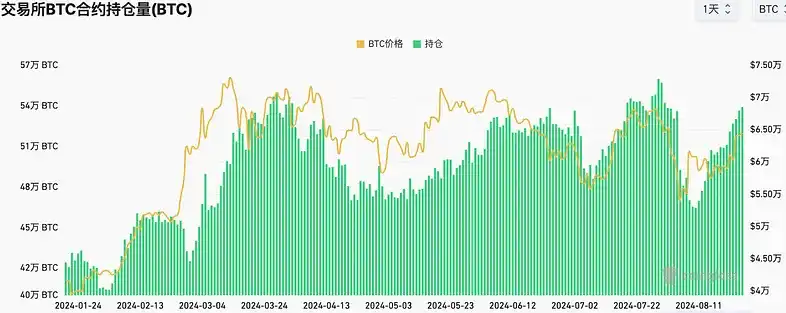
At the same time, the jump in the crypto market is also related to the sharp downward revision of last year's non-farm payrolls in the United States this week. However, as we have analyzed in depth in the previous video, this downward revision is excessive, ignoring the contribution of illegal immigrants to employment, and these people were included in the original employment statistics, so this revision is of little significance. As a result, the traditional market reacted lukewarmly, while the crypto market regarded this as a sign of a sharp interest rate cut.
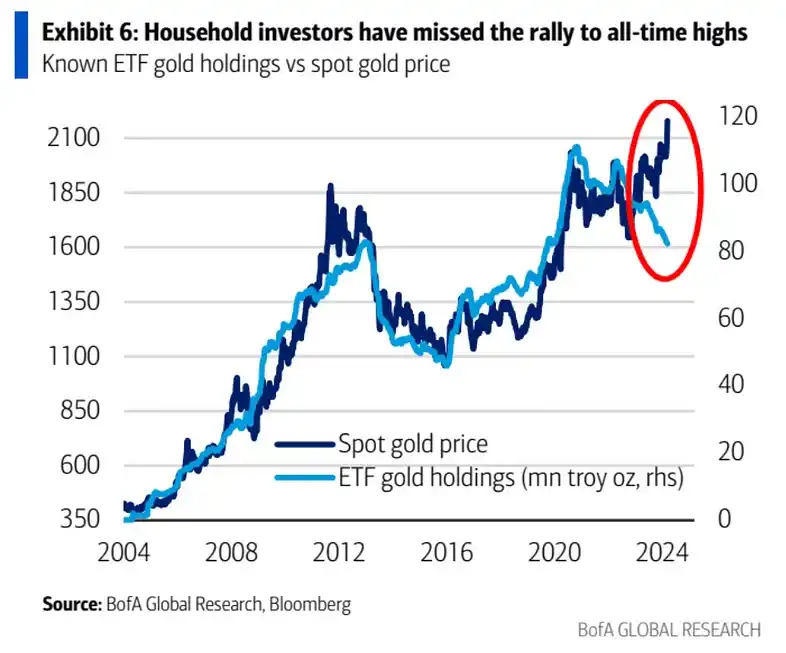
From the experience of the gold market, most of the time the price is positively correlated with the holdings of ETFs, but the market structure has changed in the past two years, and most retail investors and even institutional investors have missed the rise in gold, and the main purchasing power has become the central bank:
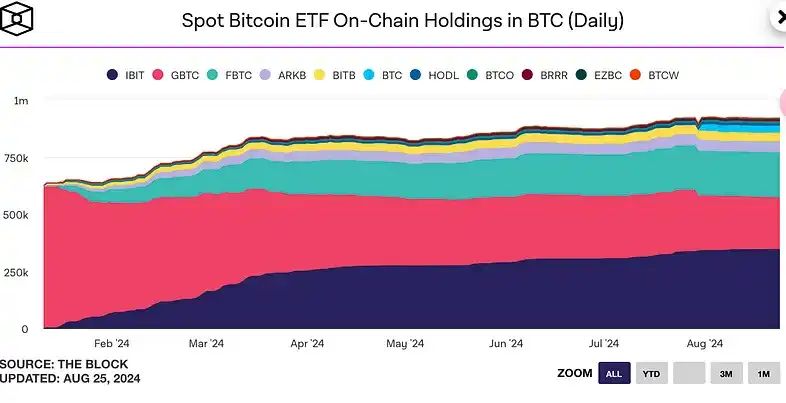
From the figure below, we can see that the inflow rate of Bitcoin ETFs has slowed down significantly since April. In terms of Bitcoin, it has only increased by 10% in the past five months, which matches its price peaking in March. If the risk-free rate falls, it may attract more investors to enter the gold and Bitcoin markets. This is very likely.
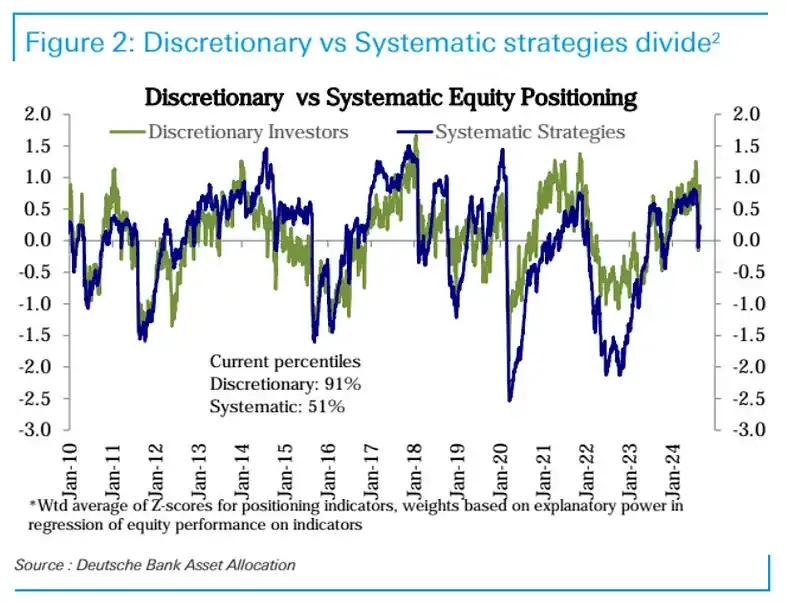
From the perspective of stock positions, subjective strategy funds did quite well earlier in the summer, reducing their positions in time and having the opportunity to attack in August. As can be seen in the figure below, the green line subjective strategy funds have recently covered their positions very quickly, and their positions have returned to the historical 91st percentile, but systematic strategy funds have reacted a bit slower and are currently only at the 51st percentile:
Stock market shorts closed their positions during the decline:

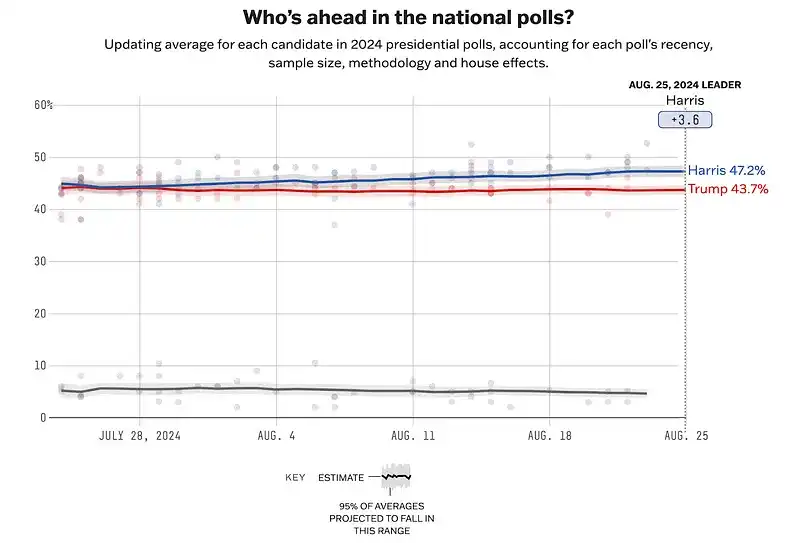
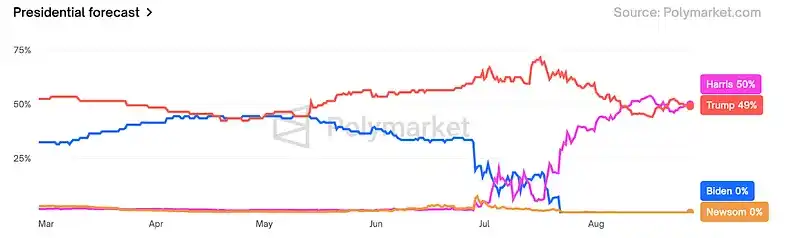
Political wise, Trump's approval rating has stopped falling, his betting approval rating has risen, and Trump also received the support of Kennedy Jr. over the weekend. Trump trading may heat up again, which is generally a good thing for the stock market or the crypto market.
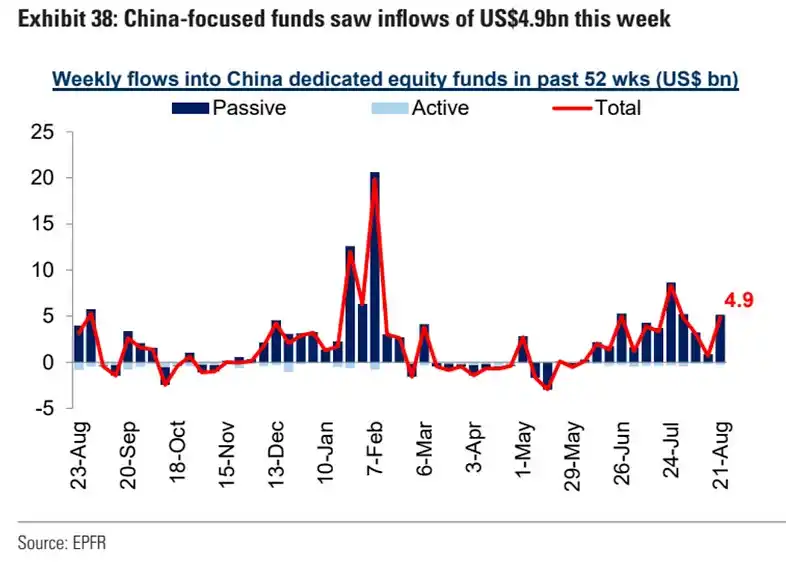
The Chinese stock market has been falling, but China-focused funds have been seeing net inflows. This week’s net inflow of $4.9 billion hit a five-week high, marking the 12th consecutive week of net inflows. Compared with other emerging market countries, China also has the largest inflows. Those who dare to choose to increase their positions against the trend in the current market downturn are either national teams or long-term funds, betting that as long as the stock market is not shut down, it will eventually rise back.
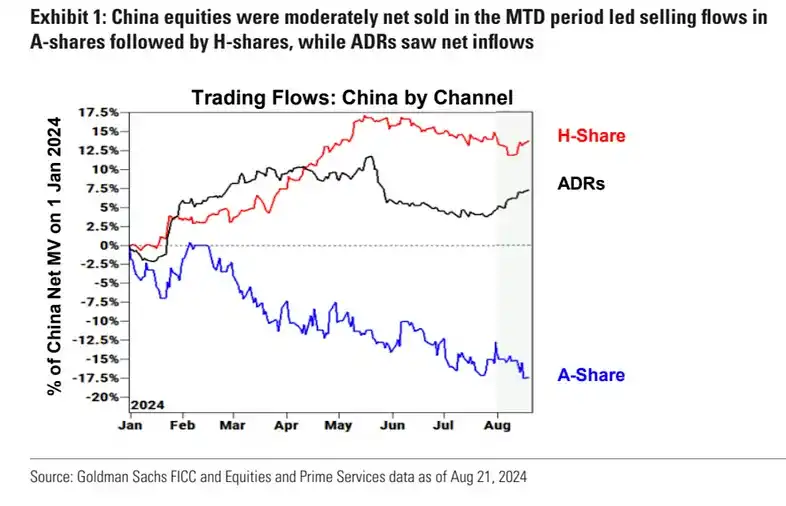
However, structurally, from the perspective of Goldman Sachs clients, they have basically been reducing their holdings of A shares since February, and the most recent increases are mainly in H shares and Chinese concept stocks:
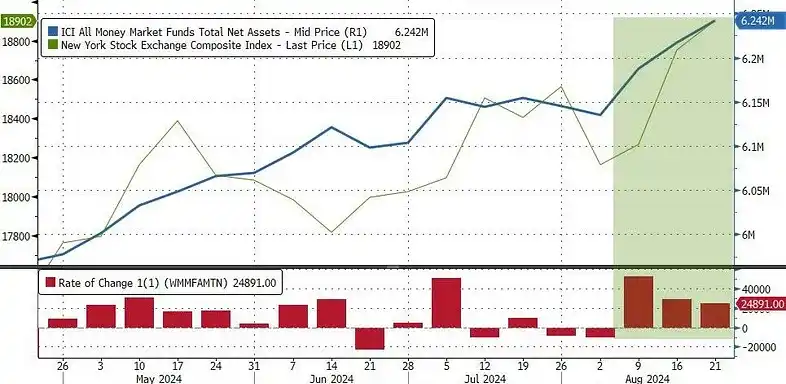
Despite the global stock market recovery + capital inflows, the low-risk preference money market has also inflows for four consecutive weeks, with the total size rising to US$6.24 trillion, setting a new historical high. It can be seen that market liquidity is still very abundant:
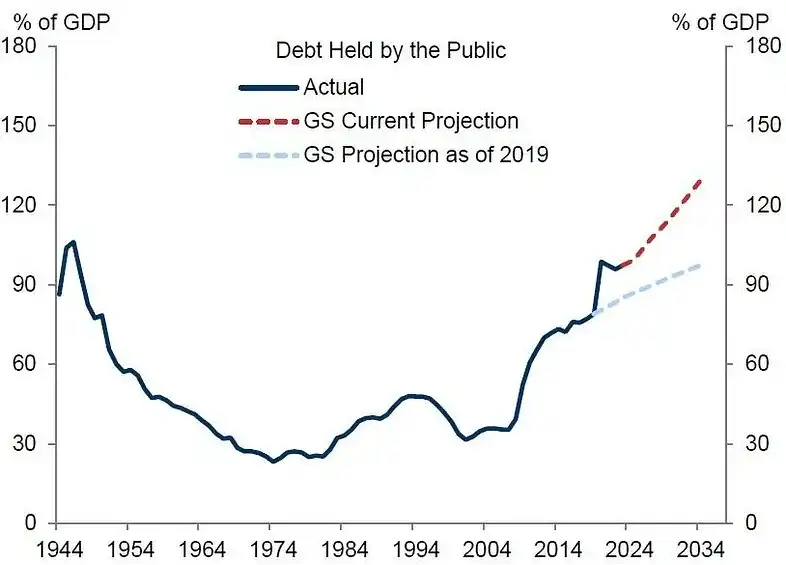
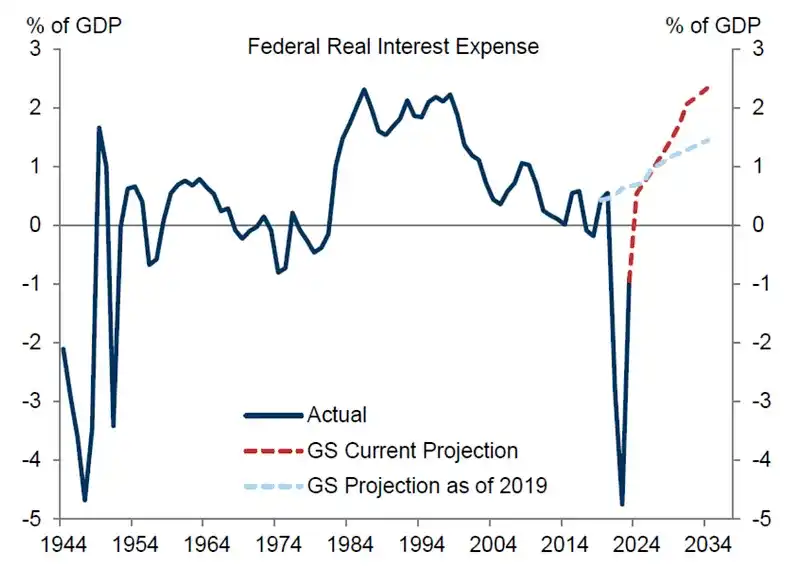
Continued attention is paid to the fiscal situation of the United States, which is basically hyped as a theme once a year. As shown in the figure below, the US government debt may reach 130% of GDP within ten years, and the interest expenditure alone will reach 2.4% of GDP. The military expenditure to maintain the US global hegemony is only 3.5%, which is obviously unsustainable.
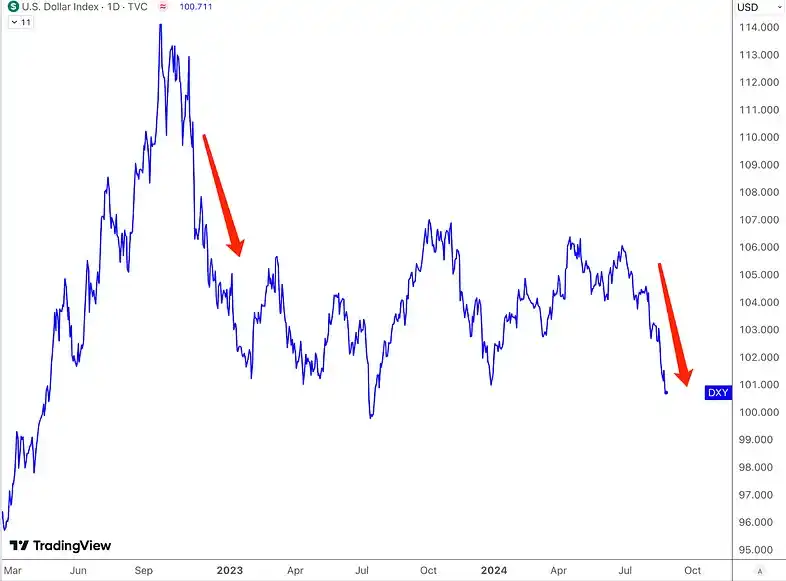
In the past month, the US dollar index (DXY) has fallen by 3.5%, the fastest rate of decline since the end of 2022, which is related to the market's increased expectations for the Fed's interest rate cuts.
Looking back at the beginning of 2022, the Federal Reserve adopted an aggressive rate hike policy to combat inflation, which pushed the dollar stronger. However, by October 2022, the market began to expect that the Fed's rate hike cycle was coming to an end and might even begin to consider rate cuts. This expectation led to a decline in market demand for the dollar, pushing the dollar weaker.
Today's market seems to be a repeat of that year, except that the hype at the time was too advanced, and today the rate cut is about to land. If the dollar falls too much, the unwinding of long-term carry trades may emerge again, and then become a force to suppress the stock market:
Key price data include the US PCE (personal consumption expenditure) inflation rate, Europe's August preliminary CPI (consumer price index), and Tokyo's CPI. Major economies will also release consumer confidence and activity indicators. In terms of corporate earnings, the focus will be on Nvidia's earnings report after the US stock market closes on Wednesday.
Friday's PCE is the last PCE price data before the next Fed decision on September 18. Economists expect core PCE inflation to remain at +0.2% month-on-month, with personal income and consumption increasing by +0.2% and +0.3% respectively, the same as in June, which means that the market expects inflation to maintain a moderate growth momentum and will not decline further, leaving room for possible downward surprises.
NVIDIA’s performance is not just a barometer of AI and technology stocks, but even the entire financial market sentiment. NV’s demand is not a problem for the time being, and the most critical topic is the impact of the postponement of the Blackwell architecture. After reading a number of institutional analysis reports, I found that the mainstream view on Wall Street is that this impact is not significant. Analysts generally maintain an optimistic outlook for this financial report, and in the past four quarters, NVDA’s actual published results have exceeded market expectations.
The most core market expectation indicators are:
· Revenue of USD 28.6 billion, +110% year-on-year and +10% quarter-on-quarter
· EPS of USD 0.63, +133.3% year-on-year and +5% quarter-on-quarter
· Data center revenue of USD 24.5 billion, +137% year-on-year and +8% quarter-on-quarter
· Profit margin of 75.5%, the same as Q1
The most concerned questions are:
1. Has the Blackwell architecture been delayed?
UBS analysis believes that Nvidia's first batch of Blackwell chips will be delayed by 4-6 weeks at most, and is expected to be delayed until the end of January 2025. Many customers have switched to purchasing H200, which has a very short delivery time. TSMC has started production of Blackwell chips, but the initial production is lower than the original plan because the CoWoS-L packaging technology used by B100 and B200 is more complex and has yield challenges, while H100 and H200 use CoWoS-S technology.
However, this new product was not originally included in the recent performance forecast:
Since Blackwell will not enter the sales forecast until Q4 2024 (Q1 2025) at the earliest, and NVIDIA only provides single-quarter performance guidance, the delay will have little impact on the performance of Q2 and Q3 2024. At the recent SIG GRAPH conference, NVIDIA did not mention the impact of the delay of Blackwell GPU, indicating that the impact of the delay may not be significant.
2. Has the demand for existing products increased?
Secondly, the decline of B100/B200 can be compensated by increasing the growth of H200/H20 in the second half of 2024.
According to HSBC’s forecast, B100/B200 substrate (UBB) production has been revised by 44%, and although deliveries may be partially postponed to H1 2025, resulting in lower shipments in H2 2024, H200 UBB orders have increased significantly, with an estimated 57% increase in Q3 2024-Q1 2025.
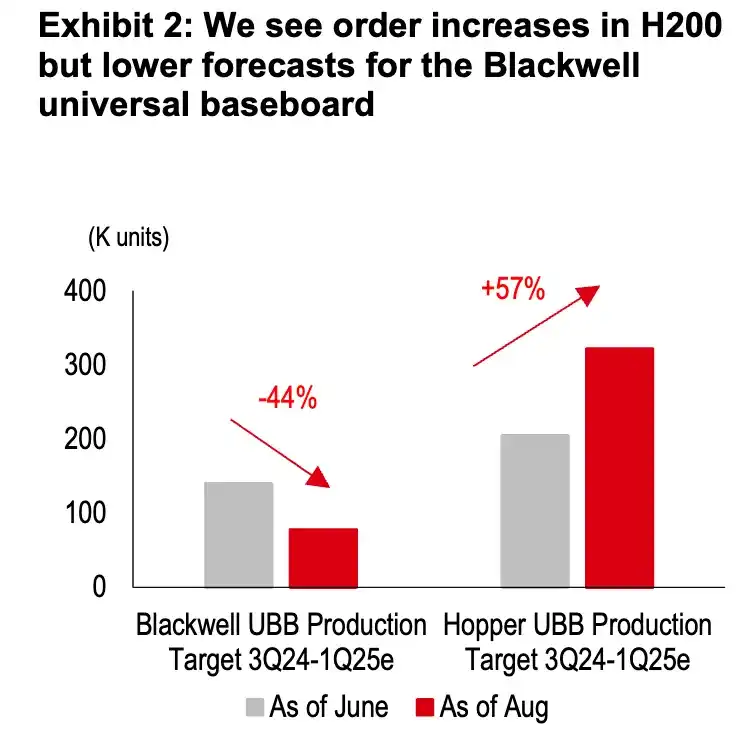
Based on this forecast, H200 revenues for H2 2024 are $23.5 billion, which should more than offset the potential $19.5 billion loss in B100 and GB200 related revenues - equivalent to an implied revenue loss of 500,000 B100 GPUs or $15 billion, and an additional $4.5 billion loss in supporting facility (NVL 36) revenues. We also see potential upside from strong H20 GPU momentum, primarily for the Chinese market, with potential shipments of 700k units or implied revenues of $6.3 billion in H2 2024.
In addition, a step-up in TSMC's CoWoS capacity could also support revenue growth from the supply side.
On the customer side, U.S. hyperscalers account for more than 50% of NVIDIA's data center revenue, and their recent comments suggest that NVIDIA's demand outlook will continue to increase. Goldman Sachs' forecast model shows that year-on-year growth in global cloud computing capital expenditures will reach 60% and 12% in 2024 and 2025, respectively, higher than previous forecasts (48% and 9%, respectively). But it can also be seen that this year is a big year for growth, and it is impossible to maintain the same level of growth next year: 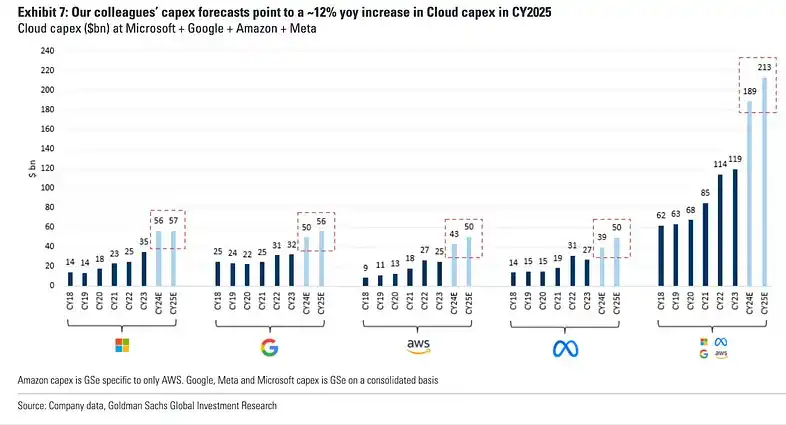 Below is a summary of recent comments from super-large technology companies on AI capital expenditures, showing these companies' expectations for capital expenditure growth in 2024 and 2025: "Alphabet: It is expected to spend $12 billion or more in capital expenditures per quarter for the remainder of 2024, and total expenditures may reach $12 billion to $13.5 billion. Microsoft: Capital expenditures in 2025 are expected to be higher than in 2024 to meet the growth demand for its AI and cloud products. Capital expenditures are expected to increase quarterly to meet cloud computing and AI needs that currently exceed Microsoft's capacity. In particular, capacity constraints on AI in Azure cloud services are expected to continue until 2025.
Meta: Raised its 2024 capital expenditure outlook to $37 billion to $40 billion from a previous range of $35 billion to $40 billion.
Capex is expected to increase significantly in 2025 as the company plans to invest to support its AI research and product development efforts.
Amazon: Capital expenditures are expected to be higher in the second half of 2025.
The main part of capital expenditures will be used to support the company's growing demand for generative AI and non-generative AI workloads."
3. The extent of the slowdown in momentum
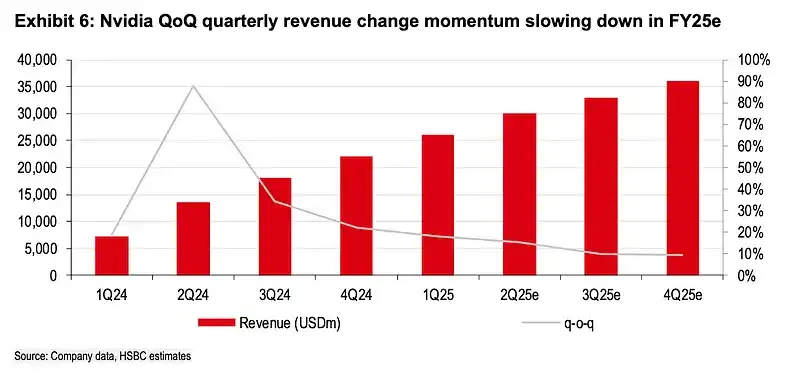
In addition to the slowdown in spending growth at large companies next year, NV's performance growth will also slow further.
The market consensus expects revenue in fiscal year 2025 to be $105.6 billion, compared with $60.9 billion last year, and the growth rate has slowed down from 126% last year to 73%. The official guidance Q2 revenue is $28 billion, and the market expects it to be more optimistic, but the growth rate of performance this quarter will further slow down from the 2x% growth rate range to the 1x% growth rate range:
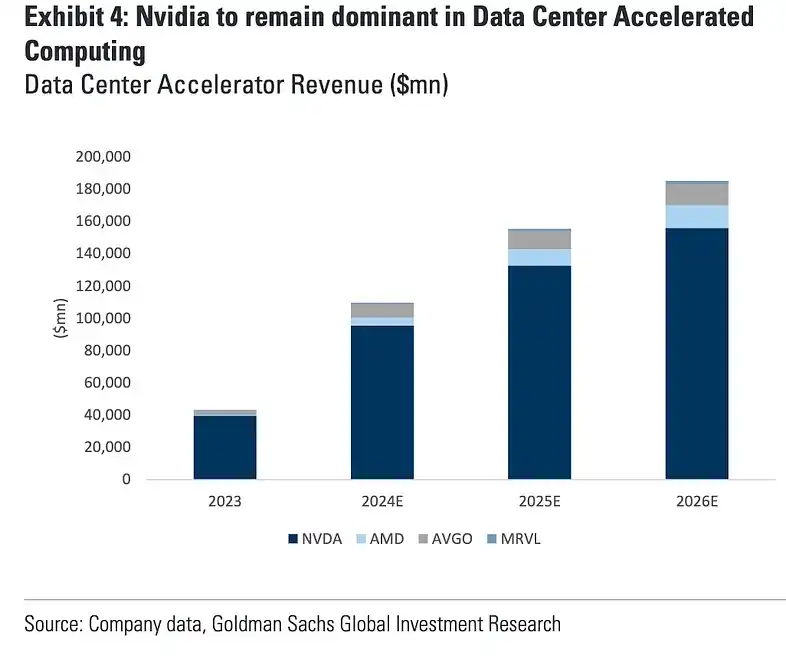
It is important to note that there are more and more players in the AI market:AMD's MI300X chip is said to be superior to Nvidia in some aspects. Cerebras has launched chips with a whole-wafer architecture, which significantly reduces interconnection and network costs and power consumption. In addition, major technology companies including Google, Amazon and Microsoft are developing their own AI chips. These may reduce dependence on Nvidia products in the future.
However, there are not enough cases to support this concern, and Wall Street still expects Nvidia to maintain its dominant position in data center chips:
4. Focus on China
NVIDIA's demand trends in China will also be a focus in the upcoming earnings outlook, especially when the market expects an increase in H20 demand. Pay attention to the following information in the earnings call:
· How customer interest has changed since the launch of H20.
· The company's competitiveness in the face of domestic competitors (mainly Huawei).
· The timing of the launch of B20 (a scaled-down version of Blackwell) in 2025.
5. Product Line Changes
Due to the unprecedented production complexity faced by TSMC chip packaging (CoWoS-L vs. traditional CoWoS-S) and ARM-based Grace CPUs (vs. traditional x86 CPUs), it is possible to reduce the number of high-bandwidth memory stacks to reduce packaging complexity (allowing the use of traditional CoWoS-S instead of CoWoS-L), such as the new NVIDIA products B200A and GB200A Ultra may use the old CoWoS-S packaging, and the changes in technical specifications and cooling methods of the new products make it difficult for NVDA to maintain its previous high pricing power in the market:
1. Technical Specifications: The new A series has reduced performance compared to the standard B100 and B200 GPUs. Lower performance means that the market's price expectations for these new products will also be reduced. As a result, the average selling price (ASP) for the B200A is expected to be between $25,000 and $30,000, compared to the $35,000 to $40,000 ASPs for the previous B100 and B200 GPUs. This reduction in specifications and performance directly translates into reduced pricing power.
2. Cooling method: The upcoming GB200A Ultra NVL36 rack solution is expected to use air cooling instead of a complex liquid cooling system. This change may result in lower consolidated revenue compared to the previous GB200 NVL36 and NVL72 racks.
This may have an uncertain impact on performance. On the one hand, it may be good for revenue, and on the other hand, it may reduce NVDA's pricing power because it is equivalent to competing with its own product lines.
6. Stock price fluctuations
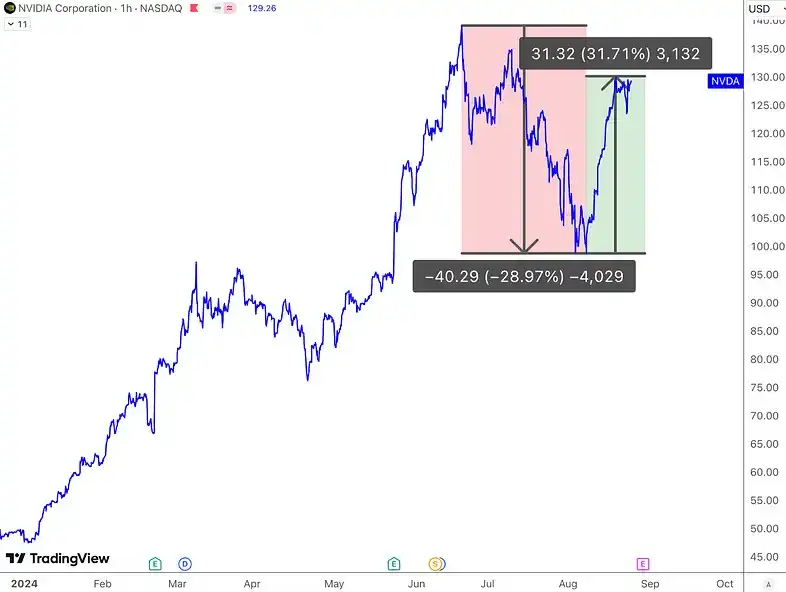
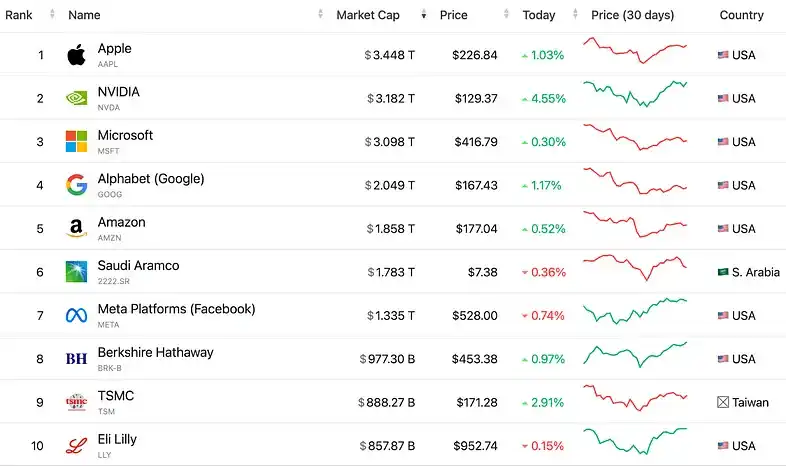
Due to the delay of Blackwell, the slight challenge of AI narrative, and the overall market correction, Nvidia once fell 30% from its peak, but investors bought on dips, causing the stock price to rebound by 30%. The current market value of 3.18 trillion US dollars ranks second in the world, only 7% away from the historical high.
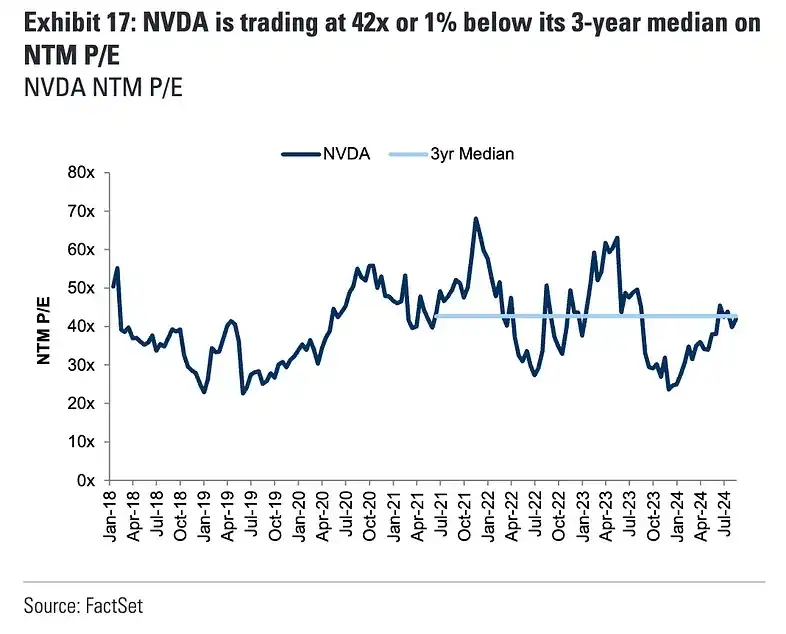
NVDA's current valuation level is basically at the median level of the past three years, neither high nor low.
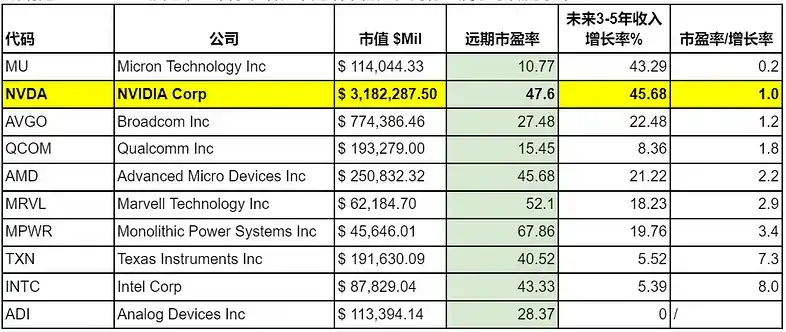
NVDA's price-to-earnings ratio is definitely not low compared to its competitors, reaching 47.6 times, but because it still maintains a high growth expectation, the so-called PEG ratio, which is the price-to-earnings ratio divided by the growth rate, is still one of the lowest levels among its peers:
7. Bull-bear hypothesis
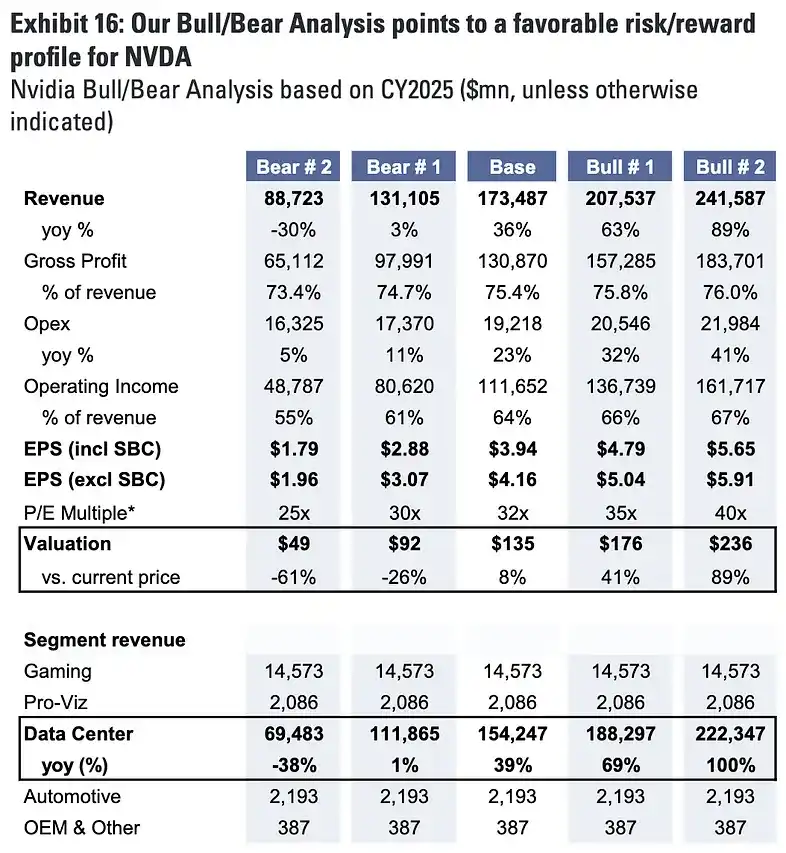
The AI narrative encountered some challenges in the first two months, mainly from the perspective that its contribution to corporate revenue may not be high. If based on this pessimistic assumption, that is, the investment boom in AI is a one-off, NVIDIA's data center business may quickly return to its pre-2023 trend level.
That is, assuming that data center revenue declines to $69 billion in 2025, 38% lower than the current level and 55% lower than the baseline expectation, as the assumption of the "most pessimistic" scenario. Then the 2025 data center revenue growth reaches 100% as the most optimistic assumption.
Goldman Sachs' stock price change forecast under this bull-bear scenario is:
Based on the current stock price of $124.58 and the baseline expected stock price of $135, Bull #1 and Bull #2 rose 41% and 89% respectively, and Bear #1Bear #2 fell 61% and 26% respectively. That is, at the current price level, NVDA's potential return is still less than the risk.
8. Summary: Trend slows down, but remains optimistic
NVDA's valuation is currently in a neutral range, and its performance is still satisfactory, but the market's most FOMO time has passed, and the performance growth rate has entered a downward channel. It is obviously difficult for NVDA prices to reproduce the 10-100 increase of that year.
The biggest risk is that the AI narrative is falsified, but as long as this matter does not continue to ferment, the negative impact on NVDA's performance is more of a mood swing. Other negatives come more from macro interest rates and geopolitical uncertainties. For example, the U.S. Department of Commerce will conduct an annual assessment of semiconductor export restrictions in October, which may prohibit the export of the "special edition" H20 chip, which has weakened performance, and even affect the difficulty of obtaining the "castrated version" B20.
Uncertainties in the market may bring some stock price fluctuations, and valuation multiples may also shrink, but we can still remain optimistic at this stage because the problems are mainly concentrated in the supply chain, not demand. These supply chain problems can be solved and will not fundamentally undermine NVIDIA's long-term growth momentum. The company will remain attractive in the next few years. For example, the recent 30% rebound in just a few days shows the market's enthusiasm for bargain hunting.
In particular, the outlook for AI demand may still be in its early stages. For example, Meta's computational workload for its next-generation Llama 4 large language model is expected to be 10 times higher than that of Llama 3.1, indicating that the long-term demand outlook for AI computing chips may exceed our expectations.
Recommended
The Wall Street Journal: How is AI Trading Stealing the Limelight from Cryptocurrency?
Aug 15, 14:00
Tencent Still Has a Dream
Aug 15, 11:27
To Catch North Korean Hackers, They Set Up a Fake Project
Aug 15, 10:00
From Litigation to Settlement: Positive Signal Released by HTX's Negotiation with FCA
Aug 14, 19:32
11,742 Shipping Addresses Exposed Alongside Trezor Orders
Aug 14, 19:01
Founder Interview: FOMO Creator Explains How They Added 30,000 Users in One Day and Became One of the Fastest-Growing Crypto Apps
Aug 14, 18:37