2024 Airdrop Retrospective: From Wealth Myth to Harsh Reality, Can Airdrops Still Be Lucrative?

Original Article Title: "It's 20XX Already, Can We Still Profit from Airdrops?"
Original Article Author: Biteye Junior Sister, Biteye
Note: The following content is adapted from Biteye colleague's keynote speech at an airdrop strategy sharing event, and all airdrop gains are personal real-life experiences shared.
Airdrop, a term that the vast majority of crypto users have seen, may be the easiest way to make money, or it could be the fastest way to wreck your portfolio.
The debate surrounding the pros and cons of airdrops has been ongoing for two to three years, from "spread the wealth" to "minimum guarantee," and then to "witch hunting," "points"...
Whether you like this model or not, it deeply impacts numerous projects in the blockchain industry.
On September 17, 2020, UNISWAP conducted an airdrop with a minimum of 400 tokens, with the airdrop worth up to $16,000, and the only requirement for claiming was to have used the protocol.
For users, a successful airdrop is called "X Master," while an unsuccessful one is "X Loser";
For projects, a successful airdrop can earn the community's admiration: "Founders deserve the highest respect!" while a bad airdrop may result in an angry community revealing the founder's last four digits of their ID number.
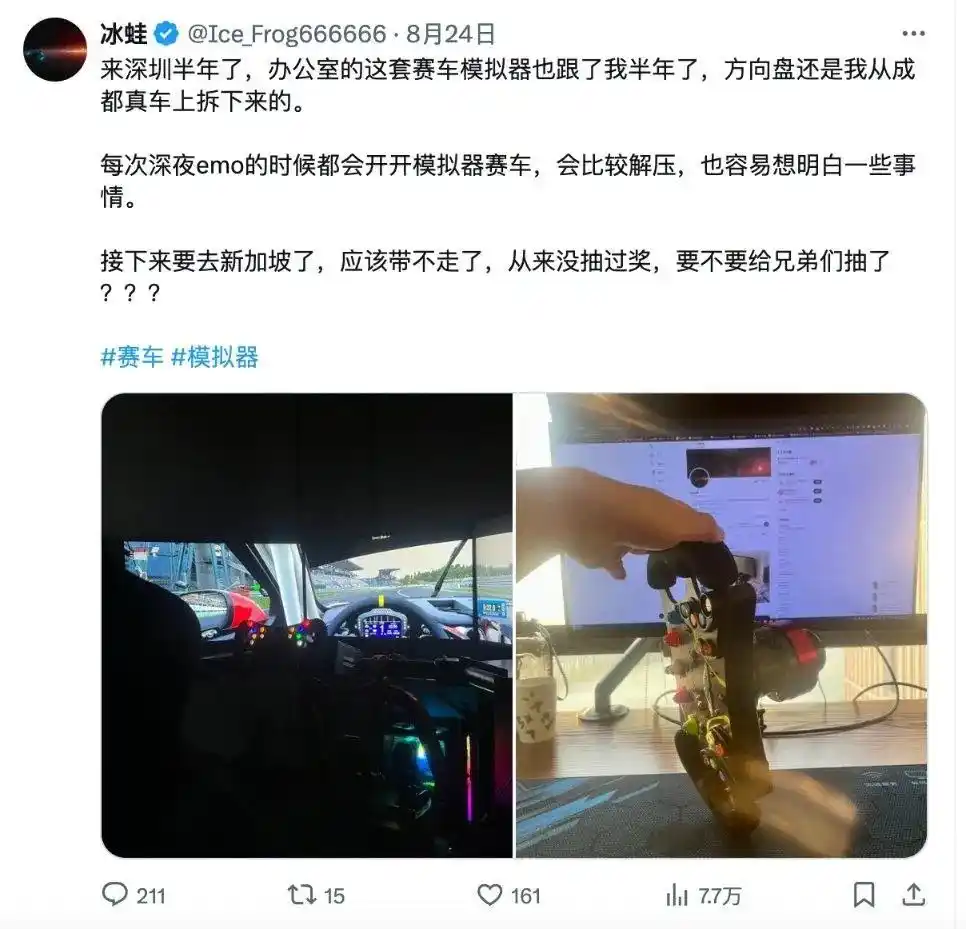
Ice Frog reaped multiple fortunes in airdrop projects such as ARB, BLUR, and is hailed by fans as Frog Master
Regardless of one's views on airdrops, after every airdrop, one question is repeatedly raised:
What has led people to ask repeatedly is nothing other than the decreasing airdrop shares, stricter witch rules, and the coin's steep price drop post-listing.
Therefore, in the following text, in 15 minutes, we will revisit the main airdrop projects of 2024 based on answering the question "Can we still profit from airdrops?" (The following content is excerpted from Senior Brother's speech at the Biteye Airdrop Strategy Sharing Event)
To help everyone clarify, I will start by elaborating on the “Focus on Major Events and Trends, with Timestamps as Secondary”.
In 2024, there are three main major events and trends:
January 10: Bitcoin ETF approved, Inscription listed on the three major exchanges, founder Casey bets that if the new Rune's market cap is below $1 billion, he will “commit seppuku” live;
March 13: Ethereum Cancun Upgrade, L2 transaction fees reduced by 90%, various re-staking assets mimic Blast and introduce Staking Points;
March 18: Solana price breaks through $210, rising 20x since the FTX scandal at the end of 2022, becoming a meme coin paradise, driving the DePIN trend.
Let's start with Bitcoin. The airdrop projects on the Bitcoin track in 2024 mainly include: Babylon Pioneer NFT, Pizza Airdrop, and OKX Wallet Drops.
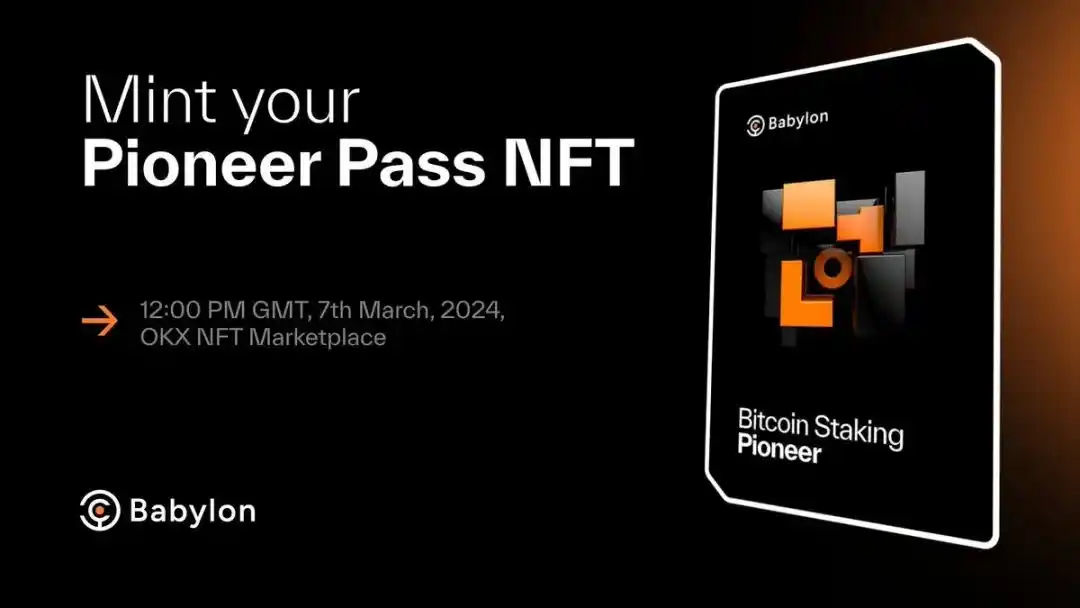
1.1 Babylon Pioneer NFT
Babylon's NFT is definitely the fastest airdrop harvest of 2024! At that time, they had already hinted at rewards when working with okxweb3, and getting the NFT was very simple, just depositing test sbtc into the test pool and then binding an EVM wallet (to receive the NFT) is okay.
Challenges
1. First of all, it was very difficult to claim testnet tokens, and most players did not receive any, remaining stuck in the token claim phase. 2. Should there be anti-whale measures? I initially received some tokens, but they were only enough for 10 accounts to use. Later, I looked for token sellers off-site and bought 100u sbtc (forgot the exact amount), which I remember was enough for about 200 accounts;
After much consideration, I ultimately did not implement anti-whale measures because, firstly, the BTC ecosystem rarely checks for whales, and secondly, in the absence of enough faucet tokens, sharing some test tokens is quite normal.
Since only the first 100k users will receive rewards, the entire event was quite intense, lasting about two days. The main workload was in distributing testnet tokens, and I managed to get around 200 NFTs for about 200 accounts.
Earnings Assessment
This time, the ROI of the event was off the charts. I sold about 100 NFTs offsite and on the OKX market at an average price of 160u, making a profit of 15000u. The remaining NFTs that were not sold have now dropped to below 30u. I feel like I should still sell them all during the FOMO phase.
1.2 OKX Drops
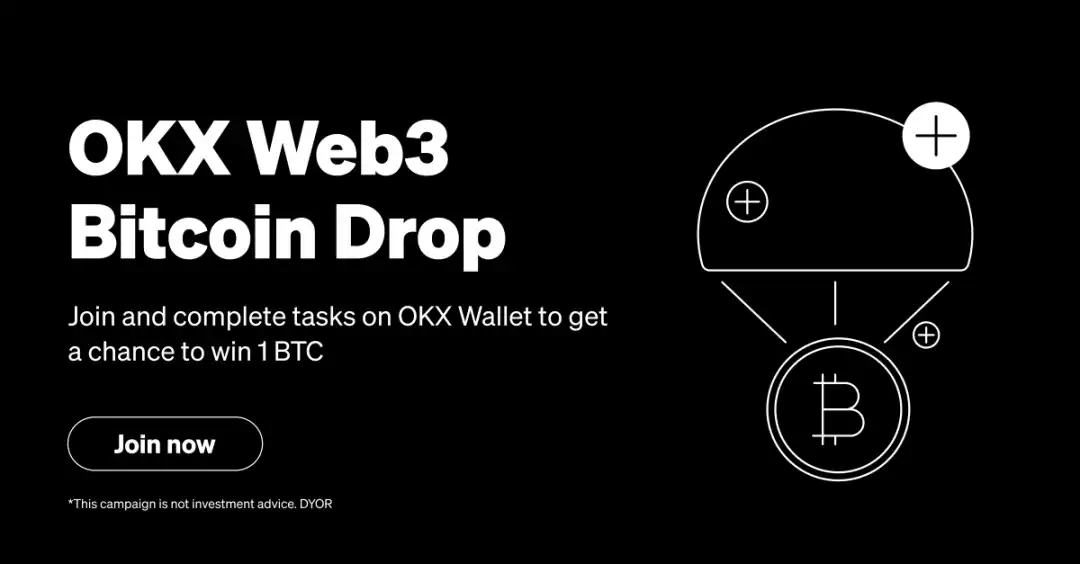
https://www.okx.com/en/web3/marketplace/launchpad
The BD team of Okxweb3 connects with relatively high-quality projects every week to seek whitelist benefits for the community. Some whitelist entries hold significant value.
Entries like Tinfun NFT whitelist, Bitsmiley smiley face whitelist, INK whitelist brought profits of over $1000 each, with zero cost participation.
However, as the number of participants increases, Okxweb3 has also taken steps to reduce the winning rate of "farmers."
They have stratified the addresses of EVM wallets, with wallets engaging in rich DEFI and NFT activities being considered premium accounts, with a much higher chance of winning than regular accounts, while "bot" accounts have a lower winning rate than regular accounts.
Therefore, the best strategy is for users with premium account resources to participate every round for stable benefits. (It is still uncertain whether wallet stratification lottery is being applied to BTC wallets and Sol wallets.)
When I saw the Bitsmiley event, I decided to participate because the BTC ecosystem was booming at the time, and the cost of participation was very low.
Earnings Assessment
1. Bitsmiley was using a BTC wallet for the draw, verifying about $10 worth of BTC. I split 100 wallets, and based on the overall winning probability, I remember it was above 1/20. I won 6 whitelist spots;
2. At its peak, a single NFT could sell for $2000, with a total profit of nearly 1wu. (After the deployment of the OKX lottery, which gave me a big surprise in the BTC ecosystem, as mentioned later).
1.3 Pizza

Pizza is a meme coin officially issued by Unitsat, with a very good concept and very high popularity.
Unitsat announced that within three months of the snapshot, any wallet that had interacted (transferred) with the unisat wallet would receive a basic reward. Additionally, higher rewards would be given for using Unitsat services, having points, being a Unitsat OG, etc.
As mentioned earlier, I participated in the OKX drops and received 100 wallets. In May, I wanted to participate in Solv's BTC staking. I decided to consolidate the BTC from those 100 wallets for staking. Due to a series of coincidences, almost every wallet had one transaction record, thus meeting Unitsat's airdrop criteria.
Earnings Assessment
The basic reward amount was 100 pizza per wallet. After the full airdrop distribution, the individual token price reached $600 and peaked at $800. The estimated earnings were around 80 wallets * 550 = 4wu.
In general, airdrops in the BTC ecosystem often occur shortly after the BTC price hits a new high, during the so-called "liquidity overflow" period.
They are characterized by high barriers (BTC on-chain gas fees, interaction difficulty), high returns (individual token earnings), and low requirements (no large-scale front-running).
However, the value of the airdrop lies in anticipation. Selling midway often yields the highest returns. If one "holds on" until the end, it often turns from a feast into a meager feast.
Next is the ETH ecosystem. The main airdrop projects for 2024 are: Friendtech, Stark, Zksync, Layerzero.
2.1 Friendtech
FT is a socialfi phenomenon that emerged at the end of '23. I only started participating a month later, without holding an account of any big influencer but choosing a matrix farm strategy.
However, the process was not smooth. Due to a team rule change, a wallet migration was required (with a 10% exit fee for buying and selling).
Ultimately, more than 5 eth was invested. The matrix could leverage three times, resulting in a portfolio value of less than 20 eth in the end, with the total loss within 1 eth.
Profit Assessment
The airdrop started in May 2024, and I ultimately received 15,000 points. I sold 2,500 points at a price of 4u on Whales Market Pro, and the remaining points were sold between 1-2u at market open, with a final profit of around 3wu.
As for costs, the loss was less than one eth. However, the remaining eth increased from 1800u to a peak of 3500u. I believe that the actual cost of mining FT was negative.
2.2 Stark
The Stark airdrop is the third coin release among the L2 Big Four. Unlike the praise for the first two, the Stark airdrop has received mixed reviews.
A contentious point of Stark is the on-chain balance cutoff, where wallets with less than 0.005 ETH were disqualified.
However, other criteria, such as being active for at least 3 months and trading $100, are relatively easy to meet.
Stark's criteria led to a group of users who had deposited ETH into on-chain DeFi projects being "betrayed," losing everything.
Furthermore, there was TrustGo's witch hunt audit, which targeted a group of wallets with similar on-chain activities. However, due to TrustGo's private witch library and undisclosed criteria, the relatively centralized anti-witch efforts faced backlash from players.
However, for the players who met the requirements, Starknet was definitely a lucrative airdrop, deserving of the Big Four title.
The minimum number of low-income addresses was 500 coins, with profits of around $1100 when sold promptly at market. The slightly higher-quality address had between 1000 and 3600 coins, with single-address profits ranging from 2000u to 8000u. Over a million addresses in total received the airdrop, indicating its significant scale.
The top prize is single 10,000 coins, single 20,000 dollars, this condition is relatively difficult, and few people have achieved it.
Earnings Assessment
I deployed about 50 accounts in Stark (because some accounts did not meet the monthly activity and balance requirements, so I lost some accounts), each account holding between 650-3600 coins, totaling 50,000 coins, with approximately 100,000 units of earnings at the opening.
In short, the Stark airdrop is definitely a victory for multi-account holders, as the criteria for holding multiple accounts is very relaxed.
A balance of 0.005 ETH + 3 months of monthly activity + 100 units of amount, with a cost within 5 dollars, can yield a return of 1000 units.
Although the reward for the top premium account is more than 10 times that of a multi-account holder, the difficulty is too high, the cost is too high, and the cost-effectiveness is insufficient.
It is worth noting that the Stark airdrop also rewarded the ECMP plan, which is the contributor plan. In addition to the inhumane balance cutoff, this has also led some users to suspect the existence of "insider trading."
Unfortunately, after the token distribution, the Stark ecosystem was unable to maintain TVL and user activity. Subsequent airdrops in the ecosystem, such as Zklend and Ekubo, were good Defi projects, but both the token price and airdrop earnings were very poor.
2.3 Zksync
However, in the second half of the year, the airdrops of Zksync and L0 completely shattered the expectations of the airdrop race.
Zksync innovatively introduced a scoring method where the TVL amount weighted by time is multiplied by a bonus multiplier, making the amount deposited into the Zksync protocol the most important metric for measuring the airdrop. This contradicts previous user perceptions of metrics such as monthly activity, transaction amount, and number of transactions.
Furthermore, zk also rewarded holders of some niche zk-native tokens and some NFT collections, making the entire airdrop standard full of suspicion of "insider trading."
However, personally, I believe that Zksync's criteria are rewarding for true Defi players, and many genuine players have received airdrops of over 50,000. This zk airdrop is undoubtedly a reward for premium accounts.
Earnings Assessment
I only have over 10,000 zk in my large account, while the rest of the accounts only have a few thousand zk. Additionally, half of the accounts did not receive the airdrop due to insufficient staking funds, resulting in only receiving a total of 80,000 zk.
Moreover, due to the less-than-ideal listing price, I did not sell and have been holding at a loss until now. The cost was not low, and a lot of effort was put into it.
Some players who have been grinding for 3 years received nothing, and even some outdated strategy studios did not profit. This airdrop was undoubtedly disappointing for most people.
2.4 Layerzero
The L0 airdrop was worse than ZK, truly the worst of the worst. The airdrop allocation was extremely low, the conditions were harsh, and there was an unpleasant experience of a mass "witch hunt" report; no more comments on that.
Earnings Evaluation
The earnings from L0 were very low, with most accounts just breaking even. Large accounts may have seen a 2x return, but I don't even have a single account with 1000u. Later on, L0 had another round of airdrop, but the results were disappointing.
Overall, the Ethereum ecosystem continues to be a hotspot for various airdrop projects. However, airdrop rules are becoming stricter, witch checks are more rigorous, and the earnings for individual accounts are hard to come by like before.
From the past "multi-account era" to the current "boutique account" era, it has been evident that airdrops have transitioned from "zero effort" to "investment."
Lastly, the Solana ecosystem, with airdrop projects in 2024 mainly including: Jupiter, Wormhole.
3.1 WEN

In January, a meme coin airdrop experiment was conducted before the $JUP token went live, with 70% of WEN airdropped and evenly distributed to over 1 million Solana wallet addresses.
The airdrop recipients include Jupiter users, Ovols NFT holders, blue-chip NFT holders, Genesis Saga NFT holders, and mockJUP test users.
Earnings Evaluation
Each address received an average of 643,652 tokens, depending on the time of sale, with a profit of $50-100 per order.
3.2 JUP
The JUP airdrop went live on January 31, with the snapshot ending on November 2, 2023. Over 950,000 wallets directly interacting with Jupiter were eligible for the initial airdrop, with 336,000 wallets receiving 200 JUP each.
The airdrop floor for JUP is 200 tokens, approximately $120. Additionally, OG BONUS, trading volume, usage continuity, whether it remained in use in 2023 (during the bear market), and the use of limit order functionality are all additional bonuses. JUP has tagging and exclusion for bot accounts.
As a newcomer who entered the scene in '22, most players who have tried the Solana ecosystem have basically used Jupiter. However, from a personal perspective, the majority of players have less than 500 tokens in a single wallet because Sol's ecosystem experienced nearly a year of silence at the end of '22 after the FTX crash. It is indeed quite difficult to continue using Jup.
Earnings Evaluation
I have used Jupiter in 10 Solana wallets, but only one main wallet received a considerable amount of coins, receiving a total of 10 $Wen floor (sold for $800) and around 10 $Jup floor (sold for $2000).
From an ROI perspective, the returns of the Jupiter series are very high because the interaction cost of the Solana ecosystem is low. However, for players who just dabble and only receive the floor, the absolute income is not high, making it a decent pig's trotters meal.
For multi-account batch players, as long as they evade bot scrutiny, the JUP airdrop is definitely a victory for floor multi-account players. Based on the airdrop rules, there are no obvious insider trading rule settings.
3.3 Wormhole Airdrop
$W is considered the most profitable airdrop to date for a cross-chain protocol.
The main reasons are its large funding, backing by Solana, relative lack of complexity compared to Layerzero, and a small number of eligible addresses (40k+ eligible addresses).
Wormhole examined users' on-chain activities, set a minimum interaction threshold of around $1500, and rewarded early users, continued users, and users who still used the platform during bear markets.
Of course, Wormhole also has anti-whale measures. In addition to common fund source analysis, Wormhole uses behavioral clustering analysis to identify clusters (https://arxiv.org/abs/0803.0476) and analyzes spam transactions.
Earnings Evaluation
In addition, some Solana and EVM wallets also received a small amount of airdrop, but the official team did not disclose very specific criteria, so it is not clear why some accounts did not receive the airdrop.
In summary, the Wormhole airdrop was profitable due to the low supply and high demand. However, the project's anti-whale measures and specific airdrop criteria are not very transparent, and some users who did not receive the airdrop have questioned its transparency.
Overall, the Solana ecosystem is still a game of capital, where only projects with a good investment background have the opportunity to earn from airdrops. In contrast, airdrop projects on other Solana-based platforms have very low returns.
Overall, looking at the trend, airdrops in 2022 and 2023, such as Op and Arbitrum, have had little controversy over "insider trading."
Their airdrop criteria are relatively "natural" and "normal," even though some projects reward NFT collections like Galxe and ZKBridge, those NFTs are all part of task-based collections with high visibility, such as "Galaxy Girls" and "Panda King."
Insider trading operations are limited to knowing the snapshot time in advance, selling the NFT promptly after the snapshot, and normal players who continue to hold the NFT are not significantly affected.
However, looking at airdrops such as zk and l0, it is now challenging to guess the criteria; these projects always reward some "mysterious" tokens and NFT communities, making it difficult for ordinary players with information asymmetry to prepare in advance.
Therefore, in the EVM airdrop track, a strategy shift is needed, and the focus should not continue to be solely on the EVM track.
Future EVM Airdrop Strategy
1. Defi Earnings
Stake multiple projects, including RWA stablecoin projects and L2 projects, with Defi projects to earn a 10% or higher APY and rewards. This strategy is suitable for conservative large fund holders. To pursue higher rewards, one can participate in the PT game, which involves more intense speculation.
For example, around May, the Stone project allowed users to stake ETH for stone, then bridge to the Scroll chain, purchase PT, and sell at the end of June, enabling a lossless or even profitable "freeloading" of Stone rewards. For a more secure approach, one can split Queenstone to receive stable returns and rewards.
This series of operations interacted with the Stone+Layerzero+Scroll project, enabling users to earn dual rewards from Stone and Scroll, a classic example of reaping multiple benefits.
There are many similar examples, such as:
Bridging ezETH to Linea, depositing it into Mitosis. This series of operations involve the Renzo+Hyperlane (cross-chain)+Mitosis+Linea four projects.
The above examples focus on rewards; for APY gains, consider stablecoin/RWA projects like usde/Usual or Anzen.
2. Account Creation and Management
Although the EVM has not seen any exciting new airdrop projects, some testnet projects now have wallet requirements for claiming rewards. For example, Initia's airdrop requires a Gitcoin20 score.
Some projects offer bonuses for older wallets, such as Particle providing additional reward points for older accounts with transactions.
3. Alpha Projects, Innovative Tracks
Currently, the proportion of alpha projects in the base ecosystem is higher, even though base projects may not necessarily issue tokens. Superchains centered around Optimism also present a narrative with potential, as they do not necessarily need an excessive amount of L2.
Exploring Other Tracks
1. BTC Track
For the BTC track, it has already experienced a wave of hype, and there is still a lot of room for growth. By 2024, BTC has given birth to major memes such as RSIC/DOG/PIZZA/Bitsmiley/Babylon NFT. A key feature of these memes is "earning while lying down," as well as referencing transactions and asset ownership.
Therefore, the current strategy is to use wallets like unisat, wizz, or websites like gennidata to mint some unique assets, such as 0-numbered glyphs/BRC20 assets, or to purchase high-demand assets like pizza/sats/ordi/rsic on marketplaces.
After setting up the account number, there will be many opportunities to participate in new low-cost projects in the BTC ecosystem (as whitelist access can be obtained).
2. Solana Track
The Solana track is a well-capitalized track, with the foundation providing greater support to excellent projects. Solana has long been known as the "ETH" killer. Following this line of thinking, if there are successful applications on the ETH chain, then there should be on Solana as well. For example, on Solana, there is Lido-Jito, where airdrop you only need to stake 1 SOL to receive a return of tens of thousands of USD.
There are also platforms on Solana like opensea/Blur-Magiceden, and non-minted ones like Safe-Squads on Solana. The number of users on Solana is still relatively small compared to EVM chains, so there are still significant opportunities.
3. Ton Track
The Ton track is a very contradictory track. On the one hand, it is a low-barrier track suitable for retail investors.
Unlike the EVM/BTC ecosystem, in the TON ecosystem, you only need a Telegram ID and a very small amount of funds to participate. However, on the other hand, retail investors are almost impossible to make big money from it.
Due to mass adoption, there are a huge number of players in the TON ecosystem, reaching millions. Airdrops for single accounts may be only a few hundred dollars, and a retail investor with ten accounts seems unlikely to make big money.
Running multiple accounts at scale requires strict controls on devices/IPs/account risks, and retail investors with no operational experience are likely to lose half of their accounts in the short term.
However, for studios with experience and a good number of resources, since 90% of studios are still on the EVM/Sol track, these TON-track studios are likely to be able to grab a huge first-mover profit. Nevertheless, I don't think retail investors have a great opportunity in this track.
4. Move Ecosystem
Recently, the Move ecosystem has been quite active, with SUI continuously pumping to new highs and APT also back above the $10 mark.
It is worth noting that the SUI ecosystem has also seen a major airdrop, Deepbook: qualifying just requires staking or interacting with related staking DeFi protocols, with rewards ranging from tens to hundreds of U.
Likewise, the APT Foundation has reserved some tokens for future airdrop rounds. The prudent way is to also stake on APT or interact with staking protocols like Amnis to await blessings.
Moreover, the rising star of the Move language is undoubtedly Movement. Currently, Movement has already opened up a series of testnet tasks for all the grinding masters.
However, it is important to note that studio automation scripts are more mature, and manual players need to focus on winning in the number of single tasks completed and the quality of acquiring roles and props, rather than blindly pursuing mass low-HP tasks.
Risk Warning: The above is for information sharing only and not investment advice. Readers are advised to comply with local laws and regulations.
Recommended
The Wall Street Journal: How is AI Trading Stealing the Limelight from Cryptocurrency?
Aug 15, 14:00
Tencent Still Has a Dream
Aug 15, 11:27
To Catch North Korean Hackers, They Set Up a Fake Project
Aug 15, 10:00
From Litigation to Settlement: Positive Signal Released by HTX's Negotiation with FCA
Aug 14, 19:32
11,742 Shipping Addresses Exposed Alongside Trezor Orders
Aug 14, 19:01
Founder Interview: FOMO Creator Explains How They Added 30,000 Users in One Day and Became One of the Fastest-Growing Crypto Apps
Aug 14, 18:37