After the airdrop "dream of getting rich" is shattered, how should the funds withdrawn from Scroll be allocated?

Original title: "After the "dream of making money" from airdrops is shattered, how should the funds withdrawn from Scroll be allocated?"
Original author: Azuma, Odaily Planet Daily

Scroll officially launched the first quarter airdrop last week, but the overall return is quite unsatisfactory. Many users shouted "anti-roll", and some even said that Scroll has ended the wealth-making effect of airdrops.
The author also roughly counted the personal yield situation. In total, I have allocated about 10,000 US dollars in the form of ETH and USDC on the Scroll network (most of it is in Aave, and a small part is in Pencils Protocol), for about half a year (only the duration of the Session Zero points activity after it was launched in April was calculated, and there was actually interaction in the early stage). The final total airdrop income was slightly less than 500 US dollars (because the amount was small and the collection was late, it was not very good to sell the node). Without taking into account wear and tear, the annualized rate of return is about 10%, but if the large wear and tear of entering and leaving the network in the early days is taken into account, the actual rate of return should be lower, even lower than the general financial management rate of return on the current chain.
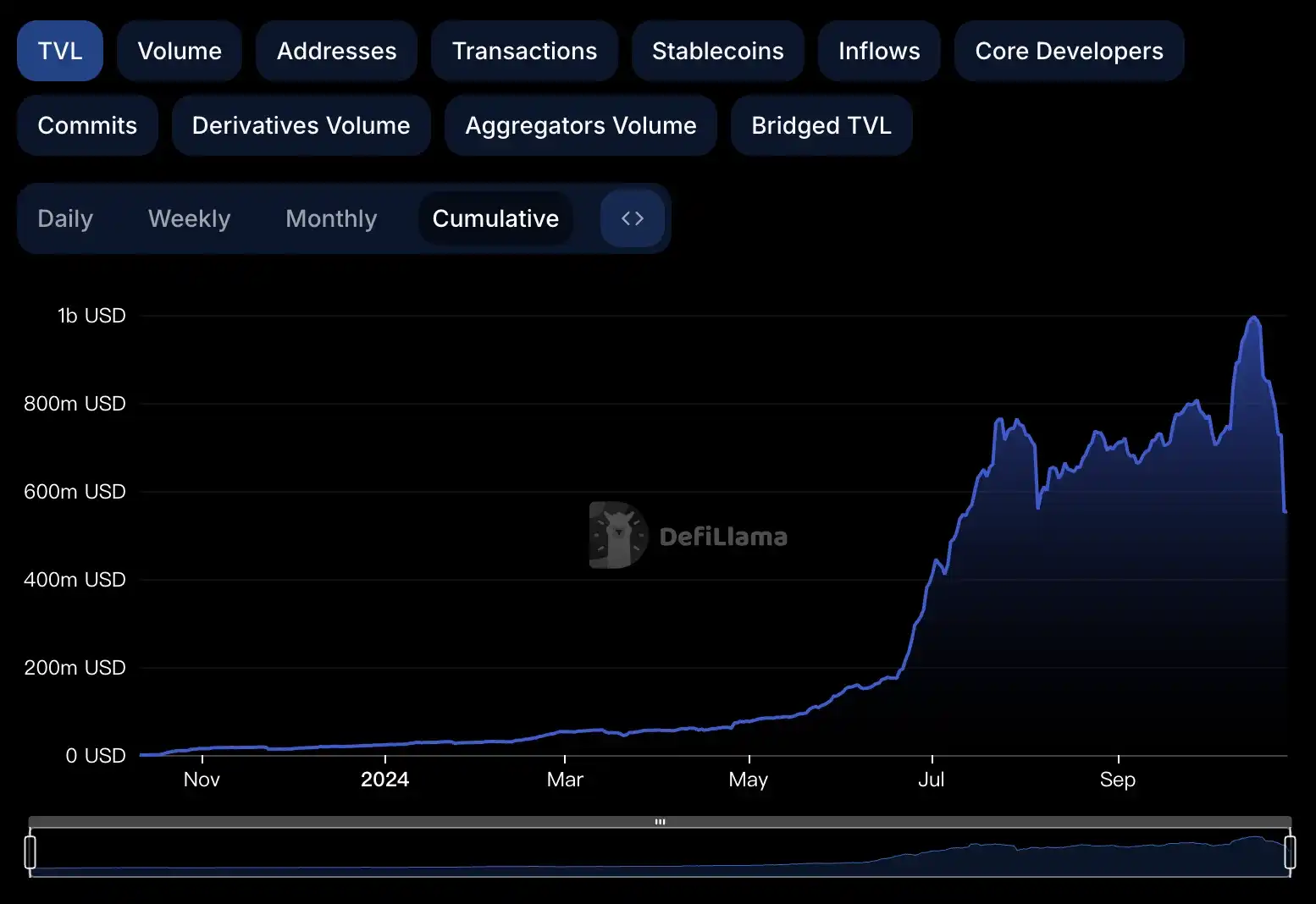
As the dust of the airdrop settles, it is not surprising that a large amount of funds are flowing out of Scroll at a rapid pace. DeFillama data shows that the total locked value (TVL) of Scroll is currently about US$550 million, which has shrunk by 44.6% from the historical peak of US$991 million on October 16 (3 days before the airdrop snapshot), nearly halving.
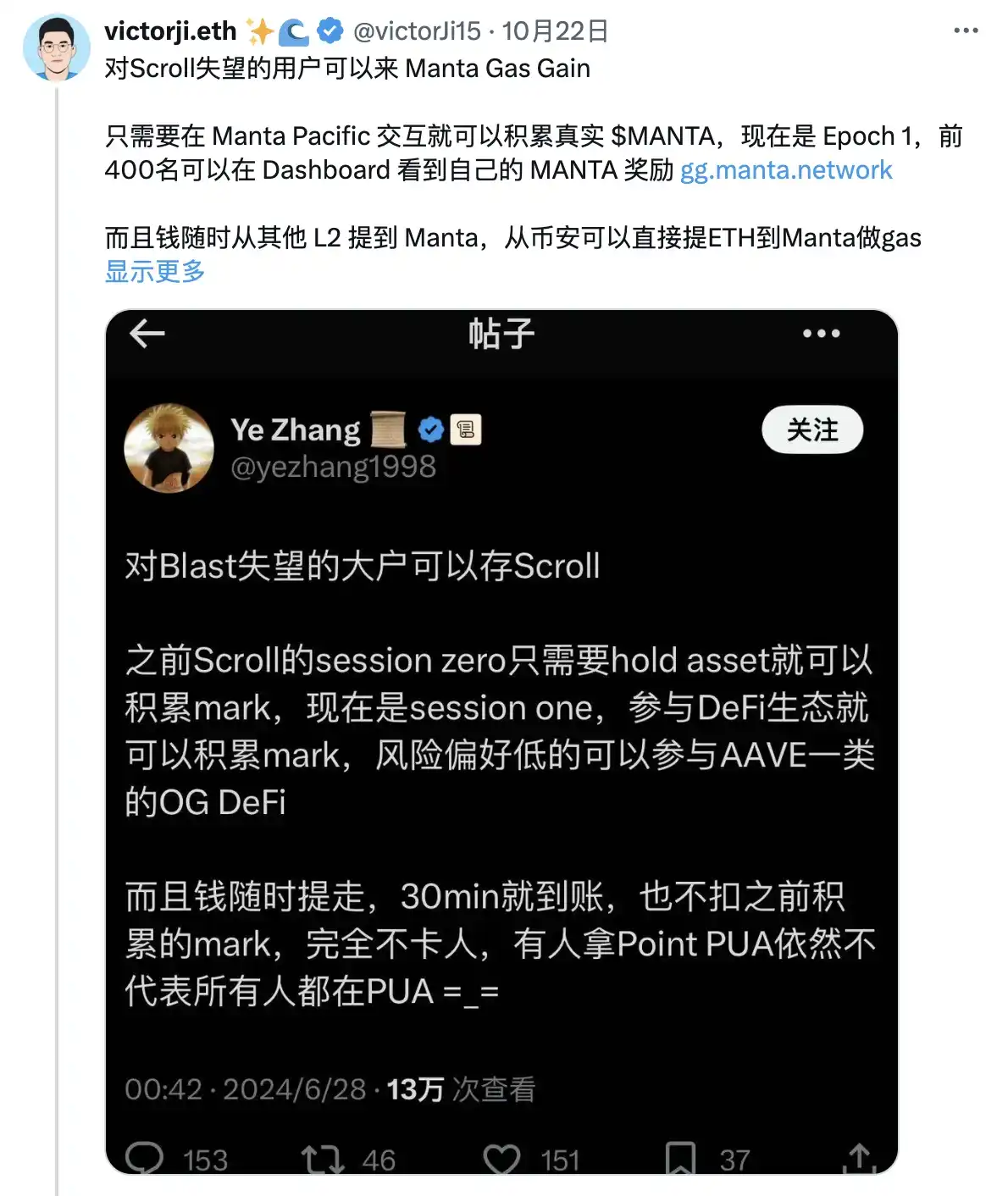
Faced with the outflow of real money, some ecosystems have begun to openly call for the hope of absorbing these liquidity funds. Victor Ji, co-founder of Manta Network, once imitated Scroll's mockery of Blast and said that users who are disappointed with Scroll can go to the ecosystem to experience the Gas Gain activity.
A few days ago, the author also withdrew the funds in Scroll, so he also faced the problem of how to allocate this fund again.
In the following, we will sort out the financial management opportunities with higher yields in multiple mainstream ecosystems. The categories will focus on "lossless" pure interest-bearing income, but will not exclude the "eating more" potential airdrop opportunities at the same time. It should be emphasized that for the sake of security and easy management, this article will only involve basic operations within each ecological head protocol, but the security risks on the chain are everywhere, and users still need to be responsible for the security of their own funds, DYOR.
Since most of the funds withdrawn from Scroll are ETH and stablecoins, the following will only focus on these two assets.
ETH is currently at the center of controversy, and its weak performance has caused many users to consider whether they should continue to hold it. If you do not consider reducing your ETH position in the short term, it is still recommended that users flexibly use the ETH in their hands to generate interest and amplify their returns.
Based on the current application development status of the Ethereum ecosystem, potential profit opportunities with strong water storage capacity still need to focus on the re-staking track. After EigenLayer issues coins, it can operate more around Symbiotic and Karak, which have relatively less competition, especially Symbiotic, which is backed by Lido and Paradigm.
For Symbiotic, you can deposit directly on the protocol, or execute through the Liquidity Re-staking (LRT) protocol such as Mellow Finance (ether.fi, Renzo also support). The first reason is that multiple mainstream LST pools of Symbiotic are full, and the LRT protocol can coordinate asset categories or wait for the quota to be opened again; second, through the LRT protocol, you can earn points of one more layer of LRT protocol at the same time, amplifying the airdrop expectations.
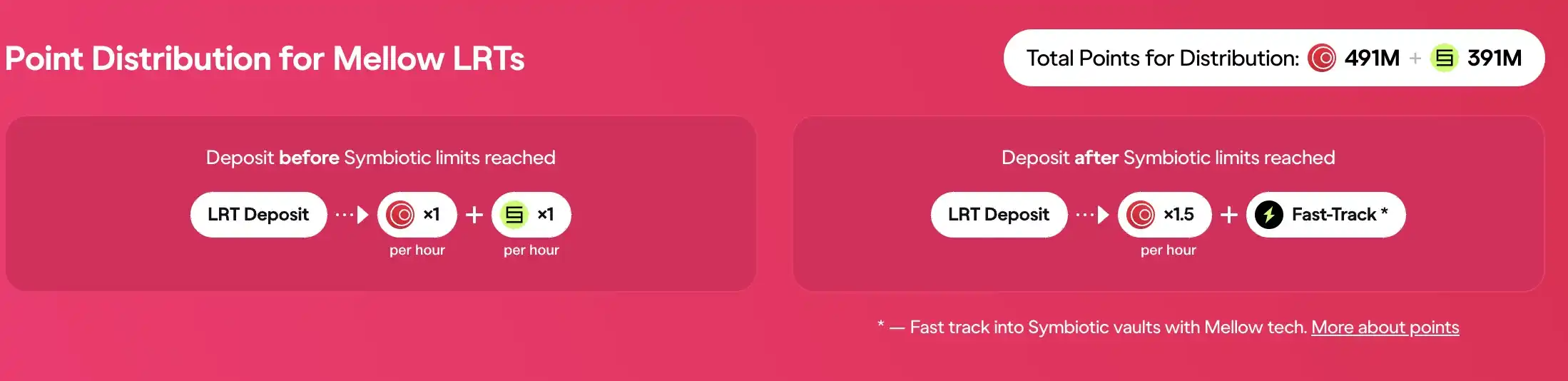
Take Mellow as an example. After depositing funds into the protocol, if the funds have not yet squeezed into Symbiotic at the bottom layer, you can earn Mellow points at an efficiency of 1.5 times faster; if the funds have already entered, you can earn both Symbiotic and Mellow points at the same time, as well as the basic ETH staking income (about 3%).
Relatively speaking, stablecoins have much more options than ETH. Perhaps because the market has shown signs of warming up, the deposit income of on-chain lending and the contract funding rate have increased to a certain extent, which also makes multiple ecosystems have good stablecoin interest-earning opportunities.
Ethereum Mainnet
On the Ethereum mainnet, two pools are recommended for the time being.
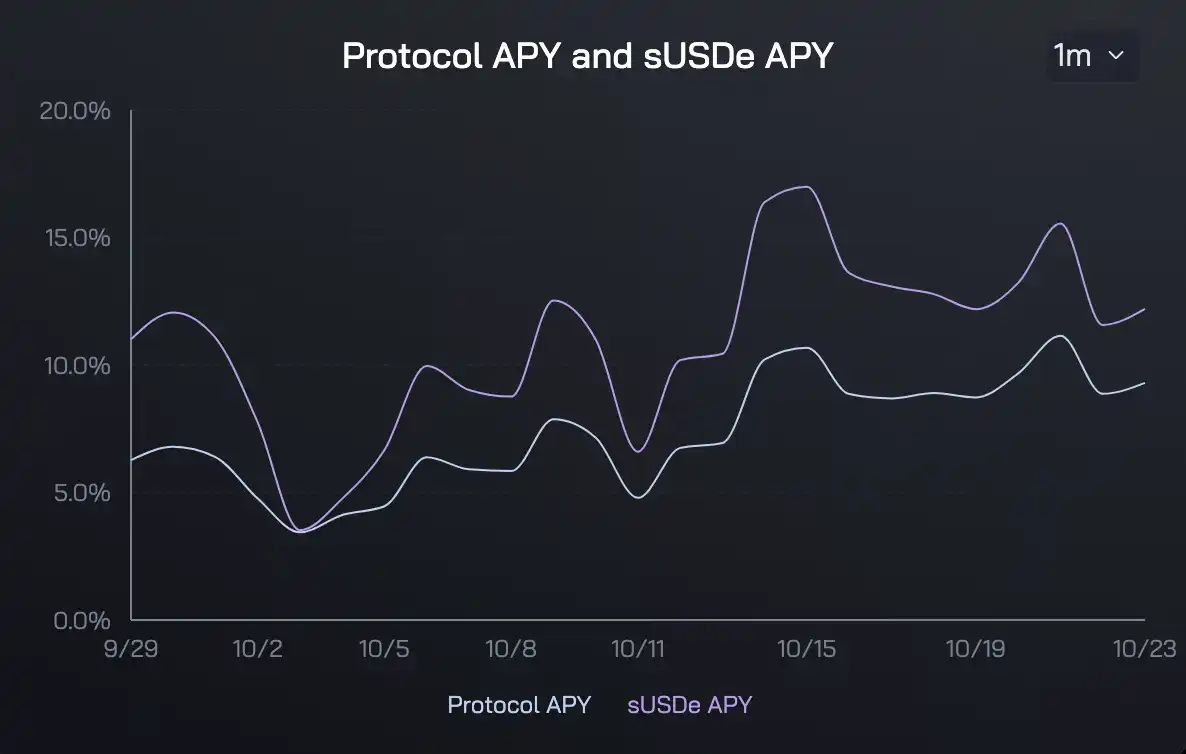
One is Ethena's sUSDe, which is the USDe after pledge. With the recovery of the funding rate, the yield of sUSDe itself has risen to 13%.
In addition, static holding of sUSDe can also passively accumulate Ethena points, which are expected to be realized through the next round of Ethena airdrops; in addition, users can also deposit sUSDe directly into the Symbiotic mentioned above (the quota is full, need to wait), and obtain Symbiotic's points rewards at the same time.
The other is USDS from Sky (formerly Maker), where users can deposit directly on Spark or Aave's USDS market, getting a pure stablecoin yield of about 6.5%.
In addition, Sky founder Rune Christensen has also said that SKY airdrop incentives will be provided to these two major markets - but there is a variable here, the Sky community is considering changing its name back to Maker, and one potential option in the direction of the name change seems to be to abandon the new SKY token and use MKR as the only protocol governance token again, and users need to continue to pay attention to this progress.
Solana
In the Solana ecosystem, there is a person who likes the "fixed investment artifact" JLP (essentially an index token of BTC, ETH, SOL, USDT, and USDC, but also has interest-bearing properties), but considering the recent surge in SOL, it is not recommended to directly use stablecoins to purchase JLP - Planet Daily PVP expert Nan Zhi once suggested that JLP can be used to arbitrage at relatively high and low positions in SOL. It is recommended to pay attention to our "Editorial Operation Record" column.
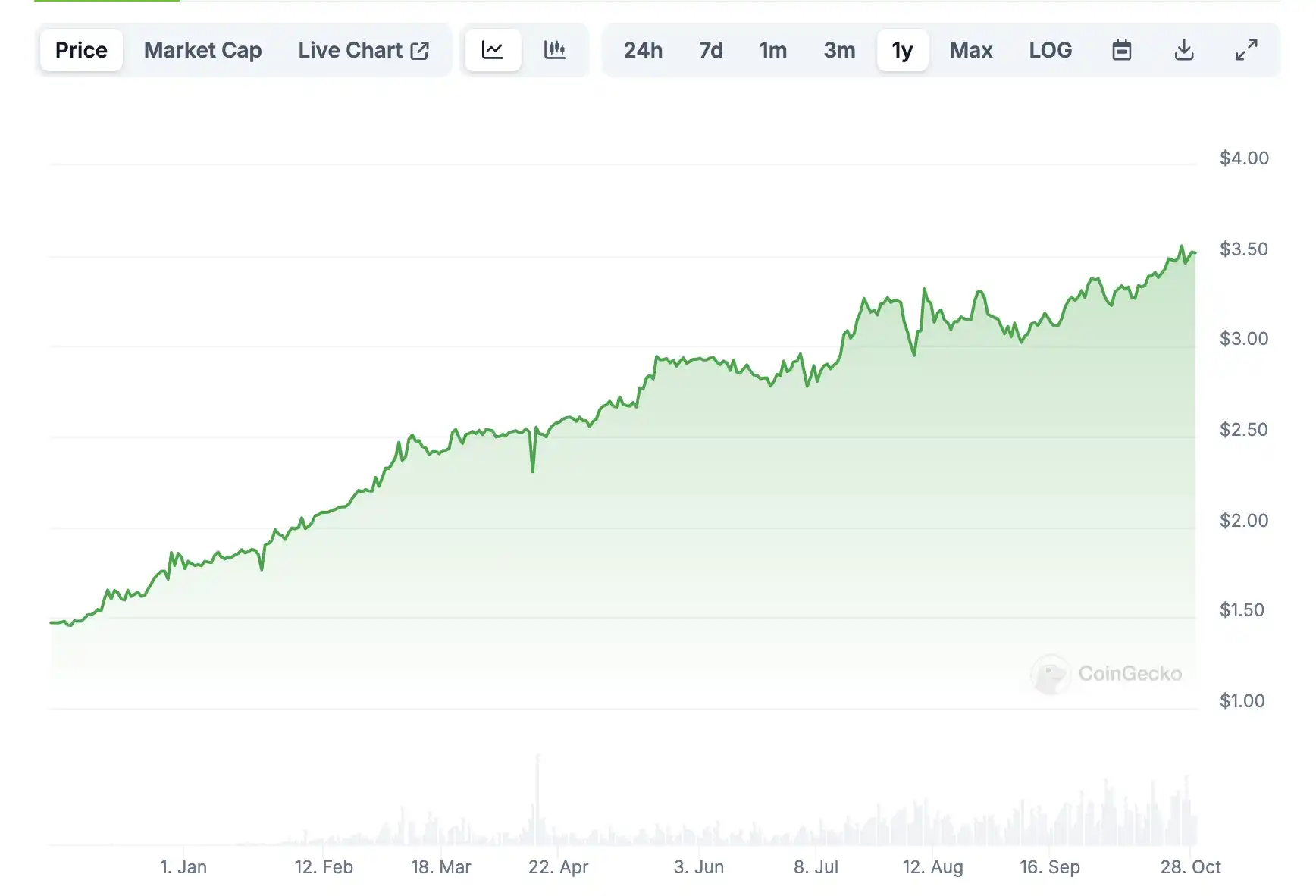
After working hard for a whole year, it is better to lie flat with JLP when looking back.
Relatively speaking, it is more recommended that users simply deposit PYUSD in marginfi and Kamino to earn interest, the former currently has a yield of about 7%, and the latter has a yield of about 9%. Both protocols can accumulate points income, but marginfi, which has not yet issued a token, may have a higher expectation than Kamino, which has already airdropped two rounds.
After depositing assets, users who are willing to actively manage the health of their positions can consider borrowing SOL and then depositing it in popular Solana ecological protocols such as Solayer that have not yet issued a token to earn airdrop income. Although borrowing SOL requires paying 6% interest, it is enough to be hedged by the SOL staking income (generally around 8%) obtained after depositing.
Sui
Sui had set off a secondary market some time ago, and the financial returns of several major DeFi protocols on its chain are also relatively objective.
With the official entry of native USDC into the Sui network, I personally recommend using native USDC to deposit directly on NAVI or Scallop to avoid the protocol risks behind the bridged stablecoins.
Currently, the native USDC yields on NAVI and Scallop are 7% and 8% respectively. The former's yield is composed of "stablecoin + NAVI + SUI", while the latter is composed entirely of stablecoins.
Starknet
Although Starknet's coin price performance is very average, its DeFi Spring is still quite good - A rough calculation shows that compared with the Scroll airdrop, the mining income here is even higher.
Currently, zkLend and Nostra, the two major lending platforms on Starknet, can provide a yield of nearly 10% for USDC and USDT, and the income is mainly composed of STRK, which can be used to pay for the gas of the network (that is, there is no need to configure ETH as gas, which is relatively more convenient).
It is worth mentioning that the price of STRK itself has entered a low volatility state. If you intend to actively manage your LP positions, you can configure the STRK-ETH liquidity pool through EKUBO, and the maximum yield can reach 70+%.
Other potential income opportunities
The above only mentions the interest-bearing strategies of a few relatively mainstream protocols in the ecosystem. The main purpose is to take into account security and to facilitate user copy operations.
In fact, there is no lack of profit space in the current on-chain world. For example, zkSync Era will soon launch an incentive plan for 300 million ZKs, and the total amount of incentives is even close to the total amount of Scroll's airdrops. In addition, users can also use Pendle's split plan to obtain higher stable returns.
But we still want to remind you that security risks on the chain are everywhere, and users need to be responsible for the security of their own funds, DYOR.
Recommended
The Wall Street Journal: How is AI Trading Stealing the Limelight from Cryptocurrency?
Aug 15, 14:00
Tencent Still Has a Dream
Aug 15, 11:27
To Catch North Korean Hackers, They Set Up a Fake Project
Aug 15, 10:00
From Litigation to Settlement: Positive Signal Released by HTX's Negotiation with FCA
Aug 14, 19:32
11,742 Shipping Addresses Exposed Alongside Trezor Orders
Aug 14, 19:01
Founder Interview: FOMO Creator Explains How They Added 30,000 Users in One Day and Became One of the Fastest-Growing Crypto Apps
Aug 14, 18:37