Arthur Hayes New Post: Bitcoin on the Move, Massive Liquidity Incoming!

Editor's Note: This article mainly expresses that the Chinese government is stimulating the economy through quantitative easing and credit growth, but the results will take time to show. Currently, most domestic investors choose to buy undervalued stocks and real estate, rather than widely flocking to Bitcoin. However, as policies progress, the market may shift towards Bitcoin to protect assets. If demand surges, the price of Bitcoin may experience a sharp rise.
The following is the original content (slightly edited for better reading comprehension):
The Wharton School has always extolled capitalism and the so-called "American exceptionalism." Students from around the world, with dreams in their hearts, are instilled by professors with free-market capitalism and the American ethos of "rule-based" peace, an order escorted by Tomahawk cruise missiles.
However, if, like me, you entered the workforce in September 2008, you would quickly realize that most of what you learned was utter nonsense. The reality is that the so-called system is not a true meritocracy, but rather those companies most adept at relying on government largesse ultimately achieve the greatest financial success. Capitalism is a game for the poor.
My first lesson in "real capitalism" — what I now call "corporate socialism" — was after the 2008 Global Financial Crisis (GFC), witnessing which top investment banks thrived and which faltered. American banks, after the collapse of Lehman Brothers, all received government bailouts through direct equity injections.
While European banks also received secret financial assistance from the Fed, it wasn't until 2011 that they received government equity injections or forced mergers (backstopped by central bank loan guarantees). So when my analyst class at Deutsche Bank received our full-year 2009 bonuses in February 2010, it was a far cry from the bonuses my colleagues at American banks who hit "F9" received.

This is the KBW Bank Index, covering major listed commercial banks in the U.S. From the low point after the global financial crisis in March 2009, this index rose over 500%.
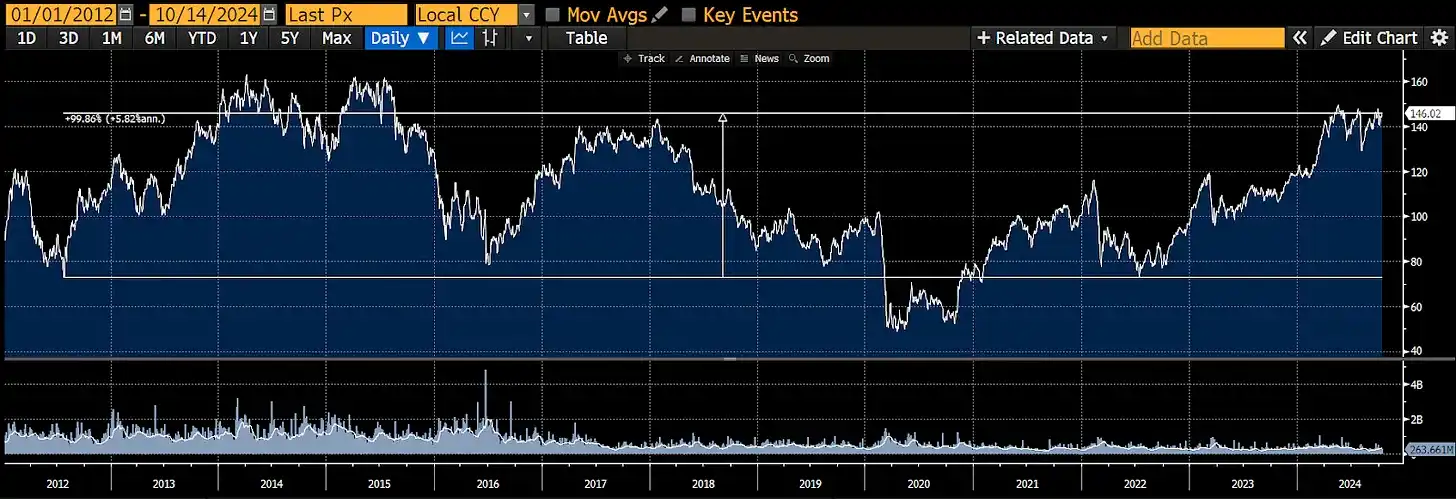
This is the Euro Stoxx Banks Index, including major European banks. From the post-crisis low point in 2011, this index only rose by 100%. Corporate socialism's profitability and prevalence in the U.S. far exceed Europe, regardless of how political commentators analyze it. Remember, kids, the returns of privatization and the losses of socialization are the recipe for hefty bonuses.
Considering China's consistent emphasis on the difference and superiority of its economic system, some may think that China will adopt different policies to address its economic issues. Not quite. The reality is more complex. To understand the significant transformation currently underway in China, one must first look back at the recent financial crises of the other three major economies: the United States, Japan, and the European Union. These economies all experienced severe financial crises due to the bursting of the real estate market bubble:
Japan: 1989
United States: 2008
European Union: 2011
China has also joined the list of economies where the real estate bubble has burst. In 2020, the central government initiated the "Three Red Lines" policy to restrict credit to real estate developers, kicking off this process.
ChatGPT Explains the "Three Red Lines" Policy:
China's "Three Red Lines" policy is a regulatory framework introduced in August 2020 to limit excessive borrowing by real estate developers and reduce financial risks in the real estate industry. The policy sets strict thresholds for three key financial indicators: a post-pre-sales asset-liability ratio below 70%, a net debt ratio (net debt-to-equity ratio) below 100%, and a cash-to-short-term liability ratio above 1. Developers are categorized based on the number of thresholds breached, and their borrowing growth is correspondingly restricted—companies meeting all criteria can increase debt by a maximum of 15% per year, while those in violation of the three criteria are not allowed to increase debt. By implementing these "Three Red Lines," the Chinese government aims to promote financial stability, encourage developer deleveraging, and strengthen their financial position.
Subsequently, the Chinese economy, like other victims, fell into a liquidity trap or balance sheet recession. Private enterprises and households tightened spending during this period, reducing economic activity to repair their balance sheets. When credit demand from households and businesses falls, the traditional Keynesian economic approach—moderate fiscal deficits and central bank rate cuts—fails. To contain a dreaded deflationary spiral, powerful monetary and fiscal measures must be taken. The timing of the switch to "panic mode" depends on the national culture, but regardless of the economic system adopted, all countries ultimately resort to "monetizing the debt" to address the crisis.
While this monetization may cure deflation, it ultimately harms the middle and lower classes, who suffer from asset price inflation without significant improvements in the real economy. This ineffective monetary treatment is highly profitable for a few financial giants, with headquarters in New York, London/Paris/Frankfurt, Tokyo, and now possibly expanding to Beijing/Shanghai.
Monetizing the debt consists of two parts:
1. Public funds recapitalize the banking system, where bad real estate loans always plague bank balance sheets. The private market no longer provides equity capital, leading to plummeting bank stock prices, showing insolvency, and eventual bankruptcy. The government must inject fresh capital and subsequently change accounting rules to legitimize the financial condition claimed by the banks externally. For instance, Japan allowed its banks to hold real estate assets at purchase cost, not current market value, to maintain accounting solvency. After the government capital injection, banks can expand their loan books again, increasing the quantity of broad money. With the expansion of bank credit, nominal GDP also rises.
2. Central Bank Printing Money, i.e., Quantitative Easing (QE). By purchasing government debt, the central bank uses money printing to inject funds. With a reliable debt buyer, the government can implement large-scale stimulus plans. QE also brings reluctant savers back to the risk financial markets. The central bank heavily buys secure interest-bearing debt, forcing savers to speculate in the financial markets with "safe" government bonds. They understand the imminent inflationary impact of monetization therapy and are eager to return to the real estate and stock markets. For those without enough assets, they are forced to accept this situation.
Bailed-out banks were saved as the financial assets (real estate and stocks) supporting their loan portfolios surged in price. I call this "reinflation," in contrast to deflation. Governments increase revenue due to the rise in nominal GDP, driving additional stimulus plans, and GDP growth is fueled by bank-led broad money creation and endless debt purchased by the central bank. For financial market investors, asset price increases no longer depend on the actual economic situation. In other words, even if the economy does not genuinely improve, asset prices such as real estate and stocks will continue to rise due to government and central bank fund injections.
The stock market is no longer a forward reflection of the economy but has become the economy itself. The only thing that matters is monetary policy and the speed of money creation. Of course, government policy also affects the types of businesses that receive capital, which is crucial for stock pickers, but the prices of Bitcoin and cryptocurrencies are mainly influenced by the total money supply. As long as fiat currency continues to be created, Bitcoin will continue to rise, and the ultimate beneficiaries are not important.
Currently, financial analysts generally believe that China's announced stimulus measures are insufficient to adjust the economic scale. However, hints in the latest measures suggest that under Beijing's leadership, China is poised to embrace "monetization therapy" to address deflation. This means that Bitcoin will soar in the long term as China revitalizes its banking system and real estate sector. Considering that the Chinese property bubble is the largest in human history, the RMB credit created will rival the total amount of USD printed by the US during the 2020-2021 pandemic.
To substantiate the above points, the following will be analyzed step by step:
· Why do modern governments all inflate real estate bubbles?
· Analyzing the scale of the Chinese property bubble and why Beijing has decided to end it.
· Discovering signs that Beijing is prepared to revitalize the Chinese economy.
· How the RMB is entering the Bitcoin market.
Social Order
The foundation of modern governments is widespread public support. In today's era that does not rely on organized religion for empowerment, how does a state garner support for its rule? The simplest way to avoid revolution is to link citizens' economic net worth to the success of the ruling regime. The most crucial financial asset is undoubtedly the primary residence, as the human body can only survive within a very narrow temperature range. When you are homeless, you may be too cold or too hot, leading to death in severe cases.
Setting aside housing costs, assuming you have saved enough money to buy a house for your family, who do you care most about protecting your property rights? Without a government able to legally counter domestic opponents, you would need private arms to defend these rights. With a lack of government protection, how do you prevent armed neighbors from claiming your land as theirs? When the state is strong and the law is respected, there is no need to worry about vagabonds stealing property; but when the state is weak, you must be prepared to use violence against trespassers. Therefore, property owners naturally trust the government to protect their property and are willing to obey government orders. This ultimately means you will not easily rebel, as it would lead to economic self-destruction.
The government seeks to turn as many citizens as possible into homeowners, linking their economic and material well-being to the state. Because construction requires expensive energy, the government often encourages private property ownership through various debt-based financing schemes. Even in so-called communist countries like China, property rights were one of the first things to be reformed, starting with Deng Xiaoping's reforms in the late 1980s and early 1990s.
A housing policy course I once took was taught by a former Deputy Secretary of Housing during the Clinton administration, in the first half of 2008 as the subprime crisis was unfolding. We studied various government initiatives to increase homeownership. My main takeaway was that a real estate bubble always requires government support and financing. In the U.S. context, starting from the Clinton era (1992 to 2000), the government vigorously promoted homeownership, expanding the roles of Government-Sponsored Enterprises (GSEs) like Fannie Mae and Freddie Mac through the 1992 Federal Housing Enterprises Financial Safety and Soundness Act.
GSEs are publicly traded private companies but have implicit government backing. They finance themselves in a government-like way, taking on most of the housing mortgage market. Thus, Fannie Mae and Freddie Mac became among the most profitable financial services companies. Banks also benefited from this, originating loans with risk-free profits, ultimately shifting the risk onto the public sector's balance sheet. Of course, precisely because of these distorted incentives, the "masters of the universe" would go too far — but they would never take on such risks without government backstopping.
China's Distinctive Real Estate Bubble
Let's first understand China's economic model: to accelerate industrialization, China used the state-owned banking system to conduct financial repression on depositors, allowing State-Owned Enterprises (SOEs) in the industrial sector to access capital at low cost. If the largest users of bank credit are industrial enterprises, then a fair interest rate to depositors should be the industrial value-added ratio. The industrial value-added ratio refers to the industrial sector's contribution to the country's GDP, calculated by dividing the value added by all industrial activities by the total GDP.
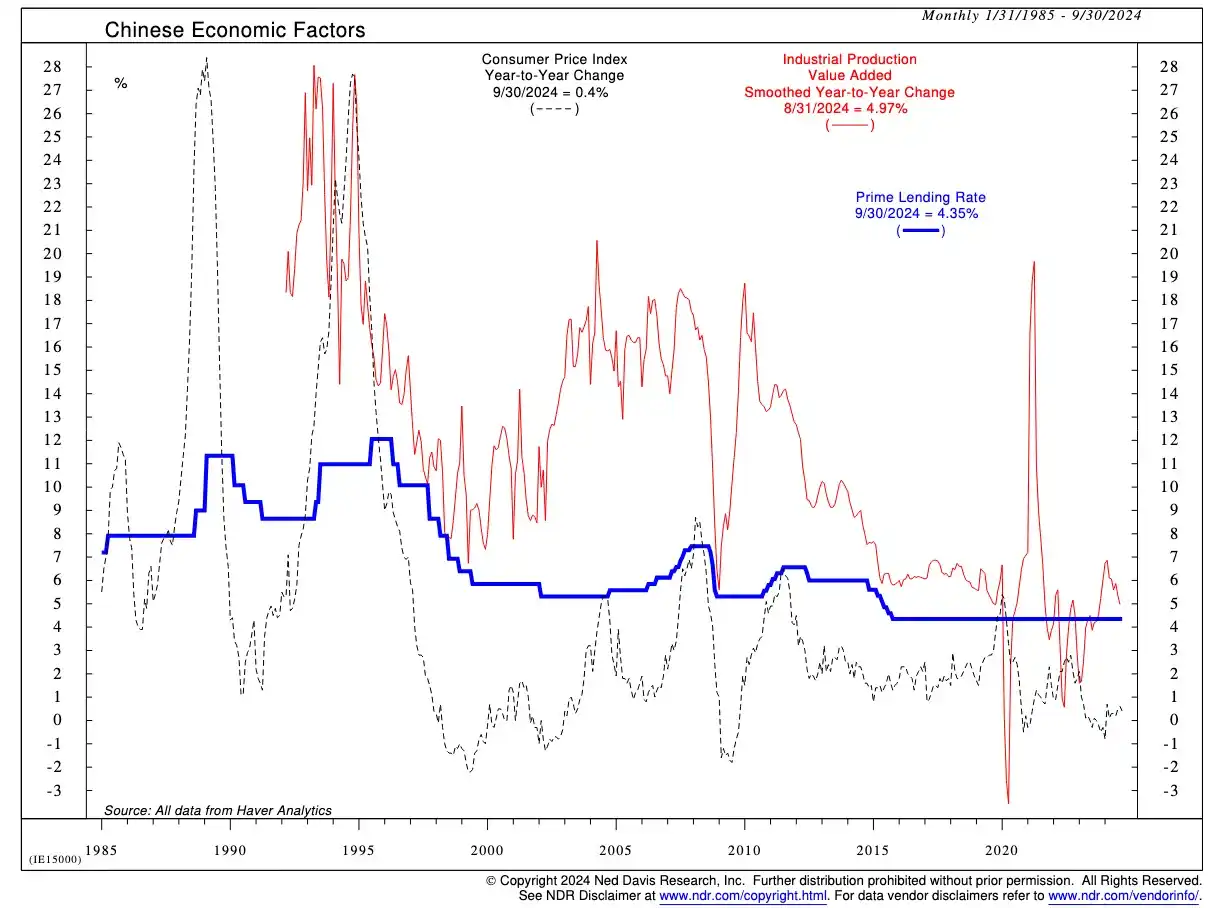
As you can see, the Loan Prime Rate has always been lower than the Industrial Added Value because state-owned banks offer very low deposit rates to ordinary savings account holders – please refer to the chart below.
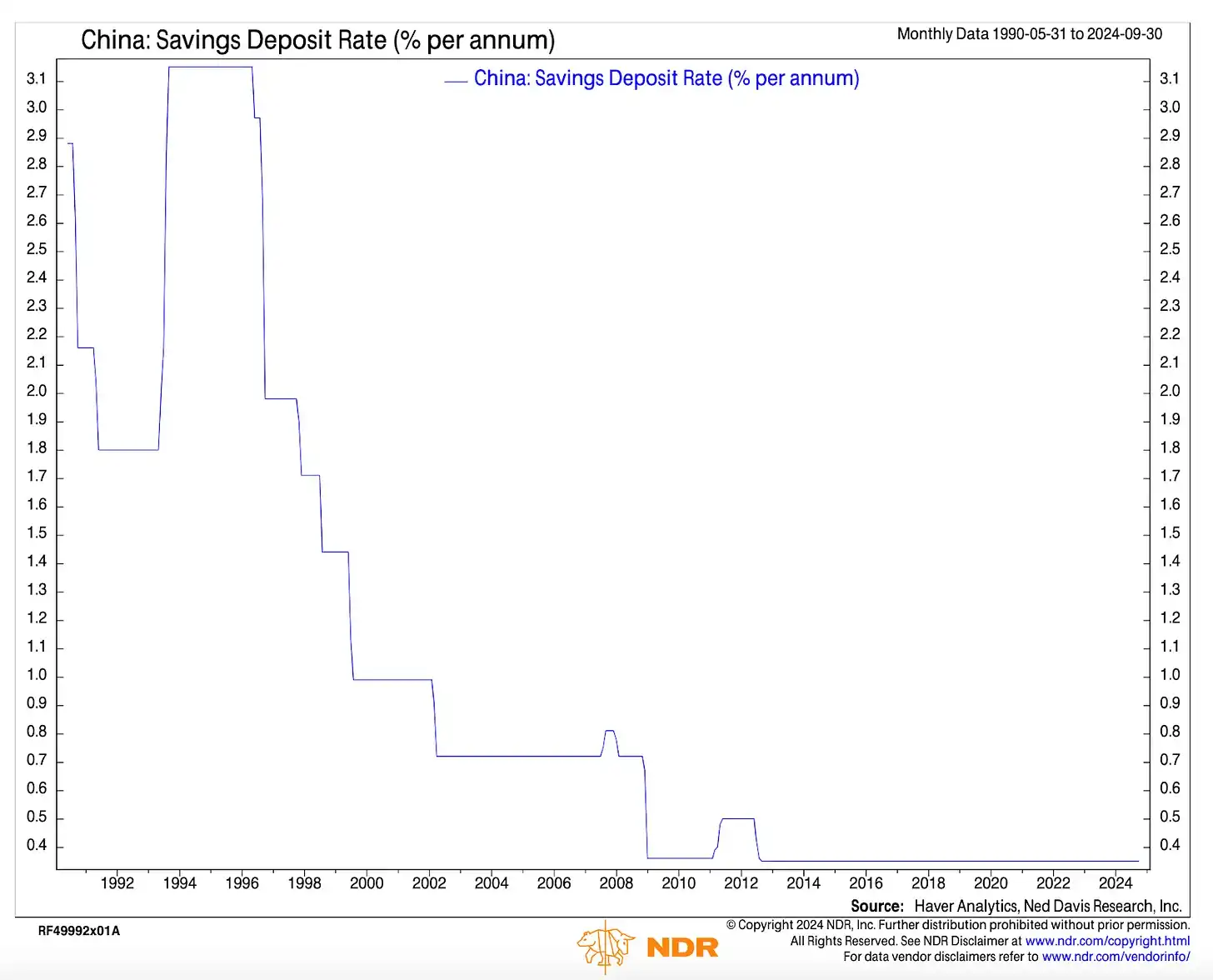
While depositors are aware of the unattractive returns they receive, they are unable to invest their funds overseas due to the restrictions on the Renminbi. To seek higher returns on their capital, they may opt to invest in the local stock market or real estate market.
However, the stock market has its issues: the best-performing companies are often state-owned enterprises. State-owned enterprises have access to the cheapest bank credit and operate monopolistically in high-profit industries such as telecoms, oil and gas, and mining due to exclusive operating licenses. You might think this would translate to impressive stock performance for state-owned enterprises, but in reality, their Return on Equity (ROE) is lackluster. This is because all senior management in state-owned enterprises are party members, and the party's interests do not always align with those of shareholders, with the party's needs always taking precedence.
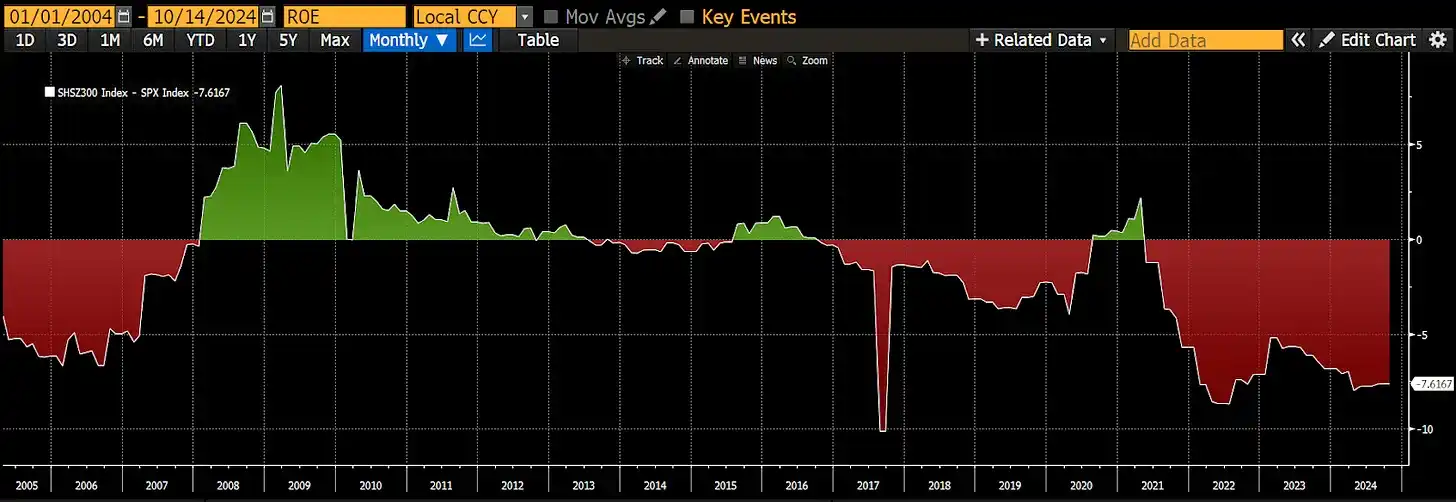
This chart illustrates the difference in Return on Equity (ROE) between the CSI300 Index and the S&P 500 Index. It is evident that Chinese stocks significantly underperform U.S. stocks.
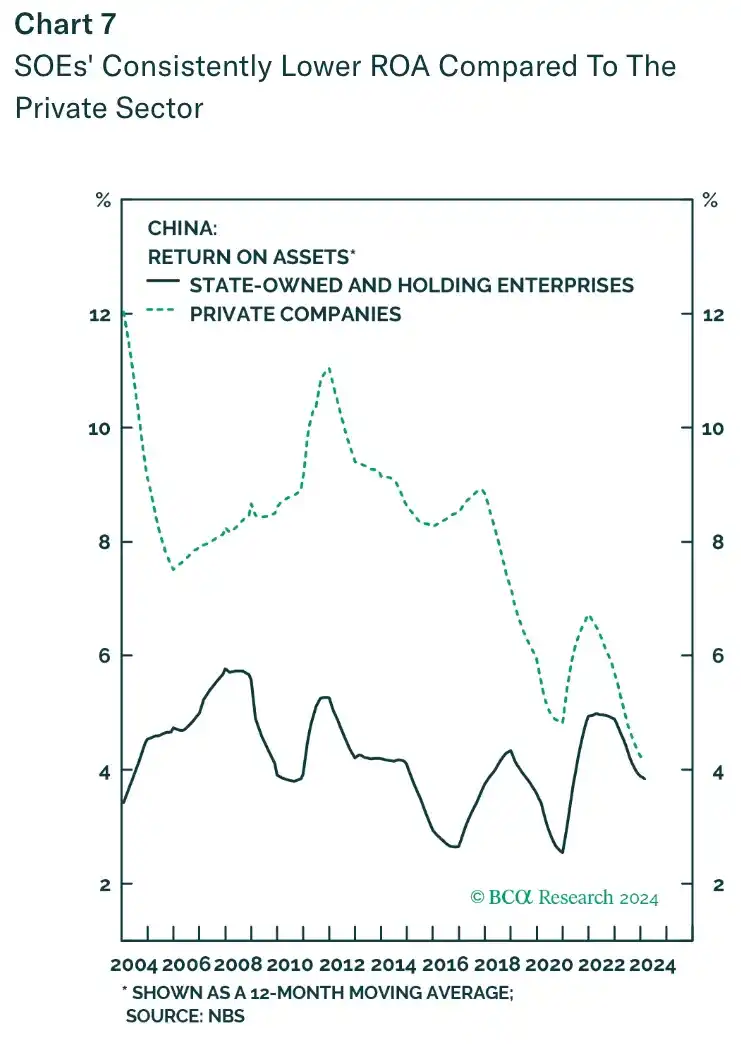
The returns of privately-owned enterprises facing real competition far exceed those of State-Owned Enterprises (SOEs); however, SOEs hold a stronger representation in major stock market indices.
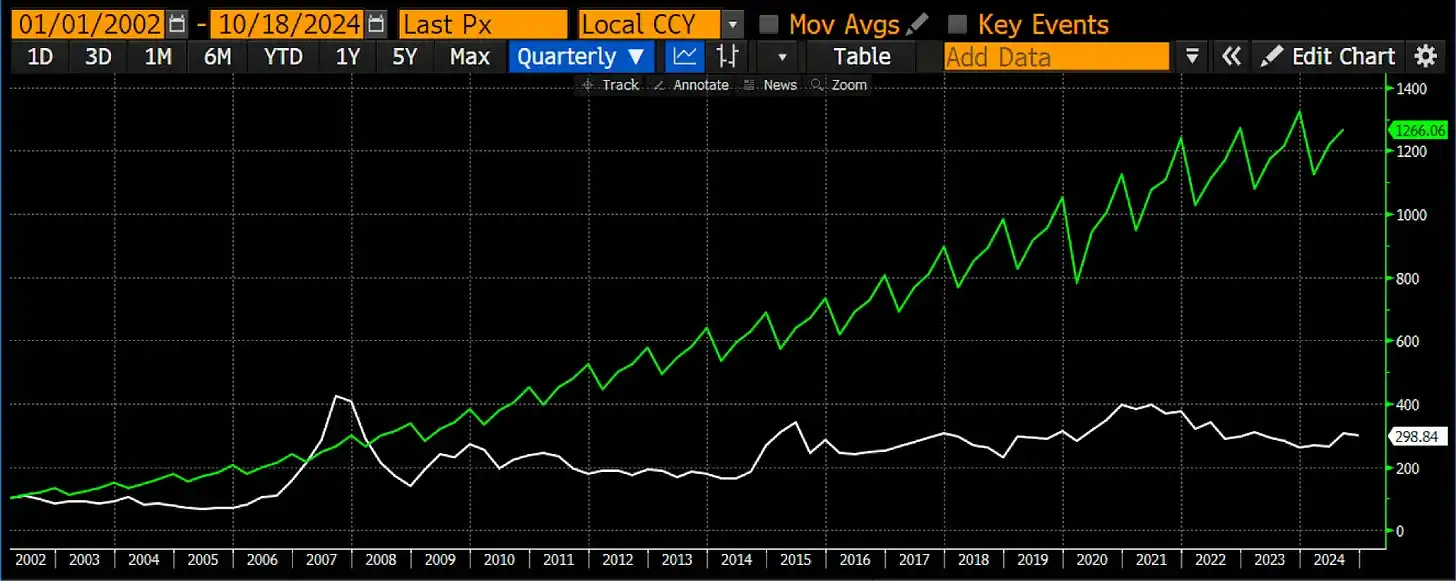
Benchmarked at 100, China's GDP (green) has grown by 1200%, while the CSI300 Index (white) has only grown by 200%.
Since the early 2000s, the stock market's performance has significantly lagged behind the frenetic growth of the Chinese economy (as shown in the chart above). The average Chinese citizen is not naive, hence, stocks are not their preferred method of appreciating savings – they are more inclined to invest in the real estate market.
Chairman Mao initiated the urbanization of China, which was then rapidly propelled by Deng Xiaoping and his more market-oriented policies. The party believes that the only way to reshape China's ("Central Kingdom" in literal translation) dominance globally is through the might of global manufacturing. This entails moving farmers from rural to urban areas to manufacture goods for export. Therefore, every five-year plan has urbanization targets.
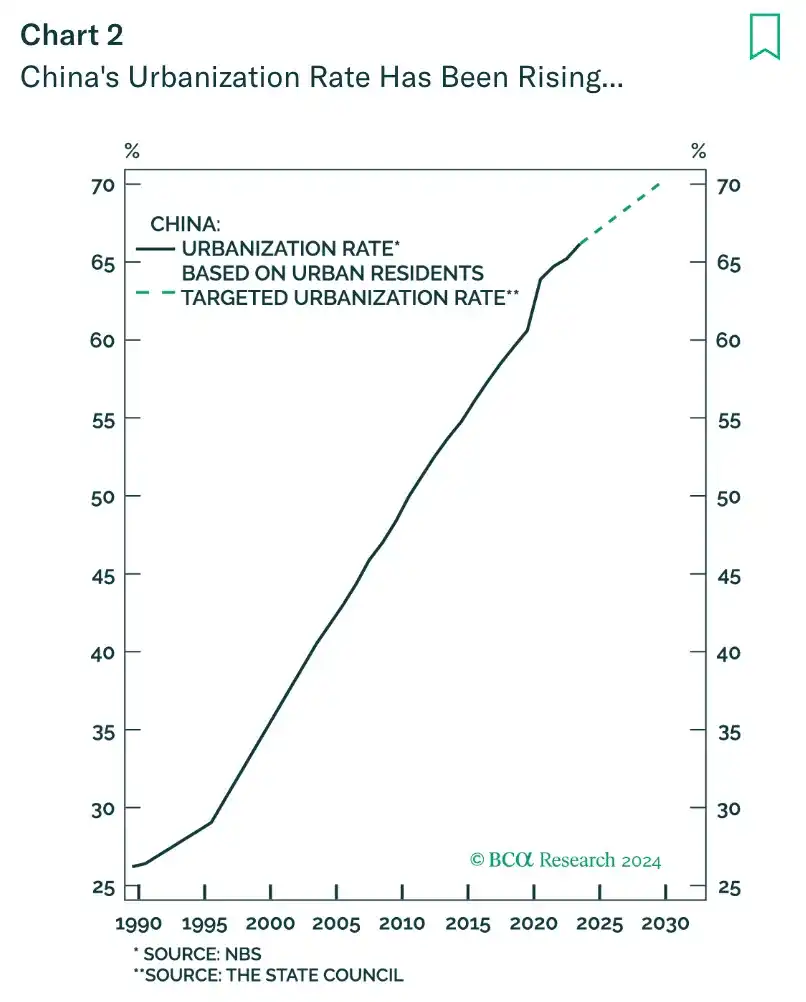
In just a few decades, moving hundreds of millions of people from rural to urban areas will require a frenzy of residential and industrial real estate development. The first step in real estate profitability is selling land to developers. Local governments own the land and sell it to developers through land use rights transfer.
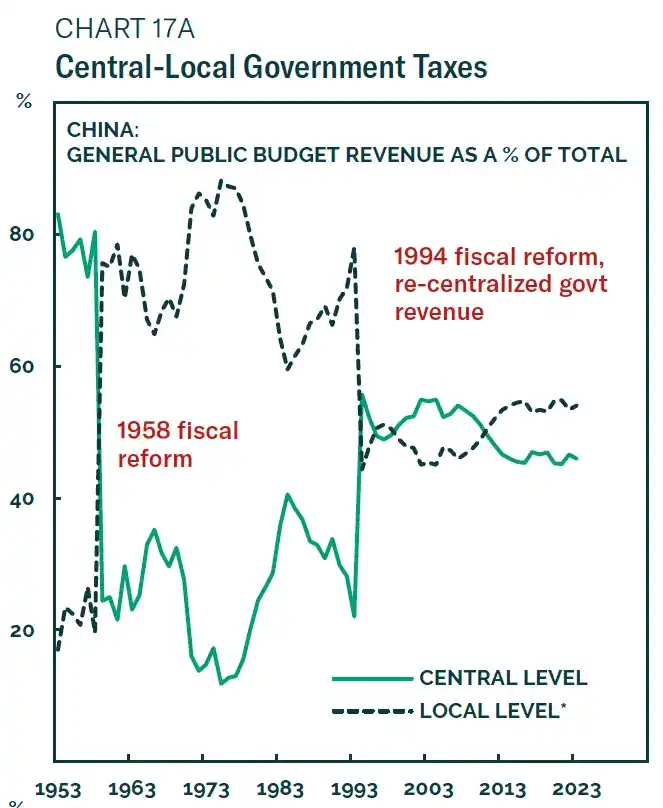
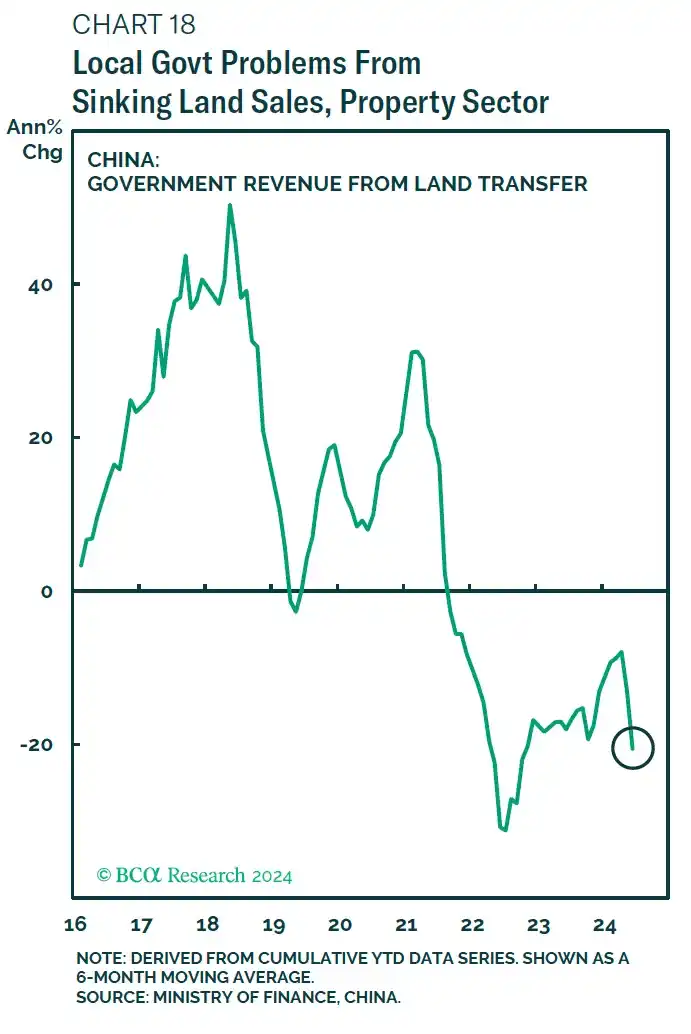
Since the central government keeps most of the income tax revenue for itself, the primary source of funding for local governments is land sales. With the acceleration of urbanization and economic growth, land becomes increasingly valuable, and sales revenue expands rapidly. Beijing also sets a limit on the amount of debt local governments can issue each year, with this debt usually being backed by their land reserves. Therefore, the government's financial situation is directly linked to the rise in real estate prices.
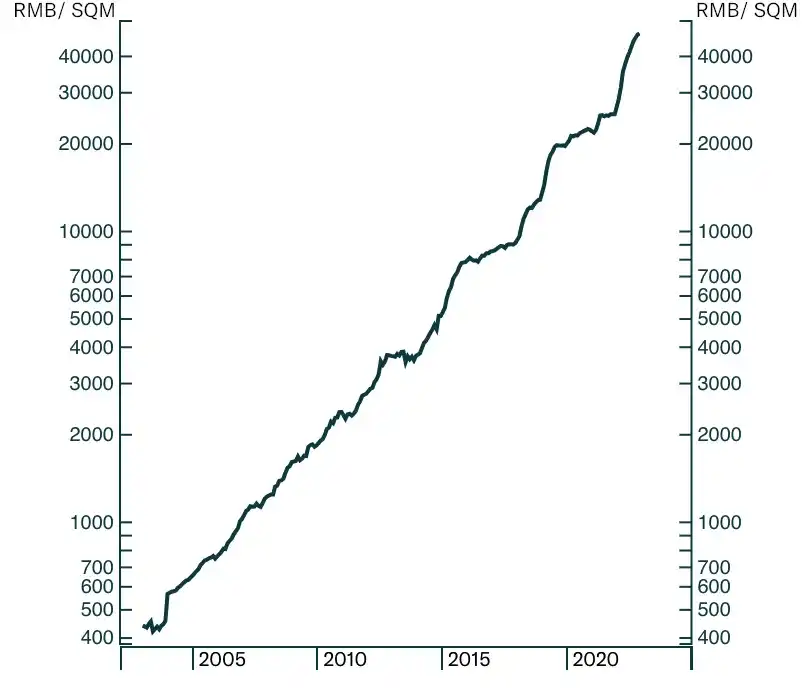
Land prices have increased 80-fold in 19 years, with a Compound Annual Growth Rate (CAGR) of 26%.
The general public has gradually accumulated wealth by saving and then buying one or more apartments. From the early 1990s to 2020, real estate prices have been constantly rising. Banks usually do not provide any form of consumer credit but are willing to lend against real estate, meaning that the net worth of ordinary families is almost entirely tied to the increase in real estate prices.
As real estate prices soared, all stakeholders made money. Even after the initial demand from the rapidly urbanizing population was met, the market continued to build apartment units, as it was encouraged and was the only area where banks felt safe to lend. This led to the formation of a massive real estate bubble.
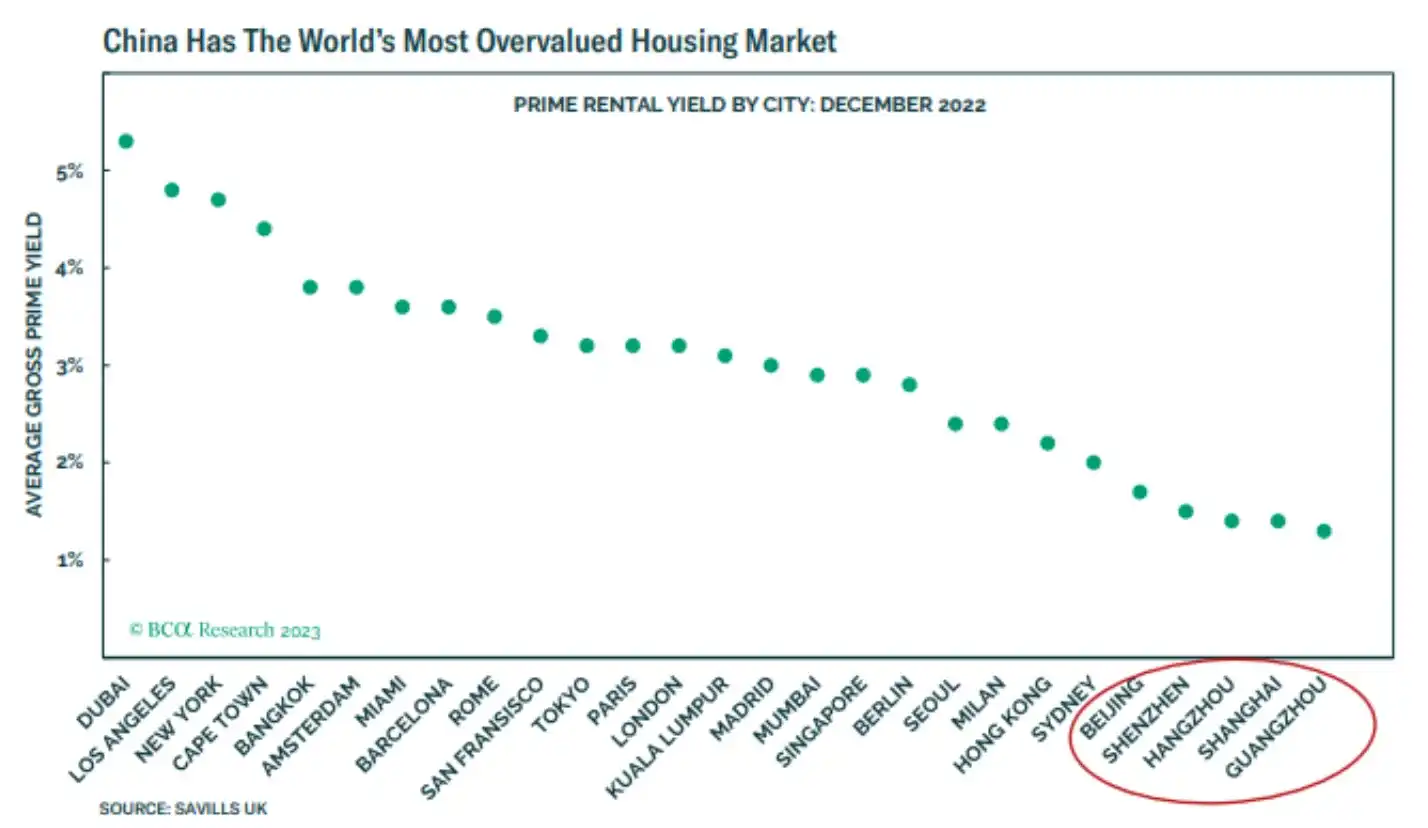
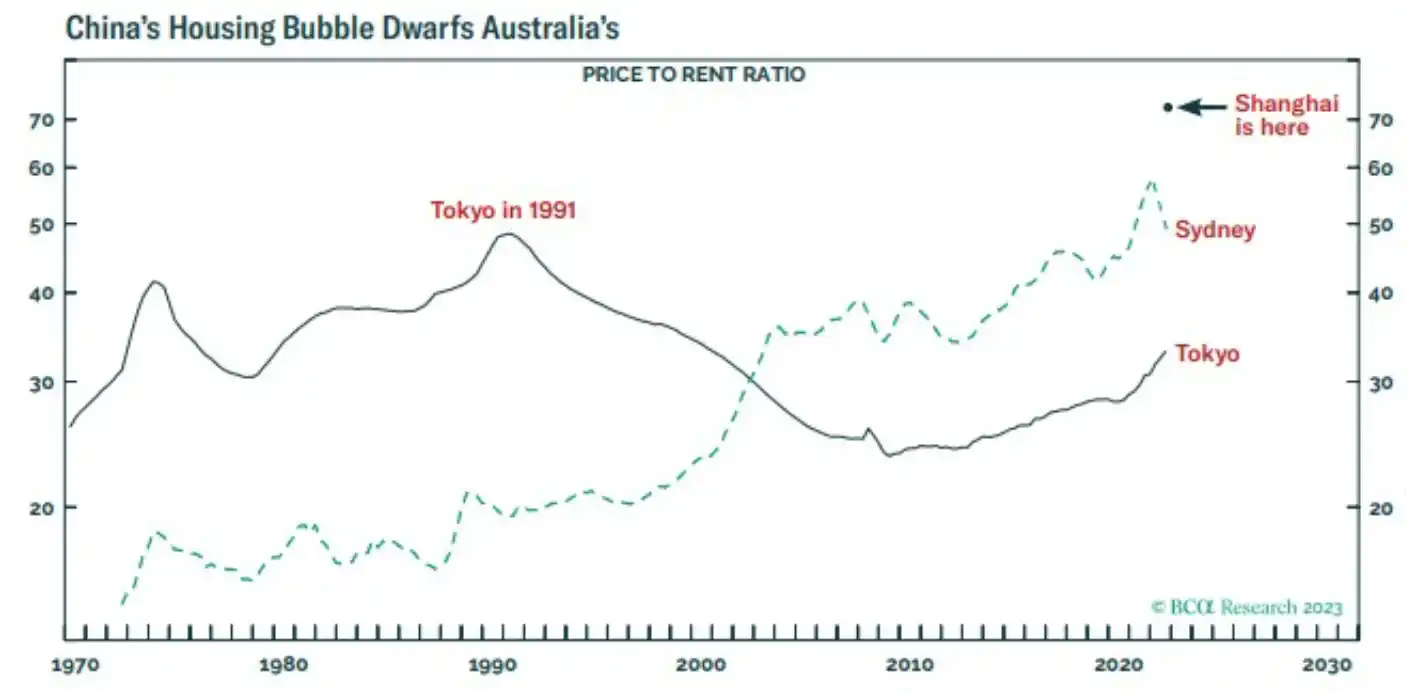
Maintaining a harmonious society is a clear goal of the Party, and when the vast majority cannot afford housing, the social structure will be torn apart. A sharp decline in the birth rate is a symptom of the real estate bubble disease. Although young people are dating, they can only afford housing in the form of a condom due to the high property prices.
In addition, excessive bank credit flowed into real estate instead of being used for the development of new technologies. Beijing shifted funds from non-productive, speculative real estate development to high-tech manufacturing.
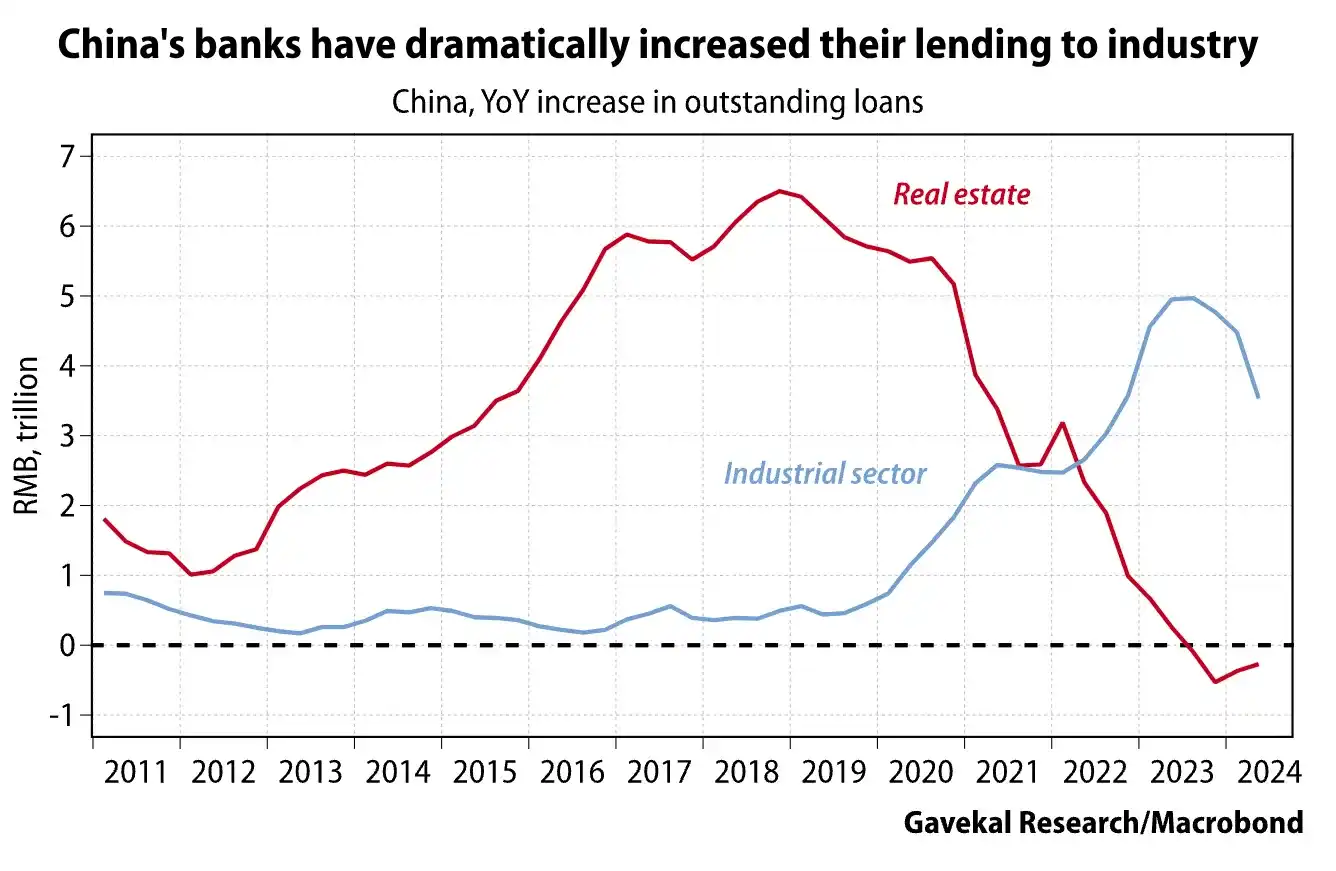
Starting in the mid-2010s, Beijing began taking a tough stance on cooling the real estate market, but the actual bubble burst came with a series of risks. Every major state-owned bank and industrial company had significant ties to the real estate market. Many bank loans were backed by residential mortgages issued to households or developers. One of the largest customer bases for companies producing goods like air conditioners, steel, and cement was real estate developers.
Furthermore, Beijing kept most tax revenue for itself to ensure the central government's balance sheet looked strong. This meant that local governments couldn't achieve the party's growth targets if land prices didn't keep rising. Popping the real estate bubble would severely impact ordinary families, banks, industrial companies, and local governments. If Beijing couldn't control the market's downturn, social harmony could collapse.
By 2020, Beijing declared, "Houses are for living in, not for speculation," and then rolled out the "Three Red Lines" policy. Quickly, the most leveraged real estate developers stopped new construction and completion, began defaulting on offshore bonds, with Evergrande being a high-profile example of a Chinese real estate developer collapsing after credit constraints.
Before I continue the timeline of the story, I'd like to quickly mention a lesser-known feature of the Chinese real estate market and its impact on the success of policy measures to end the crisis. In China, most apartments are bought before they are even built. Buyers need to pay a cash deposit upfront and then provide the remaining amount over the years until the property is completed.
Essentially, real estate developers operated like operators of a Ponzi scheme, using full payments for unreleased units to fund the completion of old units. Developers also leveraged this presale cash as collateral to secure bank loans because they still needed more funds to complete old projects and purchase new land from local governments.
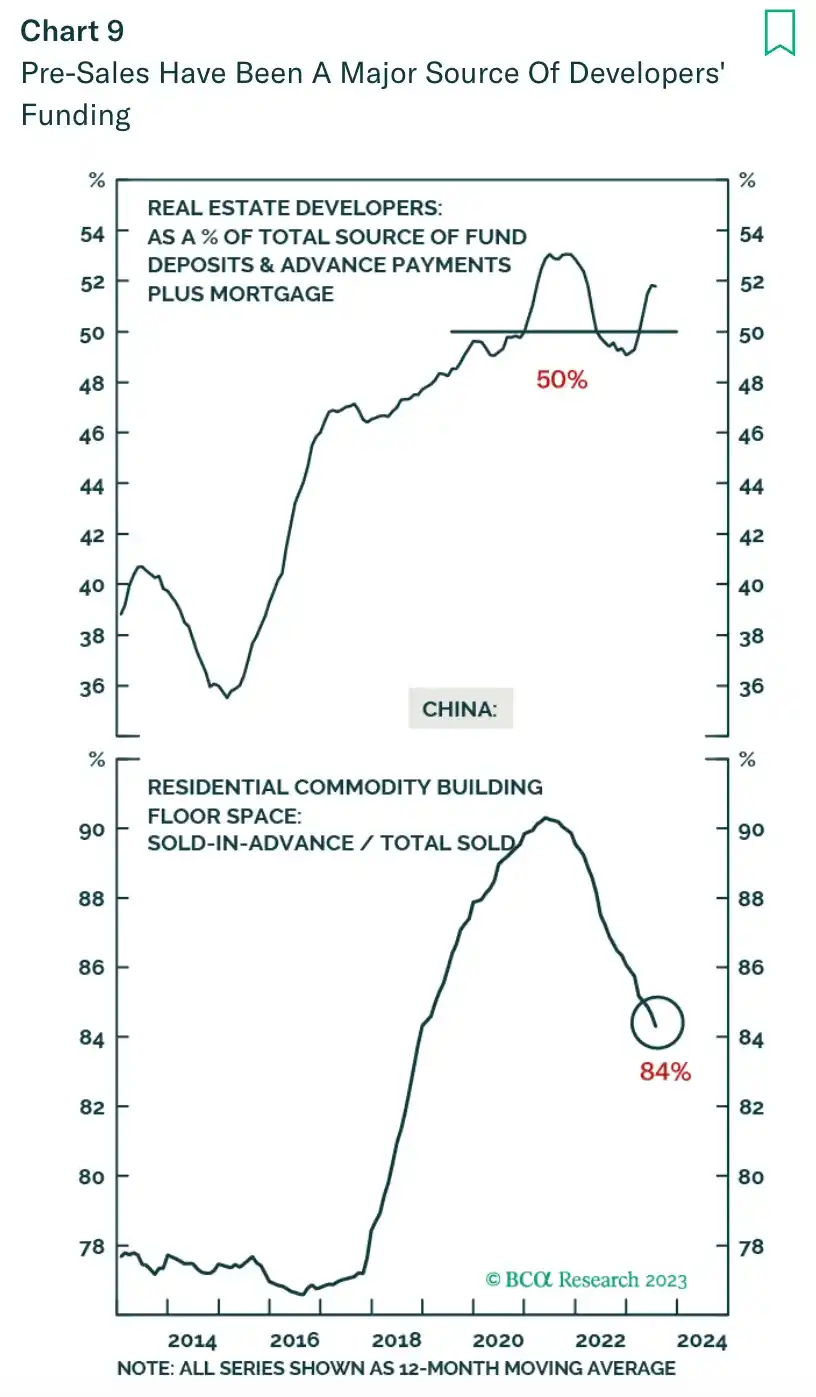
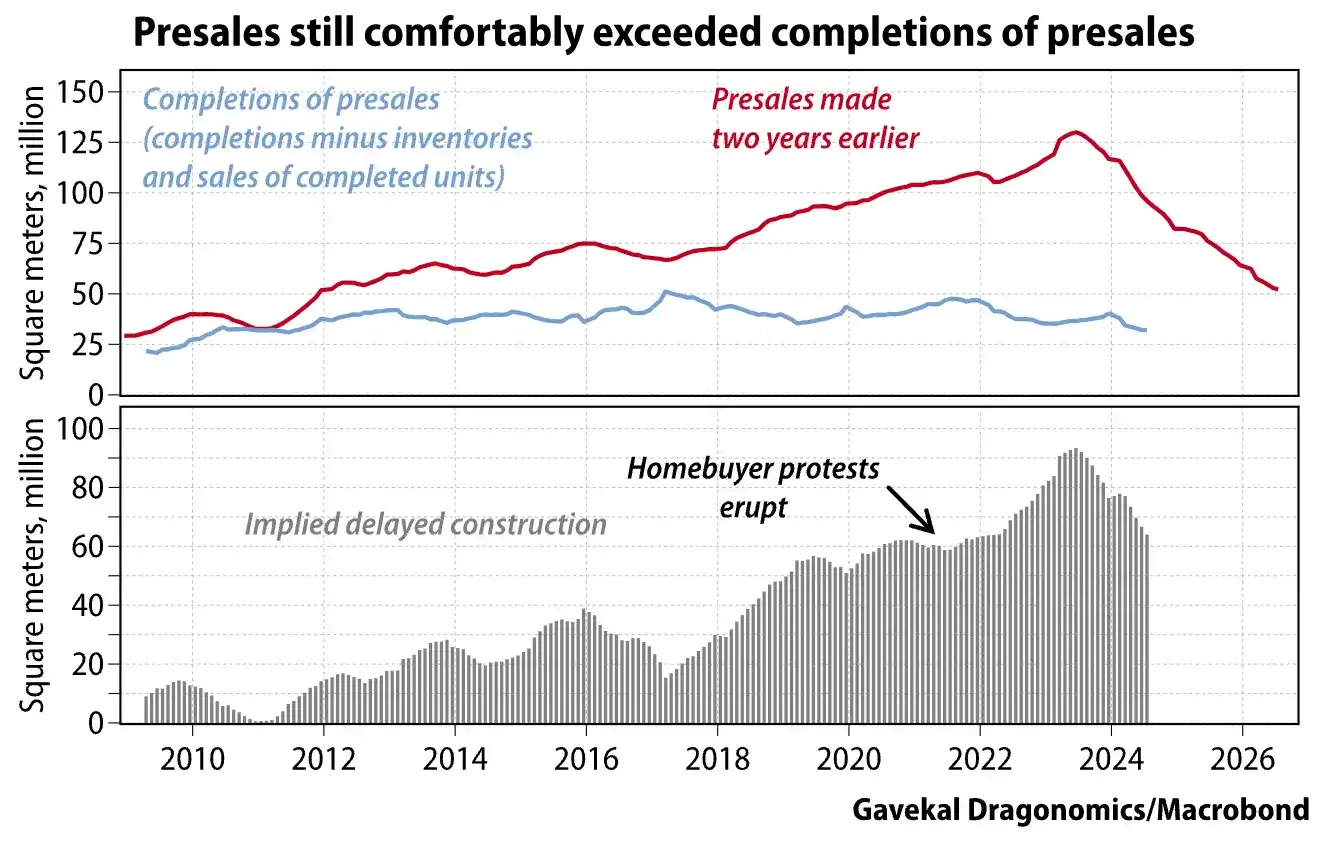
When banks were instructed to reduce loans to highly indebted developers, it raised questions among buyers about whether unfinished units would be delivered. If regular Chinese families didn't believe developers would complete construction, they wouldn't buy off-plan properties. Without presale funds, developers couldn't complete old projects. The eventual result was developers having to halt construction, leading to a collapse in market confidence where everyone loses.
In the early stages of the crisis, the Chinese government's response was to direct banks and local governments to provide loans to real estate developers to ensure unit delivery. However, there was a significant principal-agent problem here. Despite the immense power on paper held by the central government, they still relied on party members willing to take professional risks to execute directives.
Imagine you are a local government official. If you can create economic growth, you will be promoted. However, if you incur losses, you will be investigated by the Central Anti-Corruption Commission. Due to corruption issues, disciplinary action by the Party could lead to imprisonment or the death penalty, with investigations usually initiated years after the incident. Therefore, taking risks has no benefits. Even if the central government tells you to borrow money, you may choose to ignore it.
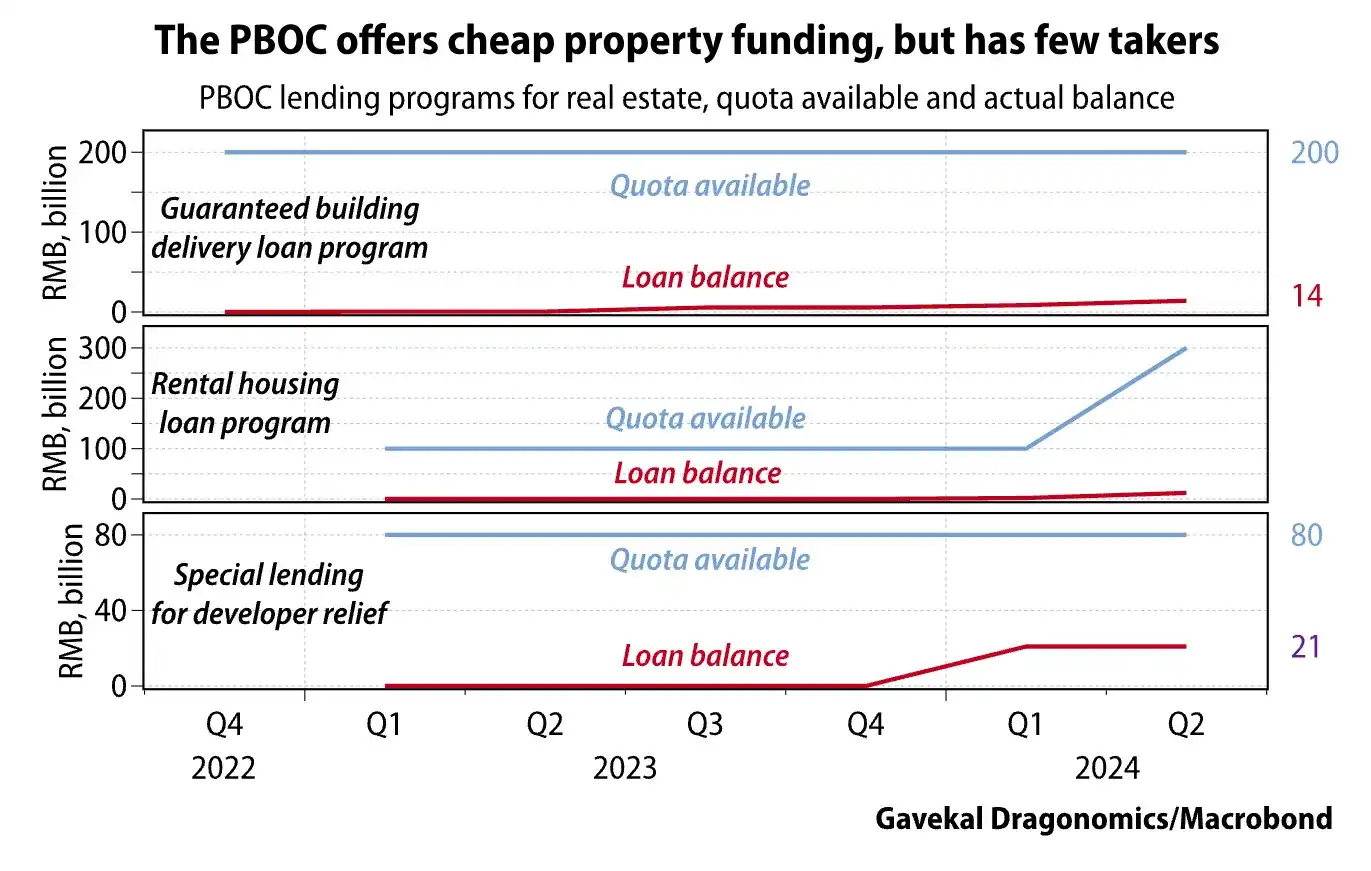
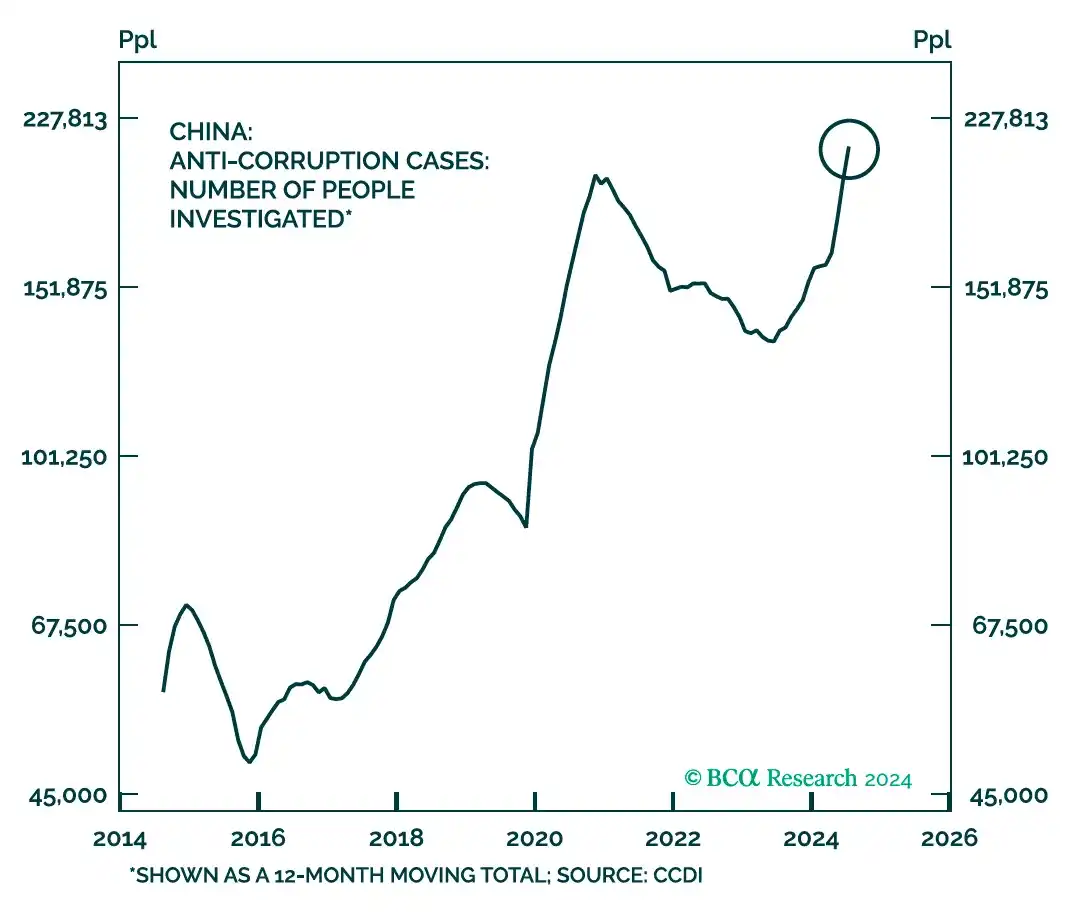
Beijing continues to issue higher quotas, allowing more real estate developers to receive credit, but this credit has not been effectively distributed. Another option would be for the government, whether central or local, to directly participate in construction, completing millions of unfinished units to restore market confidence. However, they have not taken such action so far, possibly because such a massive project is too complex for a top-down centralized government, especially when it involves millions of square feet of construction to be completed.
Furthermore, if the government enters the construction sector and the units they build fail to meet the initially promised quality, angry citizens may blame the government rather than those failing real estate developers. This brings us to the current moment. It may take decades to utilize traditional monetary policy to set a price floor and restore confidence.
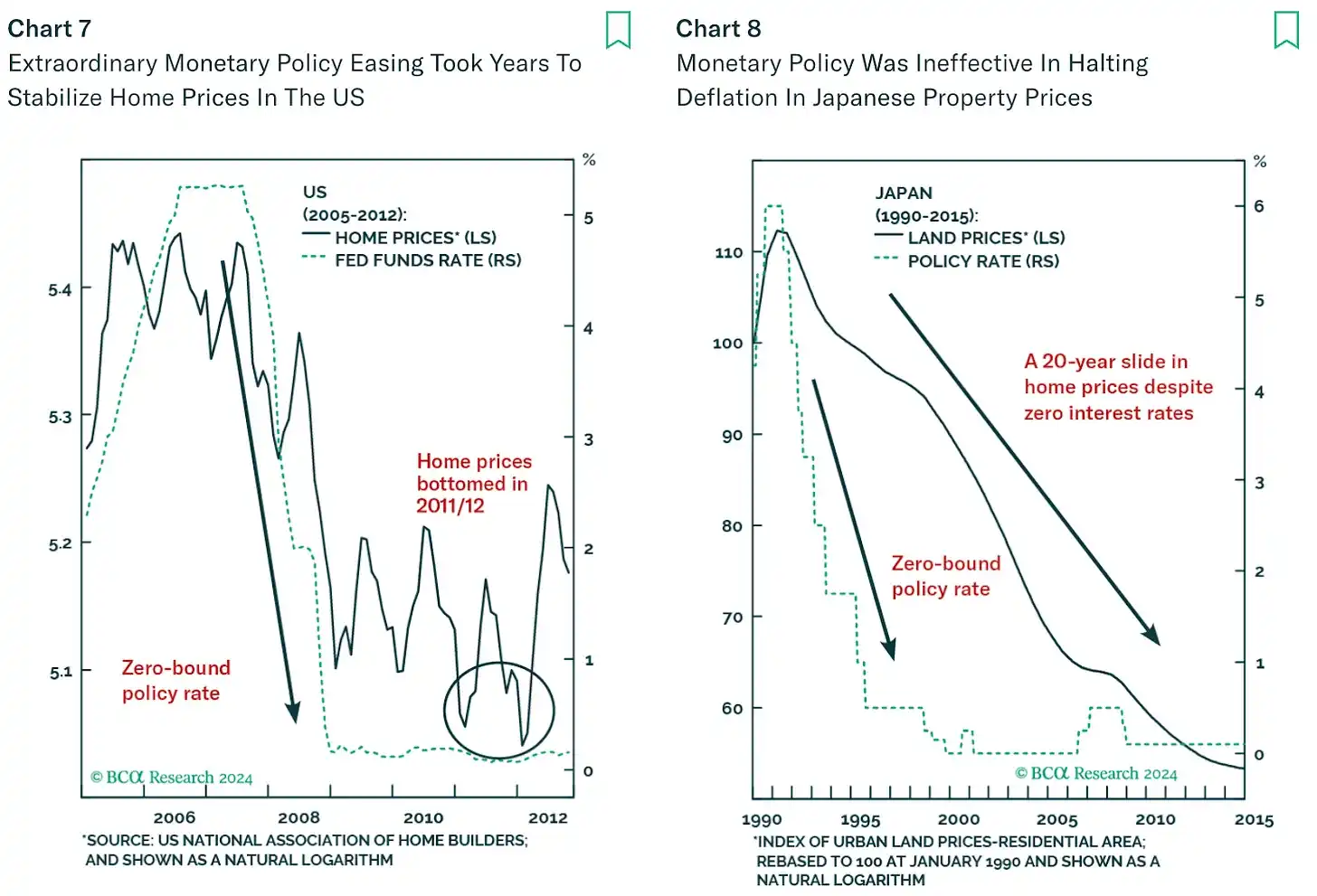
Beijing is not willing to wait that long as the Chinese economy is rapidly decelerating. It's time to summon the financial "wizards" and start the "chemotherapy."
Reinflation
Let's take a look at some depressing charts to see the impact of the bursting real estate bubble on the Chinese economy. Listening to economists' pessimistic views on the Chinese economy may make you think that Beijing has been helpless, but the reality is far from it.
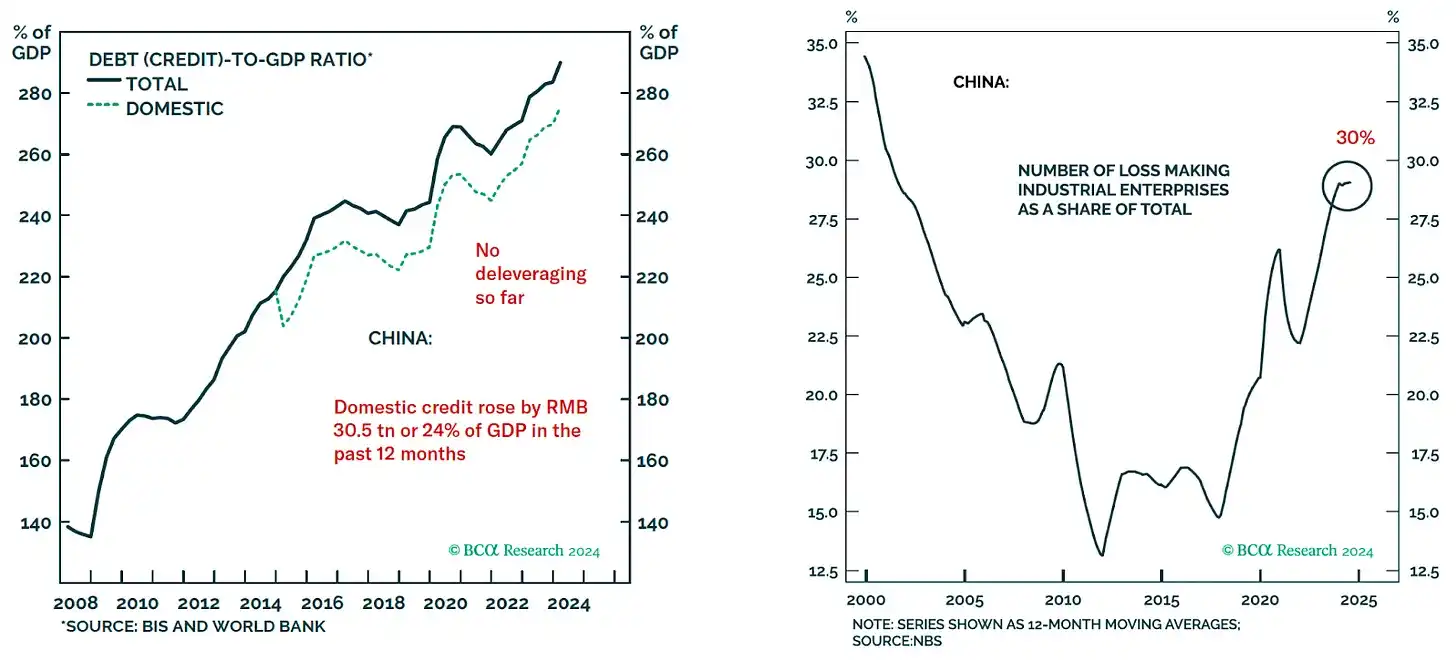
The Chinese government has implemented massive fiscal and monetary stimulus measures. However, due to the massive excess in the economy, these funds are merely used to sustain basic operations. The left chart shows the rising debt-to-GDP ratio, allowing "zombie" state-owned enterprises to continue operating (right chart), avoiding large-scale layoffs.
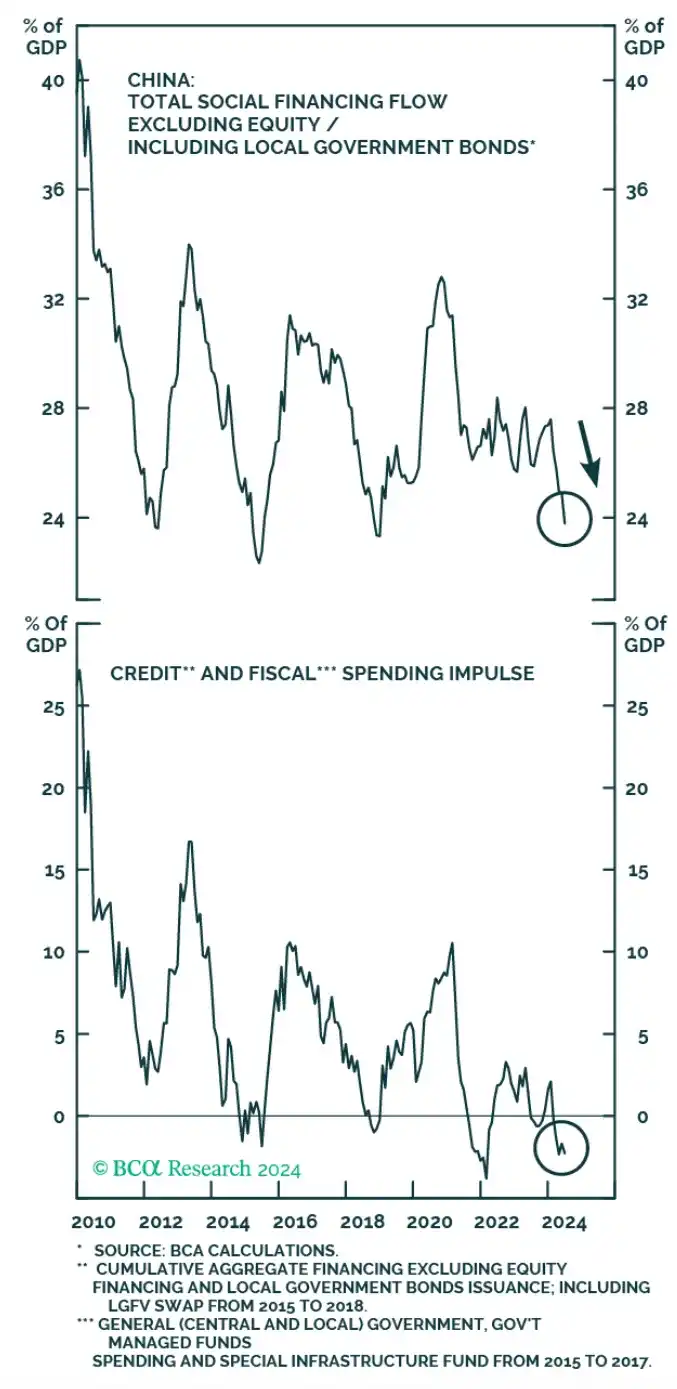
However, when you have just burst the largest real estate bubble in human history, you need strong "chemotherapy" to suppress deflation. All measures are relative. Compared to the economic "black hole" resulting from the real estate market collapse, the current stimulus measures are not sufficient to generate positive credit or fiscal expenditure effects.
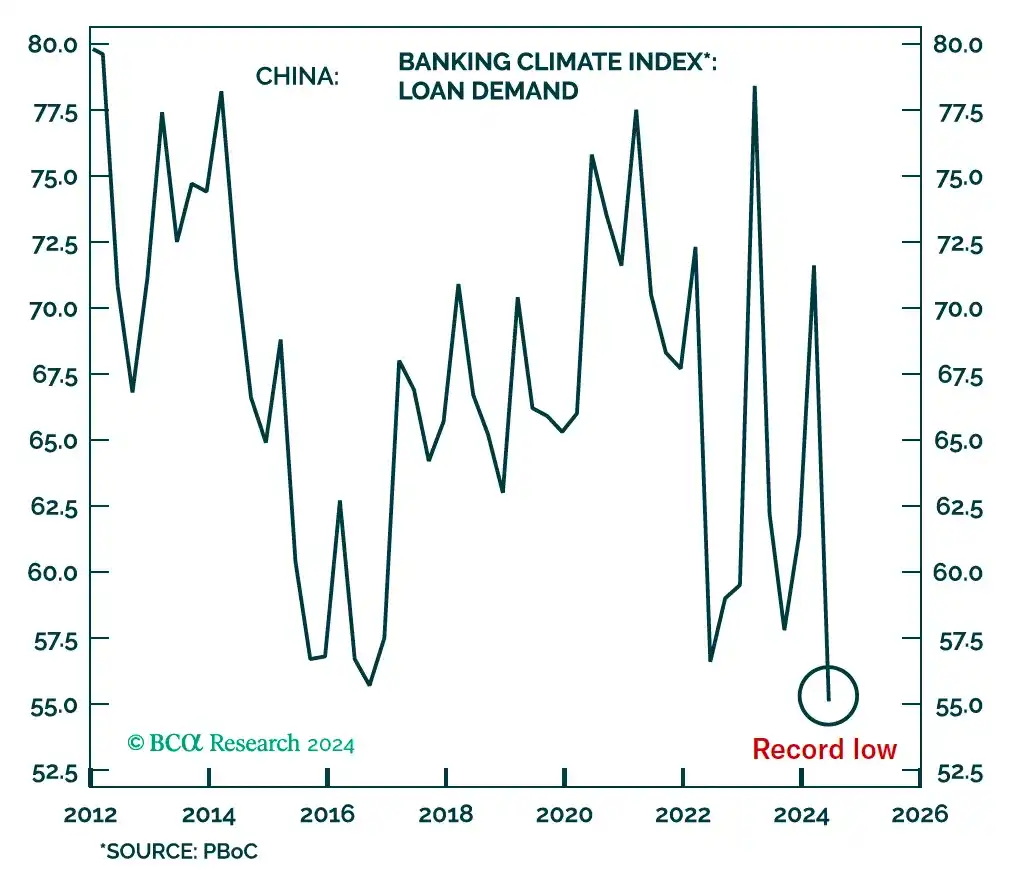
Despite implementing numerous stimulus measures, loan demand remains at historic lows. This is because real interest rates are still too high.
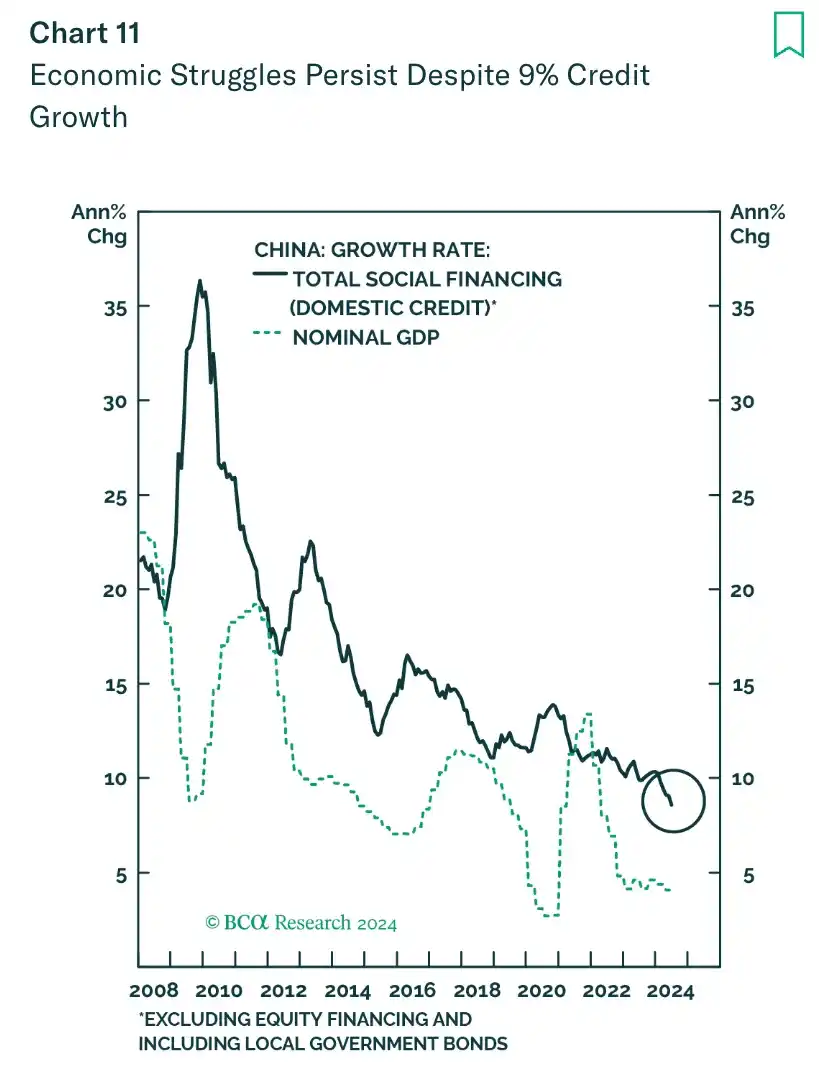
China's broad money growth has dropped to a historic low, leading to a significant slowdown in nominal GDP growth.
As economic activity contracts due to the deflationary liquidation of excess capacity, Beijing's real concern is the large number of unemployed young individuals. With urban youth unemployment rates being excessively high, China ceased publishing this data since June last year.
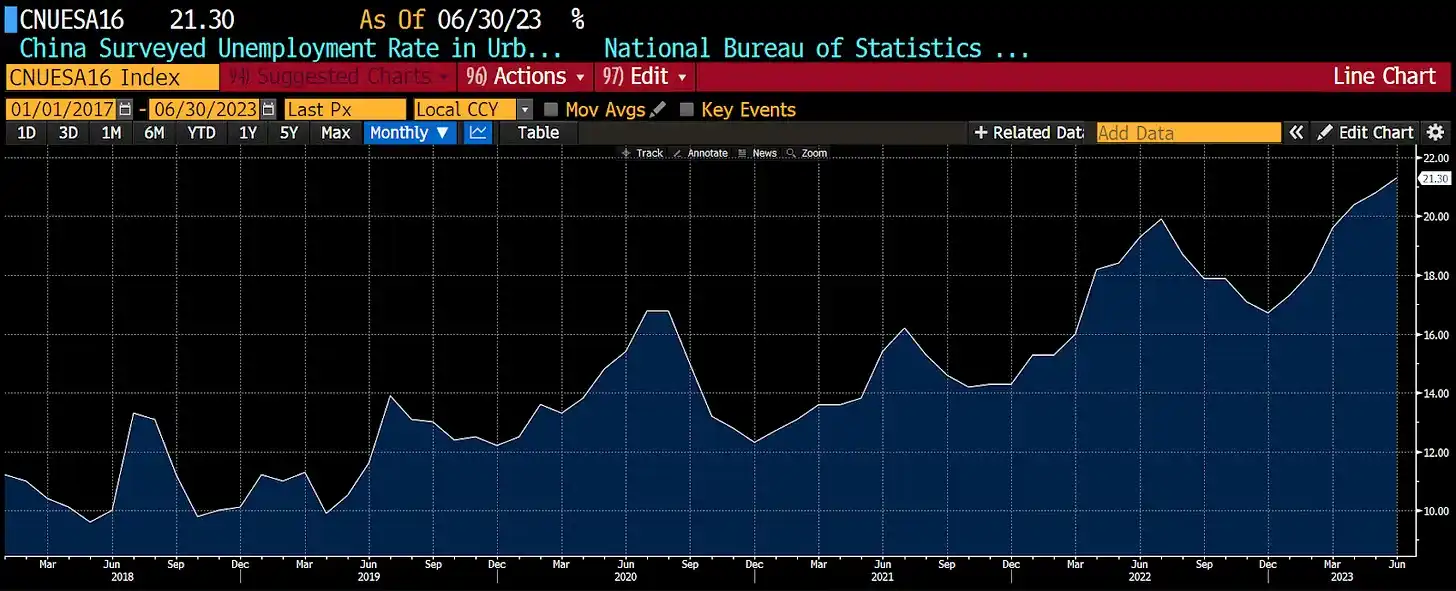
A large group of young, educated, unemployed, and homeless males, in a situation lacking opposite-sex attractiveness, are highly susceptible to fostering discontent, possibly becoming a potential trigger for popular uprisings. The CIA may be closely monitoring this situation, hoping to incite a "color revolution" in China. These newly graduated young people may be dissatisfied with the existing system as they have not been able to access the promised opportunities for prosperity.
If China were the U.S. or the EU, it might resort to external wars to relocate these young individuals. However, China has traditionally not been keen on large-scale external military adventures. Therefore, China needs to restore economic activity by quantitative easing (QE) and increasing broad money supply to provide employment opportunities for ordinary college graduates.
Beijing is well aware of this and since this summer, he instructed the People's Bank of China (PBOC) to update its tools for conducting open market operations in the government bond market. The central bank is gradually incorporating secondary market trading of Chinese government bonds into its toolkit. In recent years, the market has been paying increasing attention to this, and we have been enriching and perfecting the methods of basic currency injection. In the past, the method of foreign exchange settlement was a passive injection of basic currency. Since 2014, the amount of foreign exchange settlement has decreased, and we have actively injected basic currency through open market operations and tools such as Medium-term Lending Facility (MLF).
It is worth noting that the inclusion of Chinese government bond trading in the monetary policy toolkit does not mean the implementation of quantitative easing but serves as a channel for basic currency injection and a tool for liquidity management. The trading of Chinese government bonds will work together with other tools to create an appropriate liquidity environment.
China's Current Monetary Policy Stance and the Evolution of Future Monetary Policy Framework
Today, quantitative easing (QE) has become a sensitive term as people know it will trigger inflation. However, since August this year, the People's Bank has increased the amount of local government bonds held from 1.5 trillion yuan to 4.6 trillion yuan, marking the first time since 2007 that currency injection has been achieved through government debt purchases.
In order to achieve a fiscal stimulus sufficient to escape the deflationary trap, it is necessary to issue a large volume of local and central government bonds. Despite China's bond yields being at historic lows, they are still excessively tight. Price levels need to be close to zero, and the money supply must increase significantly, which can only be achieved through the People's Bank of China implementing quantitative easing.
The Federal Reserve, the European Central Bank, and the Bank of Japan all started with small-scale government bond purchases in the early stages of implementing quantitative easing, but eventually broke free from the deflationary trap through significant money printing. China and the People's Bank of China will follow a similar path. While the initial intervention may be small, ultimately the People's Bank of China will print trillions of yuan to adjust the scale of the Chinese economy—this is Beijing's intent!
China is about to embark on quantitative easing, but this only solves half of the problem. Banks also need to resume lending to drive high nominal GDP growth.
Returning to the incentive mechanism for senior managers of State-Owned Enterprises (SOE) banks, they are not eager to issue a large number of new loans. Some loans may default, and these managers may be investigated for corruption a few years later. They need to be certain that Beijing will support them.
A series of recent monetary policy measures by the People's Bank of China (PBOC) signal an encouragement for bank credit growth. The Chinese government has announced borrowing and direct capital injections into the banking system. While essentially the state-owned banks are moving funds from the "left hand" to the "right hand," it is more of a gesture to some extent. Through this move, Beijing is indicating to bank executives that increasing lending will not bring personal risk.
Another indication that Beijing is ready to ease up on anti-corruption efforts is the resumption of the "three distinctions" policy. In a recent party document, the politburo reassured party members that mistakes made by grassroots officials in pursuit of economic improvement will be forgiven. By reducing senior leaders' personal risk, officials can start lending and provide the necessary credit to revive the economy.
The financial metrics of the Chinese banking industry, especially regarding Non-Performing Loans (NPLs), seem somewhat distorted. According to statistics from the Bank for International Settlements (BIS), on average, banking systems experience an NPL ratio of around 22% after a real estate crisis. However, Chinese banks report an NPL of only 2%. Are Chinese banks truly that exceptional?
I don't think so. That's why Chinese banks typically only want to lend to projects directly supported by the government. Using a cryptocurrency analogy, imagine a bank predominantly lending to companies like FTX, Three Arrows Capital, BlockFi, Genesis, and Voyager. If this bank reports the lowest NPL ratio, would you believe it? Therefore, to revive the banking sector, Beijing needs to repair banks' balance sheets through equity injections.
Another indication that Beijing is ready to relax credit issuance policies is the cap set on banker's total compensation, with a recent government regulation capping the maximum total compensation for any financial services employee at $420,000, whether they work in a state-owned bank or a private bank. When the U.S. bailed out its banking sector, such limits were not set; JPMorgan Chase CEO Jamie Dimon still earned $17.6 million in 2009 after the bank bailout.
Beijing knows that credit expansion is extremely profitable for the banking system, especially when the government essentially backs all loans. At the same time, they also know that wealth will not trickle down, which could spark public outrage. The last thing Beijing wants to see is an "eat the rich" movement like "Occupy Wall Street" happening on Nanjing Road in Shanghai, which would also run counter to Beijing's policy of common prosperity.
Beijing is signaling to the market that it is undergoing a monetary "chemotherapy," if you will. You just need to listen. One side effect many analysts have pointed out is a depreciation of the renminbi against the dollar.
Renminbi
Russell Napier wrote an excellent article suggesting that China is ready to undergo the monetary "chemotherapy" I described in the previous section and believes that Beijing will tolerate the depreciation of the renminbi resulting from the dramatic increase in the money supply. I am not sure if Beijing will allow a significant devaluation of the renminbi as it could trigger capital outflows. However, I believe the renminbi will not depreciate significantly against the dollar, so this prediction will not be tested.
As we all know, China is the world's factory floor, so China's trade surplus continues to hit historical records. However, a deeper dive into the data reveals that the reason behind the rise in China's trade surplus (exports minus imports) is not an increase in export volume but a decrease in its economic reliance on imports, allowing China to pay for more imports in renminbi.
To illustrate my assumption, suppose China's monthly total exports amount to $100 and total imports amount to $50, resulting in a trade surplus of $50. Now, the import reliance of its export economy decreases—e.g., China used to import parts from overseas to manufacture cars, but now most parts are domestically produced. This allows the trade surplus to grow even though the quantity of exported goods has not increased.
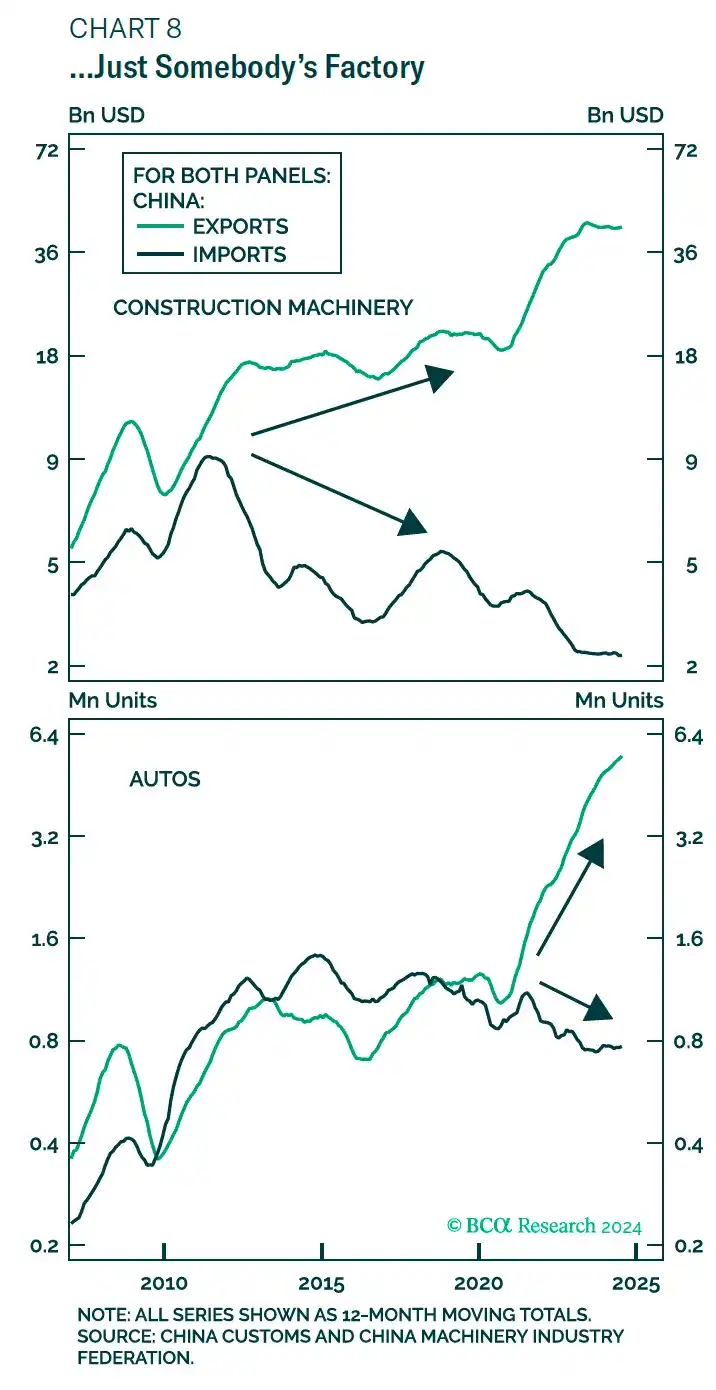
The above chart illustrates how China is exporting more construction machinery and cars while reducing imports.
One major commodity China lacks is energy, yet currently, China is able to purchase commodities from countries like Saudi Arabia and Russia using renminbi (rather than dollars).
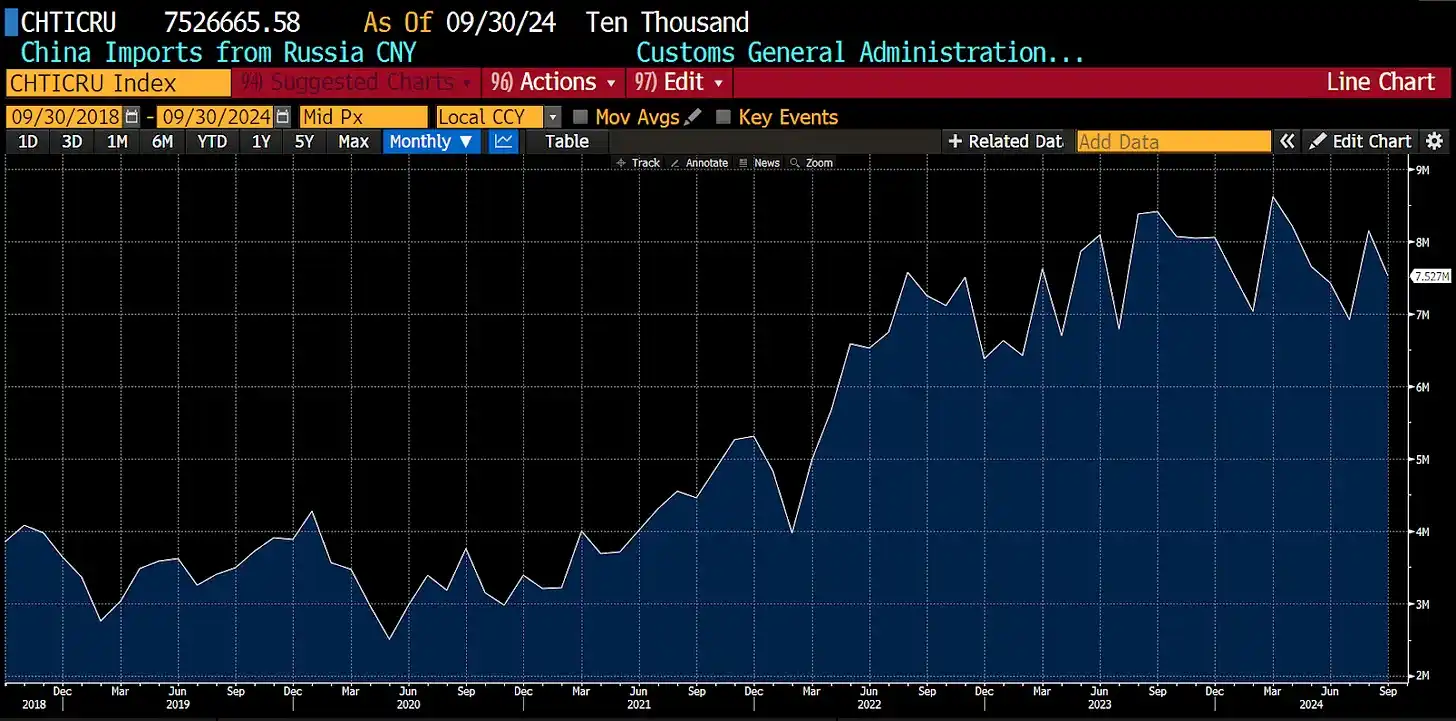
After the outbreak of the Ukraine war in February 2022, the West froze Russia's US dollar and euro reserves and imposed sanctions. Prior to this, China was unable to dominate trade terms. But now, Russia has no choice but to pay in renminbi at China's request and supply energy to China at a discounted price.
As China increases domestic renminbi supply to promote economic growth, inflation will also rise. However, due to a higher proportion of domestically produced goods in China and a larger share of energy payments settled in renminbi, the rise in inflation will not significantly weaken the renminbi against the US dollar as in the past.
The last reason the renminbi will not significantly depreciate is that, in sync with China's re-inflation measures, the United States, regardless of the election outcome, will pursue a "weak dollar" industrial policy. While Trump and Harris try to emphasize their differences, in essence, they will both stimulate the economy by printing money and injecting funds into key US industries.
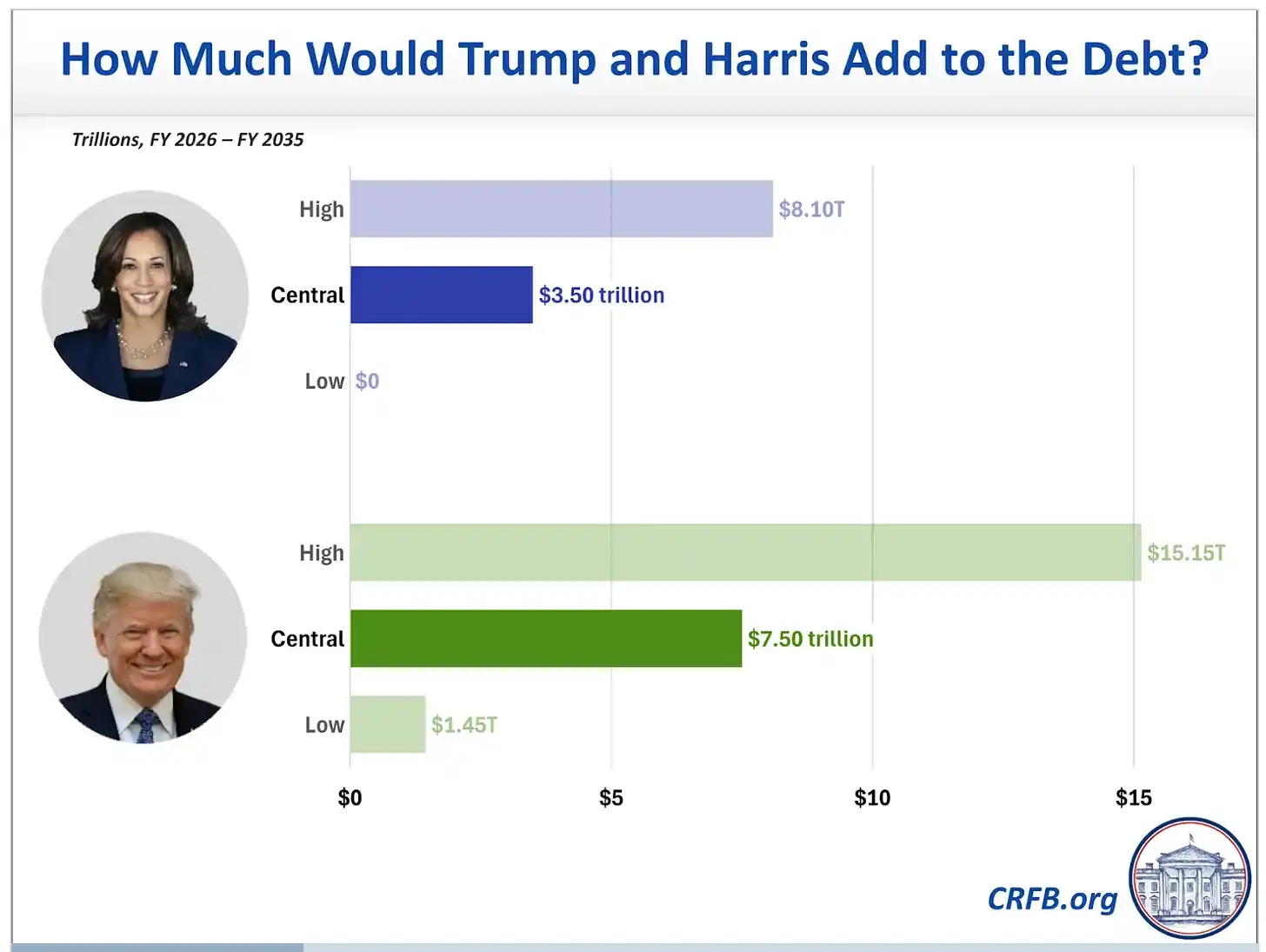
Regardless of whether Trump or Harris wins, the US will inject trillions of dollars of fiat currency into the market in the coming years, undoubtedly leading to structural devaluation of the US dollar.
For China, the negative currency effects of implementing re-inflation policies may not be directly apparent. All signs indicate that Beijing is prepared to print a large amount of renminbi. However, against the backdrop of credit creation growth, ordinary people may not see a significant enhancement of the real economy. For these people, perhaps Bitcoin will become a "remedy."
Let's Go Bitcoin
Chinese people are known for their adaptability and innovative spirit, and they will not let the depreciation of the renminbi in asset price inflation diminish their wealth. Bitcoin is not unfamiliar to middle- to high-income residents of coastal cities in China. Although exchanges are banned from offering public Bitcoin/renminbi trading pairs, the Bitcoin and cryptocurrency market continues to thrive in China.
Currently, China's cryptocurrency market has returned to a peer-to-peer (P2P) trading pattern. In the early years, during the heyday of the three major Chinese exchanges (OKCoin, Huobi, and BTC China), users often had to go through complex processes to deposit renminbi into exchange accounts. Today, it is rumored that China once again has an active P2P market, with major Asian spot exchanges like Binance, OKX, and Bybit conducting significant business on the Chinese mainland. Exchanges have P2P bulletin boards to help local traders assist each other in cryptocurrency trades. In short, motivated Chinese individuals can relatively easily convert renminbi to cryptocurrency.
The reason behind Beijing's closure of the Bitcoin/Renminbi trading pair may be to avoid Bitcoin becoming a "canary in the coal mine" for currency devaluation, thereby pushing investors to choose Bitcoin as a store of value over stocks or real estate. Although the Chinese government cannot completely ban Bitcoin, cryptocurrency holding is not fully prohibited in China either, but Beijing prefers Bitcoin to remain low-key. Therefore, I cannot directly track Renminbi inflows into the Bitcoin ecosystem via statistical data, and the only clue may come from market trends feedback.
A Bitcoin ETF listed in Hong Kong is also unlikely to receive significant inflows, as funds flowing into the Hong Kong market through the Stock Connect are not used to purchase domestic stocks or real estate. This is why the Chinese mainland prohibits the purchase of Hong Kong Bitcoin ETFs. Therefore, even if the companies issuing these ETFs advertise heavily in Hong Kong stations, mainland investors cannot easily access Bitcoin.
Although I do not have a tool to directly track Renminbi inflows into Bitcoin or a channel to view the Bitcoin/Renminbi price, I am confident that against the backdrop of central bank balance sheet expansion, the performance of stocks and real estate tends to lag.
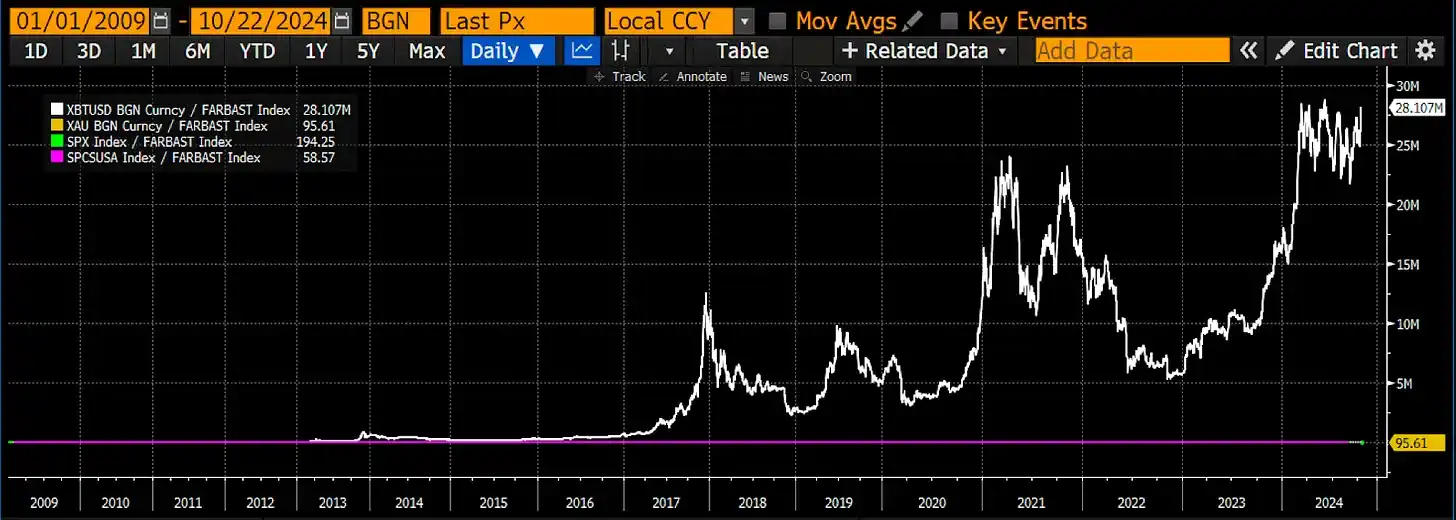
The chart above shows the performance of Bitcoin (white), Gold (yellow), S&P 500 Index (green), and Case-Shiller U.S. Home Price Index (magenta) relative to the Fed's balance sheet, with the initial value of these assets set at 100. Bitcoin has outperformed other risk assets to such an extent that the return curve of other assets is indistinguishable on the right side of the chart.
As I mentioned before, this is my favorite chart. No other major asset class can effectively resist currency devaluation like Bitcoin. Investors instinctively realize this, so when considering how to protect the purchasing power of their savings, Bitcoin will stare at you like fate, impossible to ignore, like the Kwisatz Haderach.
For those who think the market will quickly recognize the future and rapidly drive up Bitcoin, I must disappoint you. The People's Bank of China's quantitative easing (QE) policy and the re-acceleration of credit growth take time. Chemotherapy consumes the "patient" and is a process. In the initial stages, Chinese savers, as I expected, are buying oversold domestic stocks and heavily discounted apartments. This policy may not be apparent at the moment, but given time, its effects will be undeniable.
Currently, economists' pessimistic views on the scale and intensity of stimulus provide investors with a great buying opportunity. When affluent investors living on the coast decide to buy Bitcoin at any price, the price surge will evoke memories of August 2015—when the People's Bank of China suddenly devalued the Renminbi, causing the Bitcoin price to skyrocket from $135 to $600 in less than three months, achieving nearly a 5x increase.
(The views expressed in this article are the author's own views and should not be taken as the basis for investment decisions, nor be considered as any investment advice or opinion.)
Recommended
The Wall Street Journal: How is AI Trading Stealing the Limelight from Cryptocurrency?
Aug 15, 14:00
Tencent Still Has a Dream
Aug 15, 11:27
To Catch North Korean Hackers, They Set Up a Fake Project
Aug 15, 10:00
From Litigation to Settlement: Positive Signal Released by HTX's Negotiation with FCA
Aug 14, 19:32
11,742 Shipping Addresses Exposed Alongside Trezor Orders
Aug 14, 19:01
Founder Interview: FOMO Creator Explains How They Added 30,000 Users in One Day and Became One of the Fastest-Growing Crypto Apps
Aug 14, 18:37