Nine Misconceptions About the Chain Abstract: Gas Too High? Will It Bring Interactivity Security Issues?

Original Article Title: "Decoding the Hot Term! Nine Misunderstandings About Chain Abstraction"
Original Article Authors: Viee, Biteye
Recently, the discussion around chain abstraction has been heating up in both the Chinese and English communities. Founders of projects like Uniswap and Safe have also expressed their views on this matter. Biteye, in conjunction with researcher @HelloLydia, summarized the nine major misunderstandings surrounding chain abstraction based on Lydia's chain abstraction series.
Before diving into the main text, let's first define chain abstraction in a sentence—it is a user experience that is free from manually interacting with multiple chains.
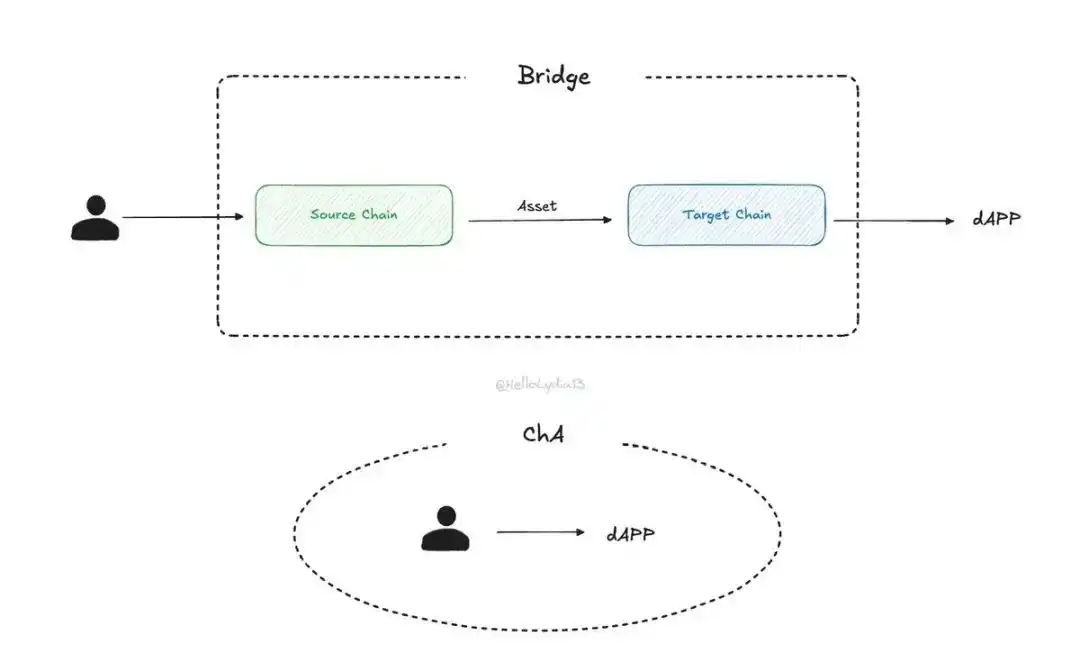
The underlying logic of chain abstraction is completely different from that of a cross-chain bridge.
A cross-chain bridge is essentially a tool that users have to use additionally in order to achieve a certain interaction goal.
On the other hand, chain abstraction removes this additional barrier, allowing users to directly use their on-chain balance to interact with dApps or perform transfers, and in this context, the user no longer has the concept of "crossing".
In this sense, chain abstraction can be seen as the end of cross-chain bridges.
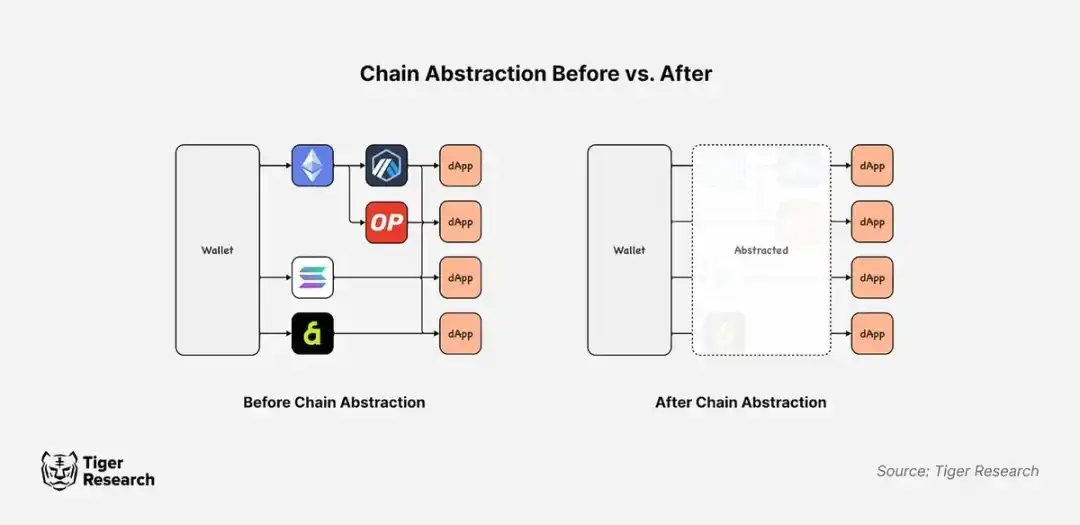
The biggest difference between chain abstraction and a multi-chain wallet lies in liquidity integration.
A multi-chain wallet simply acts as an aggregator at the user's entry point, and users still have to manually switch between different chains when using dApps.
On the other hand, chain abstraction truly integrates multi-chain liquidity, as the user's assets on any chain are equivalent from a purchasing power perspective, and they can also pay gas fees in any token. Therefore, users only need to focus on interacting with the dApp itself.
In summary:
· Multi-chain Wallet → A wallet that makes it more convenient to switch chains for asset management.
· Chain Abstraction → Bypass chains and directly manage assets and interact with dApps.
From a non-technical perspective, let's use an analogy:
· Account Abstraction is like holding a hammer and looking for a nail, it is a technical upgrade established by the Ethereum Foundation from the supply side, regarding the account structure (ERC-4337, EIP-3074, EIP-7702, EIP-7560).
· Chain Abstraction is like finding a nail and then looking for a hammer, addressing a very straightforward issue in the current industry: too many chains, too fragmented infrastructure.
The problem scenario of Chain Abstraction is clear, and this is the most scarce in the current Web3, because only real demand can bring the actual adoption rate of track projects and the token's value-capture ability.
Chain Abstraction and intent exist in completely different dimensions.
A broad sense of intent is still a vague concept, while Chain Abstraction is a mature track, with a clear conceptual definition, problem scenario, research framework, and track map.
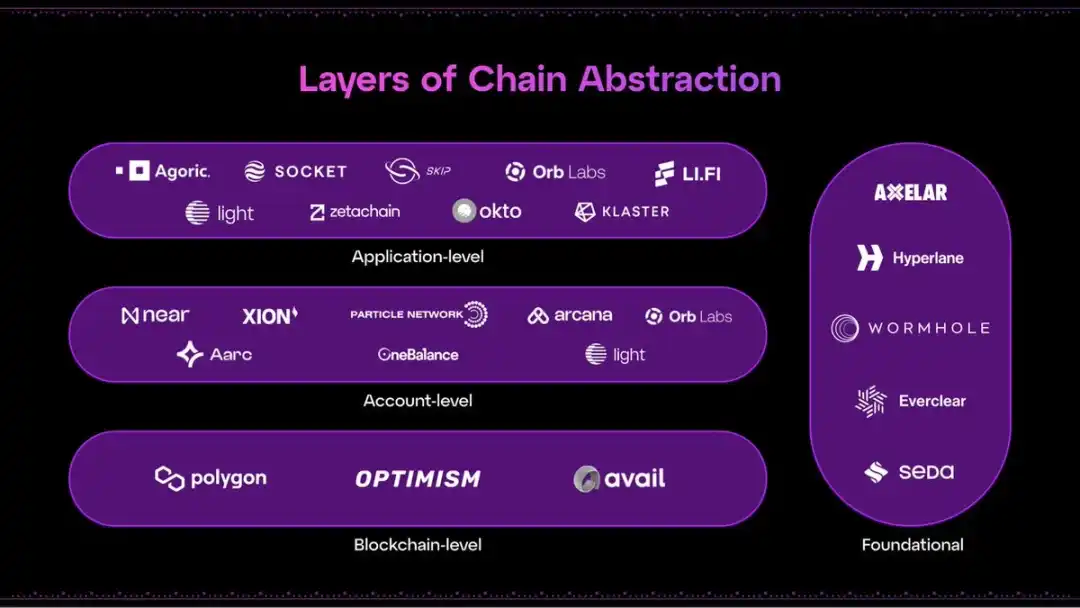
A narrow sense of intent focuses on technical details, while Chain Abstraction is a more high-level concept that can serve any form of dApp.
Intent can, together with account abstraction and interoperability protocols, be a key technology for realizing Chain Abstraction.
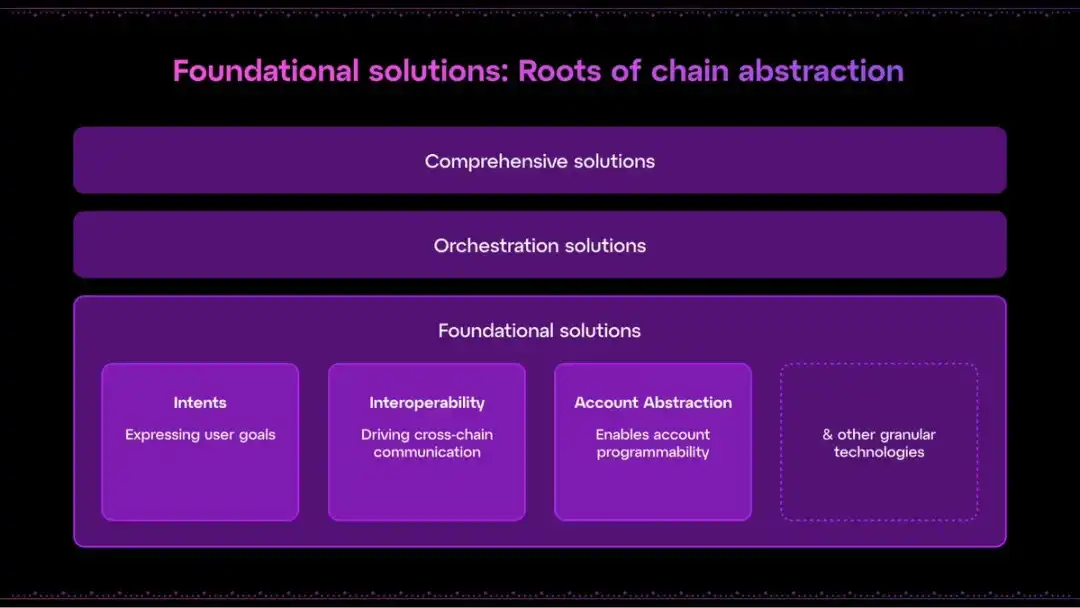
Chain Abstraction is not merely user experience optimization. It fundamentally transforms the traditional TVL model (static, asynchronous, and non-real-time, requiring assets to be pre-bridged to a specific chain for use) into a fluid, real-time, multi-chain ecosystem (assets can be used anytime, anywhere).
This essentially redefines the concept of liquidity—making multi-chain liquidity truly "liquid."
· For public chains: New public chains no longer need to acquire and lock TVL in advance but can focus from the outset on specific businesses like payments, gaming, transactions, etc.
· For users: The concept of multi-chain asset distribution will no longer exist, and there will be no need to deposit funds on each chain separately. Users can simply check their total account balance and access their funds anytime.
· For developers: In a closed, isolated ecosystem, developing products by "reinventing the wheel" will not be feasible. Genuine innovation is required.
This question can be answered from two perspectives:
· Has it increased the transaction costs on the original chains: No. The cost of chain abstraction transactions on each chain is similar to the cost users would incur by manually moving assets across chains.
· Has it added extra gas fees: It depends on the specific Chain Abstraction Layer solution and dApp. For example, in the Particle Network, the total gas paid by users includes gas fees for the underlying L1, but this amount is very, very low compared to external chains, almost negligible.
Furthermore, the Chain Abstraction Layer also allows project teams to subsidize gas fees. Some projects may be able to reduce gas costs by optimizing underlying interactions (such as introducing a settlement layer, transaction batching, etc.).
In summary, the costs are almost equivalent (potentially lower in the future), but the user experience is significantly better.
This question can be answered from three perspectives:
· Does it interfere with user decisions: No. The Chain Abstraction Layer does not interfere with user decisions but rather enhances interaction efficiency after users have made their decisions.
· Does it deprive users of information and control: No. Under the transaction logic of the Chain Abstraction Layer, users retain information about the underlying logic of each transaction and continue to have sole control over assets on different chains.
· Does it introduce additional security risks: It depends on the specific Chain Abstraction Layer solution and dApp. Well-designed Chain Abstraction solutions can fully maintain decentralization and transparency.
In summary, the core purpose of Chain Abstraction is not to interfere with user decisions on which dApp to interact with but to execute user-made decisions more seamlessly and efficiently. In this process, user rights are not compromised, and a well-designed Chain Abstraction solution is highly secure.
The current situation is not "only the top chains have traffic." The perception of C-side user social media traffic is not equivalent to the actual operation of the chain.
Besides Base and Solana, some L2 chains such as Arbitrum, Mantle, which are not currently perceived by C-side users, have accumulated a large amount of TVL; TON and Aptos have monthly active users exceeding Ethereum; Polygon, Blast, Starknet can generate $20-30 million in fee revenue in a year. It is unreasonable to think that these chains all "have no traffic."
The future cannot be built on a single chain, nor will it be "only the top chains have traffic."
The reason why a single chain in the future is impossible is that the scalability of a single chain is not infinite and faces severe risk concentration issues. Therefore, it is impossible to build the entire Web3 on a single state machine.
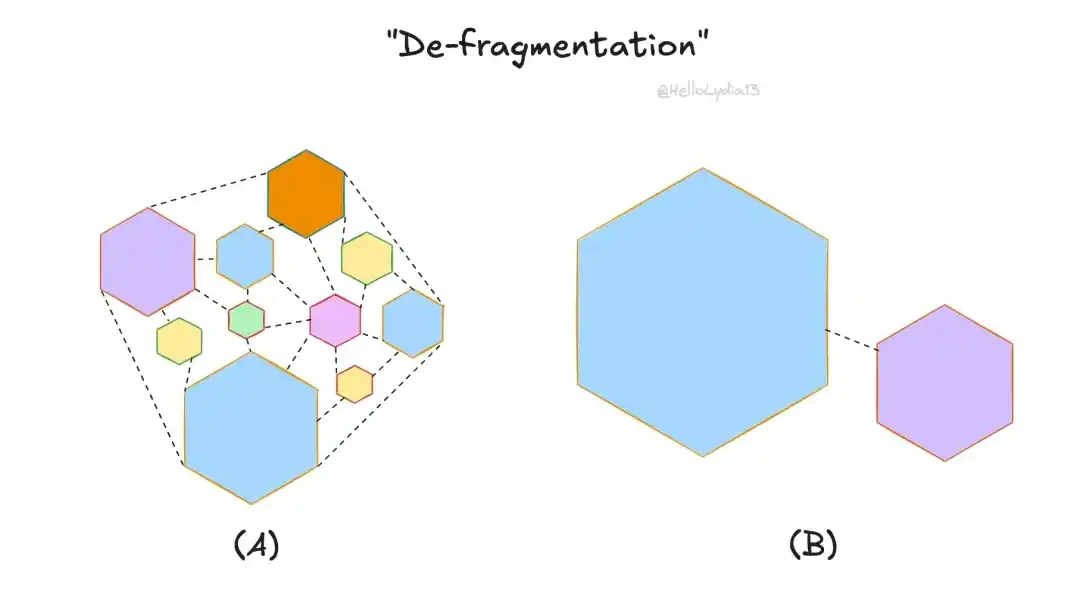
The reason why the future will not be "only the top chains and apps have traffic" is because we have seen the increasingly diverse L2 ecosystem within the Ethereum ecosystem (Unichain, Movement), the strong emergence of new EVM L1 chains (Monad, Sei, Berachain), the active non-EVM ecosystem (Sonic, Sui, Aptos), and the continuous lowering of the deployment threshold for Appchains (monthly operating costs as low as $1,000).
In summary, we are facing an irreversible multi-chain future, and the arrival of chain abstraction is inevitable and beyond any individual's will.
We define the solution to the fragmentation problem from the perspective of two audience groups.
· For users, the most direct problem caused by fragmentation is: the need to manually bridge between multiple chains, the need to hold different gas tokens, and the need to frequently manage balances across multiple chains. Chain abstraction has solved this problem.
· For developers, there are two approaches to solving the fragmentation problem: 1) Deploy smart contracts across all chains, but the fragmentation of user-side experience still exists. 2) Deploy only on one chain but accessible to users on any chain, seamlessly introducing liquidity from other chains. This is the solution provided by chain abstraction.
So, chain abstraction has already solved the fragmentation problem from both the user side and the developer side.
A fully unified underlying blockchain liquidity is not feasible. There are fundamental differences between different blockchains, making atomic equivalence impossible.
There are various interpretations of chain abstraction, with different groups emphasizing their own points when discussing it. This may be why @HelloLydia 13 chose to first clarify misconceptions about chain abstraction from a negative perspective. Only by getting to the bottom of things can the truth become clearer through debate.
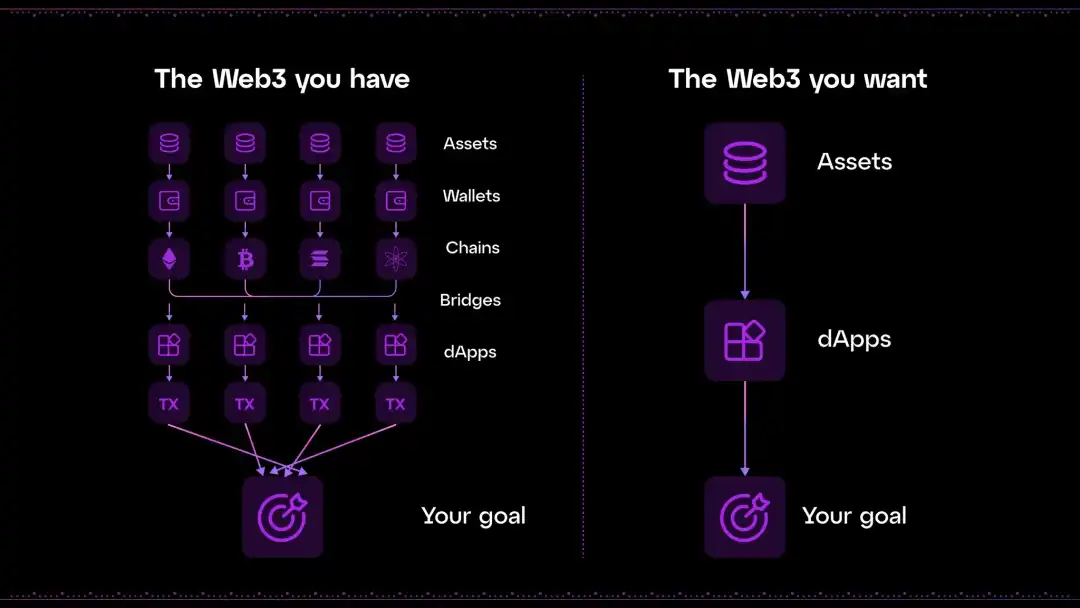
In summary, different from mere "air narratives," chain abstraction is a track with real needs, clear definitions, and rapid development. We believe that chain abstraction will eventually benefit everyone and lead the industry into the next wave of innovation.
Recommended
The Wall Street Journal: How is AI Trading Stealing the Limelight from Cryptocurrency?
Aug 15, 14:00
Tencent Still Has a Dream
Aug 15, 11:27
To Catch North Korean Hackers, They Set Up a Fake Project
Aug 15, 10:00
From Litigation to Settlement: Positive Signal Released by HTX's Negotiation with FCA
Aug 14, 19:32
11,742 Shipping Addresses Exposed Alongside Trezor Orders
Aug 14, 19:01
Founder Interview: FOMO Creator Explains How They Added 30,000 Users in One Day and Became One of the Fastest-Growing Crypto Apps
Aug 14, 18:37