Bloomberg: The Superplayer Behind the U.S. Election, 'Oligarch' Musk Ventures Into a New Field

Original Title: Elon Musk Has a New Project to Run: Trump's Government
Original Authors: Max Chafkin, Dana Hull, Bloomberg
Original Translation: Luffy, Foresight News
On Election Day afternoon, Elon Musk was at a polling place in South Texas, after which he boarded a private plane headed to Donald Trump's vote-counting party at Mar-a-Lago in Florida. En route, Musk held an impromptu political rally. He posted a live link on social network X. "Just a few hours left," Musk said as the plane's engines hummed, with around 100,000 people tuning in to his live stream, "So make sure everyone is urging friends and family to vote, vote, vote."
Up until this year, Musk was running six companies: Tesla (electric cars), SpaceX (rockets), Neuralink (brain implants), Boring Co. (tunnels), xAI (AI chatbots), and X (Twitter). But in May of this year, he added a seventh company: the America PAC. This is a political action committee that has spent over $170 million from its inception to the general election.
What is even more surprising is Musk's personal involvement in this work. He temporarily moved to Pennsylvania, where he toured the entire state, held marathon Q&A sessions in suburban auditoriums, and turned his personal X account into a hub for rapid-response actions against the right wing. Many of the jokes he spread were gender- or race-related, or both. In the final days of the campaign, his prolific posts expressed outrage at a porn star's pet squirrel being euthanized.
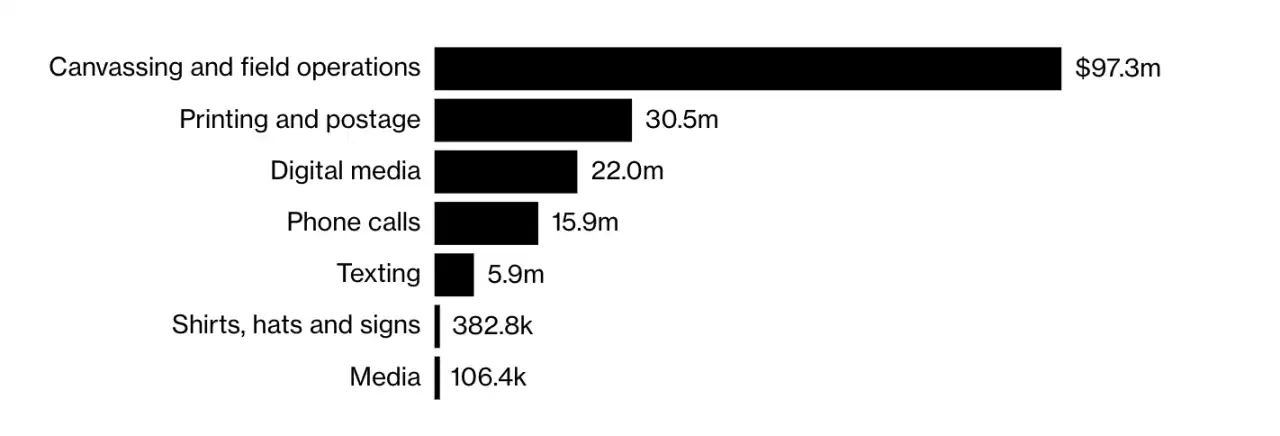
Breakdown of Musk PAC Spending, Data Source: Federal Election Commission
Musk's signature blend of rebellious humor and brazen behavior seems to have resonated, perhaps because Trump was a perfect fit for these traits. On Election Day, the former president, who had been impeached twice and convicted 34 times, mobilized not only the usual elderly white voters but also a younger, more diverse, predominantly male new demographic: essentially, those who like Elon Musk. "He's lowered the barrier to entry to becoming a Trump supporter," said Josiah Gates, Vice President of Political Marketing firm Harris Media.

Musk PAC-supported candidate, Source: Federal Election Commission
"The Democrats pretty much got all the celebrities tangled up in it," Musk said in the livestream, "They have a huge bias towards traditional mainstream media." He told the audience that Democratic politicians intentionally introduced 'illegal immigrants' to 'flood the swing state's vote, so there really isn't a true election.' Like many things Musk has said in the past two years, these are at best misleading. The immigrants he denigrates in his conspiracy are not 'illegal immigrants,' but rather asylum seekers who reside legally in the US, pay taxes, but do not have the right to vote.
Musk is clearly not a weakling. His alliance with Trump is a classic strongman story. One protagonist is an inflammatory, authoritarian billionaire, the other equally authoritarian billionaire, coincidentally the richest man in the world. This is also a story about money. We don't know the full amount of Musk's financial contributions to Trump's election, but it is at least over $132 million, totaling maybe up to $200 million. How much return can these contributions bring in the next four years? In the first three days after the election, Tesla's market value rose by 25%, increasing Musk's personal net worth by $50 billion to over $300 billion.
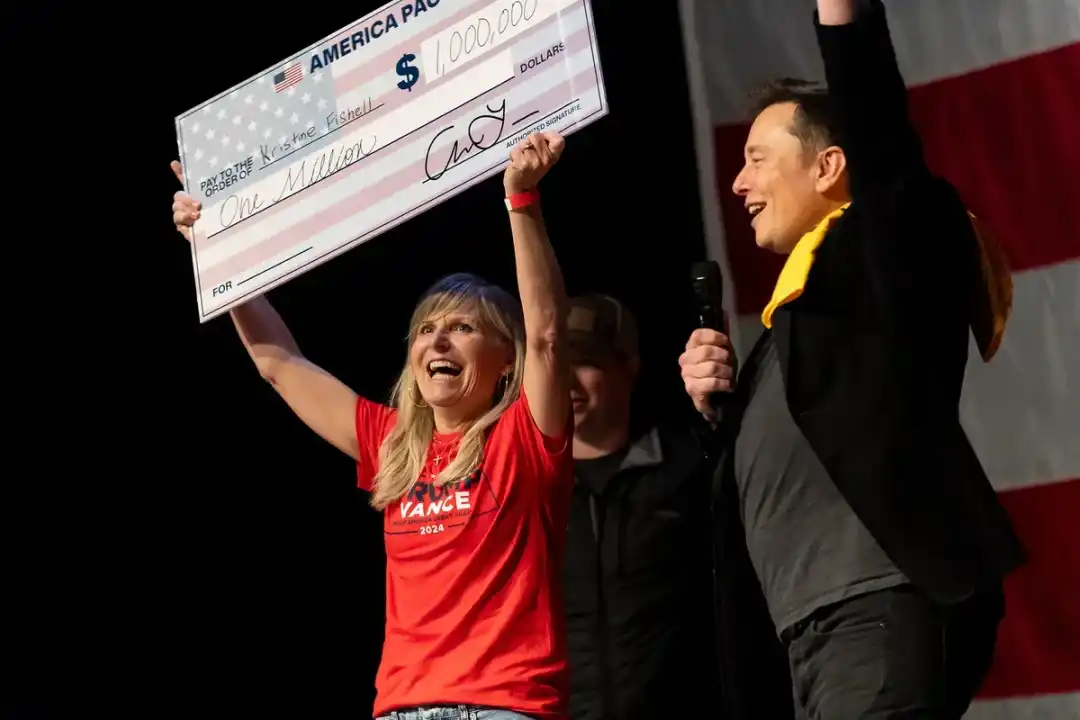
Musk presenting a $1 million check to Kristine Fishell at Pittsburgh City Hall. Image Source: Getty Images
Trump promised some returns: providing rocket contracts for the new Mars mission, setting rules to support Musk's upcoming autonomous taxi launch, and deciding in his government which government projects are cut and which are preserved. Trump and Musk termed this assumed policy combination 'Government Efficiency Department,' a name derived from Musk's fondness for the DOGE abbreviation, the symbol of his favorite cryptocurrency Dogecoin. Trump mentioned Musk in his victory speech, saying: "He's a special person, he's a super genius. We have to protect our super geniuses."
Soon, Musk may be bestowed with a more accurate title: an oligarch. This term applies not only to him but also to Jeff Bezos, Sam Altman, Sundar Pichai, Satya Nadella, and a few other tycoons who postured in various ways after the election, from fake-smile flattery to outright groveling, hoping to get what they want from Trump. Their most pressing concerns seem to include receiving more favorable treatment for mergers (Nadella, Pichai), relaxed regulations on AI oversight (Altman), and avoiding retaliation for news published in their own publications (Bezos).
Will their efforts pay off? Trump's track record does not give them enough confidence. After Bezos decided to withdraw his support for Kamala Harris, The Washington Post faced a wave of subscription cancellations, losing 10% of its subscriber base within days. This suggests that executives and investors boosting Tesla's stock price have not yet fully realized the potential negative impact.
In the days following the end of the election, Trump and Musk had closer contact. Musk was actually encamped with Trump's inner circle at Mar-a-Lago, appeared in family photos, and joined Trump's calls with world leaders. So far, the incoming president has seen Musk both as a trophy and a confidant, not shying away from potential national security issues, such as letting Musk have a call with Ukrainian President Zelensky or threatening to withdraw from NATO in retaliation for European attempts to regulate Musk's companies.
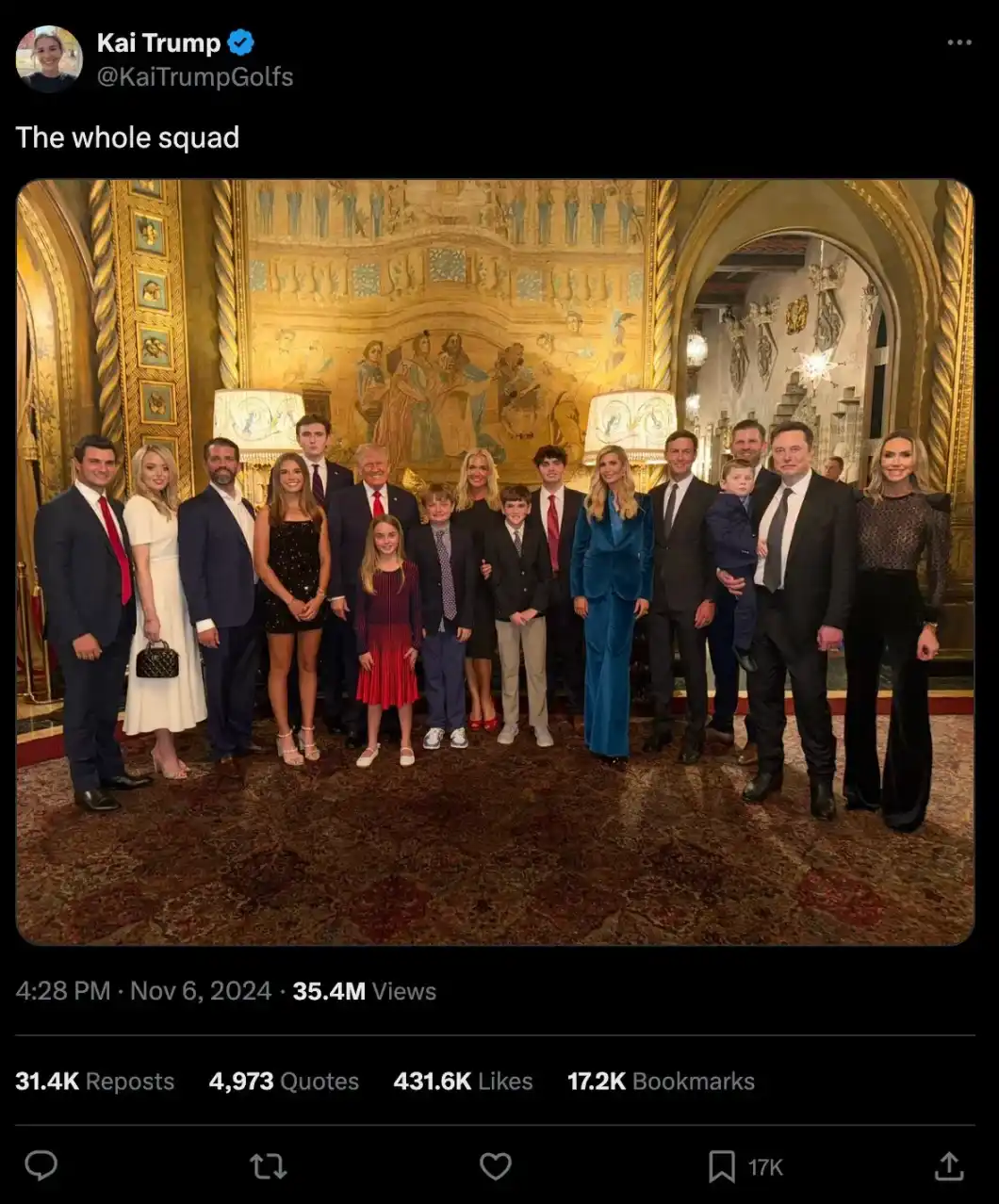
Musk with Trump family members at Mar-a-Lago. Image Source: Kai Trump's Twitter
Meanwhile, Musk continued to strongly support Trump on Twitter as usual, hinting at possibly firing 80% of government employees, abolishing the Department of Education, and ramping up propaganda against the Fed's constitutionality.
This fervor is unlikely to last. And if Trump wants to govern effectively, it certainly cannot.
Musk is talkative and quick to react. At 53, he has an understanding of the instincts of young males, perhaps because he often acts like a teenager in many ways. This may lead to disagreements with analysts and investors, as they do not see fart jokes, 420, and 69 as comedic gold; they fail to understand that for Musk and his fans, dullness is the point.
Outsiders may find it hard to realize that despite X's failure in business, it has been a huge political success. Musk transformed a less popular social media network into a distribution platform for right-wing media, fans, and many genuine white supremacists. X lost a large number of users and advertisers, leading to almost an 80% plummet in the company's value since its acquisition in 2022. But it still has a massive young audience interested in Trump, sports, video games, and cryptocurrency. A YouGov Blue survey conducted in November found that the primary news source for males aged 18 to 29 is social media, with X being the most popular, surpassing YouTube and TikTok.
When Musk began funding a political action committee, he targeted this group. The organization had three basic goals to help Trump: register new voters, encourage supporters to vote early, and get those who might not vote to vote. It arranged for paid canvassers rather than volunteers and poured a significant amount of money into social media ads that catered to the emotional fringe elements of the Trump audience. A 15-second ad began with a young bearded man lazily lounging on a couch, with a gruff voice saying, "If you don't show up to this election, Kamala and the crazies win," then describing Trump as an "American baddie." Another ad warned that Harris would ban pick-up trucks, red meat, and Zyn nicotine pouches. A third ad dubbed Harris "a capital-C communist."
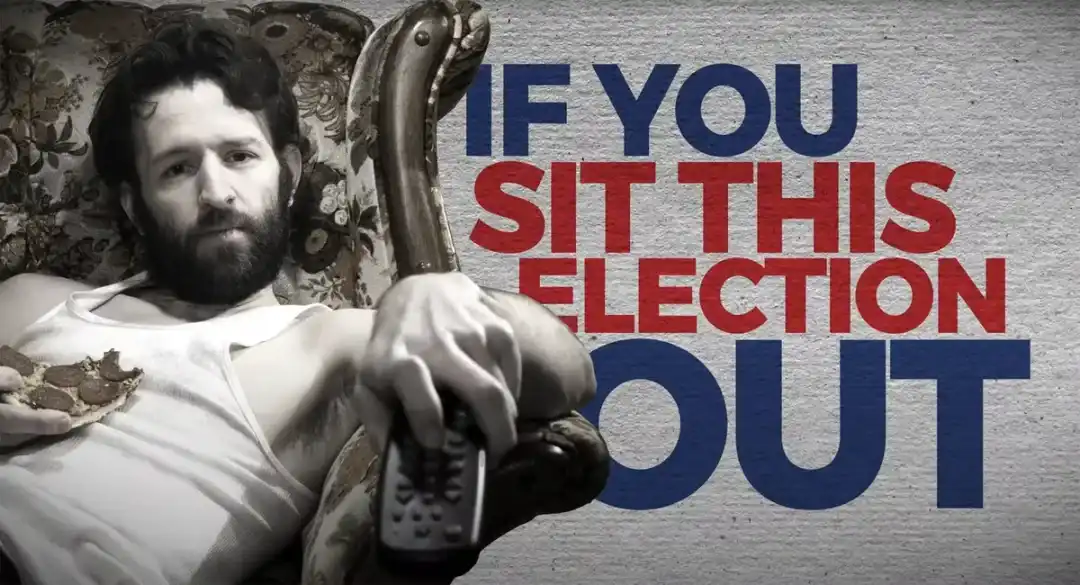
Musk PAC's video ad. Source: YouTube
The PAC's early days were chaotic. Staff complained of unpaid bills, unstable decision-making, and violations of standard labor practices, echoing long-standing grievances from Tesla and SpaceX employees. However, Musk's efficiency was remarkable: political movements typically take years to build, but Musk and his lieutenants recruited a 2,000-strong army in just a few months. Former Florida Governor Ron DeSantis's advisor Andrew Romeo oversaw North Carolina. David Ricksrod, who worked for Virginia Governor Glenn Youngkin, was in charge of Pennsylvania and Michigan. Trump's 2020 political director, Chris Carl, was responsible for Arizona and Nevada. Most canvassing efforts tried to save money by deploying salespeople to more populous areas, where they could visit as many households as possible. But someone familiar with the PAC's operations said Musk's funding allowed governors to dispatch canvassers to more rural areas, where Trump could run up the score. The anonymous source said Musk's PAC visited about 11 million households.
Musk was also extravagant in other ways. When the campaign team rented contact lists to email and text potential voters, each lead typically cost no more than $10. Musk built his own list from scratch. He offered $47 to anyone who recommended a registered voter in a swing state to the political action committee's petition asking for their email address and phone number. Musk later increased the offer for Pennsylvania registered voters to $100. He then announced a daily $1 million giveaway to a lucky signer of the petition. The proposal was arguably illegal, prompting a lawsuit from the Philadelphia district attorney seeking to stop the giveaway, but it also attracted media attention. Musk's petition ultimately collected over a million names. "That's a nice number," said Gait, from Harris Media.
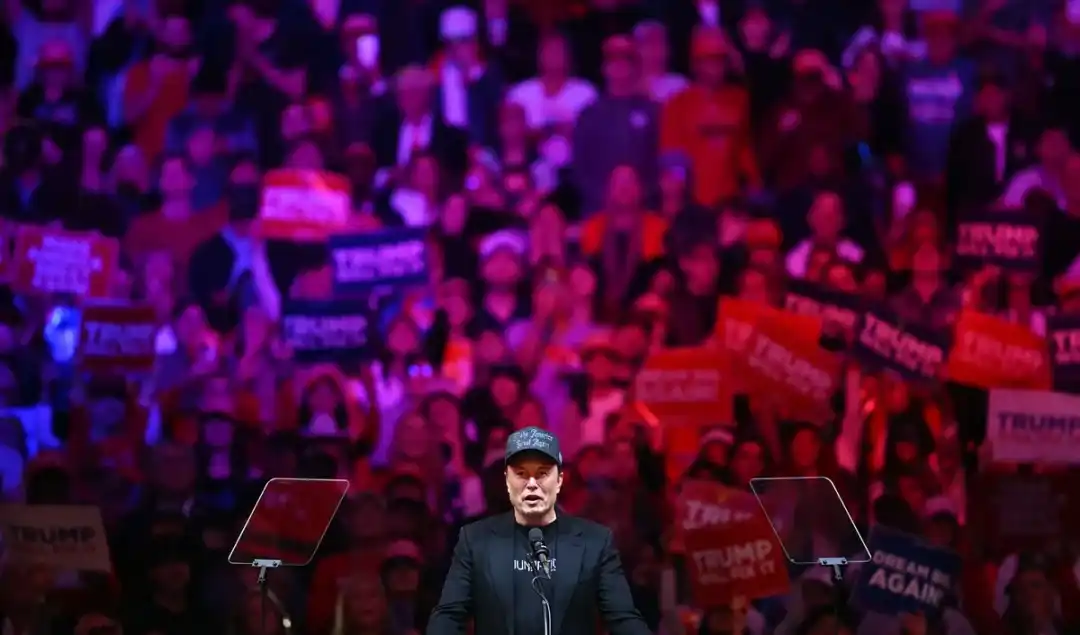
Elon Musk Rallies for Trump at Madison Square Garden. Source: Getty Images
But Musk's most significant move was to inject his personal brand into the PAC's work. On October 5, he appeared on stage at a Trump rally in Butler, Pennsylvania, at the very site where Trump had escaped an assassination attempt. He didn't just speak; he leaped into the air, donned a black MAGA hat, and proclaimed himself "the Dark MAGA." (The campaign immediately embraced the term, meaning "so in love with Trump, it's scary.") Musk held a series of events across Pennsylvania, attracting young audiences who liked him but might not necessarily understand Trump. Then, on October 27, he showed up at Trump's rally in New York's Madison Square Garden, where his treatment was even grander than Trump's running mate and his children's.
The day before the election, America's most popular podcaster Joe Rogan interviewed Musk, much like he had interviewed Trump a week earlier. "It's a message to the men," Musk said, to which Rogan nodded in agreement. "To vote as if your life depends on it." Rogan, who supported Bernie Sanders in 2020, said he now backs Trump and made it clear it was Musk who had swayed him. "The great and powerful Elon Musk," Rogan later wrote on X. "I think he made the most compelling argument for Trump, and I completely agree with his point of view."
In the days following Trump's victory, Musk was not the only billionaire to see his net worth rise. The biggest winners included investors in private prison companies, cryptocurrency firms, and nuclear energy producers. The idea behind these so-called Trump trades was this: If Trump deported millions of immigrants, private prisons would profit; if Trump built the strategic Bitcoin reserve he had promised, cryptocurrency values would soar; and nuclear energy companies would benefit from Trump's pledge to construct new reactors.
Musk's own Trump trade followed a similar logic. During the campaign, Trump signaled that his administration would fund Musk's manned Mars mission plan by 2028. This could bring SpaceX billions, if not tens or hundreds of billions, in value as the company has already launched rockets for NASA and the Department of Defense.
A more immediate potential payoff involves SpaceX's satellite internet service Starlink. Musk has been complaining of exclusion from a $42.5 billion subsidy plan passed during Biden's presidency that would fund fiber-optic broadband in rural areas. Telecom research firm New Street Research's Blair Levin suggested the government could divert some of the funds to Musk instead of laying fiber-optic lines.
Many of Musk and Trump's other interactions have also been speculative and fanciful. The rise in Tesla's stock price seemed to be due to Trump unilaterally legalizing the company's plan for self-driving rental cars. Musk floated this idea on a Tesla earnings call in the weeks leading up to the election. "If there was a government efficiency department, I would do my best to help them do this," Musk said, adding that these regulations would apply to all car companies, not just Tesla. The issue is that Tesla has not actually developed a working self-driving rental car.
Furthermore, while many Tesla investors fit the image of Trump supporters or Musk fans, the actual people buying Musk's electric cars tend to be climate-conscious middle-class moderates. During the previous Trump administration, Tesla customers responded to his Muslim immigration ban policy by canceling orders, despite Musk's indirect relationship with the Trump administration at the time.
Then there's the personal relationship between Musk and Trump. Almost every powerful business leader close to Trump has eventually been forced out of his circle. Trump's influence decays so rapidly that there is even a joking term, "Scaramucci moment," referring to investor and former Trump confidant Anthony Scaramucci's 10-day stint as White House communications director before his firing in 2017. "Elon Musk and others are now having a grand time with Donald Trump," Scaramucci said in a radio interview in early November. "But they'll be with him on the descent-to-hell moment, it's just a matter of time."
Even if Musk can hold out through the Scaramucci era, even if his companies can withstand customer pushback, neither Musk nor Trump is well-liked. (An NBC News poll in September showed Musk with a 34% favorability rating; as of November 11, FiveThirtyEight's polling average showed Trump with a 44% approval rating.) If Trump were to make good on his promise to have Musk trim $2 trillion from the federal budget, it would almost certainly involve cuts to Social Security and some of the most popular government programs. This would provoke fierce opposition not only from Democrats but also from Republicans. Even if Republicans were to win the House, their control over Congress would be very limited.
"Musk may act like an elected autocrat, but America is not an autocracy, at least not yet," Bill Allison said.
Recommended
The Wall Street Journal: How is AI Trading Stealing the Limelight from Cryptocurrency?
Aug 15, 14:00
Tencent Still Has a Dream
Aug 15, 11:27
To Catch North Korean Hackers, They Set Up a Fake Project
Aug 15, 10:00
From Litigation to Settlement: Positive Signal Released by HTX's Negotiation with FCA
Aug 14, 19:32
11,742 Shipping Addresses Exposed Alongside Trezor Orders
Aug 14, 19:01
Founder Interview: FOMO Creator Explains How They Added 30,000 Users in One Day and Became One of the Fastest-Growing Crypto Apps
Aug 14, 18:37