Conversation with a16z Co-founder: Technological Progress Thanks to AI and the Future of the U.S. Amid Regulatory Challenges

Original Source: Tom Bilyeu, YouTube
Original Translation: Deep Tide TechFlow
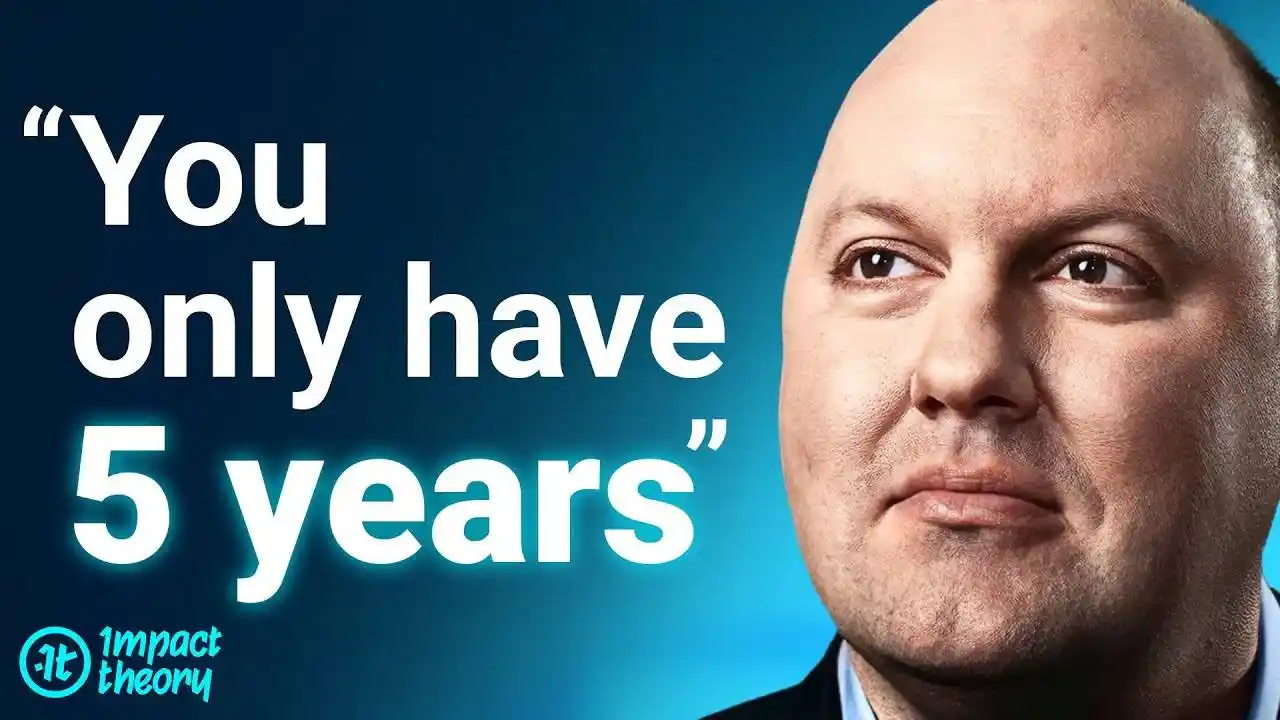
Guest: Marc Andreessen, a16z Co-Founder
Host: Tom Bilyeu
Podcast Source: Tom Bilyeu
Original Title: AI is bigger than the internet 'How AI will change EVERYTHING Elon Musk Censorship | Marc Andreessen
Air Date: October 22, 2024
Welcome to another thought-provoking episode of Impact Theory hosted by Tom Bilyeu. Today, we engage in a deep conversation with the legendary entrepreneur and investor Marc Andreessen. Tom and Marc delve into a wide range of topics, from the future of technology and artificial intelligence to the dynamic complexity of the American economy and society.
Marc shares his optimism about America's potential, particularly driven by its diversity and ambitious population, while Tom raises relevant questions about pressing challenges such as inflation, government regulation, and economic growth. They discuss how technological advancements, especially in artificial intelligence and robotics, could potentially revolutionize industries but may also clash with traditional values and societal norms.
We will delve into key issues such as job displacement, the censorship regime, and the evolving role of free speech in a rapidly changing world. Marc discusses the "slow-moving areas" of healthcare, education, and housing, emphasizing the urgent need for cost reduction and growth acceleration through technological integration.
This episode is filled with profound insights into the historical and future impact of technology on the economy, the role of government regulations, and the ever-changing religious and cultural ideologies. Get ready to challenge your perspective and gain a deeper understanding of the forces shaping our future. Buckle up; this is a riveting discussion you don't want to miss!
AI and Its Importance
Marc stated that the audit battle of AI will become more intense and crucial. He believes that rapid technological progress will bring about economic growth, but this requires people's attention and support.
Tom believes that AI will replace many jobs, and some people will reallocate themselves by learning new skills, while others may not be able to do so. Both guests emphasize the need to prepare for future changes.
The Major Disruption of AI
Marc emphasizes that AI is a fundamental transformation, similar to the emergence of the computer microprocessor and the internet. His optimism about AI is reflected in multiple industries, especially in the healthcare and entertainment sectors. He mentioned that the healthcare industry will see significant breakthroughs due to AI applications, and the entertainment industry is also experiencing a surge in creativity.
The Advancement of Robotics Technology
Marc discussed the potential of robotics technology, mentioning past promises of household robots and automation. He points out that with technological advancements, applications such as self-driving cars and drones have gradually matured. He predicts that within the next five years, household robots will gradually enter the market.
Challenges Faced by Robotics
Marc mentioned that robotics technology faces three main challenges: physical control, energy supply, and software development. Despite advances in sensors and data processing, overcoming battery life and adaptability in complex environments is still necessary.
Interaction Between Robots and Humans
When discussing how robots interact with humans, Marc believes that robots should be designed to be friendly and safe. He mentioned that modern language models allow robots to engage in natural conversations with humans, providing endless possibilities for future product design.
Social Acceptance of AI
Tom proposed a perspective of social divide, suggesting that there may be a polarization in the future between embracing technology and rejecting technology. Marc expressed skepticism about this, believing that despite this divide, most people will eventually accept technological development, similar to the selective acceptance of technology by the Amish.
Popularization and Application of AI
Tom and Marc discussed the process of artificial intelligence (AI) rapidly transitioning from a fringe technology to a common tool in everyday life.
Marc pointed out that the user base of AI systems such as ChatGPT and Midjourney has reached hundreds of millions and their usage is rapidly growing. Many people are using these tools at work and in learning, even though they may be reluctant to admit it to their superiors.
Democratization of Technology
Marc emphasized that the most powerful AI systems currently available are open to the public at an extremely low cost (usually free or up to $20 per month). The rate of adoption of this technology has even surpassed that of personal computers and the internet. He mentioned that users can now access the same technology as large corporations without paying high fees, which is changing traditional notions of technology access.
The Future of AI and its Societal Impact
Tom expressed optimism about the future development of AI, believing that this technology will bring about significant transformation. He acknowledged that AI will lead to the loss of many jobs but will also create new opportunities. Tom believes that young people, due to their adaptability, will be able to better utilize new technology, and society needs to support those impacted, for example, through Universal Basic Income (UBI).
The Relationship Between Economy and Inflation
When discussing the economy, Tom raised an important question: despite significant technological advancements driving up productivity, why does inflation still exist? He believes that governments print money to capture the economic benefits of technology, leading to a sustained increase in inflation. This phenomenon may cause people to make irrational choices when faced with economic changes.
Tom expressed dissatisfaction with the current economic situation, especially with the surge in money supply. He mentioned that the government artificially inflates the money supply to cause inflation, eroding the wealth of ordinary people. Tom believes that the government has a moral obligation to provide a non-inflationary form of currency so that ordinary people can preserve wealth without relying on the stock market to combat inflation.
Productivity and Technological Change
Marc discussed the relationship between productivity growth and technological change. He pointed out that historically, in the decades before 1970, productivity growth was much faster than it is now. Despite technological advancements, productivity growth has remained at a lower level over the past sixty years. Marc mentioned that 1971 was a significant turning point, after which productivity growth significantly slowed down.
Impact of a Low-Growth Environment
In a low-growth environment, the economy and politics often exhibit characteristics of a zero-sum game. Marc believes that in a slow-growing economy, society experiences polarization, and the wealth gap between young and old widens. Conversely, rapid technological progress and productivity growth will foster economic prosperity, providing opportunities for everyone to benefit.
Inter-Industry Price Discrepancy
Marc points out that there is a significant disparity in price changes across different industries in the current economy. Industries such as healthcare, education, and housing have seen prices skyrocket, while prices for industries like video games, entertainment, and consumer electronics have been on the decline. This phenomenon is due to the less government regulation in fast-changing tech industries, while slow-changing industries face strict regulations and constrained supply.
Future Outlook
Marc predicts that if the current trend continues, the cost of a four-year college degree could reach one million dollars in the future, while the prices of tech products will significantly decrease. This imbalance is placing a heavier economic burden on people, especially in terms of healthcare, education, and housing.
The Necessity of Introducing Technology
Marc emphasizes that to address the inflation issue in healthcare, education, and housing, more technology must be introduced in these industries. He believes that fully automated and AI-driven healthcare, education, and efficient housing construction can greatly reduce prices, thus alleviating inflationary pressures. Without technological transformation, future politics will become exceptionally intense as people will have to compete for increasingly scarce resources.
The Labor Market Paradox
Discussing the strike of the Longshoremen's Union (Dockworkers), Marc mentions that workers are demanding a ban on the introduction of new technology to protect their jobs. This conflicting stance reflects workers' complex psychology of wanting higher wages while also wanting to preserve their job positions. In reality, such protective measures have resulted in many workers being unable to engage in actual work, thereby increasing the overall cost to the economy.
Concentrated Benefits and Dispersed Harms
Marc further explains the concept of "Concentrated Benefits and Dispersed Harms." For Dockworkers, measures to protect their jobs bring direct benefits to them but lead to higher prices for other consumers when purchasing goods. This situation is common in the economy, where specific interest groups lobby the government for protection, ultimately causing a decrease in overall economic efficiency.
Impact of Occupational Licensing
Marc also mentions that around 30% of jobs in the U.S. require some form of occupational licensing, with this phenomenon being particularly pronounced in California, even becoming a barrier to entry for professions like beauticians. The strict occupational licensing system makes it difficult for newcomers to enter the market, thereby limiting industry competition and innovation, further driving up the prices of services.
Educational Monopoly
In the field of education, Marc points out that due to the existence of federal student loans, colleges and universities must be accredited to receive loans, and the accreditation process is controlled by existing educational institutions. This self-protecting mechanism makes it difficult for new schools to be established, limiting the supply in the education market, thereby driving tuition fees up.
Government Monopoly and Union Protection
Marc notes that K-12 education is not only a cartel structure but also a government monopoly. Many government employees, including teachers and police officers, enjoy civil service protection and union protection, making them difficult to fire. This system leads to incompetent teachers not being able to be dismissed, further exacerbating the issue of educational quality.
Legal and Automation Barriers
Marc emphasizes that laws restrict the application of artificial intelligence in many fields. AI cannot become a lawyer, doctor, or perform construction work because it is prohibited by law. This legal restriction prevents automation in many parts of the economy, stifling the potential for economic growth.
The Proliferation of Laws and Regulations
Marc mentions that since the 1970s, the quantity of laws and regulations in the United States has sharply increased, severely constraining economic activities. He cites Judge Neil Gorsuch's work, pointing out that the quantity and complexity of laws have made it difficult for ordinary citizens to comply, potentially inadvertently breaking the law. He emphasizes that many laws and regulations serve to protect the interests of specific interest groups, leading to the phenomenon of "concentrated benefits and dispersed harms."
Possibilities for Economic Reform
When discussing future reforms, Marc mentions that Argentina's new president, Javier Milei, is attempting large-scale deregulation to stimulate economic growth. He believes that effective deregulation could lead to higher economic growth and prosperity. Milei's reforms have garnered public support as people have grown tired of existing high inflation and regulatory systems.
Free Speech and Cultural Discourse
Tom believes that restoring freedom of speech is crucial for economic recovery. He emphasizes the necessity of open discussions of differing viewpoints and how to balance free speech and regulation in the AI age. Marc also states that he is a staunch supporter of free speech, believing that the internet should follow the principles of the First Amendment of the U.S. Constitution, with restrictions only when truly dangerous behavior is involved.
A Comparison of Social Media Censorship and AI Censorship
Marc points out that the censorship battle on social media is a prelude to the AI censorship battle. He believes that AI censorship will become more intense and crucial as AI becomes the "software layer" that controls everything, influencing various aspects of our education and communication. He mentions that some AI systems have already shown clear biases, displaying evident unfairness when providing information about different political candidates.
The Current State of Information Warfare
Marc emphasizes that the conflict of AI censorship has already begun, with those who once advocated for social media censorship now shifting towards AI censorship. He warns that this may be one of the most significant political struggles in the next 30 years.
The Control of Truth and Frameworks
Tom expresses concerns about AI censorship, pointing out that the control of frameworks may lead to the manipulation of thoughts. He believes that when AI is used to propagate a specific ideology, it can influence people's thinking by setting frameworks, thus restricting their understanding of the truth.
Elon Musk's AI Vision
Marc mentions that Elon Musk pursues "maximizing truth exploration" in his AI project, encompassing scientific truth and socio-political truth. He believes that if a genuinely truth-seeking AI can be successfully built, it would be a fundamental shift.
The Potential of Open-Source AI
Marc believes that open-source AI may play a significant role in advancing truth exploration as it allows people to experiment and develop without permissions, thereby promoting broader discussions and debates.
Pressure from Governments and Corporations
Marc warns that today's tech companies face immense pressure from governments and social activists, pressure that may intensify. He emphasizes that whether the public cares about this issue and is willing to stand up to defend free speech will be crucial.
Marc concludes that the potential impact of AI censorship is profound, and society needs to pay attention to this issue to uphold the rights of free speech and truth exploration. He calls on the public to actively engage in discussions to ensure that AI technology evolves towards facilitating open communication and truth.
The Double Standards of Cultural Censorship
Marc points out that many people in today's society support the censorship system mainly because they want to protect their own views. In the past, the Christian conservative movement was the main advocate of censorship in America, while the left-wing at that time advocated for free speech. Over time, a shift in power has allowed the left-wing to take control of mainstream culture, and now they tend to restrict speech, while the right-wing has become the force against censorship. This changing dynamic reflects the struggle of culture and power—those in power tend to restrict speech.
The Importance of Free Speech
Tom emphasizes the importance of free speech, stating that expressing thoughts and facing challenges are at the core of thinking. He uses the example of Newtonian physics versus relativity to illustrate that scientific truth is continuously revised and updated, and only through open discussion and challenge can we get closer to reality. For young entrepreneurs, accepting criticism and challenges is key to improving skills and gaining practical knowledge.
Elon Musk's Path to Success
When discussing Elon Musk's success, Marc points out that Musk's way of working and thinking sets him apart. He emphasizes Musk's focus on real issues, rapid project advancement, and his ability to quickly identify and address bottlenecks. This efficient way of working allows his companies to make progress faster than competitors.
Opposition to Bureaucracy
Marc also mentions that many large companies become inefficient due to excessive bureaucracy and processes. He uses the example of Shopify CEO Toby Luky to illustrate that by regularly canceling all meetings and reassessing which meetings are necessary, a company can avoid falling into an ineffective meeting culture. Such practices help maintain the company's agility and ensure that employees can focus on actual work.
The Impact of Bureaucracy
When discussing IBM, Marc points out that the corporate structure and bureaucracy severely hinder innovation. He gives an example that within IBM, the decision-making process is extremely complex, requiring approval from multiple layers of managers to make any decision. This ‘consensus’ system demands agreement from every relevant manager, where any opposition can halt decision-making progress, causing the company to be unable to adapt quickly to market changes.
Excessive Management Layers
Marc mentions that during his work, becoming a CEO required traversing as many as 12 layers of management. This massive structure slows down information flow and decision-making efficiency. As the company grows, the connections between employees become increasingly sparse, and many employees may never see colleagues from other departments in their lifetime, forming a closed ecosystem.
The Phenomenon of the "Rubber Room"
Marc also mentioned that similar to the New York City public schools' "rubber rooms," IBM has a similar phenomenon where many underperforming employees are placed in roles with no substantial work, further exacerbating the company's inefficiency and loss of innovation capability. This situation hinders the company from quickly reacting and adjusting to market challenges.
The Relationship Between Culture and Innovation
Marc emphasized that the health of corporate culture directly impacts the ability to innovate. In a bureaucratic environment, employees often lack initiative and creativity because their ideas and suggestions may get lost in layers of approvals. On the other hand, leaders like Elon Musk encourage employee-driven innovation and rapid trial-and-error through a flat management structure and efficient decision-making processes.
The Evolution of AI-Human Relationships
Tom raised a thought-provoking point, suggesting that in the future, people may develop intimate relationships with AI and may even choose to co-parent "AI children" in some cases. This trend could lead to significant changes in social structures and interpersonal relationships. With technological advancements, people may increasingly rely on AI to fulfill emotional needs, potentially substituting traditional human interactions to some extent.
Culture and Fertility Rate Changes
Marc further explored the issue of declining global fertility rates, noting its prevalence across different cultures, reflecting human confusion and a sense of crisis in the face of modern life pressures. He mentioned that this decline in fertility rates is closely related to people's search for meaning in life. While seeking self-fulfillment, people may overlook the traditional values of family and childbearing.
Meaning Crisis and Technological Interaction
Marc emphasized that technology not only changes culture, but culture also shapes technological development. With the proliferation of AI, people may face a deeper meaning crisis as the emergence of AI could alter people's views on intimate relationships, family, and childbearing. People may redefine the concept of "family" in the company of AI, sparking reflections and debates on religious and cultural fronts.
The Psychological Transformation of Humanity
Marc also mentioned that the experience of becoming a parent profoundly alters a person's psychological state and worldview. This transformation cannot be fully replaced by a relationship with AI because the emotional connection between humans and the unique experience brought by childbearing are things AI cannot simulate. While people may form some form of emotional bond with AI, this connection fundamentally differs in depth and complexity from human relationships.
Future Outlook
In the future, AI may become an essential part of human life, even to some extent replacing traditional intimate relationships. However, Marc reminds us that while AI can provide convenience and companionship, genuine human interaction and emotional connection remain crucial elements of our lives. We need to value interpersonal relationships and family values while enjoying the convenience brought by technology to ensure that our emotional needs as humans are met.
The Central Role of Interpersonal Relationships
Marc emphasizes that the need for humans to build deep relationships with others is deeply rooted, whether with relatives or non-relatives such as friends. This kind of relationship occupies a central place in our lives, especially against the backdrop of declining birth rates, where changes in family structure make interpersonal relationships even more crucial. As people choose not to have children or have fewer children, the traditional family ties may weaken, making connections between individuals even more valuable.
The Impact of Declining Birth Rates
The decline in birth rates signifies that many traditional family and community structures are undergoing changes. Marc mentions that as more people choose not to have children, the inheritance of many cultures and values may be affected. This change not only impacts individuals' lifestyles but may also have profound effects on the overall cohesion of society. People may rely more on friends and communities to fill this gap, seeking emotional support and a sense of belonging.
Material Wealth and Spiritual Exploration
Marc also notes that although technological and AI advancements have improved our material standard of living, it does not mean that humans have found answers to the question of life's meaning. On the contrary, material wealth may provide people with more opportunities to ponder these profound questions. When people are no longer struggling for survival, they can better explore significant issues related to religion, philosophy, and lifestyles. Therefore, as material conditions improve, the value of interpersonal relationships may further rise.
The Interweaving of Religion and Interpersonal Relationships
When discussing the influence of religion, Marc points out that the forms of religion in modern society have changed. While many may no longer engage in religious activities in traditional ways, the core values of religion and the exploration of human existence still exist in various aspects of society, including politics and culture. When facing life's challenges and uncertainties, people often turn to some form of faith or value system, a phenomenon that is increasingly evident in today's society.
Future Outlook
As society continues to evolve, a declining birth rate may lead to a reshaping of interpersonal relationships. People may place greater emphasis on connecting with others to compensate for the loss of traditional family structures. At the same time, technological advancements will also provide new ways for people to establish and maintain these relationships. Despite facing many challenges, in this rapidly changing world, the importance of interpersonal relationships will become increasingly prominent as a key aspect for individuals seeking support and meaning.
Religion and the Historical Link to Culture and Genes
Marc mentioned that early Western civilization was made up of families, tribes, and cities that contained shared ancestry, culture, religion, and geography. In the past, religion was closely tied to these elements, and changing one's faith was considered unimaginable. However, as society developed, these elements became more abstract, and the connection between religion and culture and genes became looser. Modern individuals can freely choose their religious beliefs, no longer restricted by their cultural and family backgrounds at birth.
Religious Choices in Modern Society
In today's society, individuals can choose to be Catholics, Christians, Jews, Muslims, or even create their own religion. This freedom of choice has made religion akin to a "buffet," where individuals can construct their belief systems based on their needs and preferences. While this change has promoted innovation in the concept of religion, it has also led to a diminished importance of religion in modern life.
The "Non-Seriousness" of Religion
Marc points out that modern attitudes towards religion seem less serious. When religious beliefs are no longer convenient, people are more likely to choose to abandon or change their faith. This phenomenon reflects the declining status of religion in contemporary society. Although human religious impulses still exist, their expression and focus have changed.
Alternatives to Religious Impulses
Tom puts forward a hypothesis, suggesting that the intensity of religious impulses remains unchanged in different cultures and backgrounds, only that their target has shifted. Taking video games as an example, he notes that people invest a significant amount of time and emotion in gaming communities, forming a sense of belonging similar to that of religion. This sense of belonging and commitment to the game can satisfy individuals' needs for community and identity. While this sense of belonging is not equivalent to the influence of traditional religion, it reflects humanity's desire for belonging and meaning.
Religious Group Formation and Cohesion
Marc mentioned that religion has played a crucial role in historical group formation and cohesion. In ancient societies, the formation of families, tribes, and cities was closely linked to religious beliefs. Initially, the family was the basic social unit, and over time, families gathered into tribes, which then converged into cities, with each level having its specific deities and faith. This religious structure not only strengthened the connections between families and tribes but also provided a spiritual foundation for the formation of cities.
Survival and the Role of Religion
In ancient times, the survival environment was extremely harsh, with threats such as famine, floods, and external invasions that could affect the group's existence at any time. In such a context, religion became a vital tool for uniting people and enhancing cohesion. Religious beliefs enabled individuals to form common moral obligations when facing external threats, thereby maintaining the stability and survival of the group.
Religious Impulses in Modern Society
Although the survival environment in modern society is drastically different from ancient times, human religious impulses still exist. Tom pointed out that these impulses in today's society may shift to other areas, such as video games and politics. People seek a sense of belonging and identity in these domains, forming new communities and cultural ties. The teamwork and competition in video games precisely reflect people's need for group identity.
Morality and Blindness
Marc referenced psychologist Jonathan Haidt's view, emphasizing how shared moral values or religious beliefs can bring people together but may also lead to the rejection of other viewpoints. This phenomenon is particularly evident in modern politics, where intense partisan struggles make it harder for individuals to understand each other's positions and instead tend to prioritize their group's interests.
Politics as a New "Religion"
Both Marc and Tom agree that modern politics to some extent fulfills a role similar to religion. The passion and dedication people exhibit towards politics often resemble the intensity of religious beliefs. Political faith not only influences individuals' life choices but also creates a strong sense of belonging in society. This phenomenon indicates that despite the waning influence of traditional religions, the human need for faith and belonging persists and finds fulfillment in other areas.
With the declining influence of traditional religions, political faith increasingly serves as people's spiritual anchor. The intense confrontations and profound sense of belonging in modern politics have led individuals to somewhat view politics as a new form of religion. Whether in the river of history or in today's society, this transformation reflects humanity's timeless pursuit of meaning and belonging.
Marc mentioned that productivity growth is a key economic indicator that measures the impact of technology on the economy. In essence, productivity growth means achieving more output with less input. This concept can be illustrated through many examples, such as using more efficient tools and technology to speed up railway construction, reduce the production cost of cars, or enhance the development efficiency of video games.
The speed of productivity growth directly affects the pace of economic growth. When productivity improves, the prices of goods and services usually decrease. For example, 200 years ago, the cost of purchasing an avocado was equivalent to $100 today, whereas now it's only $1. This reduction in price increases consumers' purchasing power, allowing them to buy more goods and services even without a wage increase.
New Consumer Demand and Industrial Development
With the rise in consumer purchasing power, the market's demand for new products and services also increases. This growth in demand will drive the emergence of new industries and job opportunities, creating a virtuous cycle. Marc believes that if artificial intelligence develops as expected, productivity will increase significantly, leading to further price reductions in goods and services, enabling more people to obtain what they desire.
Technological Adoption and Economic Growth
Marc emphasizes that the introduction of technology does not result in unemployment; instead, it creates more job opportunities and better working conditions. He mentions that historical concerns about technology replacing human labor are often unfounded. Technological progress usually brings about higher productivity and lower costs, thereby driving economic development.
Optimism About the Future
Despite Marc's optimism about the future, he also underscores that material well-being does not address all the underlying issues in life. He believes that having material well-being is the foundation for answering bigger questions but is not the ultimate goal. He expressly states that he is not advocating for a new religion but rather aiming to improve human living conditions through technological advancement and increased productivity.
Original Article Link
Recommended
The Wall Street Journal: How is AI Trading Stealing the Limelight from Cryptocurrency?
Aug 15, 14:00
Tencent Still Has a Dream
Aug 15, 11:27
To Catch North Korean Hackers, They Set Up a Fake Project
Aug 15, 10:00
From Litigation to Settlement: Positive Signal Released by HTX's Negotiation with FCA
Aug 14, 19:32
11,742 Shipping Addresses Exposed Alongside Trezor Orders
Aug 14, 19:01
Founder Interview: FOMO Creator Explains How They Added 30,000 Users in One Day and Became One of the Fastest-Growing Crypto Apps
Aug 14, 18:37