Understand the current stablecoin landscape, and how can retail investors participate in the trillion-dollar race?

Original Author: Ruisnakes, SevenX Investor
Original Translator: zhouzhou, BlockBeats
Editor's Note: This article discusses how stablecoins are transforming the payment and financial world, analyzing the earning strategies of stablecoins, their advantages compared to traditional payments, their role in exchanges and cross-chain transactions, as well as mentioning some challenges such as regulation and technical issues. The article also talks about major companies like JPMorgan and PayPal entering the stablecoin issuance space, the staggering profits behind it, and the new possibilities that stablecoins bring in terms of improving payment efficiency and expanding financial inclusion. Overall, stablecoins are driving a financial revolution, but they also face a game between freedom and regulation.
The following is the original content (slightly rearranged for better readability):
With various countries and institutions rushing into the stablecoin field, a trillion-dollar opportunity is emerging.
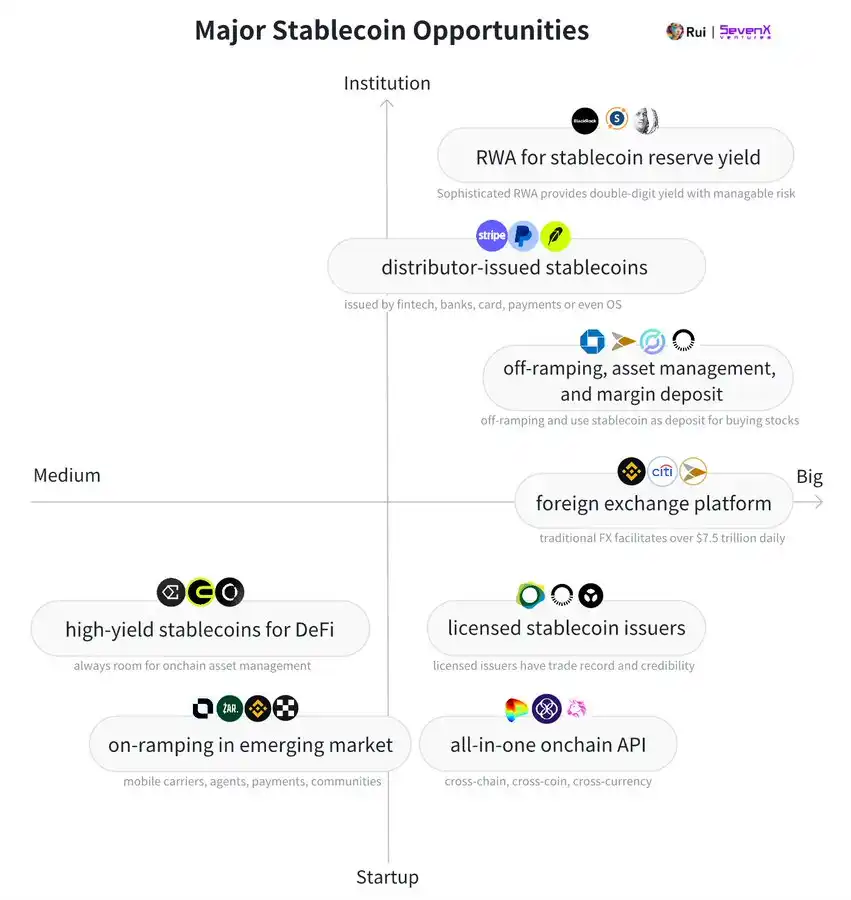
DeFi Applications of High-Yield Stablecoins
Expanding Yield Through Various Means:
ethena labs creates revenue through market volatility arbitrage.
CapLabs introduces the MEV and arbitrage profit model.
usualmoney and withAUSD utilize their own token for compound sovereign bond yields.
reservoir adopts a diversified high-yield asset basket strategy.
Deploying a recycling strategy on MorphoLabs and pendle fi.
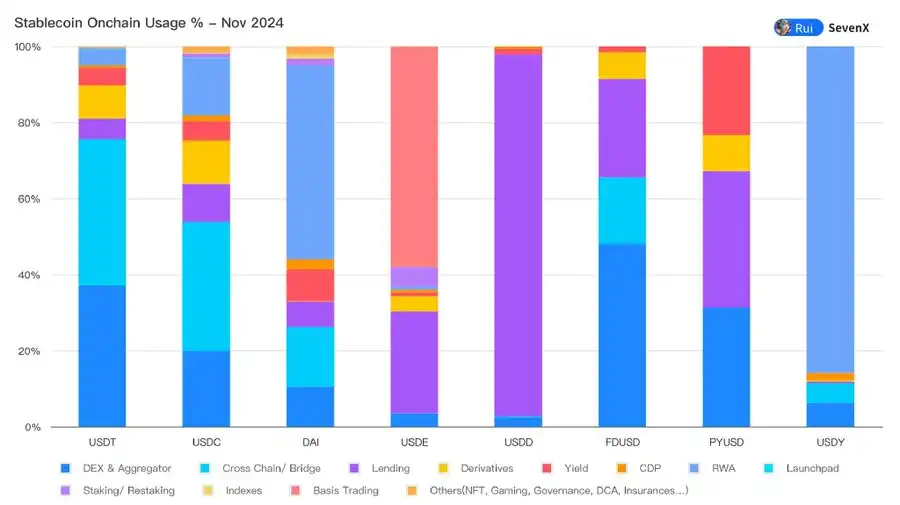
However, as TVL grows, yields are gradually diluted, and projects need to explore sustainable revenue models and real-world use cases. Currently, only USDT, USDC, and a small amount of DAI are used as primary trading pairs, with other stablecoins more often seen as financial products rather than currencies in circulation.
On-Chain Payments in Emerging Markets
USDT has a strong liquidity network in emerging markets, where locals rarely convert USDT back to fiat but rather see it as a substitute for the dollar. For example:
In Turkey, stablecoin transaction volume accounts for 3.7% of its GDP.
Argentina has a stablecoin premium of 30.5%.
Nigeria has reached 22.1%.
Projects like zarpay app and MentoLabs are using a grassroots marketing strategy through local agents and payment systems to attract more users to the blockchain ecosystem.

Licensed Stablecoin Issuers
Institutions rely on trusted stablecoin issuers to avoid the complexity of technology and regulation. Key players currently include:
Paxos (issuer of PYUSD, BUSD)
brale xyz (issuer of USC)
Stablecoin (providing B2B API services)
Integrated Stablecoin API
Future challenges will involve cross-currency, cross-border, and cross-chain complexities, and solutions are gradually emerging:
AMMs (Automated Market Makers) like CurveFinance and Uniswap provide flexible and efficient trading methods.
Companies like Perena are actively building infrastructure to simplify deployment, exchange, and liquidity management while supporting business scenarios.

Stablecoins Issued by Distributors: The Pinnacle of a New Profit Model
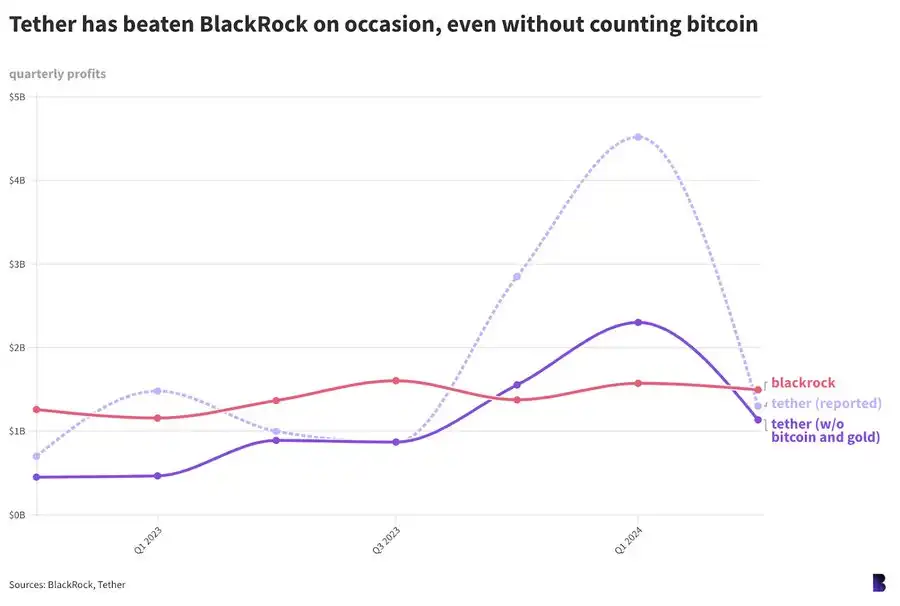
Stablecoin issuance has created an unparalleled business model. Taking Tether as an example, this company with only about 100 employees has earned billions of dollars in profit by investing its reserves, sometimes even surpassing the profit capabilities of BlackRock.
Entry of Traditional Financial Giants:
JPMorgan: Introduced its own stablecoin, JPM Coin, focusing on institutional payment and settlement needs.
PayPal: Launched PYUSD, aiming to further enhance its business value through reserve earnings.
Stripe: By acquiring stablecoin technology, it has demonstrated an interest in mastering the stablecoin core technology stack, rather than just integrating USDC.
Visa and Mastercard: They are testing the integration of stablecoins to explore the future possibilities of digital payments.
Core Driver: Stablecoins can significantly reduce payment costs and can also generate ongoing profit through investment in reserve assets. Therefore, the distributor is not only an intermediary in the payment system but has also become a key player in the new financial infrastructure.
On-Chain Solutions for the Forex Platform
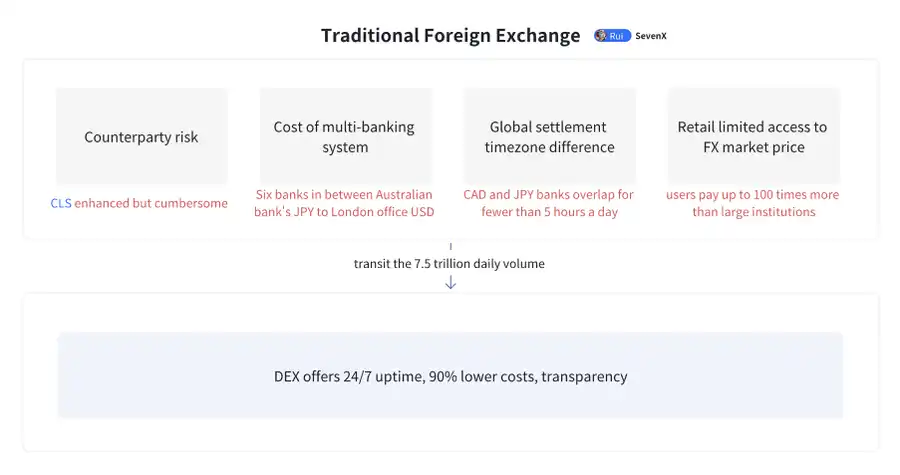
This is currently one of the largest market gaps. The traditional forex market has a daily trading volume of over $7.5 trillion but faces the following problems:
Counterparty settlement risk
High costs of the multi-bank system
Global settlement time zone differences
Access restrictions
On-chain solutions provide the best transparency and efficiency by using oracles (such as chainlink) and AMM.
Citibank is developing its on-chain forex platform in Singapore.
Binance has launched a peer-to-peer order book product, further exploring the possibilities of the on-chain forex market.
Withdrawals, Asset Management, and Margin Deposits
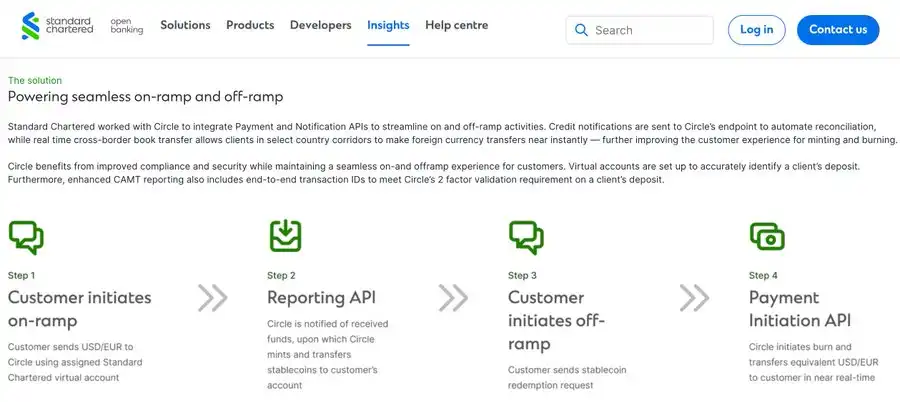
Banks are the core entry point for fiat-backed stablecoins: standardchartered has started supporting withdrawal services, and more banks are expected to join. Banks provide asset management services to institutions and are expected to use stablecoins for stock trading margin deposits.
Stablecoin Reserve Yield from RWA Investment
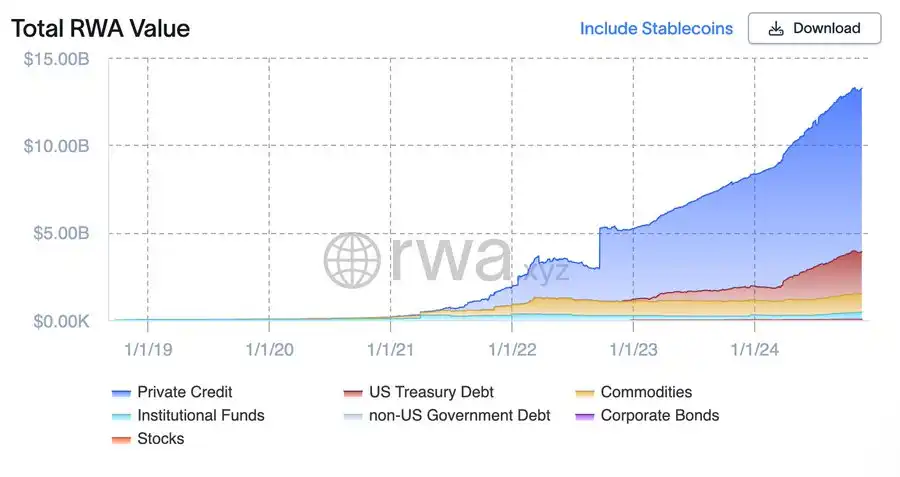
RWA is still in its early stages. Tether earns billions annually by investing its reserves like a bank. Currently, most stablecoins' reserves are invested in short-term government bonds managed by BlackRock and RWA products issued by Securitize. BlackRock and FTI US provide more on-chain financial product portfolios, and more complex high-yield on-chain products are expected to emerge in the future while maintaining manageable risks.
Unresolved Questions:
Will regulations compromise 'Open Finance'? Regulated stablecoins may enable fund monitoring, freezing, and seizure, posing a threat to openness.
To maintain a non-securities status, will compliant stablecoins avoid offering returns? In that case, would DeFi be unable to benefit from its expansion?
Can any open blockchain truly handle large fund sizes and real-world transaction throughput (TPS)?
Will the separation of currency and jurisdiction bring more chaos or opportunity?
Delve into these questions now:

Chapter 1: Distribution
The younger generation is a digital-native, and stablecoins are their native currency. With AI and IoT driving billions of automated microtransactions, global finance needs adaptive currency solutions. As a 'currency API,' stablecoins seamlessly transmit like internet data, with a transaction volume reaching $4.5 trillion in 2024. As more institutions realize that stablecoins offer an unparalleled business model, Tether earned $5.2 billion in profit through investment reserves in the first half of 2024, a number expected to continue growing.
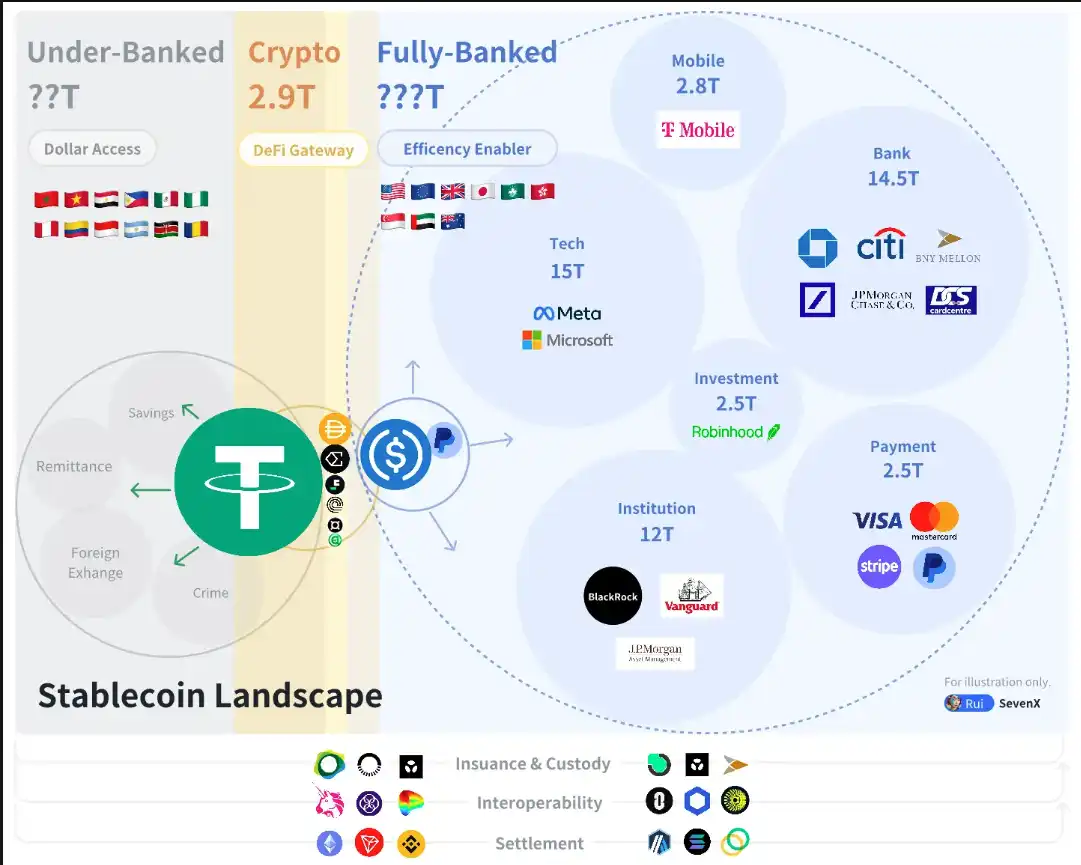
In the stablecoin competition, distribution and real adoption are key, not complex cryptographic mechanisms. Stablecoin adoption is reflected in three main areas: the native crypto world, fully banked, and underbanked worlds.
Native Crypto World ($29T):
In the $29 trillion native crypto world, stablecoins act as DeFi gateways crucial for trading, lending, derivatives, liquidity mining, and RWA. Native crypto stablecoins compete through liquidity incentives and DeFi integration.
Fully Banked World ($400T+):
Stablecoins enhance financial efficiency, primarily used in B2B, P2P, and B2C payment sectors. In this realm, stablecoins focus on compliance, licensure, and distribution through banks, card networks, payment systems, and merchants.
Unbanked World:
Stablecoins provide users with access to the US dollar, promoting financial inclusion. Stablecoins are used for savings, payments, foreign exchange transactions, and yield generation. Grassroots market promotion is crucial in this field.
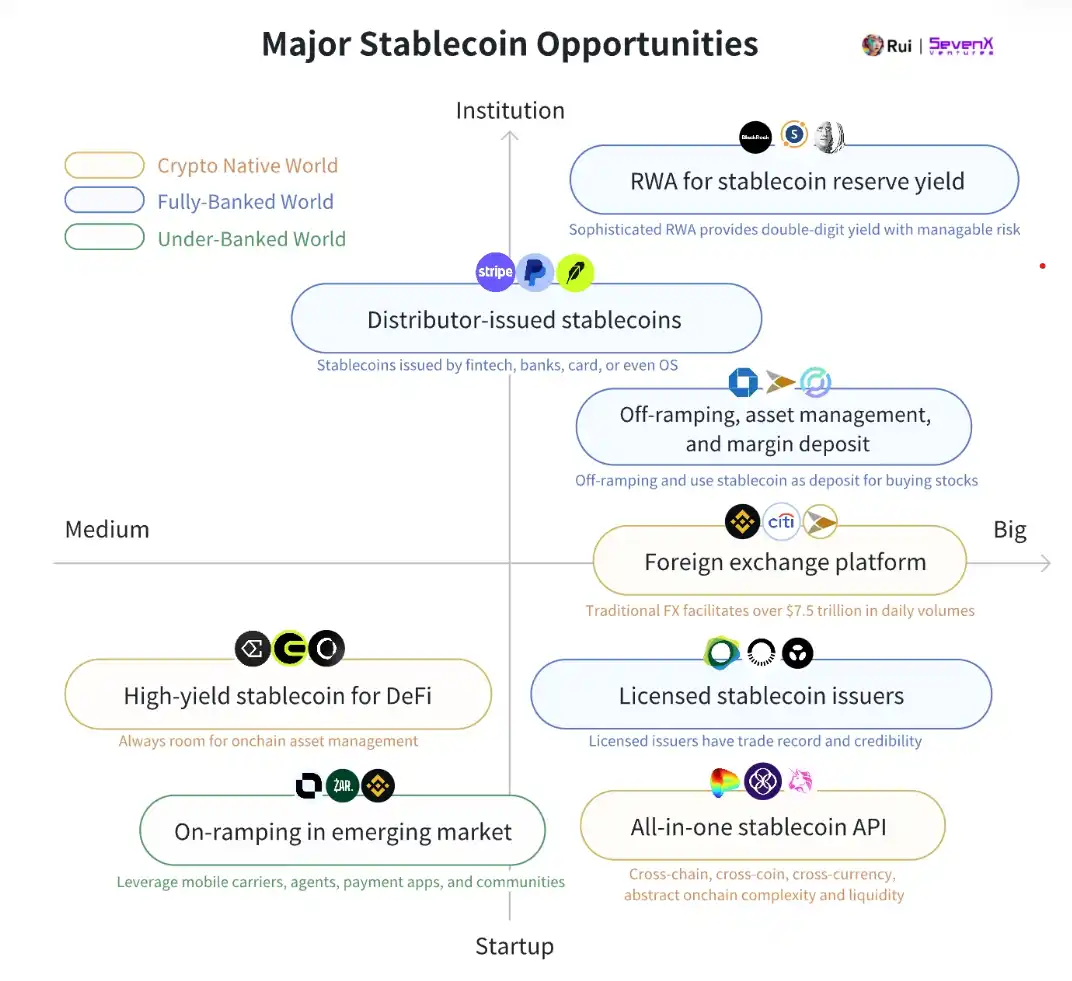
Indigenous to the Native Crypto World
By the second quarter of 2024, stablecoins will account for 8.2% of the total crypto market capitalization. Maintaining pegged stability remains a challenge, and a unique incentive mechanism is key to extending on-chain distribution. The current key issue is the limited scalability of on-chain applications.
Stablecoin Pegging Battle
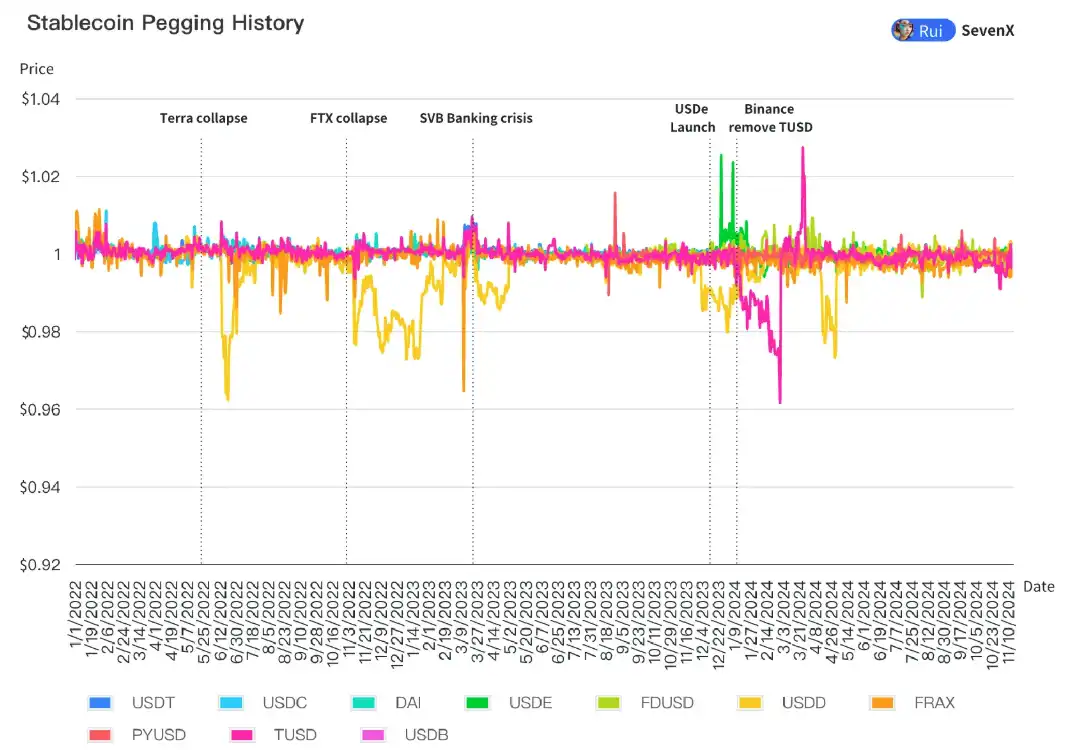
· Fiat-backed Stablecoins Rely on Banking Relationships:
93.33% of stablecoins are fiat-backed stablecoins, which offer greater stability and capital efficiency, with banks holding the ultimate decision-making power by controlling redemption rights. Regulated issuers like Paxos have become USD issuers for PayPal due to their reliability in redeeming billions of BUSD successfully.
· CDP Stablecoins Improve Collateral and Liquidation Mechanisms to Maintain Better Pegging Stability:
3.89% of stablecoins are Collateralized Debt Position (CDP) stablecoins, which use cryptocurrency as collateral but face issues of scalability and volatility. By 2024, CDP stablecoins have enhanced their risk resilience by accepting a wider range of liquid and stable collateral.
Aave's GHO accepts any asset in Aave v3, and Curve's crvUSD recently added USDM (real-world assets). Some liquidation mechanisms have been improved, especially crvUSD's soft liquidation, which provides a buffer for further defaults, benefiting from their bespoke AMMs. However, the ve-token incentive model faced issues as the valuation of CRV plummeted after mass liquidation, causing crvUSD's market cap to shrink.
· Synthetic Dollars Maintain Stability Through Hedging:
Ethena USDe has individually captured 1.67% of the stablecoin market cap within a year, reaching $30 billion. It is a delta-neutral synthetic dollar that hedges against volatility by taking short positions in derivatives. It is expected to perform well in the upcoming bull market, with its funding rate expected to remain stable even after seasonal adjustments.
However, the long-term viability relying on CEX raises questions, and as similar products proliferate, the impact of funds on Ethereum may diminish. These synthetic dollars may be affected by black swan events, and during bear markets, persistently low funding rates could pose risks.
· Algorithmic Stablecoins Reduced to 0.56%
Liquidity Bootstrapping Challenge
Crypto stablecoins leverage yield to attract liquidity, and fundamentally, their liquidity costs include risk-free rates and risk premiums. To remain competitive, stablecoin yields must match at least the treasury bond rate—we have seen stablecoin borrowing costs decline as the treasury bond rate reached 5.5%.
sFrax and DAI are leading the way in treasury bond exposure. By 2024, multiple RWA projects have boosted on-chain treasury bond portfolio capabilities: CrvUSD collateralizes Mountain's USDM, Ondo's USDY, and Ethena's USDtb are backed by BlackRock's BUIDL.
Based on the treasury bond rate, stablecoins have adopted various strategies to increase risk premiums, including fixed budget incentives (such as constraints issued by DEX and death spirals); user fees (linked to lending and perpetual contract volumes); underperformance during volatility arbitrage (performing poorly when volatility decreases); and utilizing reserve assets such as pledging or re-pledging (not attractive).
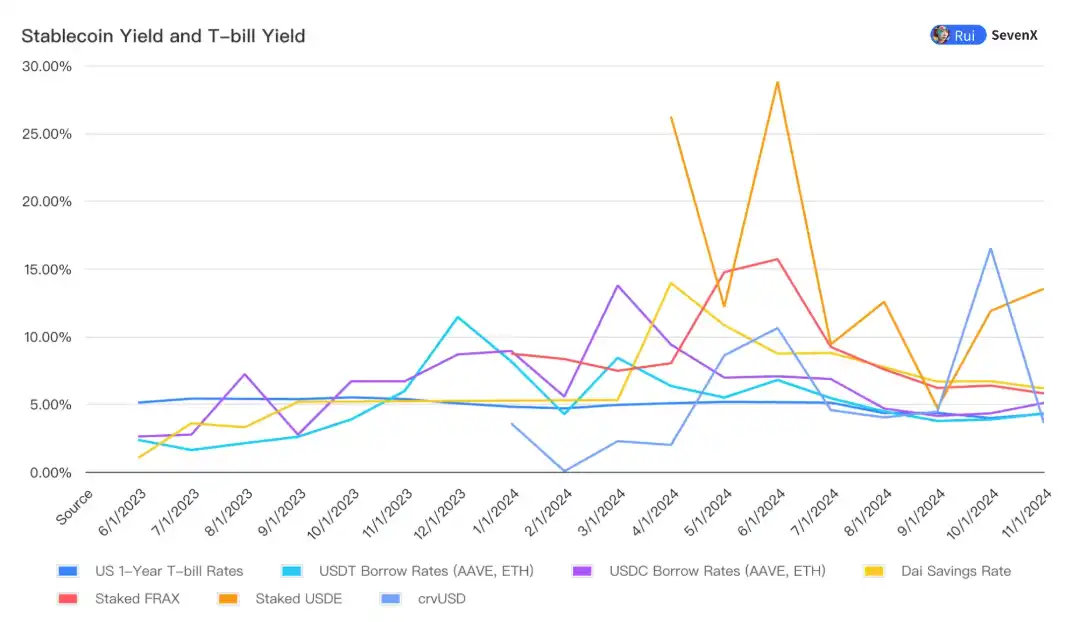
2024 Innovative Liquidity Strategies
Maximizing On-Chain Revenue:
While many current revenue streams come from self-consuming DeFi inflation incentives, increasingly innovative strategies are emerging. By operating reserves as a bank, projects like CAP aim to direct MEV (Miner Extractable Value) and arbitrage profits directly to stablecoin holders, providing a sustainable and potentially more lucrative revenue source.
Compounding with Treasury Bond Yields:
Through the new portfolio capabilities of RWA projects, projects like Usual Money (USD0) provide ''theoretically'' unlimited revenue through their governance token, with treasury bond yields as the base rate—attracting $350 million in liquidity providers and successfully entering Binance Launchpool. Agora (AUSD) is also an offshore stablecoin with treasury bond returns.
Balanced High-Yield Low-Volatility:
A new type of stablecoin adopts a diversified asset allocation approach to avoid single yield and volatility risks, providing a balanced high yield. For example, Fortunafi's Reservoir allocates assets such as government bonds, Hilbert, Morpho, PSM, etc., and dynamically adjusts the ratios, incorporating other high-yield assets as needed.
Is Your TVL Just a Flash in the Pan?
Stablecoin yields often face scalability issues. While fixed-budget yields can initially trigger volatility, as TVL grows, yields will gradually be diluted, leading to a diminishing yield effect over time. Without sustainable yields or real-world applications in trading pairs and derivatives, once the incentives end, their TVL is likely unsustainable.
DeFi Gateway Dilemma
On-chain visibility enables us to truly examine the essence of stablecoins: are stablecoins really meant to be a currency as a medium of exchange, or are they merely designed as financial products for yield?

·Use of Only the Optimal Stablecoin for CEX Trading Pairs
Although around 80% of trading still occurs on CEX, these exchanges support their "preferred" stablecoin (e.g., Binance uses FDUSD, Coinbase uses USDC). Other CEXs rely on the overflow liquidity of USDT and USDC, and stablecoins are also striving to become CEX margin deposits.
·Limited Stablecoins Used for DEX Trading Pairs
Currently, only USDT, USDC, and a small amount of DAI are used as trading pairs. Other stablecoins, such as Ethena's USDe, of which 57% is staked within its own protocol, are held purely as financial products to earn yield, far from being a medium of exchange.
·Makerdao + Curve + Morpho + Pendle, Optimal Distribution Combination
Markets like Jupiter, GMX, and DYDX are more inclined to use USDC as a deposit, as the minting and redemption process of USDT is more complex. Lending platforms like Morpho and AAVE prefer USDC due to its better liquidity on Ethereum. On the other hand, PYUSD is predominantly used for lending on Solana's Kamino, especially when incentives are provided by the Solana Foundation. Ethena's USDe is mainly used for yield farming on Pendle.
·Undervaluation of RWA
Most RWA platforms (such as BlackRock) use USDC as the minting asset due to compliance reasons, and BlackRock is also a shareholder of Circle. The success of DAI in its RWA products is also noteworthy.
Expanding the Market or Venturing into New Territories
Although stablecoins can attract major liquidity providers through incentives, they face a bottleneck—DeFi usage is declining. Stablecoins are now faced with a dilemma: either they wait for the expansion of crypto-native activities or seek new use cases beyond these activities.
Key Players are Taking Action
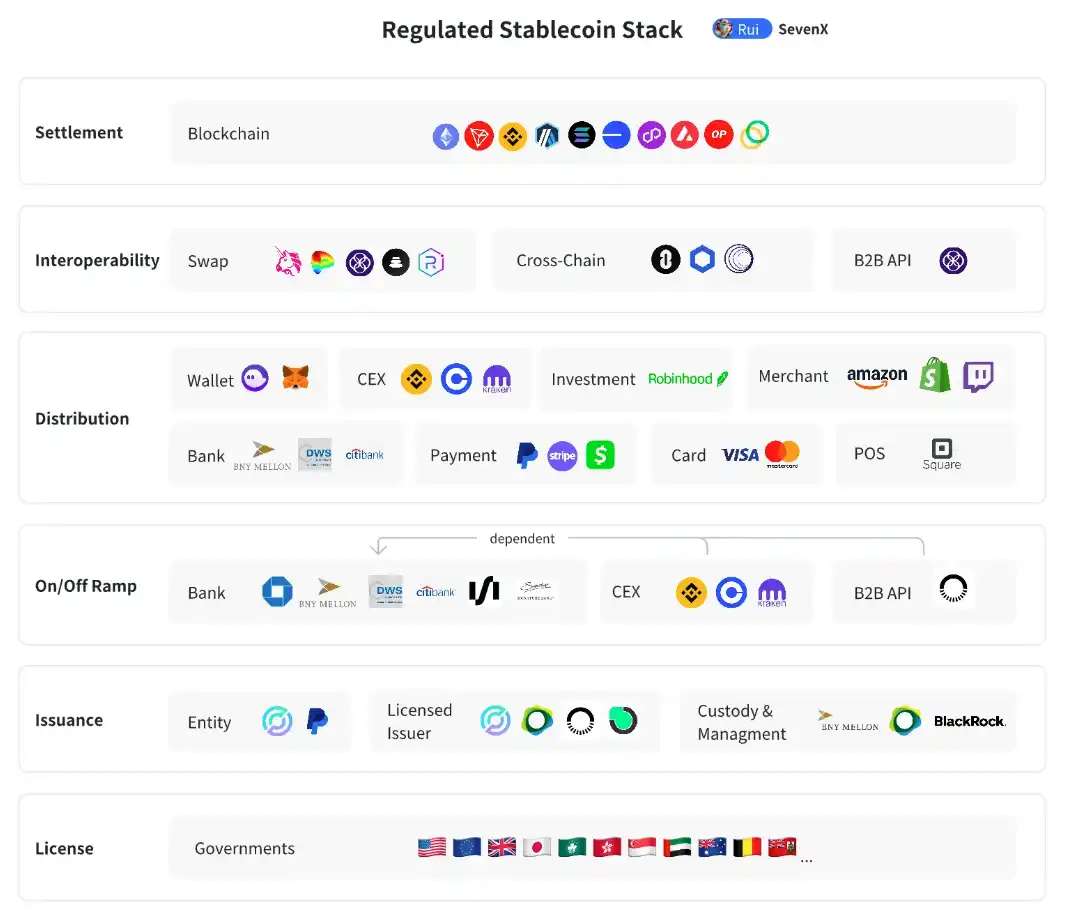
·Increasingly Clear Global Regulation
99% of stablecoins are backed by the US dollar, and the United States federal government has ultimate influence in this area. The U.S. regulatory framework is expected to further clarify post the crypto-friendly Trump administration, with Trump pledging to lower interest rates and ban Central Bank Digital Currencies (CBDCs), a policy that could benefit stablecoins.
A report from the U.S. Treasury Department noted the impact of stablecoins on the demand for short-term treasuries, with Tether holding $90 billion in U.S. treasuries. Preventing crypto crime and maintaining the dominance of the US dollar are also regulatory drivers. By 2024, multiple countries have established stablecoin regulatory frameworks based on common principles, including approval of stablecoin issuance, reserve liquidity and stability requirements, restrictions on foreign currency stablecoin usage, and typically a ban on interest generation.
Key examples include the EU's MiCA, UAE's PTSR, Hong Kong's sandbox regulation, Singapore's MAS, and Japan's PSA. Notably, Bermuda became the first country to accept stablecoin tax payments and authorize interest-bearing stablecoin issuers.
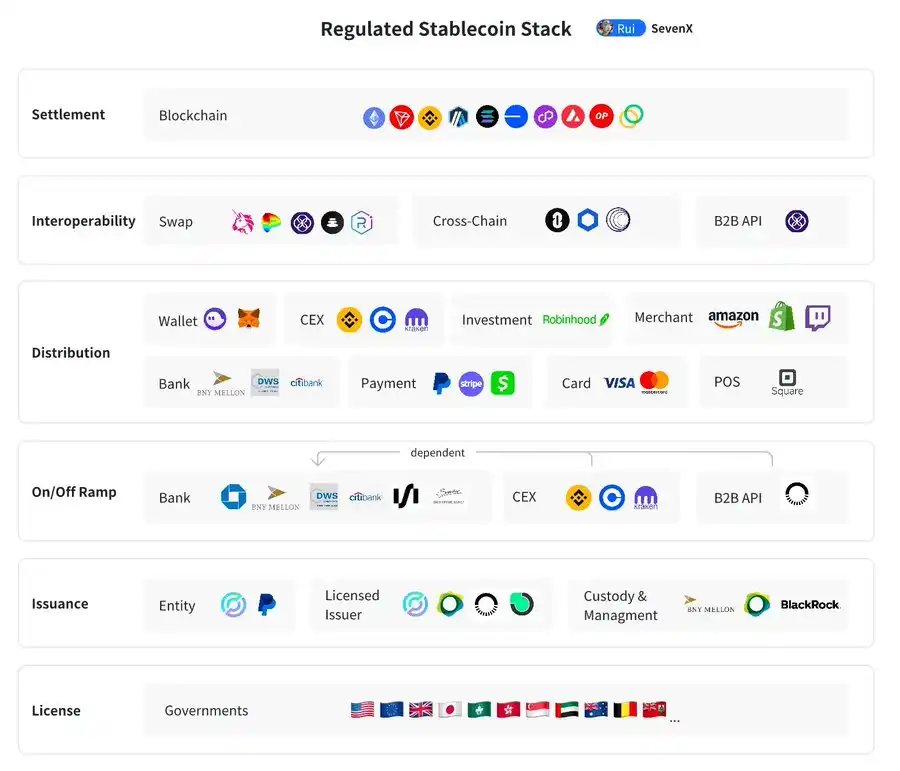
·Licensed Issuers Gain Trust
The issuance of stablecoins requires technical capabilities, cross-jurisdictional regulatory compliance, and robust management abilities. Major participants include Paxos (PYUSD, BUSD), Brale (USC), and Bridge (B2B API). Reserve management is handled by reputable institutions like BNY Mellon, and USDC's reserves earn yield by investing in funds managed by BlackRock. BUIDL now allows more on-chain projects to earn revenues.
·Banks as Gatekeepers of Fiat Off-Ramp
While fiat-to-stablecoin on-ramping has become easier, off-ramping from stablecoin to fiat still faces challenges as banks find it difficult to verify the source of funds. Banks prefer licensed exchanges like Coinbase and Kraken, which conduct KYC (Know Your Customer) and KYB (Know Your Business) and have similar AML (Anti-Money Laundering) frameworks.
High-reputation banks like Standard Chartered have started accepting stablecoin off-ramps, while smaller and mid-sized banks like DBS Bank in Singapore are also moving swiftly. B2B services like Bridge have managed billions in transaction volume for high-end clients, including SpaceX and the U.S. government, by integrating off-ramp channels.
·Distributors Hold Ultimate Decision-Making Power
As a leader in compliant stablecoins, Circle relies on Coinbase and is currently pursuing global licensing and partnerships. However, as institutions issue their own stablecoins, this strategy may face challenges, as stablecoins are unparalleled as a business model—Tether, a 100-person company, made a $5.2 billion profit in the first half of 2024 through investment reserves.
Banks like JPMorgan have already launched the JPM Coin for institutional transactions. On the payment app front, Stripe acquired Bridge, showcasing its interest in owning a stablecoin ecosystem, not just integrating USDC. PayPal has also issued PYUSD to capture reserve revenue. Card networks Visa and Mastercard are testing the feasibility of accepting stablecoins.
Efficiency Drivers
With trusted issuers, robust bank relationships, and distributor networks, stablecoins can drive efficiency in the large-scale financial system, especially in the payments sector.
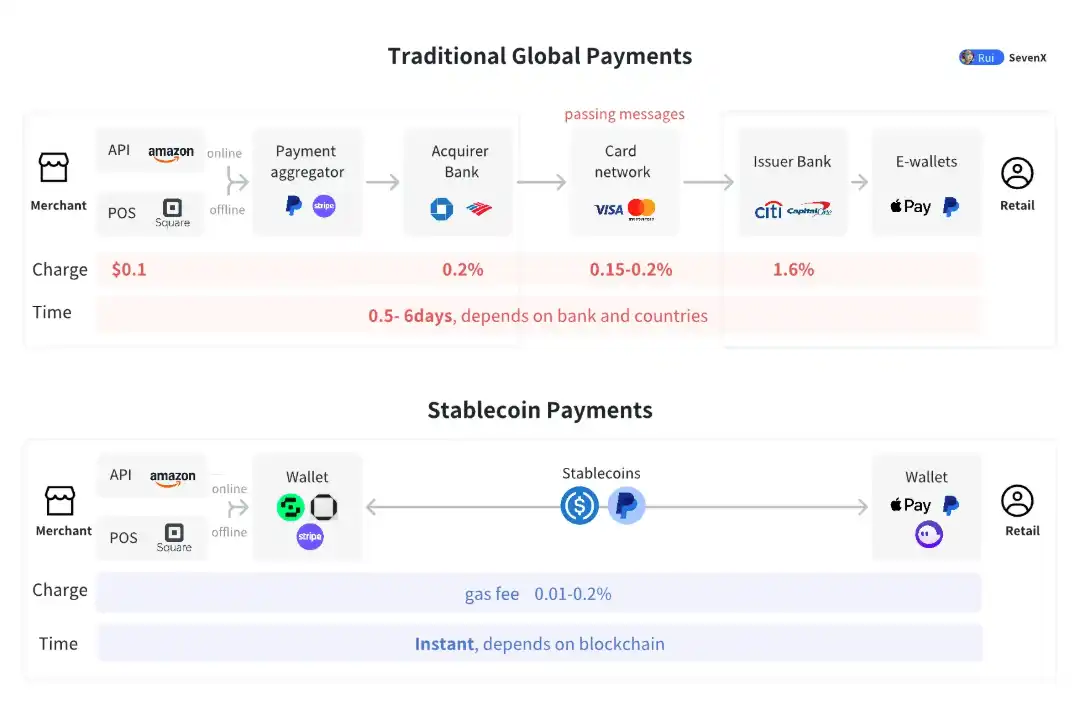
Traditional systems face efficiency and cost limitations, offering instant settlements for in-network applications or intra-bank transfers but restricted to their own ecosystems. Cross-bank payments typically incur about a 2.6% fee (70% to the issuing bank, 20% to the acquiring bank, 10% to the card network) and take over a day to settle. Cross-border transaction costs are even higher, around 6.25%, with settlement times potentially up to five days.
Stablecoins enable instant settlement of peer-to-peer payments by eliminating intermediaries. This not only accelerates fund transfers and improves capital efficiency but also provides programmable features such as conditional automatic payments.
·B2B Payments (Annual Transaction Volume $120-150 Trillion)
Banks are well-positioned to drive stablecoin adoption, with JPMorgan Chase having developed JPM Coin on its Quorum blockchain. As of October 2023, JPM Coin is used in approximately $1 billion daily transactions.
·P2P Payments (Annual Transaction Volume $1.8-2 Trillion)
Digital wallets and mobile payment apps are favorably positioned to drive stablecoin adoption. PayPal has launched PYUSD, currently valued at $6.04 billion on Ethereum and Solana. PayPal enables end-users to access and send PYUSD for free.
·B2C Commerce (Annual Transaction Volume $5.5-6 Trillion)
Stablecoins need to collaborate with POS systems, bank APIs, and card networks. In 2021, Visa became the first payment network to accept USDC settlements.
Shadow Dollar Economy
The need for stablecoins is crucial in emerging markets due to severe currency devaluation and economic instability. In Turkey, stablecoin purchases represent 3.7% of its GDP. People and businesses are willing to pay a premium for stablecoins compared to the fiat US dollar, with premium rates reaching 30.5% in Argentina and 22.1% in Nigeria. Stablecoins provide these regions with access to the US dollar and financial inclusion.
The dominant role of Tether in this field is significant, given its reliable ten-year track record. Even when facing complex banking relationships and redemption crises—Tether once admitted in April 2019 that USDT was only backed by 70%—its peg remained stable.
This is because Tether has built a robust shadow dollar economy: in emerging markets, people rarely convert USDT to fiat but rather treat it as the dollar. This practice is particularly prevalent in regions like Africa and Latin America, where people use it to pay salaries, bills, etc. Tether has achieved this through its long-standing presence and ongoing utility without requiring additional incentives. With its credibility and broad acceptance, this should be the ultimate goal of every stablecoin.
Dollar Access
·Remittances: Remittance inequality hinders economic growth. In sub-Saharan Africa, an economically active individual sending remittances to low- to middle-income countries (LMICs) and developed countries typically faces an 8.5% remittance fee. For businesses, the high cost of remittances, lengthy processing times, cumbersome procedures, and exchange rate risks are direct barriers to growth and competitiveness.
·Dollar Access: Currency volatility has led to 17 emerging market countries losing $1.2 trillion of GDP between 1992 and 2022, roughly 9.4% of their total GDP. Local financial development is crucial for dollar access. Many crypto projects are dedicated to facilitating deposits through grassroots 'DePIN' approaches that leverage local agents to facilitate cash-to-stablecoin transactions in Africa, Latin America, and Pakistan.
·Foreign Exchange Market: Currently, the foreign exchange market has a daily trading volume exceeding $7.5 trillion. In the Global South, individuals often convert local fiat to dollars via the black market, mainly because black market rates are more favorable than official channels. Binance's P2P trading has started to be adopted, but due to its order book approach, it lacks flexibility. Many projects like ViFi are developing on-chain Automated Market Maker (AMM) FX solutions.
·Humanitarian Aid Distribution: Refugees from the Ukraine War can receive humanitarian aid in the form of USDC and can store it in a digital wallet or exchange it locally. In Venezuela, frontline healthcare workers used USDC to purchase medical supplies during the COVID-19 pandemic to cope with the escalating political and economic crisis.
Interoperability
·Foreign Exchange (FX)
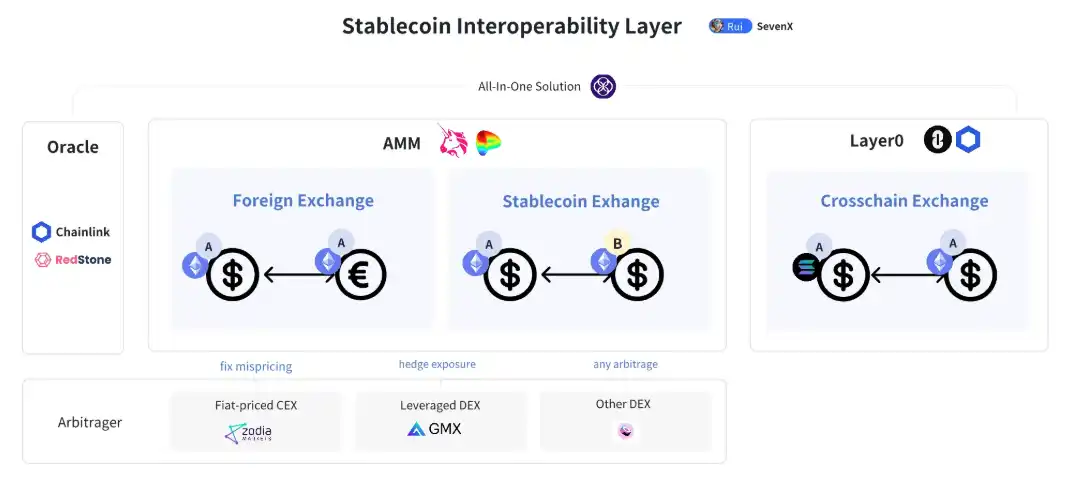
Traditional FX systems are inefficient and face several challenges: counterparty settlement risks (although CLS has been strengthened, it remains cumbersome), multicurrency banking system costs (e.g., an Australian bank's yen purchase involves coordination among six banks), global settlement time zone differences (e.g., the overlapping hours of the Canadian dollar and yen banking systems are less than 5 hours per day), and access restrictions to the FX market (retail users pay fees 100 times higher than institutions). On-chain FX offers significant advantages:
1. Cost, Efficiency, and Transparency: Oracles like Redstone and Chainlink provide real-time price feeds. Decentralized exchanges offer more cost-effective and transparent services, with Uniswap's Constant Product Market Maker (CPMM) reducing transaction costs to 0.15%-0.25%, around 90% lower than traditional forex. Moving from T+2 bank settlements to instant settlements allows arbitrageurs to employ various strategies to correct pricing errors.
2. Flexibility and Accessibility: On-chain forex enables corporate treasurers and asset managers to access a variety of products without the need for multiple currency-specific bank accounts. Retail users can utilize wallets embedded with DEX APIs to obtain the best forex prices.
3. Currency and Jurisdiction Separation: Transactions no longer rely on domestic banks, thus decoupling them from the underlying jurisdiction. This approach leverages digital efficiencies while maintaining currency sovereignty, although pros and cons exist.
However, challenges persist, including the scarcity of non-USD-denominated digital assets, oracle security, support for long-tail currencies, regulatory issues, and a unified interface with on/off-chain. Despite these obstacles, on-chain forex still presents significant opportunities. For example, Citibank is developing a blockchain-based forex solution under the guidance of the Monetary Authority of Singapore.
· Stablecoin Exchanges
Imagine a world where most companies issue their own stablecoins; stablecoin exchanges face a challenge: how to pay a JP Morgan merchant using PayPal's PYUSD. While on/off-chain solutions can address this issue, they compromise the efficiency promised by cryptocurrencies.
On-chain Automated Market Making (AMM) provides the optimal real-time and low-cost trading between stablecoins. For instance, Uniswap offers multiple such pools with fees as low as 0.01%. However, once billions of dollars flow onto the chain, users must trust the security of smart contracts while ensuring sufficient deep liquidity and immediacy to support real-world transaction activities.
· Cross-chain Exchanges
Major blockchains have different strengths and weaknesses, leading to stablecoin deployment across multiple chains. This multi-chain approach introduces cross-chain challenges, and bridging introduces significant security risks. In my view, the best solution for stablecoins is to launch their own Layer 0, such as USDC's CCTP, PYUSD's Layer0 integration. Additionally, we have seen USDT's token burn bridge locking up the tokens and may introduce similar Layer0 solutions.
Unresolved Questions:
1. Will regulation compromise 'Open Finance' as compliant stablecoins may enable fund monitoring, freezing, and seizure?
2. Will compliant stablecoins also avoid providing yields that could be classified as security offerings, thus preventing on-chain DeFi from benefiting from its massive expansion?
3. Can any open blockchain truly handle significant volumes of funds? Is it feasible considering Ethereum's slow throughput, its L2 reliance on a single sequencer, Solana's imperfect uptime record, and the lack of a long-term track record for other popular chains?
4. Will the separation of currency and jurisdiction bring more chaos or opportunity?
The financial revolution led by stablecoins is both exhilarating and full of uncertainty, marking a new chapter where freedom and regulation dance in a delicate balance.
Recommended
The Wall Street Journal: How is AI Trading Stealing the Limelight from Cryptocurrency?
Aug 15, 14:00
Tencent Still Has a Dream
Aug 15, 11:27
To Catch North Korean Hackers, They Set Up a Fake Project
Aug 15, 10:00
From Litigation to Settlement: Positive Signal Released by HTX's Negotiation with FCA
Aug 14, 19:32
11,742 Shipping Addresses Exposed Alongside Trezor Orders
Aug 14, 19:01
Founder Interview: FOMO Creator Explains How They Added 30,000 Users in One Day and Became One of the Fastest-Growing Crypto Apps
Aug 14, 18:37