Is the United States Intentionally "Desiring" a Recession?
Source: The Kobeissi Letter
Translation Source: DeepTech TechFlow
Is the U.S. Government expecting an economic recession?
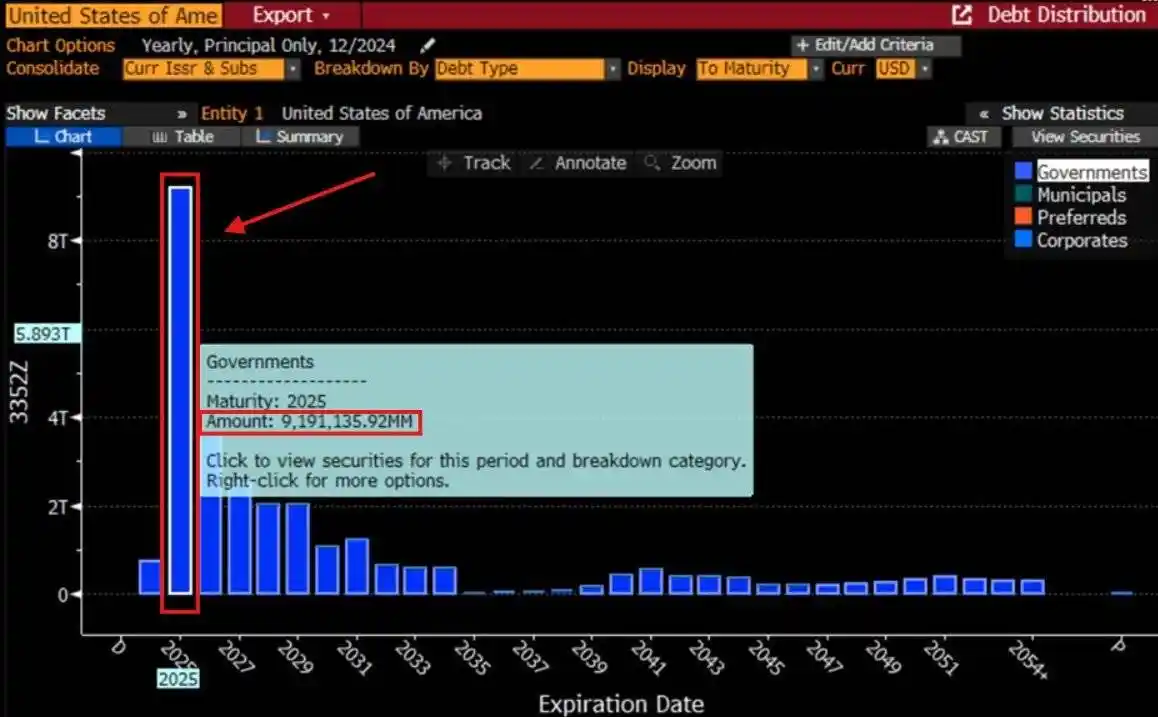
By 2025, the U.S. will have $92 trillion of debt due or needing to be refinanced. Faced with this massive refinancing, the quickest way to lower rates may be to trigger an economic recession.
But can the U.S. benefit from a market crash?
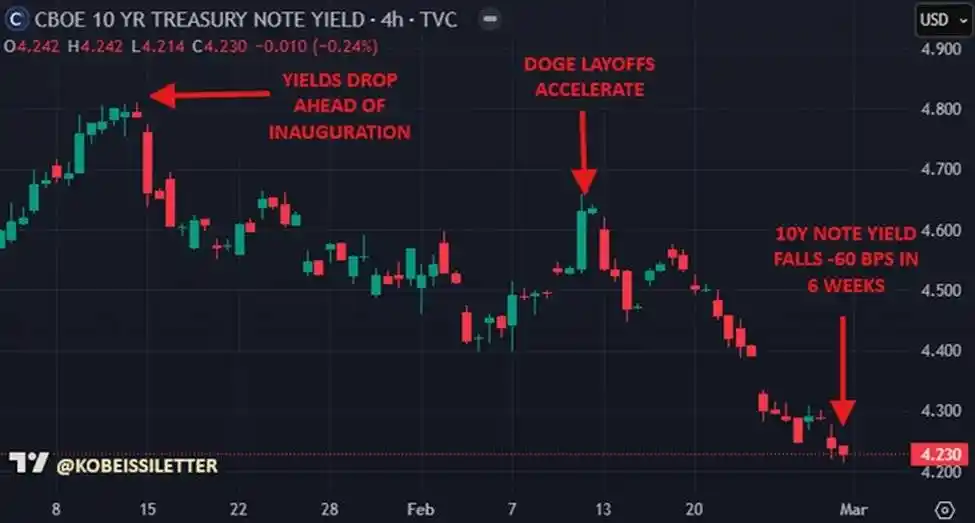
Over the past two months, the 10-year Treasury yield has dropped by about 60 basis points. This is partly due to market expectations of cutting government inefficiencies department spending. However, it is also related to increased uncertainty and the rising likelihood of a U.S. economic recession.
An economic recession almost guarantees a rate cut.
But why does an economic recession signify a rate cut?
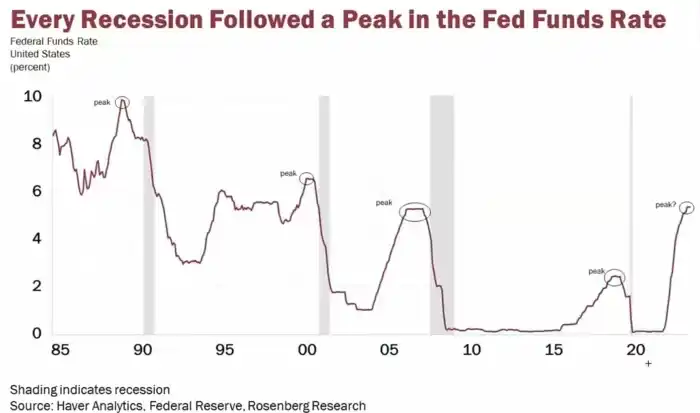
Since the 1980s, every U.S. economic recession has occurred after the federal funds rate peaked. When economic growth stagnates, the Fed stimulates the economy. This means lowering rates to reduce the cost of capital and boost consumption.
Since the trade war began, U.S. economic growth expectations have plummeted. At the same time, oil prices have fallen to new 6-month lows. Interestingly, President Trump has repeatedly stated that he hopes to reduce inflationary pressures by lowering oil prices.
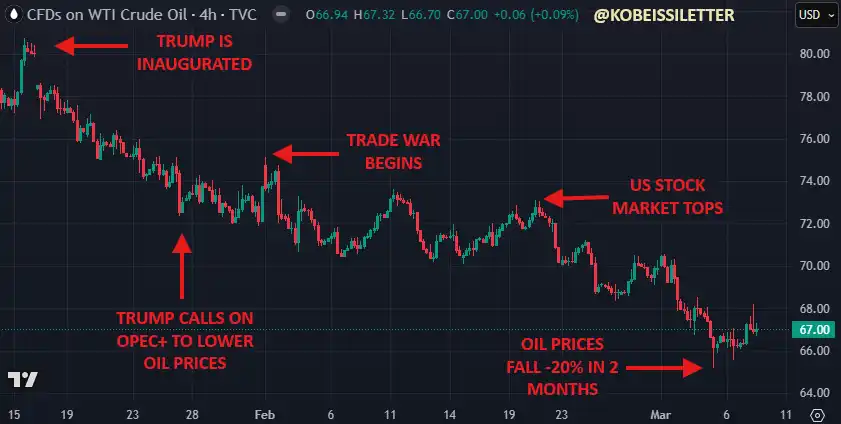
On January 25th, President Trump claimed to have a solution to the Fed's over 3-year struggle against inflation. He called on the Organization of the Petroleum Exporting Countries (OPEC) to lower oil prices and urged a global rate cut.
However, the quickest way to reduce oil prices is likely through an economic recession caused by reduced demand.
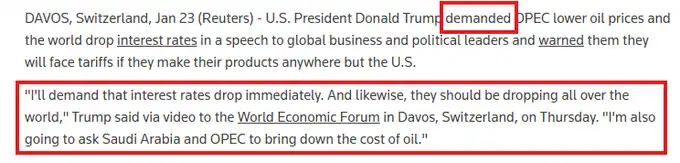
In a recent interview with Fox News, President Trump mentioned that he would prioritize lowering rates.
He said: "Rates are coming down... I'd like to see the energy prices come down too." This statement is from @amitisinvesting's report.
Next, let's take a look at the inflation data.
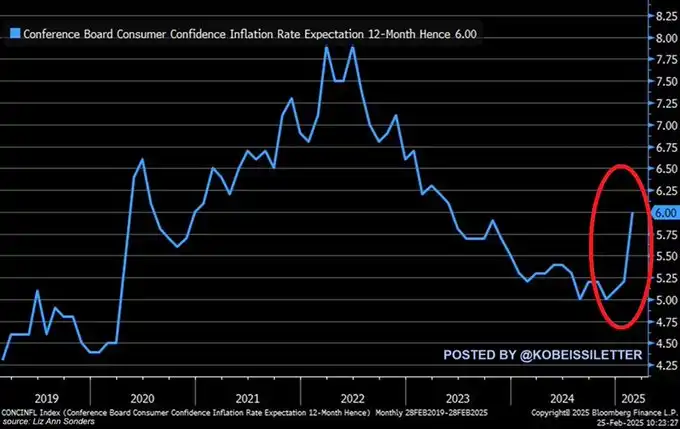
American consumers believe that the inflation rate for the next 12 months will rise to +6.0%, the highest level since May 2023. This marks the third consecutive month of increasing inflation expectations.
Inflation is on the rise, rate cuts are being postponed, yet interest rates are declining.
The market is pricing in an economic recession.
In the escalating trade war of soaring inflation, a significant rate cut almost inevitably triggers an economic recession. Furthermore, President Trump stated on March 6 that he wasn't even thinking about the stock market. The reality is, as we've seen throughout his first term, Trump has always been attuned to the markets.
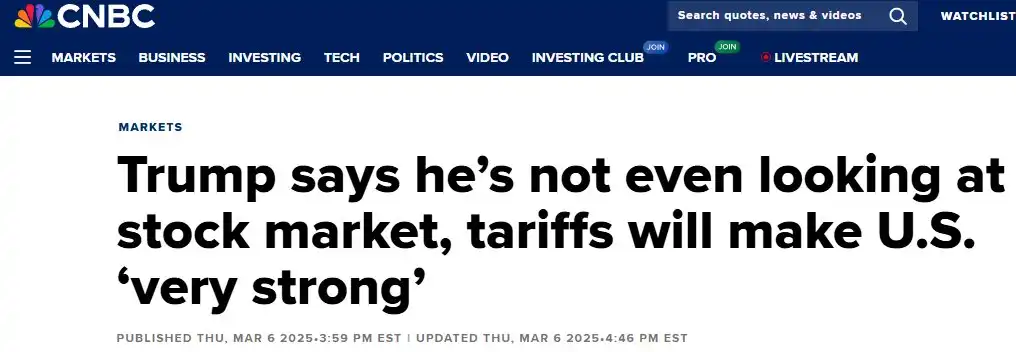
President Trump's declaration of "not focusing on the market" carries a profound implication.
In a scenario where he clearly pays attention to the market, this is actually a signal he is sending to Wall Street, indicating his willingness to lower interest rates and reduce the trade deficit at all costs, even if it means potentially triggering an economic downturn.
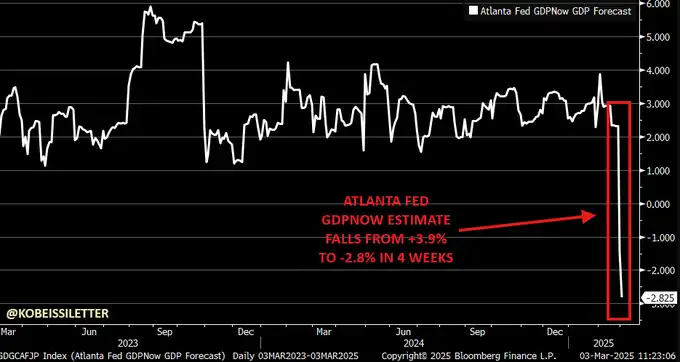
Amid the chaos of the trade war, we are witnessing a significant downturn in economic growth expectations. The Atlanta Fed last week lowered its GDP growth forecast for the first quarter of 2025 to as low as -2.8%. Therefore, we saw a sharp rise in market expectations for rate cuts last week.
Is this deliberate?
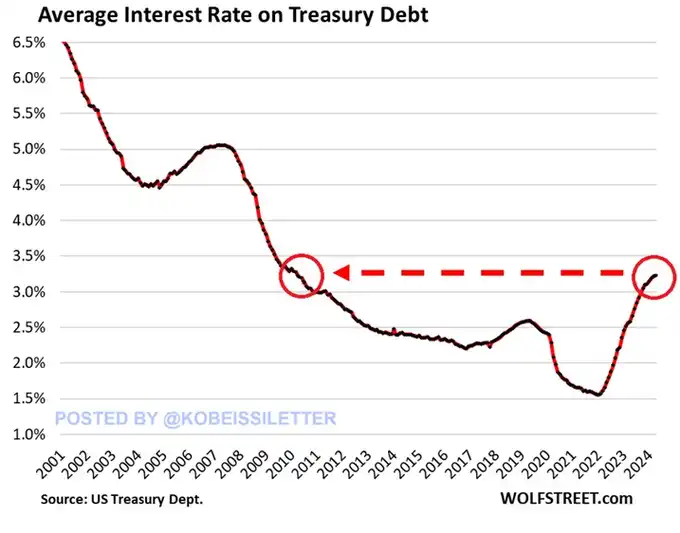
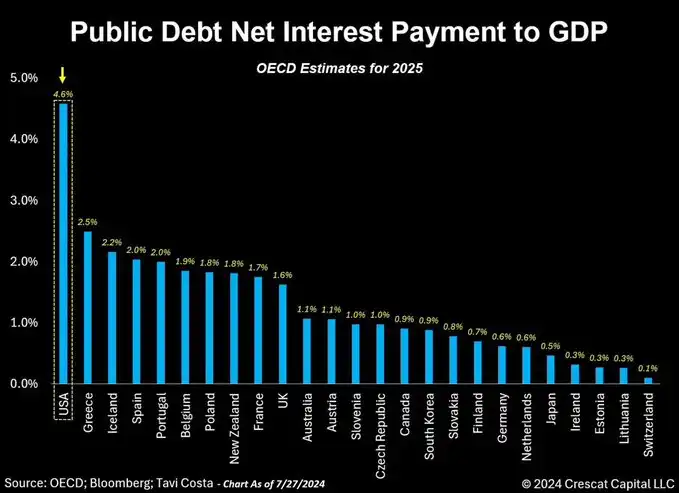
High-interest rates are the biggest issue facing the U.S. government.
With the surge in interest rates, the cost of servicing debt has significantly increased. Currently, the average interest rate on the U.S.'s $36.2 trillion national debt is 3.2%, reaching its highest level since 2010. The U.S. government needs a rate cut more than anyone else.
Moreover, a rate cut is imminent:
The U.S.'s $9.2 trillion debt maturing is heavily concentrated in the first half of 2025, with 70% of the debt needing refinancing between January and June 2025.
The average interest rate on this debt is expected to rise by approximately 1 percentage point.
Furthermore, efforts to reduce the deficit spending in the U.S. will not happen overnight.
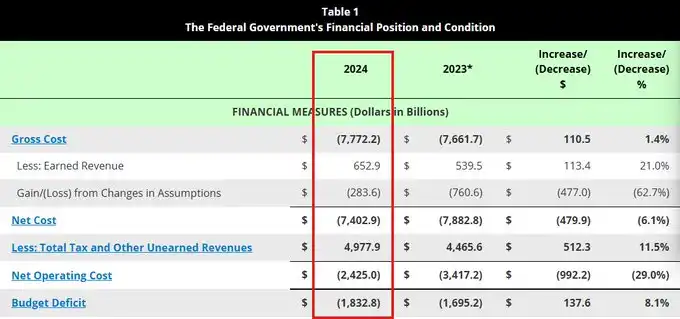
In the 2024 fiscal year, the United States had expenditures of up to $7.8 trillion, while revenue was only about $5.0 trillion. This means that for every $1 of revenue generated, there was $1.56 in costs. The shadow of a debt crisis will loom over the United States for a long time to come.
These significant changes in the macroeconomic landscape will have a broad impact on the entire market, and we are currently and will continue to seize opportunities from them.
Interested in how we are trading the market? Click the link below to subscribe to our premium analysis and alert service: https://www.thekobeissiletter.com/pricing
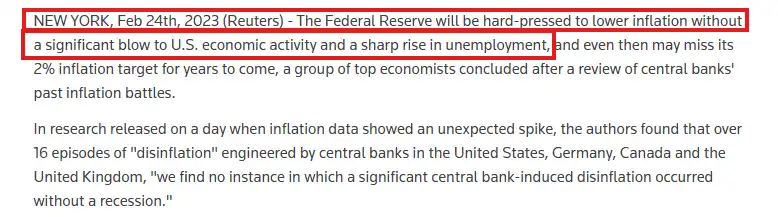
Finally, let's go back to 2023 when the Fed was almost calling for an economic recession to tame inflation.
In February 2023, many studies suggested that an economic recession might be the only solution. Subsequently, the Fed shifted to the narrative of a "soft landing," but this strategy has so far failed to lower interest rates.
The reality is that the U.S. debt crisis is currently the most severe yet most overlooked crisis. While former President Trump was aware of this, it may be too late. An economic recession might be the only solution to lower interest rates.
Follow us @KobeissiLetter for real-time analysis updates.
Recommended
The Wall Street Journal: How is AI Trading Stealing the Limelight from Cryptocurrency?
Aug 15, 14:00
Tencent Still Has a Dream
Aug 15, 11:27
To Catch North Korean Hackers, They Set Up a Fake Project
Aug 15, 10:00
From Litigation to Settlement: Positive Signal Released by HTX's Negotiation with FCA
Aug 14, 19:32
11,742 Shipping Addresses Exposed Alongside Trezor Orders
Aug 14, 19:01
Founder Interview: FOMO Creator Explains How They Added 30,000 Users in One Day and Became One of the Fastest-Growing Crypto Apps
Aug 14, 18:37