When "De-dollarization" Meets Bitcoin: Analyzing the New Narrative of Cryptocurrency in Capital Restructuring
Original Article Title: Bitcoin - the trade after the trade
Original Article Author: fejau
Original Article Translation: DeepFlow Tech
I would like to write about a question I have been pondering for a long time: how might Bitcoin behave in a significant shift in capital flows, a situation the cryptocurrency has never experienced since its inception.
I believe that once deleveraging is complete, Bitcoin will see an incredible trading opportunity. In this article, I will elaborate on my thought process.
I will adopt Michael Howell's research on the historical drivers of Bitcoin's price and use these findings to further understand how these intersecting factors might evolve in the near future.
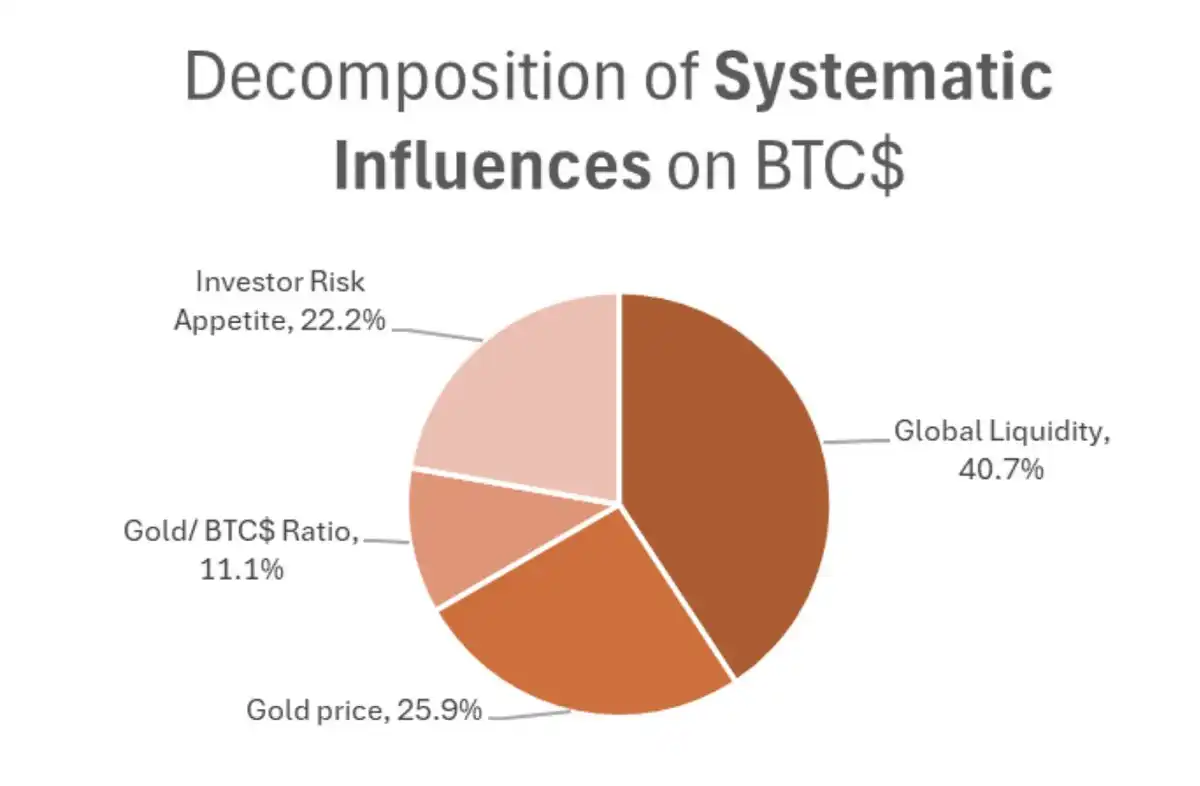
As shown in the above chart, Bitcoin's drivers include:
· Overall demand for high-risk, high-β assets by investors
· Correlation with gold
· Global liquidity
Since 2021, I have used a simple framework to understand risk appetite, gold performance, and global liquidity, focusing on the percentage of the fiscal deficit to GDP as a straightforward way to grasp the fiscal stimulus dominating global markets since 2021.
A higher percentage of the fiscal deficit to GDP mechanically leads to higher inflation, higher nominal GDP, and thus higher total corporate revenues, as revenue is a nominal metric. This is a boon for firms able to enjoy economies of scale in their profit growth.
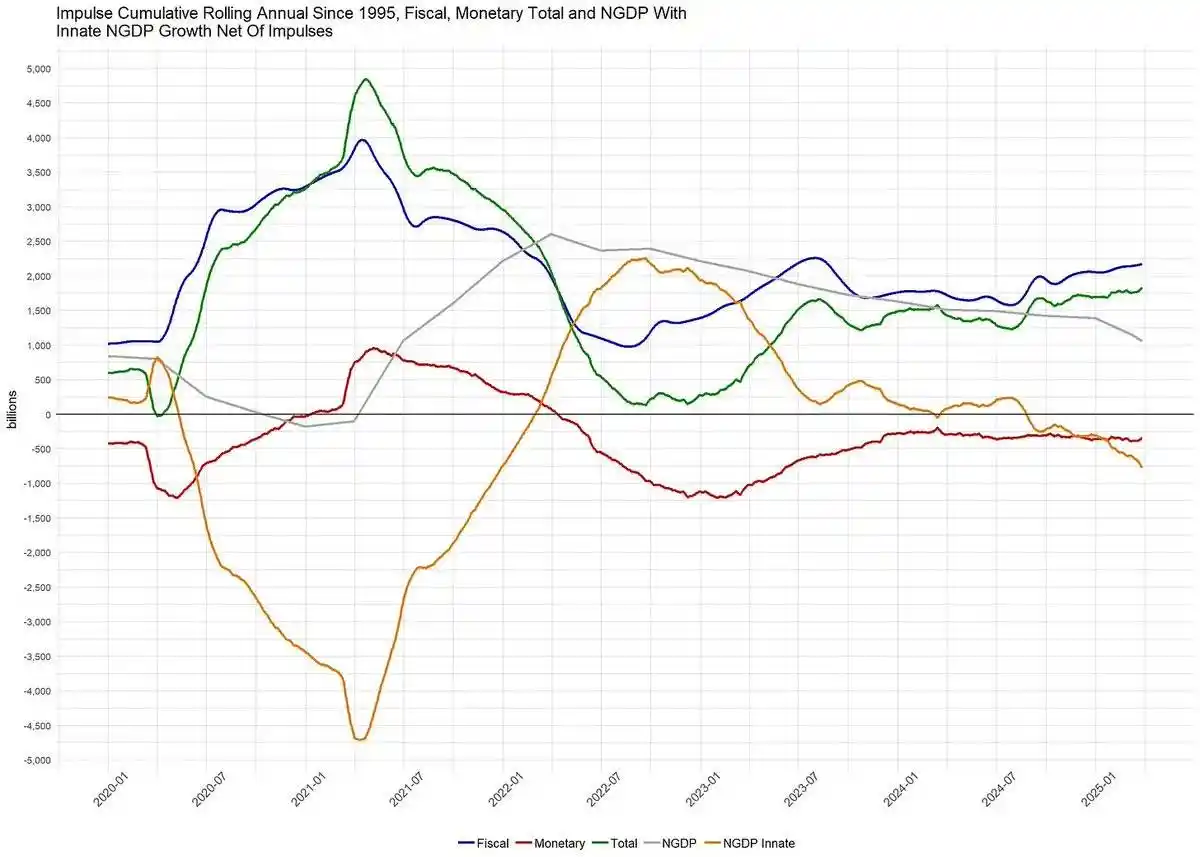
In most cases, monetary policy plays a minor role in risk asset activities, with fiscal stimulus being the primary driver. As shown in the chart regularly updated by @BickerinBrattle, the US monetary stimulus is so weak compared to fiscal stimulus that I will set it aside in this discussion.
As shown in the chart below, the US's fiscal deficit as a percentage of GDP is much higher than in any other major developed Western economy.
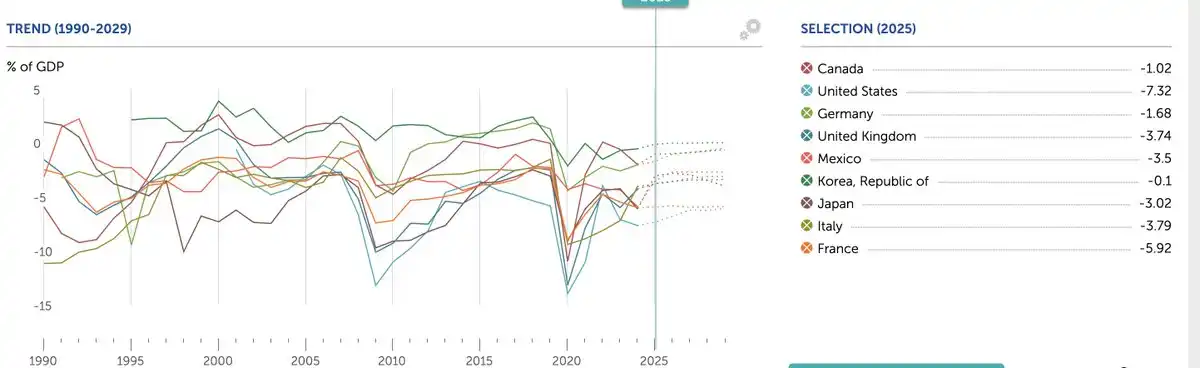
Due to the large deficit in the United States, income growth has been predominant, leading to the outperformance of the U.S. stock market compared to other modern economies:
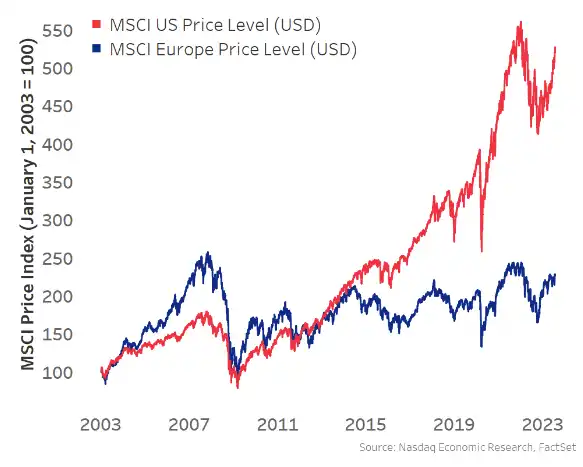
Because of this dynamic, the U.S. stock market has become a primary marginal driver of risk asset growth, wealth effect, and global liquidity, making it an attractive destination for global capital: the U.S. Due to this flow of capital into the U.S., coupled with a significant trade deficit, the U.S. obtains dollars in exchange for goods from other countries, and these dollars are subsequently reinvested in dollar-denominated assets (such as treasuries and MAG7), making the U.S. a primary driver of global risk appetite.
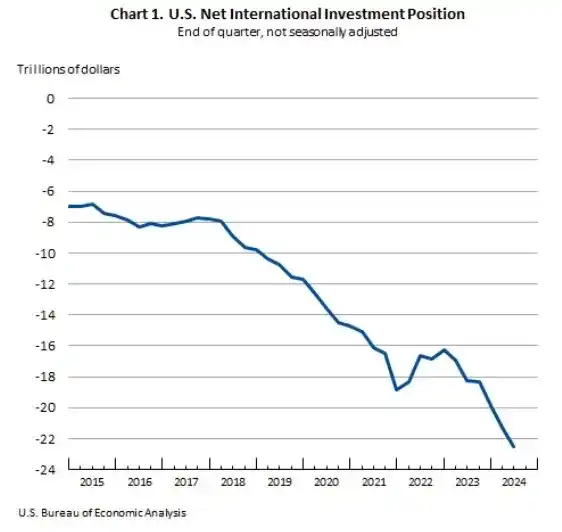
Now, back to the aforementioned research by Michael Howell. Risk appetite and global liquidity have been primarily driven by the U.S. over the past decade, and since the COVID-19 pandemic, this trend has accelerated due to the U.S.'s massive fiscal deficit compared to other countries.
Therefore, Bitcoin, although a global liquidity asset (not just U.S.-centric), has shown increasing positive correlation with the U.S. stock market since 2021.
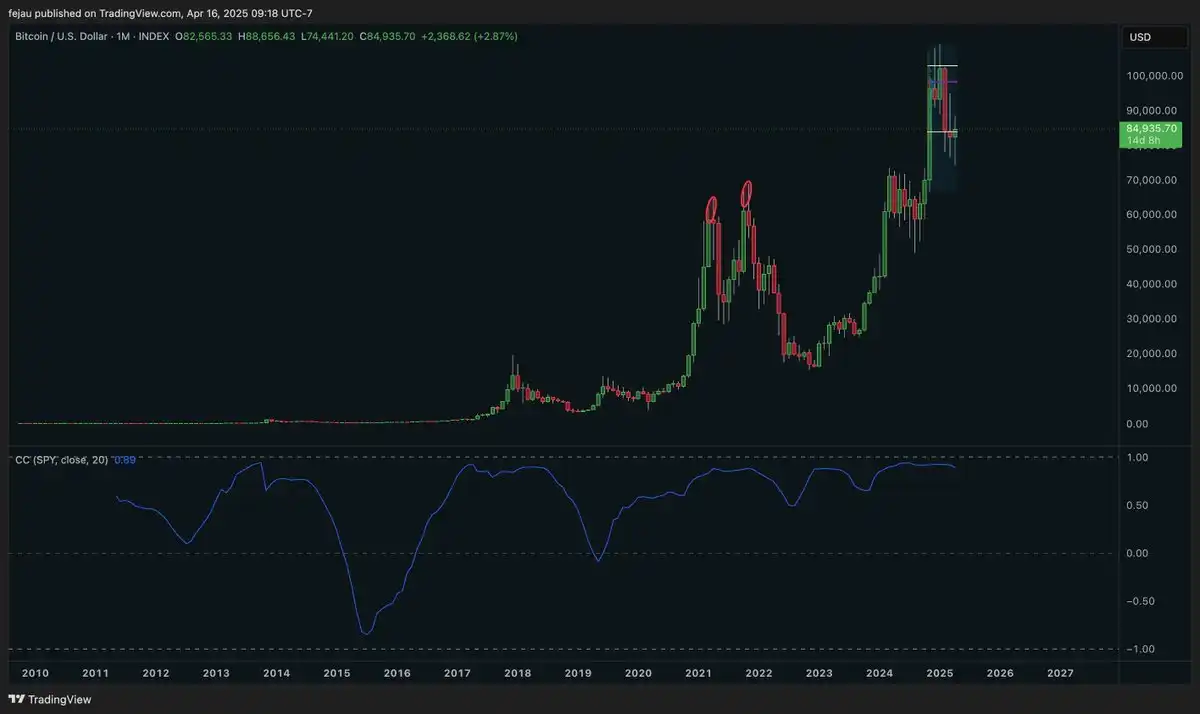
Now, I believe that the correlation with the U.S. stock market is spurious. When I use the term "spurious correlation" here, I am coming at it from a statistical perspective, believing that a third unobserved variable in correlation analysis is the actual driving factor. I believe this factor is global liquidity, as discussed above, which has been dominated by the U.S. over the past decade.
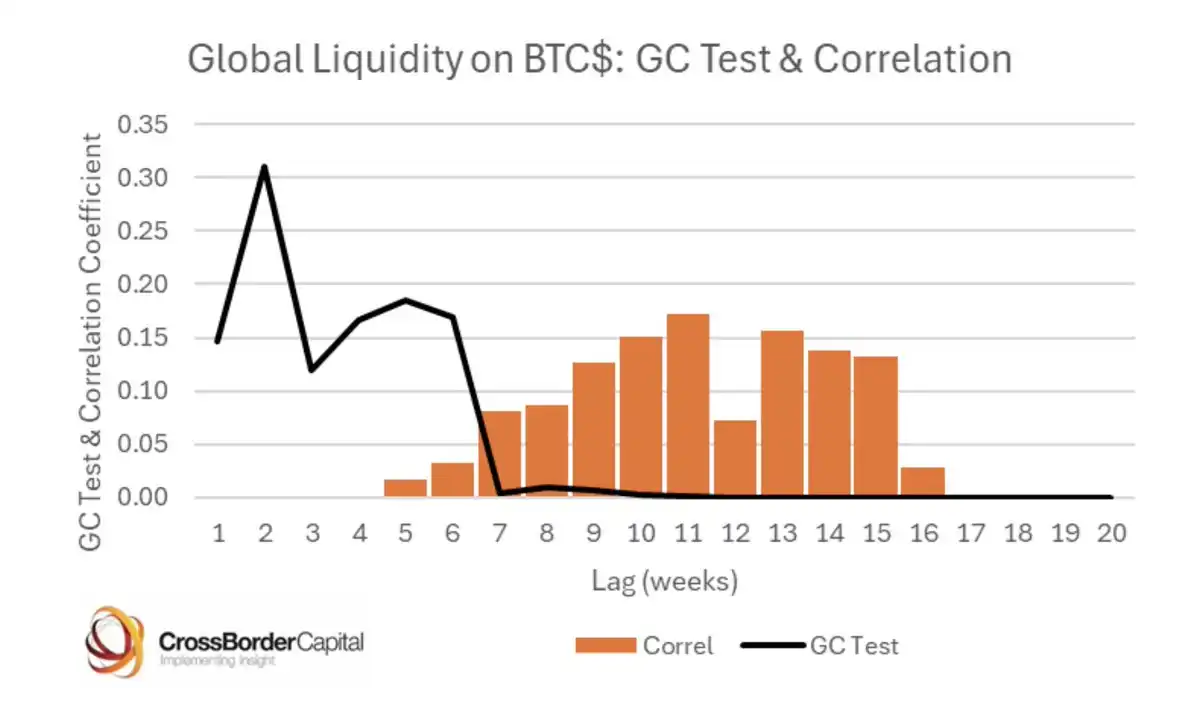
As we delve into statistical significance, we must also establish causality rather than just correlation. Fortunately, Michael Howell has also done some excellent work in this regard, establishing causality between global liquidity and Bitcoin through Granger causality testing.
So, what does this provide us as a starting point?
Bitcoin is predominantly driven by global liquidity, and because the U.S. is a major driver of global liquidity growth, a spurious correlation has emerged.
Over the past month, with speculation about Trump's trade policy goals and the reshuffling of global capital and commodity flows, some key narratives have emerged. I see this as:
The Trump administration aiming to reduce the trade deficit with other countries, which mechanically means reducing the outflow of dollars to foreign countries, which would not be reinvested in U.S. assets. The decrease in the trade deficit cannot happen without this situation occurring.
The Trump administration believes that foreign currencies are artificially suppressed, thus the US dollar is artificially strong, and it aims to rebalance this. In short, a weaker US dollar and stronger foreign currencies will cause interest rates in other countries to rise, prompting capital inflows to capture these better-performing rates post-forex adjustment, as well as domestic equities.
Trump has taken a "shoot first, ask questions later" approach in trade negotiations, leading other countries around the world to move away from meager fiscal deficits compared to the US (as previously mentioned), instead investing in defense, infrastructure, and generally protectionist government spending to make themselves more self-sufficient. Regardless of tariff negotiation downgrades (e.g., with China), I believe this has been set in motion, and countries will continue to pursue this goal.
Trump wants other countries to increase their defense spending as a percentage of GDP and contribute more to NATO spending, as the US bears a significant portion of these costs. This will also increase fiscal deficits.
I will temporarily set aside my personal views on these points and focus on the potential impacts if we follow through with the logic of these narratives:
Capital will leave dollar-denominated assets and flow back into home countries. This means underperformance of the US stock market relative to other regions globally, rising bond yields, and a weaker US dollar.
This capital will flow to places where fiscal deficits are no longer constrained, and other modern economies will start a spree of spending and printing money to fund these increased deficits.
As the US shifts from a global capital partner to a more protectionist role, holders of dollar assets will have to price in a risk premium on these once pristine assets, and tag them with a broader safety margin. As this process unfolds, it will lead to rising bond yields, foreign central banks seeking to diversify their balance sheets away from solely US treasuries, turning to other neutral commodities like gold. Similarly, foreign sovereign wealth funds and pensions may also pursue such diversification.
The counter to these points is that the US is the center of innovation and technology-driven growth, and no country will overturn that idea. Europe is too bureaucratic and socialized to chase capitalism like the US. I sympathize with this view; it may signify that this won't be a multi-year trend but rather a medium-term one as the valuations of these tech companies will cap their upside for a while.
Returning to the title of this article, the first trade is to sell off the over-owned US dollar assets worldwide, avoiding the ongoing deleveraging. Since the world holds too much of these assets, when risk limits are hit by large asset managers and more speculatively inclined players with tight stop-losses such as multi-strategy hedge funds, this deleveraging can get messy. When this occurs, we'll see days akin to margin calls, where all assets need to be sold to raise cash. The current strategy for trading is to survive and keep funds ample.
However, as the deleveraging subsides, the next phase of trading begins — a shift to a more diversified investment portfolio: foreign stocks, foreign bonds, gold, commodities, and even Bitcoin.
On market rotation days and non-margin call days, we have already started to see this dynamic take shape. The US Dollar Index (DXY) is falling, the US stock market is underperforming other regions' stock markets, gold is soaring, and Bitcoin is unexpectedly holding strong compared to traditional US tech stocks.
I believe that as this situation unfolds, the marginal increase in global liquidity will shift towards the entirely opposite dynamic we are accustomed to. Other regions will take on the responsibility of increasing global liquidity and risk appetite.
When considering the risks of this diversification against the backdrop of a global trade war, I am concerned about the tail risks of venturing too deep into other countries' risk assets, as there are some major landmines when it comes to potential bad tariff news. This makes gold and Bitcoin choices for globally diversified investments in this transition.
Gold has been on an absolute tear, hitting new all-time highs daily, reflecting this institutional shift. However, while Bitcoin has surprisingly held strong throughout the entire institutional transition, its beta correlation to risk appetite has so far limited its performance, failing to keep up with gold's performance.
Therefore, as we move towards a global capital rebalancing, I believe Bitcoin is the trade to come after this.
As I contrast this framework to Howell's correlation research, I can see how they fit together:
The US stock market is not affected by global liquidity, only by liquidity measured by fiscal stimulus and some capital inflows (but we have just identified that this aspect of liquidity may stop or even reverse). However, Bitcoin is a global asset, reflecting this broad perspective of global liquidity.
As this narrative solidifies and allocators continue to rebalance, I believe risk appetite will be driven by regions other than the US.
Gold has performed exceptionally well, so here we can also check the box for the Bitcoin portion associated with gold.
Given all of this, for the first time in the financial markets, I see the potential for Bitcoin to decouple from US tech stocks. I know this idea often marks a local top for Bitcoin. However, this time we see the potential for significant changes in capital flows that will make it sustainable.
Therefore, for someone like me, a risk-seeking macro trader, Bitcoin feels like the purest trade here. You can't impose tariffs on Bitcoin, it doesn't care about which border it resides in, it provides a high beta value to the portfolio without the current tail risk associated with US tech, I don't have to opine on whether Europe will get its act together, and it offers a pure exposure to global liquidity, not just US liquidity.
This market structure is exactly the reason Bitcoin was born. Once the dust of deleveraging settles, it will be the fastest horse, accelerating ahead.
Recommended
The Wall Street Journal: How is AI Trading Stealing the Limelight from Cryptocurrency?
Aug 15, 14:00
Tencent Still Has a Dream
Aug 15, 11:27
To Catch North Korean Hackers, They Set Up a Fake Project
Aug 15, 10:00
From Litigation to Settlement: Positive Signal Released by HTX's Negotiation with FCA
Aug 14, 19:32
11,742 Shipping Addresses Exposed Alongside Trezor Orders
Aug 14, 19:01
Founder Interview: FOMO Creator Explains How They Added 30,000 Users in One Day and Became One of the Fastest-Growing Crypto Apps
Aug 14, 18:37