History won't repeat itself, but it does rhyme - don't miss out this time

Original Author: Long Ye
Note: This article is the full version of (https://x.com/Tony_lza/status/1914223870581915770), and the core points were already posted on Twitter two days ago.
(1) Right now may be one of the best times this year to buy crypto.
(2) I stick to the viewpoints I expressed during last December's bull market: https://reurl.cc/4L6O5Y
(3) Apart from BTC, if I had to choose another token to put $500,000 in, I would choose hyperliquid, and if it were $5 million, I would choose SOL.
Returning to the "rhythm" itself: Structural opportunities are emerging once again.
Right now, it is likely one of the best times this year to buy Crypto.
This judgment is not made out of thin air. Whether from a price structure, macro signal, on-chain data, or asset value evolution perspective, the current market conditions closely resemble the "low-level reorganization" moment during the spring 2020 pandemic—Bitcoin plummeted to $3,800 in just a few days, followed by the most astonishing rebound in cryptocurrency history.
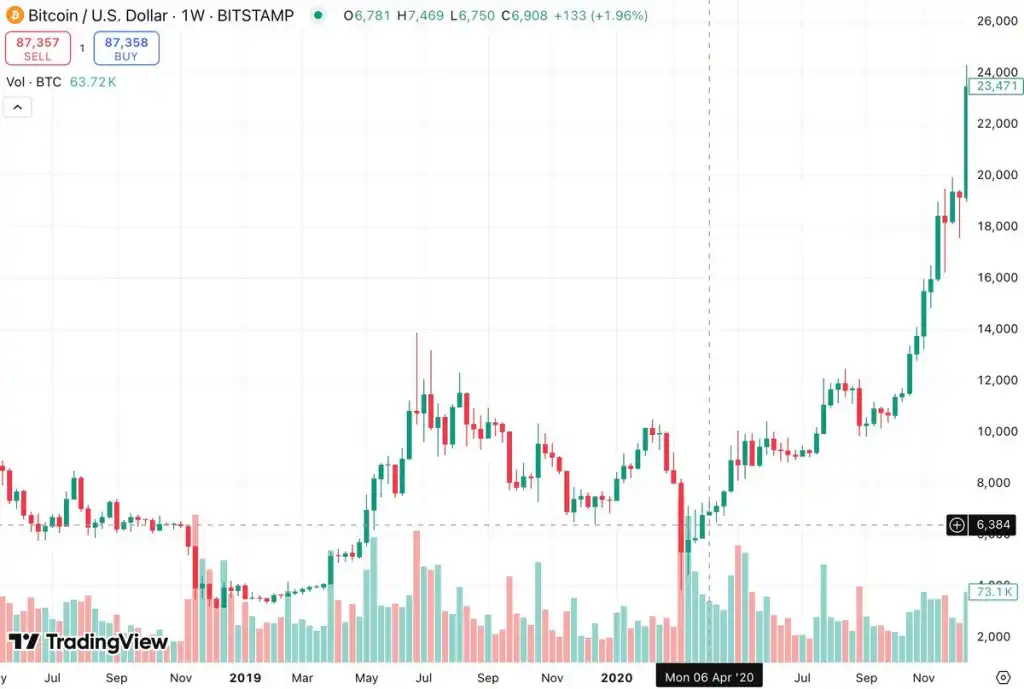
Today, the market seems to be replaying this script. Back then, the Nasdaq index entered a 3–4 week oscillatory rebound period after a panic sell-off, while Bitcoin rapidly completed its bottom formation in two weeks and then had a strong rebound in the following months.
And this time, the short-term sell-off triggered by the "tariff war + new high in U.S. bond rates" starting from early April also caused BTC to quickly dip below $74,000, SOL even briefly dropping below $100, but both have rapidly stabilized since.
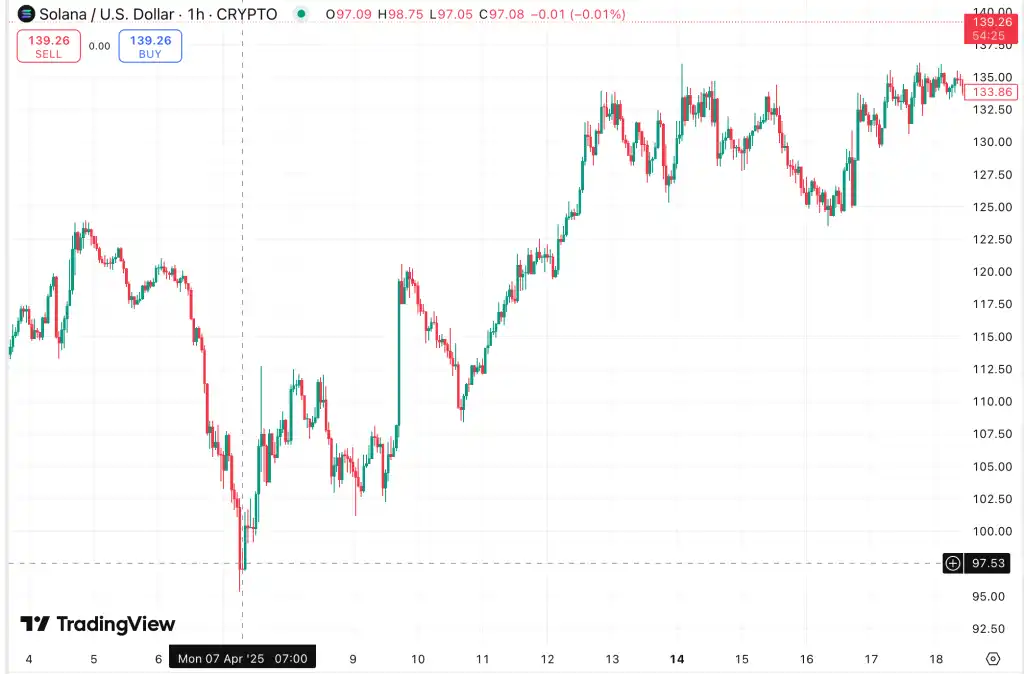
Currently, it seems that this wave of the bottom has been mostly formed. Looking at the U.S. stock market, especially the Nasdaq, it is still in an extended oscillation range.

In other words: The emotional correction in the crypto market has been faster and more resolute than in the traditional market, and the signals of stabilization have come earlier.
This shift from "weak hands to strong hands" in the market structure is a typical characteristic before a major bull run. Looking back at 2020, in the 6 months after the March crash, Bitcoin rose by over 300%. If history repeats itself, the current market correction may be a great opportunity for positioning.
In terms of time and structure, Crypto has been ahead of the curve.
A Turning Point in Macro Capital Flow: From Misunderstanding to Active Embrace
Beyond this structural rebound, what is even more worthy of attention is the changing concept of capital at a macro level.
An undeniable trend is that traditional funds are pouring into the crypto market at an unprecedented rate. The approval of the U.S. Bitcoin spot ETF has opened the door to institutional investment. Data shows that since approval in January, these ETFs have seen a net inflow of over $12 billion in funds.
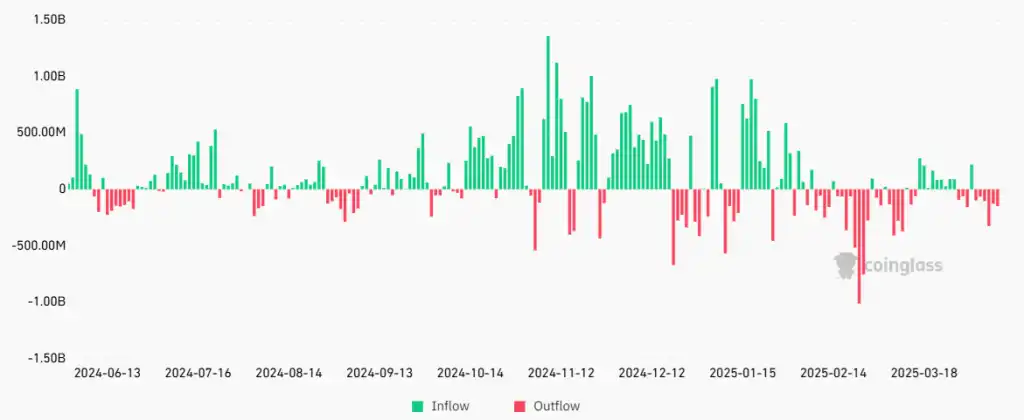
Total Net Inflow of U.S. Bitcoin Spot ETF (USD)
More notably, cryptocurrency is transitioning from a speculative tool to a practical tool. I recently visited numerous foreign trade companies in Shenzhen and Yiwu and found that the use of USDT in cross-border trade settlements is quite common. The owner of a company engaged in electronic product exports frankly admitted, "Settling in USDT is much faster than bank wire transfers now, and the fees are only one-tenth of the traditional method."
This trend is accelerating globally. In high inflation countries like Argentina and Turkey, people are using stablecoins to preserve asset value; in Southeast Asia, an increasing number of SMEs are starting to accept cryptocurrency payments. Cryptocurrency is shifting from a "speculative asset" to a "practical tool," a process that will bring about more sustainable demand support.
Over the past month, I chatted with some friends in China who are in the export business. They were not the target users of Crypto at first and even had extreme aversion to it. However, against the backdrop of global supply chain restructuring, geopolitical tensions, and the tightening of remittance channels, they have begun to frequently raise some previously unimaginable questions:
Is it possible to find a third country for simple processing, settle exports to the U.S. in USDT to bypass sanctions? Physical goods are too uncertain, are there any virtual goods that can be made, such as NFTs? After the factory shutdown, how to exchange cash on hand for currency to buy coins? More importantly, during the downtime, what coins can be traded?
You will find that Crypto is no longer just an "asset choice" but has become a resource for export after a "reality interruption".
And USDT is becoming more and more prevalent: in some cross-border settlement scenarios, USDT has become a common tool. In their words, "It is now unrealistic not to hold BTC."
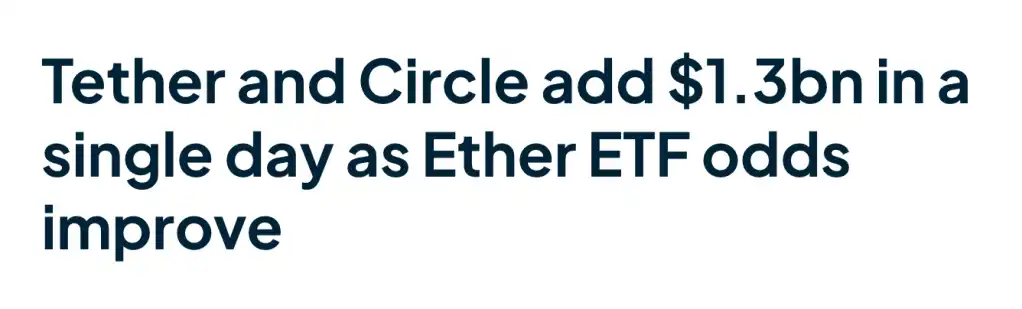
Another rarely mentioned but highly significant signal is that gold has hit a new all-time high and is still accelerating.
In early April, gold briefly plummeted by 5% in just 4 days, breaking through $3000, intensifying market panic. However, in less than a week, it rebounded to reach a new high, breaking through $3300 and is now in a strong uptrend.
From historical experience, Bitcoin often follows a breakthrough before its high within 100–150 days after the gold price hits a new high. This is not a coincidence but a resonant signal highly related to fund flows and market structure, as well as the high correlation of gold and Bitcoin in macro attributes—they are both tools against fiat devaluation.
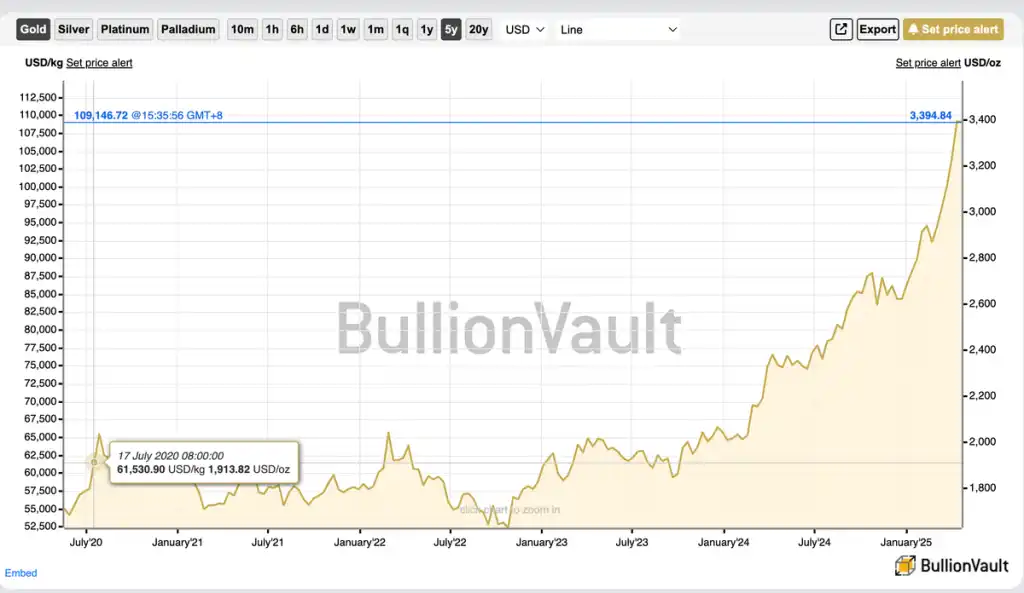
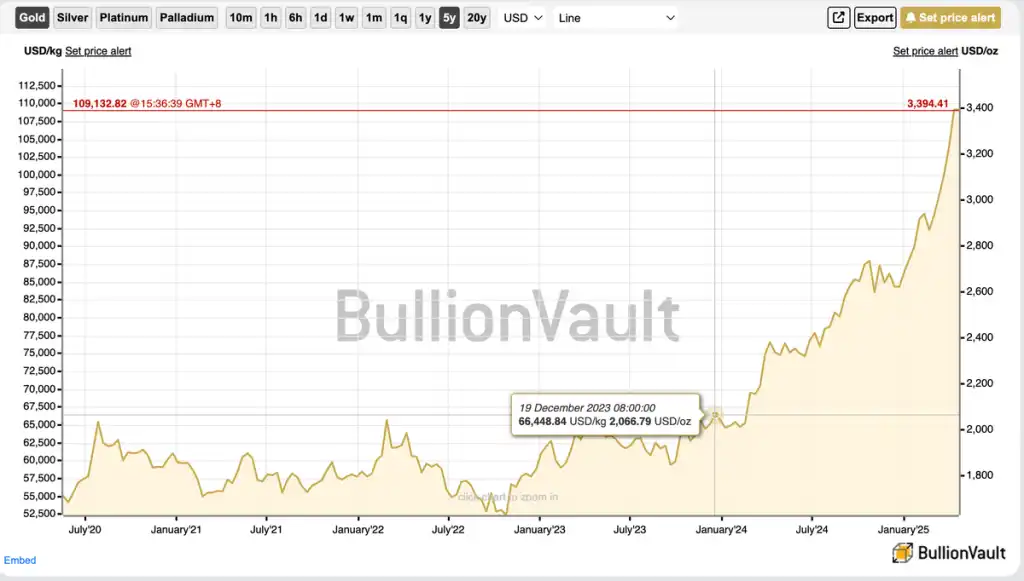
If this historical rhythm repeats again, we may see BTC break its previous high at the end of Q2 or beginning of Q3, with Q4 potentially being the top of the market.
ETH, SOL, Hyperliquid: Three Structural Narratives and Value Differentiation
Now we come to another important question: After BTC, if you still want to hold an asset, what should you choose?
I still stand by my previous views:
If it's a $500K investment, I choose Hyperliquid
If it's a configuration of $5M or more, I would choose SOL
These three represent completely different asset logics and user paths:
ETH: On-chain Finance and Real-world Connection Infrastructure
Regarding the core value of Ethereum, my judgment is clear: RWA is the largest narrative for ETH's future, but the tipping point is not this year.
As the second-largest cryptocurrency by market cap, I am now more certain that Ethereum will be the infrastructure that combines reality and crypto, attracting institutional funds (not web3 institutions, but real-world funds with utility needs).
The key is RWA, which fundamentally combines DeFi to systematically transfer offline trading systems to the chain, bringing long-term value, that is, systematically moving offline trading, financing, and credit systems to the chain.
Although the implementation of RWA is still relatively fragmented, with infrastructure and regulatory frameworks still under construction, the trend is already very clear. Traditional financial giants including Blackstone, Citigroup, and BlackRock have begun core financial activities such as bond tokenization and cross-border settlements on Ethereum. In the future, not only bonds, but even asset classes such as stocks, gold, carbon credits, etc., are likely to circulate on the ETH network.
Moreover, from a data perspective, over 80% of projects in both DeFi and RWA, the two core sectors, are built on top of Ethereum. Taking DeFi as an example, the total value locked (TVL) in DeFi still remains at the level of hundreds of billions of dollars, indicating a huge underlying demand.
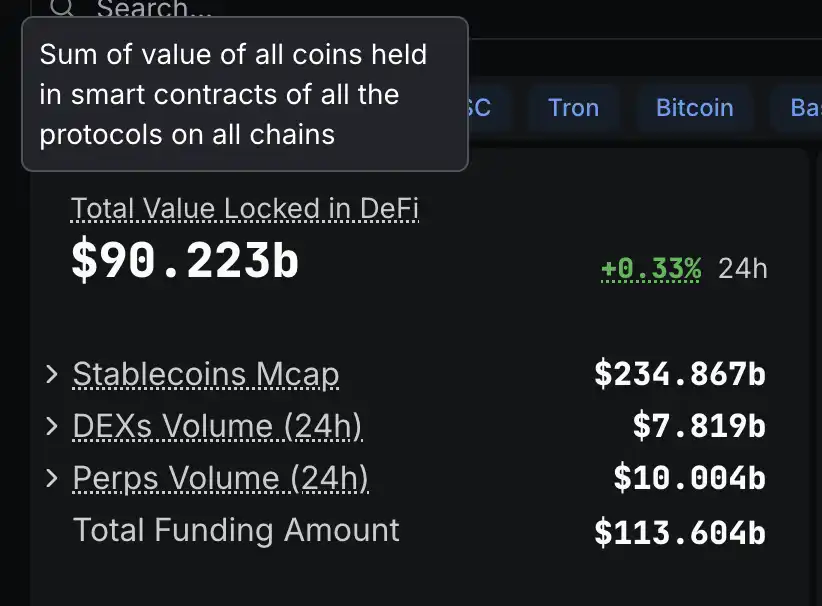
Therefore, in my view, Ethereum's role is evolving from being a "smart contract platform" to being the "operating system of real finance." It is like the "oil" of the digital age—supporting not only the continuous operation of the entire on-chain economy but also potentially becoming the underlying infrastructure of the future global financial system.
SOL: A Microcosm of On-Chain Activity and Retail Narrative
SOL may not be the most technologically advanced public chain, but it is the public chain with the most on-chain liquidity. From meme coins, GambleFi, to various projects led by strong operators, SOL has become the home of retail speculative psychology. And retail activity implies continuous liquidity. If you believe that the retail cycle will still see another wave this year, then SOL is the most beta-resilient asset.
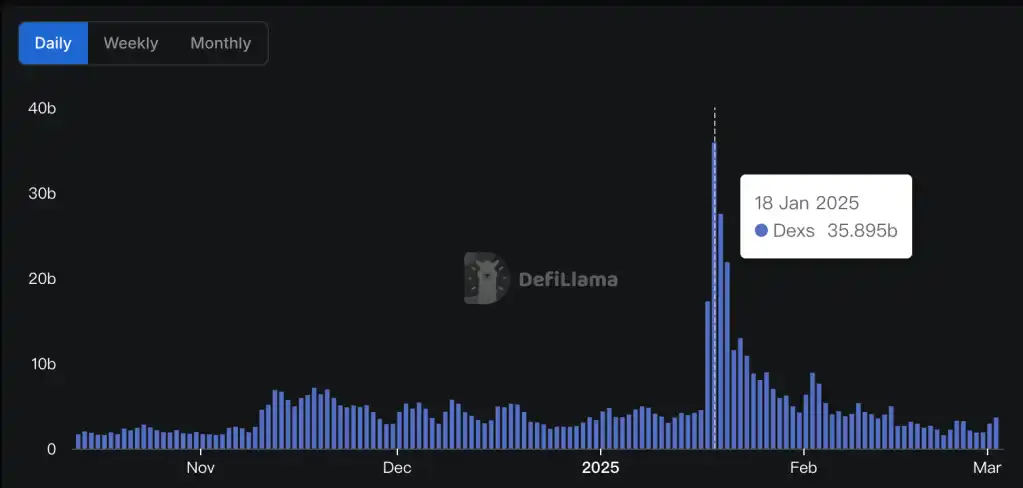
During the MEME price action, SOL's DEX alone saw daily trading volumes in the tens of billions of dollars
In the future, cryptocurrency classification will also change, possibly only having three types of coins: Bitcoin, mainstream coins, and MEME coins. MEME coins will not seek to replace BTC or gold, but they represent a consensus and culture; they will not only be accepted by the public but also become the wildest capital whirlpool in the cryptocurrency market.
Solana is a barometer of the current market sentiment. Meme coin frenzy, intense on-chain transactions—all of these have made SOL the best place for short-term speculation — just like the "Las Vegas" of the cryptocurrency world—where wealth creation myths unfold every day and where thrill-seeking gamblers abound. However, it is undeniable that it is attracting some of the most active funds and developers globally.
Hyperliquid: The On-Chain Mirror of TradeFi, the Perfect Venue for AI Trading
Hyperliquid is actually a structural narrative: it is not a Meme, nor is it L1/L2, but one of the core scenes of on-chain finance: perpetual contracts + leveraged trading + high-frequency strategies.
This is a platform I have most recently paid attention to and traded on frequently. I engage on this platform almost every week, not because of following trends, but because it truly addresses a key issue—how to achieve professional-grade derivative trading in a decentralized environment.
Hyperliquid is now more geared towards professional traders, which is why it has not been widely recognized by a larger audience. However, with the advancement of AI, a large amount of strategy design and execution will be handled by AI Agents — users only need to express their trading intent in natural language, and the AI can call upon complex on-chain modules to execute strategies such as futures-spot arbitrage, cross-asset hedging, grid strategies, and more.
In the future, you won't need to personally perform complex operations anymore. You'll just need to tell the Agent, "Open a 5x leveraged ETH long position on Hyperliquid, with an automatic stop-loss if it drops below 2000." The AI Agent will automatically break this down into contract calls, slippage control, on-chain gas optimization, and more, efficiently executing the complex trade for you.
Furthermore, if you want to profit from "exchange spread + funding rate" dual income when the BTC price fluctuates, manual operation would require monitoring 5 exchanges simultaneously, calculating the funding rate breakeven point, dynamically adjusting margin, and preventing liquidation through liquidation price monitoring. This may be too difficult for the average person, but for an AI Agent, it only requires a series of basic analyses and operations like spread capture, funding rate optimization, risk management, and more.
In terms of speed, accuracy, and even emotionally, AI Agents have advantages that humans cannot match. Of course, AI Agents will not replace human traders but will transform professional-level strategies into something as simple as ordering takeout through "human-machine cooperation."
With its high level of openness and clear on-chain settlement, Hyperliquid is very suitable to serve as the trading backend for the future "AI x DeFi" scenario. Therefore, the core battlefield of this transformation is likely to be in on-chain derivative protocols like Hyperliquid.
Summary: A bull market is always born in doubt and grows in hesitation
This current market situation reminds me of the tumultuous yet opportunity-filled spring of 2020 — the market bottomed out in panic and then embarked on an epic rebound. And now, it seems like the same script is unfolding: gold has broken historical highs as if a starting gun has been fired; traditional funds are quietly entering the market through USDT; and more Smart Money is already considering how to position themselves for the next round of AI-driven trading on Hyperliquid.
The market's landscape is actually quite clear: BTC is digital gold, ETH is the operating system of real-world finance, SOL is the battleground of retail liquidity and sentiment, and Hyperliquid has become the platform for professional traders and future AI trading behavior. As AI officially becomes involved in the design and execution of trading behavior, Hyperliquid is likely to become the landing place for the next round of on-chain behavior migration.
Those who are still waiting for a "better entry point" may not realize: when international trade bosses start discussing USDT settlement, when gold breaks through its previous high, when AI begins automatically executing arbitrage strategies, there is not much time left in the market for onlookers. Many trends will not wait for you to fully understand before they occur— and now is the window for those who can still get on board.
Recommended
The Wall Street Journal: How is AI Trading Stealing the Limelight from Cryptocurrency?
Aug 15, 14:00
Tencent Still Has a Dream
Aug 15, 11:27
To Catch North Korean Hackers, They Set Up a Fake Project
Aug 15, 10:00
From Litigation to Settlement: Positive Signal Released by HTX's Negotiation with FCA
Aug 14, 19:32
11,742 Shipping Addresses Exposed Alongside Trezor Orders
Aug 14, 19:01
Founder Interview: FOMO Creator Explains How They Added 30,000 Users in One Day and Became One of the Fastest-Growing Crypto Apps
Aug 14, 18:37