Sentient In-Depth Research Report: Secures $85 Million in Funding, Pioneering a Decentralized AGI New Paradigm
Original Title: "AI L1 Deep Research Report Series on Sentient: Building an Open AI Platform with $85 Million"
Original Authors: 0xjacobzhao, Biteye
Sentient is an open-source protocol dedicated to constructing a decentralized artificial intelligence economy. Its core objective is to establish ownership structures for AI models, provide on-chain invocation mechanisms, and build a composable, revenue-sharing AI Agent network. Through the "OML" framework (Open, Monetizable, Loyal) and model fingerprinting technology, Sentient addresses the fundamental issues of "unclear model ownership, untraceable invocations, and unfair value distribution" in the current centralized LLM market.
The project is driven by the Sentient Foundation, focusing on building open AGI and incentive mechanisms for the protocol. The advocated "Loyal AI" refers to an open AI model ecosystem that serves the community, practices fair governance, and has the ability to evolve long-term.
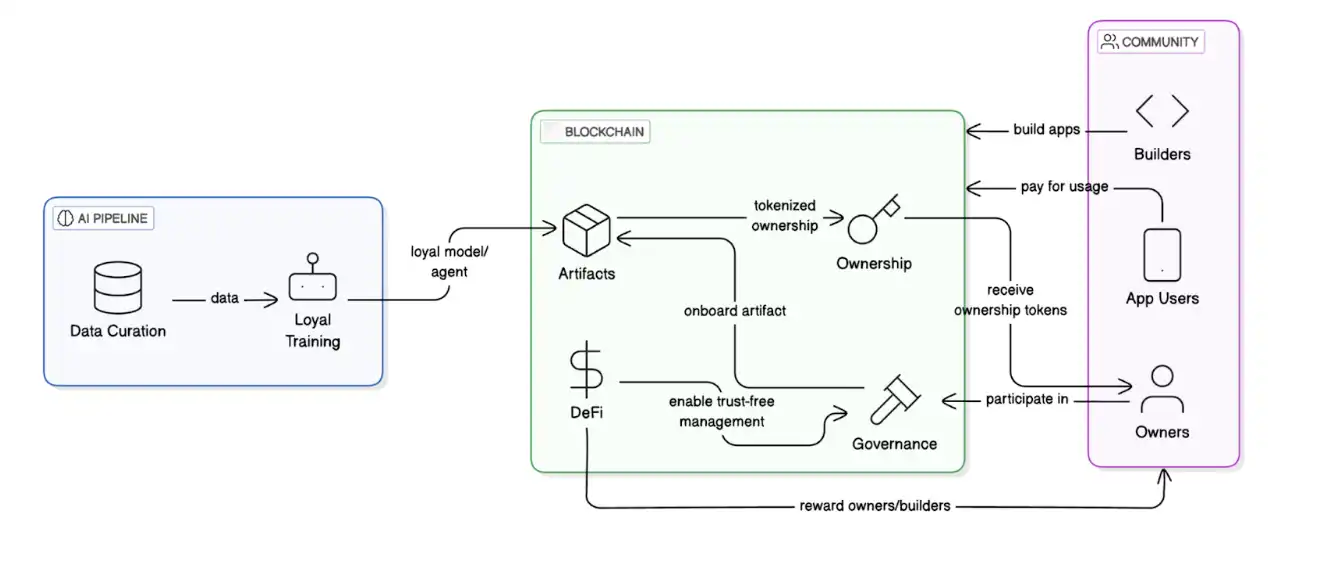
Figure 1: The architecture of the Sentient Protocol consists of two core components: the blockchain system and the AI pipeline
The AI Pipeline is the foundation for developing and training "Loyal AI" artifacts, consisting of two core processes:
· Data Curation: A community-driven data selection process used for model alignment.
· Loyalty Training: Ensuring the model undergoes training that aligns with the community's intent.
The blockchain system provides transparency and decentralized control to the protocol, ensuring ownership and governance of AI artifacts. The main modules include:
· Governance: Controlled and decided by a decentralized autonomous organization (DAO).
· Ownership: Representing ownership of AI artifacts through tokenization.
· Decentralized Finance (DeFi): Providing financial tools to support open, decentralized, fair governance, and rewards.
1. OML Model Framework
The Sentient: Loyal AI Whitepaper proposes the OML framework Open, Monetizable, and Loyal AI, which starts with model ownership and first systematically introduces the concept of "AI-native Cryptography", aiming to provide an encryption-level ownership protection mechanism for open-source models.
· Open: The model must be open source, with transparent code and data structure, supporting community replication, auditing, and forking;
· Monetizable: Each model invocation triggers a revenue stream, allocated through on-chain contracts to trainers, deployers, and validators;
· Loyal: The model does not belong to a company but to a contributor community, with model upgrade direction and governance determined by a DAO. Model ownership is verifiable, modification is restricted, and usage is controlled.
OML, through on-chain mechanisms and cryptographic means, ensures that open-source models maintain openness while possessing economic and governance sovereignty. It constructs an AI-native protocol layer for usage rights and revenue rights, ensuring model transparency, clear ownership, economic incentives, and behavioral governance.
Core Concept: AI-native Cryptography
AI-native cryptography utilizes the continuity of AI models, low-dimensional manifold structure, and model differentiability to develop a "verifiable but irremovable" lightweight security mechanism. Its core technologies are:
· Fingerprint Embedding: Insert a set of hidden query-response key-value pairs during training to form a unique model signature;
· Ownership Verification Protocol: Verify whether the fingerprint is retained in query form by a third-party prover;
· Permissioned Invocation Mechanism: Prior to invocation, obtain a "permission credential" issued by the model owner, based on which the system authorizes the model to decode the input and return the correct answer.
This approach enables "behavior-based authorization invocation + ownership verification" to be achieved at no additional encryption cost.
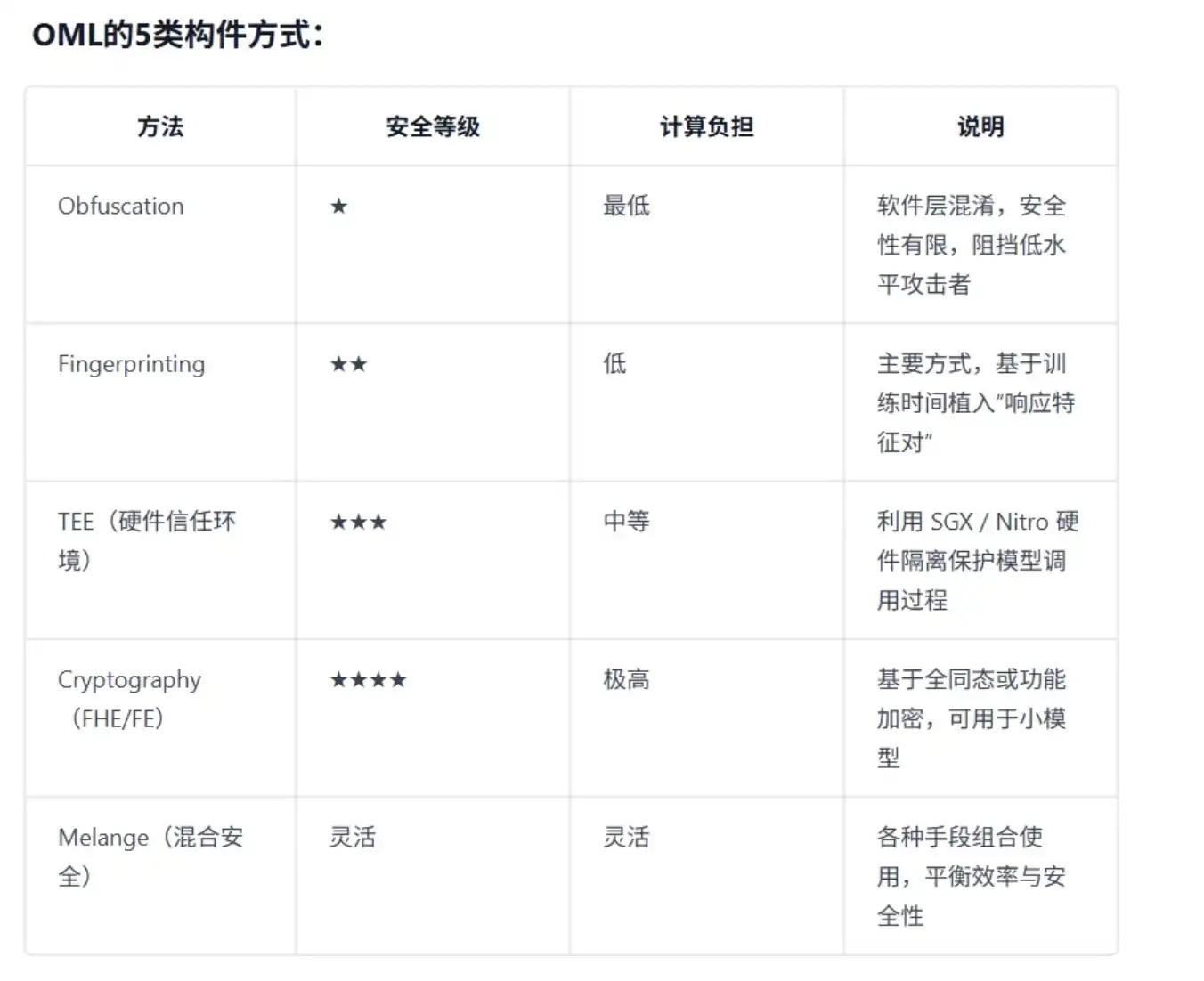
Sentient currently employs Melange Hybrid Security: a combination of fingerprint ownership, TEE execution, and on-chain contract profit sharing. The fingerprint method is the mainstream implementation of OML 1.0, emphasizing the "Optimistic Security" concept, whereby default compliance is assumed, and violations can be detected and penalized.
OML and Sentient Protocol Protocol Architecture
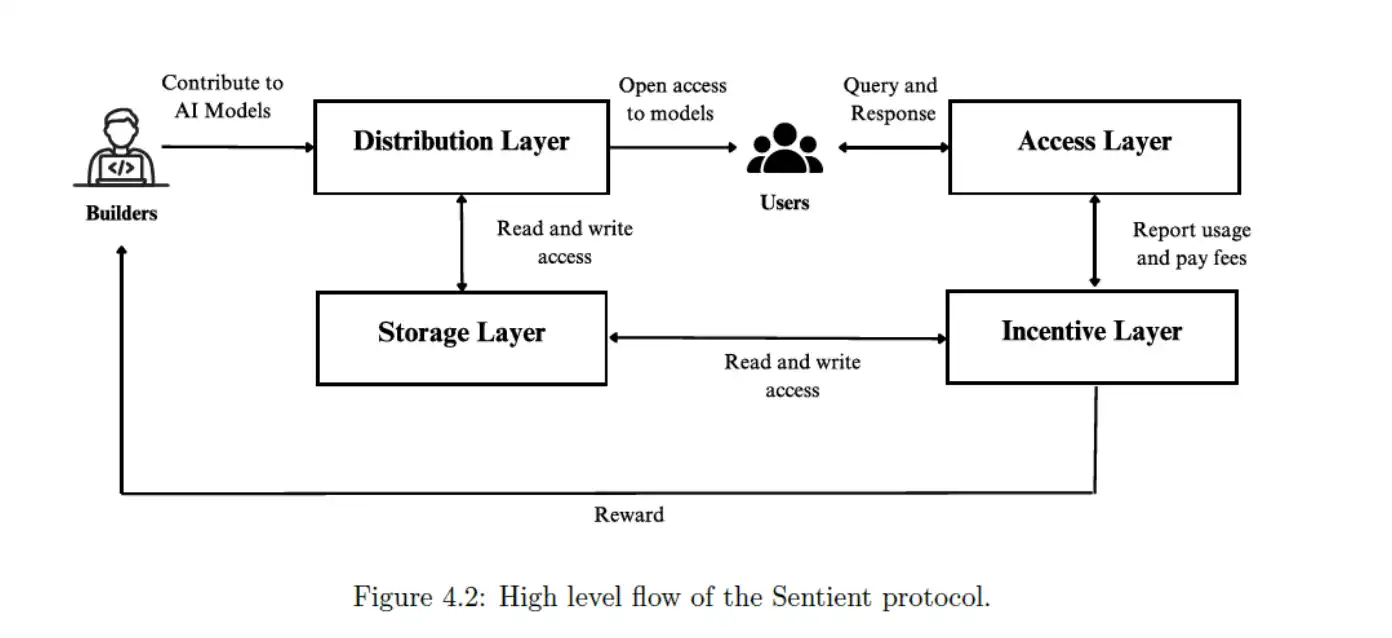
The final chapter of the paper proposes a complete on-chain protocol (Sentient Protocol) to support OML:
· Storage Layer: Stores model weights and fingerprint registration information;
· Dispatch Layer: Authorization contract controls model invocation entry points;
· Access Layer: Verifies user authorization through proof of permission;
· Incentive Layer: A revenue routing contract distributes payment for each invocation to trainers, deployers, and validators.
2. Fingerprinting and Model Ownership Mechanism
GitHub: https://github.com/sentient-agi/oml-1.0-fingerprinting
This repository is the first implementation of the Sentient fingerprinting mechanism, providing a fingerprint injection and validation interface that can be embedded into the training process. Its purpose is to ensure that model ownership is verifiable, usage behavior is traceable, and unauthorized replication and commercialization are prevented. This is a specific engineering implementation of the OML framework.
The essence of the fingerprinting mechanism is: by fine-tuning the model, embedding a set of unique "key-response" pairs, the model owner can verify ownership through specific queries, thereby forming a "cryptographic signature" for the model.
3. Enclave TEE Computing Framework
GitHub: https://github.com/sentient-agi/Sentient-Enclaves-Framework
The Sentient Enclaves Framework is an open-source framework that utilizes trusted execution environments (TEEs) such as AWS Nitro Enclaves to achieve secure deployment of model inference, fine-tuning, and proxy services. The framework emphasizes the "loyalty" of the model, ensuring that the model only responds to authorized requests, preventing unauthorized access and use.
The TEE (Sentient Enclaves Framework) excels in high performance and cloud integration, suitable for real-time AI and sensitive data processing, but is limited by hardware dependencies and side-channel attacks. Compared to other cryptographic technologies, FHE provides hardware-agnostic and post-quantum secure strong privacy guarantees, but with significant performance overhead, making it challenging to directly replace TEE for high-performance tasks. ZK performs exceptionally well in verifiability and decentralization scenarios and can serve as a complement to TEE (this module is planned to integrate with zkML in the future).
4. Sentient Agent Framework
GitHub: https://github.com/sentient-agi/Sentient-Agent-Framework
The Sentient Agent Framework is a lightweight open-source framework focused on achieving web task automation through AI agent-controlled browsers (e.g., search, video playback) with a simple development experience using natural language commands (boasting 3 lines of code). This architecture supports building an intelligent agent with a complete "perceive-plan-execute-feedback" loop and compared to traditional AI Agent Frameworks, the Sentient Agent Framework is limited in functionality, lightweight, and concise, making it more suitable for off-chain web tasks.
5. Sentient Social Agent
GitHub: https://github.com/sentient-agi/Sentient-Social-Agent
The Sentient Social Agent is an AI system designed to automate interactions on social platforms (Twitter, Discord, and Telegram), capable of understanding the social environment, generating content, interacting with users, and engaging in social exchanges through multi-agent collaboration. This system can be integrated with the Sentient Agent Framework.
6. Open Deep Search (Not Yet Launched)
On the Sentient website, Open Deep Search is described as a search agent that surpasses ChatGPT and Perplexity Pro. Team member Sewoong Oh revealed part of the roadmap at the EthDenver 2025 Open AGI Summit:
Open Deep Search consists of two main parts: Sensient's search capabilities (including query paraphrasing, URL and document handling, etc.) and the reasoning agent. The reasoning agent leverages open-source LLMs (such as Llama 3.1 and DeepSeek) to enhance search quality through tools like search, calculators, and self-reflection. On the Frames Benchmark, Open Deep Search outperforms other open-source models, even rivaling some closed-source models. However, due to its unreleased status, we cannot currently assess its real capabilities.
The products currently showcased on the Sentient official website focus on the Sentient Chat conversational platform and the open-source Dobby LLMs model:
Sentient Chat:
Sentient Chat is a decentralized AI chat platform launched by the Sentient Foundation. This platform integrates open-source large language models (such as the Dobby series) with an advanced reasoning agent framework. Its core features include:
1. Open Reasoning Agent: The built-in reasoning agent in Sentient Chat can perform complex tasks, supporting tools like an Open Discovery System (ODS), calculator, and code execution.
2. Multi-Agent Integration: The platform supports integrating multiple AI agents, allowing users to interact with different agents based on their needs. Similar to a Web3 version of POE or an open, agent-driven Perplexity alternative.
Sentient Chat is currently in the testing phase and is only accessible through invitation codes distributed via email or community activities. According to official public information, over 5,000 users have successfully obtained access to Sentient Chat and have generated over 100,000 user queries. As the author is not currently a whitelisted tester, the true capabilities of its model cannot be assessed at this time.
Dobby LLM Model Series:
1. Dobby-Unhinged Series
· Dobby-Unhinged-Llama-3.3-70B: Based on the Llama 3.3-70B-Instruct fine-tuning, emphasizing personal freedom and a stance on cryptocurrency, with a straightforward, humorous, and personable conversational style.
· Dobby-Mini-Unhinged-Llama-3.1-8B: An 8B parameter version suitable for resource-constrained devices.
2. Dobby-Mini-Leashed-Llama-3.1-8B: A milder-toned version suitable for applications requiring more robust outputs.
As the Dobby LLM models are fine-tuned versions based on Llama 3.1 and 3.3, we believe their primary applications lie in building chatbots, content generation and creation, role-playing agents, etc. Their advantages include flexible style generation, enhanced reasoning, and low resource requirements, allowing for rapid deployment and flexible customization in resource-constrained environments. Compared to more powerful closed-source models like GPT-4, Dobby LLM still lags in handling tasks involving advanced logic, cross-domain knowledge reasoning, and deep inference.
The Sentient Builder Program currently offers a $1 million grant to support developers in building an AI Agent to operate within the Sentient Chat ecosystem. Developers are required to use the Sentient development kit and integrate their solution into the ecosystem through the Sentient Agent API.
At the same time, the ecosystem partners announced on the Sentient website cover projects in various areas of Crypto AI, as follows
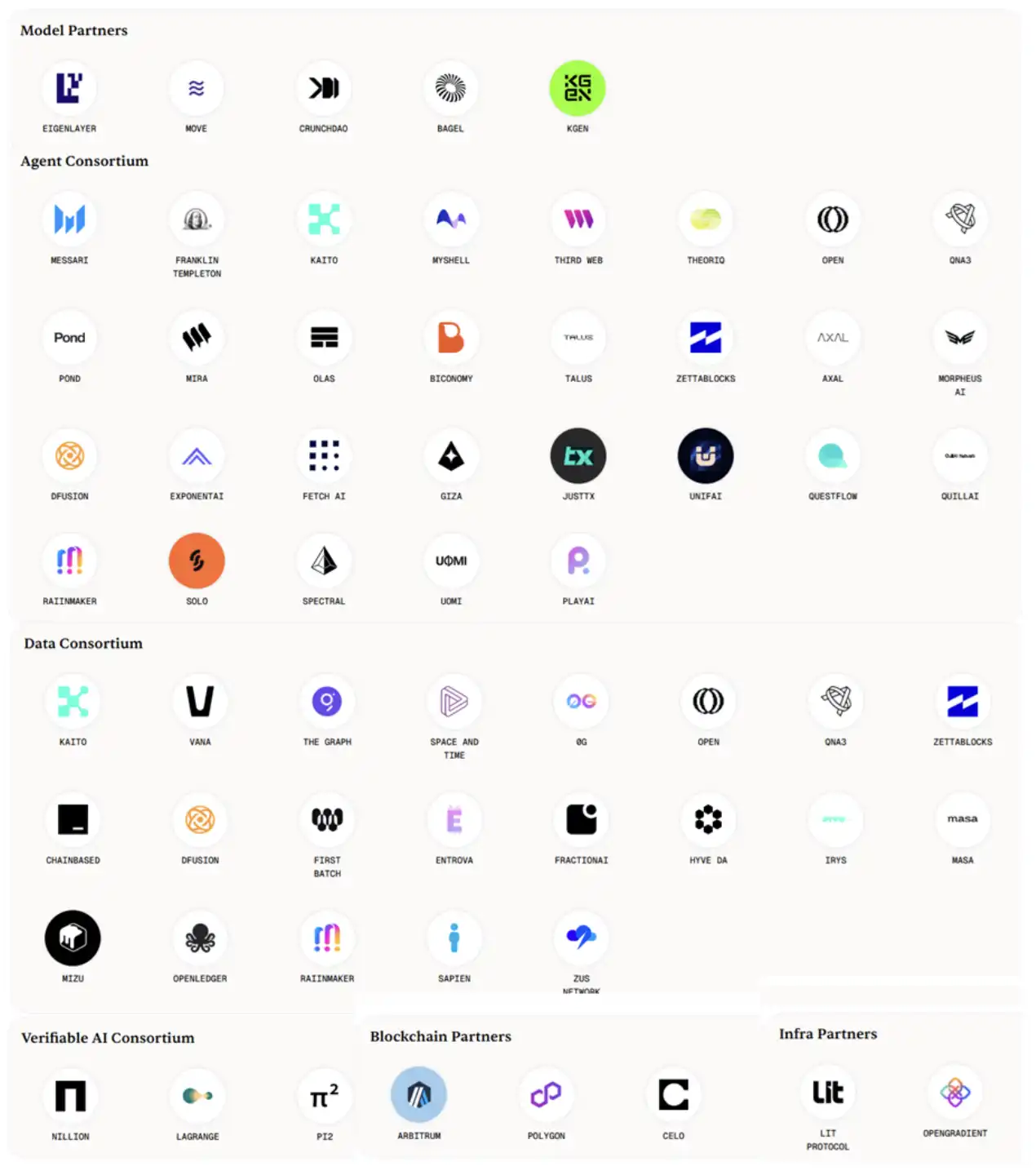
Figure 2: Sentient's AI Ecosystem Partners
As a leading project in the Crypto AI field, Sentient's resource integration ability can encompass any star startup project in the industry. However, it should be noted that the prevalence of "marketing-driven" partnerships in the Crypto field has created an illusion of industry prosperity. The contribution and loyalty of Sentient's ecosystem partners still require our ongoing observation.
The Open AGI Summit is an internationally recognized conference initiated by the Sentient team dedicated to exploring the integration of Artificial Intelligence (AI) and Cryptocurrency technology. I had the privilege of attending its summits in 2024 and 2025 during ETH Denver and ETHcc events, where the Sentient team demonstrated its ability to gather top institutional investors and project entrepreneurs in the industry, which was truly remarkable.
The Sentient Foundation has brought together top academic experts, cryptocurrency industry entrepreneurs, and engineers from around the world, committed to building a community-driven, open-source, and verifiable AGI platform. According to officially released information, the team members are mainly:
Core Leadership (Steering Committee)
· Pramod Viswanath – Forrest G. Hamrick Professor at Princeton University, with extensive research in information theory and communication systems, leading Sentient's AI security and theoretical foundation development.
· Himanshu Tyagi – Professor at the Indian Institute of Science, specializing in privacy-preserving and decentralized learning algorithms, providing academic support for model training and privacy collaboration.
· Sandeep Nailwal – Co-founder of Polygon, responsible for blockchain strategy and global ecosystem development, a key figure in connecting the crypto community with AI architecture.
· Sensys Team – Web3 native product studio, leading user experience optimization and developer infrastructure construction, driving the implementation of the Sentient product.
Core Engineering and Development Team: From renowned tech and blockchain companies such as Meta, Coinbase, Circle, Polygon, Binance, as well as researchers from universities such as Princeton, University of Washington, IIT, among others. AI Research and Model Training Team: Research team covering AI/ML, NLP, computer vision, and reinforcement learning, with members having practical experience at institutions such as Google Research, Daimon Labs, Fetch.ai.
It is important to note that Sentient was founded with the successful aura of Polygon co-founder Sandeep Nailwal. As a key scaling solution in the Ethereum ecosystem, Matic relied on Plasma, a technology that was not cutting-edge but sufficiently "cheap and fast," to establish Polygon's competitive moat in areas such as NFTs and social, while integrating ZK technology into its blockchain scaling solution through the acquisition of Mir Protocol and Hermez Network and the launch of Polygon zkEVM. As Sandeep Nailwal's second entrepreneurial endeavor, Sentient benefits from his experience, funding, network, and market recognition, enabling it to raise substantial funds in 2024 based on an imperfect project concept. However, the AI field is different from Crypto, and Sentient still faces challenges in adapting to a new market environment, increasing competition, and evolving technology.
In 2024, Sentient raised an $85 million seed round led by Founders Fund, Pantera, and Framework Ventures. The token has not yet been released. The current Agent incentive points can be mapped to tokens in the future. The token can be used for proposal voting on model version management, staking to validate Agent outputs' authenticity, governance signaling, and more.
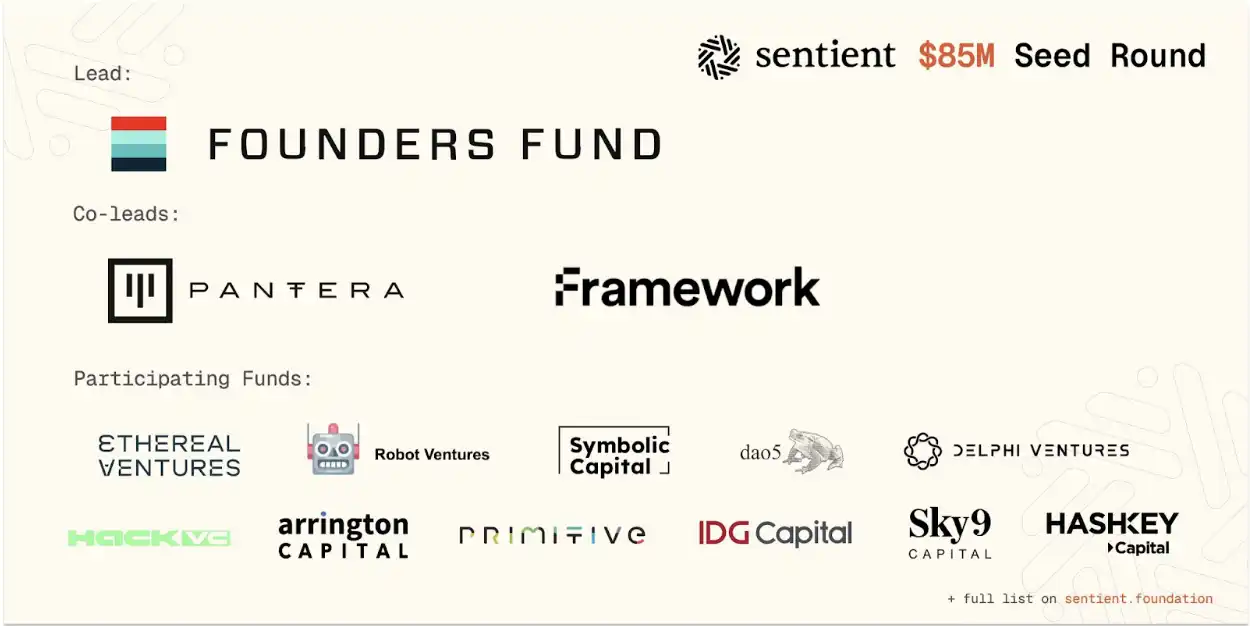
Figure 3: Sentient Funding Status
Sentient is the born-in-the-purple king project, with its investor background, funding scale, and valuation setting the bar for most Crypto AI projects in the market. On the one hand, its strong resource endorsement can more easily integrate various industry resources, a high amount of funding can more easily hire top talents to join its team, and substantial capital can support the project's development across industry cycles. However, on the other hand, the current Crypto industry is wary of high-valued projects backed by VCs. Furthermore, VC-backed projects mainly focus on capital operations, severely decoupled from fundamentals. Assuming Sentient fails to deliver impactful Crypto AI products and instead opts for a high valuation token issuance, it will ultimately harm the trust that the Crypto community urgently needs to rebuild. How the team responds to the current industry dilemma is worth our continued observation.
Most Crypto AI projects in the market mostly focus on a single area such as data, models, computing, training, or inference, or develop consumer-facing applications like AI Agents. Projects positioning themselves as AI Chain include those focusing on the transformation of public chains into AI (like Near and ICP) or decentralized resource-sharing coordination and token incentive protocols like Bittensor. Sentient's positioning does not entirely match these projects. On the model training side, Sentient is more like an integration platform, cooperating with open-source AI models in the market. On the Agent side, Sentient competes with projects like Talus, Olas, or Theoriq in multi-agent systems and reasoning capabilities, but each project has different core goals and application scenarios, still exhibiting complementarity.
Sentient, as a decentralized artificial general intelligence (AGI) protocol platform, aims to provide clear ownership structure for AI models and enable on-chain invocation and value distribution through mechanisms to address the ambiguity and unfairness in the current centralized LLM market. The core framework OML (Open, Monetizable, Loyal), through model fingerprints and blockchain technology, ensures ownership, transparency, and fair revenue sharing of open-source models. With the support of various top VCs and AI ecosystem partners under the backing of Polygon co-founder Sandeep Nailwal, Sentient, despite facing development uncertainties, controversies, and competition, still aims to become one of the standard protocols for decentralized AI ownership and to drive the decentralized development of AGI.
Recommended
The Wall Street Journal: How is AI Trading Stealing the Limelight from Cryptocurrency?
Aug 15, 14:00
Tencent Still Has a Dream
Aug 15, 11:27
To Catch North Korean Hackers, They Set Up a Fake Project
Aug 15, 10:00
From Litigation to Settlement: Positive Signal Released by HTX's Negotiation with FCA
Aug 14, 19:32
11,742 Shipping Addresses Exposed Alongside Trezor Orders
Aug 14, 19:01
Founder Interview: FOMO Creator Explains How They Added 30,000 Users in One Day and Became One of the Fastest-Growing Crypto Apps
Aug 14, 18:37