2025 Buffett Shareholder Meeting Highlights: A 800-Word Rapid Review of 60 Years of Investment Wisdom and Succession Planning
Original Article Title: "2025 Berkshire Hathaway Shareholders Meeting Digest: Buffett Talks About 'Retirement,' Trade, Cash Deployment, American Exceptionalism, and US Stock Volatility"
Original Source: Wall Street News
The annual event in the investment world—Berkshire Hathaway's shareholder meeting—kicked off on May 2nd, with the Q&A session starting at 9 p.m. on Saturday, May 2nd Beijing time. "Oracle of Omaha" Buffett once again fully participated, accompanied by his CEO successor—Greg Abel, who is in charge of Berkshire's non-insurance businesses, and Ajit Jain, who is in charge of the insurance business, to answer shareholder questions together.
Key points from Buffett's shareholder meeting, as summarized by Wall Street News, are as follows:
1) About Trade
"Trade should not be used as a weapon," and the U.S. should seek to trade with other countries, each doing what they excel in. Protectionist policies are a "serious mistake."
2) About America
"Fiscal policy is the issue I am most worried about in America," When the government takes irresponsible action, the value of currency may become "frightening." Buffett implies his full support for America, advocating American exceptionalism. He said his luckiest day was the day he was born in America, which he sees as a model of capitalism.
3) About Japan
We will not easily invest overseas unless I believe it is a truly huge opportunity. We plan to continue holding onto shares of Japanese trading companies for five to six decades. Even if the Bank of Japan raises interest rates, he does not consider selling. Berkshire's current investment in Japan has reached $20 billion, and I even wish we had invested $100 billion instead of $20 billion.
4) About the U.S. Stock Market
The recent stock market fluctuations are "not significant," compared to past crashes, "it is not yet a severe bear market" or a similar situation.
5) About Record Cash Reserves
Regarding how to utilize Berkshire's record cash reserves, there may be investment opportunities in the next five years. Berkshire recently came close to making a $10 billion investment.
6) About Succession
The head of Berkshire's non-insurance businesses, Abel, is expected to take over as CEO by the end of the year. He will not sell any of his Berkshire shares and will gradually donate them.
7) About Berkshire
If one day Berkshire's stock price were to fall by half, it would actually be an opportunity for me. Not that I lack emotions, but stock price fluctuations will not affect my rational judgment. It will not impact my assessment of value. Overall, Berkshire's profitability is expected to continue growing for a period of time.
8) About Investment Companies
Buffett believes that the balance sheet is a good starting point for evaluating whether a company is worth investing in. He said, "I spend more time on studying the balance sheet than on the income statement. Wall Street doesn't pay much attention to the balance sheet, but I like to review eight to ten years of a company's balance sheet before looking at the income statement because some things are harder to hide or manipulate on the balance sheet."
9) About Investing as a Young Person
If your life has a direction, then you need to strive to make those you respect and aspire to be like your friends. The fastest path to success is to find those truly outstanding individuals and walk with them. Buffett concluded the Q&A session by announcing that he plans to propose to the board to step down as CEO by the end of this year. That will mark the beginning of the end of the Berkshire Hathaway "Buffett era." Investors need to prepare for a Berkshire without Buffett at the helm.
Prior to the Q&A session at the shareholders meeting, Berkshire Hathaway also released its first-quarter earnings report, with some key points as follows:
The company's first-quarter operating profit was $9.64 billion, compared to $11.2 billion in the same period last year, a 14% year-over-year decline, falling short of analyst expectations. The company warned that tariffs may further impact its profit. Berkshire's overall profit was also impacted by the U.S. dollar's depreciation in the first quarter. The company reported a foreign exchange loss of approximately $713 million, compared to a $597 million gain in the same period last year due to exchange rate fluctuations.
Berkshire Hathaway has been a net seller of stocks for the tenth consecutive quarter, with net sales of $1.5 billion in the first quarter. The financial report shows that Berkshire's cash reserves reached $347.7 billion for the quarter, a new all-time high. In an environment of extreme uncertainty due to tariffs, Buffett is cautious about current investments, expecting good investment opportunities in the next five years. He mentioned that Berkshire's decision to postpone a share buyback partly stems from a 1% excise tax on buybacks imposed by the Biden administration last year.
Below are key points from Buffett's shareholder meeting Q&A session, listed in order of the questions:
9:00 PM 2025 Shareholder Meeting Q&A Session Opening Remarks
The shareholder meeting commences. Buffett opens the meeting by saying, "This is my 60th shareholder meeting." The audience erupts in applause.
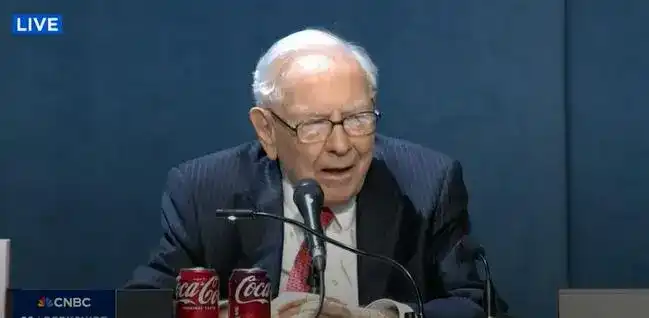
Buffett notes that 19,700 people are attending the meeting in person this year, setting a new record for in-person attendance. At the meeting, the sales of See's Candies have reached $317,000. Brooks running shoes have generated sales of $310,000, and products such as toys under Jazwares have sold $250,000.
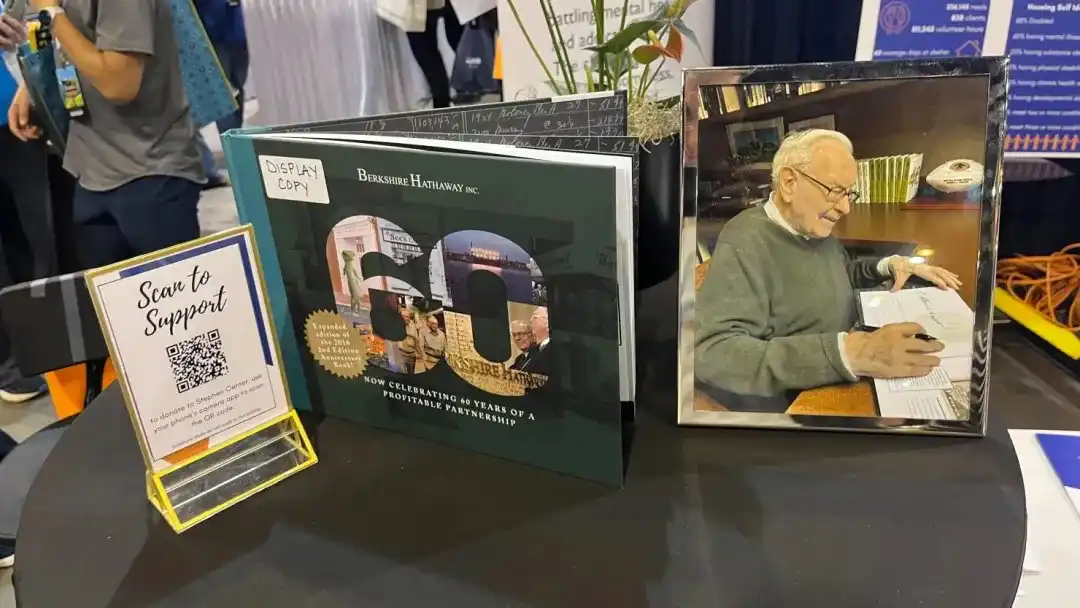
Buffett mentions that a limited edition book commemorating the 60th anniversary of Berkshire's acquisition is being sold at the meeting. This is the only book available at this year's official bookstore, Bookworm. Berkshire has printed about 8,000 copies of the book, an increase of about 3,000 copies from the original plan, with approximately 4,000 copies sold at the meeting.
9:21 PM First Shareholder Meeting Question: Trade
The first question posed to Buffett is about import certificates, an idea he put forward in a 2003 column to narrow America's trade deficit. Buffett says, "The design of import certificates is to balance trade. I came up with the idea of these import certificates. It has some showmanship to it, but I think it's certainly way better than anything we're talking about now."
Buffett criticizes tariffs and trade protectionism, stating that "trade should not be used as a weapon." He points out that the U.S. has gone from nothing to an extremely important country. Buffett says, "We should seek to trade with other countries worldwide, we should do what we're best at and they should do what they're best at. The more trade, the better."
When asked about trade barriers, Buffett said, "You can make very good arguments that balanced trade is beneficial to the world. There's no question that trade and tariffs can be a form of warfare. I think it has had deleterious effects, certainly just in the attitude it sets off."
Buffett believes that protectionist policies could have long-term negative effects on the United States, especially after the U.S. has become a leading industrial country globally. He said, "I think it's a serious mistake. When you are making 7.5 billion people against you and having 300 million people give themselves a little bit of applause for what they've managed to achieve. I don't think that's right, and I don't think that's wise. I do think that the more the rest of the world prospers, the better it is for us."
We went from nothing 250 years ago to being a hugely important country, which is unprecedented in history. Buffett's speech received applause from the audience. Buffett did not directly mention U.S. President Trump in his speech.
21:26 Shareholders Meeting Second Question: Japan
When asked if Berkshire would stop investing in Japanese stocks if the Bank of Japan raises interest rates in the future, Buffett stated that he would not sell stocks. Buffett said, "We will not sell these stocks in the next fifty years. The operating history of these Japanese companies is excellent," and pointed out that companies like Apple, American Express, and Coca-Cola have performed well in Japan.
Buffett stated that investing in Japan is completely in line with Berkshire's investment philosophy. The five Japanese trading companies Berkshire has invested in have had excellent performance in the past, intend to continue holding these trading companies' stocks for fifty to sixty years, and hope to establish long-term and deep partnerships with them. Buffett said that the culture and habits of these trading companies are different from ours, and their way of doing business is also different, but for that reason, we value this partnership more. "We will not sell any stocks. It will not happen in decades. Japanese investments suit us well."
Buffett stated that Berkshire currently has no plans to sell the stocks of these Japanese trading companies in the near term. Their current operations are very successful, and he believes that even now, at the age of 94. Berkshire also plans to further expand cooperation. Buffett said Berkshire's current investment in Japan has reached $20 billion, and I even wish we had invested $100 billion at the beginning instead of $20 billion.
21:35 Shareholders Meeting Third Question: Deployment of Berkshire's Massive Cash
When asked about Berkshire's current massive cash reserves, Buffett joked that he didn't stop investing to make Greg Abel look good in the future. Buffett is cautious about current investment opportunities. He stated that he has been looking for investment opportunities and that Berkshire is "very opportunistic," hoping to reduce its cash holdings, possibly down to $50 billion.
Buffett said Buffett stated that Berkshire will find opportunities to deploy the company's record cash in the next five years. "Occasionally, there are very attractive opportunities. But not every day is a good day. An outstanding transaction is not likely to appear tomorrow, but it could happen within five years. We have made a lot of money by not being fully invested at certain times."
Buffett revealed that Berkshire nearly invested $100 billion recently. "For example, just recently, we came close to spending $100 billion, but today we would spend $100 billion. What I mean is that when a project makes sense to us, we understand it, and it has good value, making such a decision is not difficult."
Buffett pointed out that one issue in the investment industry is that things do not progress in an orderly manner.
21:43 Shareholders Meeting Fourth Question: Challenges of Investing in Real Estate in a Global Uncertain Environment
When asked how to deal with the challenges of the real estate industry in the current globally uncertain environment, Buffett said that real estate investment is more complex and difficult than investing in stocks. Whether it's communication, negotiation, or bargaining, there are many people and factors involved, such as who the owner is, legal structures, funding arrangements, and so on. It is really not easy to close a deal in real estate, get a good price; there are too many variables.
If you choose to invest in stocks, there is a huge advantage: countless opportunities are visible every second, especially in the U.S. market. In contrast, real estate transactions are slow-paced and highly dependent on personal communication and negotiation. Real estate investment can be done by an individual or a team.
At the NYSE, there are billions of dollars traded every day, with thousands of unknown investors participating in market activities. You only need the right price to trade 20,000 shares of Berkshire stock in 5 seconds. But it's not like that in real estate. Completing a real estate transaction is not only cumbersome but also has a long cycle. Even if the size of today's transaction is large, once it enters the negotiation stage, there are many factors to consider and coordinate.
Buffett said that Berkshire has also made real estate investments, such as during the 2008-2009 financial crisis. He advised: if you are going to do real estate, you must do it in a smarter, more strategic way to compare and choose.
21:49 Shareholder Meeting Fifth Question: The Impact of AI on the Insurance Industry
The question of whether artificial intelligence (AI) can change the insurance industry was first answered by Berkshire's insurance business leader Jain. Jain said that people have invested a lot of time and money in AI. AI will be a tool to change industry rules. AI technology may "truly change" the way the insurance industry currently assesses, prices, and sells risks, as well as the current claims process.
However, Jain pointed out that Berkshire will not be the first to adopt AI in the industry; Berkshire has taken a more cautious approach to any high-profile new technology claims. Jain said, "I certainly think that people will eventually invest large sums of money to chase the next big thing," he said. "We are not good at being the fastest or first movers. Our approach is more about observing until the opportunity materializes, and we have a clearer understanding of the risks and benefits of failure."
However, Jain added that once the right opportunity arises, Berkshire will not hesitate to invest. He said, "Currently, some insurance companies are indeed trying AI and trying to find the best way to utilize it, but we have not consciously invested a large amount of money to seize this opportunity. I guess we will be prepared to invest rapidly once the opportunity arises."
Buffett said he would let Jain decide Berkshire's insurance business for the next ten years. Whether to use AI will be Jain's choice.
21:52 Shareholder Meeting Sixth Question: Why Did Berkshire Invest in Hot Dog Company Portillo's
Someone asked why Berkshire acquired the Chicago hot dog chain Portillo's, and Buffett answered that he didn't know much about Portillo's. He joked that maybe someone else invested secretly. Buffett then told a story about Jay Pritzker. Jay is a relative of Illinois Governor JB Pritzker, who bought a Brooklyn chocolate company decades ago. Buffett referred to Jain as a very outstanding manager. Abel clarified that Berkshire does not own Portillo's. In fact, this company is owned by an investment firm with a name similar to Berkshire.
22:00 Shareholder Meeting Seventh Question: The U.S. Seems to Be Going Through a Huge Transformation, Are You Optimistic or Pessimistic About the U.S.
The questioner stated that Buffett has always had great faith in the long-term advantage of the United States, but today's America seems to be undergoing some unprecedented, almost "revolutionary" changes. As an investor, how do you assess the current situation and whether one should remain optimistic or pessimistic?
In response to this question, Buffett said the questioner is a new generation of investor. In Berkshire's annual manager's report, you usually don't see these macro-level comments. However, he can say that America will not undergo the kind of drastic "revolutionary" change. Buffett stated that America was once an agricultural country, then society changed, and the economy performed very well. It was a male-dominated era before, then there was fair reform, a constitutional amendment, and women also got equal opportunities.
"I have mentioned that we started out as an agricultural society. We started out as a hopeful society, but we haven't exactly delivered. We have been in a constant state of flux. We are always going to find all kinds of things to criticize about this country, but the luckiest day in my life was when I was born, because I was born in the United States."
Buffett said that from the 1920s to now, from 1776 to now, we have done a lot of things and it has taken a long time. I was born in the United States, and almost everything was happening in the United States back then. But now it's different. Being a male born in the United States, I am very lucky—it's not easy, but America has changed.
"We have gone through great recessions, we have gone through world wars, we have gone through the development of nuclear weapons back when I was born, something I hadn't dreamed of, so even though we haven't solved all the problems that have come up, I do not get pessimistic. If I were born today, I would be bargaining in the womb until they allowed you to go to the United States." From the 1930s to now, we have been through a lot such as the Great Depression, two World Wars, and the tensions brought about by the atomic bomb. These are the experiences we have gone through. We are a very fortunate country, and I am a very fortunate individual. I think being born in the United States is much luckier than being born elsewhere.
22:04: The eighth question at the shareholders' meeting: Can patience be broken in investing
Someone asked, is there sometimes a need to show impatience in investing and break the patience principle? Buffett stated that sometimes you have to act quickly. Berkshire has made a lot of money by being willing to act quickly. You don't want to be patient in those meaningful transactions.
Buffett said, "When a good chance comes along, you don't want to be patient at that point. You should be patient to wait for those occasional chances. But for those reasonable deals, you shouldn't hesitate. You also shouldn't patiently listen to those talks that will never materialize."
22:13 Shareholders Meeting Ninth Question: Geico Insurance Company
Jain said that Geico did indeed face a crisis, but we turned that crisis into an opportunity. When we first took over, there were two main issues: first, our rate structure was not reasonable, and second, we had systemic issues in our actuarial and pricing mechanisms. Five or six years ago, these were our main concerns.
Through rapid technological adjustments and process optimization, these issues have now been resolved. We have not only improved the pricing model but have also done a lot of work on risk matching and overall price system optimization. Today's Geico is able to price everyone based on their comprehensive risk level. We have excelled in this area, which has translated into significant profits.
While we have achieved a lot, I do not believe the mission is complete. We still have many technologies to leverage, such as AI and other new tools. Our goal is not to "keep up" but to "do better." Buffett said that this is a very interesting case study, especially regarding how a company responds to changes in industry rules. Every business has its challenges and opportunities.
Berkshire bought Geico in the 1970s for $50 million, which was initially a partial stake. Later on, Geico brought us huge returns, and now we own 100% of the company, with quarterly profits reaching $2 billion. However, this is the result of decades of continuous investment and improvement. 100 years ago, auto insurance was almost non-existent, but now, in addition to property and casualty insurance, auto insurance has become one of the largest lines of insurance. Geico's profits are substantial, with up to $29 billion in liquid assets. When I bought this company for $50 million, it was a very worthwhile investment.
Geico was founded in 1936 by a government employee who was originally a USAA employee. He made a profit in the first year, more in the second year, and the company then grew and successfully went public. This marked the beginning of the auto insurance industry's rise. No one likes to buy insurance, but everyone likes to drive, making auto insurance a necessity. Geico's development story is very interesting; it once tripled in size within a few years, although it later veered off course, it eventually got back on track. We discuss Geico-related issues almost every year at the annual meeting.
Buffett specifically mentioned Geico's CEO Todd Combs. He said that Combs did an excellent job in this transformation. He successfully turned around the situation of this subsidiary. The once perceived disadvantage of "telematics" is no longer a competitive disadvantage. Combs also significantly streamlined the company's workforce, cutting thousands of positions, which played a crucial role in improving efficiency.
22:22 Time: Shareholders Meeting 10th Question: Why Do You Think Abel is the Right Successor
Buffett did not directly answer this question. He mentioned that it is important to associate with excellent people one enjoys working with. Buffett provided advice on choosing a job and starting a career. He said it is essential to "do what you love." Buffett reminded that an employee's habits can affect colleagues; hence, selecting a workplace carefully is crucial.
Buffett suggested that while one should be "careful" in choosing their employer, they should not get too hung up on factors like starting salary. "If you find outstanding teammates there, go there," Buffett stated. Abel expressed his honor to be involved in Berkshire Hathaway's work.
22:31 Time: Shareholders Meeting 11th Question: US Dollar Depreciation and Currency Risk
Someone asked about the weakening of the US dollar and currency risk. When answering how to reduce exposure to US dollar depreciation risk, Buffett stated that his company would not invest in a "worthless" currency. "We don't want to hold any currency we think is going to devalue," Buffett also mentioned an increased holding in the Japanese yen. He did not rule out the possibility of exploring and monitoring other currencies in the future.
Buffett also emphasized the complexity of currency games and pointed out that one of the government's responsibilities is to devalue its national currency. Buffett stated that no actions based solely on quarterly or annual earnings are taken to manage currency risk. Building an effective balancing mechanism in the currency value system is very challenging.
Furthermore, Buffett stated: "The US fiscal policy scares me because the way it's being done and all the motives are to do a lot of things that might lead to trouble with money. But it's not just the US, it's everywhere." "I have briefly mentioned in the annual report that fiscal policy is the thing that worries me most in the US because that's the way it's being done," he said.
He said, "All motives are in place to drive behaviors that could and indeed have caused trouble with money. But this is not limited to the US; it's in many places around the world. In some places, this situation often gets out of control." Buffett said, "We won't really invest in a currency that's about to 'collapse,'" adding that when the government takes irresponsible actions, the currency's value may become "frightening."
Buffett, when talking about the late Vice Chairman Charlie Munger, said, "Charlie has always maintained that if he had to choose an investment field outside of stocks, he thinks he can make a lot of money in the foreign exchange market." Buffett said, "We've tried it once. We can't say we won't do it again, but it's unlikely. Unless something happens in America that makes us willing to hold a large amount of another country's currency."
22:41 Shareholder Meeting 12th Question: Mongolia
The questioner stated that Mongolia is an emerging market located between China and Russia. We have animal husbandry and mining industries, and the economy is still growing. We held a Mongolian Investor Conference in New York last year, attracting many interested investors. How does Buffett view emerging markets like Mongolia? Is there a long-term investment plan?
Buffett said, I remember about twenty years ago, I attended a meeting where Mongolia was first brought to my attention, so I do have some understanding of Mongolia's situation—it was a long time ago. Now, we receive some reports from governments and evaluate which are the real business opportunities that can be developed. However, we do not easily invest overseas unless I believe it is a truly enormous opportunity.
Many people think you have to go to a place with high inflation to make money, as that's where you can earn a lot of money, but I don't see it that way. Currently, our company has no short-term investment plans in Mongolia unless it is a very attractive project on a large scale. Perhaps twenty years ago, we would have considered going to take a look. But regarding your economy, such as animal husbandry, mining, etc., I don't know much. That's my current view.
22:45 Shareholder Meeting 13th Question: Private Equity Firms Competing in the Insurance Industry
Someone asked, private equity firms like Blackstone, Apollo, and KKR are expanding in the insurance sector, these types of enterprises are more aggressive, what's your opinion? Jain acknowledged that competition from private equity has made Berkshire's investments in the insurance business more challenging. "Undoubtedly, private equity firms have entered this sector, and we have lost competitiveness in this area. We were quite involved in this area in the past, but in the last three to four years, I don't think we've done any deals."
However, Jain stated that private equity employs a model with higher leverage and a more aggressive investment strategy. When the economy is performing well, private equity firms take on certain risks in leverage and credit, especially in the life insurance sector. "As long as the economy is good and credit spreads are low, they will make a lot of money." Jain said, however, there is always the risk that at some point, regulatory authorities might not be happy and say the risk you are taking on behalf of policyholders is too great, which could end tragically. "We don't like the risk-return profile in these situations, so we choose to wave the white flag and decide not to compete with private equity firms in the life insurance area."
Buffett said, many companies want to emulate Berkshire's model, but their CEOs do not commit all their assets to the company as I do. Buffett added, the difference between Berkshire and its competitors is that he personally takes on more significant individual responsibility for the investments. He said, "Their sense of trusteeship for what they are doing might be somewhat different from our case, sometimes it works, sometimes it doesn't, and if it doesn't work, they move on to other things. But if what we are doing at Berkshire doesn't work, I will rue what I have created for the rest of my life, so it is a wholly different personal relationship. In the property and casualty insurance field, no other company can truly replicate Berkshire's model."
22:50 - Shareholders Meeting 14th Question: Young People Investing
The questioner is a young girl. She said she has just started learning about investing and would like to hear Buffett's opinion. She asked what lessons Buffett learned in the early stages of investing. Buffett said, "This is a very good question. I really wish that when I was young, someone could have given me such advice."
"This matter is closely related to the people around you. Do not expect every decision you make to be correct. If your life has a direction, then you must strive to make those you respect and aspire to be like your friends. I have just mentioned a few people I have worked with in the past, maybe they have not achieved the scale I have, but they are people I really like, and it means a lot to me to be around them. Walking through life with like-minded people is very valuable. Unfortunately, these truths are often not truly appreciated until later in life. When you are older, you will understand that these are the truly important things."
Buffett mentioned two former Berkshire directors, Tom Murphy and Walter Scott. He said, "If you have people around you like Tom Murphy and Walter Scott, your life will definitely be better." But this does not mean you have to follow wealthy people or replicate their lifestyle. I would advise you to get close to those who are truly smart and wise, learn from them, seek advice from them, and try to be with them."
"If you are looking for a meaningful job and you are not in a hurry to make money, then I suggest you, like Charlie Munger, spend time with excellent people. Find opportunities like this, share in their success; if you can't find them, it's okay, just keep doing what you are doing, keep working hard. Persist, and you will eventually find those who live as seriously and thoughtfully as you do. Buffett recalled, 'The first time I went to Geico, the door was locked, and I didn't know who was behind the door. Ten minutes later, I met that person, who later had a great impact on my life. When you meet such people, remember their help to you, and think about how you can help them in the future. Never forget these benefactors.'
"Of course, sometimes you may encounter less than ideal situations. But if you are really lucky to live in a good environment surrounded by great people, then cherish that. You don't need to feel guilty for being lucky. There are 8 billion people in the world, and the United States has only over 300 million people. If you live here, you are already in a leading position in this game, you should make good use of it. If you are asked to do something at work that you really don't want to do, then don't be around those people. Different industries have different standards for choosing people, but if you find a direction that excites you, then strive to do it, especially if it is a career you have always wanted to pursue."
The investment industry is very interesting, and many people are not willing to continue working after making their first bucket of gold. But I am personally very fortunate as I saw the long-term allure of it from the beginning. Like Tom Murphy, who lived to be 98, he had an ability to see the potential in others. We have not yet encountered another person like him who could so keenly spot talent. If you want to become a better person, you must strive to find someone like him and work with them.
There are many successful people in the world, but not everyone can make the right choices. The fastest path to success is to find those truly outstanding individuals and walk alongside them. The experience of Berkshire has also been very valuable to me. Sandy Gottesman managed our assets from 1963 until his passing a few years ago, as did Walter Scott and Abel, all of whom epitomize long-term success. You can learn a lot of truly valuable things from them.
That is the advice I can give you. Some people can live long lives, perhaps because they are surrounded by good people, or maybe because they drink cola every day (laughs). But I believe that happy and joyful people can live longer because they are always doing what they truly love.
Question 15 at the 2022 Shareholders Meeting: Has the recent market turmoil provided investment opportunities?
Asked if the recent market volatility has provided significant investment opportunities, Buffett downplayed the recent market swings, stating "it's really nothing," and that it is part of investing. He was unimpressed by the stock market volatility that has made investors uneasy in recent weeks.
Buffett said, "Anything that happens in the last 30 days, 45 days, or 100 days is... really not significant." Buffett noted that in the last 60 years, Berkshire Hathaway's stock price has dropped by 50% less than three times. During this period, the company did not have any fundamental problems.
In the past 60 years, Berkshire Hathaway's stock price has dropped by 50% less than three times. He pointed out that during this period, the company did not have any fundamental problems. Given this, compared to periods like the 1929 stock market crash, Buffett believes that the recent performance of the U.S. stock market is "not a huge move," "not a dramatic bear market," or similar.
Buffett recalled that on his birthday in 1930, August 30, 1930, the Dow was at 240 points and later dropped to 41 points. Despite having experienced some "hair-raising" events, the Dow closed above 41,300 points this past Friday.
For those who are worried about the cyclical fluctuations of their investment portfolio, Buffett advises: they should change their investment philosophy to adapt to the world, rather than expecting the world to adapt to them. Buffett says, "If it's important to you whether your stock is down 15%, then you need to change your investment philosophy. The world will not adapt to you, you must adapt to the world." He adds, "People are emotional. But you must control your emotions when investing."
23:03 Shareholders Meeting 16th Question: Dealing with Life Setbacks
A shareholder from Shanghai, China, sought advice on how to deal with life setbacks. Buffett said, "I would focus on the good things rather than the bad things. Life can be wonderful, but it can also encounter setbacks."
23:09 Shareholders Meeting 17th Question: Autonomous Driving
Someone asked, autonomous driving has not yet been fully popularized in the United States. If it does become a reality in the future, what impact will it have on Geico's insurance business? How do you view the responsibility allocation, software issues, and broader changes brought about by autonomous driving?
Jain, in charge of the insurance business, answered that from an insurance perspective, autonomous driving will not immediately bring about fundamental changes. Currently, most auto insurance premiums are priced based on the frequency of driver errors, and our policy and claims systems operate based on this risk calculation method.
Jain said that autonomous driving technology could indeed reduce the incidence of accidents, and Geico, like other insurance companies, holds a similar view. However, once this technology is widely adopted, we will make corresponding adjustments.
Buffett said, "This reminds me of what Charlie Munger told me before. When we decided to enter the textile industry, we could not foresee the future transformation of the entire industry."
The world is constantly changing. Just like playing baseball or golf, not every swing results in a home run, and not every stroke is a hole-in-one. You have to accept the fact that you will make mistakes.
Today we are discussing whether automobile insurance will be changed, which is a very important question. However, at present, autonomous driving has not been fully commercialized, and the United States has not yet widely promoted it. No one can accurately predict what the insurance industry will look like in the next hundred years.
But one thing is clear: this world is dynamic. People enjoy driving, and we don't want to destroy this world. We have learned how to better protect the Earth, even though the journey has been difficult. We know that 8 countries globally have a significant impact on human development, and we hope these countries will have the best leaders.
In 1905, Einstein published the theory of relativity, which also spurred research on transforming energy into a powerful force, ultimately leading us to confront the threat posed by nuclear weapons. I was born in 1930 and witnessed the consequences of these advancements. Even Einstein himself could not have foreseen how these inventions would eventually reshape the world.
We have also witnessed North Korea's development. No one can truly predict what they will do next. These uncertainties are not likely to disappear anytime soon.
Nevertheless, the transformations have brought many benefits, making our lives today much better than they were 100 years ago. But we still have to face realities like the presence of weapons of mass destruction.
Similar to today's car insurance, we see rapid technological advancements, but to me, this change is not as impactful as the disruption seen in the textile industry back in the day. This should be one of the "luckiest" periods in human history, where you should enjoy life while also paying attention to the changes happening in the insurance industry.
We are doing well in the insurance industry. While it faces many structural issues, not everything is within our complete control. If you don't know how to swing, don't play golf.
There are indeed many terms that need to be clarified regarding product liability and accidents caused by autonomous driving. Once an accident occurs, due to technological upgrades, repair costs will significantly increase. Cars today are becoming more and more like high-tech products, and these new technology-related issues are not yet fully resolved.
For example, when I joined Geico in 1950, the average annual premium was about $40, depending on the state you lived in. But now, $2000 a year is more of the norm. However, at the same time, the number of traffic accident fatalities has decreased significantly. If you look at it from a different perspective, driving now is actually much safer than before. The future trajectory of the entire industry is difficult to predict. You must consider research, reality, and various data together.
The changes in the energy industry, healthcare, and the political environment could also lead to structural adjustments in the industry. In the business world, many problems do not have "answers," only "action points." The rules of the game today are completely different from the past, so every day when you wake up, you must rethink how to operate in your industry.
Additional Notes on Berkshire's First Quarter Financial Report:
Our insurance sector's performance showed a significant decline in the first quarter of this year. It was very strong last year, but this year it faced pressure due to price declines and increased risks. Some of our achievements cannot be replicated, and we do not recommend everyone to replicate others' models. We do have some advantages. Our investment income has not changed much because our overall mistakes are few. We expect total investment this year to be around $400 billion, and although overall returns may be lower, the negatives are also fewer than in the past.
The railroad business has seen a slight growth this year compared to last year, with some issues being addressed and it remains a high-quality asset for Berkshire. The problems in the energy sector have been mostly resolved, and this year's earnings have also rebounded. Other businesses require us to continue to exert more effort. We have done many calculations, some show growth, some show decline, but overall it's not bad. Regarding cash flow, please also be patient. Munger once told me, "As long as you are patient, willing to read the financial reports every day, and listen to speeches from political figures, you will find very excellent opportunities."
Currently, we still have ample cash, and as long as the underwriting business brings profits, this cash will come in handy. In the next 50 or 100 years, we may also make significant investments. Of course, difficult years will also come, and that's when these cash reserves will be particularly important. Currently, the reserve of the life insurance segment is -2.2%. If you are not prepared to face the future, you may likely run into trouble. Operating a business requires a different mindset to tackle issues.
This year we have not made any acquisitions. If you buy Berkshire's stock, you will also receive your fair share. Buffett stated that part of the reason Berkshire suspended its stock buyback plan this year was that approximately a year ago, the 《Inflation Reduction Act》 was passed, which imposed a 1% consumption tax on stock buybacks. This is more detrimental to us than to other companies.
Buffett said, "This did make it (buyback) slightly less attractive." Buffett cited examples such as Apple, which performed well this year and spent $100 billion on buybacks. The taxes they paid on these buybacks were also substantial. The price they repurchased at was even higher than the price you bought in at – that's good news.
Today, everyone is looking for ways to increase their chances of success, but I want to emphasize: you must read attentively. Without deep reading, wise decisions cannot be made. If significant changes occur in the future, our company will still adhere to a conservative and cautious engagement strategy. Although we have engaged in some buybacks, the tax burden is already significant.
5 Minutes Past Midnight Halftime Recap and 18th Shareholders Meeting Question: Learnings from Munger and Others
Before the start of the second-half Q&A, Buffett recommended a documentary to the live audience about the late Washington Post publisher Katharine Graham: Becoming Katharine Graham. Buffett appears in this film due to his friendship with Graham and his role on the Washington Post board. As Jain did not take the stage for the second half, Buffett and Abel continued to answer questions.
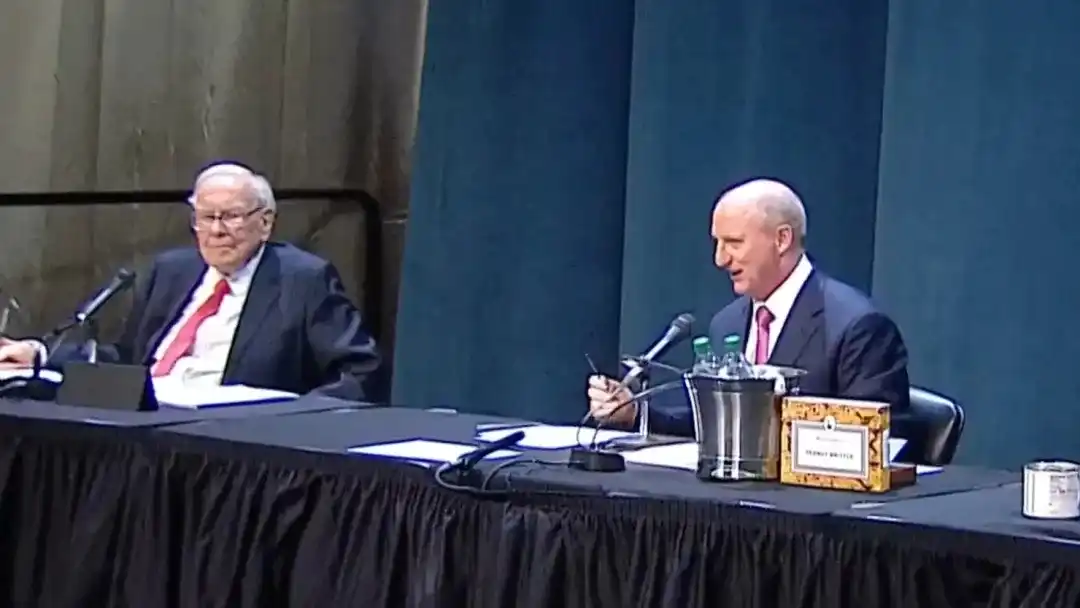
A shareholder asked Abel how he would like to be remembered. He said that his role as a father and coach is very important to him. Buffett jokingly said that he would like to be remembered because of his "old age", which drew laughter from the audience. Buffett explained why he believes the balance sheet is a good starting point to evaluate whether a company is worth investing in.
He said, "I spend more time on the balance sheet than on the income statement. Wall Street doesn't really focus on the balance sheet, but I like to look at eight to ten years of a company's balance sheet before looking at the income statement because some things are harder to hide or manipulate on the balance sheet."
He added, "Of course, neither of these can give you all the answers."
Question 19 at 0:13 on Capital Allocation at Berkshire Hathaway's Annual Meeting
Someone asked that for the past dozen years, everyone has been focusing on Buffett and Charlie Munger's investment strategy. Now that Abel will take over as CEO from Buffett, there may be more capital allocation decisions led by him in the future. How does he view this aspect of succession, and what does he see for the future?
Abel first mentioned that Berkshire has a very strong investment culture, which is the long-term result of Mr. Buffett's efforts. All of us uphold common values. Capital allocation is the most core part of our operating philosophy. When we make decisions, it's not just a discussion among the management, but more importantly, we have a very clear risk awareness. These values are the key to our company's success.
We always value Berkshire's reputation, which is our greatest asset. Buffett once reminded everyone that when making any investment decision, the first thing is to see the profit and loss statement and understand the real numbers. Now we have a large amount of cash, which is a huge advantage, but at the same time, it brings challenges—how to allocate this capital? This is not a simple question but a profound philosophy. We have the ability to allocate at any time but we strive for "better allocation."
Our emphasis has always been that Berkshire will not rely on others in any environment; we will not rely on bank loans for capital operations. Whether in the insurance or non-insurance business, we must have sufficient cash flow to ensure Berkshire can operate continuously.
We will continue to focus on high-quality opportunities in various industries, not limited to the insurance industry. Our goal is to fully understand the vision of a company when investing, whether it is acquiring 100% ownership of a business or only holding a portion. As Buffett mentioned before: We completed a $10 billion acquisition in the last quarter. Sometimes a full acquisition is appropriate, and other times holding a stake can also be effective. The key is that whether we hold 1% or 100% of the shares, we must understand what kind of company this company wants to be in the next 5, 10, or 20 years.
We will continue to follow this philosophy. This has been the core of Berkshire's success for the past 60 years, and we will not change it. Buffett went on to say that it is important to emphasize that the U.S. is indeed facing some significant transformational needs. Our country's power grid and highway systems are already lagging behind the current population and economic growth rates. To drive these changes, the U.S. government must take stronger actions. The U.S. has 50 states, each with a different way of thinking. Just like after World War II, we mobilized the entire manufacturing industry to support the war effort in a very short time, and the efficiency was amazing. However, during peacetime, achieving the same efficiency is not easy.
Investment depends on the context. We have the knowledge and the capital, but we also need to undergo a strategic shift. How to play Berkshire's role requires solutions that are meaningful both to the nation and to the people and companies. Abel may provide his views on these issues next. But one thing is clear: We need to have sufficient cash reserves ready to intervene at critical moments.
In the past, we have done many collaborative projects. For example, the U.S. highway system was completed under the leadership of the federal government. It is impossible to achieve this with just one company. Similar large projects in the future will also require close collaboration between the government and the private sector. Abel said that from the perspective of the energy sector, there are indeed many areas we can further advance. Currently, there is a rapid growth in electricity demand, and to meet long-term energy needs, necessary capital investments must be made. We have a strong capability in this area and are actively addressing related risks.
Only by addressing these risks can we deploy the capacity to meet future demands. And we must start preparing now. Buffett agrees, saying that we must leverage the power of the U.S. federal government. Just like building the highway system during World War II, it would not have been possible to do it quickly without national coordination.
We do have capital and sufficient knowledge, which enables us to participate. But only having the willingness to cooperate is not enough; there is also a need for the ability to "concentrate power to accomplish great things." We were able to do this during World War II, but in peacetime, driving similar national construction is very difficult. This task may ultimately fall into the hands of the next generation.
Question 20 at 0:26 AM: 14-Year-Old Girl Wishes to Join Berkshire, How to Strive
A 14-year-old girl from Hong Kong expressed her wish to join Berkshire Hathaway in the future and asked what kind of job she could do. Abel said that hard work and a willingness to contribute will take you further. "We look forward to the day when you will sincerely be a part of Berkshire." Buffett added, "Stay curious and read a lot."
Question 21 at 0:29 AM: Wildfires Impacting Utilities, What Is the Strategic Protection
When discussing wildfire risks, Abel said, "It's not going away. The company has decided that when a fire comes, sometimes you have to shut off the power. It's not something you can just turn off the lights for." Wildfires are happening in California and Texas. Where to invest is the first viewpoint. Regarding the responsibility Berkshire Hathaway's utility companies take on when wildfires spread, Abel said, "We can't just be the insurer of last resort. We can't be responsible for everything that happens."
Buffett assured shareholders that Berkshire will not use their money on things the company considers "foolish." He added that if they do, shareholders "should kick us out." "It's easier to do foolish things with other people's money than with your own. This is one of the widespread problems of government. We don't want to bring that phenomenon to private enterprise," Buffett joked.
Question 22 at 0:43 AM: Female Fan Hopes Buffett Can Arrange an Office Meeting
A question came from a Polish lady who said that 74 years ago in January 1951, Buffett took an 8-hour train ride to Washington just to learn about insurance and has been walking on this road ever since, which is a very touching experience. Only 15 years old in 2011, she set a goal for herself: one day she must meet you. Today, she has finally fulfilled this commitment and she would like to request Buffett to fulfill a small wish: could you spare her some time to spend an hour in your office.
Buffett thanked her for the question, smiling and saying that she doesn't need to announce anecdotes from my life, but he appreciates her perseverance and effort. Today there are forty thousand people present, and your question is indeed very special. Buffett said, when I was young, I used to drive across the country to visit various companies. At that time, these companies usually didn't have investor relations departments, so many times the CEO would personally receive me. I was also worried at the time that they might not pay attention to me, but I would prepare two very specific questions in advance.
This approach is not a bad idea. If you want to visit someone and chat with them for ten minutes, you should first think about what you want to say and ask. You set the terms for these ten minutes, not the other person. You will find that most companies now have investor relations departments whose job is to tell you why you should buy their stock. This is becoming a bigger business. However, you can completely learn and understand this world in your own way. Berkshire also has its own way; we do not just copy what others do.
Now we have enough information and talent, so we don't need to conduct interviews one by one like we used to. Today, with over forty thousand people here, we truly cannot accommodate everyone's request for an hour. But I really appreciate your enthusiasm and persistence; this is all I can tell you.
10:50 AM Shareholders Meeting 23rd Question Acquisition of Berkshire's Remaining Energy Division Assets
Regarding the decision for Berkshire to acquire its remaining energy division assets. Buffett is not optimistic about the utility industry, stating, "The utility business isn't as good as it was a few years ago." He attributes this to societal factors, noting that values change and not always for the better.
Buffett discussed investment opportunities in the American energy industry and the role Berkshire can play. "The solution to that problem is to have some sort of collaboration between the government and private industry, like in wartime. I don't think during the construction of the Interstate Highway System, the government was laying all that concrete or doing similar tasks themselves." He added, "We do have the capital, and we also have knowledge that very few places have."
10:54 AM Shareholders Meeting 24th Question: Berkshire's Future Earnings
Someone asked Buffett, in this most recent fiscal year, what is the estimate for the company's earnings? Will future earnings increase or possibly decrease? Buffett said, "I think our utilities income will be somewhat affected; profitability doesn't exclusively depend on acquisitions, but it is undeniable that we do periodic acquisitions. This year, we've already spent $100 billion on investments."
These types of questions often depend on the market environment and people's sentiment. Some individuals are more pessimistic. As someone born in the 1930s, I've experienced very tough times. Sometimes you find certain opportunities very attractive but fail to act, missing out on opportunities. Such situations have occurred many times in my life.
Many times, I choose not to attempt things I feel uncertain about—such as walking on a tightrope; I wouldn't do that. But when it comes to financial markets, things others might fear, I don't. If one day Berkshire's stock price falls by half, for me, it's actually an opportunity. I know many people would react differently than I do, but I wouldn't worry. It's not that I'm emotionless, but stock price fluctuations will not affect my rational judgment. It won't sway my assessment of value.
From a holistic perspective, Berkshire's profitability is expected to continue to grow over time. What we need to do is retain the money we earn and then make decisions rationally. Everyone's abilities and risk tolerances are different, and it is these differences that create opportunities in the investment market.
Question 25 at 0:59 AM Shareholders Meeting: Stock of Tech Giants
Tech giants are currently heavily investing in capital expenditures, focusing on AI. Buffett stated that tech giants have made a lot of money and also made many investments. Like Coca-Cola with its bottling company, these investments are not actually that significant. The initial investment by a company, such as in machinery, is large, but subsequent investments are smaller. Buffett mentioned that observing the future capital intensity of the Tech Magnificent 7 will be very interesting. "In America, many people have become very wealthy by watching how others invest."
Question 26 at 1:09 AM Shareholders Meeting: What High School Courses or Activities Would Be Helpful for Future Investments
Buffett mentioned that future school teachers can learn in their jobs.
Question 27 at 1:17 AM Shareholders Meeting: Is DOGE Good or Bad for America in the Long Run
When asked about the Department of Government Efficiency (DOGE), Buffett jokingly said, "Why are you asking me such a difficult question?". To me, the bureaucratic system of the government has always been a confusing thing. In a capitalist market, many bureaucratic structures can 'spread', meaning their inefficiency could spread to other areas. Many systems actually have better ways of management, even within Berkshire, there is room for streamlining and increasing efficiency.
But the government is the government. It doesn't have a 'real' higher authority overseeing it, which makes one anxious about the future governance and financial situation. Especially when elected officials say one thing and do another, it can really worry people. I have always believed that if a politician is rich but lacks credibility, that is a very negative signal to me. In terms of fiscal policy, the United States has not really addressed the issue of fiscal deficits in the long term, and it has never been a topic that has been thoroughly resolved.
Regarding the United States, "Our current fiscal deficit situation is difficult to sustain for a long time. We do not know whether this means it can last for two years or twenty years, because no country has ever been like the United States, where this situation cannot continue indefinitely."
Sometimes you know something cannot last, but you do not know how to stop it — in the end, you can only throw up your hands and give up. In the past, it was (former Federal Reserve Chair) Paul Volcker who saved the United States from the worst inflation collapse. And now, the inflation problem in the United States is severe, and we have also experienced the consequences of such policies.
Buffett did not directly address DOGE, but he admitted that reducing the budget deficit is a daunting but crucial task. To be honest, I wouldn't want to be in charge of fixing the fiscal system, balancing the budget—it's not a job I'd want to do, but it's a job that should be done. However, it seems that Congress has not taken action on this issue.
We are a great country with the most innovative talent globally, but we do have many structural issues. If something goes wrong, these issues don't erupt immediately, but they will surely simmer. Governance certainly has incentives and checks and balances. Just like in a company, even the most successful companies cannot be without problems.
Buffett once again mentioned the risk of dollar depreciation, stating: "However, the foundation of all this is having a currency that does not depreciate. If everyone who trusts the government is deceived, and everyone trying to profit from it becomes rich or richer, what impact would depreciation have on societal stability? I don't think you would want a society to operate in this way."
1:23 PM Shareholders Meeting 28th Question: Assuming going back to 1776, how to establish the foundation of capitalism for the United States to support its long-term prosperity
Buffett said, "When people are most pessimistic, we will make the best deals." He stated that Berkshire will continue to strengthen its ability to earn, but this growth will not be linear. Buffett defended Berkshire's long-standing decision not to use others' capital for trading.
Buffett called the United States the shining example of capitalism, comparing this system to a grand cathedral with an attached casino. He said, "American capitalism has achieved unprecedented success. It is a combination of a grand cathedral that has created an economic system never seen before in the world, along with a huge casino attached to it. The temptation is very strong, especially now, and the temptation is to go into that casino."
"In that grand cathedral, people are basically designing a system to produce goods and services for a population of over three hundred million, a scale unprecedented in history." While immersing oneself entirely in this metaphorical casino attached to the grand cathedral is indeed tempting, Buffett reminded that maintaining balance is crucial. "In the casino, everyone is having a great time, money is flowing, but you also have to ensure the cathedral is sustained. In the next 100 years, America must ensure that this cathedral is not swallowed by the casino."
He added, "We have built an interesting system, but it has indeed worked. Capitalism seems very arbitrary and capricious in terms of distributing rewards."
1:31 PM Shareholders Meeting 29th Question: Berkshire's Operating Model for Subsidiaries
Berkshire adopts a "hands-off" management approach in operating its subsidiaries. Someone asked, could you elaborate on how this works in practice? Abel said that starting in 2018, he began to have a deeper understanding of Berkshire's various businesses. Buffett's own knowledge is very admirable, and he is very willing to share: he points out risks that may exist in the business model, and we promptly communicate with him once we encounter issues.
I and he mostly exchange ideas on a framework level, such as how to view an industry trend, whether a certain strategy is reasonable, and so on. However, in day-to-day operations, we have a high degree of autonomy and can make independent decisions and drive projects forward.
If there is a sudden opportunity in an industry, or if we plan to pursue a new direction, we will discuss with Buffett whether it is worth doing. But in terms of execution, we have a high level of latitude. The managers selected by Berkshire are very knowledgeable about the operations of their respective industries, such as Geico's leader. Especially in recent years when the insurance industry has undergone transformation, a visionary leader is crucial. We are benefiting from past experiences.
Buffett smiled and said, I have worked with Abel for many years. He is very serious about his work, sometimes I wish I could be as relaxed as an artist and not work so hard. But to be honest, if a business is operated very well, then you don't have to worry about being fired.
Abel has done an exceptional job. Not everyone is suitable to be a manager. Some people want to be told how to do things; once you give them an order, they will resign, and I don't blame them. But Abel is different, he is autonomous and is also willing to accept others' advice or assistance. He is a true leader.
At Berkshire, we do not expect every manager to do things in the same way. Some people are very admirable, while others may not be. However, the quality of an organization's management is evident—if the organization's culture starts to decline, it means that the leadership may also need to make improvements.
For example, in a retail store under our umbrella, there were employees who told their friends, "Come buy something, and I'll give you a discount," although they meant well, they violated the company's employee discount rules. Such behavior is "contagious." We do not want to see senior managers leading by example in changing rules for personal gain. Once this is done, the entire organization may veer in the wrong direction.
1:38 AM Shareholder Meeting 30th Question: Berkshire's View on Climate Change
Abel stated that Berkshire considers this issue in its support and acquisition of energy companies, taking into account both federal and state requirements. Abel provided an example of the early 21st-century transformation of Iowa's power structure. Abel explained that in the early 21st century, Iowa faced an electricity shortage when the state was predominantly coal-fired. He discussed this with the governor to determine how to secure long-term energy supply, considering various energy types at the time.
Abel emphasized that with the support of state legislators, Iowa embarked on a large wind power project while retiring a set of coal-fired units. Berkshire invested $16 billion in the largest wind power project in America in Iowa and simultaneously retired some coal-fired units. Abel added, "Coal-fired units are still needed to maintain a stable power supply." This statement received applause from the audience.
Abel mentioned that renewable and non-carbon energy must align with national requirements for advancement. Berkshire has made decisions that fully comply with federal and state government requirements, respecting the processes of all states and working in conjunction with them. "We will continue to collaborate with states to determine the path they want to plan."
Abel cautioned: "We cannot have a situation like Spain and Portugal." He referred to the recent power outage events that swept through the Iberian Peninsula of Spain and Portugal, indicating that Berkshire's energy business still relies on coal-fired power plants to generate sufficient electricity.
1:44 AM Shareholder Meeting 31st Question: U.S. Healthcare Reform
A nurse asked Berkshire why they terminated their collaboration with JPMorgan Chase and Amazon in the healthcare sector and their thoughts on U.S. healthcare reform. Buffett stated that the termination of the collaboration was due to the significant resistance to change they encountered.
1:54 AM Shareholder Meeting 32nd Question: Abel's Future Role
Someone asked about Abel's future full takeover of Berkshire, including asset allocation responsibilities, and whether his future focus would be as an investor or more as an operational role player. Buffett said, to be honest, being an operator of a business is very difficult, while sitting in a room managing money is relatively easy and more enviable. I have always felt lucky because I have had the opportunity to choose who to work with throughout my life. I have never been let down by my teachers or partners, which is rare.
I am also grateful for the freedom to choose what I want to do every day, a luxury that many professional managers do not have. To be honest, I have never thought about becoming a "top manager" of a company—that is not a role I am good at or enjoy. Now I can run the company in a way I enjoy, and that is a happy thing for me. Abel is an outstanding operator, excelling in handling complex operational matters. The reason I can entrust him with this job is because I believe he will handle it well.
As for asset allocation, that will certainly be part of the future job. But I want to emphasize that the real challenge is not just "investing," but how to use Berkshire's resources to do the right thing. Abel will be someone who can combine these two things very well.
1:57 Shareholders Meeting Q&A End
Buffett announced, "Greg (Abel) should be the CEO of the company by the end of the year." Buffett stated that after stepping down, he will still stay at Berkshire and provide help, but the "ultimate decision-making" will be in Abel's hands. Buffett mentioned that Abel is unaware of this. Apart from his children, other board members are also unaware.
Buffett stated that he has no intention of selling any Berkshire shares but will gradually donate his holdings. He said, "I have absolutely no intention of selling any Berkshire Hathaway shares; I will give them away gradually." This statement prompted rounds of applause and cheers from the audience. Buffett continued, "I want to add: the decision to retain all shares is an economic decision because I believe that under Greg Abel's management, Berkshire's future will be better than when I managed it."
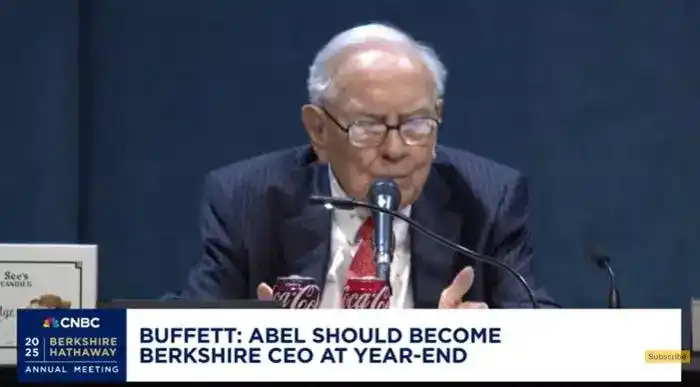
He noted that this decision also demonstrates his confidence in Abel's leadership abilities. Buffett concluded, "But I will add that perhaps one day we will have the opportunity to deploy a large amount of money. By then, I think it would be helpful for the board to know that I have put all my money into the company, which I think is wise, and I have seen Greg's performance."
Recommended
The Wall Street Journal: How is AI Trading Stealing the Limelight from Cryptocurrency?
Aug 15, 14:00
Tencent Still Has a Dream
Aug 15, 11:27
To Catch North Korean Hackers, They Set Up a Fake Project
Aug 15, 10:00
From Litigation to Settlement: Positive Signal Released by HTX's Negotiation with FCA
Aug 14, 19:32
11,742 Shipping Addresses Exposed Alongside Trezor Orders
Aug 14, 19:01
Founder Interview: FOMO Creator Explains How They Added 30,000 Users in One Day and Became One of the Fastest-Growing Crypto Apps
Aug 14, 18:37