Interpreting the FBI's 2024 Cryptocurrency Fraud Report
Original Article Title: "Analyzing the FBI's 2024 Cryptocurrency Fraud Report"
Original Article Author: Lisa, SlowMist Technology
In April 2025, the Federal Bureau of Investigation (FBI) released the "2024 Cryptocurrency Fraud Report." Based on data collected by the FBI's Internet Crime Complaint Center (IC3) in 2024, the report analyzed the number of cryptocurrency-related complaints, the scale of losses, victim profiles, types of crimes, and progress in asset recovery. This article will interpret the core content of the report to help readers quickly grasp trends and enhance their awareness and prevention capabilities against complex cybersecurity threats.
Key Point One: 2024 Complaint Data
1. Overall Situation
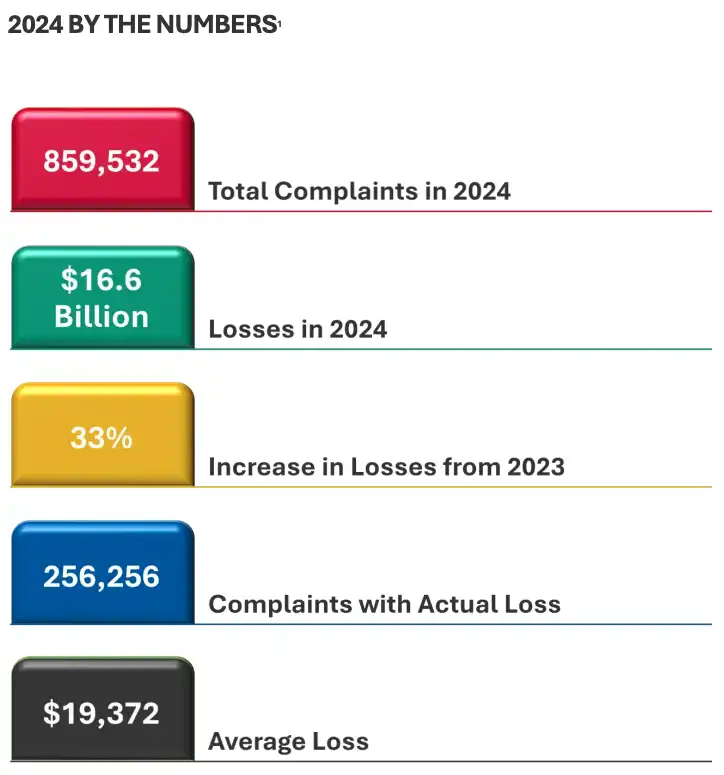
In 2024, IC3 received a total of 859,532 complaints, resulting in actual losses of $16.6 billion, a 33% increase from 2023. Of these, 256,256 complaints involved actual financial losses, with an average loss of about $19,372 per incident. Approximately 83% of the losses were caused by online scams.
2. Cryptocurrency-related Situation
There were 149,686 cryptocurrency-related complaints, resulting in $9.3 billion in losses, a 66% year-over-year increase in loss amounts. The older than 60 age group had the highest percentage of victims.

3. Age Group Over 60
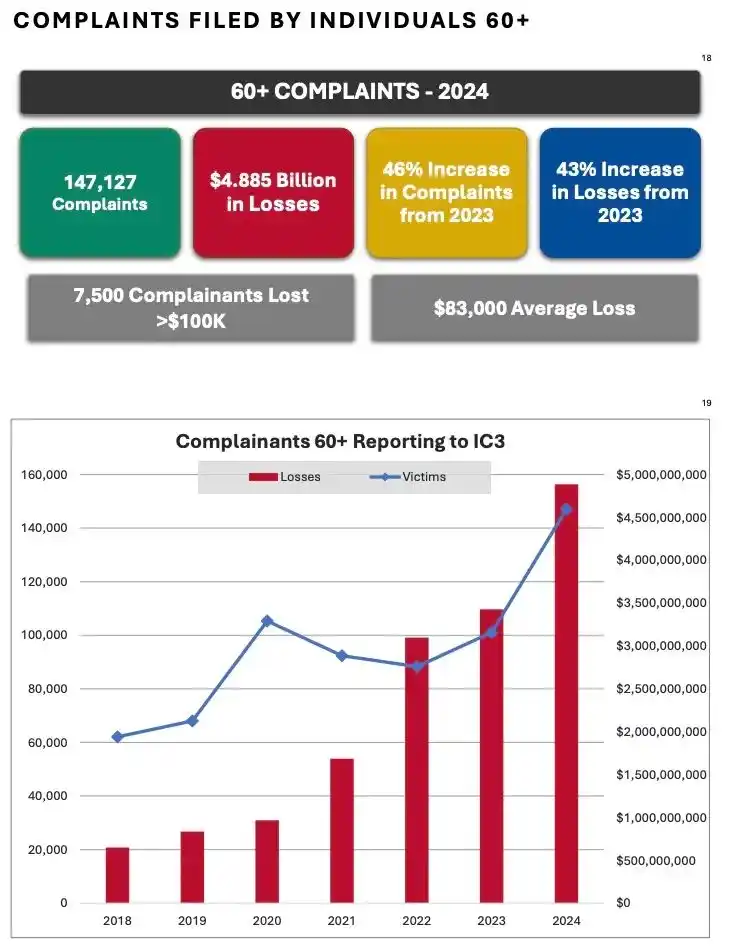
This group filed 147,127 complaints, reporting losses of $4.885 billion. Complaint volume increased by 46% year-on-year, and loss amounts increased by 43% year-on-year. Among them, 7,500 people reported losses exceeding $100,000, with an average loss as high as $83,000.
Key Point Two: Victim Group Analysis
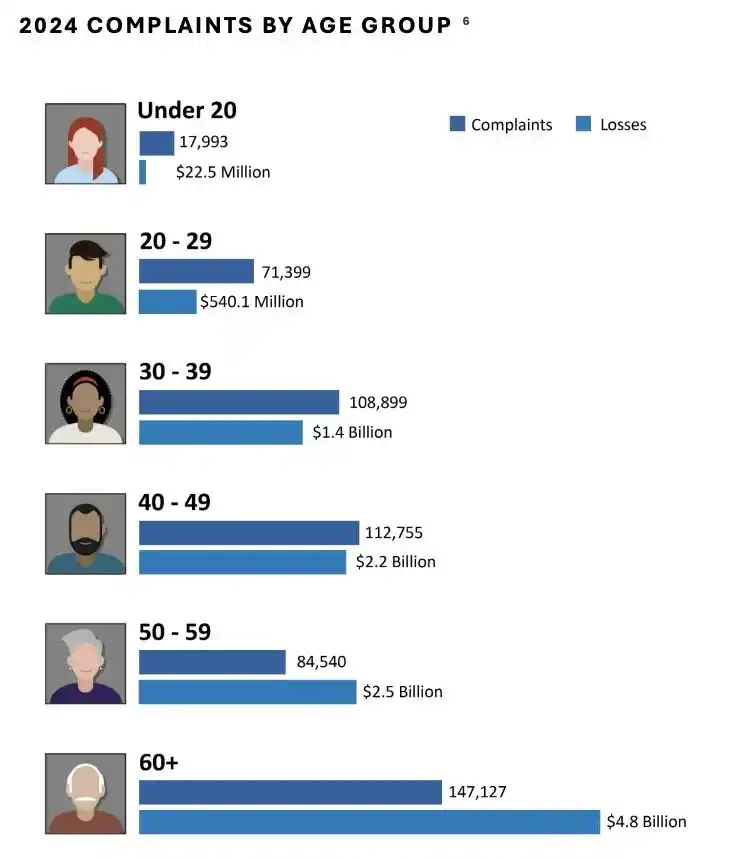
1. Overall Age Distribution
· Below 20 years old: 17,993 complaints, $22.5 million in losses.
· 20-29 years old: 71,399 complaints, $540.1 million in losses.
· 30-39 years old: 108,899 complaints, $1.4 billion in losses.
· Ages 40-49: 112,755 complaints, $22 billion in losses.
· Ages 50-59: 84,540 complaints, $25 billion in losses.
· Ages 60 and over: 147,127 complaints, $48 billion in losses.
2. Cryptocurrency Victims
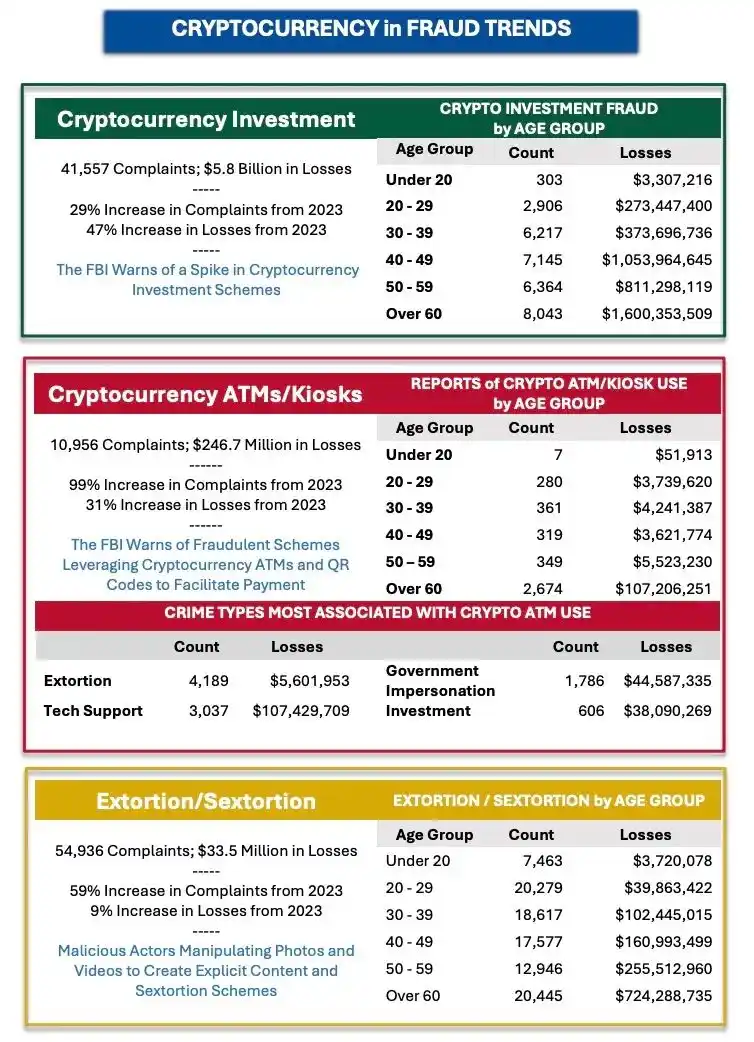
In cryptocurrency investment scams, the age group of 60 and over filed the most complaints (8,043), with total losses of $16 billion, far exceeding other age groups. The 60 and over age group is the primary target of scammers due to a lack of fraud awareness and unfamiliarity with new forms of payment such as cryptocurrency ATMs (2,674 complaints, $107,206,251 in losses). This age group also has the highest number of complaints in extortion/blackmail schemes (20,445 complaints, $724,288,735 in losses).
Key Point Three: Analysis of Crime Types
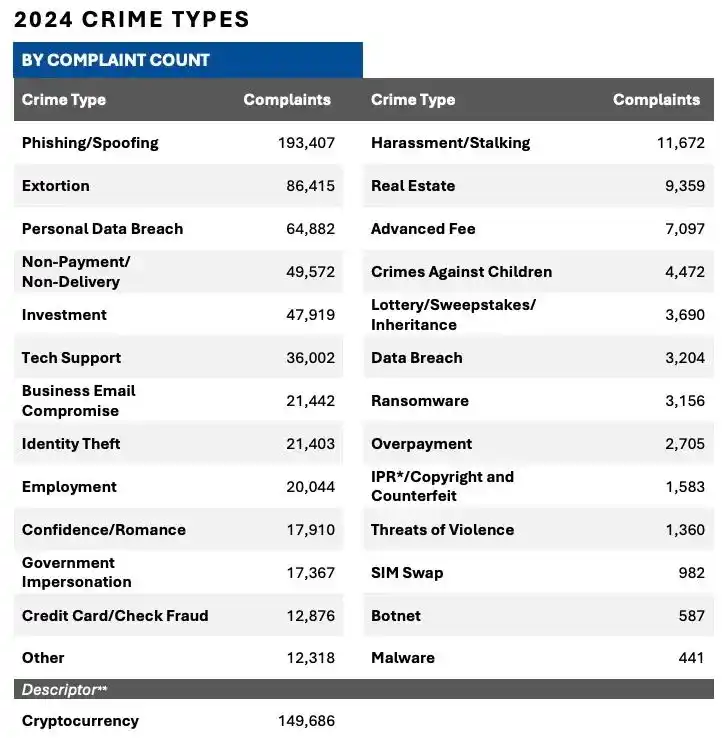
1. Based on Number of Complaints
· Phishing/Electronic Fraud: 193,407 complaints.
· Ransomware: 86,415 complaints.
· Personal Data Breach: 64,882 complaints.
· Non-payment/Transaction Failure Scams: 49,572 complaints.
· Investment Fraud: 47,919 complaints.
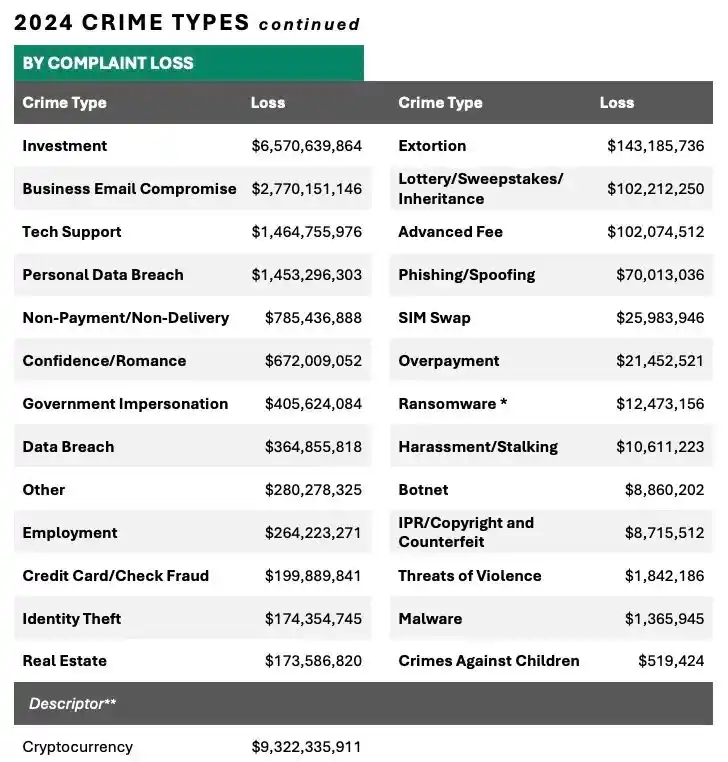
2. Based on Loss Amount
· Investment Fraud: $65.7 billion.
· Business Email Compromise (BEC): $27.7 billion.
· Tech Support Scams: $14.6 billion.
· Personal Data Breach: $14.5 billion.
· Non-payment/Transaction Failure Scams: $7.85 billion.
3. Cryptocurrency-Related Crimes
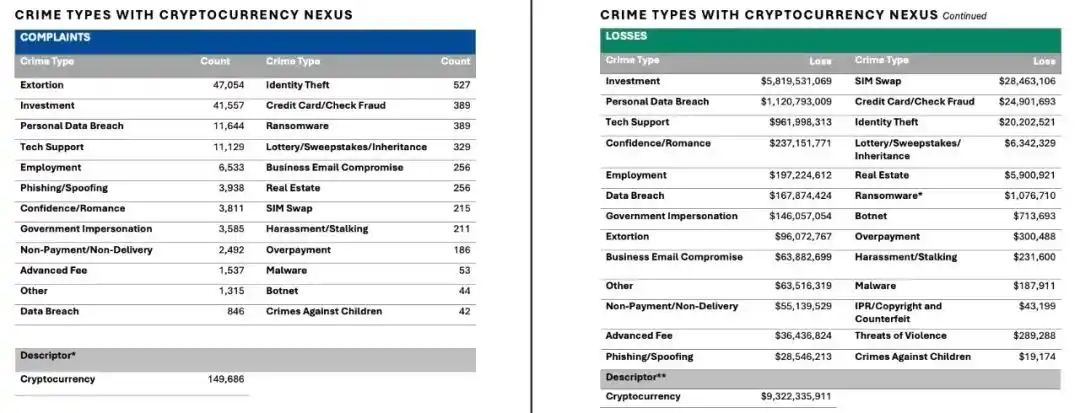
· Most Complaints: Extortion/Blackmail (47,054) and Investment Fraud (41,557).
· Highest Losses: Investment Fraud ($58 billion) and Personal Data Breach ($11 billion).
4. Primary Scam Types Faced by the 60 and Over Age Group
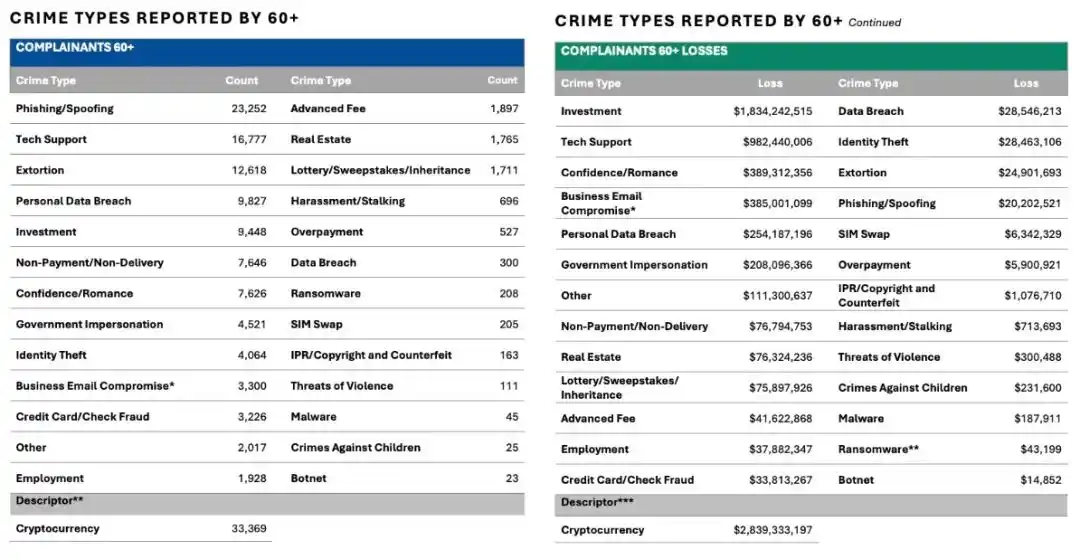
· Most Reported Types of Fraud: Phishing, Tech Support, Ransomware, Personal Data Breach, Investment Scam.
· Highest Losses by Fraud Type: Investment Scam, Tech Support, Romance Scam, Business Email Compromise (BEC), Personal Data Breach.
Key Point Four: Cyber Fraud and Asset Recovery
1. Cyber Fraud Overview
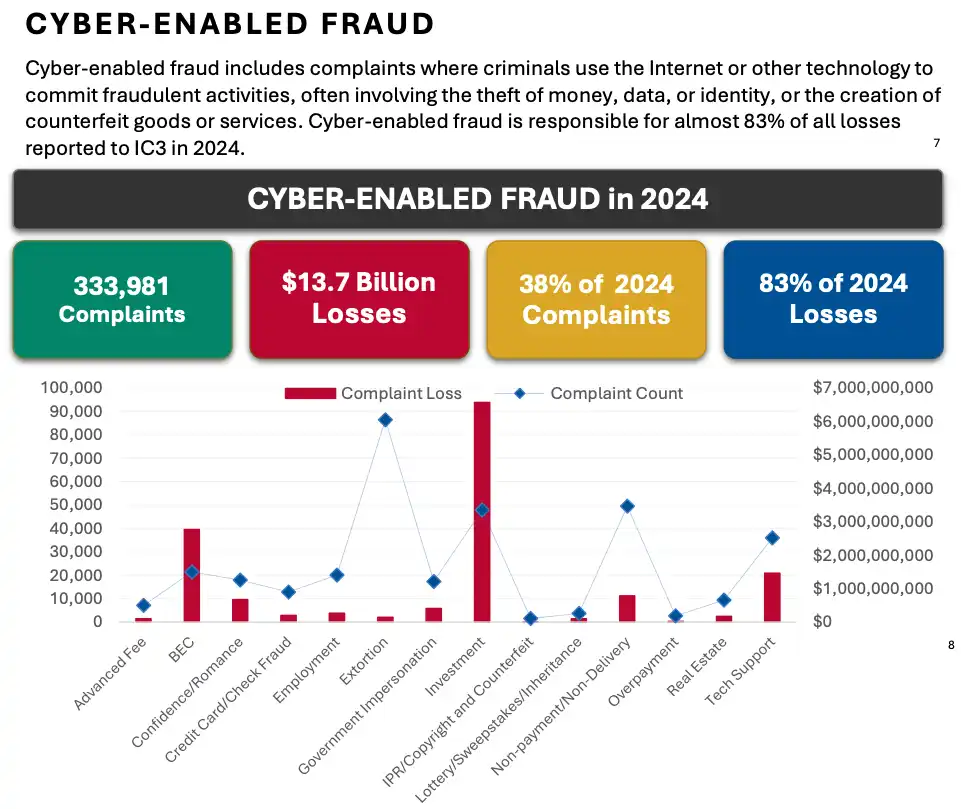
In 2024, IC3 received 333,981 reports of cyber fraud, resulting in $13.7 billion in losses, accounting for 83% of the total annual losses. Major transaction methods included cryptocurrency, wire transfers, credit card payments, etc.
2. Common Fraud Schemes
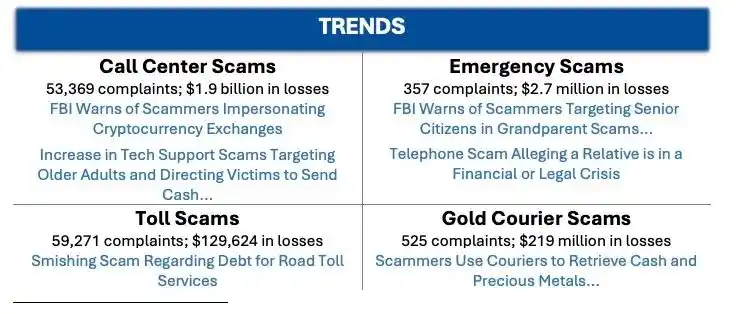
· Call Center Scams: 53,369 cases, $1.9 billion in losses.
· Emergency Scams (Impersonation of Relatives in Need): 357 cases, $2.7 million in losses.
· Toll Fraud (SMS Phishing): 59,271 cases, $129,000 in losses.
· Gold Delivery Scams: 525 cases, $219 million in losses.
3. Cyber Threats
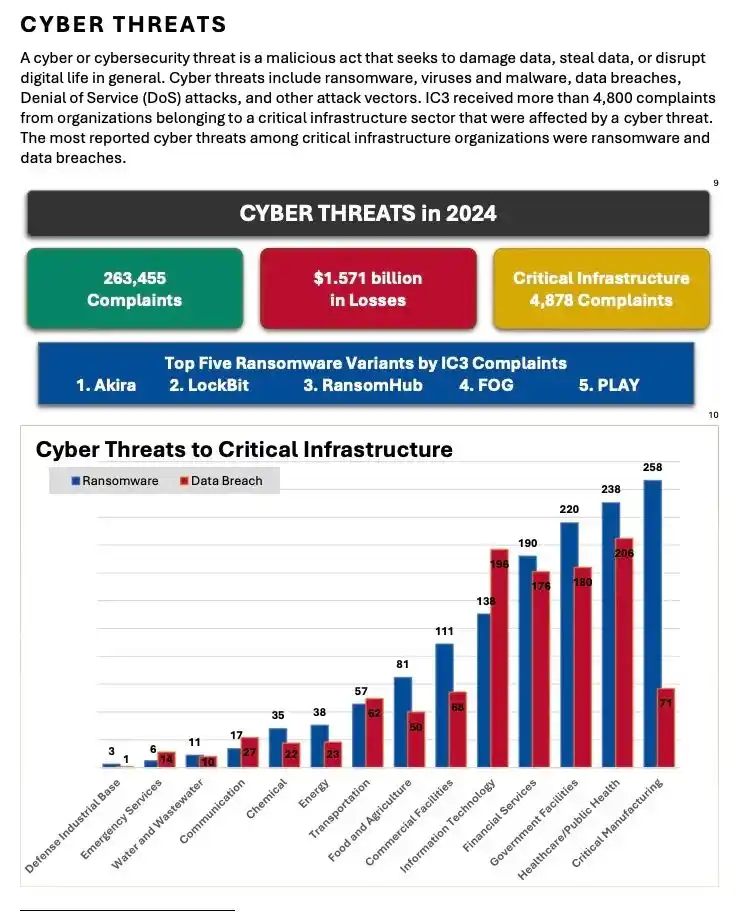
263,455 cyber threat-related complaints resulted in $1.571 billion in losses. Major ransomware variants include Akira, LockBit, RansomHub, FOG, PLAY.
4. Asset Recovery Achievements
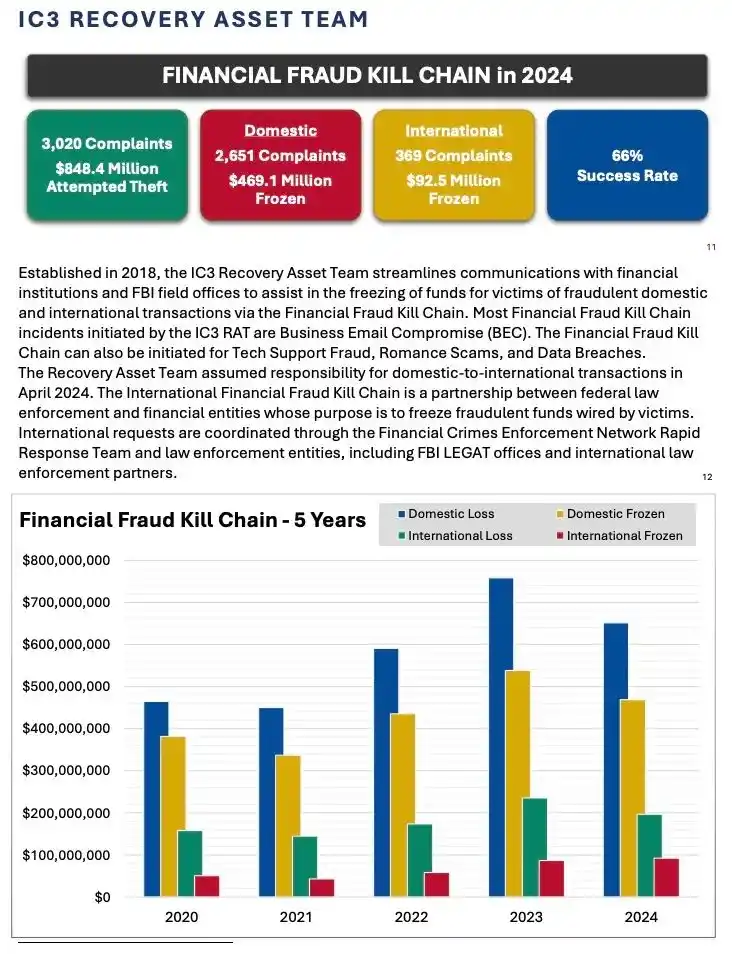
The FFKC team processed a total of 3,020 freeze requests, froze $560 million in funds, with a successful recovery rate of 66%. The "Operation Level Up" successfully notified 4,323 crypto scam victims, helping recover approximately $285 million in potential losses. Through collaboration with Indian law enforcement, call center scams were targeted, resulting in the arrest of 215 individuals, a 700% increase year-over-year. In financial fraud initiatives, significant amounts of funds were successfully frozen and recovered.
Key Point Five: Preventing Cryptocurrency Scams
To address the prevalence of crypto scams, the FBI has put forward the following prevention recommendations:
· Stay Vigilant, Avoid High Return Temptation: Investments promising high returns with no risk are often scams.
· Verify the Legitimacy of the Trading Platform: Use reputable, regulated trading platforms and avoid clicking on unknown links in social media ads.
· Avoid Sending Money to Strangers: Do not trust "investment advisors" or "friends" you meet online.
· Be Cautious of Cryptocurrency ATM Transactions: Scammers often instruct victims to make payments via ATMs, so remain vigilant.
· Use Two-Factor Authentication (2FA): Enhance account security to prevent hacking.
Summary
The FBI's "2024 Cryptocurrency Fraud Report" reveals new trends in online crime in the current cryptocurrency environment: a significant increase in cryptocurrency-related cases, with the 60+ age group being the primary victims; fraud schemes are highly sophisticated and internationalized. Additionally, cryptocurrency has become the preferred tool for money laundering and fund transfers by criminals.
Although progress has been made in asset recovery and international law enforcement cooperation, considering the overall scale of losses and the upward trend, ordinary users still need to remain highly vigilant, enhance their security awareness, and avoid falling into various fraud traps. For governments and financial institutions, continued strengthening of international cooperation, regulatory enforcement, and tracking of fund flows will be key measures to curb online crime and enhance the efficiency of law enforcement.
Recommended
The Wall Street Journal: How is AI Trading Stealing the Limelight from Cryptocurrency?
Aug 15, 14:00
Tencent Still Has a Dream
Aug 15, 11:27
To Catch North Korean Hackers, They Set Up a Fake Project
Aug 15, 10:00
From Litigation to Settlement: Positive Signal Released by HTX's Negotiation with FCA
Aug 14, 19:32
11,742 Shipping Addresses Exposed Alongside Trezor Orders
Aug 14, 19:01
Founder Interview: FOMO Creator Explains How They Added 30,000 Users in One Day and Became One of the Fastest-Growing Crypto Apps
Aug 14, 18:37