The Untold Story of Tether's $500 Billion Valuation and its Secretive Shareholders
Original Title: "The Untold Story of the Wealthy Shareholders Behind Tether's $5 Trillion Valuation"
Original Author: David, DeepWave TechFlow
On September 24, 2025, according to Bloomberg, Tether Holdings, the world's largest stablecoin issuer, is in talks with investors for a new round of funding, planning to sell a 3% stake to raise $150-200 billion.
If calculated at the upper limit, this transaction would bring Tether's valuation to around $5 trillion, making it one of the most valuable private companies globally.
What does a $5 trillion valuation mean?
For comparison, in March of this year, OpenAI was valued at around $3 trillion, and SpaceX at about $4.5 trillion. Tether's target valuation of $5 trillion even exceeds the combined market capitalization of two Wall Street giants, Goldman Sachs at $2.16 trillion and Blackstone at $1.48 trillion.
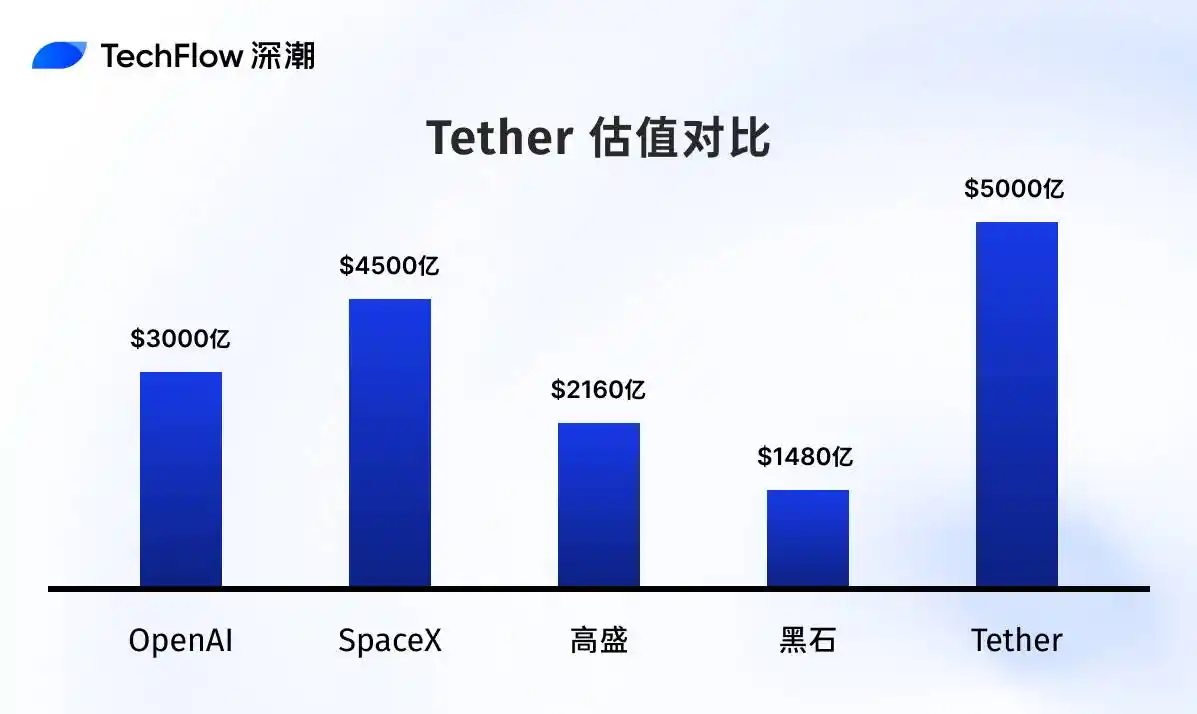
However, what is truly striking is not the company's valuation itself but the people behind this number.
Those who directly or indirectly hold Tether shares, if the deal goes through, may become one of the wealthiest groups in the history of the cryptocurrency industry.
As a privately held company registered in the British Virgin Islands, Tether has never voluntarily disclosed its ownership structure. This company, which controls a $170 billion USDT circulation and nearly monopolizes the global cryptocurrency trading infrastructure, has always had its ultimate controllers hidden behind the scenes.
It wasn't until 2021 that part of the ownership information was unexpectedly exposed in the investigation files of the New York Attorney General's Office and the Commodity Futures Trading Commission (CFTC); in 2024, the well-known American media Forbes further supplemented this puzzle through multiple sources.
Based on these fragmented yet relatively reliable pieces of information, we can finally outline the wealth map behind Tether.
Based on the $5 trillion valuation, Tether's largest shareholder, a 61-year-old Italian, would possess over $200 billion in wealth, surpassing Buffett to become the world's fifth-richest person.
And several other key shareholders will also enter the billionaire or centi-billionaire club.
These long-time invisible super-rich individuals finally have specific names and faces. Among them are former plastic surgeons, programmers coding until dawn, a Dutchman studying Chinese in Taiwan, and even a Chinese businessman currently serving a prison sentence.
Behind each person is a little-known story of wealth accumulation.
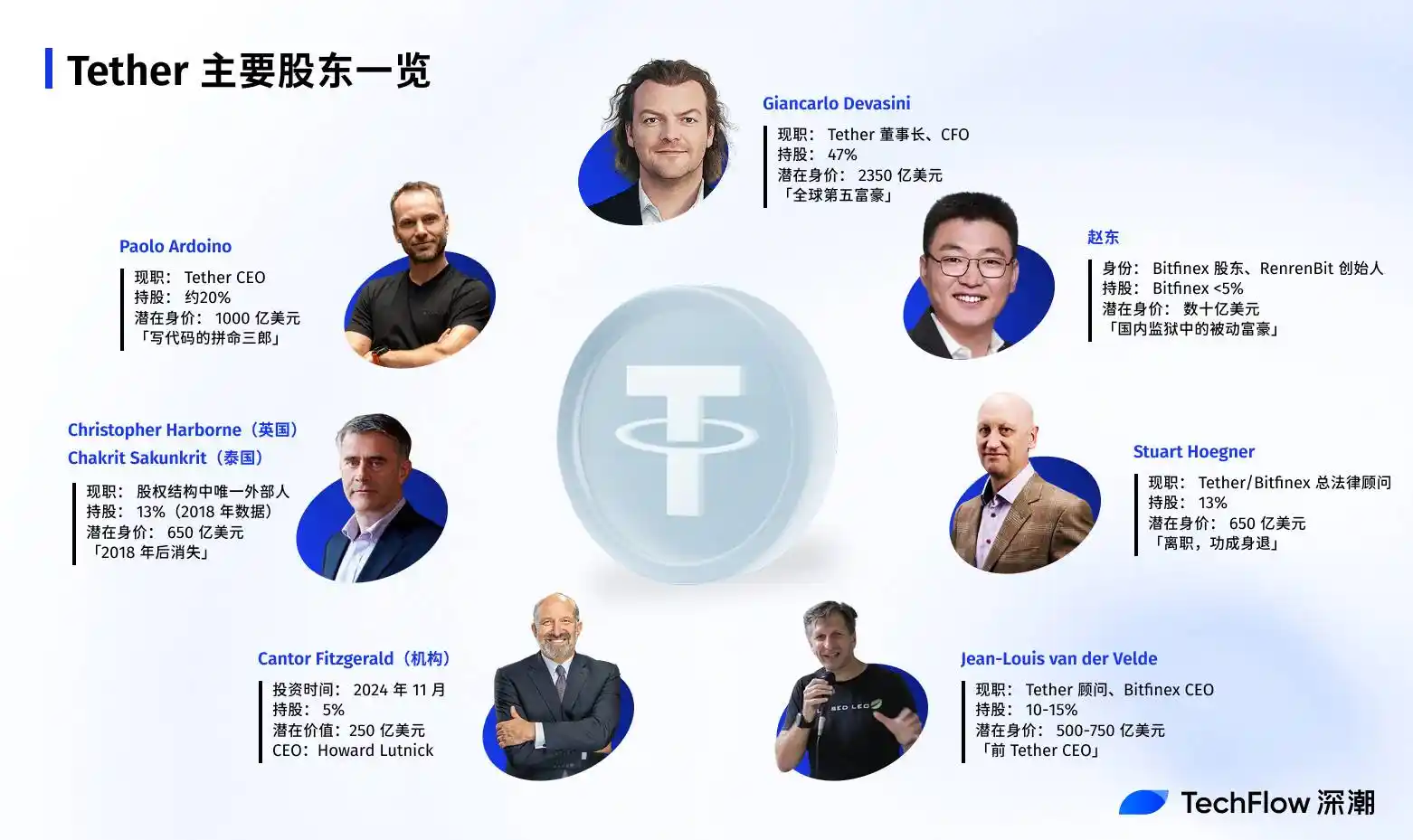
Giancarlo Devasini
Current Position: Tether Chairman, CFO
Ownership: 47%
Potential Net Worth: $235 Billion (5th globally)

Giancarlo Devasini may be the most mysterious super-billionaire in the crypto world.
This 61-year-old Italian is rarely seen, has no social media presence, and few public photos can be found, yet he controls 47% of Tether's shares.
According to the Bloomberg Billionaires Index, if the $500 billion valuation materializes, he will surpass Buffett to become the world's fifth-richest person, second only to Musk, Ellison (Oracle), Zuckerberg, and Bezos.
However, compared to the stability of wealth value, Devasini's life path appears more erratic.
In 1990, Giancarlo Devasini graduated from the University of Milan Medical School and became a plastic surgeon. Two years later, he abandoned this seemingly stable and respectable profession.
After leaving the hospital, Devasini entered the IT trading field, importing computer parts, selling electronic products, and doing whatever made money. In 1995, he was asked by Microsoft to pay a 1 million lira settlement for selling pirated software.
In 2008, a fire destroyed his warehouse, leading to the bankruptcy liquidation of his company. At the time, 44-year-old Devasini found himself almost penniless once again.
But it was precisely this bankruptcy that pushed him into the crypto world. In 2012, he invested in the then-obscure Bitfinex exchange and gradually took over its operation.
At that time, the crypto market's volatility was even more extreme than it is today. Devasini also keenly observed a problem: the price fluctuation of BTC and others was too high to be used as a payment tool.
In 2014, Devasini and the tech genius Paolo Ardoino launched a solution: Tether, a stablecoin pegged 1:1 to the US dollar, but the process was far from smooth.
At the time, the market's willingness to accept stablecoins was far lower than it is today. Concerns about stablecoin reserves, audits, and redemption were everywhere. Devasini personally prospected, flying to the Bahamas, Switzerland, Hong Kong, knocking on the doors of banks one by one, looking for financial institutions willing to open accounts for this "suspicious" project.
In 2016, Bitfinex was hacked, losing 120,000 bitcoins, and everyone thought the company was finished.
Devasini proposed a solution, issuing debt tokens BFX to compensate the affected users, promising a buyback, while ensuring Tether continued to operate as usual. The market accepted this seemingly unrealistic plan, and USDT instead began to grow explosively.
In 2018, Bitfinex had $850 million frozen by payment processor Crypto Capital, facing a liquidity crisis.
Devasini chose to directly tap into Tether's reserves to alleviate the situation, a decision that caught the attention of the New York Attorney General, who believed it affected the integrity of USDT's US dollar reserves.
After a two-year investigation, Tether agreed to a $18.5 million settlement but did not admit any wrongdoing.
Following several crises, Devasini's position became even more secure. Public news and data show that his ownership stake increased from 43% in 2018 to 47% in 2024.
In March 2025, the 61-year-old Devasini was promoted from CFO to Chairman, further consolidating his control.
Today, Devasini, 61, still maintains an extremely low profile. Without social media, rarely accepting media interviews, and very few public photos. Between 2017 and 2023, reports indicate he mainly resided in Lugano, Switzerland, where Tether signed a memorandum of cooperation with the local government to promote cryptocurrency applications.
According to the New York Attorney General's 2021 investigation document, Devasini played a key role in Tether and Bitfinex's operations, including handling banking relationships and reserve management.
Over 15 years, Devasini went from being a doctor to a billionaire with a net worth of 200 billion.
Paolo Ardoino
Current Position: Tether CEO
Ownership: Approximately 20%
Potential Net Worth: $100 billion
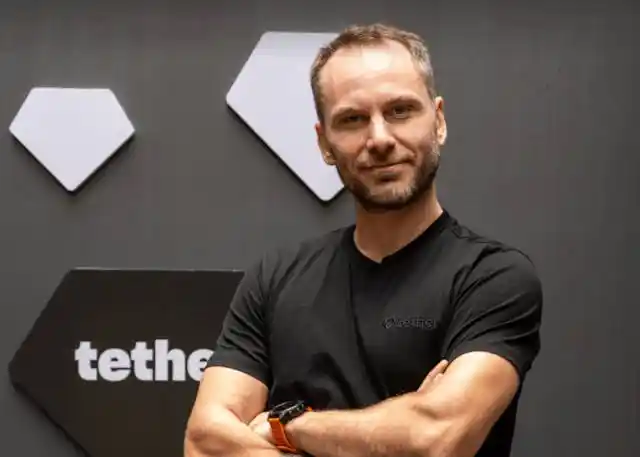
If Giancarlo Devasini is the mysterious mastermind behind Tether, then Paolo Ardoino is the public face of this company.
One who never appears, one who speaks out on Twitter every day; one who gained control through capital operations, one who obtained shares through code.
In 2017, Ardoino made 40,000 code commits on GitHub, averaging over 100 per day. His almost obsessive work intensity defined the rise of this Italian programmer.
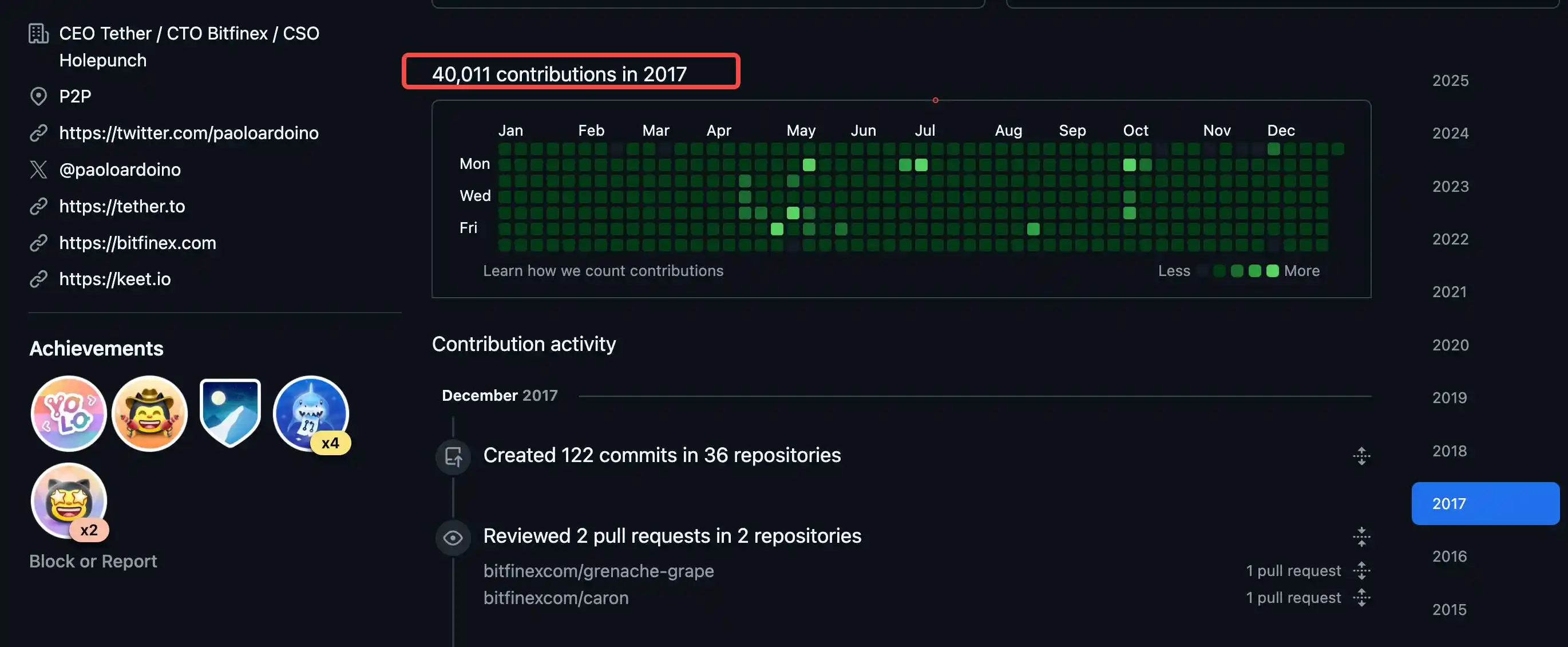
In 2014, he joined Bitfinex as a senior software developer, with the ownership situation unknown at the time; by 2024, Forbes reported that he held approximately 20% of Tether. If the $500 billion valuation becomes a reality, it would mean $100 billion in wealth.
Ardoino's fate with Devasini began in London in 2014. According to CoinDesk, at that time, Devasini was running Bitfinex and was impressed by Ardoino's technical abilities.
From a regular developer to CEO, Ardoino's promotion path is very clear: promoted to CTO in 2017, took over as CEO in December 2023.
But even as CEO, he remained the person who worked until the early hours of the morning. His Twitter account @paoloardoino often replies to technical questions late at night. When the media questioned Tether, he would immediately push back, such as directly referring to a critical article in The Wall Street Journal as a "clown article."

This frequent outspoken style filled the information void left by Devasini's low profile. In a stablecoin business that relies on trust, Ardoino became the visible face that users could trust.
In addition to Tether, he also founded the peer-to-peer technology company Holepunch in 2022. Despite juggling multiple roles, he admitted that he has not taken a formal vacation in almost a decade.
"I have never been to Japan," he mentioned in an interview, "that is the birthplace of video games and anime, which I have always wanted to visit."
In April 2024, Forbes included Ardoino in the global cryptocurrency billionaire list, valuing him at 3.9 billion USD. But if Tether reaches a valuation of 500 billion, this number would multiply by 25. By then, he would enter the global trillionaire club.
Jean-Louis van der Velde
Current Position: Tether Advisor, Bitfinex CEO (former Tether CEO)
Ownership: 10-15%
Potential Net Worth: 500-750 billion USD

Among Tether's executive team, Jean-Louis van der Velde may be the most elusive one.
This Dutchman's Asian story began in 1985. At that time, he left his homeland and came to National Taiwan Normal University to study Chinese. According to his LinkedIn profile, after graduating in 1988, he never returned to the Netherlands but instead planted roots in Asia.
Nearly 40 years later, this former Chinese language student may possess wealth totaling hundreds of billions of USD.
Van der Velde rose quietly in the crypto world. In 2013, he became a co-founder and CEO of Bitfinex. According to the company's blog, his role at the time was to "build a holding structure, focusing on the development and investment of financial technology and big data-related technologies."
In simpler terms, he was responsible for building the company's framework and external relations.
Regulatory filings from 2018 showed he held about 15% of Tether. By 2024, his specific stake is no longer public, but Forbes still includes him on the cryptocurrency billionaire list, valuing him at $3.9 billion. If he still holds 10-15% stake, at a $500 billion valuation, his wealth would reach $50-75 billion.
Unlike Devasini's mystery and Ardoino's activity, Van der Velde chose a different mode of existence: present but invisible.
He has a position, he has shares, but hardly any public statements. Search his name, and you'll find a wealth of job information but scant personal details.
In October 2023, Van der Velde stepped down as Tether CEO, passing the baton to Ardoino. However, he did not leave but transitioned to an advisory role while continuing as Bitfinex's CEO.
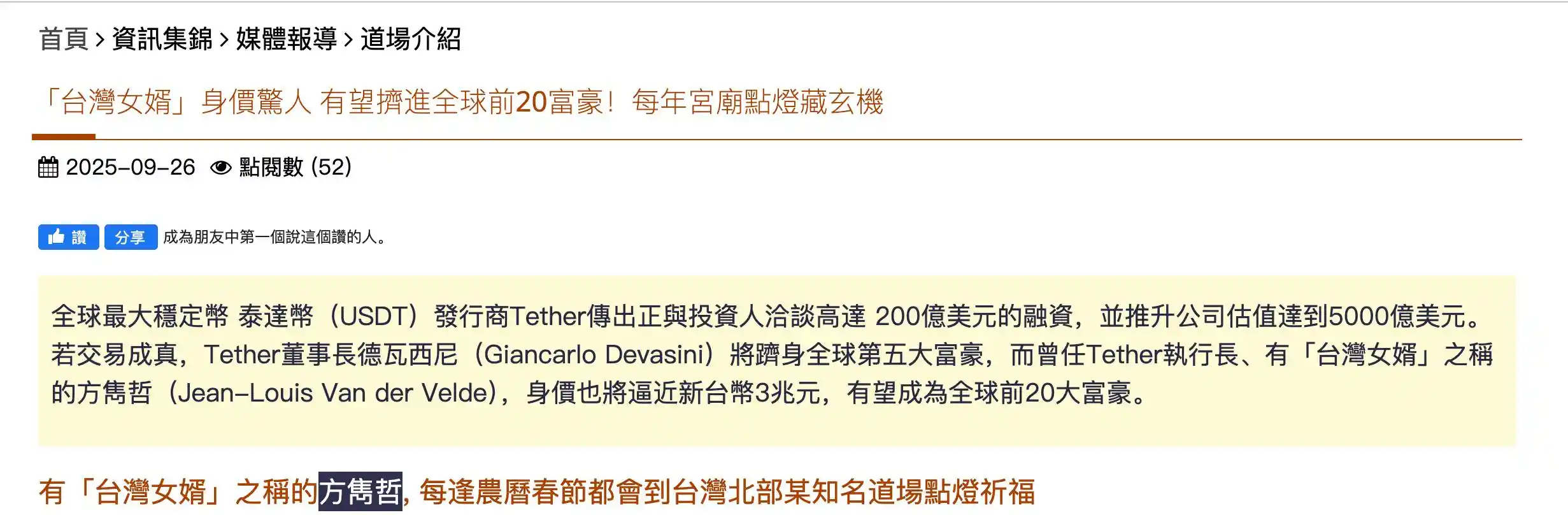
Little public information is available about his personal life. According to his LinkedIn, he is fluent in five languages: Dutch, English, Chinese, German, and French. Besides this, the most widely circulated detail comes from Taiwanese media:
His wife is Taiwanese, thus deeply influenced by the local culture. Due to the hardships of entrepreneurship, he lights incense at a temple in northern Taiwan every year for blessings. Even if he can't do it in person, he arranges for someone to do it on his behalf.
This detail is hard to confirm, but it does fit his image.
A Westerner deeply influenced by Asian culture, low-key, pragmatic, gradually building a crypto empire in the East's business landscape.
Interestingly, some have even questioned whether Van der Velde truly exists. Previously, there were Twitter users jokingly asking, "Has anyone really seen Bitfinex's CEO?" This is, of course, an exaggeration but also reflects his level of discretion.
This, unlike most KOLs in the current noisy crypto ecosystem, the strong may not need to be loud, to speak up, or even to be seen.
Of course, the prerequisite is that you positioned yourself early enough.
Stuart Hoegner
Former Position: Tether/Bitfinex Chief Legal Officer
Equity: 13%
Potential Net Worth: $650 Billion

In January 2025, Stuart Hoegner updated his Twitter bio from "Chief Legal Officer at Bitfinex and Tether" to "Former Chief Legal Officer."
Hoegner holds a unique identity in the crypto world: @bitcoinlawyer. This Twitter account has been active since 2011, three years before Tether was born.
While most lawyers were still researching the legality of Bitcoin, he was already providing legal services to the industry.
In 2014, Hoegner joined Bitfinex, later becoming Tether's Chief Legal Officer. In this role, he guarded the two companies for 11 years. According to regulatory filings in 2018, he held approximately 15% of Tether's shares. By 2024, Forbes reported this percentage had decreased to 13%.
As a lawyer, Hoegner's work often found him in the eye of the storm. In 2019, when the New York Attorney General investigated Tether's $850 million fund issue, he led the legal team's response. In 2021, when the CFTC fined Tether $41 million over reserve issues, he also handled the negotiations.
But unlike typical corporate lawyers, Hoegner is unusually active on social media.
His Twitter not only discusses legal issues but also frequently retweets pro-Bitcoin content, rebutting doubts about Tether. This combative stance has made him a prominent figure in the crypto community.
His background is also quite a story. Before joining the crypto industry, Hoegner worked in the online poker industry. In 2008, during his tenure at the Ultimate Bet poker site, the site was embroiled in a scandal where insiders were caught using superuser accounts to cheat.
Interestingly, another attorney involved in the Ultimate Bet incident, Daniel Friedberg, later became FTX's Chief Regulatory Officer and played a controversial role in FTX's downfall.

The two former colleagues took different paths in the crypto world.
One saw a company rise to a $500 billion valuation, while the other witnessed the collapse of the largest crypto empire in history.
In January 2025, at the time of his retirement, Hoegner chose a nuanced moment. The EU's MiCA regulation had just come into effect, and stablecoin regulation in the United States was also accelerating.
As the head of legal, he was more aware than anyone of the impending regulatory challenges. Retirement might have been a timely exit from the rapids.
If he still held that 13% stake, the title of "former legal counsel" would not hinder his potential to become the wealthiest lawyer in the crypto industry.
Christopher Harborne (UK) / Chakrit Sakunkrit (Thailand)
Shareholding: 13% (2018 data)
Potential Worth: $650 billion
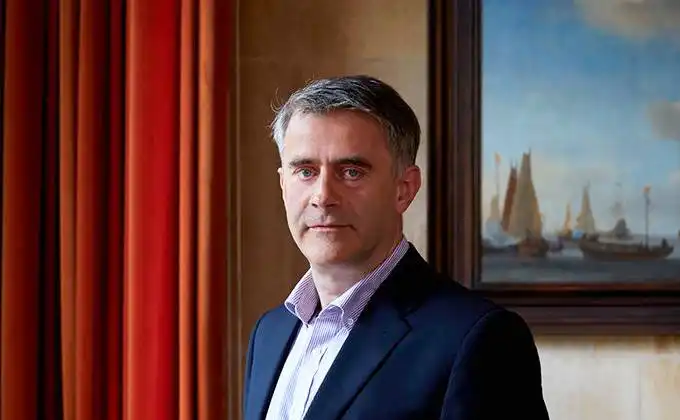
On Tether's shareholder list, there is a person more mysterious than Van der Velde, who even goes by two names.
According to the 2021 investigation file from the New York Attorney General, in 2018, a businessman holding dual British and Thai citizenship owned approximately 13% of Tether. In the UK, he is known as Christopher Harborne; in Thailand, he is known as Chakrit Sakunkrit.
This is the only "outsider" in Tether's ownership structure. Neither part of the founding team nor an executive, yet holding a stake equivalent to the Chief Legal Officer.
Public information about Harborne/Sakunkrit is extremely limited. UK company records show he has been involved in multiple areas, from aviation to tech investment. Information from Thailand is even scarcer, with only the knowledge that he operated under the name Chakrit Sakunkrit in business activities.
How he obtained his Tether stake, when he invested, and the amount invested—all these key questions remain unanswered.
Even more puzzling, after 2018, this name has completely disappeared from all Tether-related documents and reports.
In the 2024 Forbes Crypto Billionaires list, the aforementioned Devasini, Ardoino, Van der Velde, and Hoegner are listed, with no mention of Harborne.
In the 2025 funding news, he is also nowhere to be found. With 13% ownership, if valued at $500 billion, it would be worth $65 billion. Assuming he still holds his stake, he would evidently be Tether's most successful invisible investor.
In a company full of secrets, this individual may be the biggest enigma.
Institution: Cantor Fitzgerald
Investment Date: November 2024
Ownership: 5%
Investment Amount: $6 billion
Potential Value: $25 billion
In November 2024, Wall Street financial services firm Cantor Fitzgerald acquired a 5% stake in Tether for $6 billion.
At that price, Tether was valued at only $120 billion. In comparison, competitor Circle had a market cap of around $300 billion, while Tether's USDT circulation was more than double that of Circle's USDC.
Why so cheap? The answer may lie in timing and personal relations.
The key figure in this transaction was Howard Lutnick, CEO of Cantor Fitzgerald. Shortly after the investment was completed in November 2024, Lutnick was appointed as the U.S. Secretary of Commerce in January 2025.
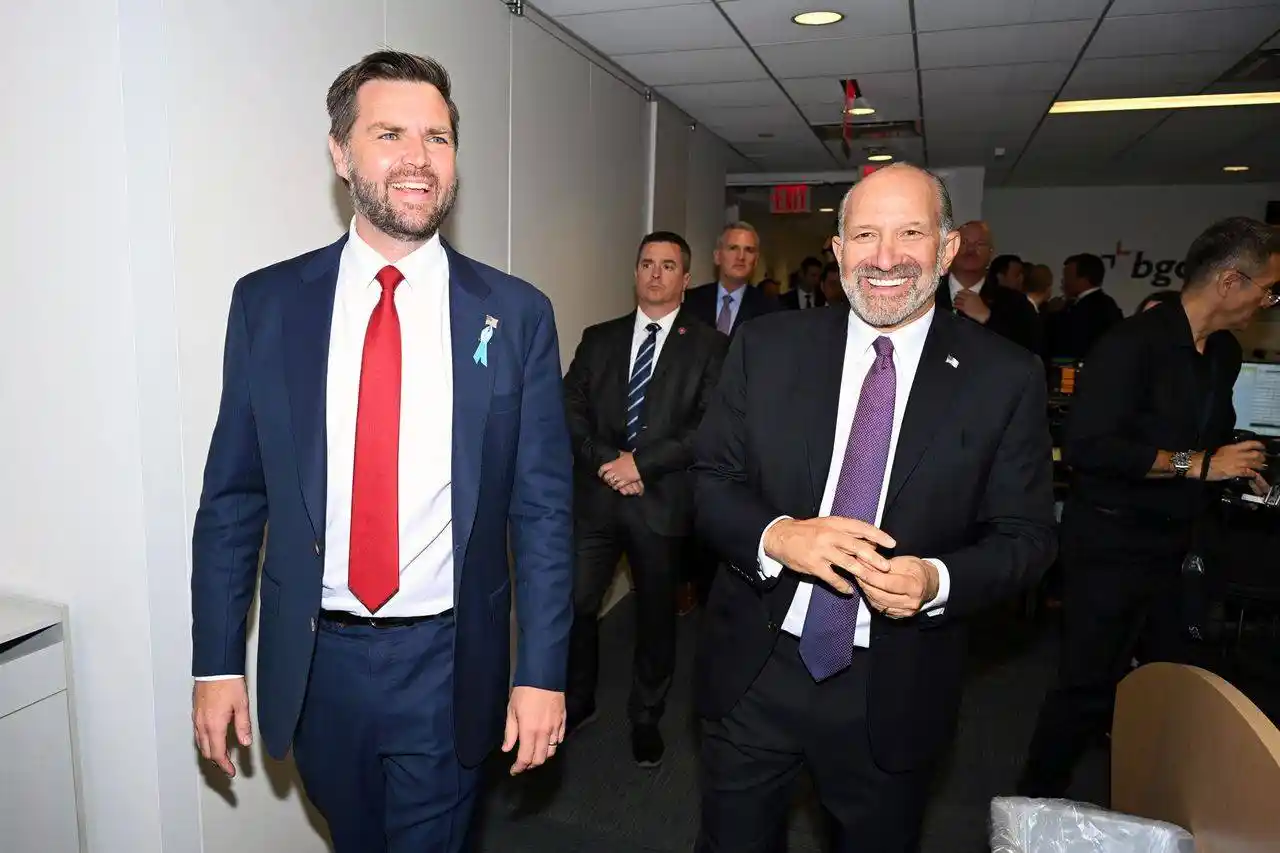
This timeline added a special color to the transaction of acquiring Tether shares. Critics argue that this was a "friendly price" transaction, with Tether providing benefits to Lutnick, who was about to enter the government, at a discounted valuation.
Adding to the intriguing details, according to Fortune magazine, Lutnick's son Brandon Lutnick works at Cantor and had previously interned at Tether in Switzerland.
Regardless of the motive, from an investment perspective, this may be one of Cantor Fitzgerald's most successful deals in history. If Tether reaches a $500 billion valuation, the $600 million will turn into $250 billion, yielding a return of over 40x. Even if the valuation only reaches $250 billion, the return would still be 20x.
Founded in 1945, Cantor Fitzgerald is a long-standing Wall Street financial institution. Their investment in Tether is significant: the first mainstream U.S. financial institution to become a Tether shareholder. In the context of increasing regulatory pressure, the endorsement value is difficult to quantify.
Moreover, over the past 3 years, Cantor Fitzgerald has been providing custody services for the government bonds backing the Tether stablecoin, which represent over 80% of the $132 billion in assets supporting the stablecoin.
According to The Wall Street Journal, the company has earned tens of millions of dollars in commissions for providing this service.
The more practical value may lie in Cantor's financial network. One of Tether's longstanding challenges has been banking relationships. With Cantor's involvement as a regulated U.S. financial institution, new banking channels may open up for Tether.
From another perspective, Cantor's investment represents a shift in Wall Street's attitude towards cryptocurrency. No longer just observing or providing services, but directly becoming a shareholder to share in the growth dividends.
Howard Lutnick has a dual role, being the CEO at the time of investment and now serving as Secretary of Commerce.
Regardless of whether this has affected the transaction price, what can be confirmed is that Tether now has an indirect link to the highest levels of the U.S. government.
Zhao Dong
Identity: Bitfinex Shareholder, RenrenBit Founder
Shareholding: Bitfinex <5%
Potential Wealth: Billions of dollars, indirectly benefiting through the iFinex structure

Zhao Dong may be one of the most dramatic rags-to-riches stories in the Tether saga.
In August 2016, Bitfinex was hit by a hack, losing 120,000 bitcoins. In this crisis, this Chinese bitcoin whale became an unexpected protagonist.
To address the loss, Bitfinex proposed a compensation plan and issued BFX tokens to affected users, with each token representing a $1 loss. Zhao Dong, then one of the affected users, chose not to exit but instead accepted Bitfinex's debt-to-equity swap offer.
He acquired more tokens from other users, eventually converting all these tokens into iFinex equity. This decision transformed him from a victim into a Bitfinex shareholder.
In April 2017, Bitfinex completed the redemption of all BFX tokens, and users who chose the debt-to-equity swap became permanent shareholders of the exchange. With the rapid growth of Bitfinex and its affiliate Tether, the value of these early equity stakes has multiplied several times over.
According to public reports, Bitfinex CTO Paolo Ardoino once stated that Zhao Dong's shareholding in Bitfinex is less than 5%.
Although the percentage is not high, considering Bitfinex and Tether are both under iFinex, sharing management and ownership structures, the value of this equity stake may far exceed the surface figure.
Zhao Dong holds a unique and sensitive position in the domestic crypto circle.
He is a co-founder of Moji Weather, successfully cashed out in 2012. In 2013, he entered the Bitcoin world and reportedly held 10,000 bitcoins at the peak. He founded the OTC trading platform RenrenBit, which was once one of the largest OTC traders in China.
More importantly, he is the unofficial "spokesperson" for Tether in China.
In January 2018, Zhao Dong posted on Weibo that he saw a bank account balance of over $3 billion while meeting with Tether CFO Giancarlo in Tokyo. As a well-known figure in the crypto circle, his statement drew widespread attention.
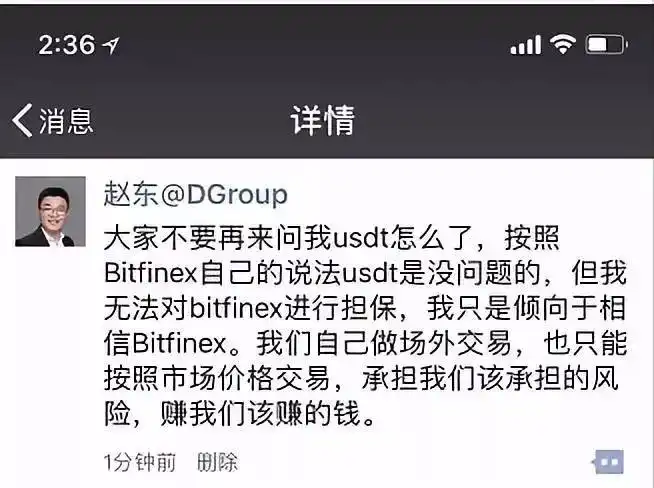
In June 2020, everything came to a sudden halt.
According to multiple media reports, Zhao Dong was taken away by the police on charges related to money laundering and illegal business operations. In 2021, there were reports that he was sentenced to several years in prison. The specific details of the case were never made public, but it is widely believed in the industry to be related to his OTC business.
Ironically, Zhao Dong's years in prison coincided with the craziest period in the cryptocurrency market.
From 2020 to 2024, Bitcoin surged from $10,000 to over $70,000, and USDT's circulation increased from $10 billion to $170 billion. If he still holds his Bitfinex shares, their value may have multiplied several times.
If Zhao Dong's Bitfinex shares were not disposed of, through the iFinex structure, he might have indirectly benefited from Tether's valuation growth. Even with less than 5% indirect ownership, at a $500 billion valuation, it would mean billions of dollars in wealth.
But all of this is hypothetical. His "passive holding" seems more like fate making choices for him.
Finally, if Tether's fundraising is completed, it will be the largest wealth creation in the history of the crypto industry.
Less than 10 individuals hold the vast majority of the equity in the $170 billion stablecoin empire. Among them, Giancarlo Devasini alone holds 47%; and the rest of the big players, most of them not even under the spotlight of the crypto industry.
Perhaps this is the wealth code of the crypto era:
Irrelevant to decentralization, but rather, at the right time, quietly standing at the center of the storm.
Recommended
The Wall Street Journal: How is AI Trading Stealing the Limelight from Cryptocurrency?
Aug 15, 14:00
Tencent Still Has a Dream
Aug 15, 11:27
To Catch North Korean Hackers, They Set Up a Fake Project
Aug 15, 10:00
From Litigation to Settlement: Positive Signal Released by HTX's Negotiation with FCA
Aug 14, 19:32
11,742 Shipping Addresses Exposed Alongside Trezor Orders
Aug 14, 19:01
Founder Interview: FOMO Creator Explains How They Added 30,000 Users in One Day and Became One of the Fastest-Growing Crypto Apps
Aug 14, 18:37