Mr. Beast's Finance Gamble
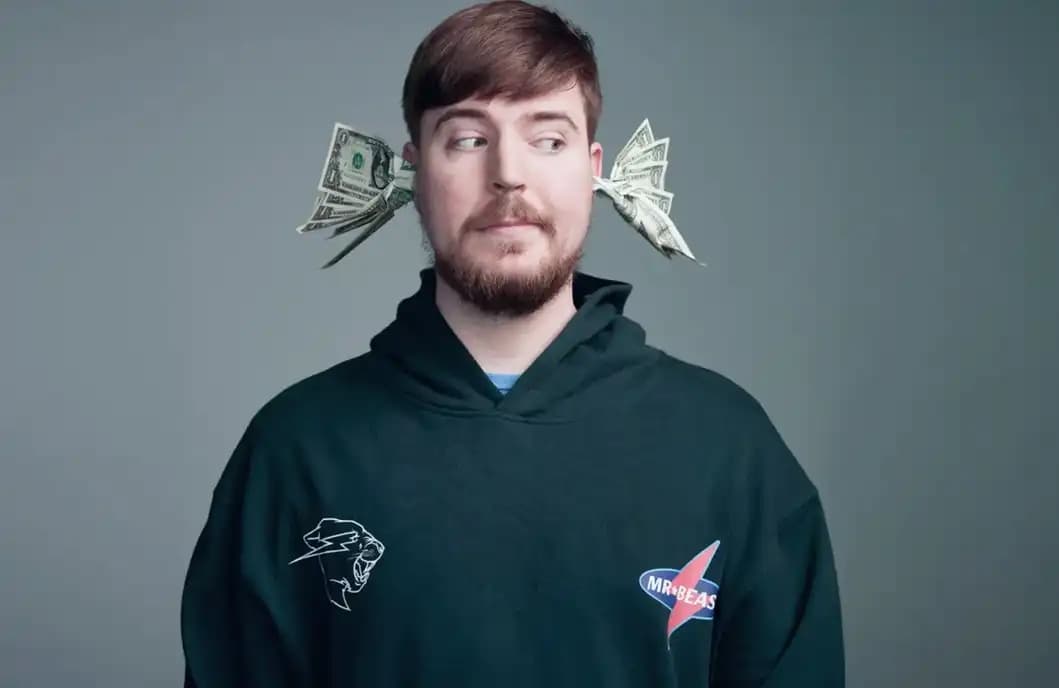
In October 2025, MrBeast submitted a trademark application to the United States Patent and Trademark Office for "MrBeast Financial."
This 27-year-old individual, who in the real world has buried himself alive for video content and in the virtual world boasts 4.5 billion fans, plans to expand his business empire from fast food and snacks to banking, investment, and even cryptocurrency trading platforms.
According to the application documents, what he envisions is a SaaS platform covering encrypted payment processing, microloans, and investment management. MrBeast, with his empire valued at a soaring $5 billion, is gearing up to enter a field long locked down by trust, risk, and regulatory constraints—finance.
This move is not entirely out of the blue. He already owns a snack brand called Feastables and a virtual restaurant chain, MrBeast Burger. However, financial services are a whole different ball game, touching on people's most sensitive nerve.
What's more nuanced is that just a year ago, he found himself in the midst of controversy due to his cryptocurrency investment. Blockchain researchers accused him of using his influence to "rug pull" across multiple projects, pocketing profits exceeding tens of millions of dollars.
Now, this controversial content powerhouse, accompanied by his several hundred million Z-generation fan base, is stepping into a tightly regulated financial world.
This is a high-stakes gamble. The wager is his reputation, and the chips are the trust of a generation. The outcome of this gamble will redefine the relationship between traffic, finance, and trust.
The Z Generation's Banking "Exodus"
Traditional banks are losing their future.
Youth no longer walk into those halls built of marble and bulletproof glass. Their bank-switching frequency is two to three times higher than that of their parents, and it's not for a higher deposit rate but for a better digital experience. Only 16% of the Z generation say they "completely trust" traditional banks, a proportion nearly double that of millennials and almost triple that of baby boomers.
For those who grew up in algorithms and screens, a bank teller in a suit and tie is far less trustworthy than a sleek app interface.
Traditional banks took a century to build a trust mechanism, where physical branches symbolize "reachable," brand history represents "proven," government endorsement means "won't run off," and marble counters and suit-clad staff convey "professionalism" and "seriousness." These visual cues and institutional arrangements were effective in the past.
Bank of America | Image Source: BloomBeag
However, for the Z Generation, they live in a world of high-frequency interaction and instant feedback. What they need is not static, institutional proof of trust, but a dynamic, perceptible trust experience. Whether a bank has a hundred years of history is far less important to them than whether the app's interface is user-friendly, customer service is responsive, and the product can be customized according to individual needs.
Deeper still, the Z Generation has a deep-rooted dissatisfaction with the traditional financial system. They grew up after the 2008 financial crisis, witnessing how big banks were bailed out in times of crisis while ordinary people bore the brunt of unemployment and wealth shrinkage. They witnessed numerous data breach scandals in financial institutions and saw how Wall Street elites abandoned moral boundaries in favor of their interests. These experiences have instilled in them an instinctive skepticism toward traditional finance.
The vast majority of the Z Generation is influenced by financial influencers on the internet. They discover new financial products through social media, learn about investment knowledge on Xiaohongshu, and follow finance bloggers on TikTok. Behind these behavioral patterns is a collapse and rebuild of the foundation of trust.
The Z Generation is not looking for a "better bank"; they are looking for something entirely different—a seamless integration of financial services, social experience, and personal values in an ecosystem. They hope that finance will no longer be a cold numbers game but a partner that can understand them, respond to them, and even represent their values.
This is precisely the opportunity Mr. Beast sees.
His relationship with fans has long transcended traditional brand-consumer relationships and evolved into a quasi-social relationship. Social media researchers refer to this phenomenon as "quasi-social interaction," where the audience forms a strong emotional connection through continued consumption of a media person's content, almost as if this person is a friend in their life.
Mr. Beast understands this deeply.
Each week, the videos he releases are carefully orchestrated performances of wealth redistribution. From challenging 100 kids to take on the world's strongest man, to having strangers survive 100 days in a nuclear bunker to win $500,000, to burying himself alive for 50 hours, behind these extreme challenges is a continuous stream of cash gifts.
The cash, cars, and houses he gives away amount to tens of millions of dollars. These acts of giving are not mere appendages to a marketing strategy; they are the content themselves, a continuous fulfillment of the trust pact between him and his fans.

Mr. Beast Challenges Himself to be Buried Alive for 50 Hours|Image Source: Instagram
Every time he gives, he proves to his fans that he walks the talk, that his promises are genuine, and that he is willing to share his earnings. This "visible generosity," in the eyes of Generation Z, is more convincing than any brand manifesto.
In 2024, Mr. Beast partnered with the fintech company MoneyLion to launch a $4.2 million giveaway event. Young users willingly downloaded the MoneyLion app because they believed in Mr. Beast. They weren't just choosing a financial product; they were following someone they trusted.
The success of this event made Mr. Beast see a greater possibility. If he could directly convert traffic into financial services, cutting out intermediaries, then the monetization efficiency would reach unprecedented levels.
Traditional banks say, "We have a 100-year history. We've been through the Great Depression and financial crises. We have government backing."
Mr. Beast says, "I just gave $100,000 to 100 people each."
The former's trust is based on past accumulation, while the latter's trust is based on present performance. The former needs institutional endorsement, and the latter needs algorithmic amplification. The former is static and abstract, while the latter is dynamic and visible.
However, the paradox lies in the fact that Generation Z's distrust of traditional finance stems precisely from the latter's transparency and ethical flaws. The global trustworthiness of the financial services industry has long ranked low among all industries, and young people's dissatisfaction with financial institutions largely comes from their moral lapses in the face of self-interest.
So, how did Mr. Beast, an influencer who has left a "stain" in the cryptocurrency world, become their financial savior?
The Distance Between the "Reaper" and the "Whale"
In October 2024, blockchain sleuth SomaXBT published a detailed report on the X social platform, dissecting Mr. Beast's other side in the crypto world like a surgical knife.
The report traced wallet addresses associated with Mr. Beast, accusing him of participating in multiple "rug pull" projects. These accusations were not baseless but were based on publicly transparent transaction records on the blockchain. In a decentralized world, every transaction is permanently recorded, irrevocable and undeniable.
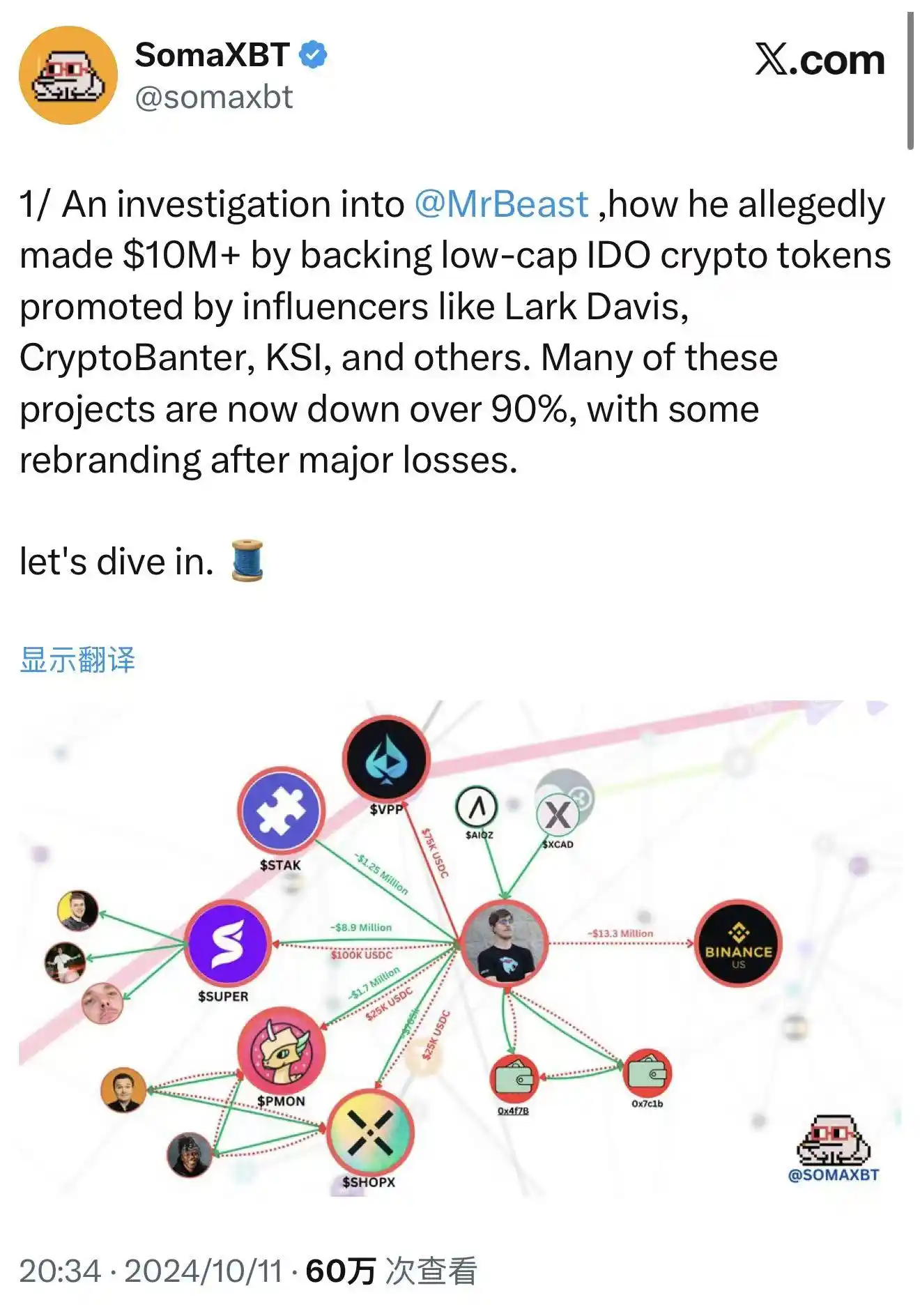
SomaXBT's Exposure of Mr. Whale|Image Source: X
The most typical case is SuperFarmDAO. During the project's presale phase, Mr. Whale invested $100,000 and received 1 million SUPER tokens. He then used his unparalleled influence to promote the project. The token price skyrocketed as a result, igniting market sentiment. He then began to sell off.
Ultimately, this $100,000 investment brought him profits of millions of dollars. Behind this astonishing figure are the losses of countless retail investors. Seeing Mr. Whale involved in the project, they thought it was a reliable investment opportunity and followed suit to buy in. However, when he started selling, the token price quickly collapsed, leaving retail investors as the ultimate bagholders.
A similar operating pattern has been repeated in multiple projects such as Polychain Monsters, STAK, VPP, SHOPX, and more. SomaXBT estimates that Mr. Whale has made over $10 million in profit from these projects.
From a legal perspective, these operations may indeed not be in violation. Mr. Whale did not explicitly commit to holding these tokens long-term, nor did he violate any specific securities regulations. At that time, the cryptocurrency market was still in a regulatory gray area, and many rules from traditional financial markets did not fully apply. In the traditional stock market, this behavior might constitute market manipulation and face severe legal sanctions. However, in the crypto world, there are no such rules.
But from a moral standpoint, these actions have sparked considerable controversy. Many in the cryptocurrency community believe that pumping token prices with influence and then selling off is essentially profiting from fans' trust. This not only destroys the long-term value of the project but also damages the reputation of the entire industry. When major KOLs use information asymmetry and influence to harvest retail investors, this market becomes another version of the Wall Street game.
Mr. Whale's team responded by denying direct involvement, claiming that these investments were managed by third parties, and he was not aware. However, this defense appears weak. Even if investment decisions were carried out by others, his name and influence were still at the core of attracting retail investors to these projects.
When he mentions a project on social media or features elements of a project in a video, fans naturally assume it is an endorsement. Regardless of who pulled the trigger, the bullet bears his name.
Now, fast forward to October 2025. Less than a year since SomaXBT's initial public investigation results, Mr. Whale has filed a trademark application for "MrBeast Financial." What's even more intriguing is that among the services he plans to offer are "cryptocurrency exchange" and "decentralized exchange operation," the very areas that once sparked controversy.
He seems to want to tell the world that the former "reaper" is now transforming into a compliant "house."
There are two possible business logics behind this transformation, and they are not mutually exclusive.
The first is a business "whitewashing." By establishing a compliant financial platform, he is trying to cover up his speculative past and repackage himself as a responsible financial service provider. This strategy is not uncommon in business history. Many former speculators have transformed themselves from "barbarians" to "establishment figures" by establishing legitimate institutions. J.P. Morgan's founder was also a radical speculator in his early years but eventually became one of Wall Street's most respected bankers.
The second is a deeper business logic. He sees a more efficient path in monetizing traffic directly into financial assets. Instead of investing and trading through third-party platforms to earn one-time speculative profits, he prefers to build his platform to control the entire ecosystem. This way, he can not only profit from content creation but also take a commission from every financial transaction of fans, earn interest from every loan, and share returns from every investment.
This is the ultimate form of creator economy monetization, transitioning from content monetization to financial monetization, from influence to capital, from fans to customers. If successful, Mr. Beast will pioneer a new business model and become the first true "Internet-famous banker."
However, regardless of the logic, he must face the same question. Trust is at the core of finance, and once trust is broken, the cost of rebuilding it is exponential. He needs to convince regulatory agencies that someone who once preyed on retail investors in the crypto market now has the ability, willingness, and system to protect consumer interests.
Moreover, the sword of Damocles of regulation is hanging over his head.
Dancing on the Edge of Regulation
By 2025, cryptocurrency regulation in the United States is undergoing a subtle shift.
On July 31, SEC Chairman Paul Atkins announced the launch of "Project Crypto," aiming to reform securities laws and promote crypto innovation. This is a significant signal. Over the past few years, the SEC has taken a harsh stance on the cryptocurrency industry, suing multiple exchanges such as Coinbase and Binance, attempting to bring most crypto assets under the securities regulatory framework. But in 2025, the tide has turned.
On September 29, the SEC and CFTC held a historic joint roundtable discussion on the regulatory framework for spot cryptocurrency trading. This was the first time the two major regulatory agencies discussed crypto regulation together, marking a new phase in U.S. cryptocurrency regulation from "strict enforcement" to "clear rules."
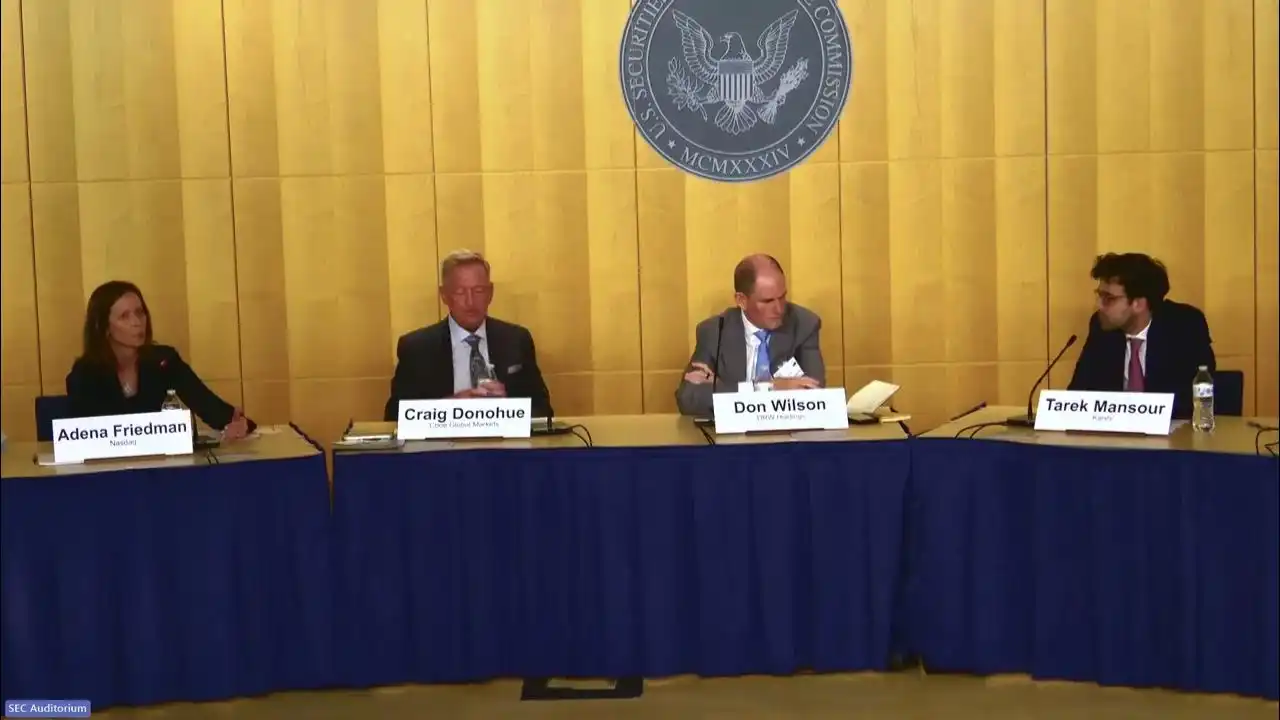
SEC and CFTC Roundtable Meeting | Image Source: YouTube
For companies looking to enter the crypto financial space, this is a rare regulatory window. Regulatory agencies are sending friendly signals, trying to find a balance between protecting consumers and promoting innovation. According to the timeline of the U.S. Patent and Trademark Office, the trademark application for "MrBeast Financial" will undergo its first review in mid-2026, with final approval or rejection expected by the end of 2026. This means that even if everything goes smoothly, this platform will not be able to officially operate until 2027.
But a window of opportunity does not equate to a free pass. "MrBeast Financial" will face multi-layered, comprehensive regulatory challenges.
At the federal level, the SEC will review whether it involves securities issuance. If the investment products offered by the platform are deemed securities, then it must register as a broker-dealer or investment advisor, subject to strict regulation. The CFTC will regulate its derivatives and commodity trading, ensuring that the platform does not engage in market manipulation or fraudulent activities. FinCEN (Financial Crimes Enforcement Network) will require compliance with anti-money laundering (AML) and know your customer (KYC) protocols, meaning the platform must establish a robust identity verification system, monitor suspicious transactions, and report unusual activities to regulatory authorities.
If the platform promotes crypto payments and transactions, it is likely to be classified as a Money Services Business (MSB), which entails stricter compliance requirements, including registration, regular reporting, and undergoing audits. Each requirement demands significant manpower, resources, and financial investment.
At the state level, the challenges become even more complex. The U.S. financial regulation operates on a dual federal and state system, and operating in various states as a crypto exchange or mobile bank requires obtaining money transmitter licenses (MTL) from dozens of different states. Each state has different licensing requirements, making the application process time-consuming and costly.
MrBeast's direct appeal to young retail investors will place his business under the regulatory microscope. Regulators will pose a fundamental question: Does a creator whose brand essence revolves around extreme content have the "prudence" to manage consumer deposits and investments?
This involves not only compliance but also reputational risk. Regulators, when assessing financial license applications, look not only at technical capabilities and capital strength but also at "risk culture" and "governance capabilities." They will review the company's track record, assess the integrity and professionalism of the management team, and judge whether the company has the capacity to protect consumer interests in the long term.
Just weeks before the trademark application, Mr. Beast's video "Would You Risk Your Life for $500,000?" sparked a huge controversy. In the video, a professional stunt performer escaped from a simulated fire in a building to win a prize. Mr. Beast defended the stunt, saying that the safety measures were "stricter than anyone could imagine," with a professional stunt and pyrotechnics team present, and all risks were within a controlled range.
However, critics argue that this high-risk, high-drama content conveys a dangerous value proposition, associating human life with a monetary reward. Even if the actual risk is low, this presentation implies that "one can risk their life for money." For young audiences, this could have a negative modeling effect.
For companies seeking financial licenses, this controversy could serve as negative evidence. Regulatory agencies would see it as a manifestation of "risk culture." Would a creator willing to have people risk their lives for a prize also adopt similar risk-taking behavior in financial product design? Would they, to attract attention, design products that are high-risk, high-reward but ultimately detrimental to consumers?
These concerns are not baseless. The design of financial products requires extreme caution, as any elements that encourage risk-taking or speculation could lead to significant consumer losses. The celebrity aura crumbles in the face of the compliance and ethics of financial products.
The design of financial products requires deep expertise and genuine concern for consumer interests, relying not just on brand effects. Regulatory agencies and consumer protection organizations are more vigilant regarding celebrity financial products, amplifying scrutiny of any suspicious fee structures or risk designs.
Mr. Beast's challenge is even more complex. He must not only prove the compliance and fairness of the product but also rebuild his moral image under the shadow of the cryptocurrency controversy. Within the regulatory window, he must perform a delicate balancing act, maintaining his "Beast" persona to attract young users while demonstrating enough "prudence" to convince regulatory agencies.
This is a dance on the edge of a knife. One wrong step could send the entire plan into the abyss. But if successful, he will pioneer a new business model, directly converting the trust of his 44.5 million fans into financial capital.
The Ultimate Trust Experiment
Mr. Beast's financial gamble is less a business venture and more of the ultimate experiment on the essence of "trust" in our era.
It is the product of the convergence of three trends: the financialization of influencer economy, Gen Z's rebellion against traditional finance, and the regulatory process of cryptocurrency.
At this point in 2025, these three forces converged, creating a unique opportunity window but also unprecedented risks.
If he succeeds, it will prove that a new trust generation mechanism has undergone a paradigm shift. Trust will no longer necessarily arise from the sedimentation of time and the endorsement of institutions but can be rapidly generated through individual charm and algorithm amplification in a short period. Traditional financial institutions will be forced to acknowledge that their centuries-old legacy, which they proudly hold onto, may truly not stand the test in the eyes of the Z generation.
This will compel traditional banks to reassess their strategies for young users, rethink how to establish trust in the world of algorithms and screens, and potentially set aside their pride to learn the language of internet celebrities, embrace social media logic, and even collaborate with influencers to reach young users leveraging their influence.
It will also pave the way for other influencers to explore a new monetization path. The creator economy will enter a new phase where content creators are no longer just sellers of advertising and products but can become providers of financial services. We may see more of "influencer banks," "influencer funds," and "influencer insurance." The boundaries of traffic and trust will be redefined.
However, if he fails, it will once again affirm an ancient lesson that while traffic can create wonders, it cannot magically create trust. Especially in the financial field, ethical flaws and regulatory risks are sufficient to erode any fan base regardless of its size. Influence can bring attention but cannot be directly converted into the most valuable asset in the financial world, responsibility.
It will remind regulators that influencer-driven financial innovation requires stricter scrutiny and clearer rules. When financial services deeply integrate with content creation and the fan economy, the traditional regulatory framework may no longer apply. Regulators need to consider when an influencer with a fan base of billions becomes a financial service provider, whether his influence itself constitutes a systemic risk. When fan relationships transform into financial relationships, how can consumer rights be protected?
Mr. Beast's brand is built on "wonders" and "extremes," with content core that includes burial alive, nuclear bunker, extreme challenges, all aimed at breaking conventions and creating amazement.
But financial services precisely require "stability" and "prudence," needing predictability, security, and long-term viability.
Can he, while maintaining entertainment value, establish a trusted financial brand? This is not just a business issue but also a quandary related to identity. When a creator known for "madness" tries to persuade you to entrust your hard-earned money to him for management, is he expanding the brand's boundaries or diluting its core values?
This paradox has no simple answer. Perhaps, Mr. Beast will create a new form of financial brand that maintains entertainment value while being professional. Alternatively, he may find that these two are fundamentally incompatible and ultimately have to make a choice between them.
Regardless of the outcome, the game has already begun. It will force all of us to rethink, in an age of ubiquitous media, who should we trust? Should we trust those institutions in suits speaking in incomprehensible jargon, or should we trust that influencer who brings us joy and dreams on our screens.
When the first user completes the first transaction on MrBeast Financial, regardless of whether they click "Buy" or "Sell," they will cast a vote, providing their answer to the trust dilemma of this age. And billions of young people will, with their hard-earned money, collectively script the conclusion of this experiment.
Recommended
The Wall Street Journal: How is AI Trading Stealing the Limelight from Cryptocurrency?
Aug 15, 14:00
Tencent Still Has a Dream
Aug 15, 11:27
To Catch North Korean Hackers, They Set Up a Fake Project
Aug 15, 10:00
From Litigation to Settlement: Positive Signal Released by HTX's Negotiation with FCA
Aug 14, 19:32
11,742 Shipping Addresses Exposed Alongside Trezor Orders
Aug 14, 19:01
Founder Interview: FOMO Creator Explains How They Added 30,000 Users in One Day and Became One of the Fastest-Growing Crypto Apps
Aug 14, 18:37