Bloomberg: Peso Crisis Deepens, Stablecoins Become Argentines' 'Lifeline'
Original Article Title: Why Argentines Are Turning to Crypto in the Latest Peso Crisis
Original Article Author: Maria Clara Cobo, Bloomberg
Original Article Translation: Luffy, Foresight News
As the mid-term elections approach, Argentine President Javier Milei tightened foreign exchange controls to support the peso exchange rate, while Argentine citizens like Ruben López are turning to cryptocurrency to protect their savings.
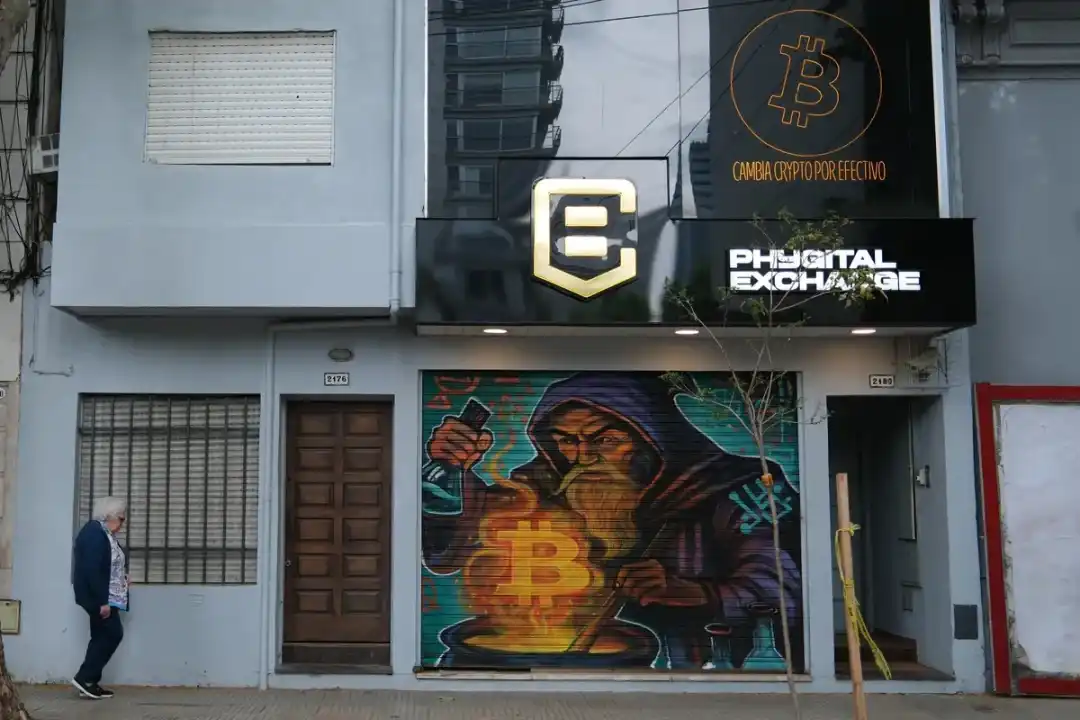
Bitcoin sign outside a cryptocurrency exchange in Buenos Aires
A new strategy has emerged: leveraging a stablecoin pegged to the dollar at a 1:1 ratio to exploit the difference between the official exchange rate and the parallel market rate. Currently, the value of the peso at the official exchange rate is about 7% higher than in the parallel market. Cryptocurrency brokers state that the trading process involves: first buying dollars, immediately exchanging them for a stablecoin, and then converting the stablecoin into pesos at the cheaper parallel market rate. This arbitrage operation, known as "rulo," can quickly earn profits of up to 4% per transaction.

October 17, Milei at an election rally in Buenos Aires
"I do this trade every day," said López, a stockbroker in Buenos Aires, who uses cryptocurrency to hedge against inflation.
This cryptocurrency operation reflects a shift in how the Argentine people are dealing with the latest round of economic turmoil. Ahead of the October 26 elections, Argentina is running out of US dollar reserves to shore up the peso and prevent a break in the trading band. Despite significant support from the US, investors still expect the peso to further devalue post-election.
The Central Bank of Argentina recently introduced new regulations to prevent individuals from reselling dollars within 90 days to curb quick-profit arbitrage trading, leading to the almost immediate emergence of the "rulo" arbitrage model. On October 9, the trading platform Ripio stated that "the trading volume of stablecoin to peso surged by 40% in a single week," as "users are taking advantage of exchange rate fluctuations and market opportunities to profit."
For some Argentine citizens, such operations are indeed necessary. After all, this country has already defaulted on its debt three times this century. When Milei was elected in 2023, he promised to end these financial troubles. He did make some progress, such as reducing the annual inflation rate from nearly 300% to about 30%; however, the peso exchange rate continues to devalue significantly, partly due to Milei's currency devaluation policy upon taking office and partly due to recent investor concerns about the election.
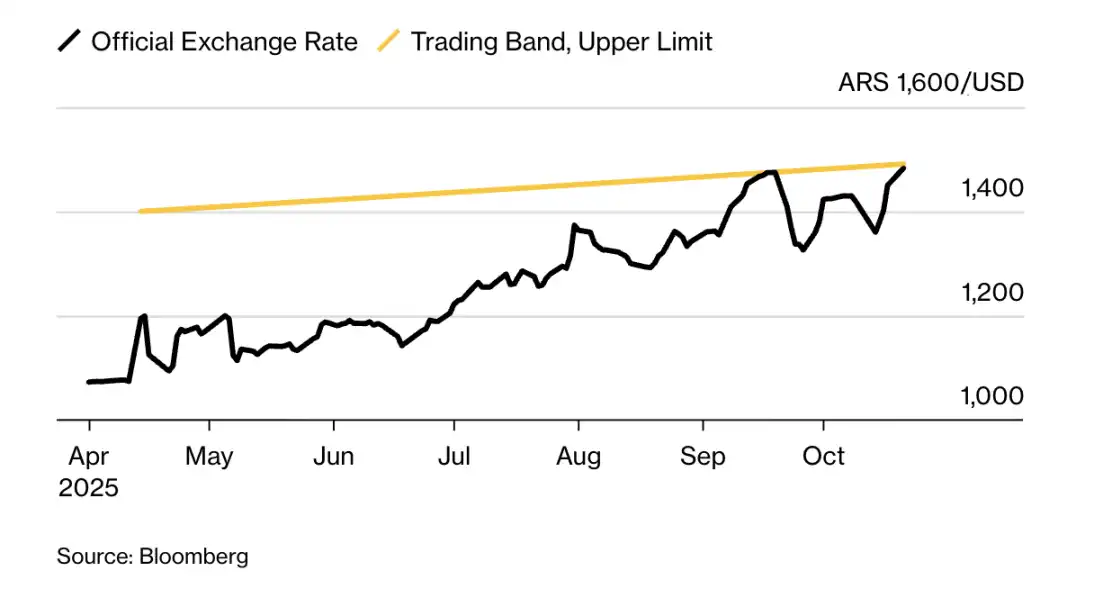
Peso Exchange Rate Nearing Upper Trading Range
The "rulo" arbitrage phenomenon indicates that the role of cryptocurrency in Argentina has undergone a qualitative change: from a novelty that intrigued citizens including Milei himself, to a financial tool for protecting savings. In the United States, cryptocurrency is often used as a speculative tool; but in Latin America, it has become a stable-seeking option. In countries like Argentina, Venezuela, Bolivia, the use of cryptocurrency can help people avoid the triple pressure of "currency volatility, high inflation, strict foreign exchange controls."
"We provide users with channels to buy cryptocurrency with pesos or dollars and sell for profit—this is our daily business," said Manuel Beaudroit, CEO of the local cryptocurrency exchange Belo, "Obviously, exchange rate differentials can bring substantial profits." He mentioned that in recent weeks, traders could earn 3%-4% per transaction, but also cautioned that "this level of return is very rare."
Cryptocurrency exchange service outside a store in La Paz, Bolivia
Similar situations have also appeared on other trading platforms. Another local platform, Lemon Cash, stated that on October 1st, the day the Argentine Central Bank's 90-day ban on dollar sales took effect, its total cryptocurrency trading volume (including buying, selling, exchanging) surged by 50% compared to the average level.
"Stablecoins are undoubtedly a tool to obtain cheaper dollars," pointed out Julián Colombo, head of the Argentine region at the Bitso exchange, "Cryptocurrency is still in a regulatory gray area, and the government has not clearly defined how to control stablecoins or restrict their liquidity, creating conditions for the rise of 'rulo' arbitrage."
However, the growth in stablecoin trading is not solely due to arbitrage. As the Milei government faces crucial elections and the economy comes under pressure once again, many Argentine citizens are also using cryptocurrency as a hedge against the possible further devaluation of the peso.
“Inflation and political uncertainty have made us more conservative, so I don't hold any pesos in savings or investments; I only use pesos for daily expenses,” said Nicole Connor, head of the Argentine Cryptocurrency Women's Alliance. “My savings are all in cryptocurrency and stablecoins, trying to earn a return through them.”
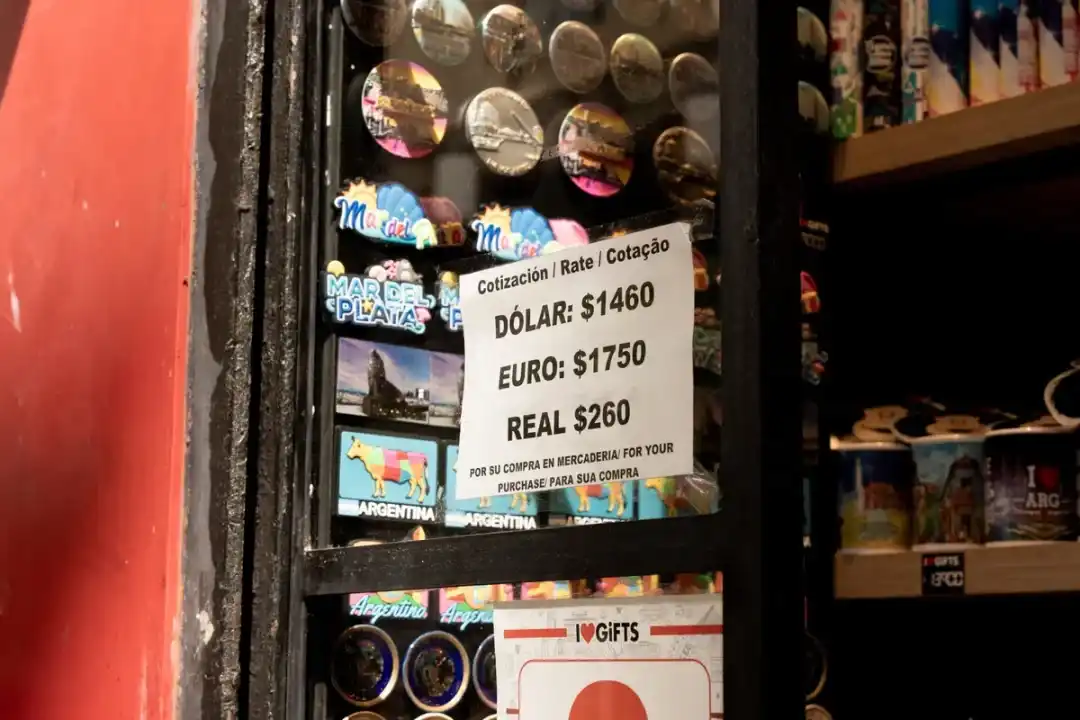
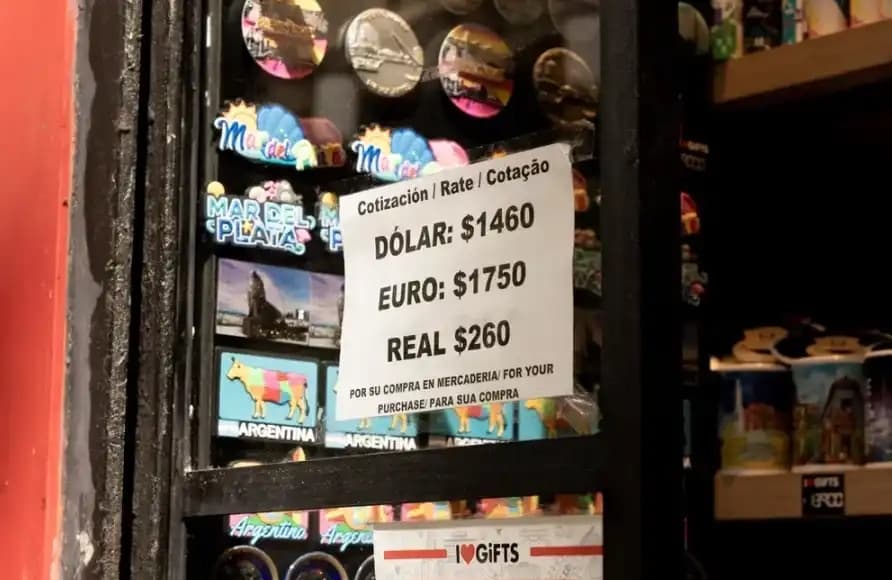
Exchange rate sign inside a store in Buenos Aires
However, cryptocurrency operations are not without risks. In Argentina, stock market trades are tax-free, but profits from cryptocurrency trades are subject to a maximum of 15% tax. In addition, frequent trading may also attract the attention of banks. For users who make large transfers repeatedly, banks often require proof of the source of funds.
Yet analysts believe that as economic hardship persists, Argentina's reliance on stablecoins may deepen. Throughout Latin America, more and more people are using such tools to protect their assets against financial turmoil and election shocks.
“Stablecoins will continue to exist,” said stockbroker López. “The U.S. dollar holds a crucial position in Argentine society and daily life because it is our safe haven to avoid currency risks.”
Recommended
The Wall Street Journal: How is AI Trading Stealing the Limelight from Cryptocurrency?
Aug 15, 14:00
Tencent Still Has a Dream
Aug 15, 11:27
To Catch North Korean Hackers, They Set Up a Fake Project
Aug 15, 10:00
From Litigation to Settlement: Positive Signal Released by HTX's Negotiation with FCA
Aug 14, 19:32
11,742 Shipping Addresses Exposed Alongside Trezor Orders
Aug 14, 19:01
Founder Interview: FOMO Creator Explains How They Added 30,000 Users in One Day and Became One of the Fastest-Growing Crypto Apps
Aug 14, 18:37