New York Times: Crypto ATM Fraud Rampant, $240 Million Stolen in Six Months
Original Title: How Fraudsters Use Cryptocurrency A.T.M.s to Target Victims
Original Authors: Cameron Fozi, Chloe Rosenberg, Reeno Hashimoto, The New York Times
Original Translation: Chopper, Foresight News
Cryptocurrency ATMs situated in convenience stores and gas stations, seemingly convenient cash-to-coin terminals, have actually become a gold mine trap for fraudsters targeting the elderly. Behind the disappearing deposits lies a series of carefully crafted scams.
Mary Handeland, a real estate agent in Grafton, Wisconsin, connected with a match on a dating app last year. The match, who identified as Mike, claimed to be an engineer at a defense contractor in Texas.
After two months of texting and calls, the 71-year-old Handeland received a confession of love from Mike. Soon after, Mike asked her for a loan.
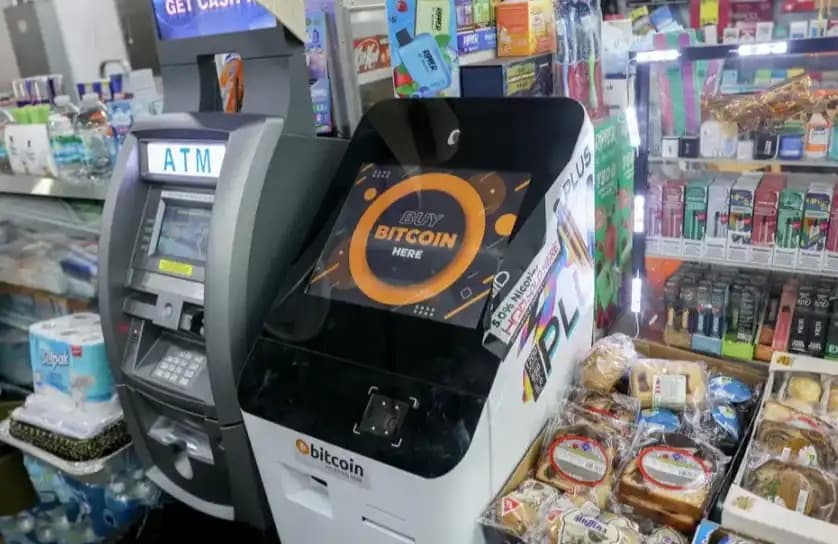
Handeland was asked to deposit cash into a device called a "cryptocurrency ATM." These self-serve terminals are commonly found in grocery stores, gas stations, and tobacco shops. They resemble traditional ATMs but can convert cash into cryptocurrency.
Starting in October last year, Handeland made 19 transactions, depositing $98,300 into these machines. In the end, all the money vanished, and Mike disappeared too, with his entire identity being fictitious from start to finish.
"I still don't know what came over me," Handeland said. "That sense of being manipulated, like being caught in some kind of whirlpool."
Handeland's experience has put the spotlight on cryptocurrency ATMs. These devices have rapidly proliferated across the U.S. but have drawn close scrutiny for becoming tools of fraud. Data from the U.S. Treasury Department's Financial Crimes Enforcement Network shows that the number of cryptocurrency ATM operational locations has reached at least 28,000, more than twice the number of Bank of America ATMs.

Mary Handeland deposited $98,300 in 19 transactions into a cryptocurrency ATM, and it all disappeared in the end.
These self-service kiosks operated by companies such as Bitcoin Depot, CoinFlip, and Athena Bitcoin help people convert cash into cryptocurrency at physical locations. After users deposit cash, the operator transfers the corresponding amount of cryptocurrency to the user's cryptocurrency account and charges a transaction fee.
However, law enforcement officials say these kiosks have become hotbeds for financial crime. Last year, the FBI's Internet Crime Complaint Center received nearly 11,000 complaints related to such devices, with total losses amounting to $2.467 billion. The FBI estimates that in the first 7 months of this year, fraud involving cryptocurrency ATMs has resulted in losses of around $240 million.
The cryptocurrency industry has long been plagued by money laundering and fraud scandals, with ATM-related crimes just being a piece of the puzzle. But Aidan Larkin, CEO of asset tracing company Asset Reality, points out that the specificity of these devices lies in their ease of access and targeting of vulnerable groups.
"For victims with low technical skills and lack of experience in using technology products, cryptocurrency ATMs are the easiest way for fraudsters to exploit their assets," he said.
According to cryptocurrency analytics company TRM Labs, from 2024 to the first half of 2025, the proportion of illicit transactions involving cryptocurrency ATMs is more than 17 times higher than the industry average.
Since the birth of Bitcoin in 2009, these devices have started appearing in coffee shops, convenience stores, and gas stations. Bitcoin Depot was founded in 2016 by founder Brandon Mintz, who had just graduated from college at the time. He once said that the company's founding purpose was to build a cryptocurrency ATM network so that people without bank accounts or those having difficulty purchasing cryptocurrency through other channels could also access Bitcoin.
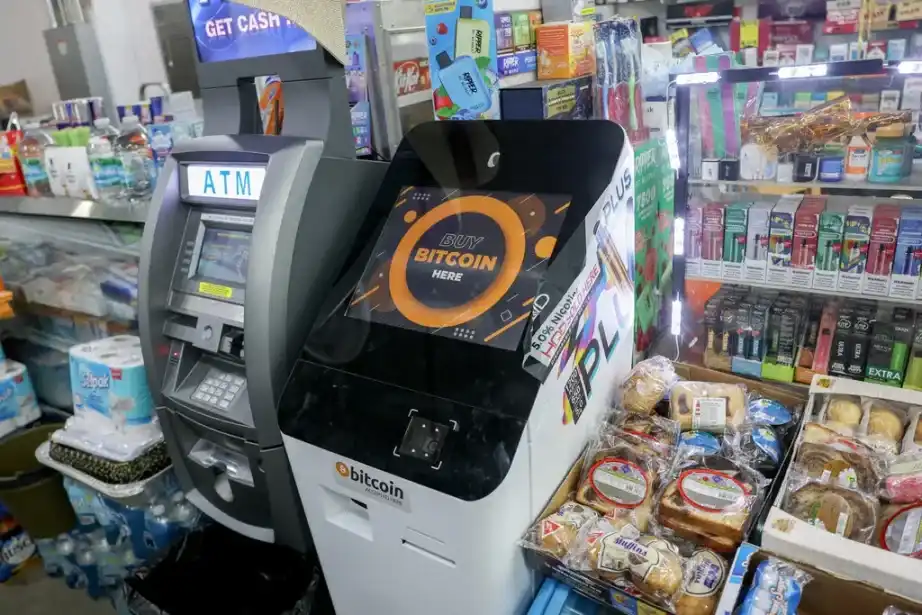
A Bitcoin ATM inside a convenience store in Miami. According to U.S. Treasury Department data, cryptocurrency ATM operators are present in at least 28,000 locations.
In 2023, Bitcoin Depot went public through a merger with a special purpose acquisition company (SPAC). The company stated that its operated ATMs have exceeded 9,000 units, making it the largest cryptocurrency ATM network in North America. Since its inception, the company has processed 4 million transactions, with a total transaction volume of $33 billion.
However, law enforcement agencies argue that once cash is exchanged for cryptocurrency through these machines, fraudsters can transfer the cryptocurrency to jurisdictions beyond the reach of U.S. law enforcement, making it nearly impossible to recover the victims' losses.
Several states, including California and Illinois, have already started restricting the use of cryptocurrency ATMs, with some setting limits on transaction amounts and fees charged by operators.
When discussing whether to restrict cryptocurrency ATMs in California in 2023, the then-president of the California Police Chiefs Association, Alexander Gammelgard, warned state lawmakers about the dangers of such devices and supported related regulatory proposals.
In his letter, he wrote, "These devices allow international criminal organizations to steal funds from California residents without the need for any involvement of banks or financial institutions, which could otherwise assist law enforcement in apprehending criminals and recovering stolen property."
That same year, California passed a series of regulations limiting individuals to a daily transaction amount of $1,000 through cryptocurrency ATMs and capping the fee at $5 or 15% of the transaction amount (whichever is higher).
Many cryptocurrency ATM operators have stated that fraudulent transactions account for only a small percentage. Chris Ryan, Chief Legal Officer of Bitcoin Depot, informed Texas lawmakers this year that fraudulent transactions represent 2% to 3% of the company's total U.S. transactions. The company stated in a release that consumer protection is its top priority and that it has one of the most comprehensive compliance programs in the industry.
Byte Federal, which operates over 1,200 cryptocurrency ATMs, reported that from July 2024 to the first half of 2025, fraudulent transactions on victims accounted for only 1.2%. The company's CEO, Paul Tarantino, explained that for registered users aged 60 and above, the company proactively makes reminder calls about potential fraud risks, successfully preventing over 80% of suspicious transactions.
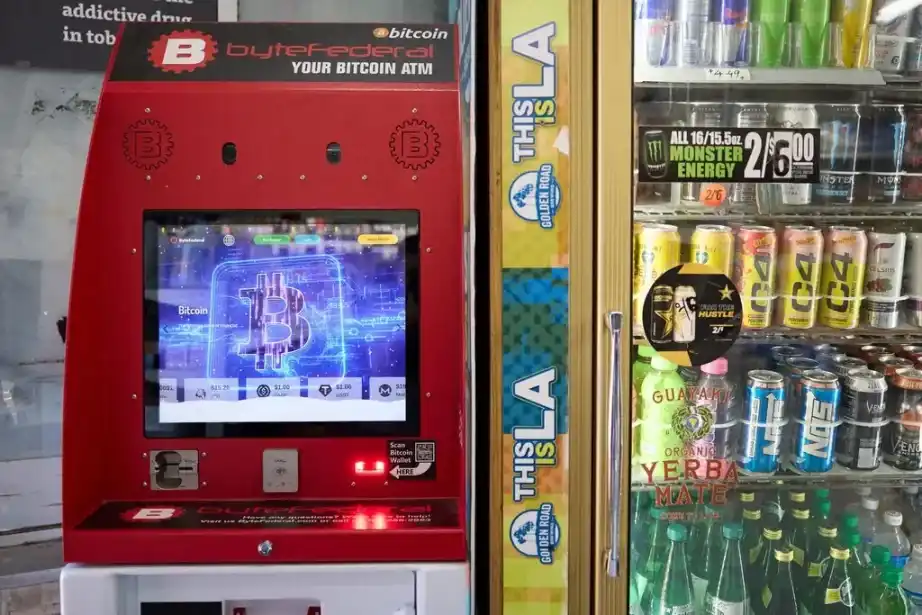
Paul Tarantino, CEO of cryptocurrency ATM operator Byte Federal, stated that the company makes reminder calls to customers aged 60 and above during registration to alert them to possible fraudulent activities
Many cryptocurrency ATM operators have also posted fraud alerts on their machines, asking users to confirm that the funds they are depositing are being sent to their own cryptocurrency account, not an account managed by someone else. They also state that they will cooperate with law enforcement.
Coinme, the company that provides software support for ATMs, Chief Operating Officer Sung Choi, said the Seattle-based company continues to improve in identifying and preventing potential fraudulent transactions, but fraudsters still find ways to circumvent anti-fraud measures.
"No matter how hard we try, fraudsters' tactics are quite sophisticated and they always seem to be one step ahead," Sung Choi said.
Athena Bitcoin said it strives to prevent fraud but cannot control users' decisions, similar to how a bank is not responsible for a user's actions after withdrawing money and sending it to someone else. CoinFlip, on the other hand, says it is committed to anti-fraud efforts and has high standards for compliance and transparency.
For victims of scams induced to use such machines, the consequences can be devastating. In 2022, retired nurse Connie Ruth Morris from Amarillo, Texas, joined an online fan group of Brazilian actor and singer Daniel Boaventura and began receiving texts from someone claiming to be Boaventura.
After several days of texting, the individual confessed his feelings to the 72-year-old Morris and asked her to transfer money through a cryptocurrency ATM to help him repay personal debts so they could jointly purchase real estate.
After being married for over 45 years, Morris agreed to the request. She said that over about six months, she deposited around $300,000 through a cryptocurrency ATM and even sent four iPhones and a $200 gift card.
In May 2023, Morris told her husband she was leaving him to be with Boaventura. Her son informed her that she had been scammed.
By then, much of the family's savings had vanished. Morris and her husband later divorced.
"I was brainwashed too much at that time, and I was out of touch with reality," she said. "I used to be able to help my son and grandchildren, but now I can't."
Recommended
The Wall Street Journal: How is AI Trading Stealing the Limelight from Cryptocurrency?
Aug 15, 14:00
Tencent Still Has a Dream
Aug 15, 11:27
To Catch North Korean Hackers, They Set Up a Fake Project
Aug 15, 10:00
From Litigation to Settlement: Positive Signal Released by HTX's Negotiation with FCA
Aug 14, 19:32
11,742 Shipping Addresses Exposed Alongside Trezor Orders
Aug 14, 19:01
Founder Interview: FOMO Creator Explains How They Added 30,000 Users in One Day and Became One of the Fastest-Growing Crypto Apps
Aug 14, 18:37