Develop 15 Products to Test Human Nature, This 'Dopamine Dealer' Became Musk's Product Czar
Original Title: "Developing 15 Products to Test Human Nature, This 'Dopamine Dealer' Became Musk's Product Czar"
Original Author: Sleepy.txt, Motion Beating
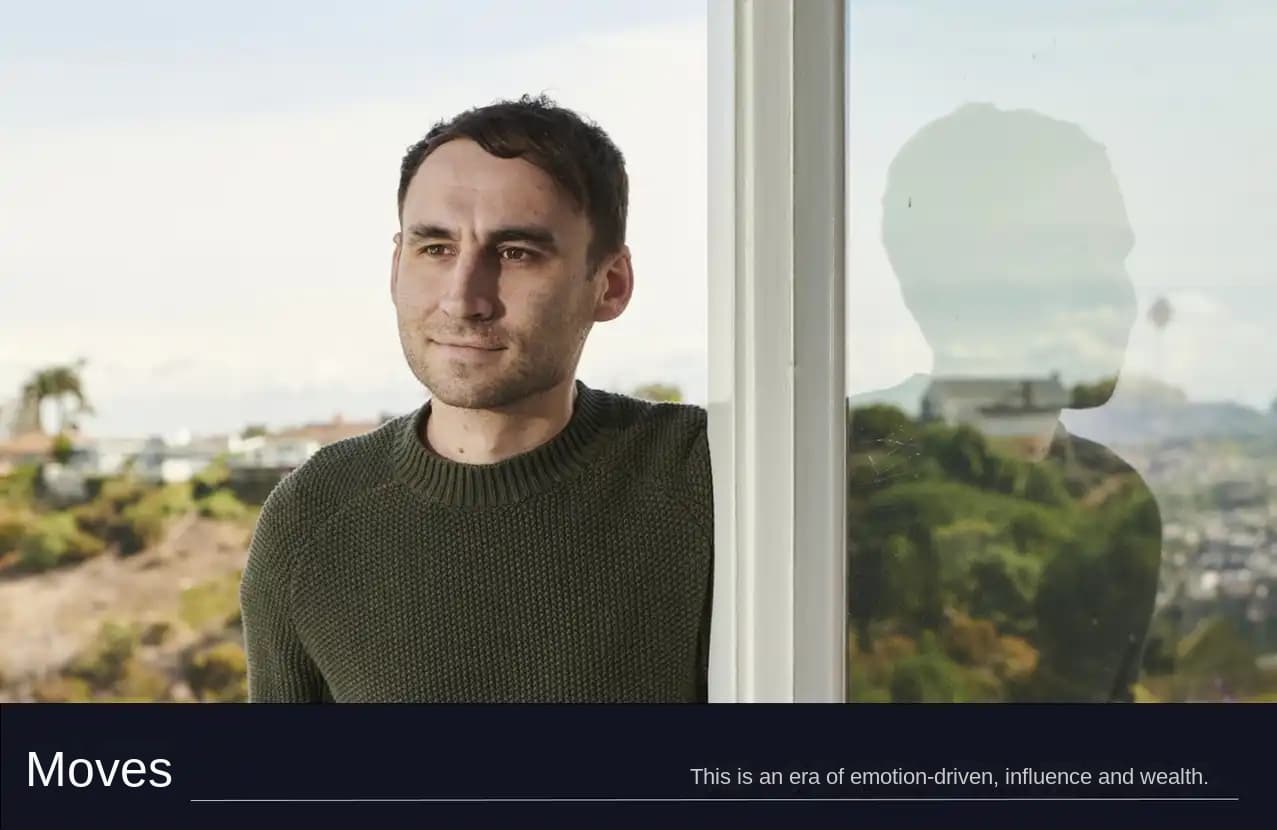
On June 30, 2025, X welcomed a young product leader. His name is Nikita Bier, 36 years old. Before joining Musk's team, he had successfully developed several viral social apps and sold them to tech giants for tens of millions of dollars.
Since acquiring Twitter, Musk had been determined to transform it into a super app, integrating social, payment, investment, and banking functionalities. However, the road was littered with failures, as numerous tech giants had similar dreams but none succeeded.
Against this backdrop, Nikita Bier's appointment took on significant meaning.
During his first six months, Bier worked with the algorithm team to adjust the recommendation page, increasing the proportion of content from friends, mutuals, and fans. He changed X's content distribution logic, placing users' social relationships back at the core of content distribution.
Recently, Bier announced the upcoming launch of the Smart Cashtags feature. Users can mention stock or cryptocurrency codes in their tweets, and X will automatically display real-time price, price change percentage, and related discussions. This feature transforms X from a mere social platform into a real-time financial information platform. Users no longer need to leave X to check stock prices or switch between multiple apps; all information is presented on one interface.
Then, on January 16, he revised X's developer API policy, no longer allowing InfoFi-like apps that reward users for posting and directly revoking API access for these apps. At the same time, he pushed for an upgrade to X's creator incentive program.
These reforms may seem fragmented, but they all point to a core goal: transforming X from a social platform into a vast ecosystem integrating social, influence, and finance.
In 2012, Nikita Bier was still a student at the University of California, Berkeley. That year, he developed an app called Politify, aiming to use data and logic to intervene in American politics.
Politify's core feature was a tax calculator. Users input their income and family status, and the app calculated the actual impact of different candidates' tax policies on them. Bier believed that if voters could clearly see their economic interests, they would make more rational choices.
This idea saw massive success during the 2012 election season. Politify attracted 4 million users with zero marketing budget, once topping the charts on the App Store. Bier believed at the time that information asymmetry in voter decision-making was the root of a societal issue, and his product could address this.
But reality hit him hard. Bier found that although users downloaded Politify, saw their own economic interests, they did not change their voting choices. A blue-collar worker making $30,000 a year, even if aware that a candidate's tax policy would benefit them, might still vote for another candidate due to cultural identity.
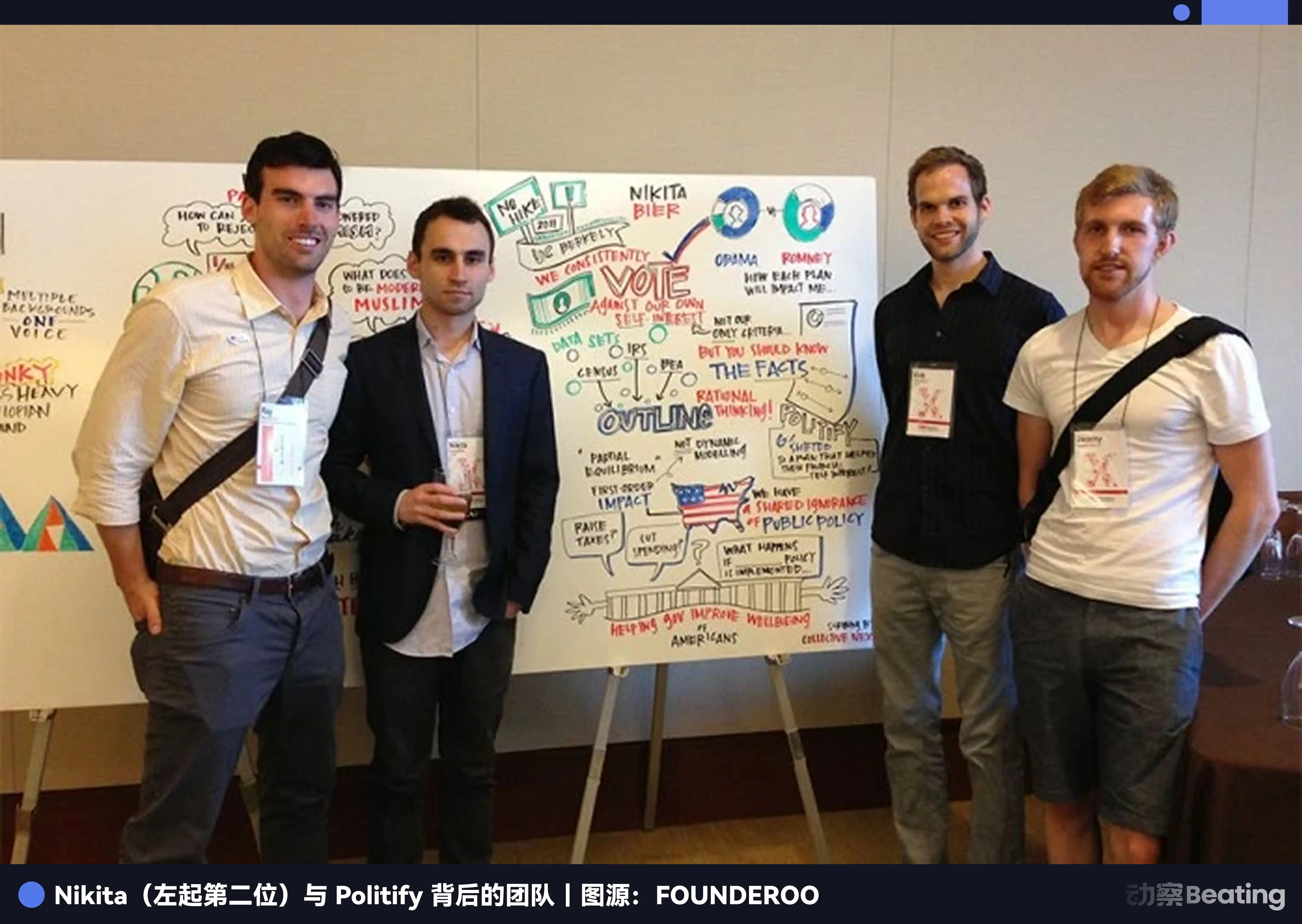
This made Bier realize that data and logic could not overcome emotional resonance. So, from 2012 to 2017, Bier embarked on a five-year frenzy of trial and error. According to Startup Archive, after Politify, he and his team developed over a dozen apps, attempting to dissect human nature from different angles, but all unsuccessful, either unable to gain users or retain them.
However, each failure gave Bier a deeper understanding of human nature. He began to realize that the most primal desire of humans is not rationality, knowledge, or efficiency but to be seen, acknowledged, and praised.
By 2017, they had completed the 15th product, tbh (To Be Honest).
This was an anonymous social app where users could anonymously vote for friends, choosing "who is most likely to become president," "who is most likely to become a millionaire," "who is most likely to save the world," and so on. All questions were positive, and all feedback was praiseful.
tbh attracted 5 million users in two months, with daily active users peaking at 2.5 million. Starting from a high school in Georgia, it quickly achieved viral growth among American high school students. In October 2017, Facebook acquired tbh for under $30 million.
tbh's success marked the moment Bier stopped trying to persuade users with data and instead began to drive users with emotions. He no longer aimed to solve social issues but to exploit the weakness of human nature to create addictive products. Thus, the serious entrepreneur disappeared, replaced by a deft dopamine dealer.
In October 2017, Nikita Bier and his team joined Facebook, with Bier taking on the role of a product manager.
Within Facebook, Bier had previously shared with Facebook colleagues the growth strategy of tbh. According to internal Facebook documents obtained by BuzzFeed News in August 2018, Bier's team extensively outlined how they leveraged Instagram's mechanics for rapid growth.
At the core of this strategy was tapping into teenagers' curiosity and herd mentality. Bier's team would create private Instagram accounts, follow all students at the target high school, and tease in the account bio with phrases like "You have been invited to join a mysterious app – stay tuned!"
Out of curiosity, students would request to follow this account. Bier's team would then wait 24 hours to aggregate all follow requests and, come 4 p.m. after school, switch the account to public with an added App Store link in the bio. Instagram would simultaneously notify all students that their follow request had been accepted, prompting them to visit the account, see the download link, and proceed to download the app.
While this strategy was unconventional, it showcased Bier's precise understanding of human nature. If you want users to take action, you don't need to persuade them – you just need to create an irresistible emotional trigger.
Less than a year after the acquisition, Facebook shut down tbh citing "low usage." However, Bier chose to remain at Facebook, continuing as a product manager. During this time, Bier delved into understanding the inner workings and internal politics of large-scale social platforms. He witnessed how Facebook engineered controversy through algorithms, predicted user behavior through data analysis, and elongated user engagement through product design.
The most crucial lesson Bier learned at Facebook was that social platforms are not meant to connect people but to evoke emotional reactions. The greater the emotional rollercoaster, the longer users stay, and the higher the ad revenue.
In 2021, Bier departed from Facebook and joined Lightspeed Venture Partners as a partner focused on product growth. In 2022, he and his original team launched Gas, the upgraded version of tbh. Gas introduced voting, gamification, and premium features, allowing users to pay to see who complimented them.
Within three months, Gas attracted 10 million users, generated $11 million in revenue, and briefly surpassed TikTok and Meta to become the most popular app in the United States. In January 2023, Discord acquired Gas for $50 million.
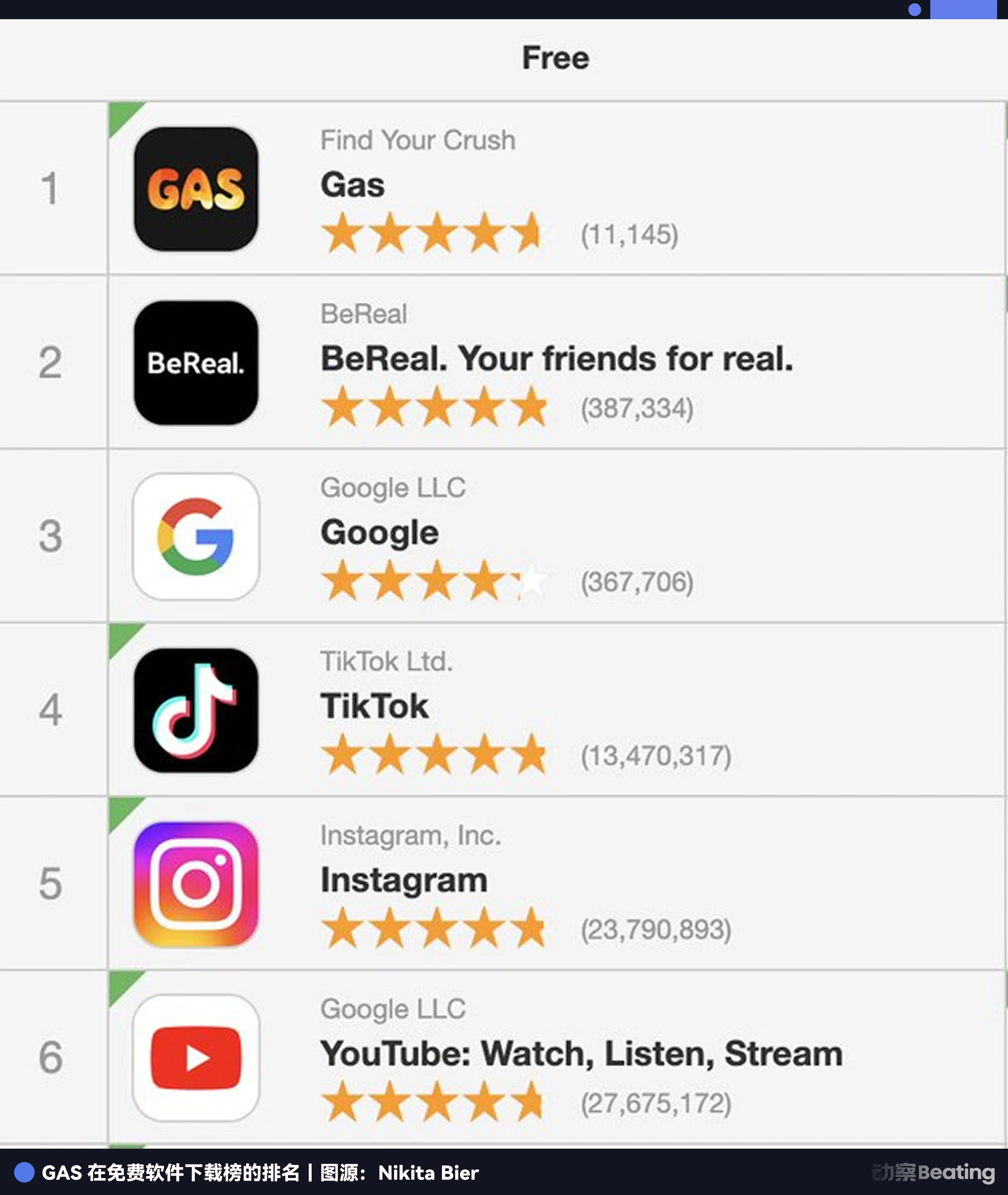
Gas's success once again validated a key insight by Bier, that the human desire for praise can be monetized. If you can create an environment where users crave being seen and acknowledged, and then introduce a payment threshold at a critical moment, users will not hesitate to pay.
This insight is exactly what Musk needed.
In October 2022, Musk made a bold move by acquiring Twitter for $44 billion and rebranding it as X. In his vision, X would evolve into the ultimate closed loop of social and finance. However, to make this dream a reality, Musk must tackle a key proposition: how to dissolve the psychological barrier of users and naturally guide them to engage in financial transactions while scrolling through social feeds.
This is ultimately a question about human nature. What kind of driving force can lead users to overcome the psychological hurdles from engaging in transactions and investments on a social platform to saving?
Bier's connection with Musk began with a bold self-nomination. When Musk announced the acquisition of Twitter, Bier tweeted on X: "@elonmusk Hire me to run Twitter as VP of Product." Although this tweet initially received no response, Bier did not give up.
Over the next three years, he continued to post on X, sharing profound insights on product growth, user psychology, and social networks. His tweets gradually accumulated significant influence, catching Musk's attention to his deep understanding of product and human nature.
Thus, in June 2025, when X needed a product lead who could integrate social and finance, Musk thought of Bier. Upon announcing his joining, Bier wrote, "I've officially posted my way to the top," and replied under his 2022 self-nomination tweet: "Never give up."
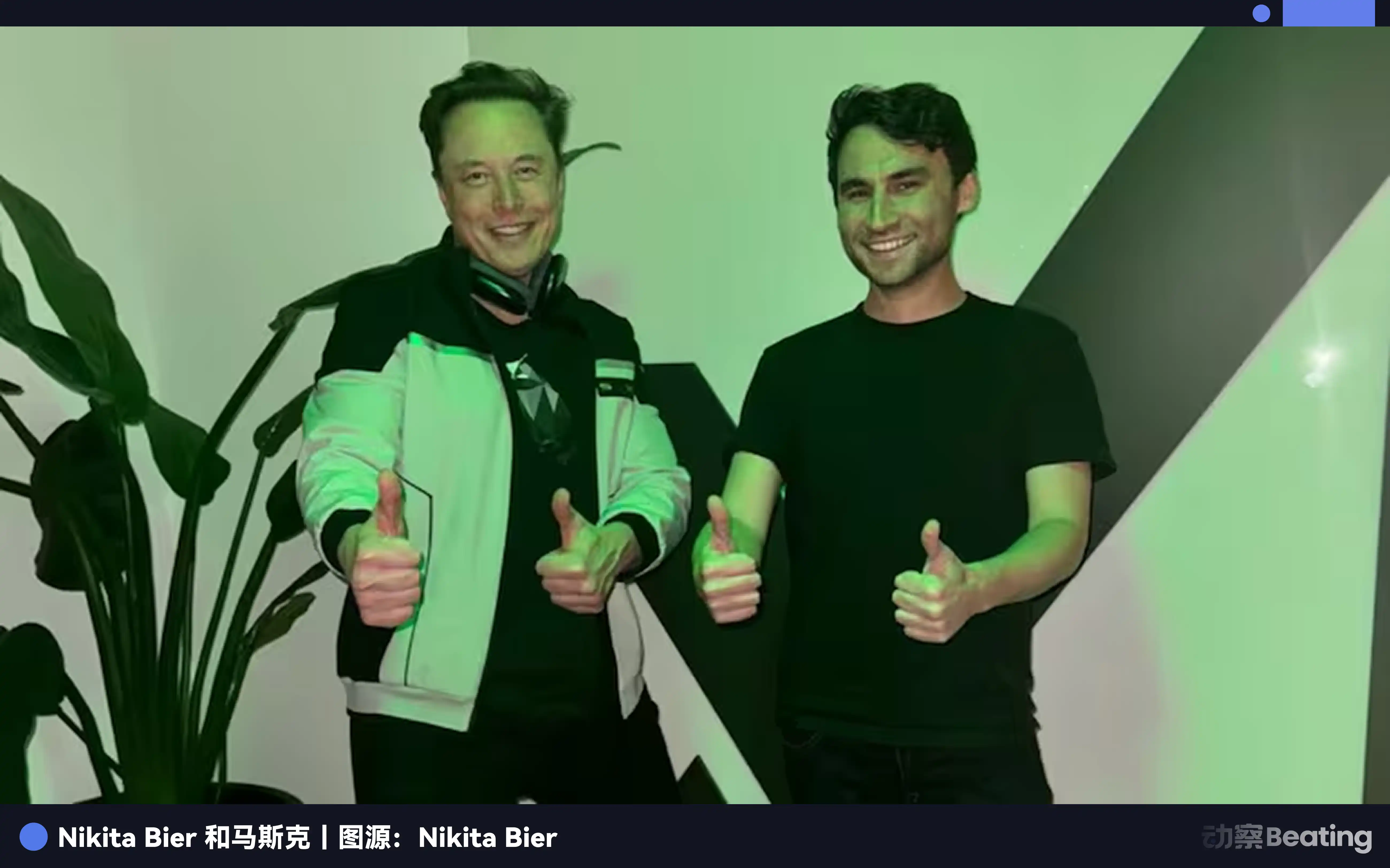
This story itself is the best illustration of Bier's concept that "influence is currency."
Before joining X, Bier also served as an advisor to the Solana Foundation, steering the foundation's strategic initiatives. During this experience, he witnessed firsthand how cryptocurrency leveraged social power to achieve viral growth, realizing that influence itself has become a tradable financial asset.
Musk took notice of Bier as part of Musk's first principles thinking, where the essence of finance is not technology but trust and emotion. You must know how to leverage emotion effectively.
And Bier is an expert in this area.
His series of actions at X fundamentally revolve around manipulating emotional leverage. Take, for example, his reform of the creator incentive at X. Bier deeply understands that for a platform to consistently generate high-quality content, it must address creators' core anxieties. So, in plain sight, he upgraded X's creator incentive program, ensuring that creators receive more money each cycle; and behind the scenes, he was actively manipulating the algorithm to create a sensation.
In January 2026, renowned American creator Dan Koe published a lengthy article on X titled "How to Transform Your Entire Life in One Day." This article garnered 1.5 billion views and 260,000 likes within a week, becoming the most-read long-form article in X's history.
This exemplifies Bier's approach. By propelling an in-depth article to a billion-level exposure, Bier sent a clear message to all creators, especially those hesitant to delve into substantive content on X: as long as your content is of high quality, X's algorithm will assist in amplifying it.
This is a more sophisticated strategy than direct monetary incentives. It addresses creators' fear of their content going unnoticed. Cases like Dan Koe's can make them believe that on X, profound thinking and high-quality content can be discovered and magnified by the platform.
This strategy aligns with the psychological tactics Bier employed in tbh and Gas. He realized that for creators, what they need is visibility and recognition. By establishing an exposure benchmark, Bier precisely stimulated the participation enthusiasm of the creator community, attracting more high-quality content to the platform, thus forming a positive ecosystem feedback loop.
This nuanced understanding of human nature allows Bier to consistently hit the target audience's pain points accurately. In the financial realm, Bier faces a young generation repeatedly plagued by financial anxiety.
In October 2024, BuzzFeed published an article titled "This Woman Revealed How She Coped with Financial Anxiety in Her 20s." The article's protagonist is 27-year-old Hayley, who lives in northern Colorado, works at a veterinary clinic as a receptionist, and earns $17 per hour.
She can only get scheduled for 33 hours of work per week. Her monthly fixed expenses include: rent $600, car loan $400, car insurance $150, electricity $50, phone bill $70, student loan $100, credit card minimum payment $50, totaling $1420. Although she sets aside $50 as pocket money from each paycheck, this money often runs out quickly.
Hayley said, "Every expense comes with guilt, I always feel like this money should have been saved. As long as the financial black hole is not filled, I cannot feel that kind of foundational security that allows me to feel at peace with myself. Maslow's hierarchy of needs theory is right on the money. I hate this society that forces people to survive but deprives them of the opportunity to live."
Hayley's story is a microcosm of an entire generation.
According to a July 2025 survey by Bank of America, 72% of young people have changed their lifestyle habits due to rising living costs, 33% of Gen Z feel significant financial pressure, and over half blame it on economic instability. EY's research also emphasizes that financial issues are the primary cause of anxiety for the Z generation. Arta Finance's 2024 report shows that financial stress has led 38% of Gen Z and 36% of millennials to experience a midlife crisis prematurely.
This anxiety has become the fuel for X's financial expansion.
After Nikita Bier joined X, he quickly initiated a series of product adjustments mentioned at the beginning of the article. However, Bier's true ambition is not just to make X a financial information platform; he wants X to become a financial transaction platform.
According to a report by the Financial Times in November 2025, X is developing in-app transaction and investment features, allowing users to directly purchase stocks and cryptocurrencies on X. X's CEO Linda Yaccarino revealed that Visa will be the first partner for the XMoney account. As of December 2025, X Payments has obtained money transmission licenses in 38 U.S. states, covering approximately 75% of the U.S. population.
On X, every like, every comment, every repost is an expression of user sentiment. Bier's task is to convert this sentiment data into financial signals. If a user frequently likes tweets about a particular stock, X can infer that they are interested in that stock, and then push a buy link at the right time. If a user frequently comments on tweets about cryptocurrency, X can infer that they are a potential cryptocurrency investor and then push relevant investment products.
This is a sentiment-based financial service. It doesn't require users to actively search, fill out complex forms, or go through tedious verification. It only needs to capture user sentiment fluctuations and then, at a time of heightened emotion, provide a simple transaction entry.
In an interview, Bier said, "Consumers do not choose to use a product because of the functional gap but because of what kind of emotional resonance can be generated when using this product." Similarly, X's financial logic is not to provide better financial services but to capture user sentiment and then, at a time of heightened emotion, convert that sentiment into transactions.
This pattern is particularly effective in Generation Z. According to a CFA Institute research report, 31% of Gen Z started investing before the age of 18, 54% of Gen Z investors get investment information through social media, 44% of Gen Z investors hold cryptocurrency, and cryptocurrency accounts for up to 20% of the average portfolio.
For this generation, social media is not only a channel for information but also a place to make investment decisions. They don't trust traditional financial institutions and Wall Street analysts; they believe in social media Key Opinion Leaders (KOLs) and their own emotions and intuition. X is precisely the amplifier of these emotions and intuitions.
However, before Musk and Bier, numerous giants had tried to build super apps, and they all failed.
As a former mobile phone giant, BlackBerry and its BlackBerry Messenger (BBM) were once on the verge of becoming super apps. Executives ambitiously planned to overlay payments and services on top of social networking, attempting to build a digital empire of that era. But reality is extremely cruel — a series of decision-making errors led BlackBerry to retreat in the face of competition. By 2013, the once 20% market share had shrunk to less than 1%, and the grand dream of the empire ultimately ended in failure.
BlackBerry's failure is not an isolated case. Amazon's attempt also ended in failure. In 2014, the Fire Phone, bearing Bezos's grand vision of integrating e-commerce and social networking, emerged, only to quickly collapse. This attempt not only cost Amazon a goodwill write-down of $170 million but also became a major blunder in Bezos's business career.
Reflecting on these cases, we can summarize the three reasons why super apps cannot succeed in the West.
Firstly, there is a high degree of specialization in user habits. Western users prefer independent apps that excel in their specific functions. A small business owner often relies on Shopify for transactions, QuickBooks for accounting, and Slack for collaboration. In their view, being all-in-one often means being mediocre, and super apps find it challenging to compete with the specialized leaders in each segmented field.
Secondly, there are stringent regulatory barriers and privacy boundaries. The essence of a super app is data dominance, while privacy protection is a red line in Western regulations. Integrating massive amounts of data on a single platform raises significant social concerns and escalates compliance costs and data breach risks exponentially.
Lastly, there is the entrenched dominance of tech giants. In mature markets, there is no void to fill, as Google, Amazon, and Apple have already divided users' digital lives. New entrants in the super app arena not only face functional competition but also challenge user loyalty to existing ecosystem brands.
So, can X achieve what its predecessors could not?
The advantages of X are evident: it comes with 550 million active users, Elon Musk has enough money and political resources to tackle regulatory challenges. Most importantly, X is not starting from scratch but incrementally adding financial functions to its existing base.
This incremental approach saves users from the hassle of switching. No need for downloads or learning new operations—just one more button on the familiar interface, and social and financial aspects are integrated.
However, X faces significant resistance. U.S. users are already accustomed to using Venmo for transfers and Robinhood for stock and crypto trading. These specialized apps work well, so why switch to X?
This is the problem Nikita Bier aims to solve. His strategy involves integrating financial transactions into users' daily social behaviors. It's not about urging you to conduct business on X; instead, it's about seamlessly buying a stock or cryptocurrency while scrolling your feed. This seamless experience is key to X's potential success this time.
Yet, this seamless experience also brings a new issue. When social and financial aspects merge, users' emotional fluctuations directly affect financial transactions. Will this model intensify market irrational exuberance? Will it lead users to make wrong investment decisions in moments of heightened emotions? Could it attract more regulatory scrutiny?
Currently, there is no answer to this question.
Over the past decade, we have witnessed social media's shift from "connecting people" to "manufacturing emotions." We have witnessed the attention economy's shift from "content is king" to "emotion is king." We have witnessed wealth distribution's shift from "capital is king" to "influence is king."
Nikita Bier's career is a microcosm of this shift. He has transformed from an entrepreneur trying to change the world through reason to a dopamine peddler exploiting emotions to engage users.
This shift is, in fact, a reflection of the entire era. In an age of information overload and attention scarcity, reason gives way to emotion, logic gives way to intuition, and the long term gives way to the short term. In this era, whoever can manufacture emotion can capture attention; whoever can capture attention can gain influence; whoever can gain influence can attain wealth.
This is a brand new era, an era driven by emotion, an era where influence equals wealth.
In this era, each of us is a product of Nikita Bier. Our likes, comments, and shares are all captured by algorithms, analyzed by data, and amplified by emotions. Our attention, our emotions, our influence are all being transformed into liquidity, wealth, power.
In this era, emotion is the most powerful weapon and the most dangerous poison.
Recommended
The Wall Street Journal: How is AI Trading Stealing the Limelight from Cryptocurrency?
Aug 15, 14:00
Tencent Still Has a Dream
Aug 15, 11:27
To Catch North Korean Hackers, They Set Up a Fake Project
Aug 15, 10:00
From Litigation to Settlement: Positive Signal Released by HTX's Negotiation with FCA
Aug 14, 19:32
11,742 Shipping Addresses Exposed Alongside Trezor Orders
Aug 14, 19:01
Founder Interview: FOMO Creator Explains How They Added 30,000 Users in One Day and Became One of the Fastest-Growing Crypto Apps
Aug 14, 18:37