Gold and Silver Soar Together, BTC Dips Alongside USD
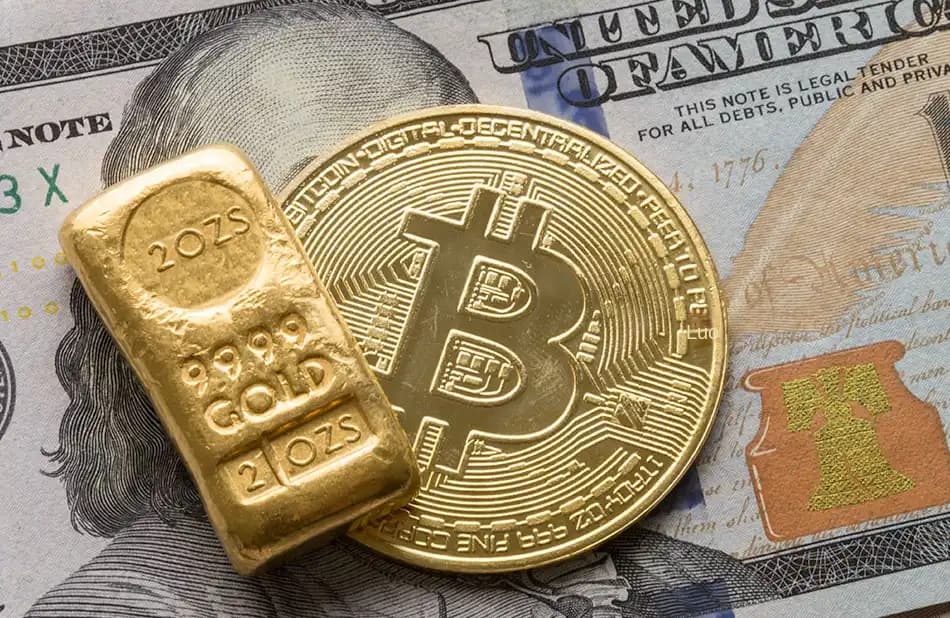
Original Title: "Gold and Silver Hit Historic Highs Together, Is 'Digital Gold' Bitcoin Really Lagging Behind?"
Original Author: Max, Foresight News
On January 23, gold and silver continued their significant gains, with the spot gold price hovering around $4956 per ounce and silver reaching $98.79 per ounce, approaching the $100 mark, both hitting their historical highs. In contrast, Bitcoin has been fluctuating around $90,000.
This divergence highlights a structural shift in the global market: in an environment of uncertainty, traditional safe-haven assets are thriving, while Bitcoin is weighed down by liquidity constraints and risk aversion sentiment.
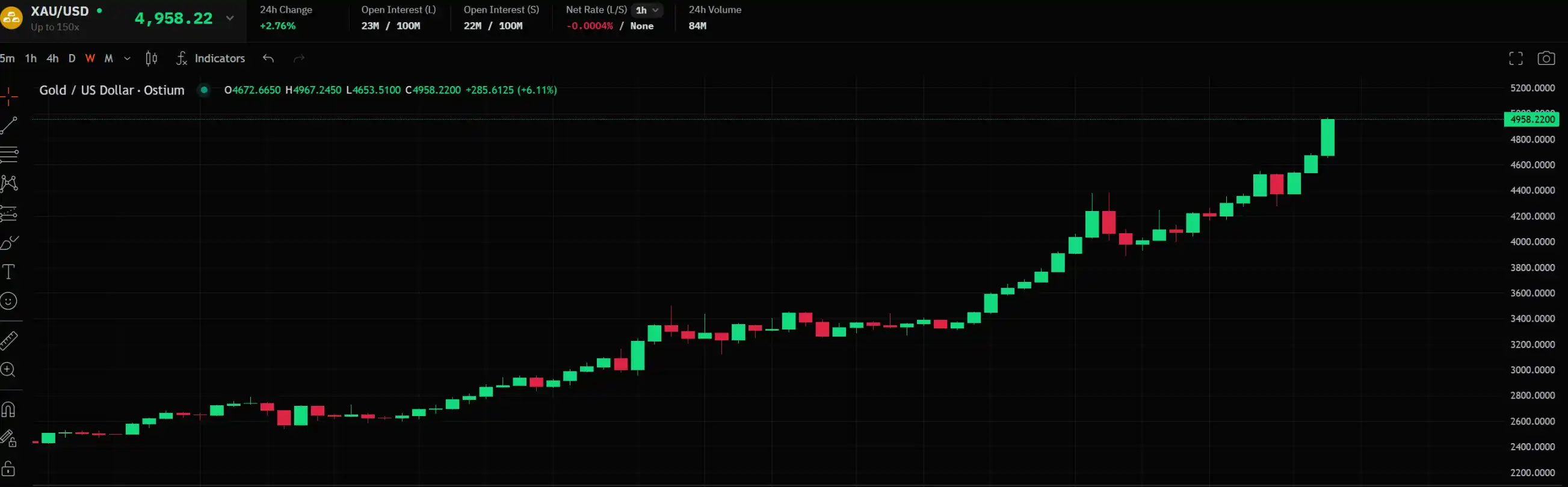
In January 2025, the price of gold was at $2600, and since then, it has been on a relentless uptrend, with its price nearly doubling by January 23 of this year.
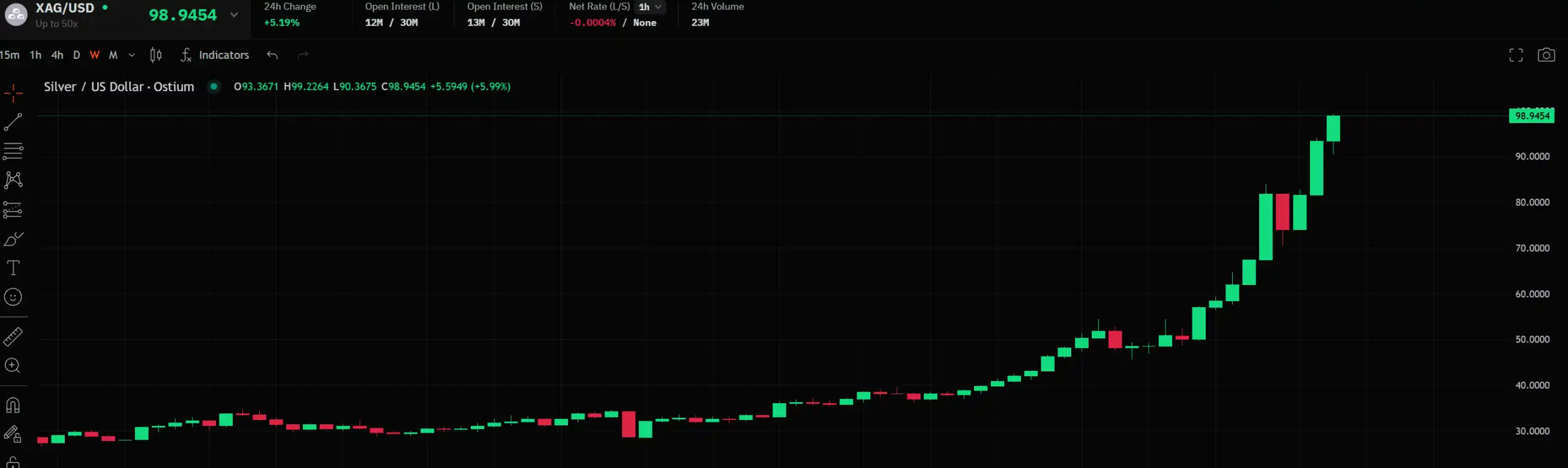
As the "volatile companion of gold," silver has outperformed, starting at $30 in April 2025, reaching new highs amid continuous oscillation, with its price now up over 300%.
This surge is driven by a mix of macroeconomic and geopolitical factors.
Central Bank Gold Purchases are a Key Driver. In 2025, the People's Bank of China added 27 tons of gold reserves, and the Reserve Bank of India increased its gold allocation from 10% to 16%, benefiting from the price surge and diversification away from US Treasuries. With US debt exceeding $36 trillion, this trend of de-dollarization positions gold as a hedge against currency devaluation.
Intensifying Geopolitical Tensions Boost Demand. The US tariff threats against Greenland and intervention in Iran have triggered safe-haven inflows, propelling gold above $4800. A weakening US dollar — a 6% decline in the 2025 Wall Street Journal US Dollar Index — further supports prices, making dollar-denominated metals more attractive to overseas buyers.
The Collapse of Fed Independence and Credit Crisis are also significant, with the most imminent driver stemming from a "institutional earthquake" in Washington. As a criminal investigation into Fed Chair Powell unfolds, the Fed's independence as the global currency's last line of defense has come under unprecedented scrutiny. When investors realize that central banks could become tools of political gamesmanship, the long-standing creditworthiness of the dollar is tarnished.
Despite the gold price approaching the $5000 milestone, global ETF holdings and central bank reserve purchases continue to grow net. This indicates a shift in psychological paradigm in the market: what people are worried about is no longer the price being too high, but rather the fiat currency they hold being too "cheap."
For silver, industrial demand continues to provide additional price momentum. Since 2021, a structural supply shortage has continued to widen, with mining output remaining flat and demand surging for solar panels, electronic products, and AI infrastructure. China's implementation of export restrictions starting January 1, 2026, has exacerbated the silver shortage. Analysts estimate an annual deficit of 200-300 million ounces, with industrial consumption accounting for 50% of the supply. In the middle to late stages of the precious metals bull market, silver, due to its smaller market size and greater elasticity, often experiences extremely sharp upward moves. The current gold-to-silver ratio is returning to historical averages or even lower levels.
Prominent economist Hong Hao previously analyzed that as long as the expected improvement in global liquidity remains unchanged, the upward cycle for silver is not over. While its volatility will far exceed that of gold, its "industrial necessity" attribute outside of being "digital gold" will provide strong support.
Bitcoin's trajectory presents a stark contrast. After reaching a peak of $126,000 in 2025, it consolidated around $90,000. A post by glassnode indicated that Bitcoin has lost the 0.75 supply cost percentile and has failed to recover. The current spot trading price is below the 75% cost percentile of the supply, signaling increasing distribution pressure. The risk level has moved up, and unless that level can be reclaimed, the market will be dominated by a downward trend.
Liquidity contraction is a major culprit, with the Federal Reserve implementing quantitative tightening (QT) since 2022, withdrawing $1.5 trillion in reserves, dampening speculative flows into Bitcoin and other risk assets. The $19 billion leverage washout in October exacerbated this issue, leading to cascading liquidations. While geopolitical risks have boosted gold, they have stirred risk-averse sentiments in the crypto space.
In terms of a rotational cycle, although BTC has not outperformed gold and silver from last year to date, in absolute return multiples, BTC from $15,000, once reaching a historical high of $126,000, has surged over 800%, still displaying a sufficiently impressive performance.
Wintermute mentioned that Bitcoin seems to be entering an upward channel after breaking the narrow 50-day trading range. The market pattern changed last week. Since November, Bitcoin has for the first time broken the range based on real capital flows (rather than leveraged trading). ETF demand is returning, the inflationary environment is favorable, and cryptocurrency is also starting to catch up with the overall rally in risk assets. Monday's sharp drop, although intense, was a healthy adjustment. Leveraged positions were swiftly cleared, and the market did not fall into a vicious cycle, which is a positive sign. The current issue lies in whether the tariff turmoil will end up being mere "saber-rattling" or evolve into substantive policy. The market tends to favor the former, as since the beginning of the year, U.S. stocks and the U.S. dollar have continued to rise, and interest rates have not been repriced.
If Bitcoin can hold above the $90,000 mark this week and ETF inflows continue, the breakout momentum is expected to continue; however, if a subsequent sell-off pushes the price below $90,000, the range seen since November will once again act as resistance.
Recommended
The Wall Street Journal: How is AI Trading Stealing the Limelight from Cryptocurrency?
Aug 15, 14:00
Tencent Still Has a Dream
Aug 15, 11:27
To Catch North Korean Hackers, They Set Up a Fake Project
Aug 15, 10:00
From Litigation to Settlement: Positive Signal Released by HTX's Negotiation with FCA
Aug 14, 19:32
11,742 Shipping Addresses Exposed Alongside Trezor Orders
Aug 14, 19:01
Founder Interview: FOMO Creator Explains How They Added 30,000 Users in One Day and Became One of the Fastest-Growing Crypto Apps
Aug 14, 18:37